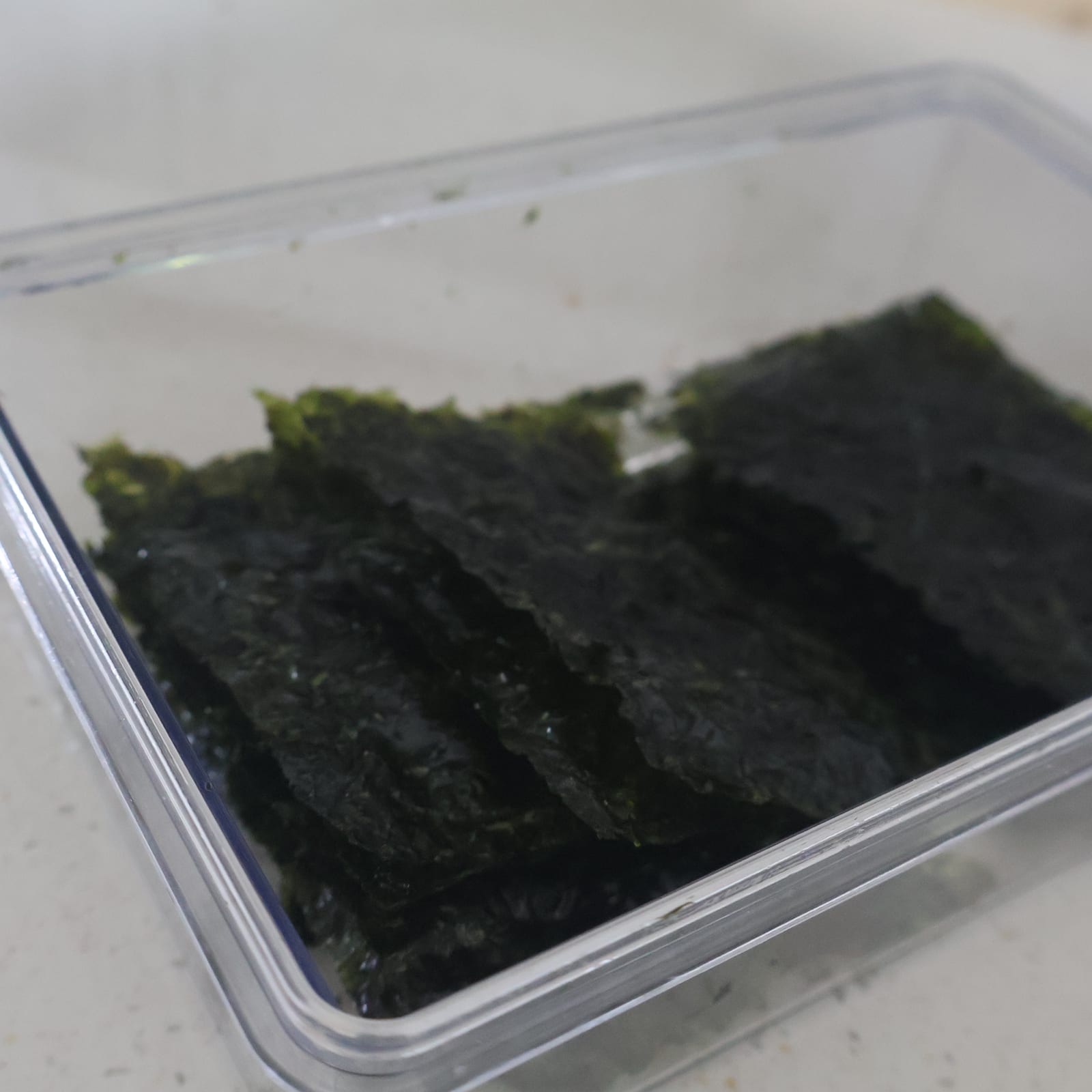
Korean Seaweed Snacks: Gim Is Called the Black Semiconductor, and the Price Doubled
Korean seaweed looks like the least serious thing in the shop. A packet of gim costs about as much as a bottle of water and comes in a bag you can fold into a pocket.
Koreans call it 검은 반도체 — the black semiconductor. That is not a joke about the colour. It is what the industry calls gim because it became Korea's biggest seafood export, and because in 2024 it behaved like a commodity in a squeeze:
- Production value jumped 90.3% in one year — from ₩632.4 billion in 2023 to ₩1.2037 trillion in 2024.
- Exports hit $997 million in 2024, up 25.9%, the largest ever for a Korean seafood product, and 2025 was forecast to clear $1 billion.
- Korea's total fishery production value passed ₩10 trillion for the first time since records began in 1970.
- And the wholesale price of dried gim doubled: a 속 (100 sheets) went from under ₩5,000 in 2022 to over ₩10,000 in 2024.
Then Korea started writing the rulebook. A CODEX world standard for gim products, proposed by Korea, cleared mid-stage review at the 49th Codex Alimentarius Commission session in Geneva in July 2026.
The good news for anyone shopping now: two consecutive good harvests have flattened prices in 2026. This is a decent moment to buy. Here is what to buy, in Korean, and what the words on the bag mean.
If the soup tradition brought you here, EpicKor's miyeokguk birthday seaweed soup guide covers that first — miyeok is a different seaweed entirely.
Korean seasoned seaweed snack packs — compare on AmazonAffiliate link. As an Amazon Associate, EpicKor earns from qualifying purchases at no extra cost to you.
The Four Words on the Bag
Korean seaweed is categorised by how far it has been processed. Learn these four and the shelf resolves.
| Korean | What it is | Buy it for | Do not |
|---|---|---|---|
| 마른김 (mareun-gim) | Dried, unroasted, unseasoned sheets | Cooking, rolling, making your own | Snack on it plain — it is raw material |
| 구운김 (gu-un-gim) | Roasted, no seasoning | Rice, soups, a cleaner taste | Expect salt or sesame flavour |
| 조미김 (jomi-gim) | Roasted and seasoned with oil and salt | Eating with rice, snacking | Use for gimbap — the oil makes it tear |
| 김밥김 (gimbap-gim) | Larger, thicker unseasoned sheets | Rolling gimbap only | Snack on it — it is tough by design |
Two more you will meet:
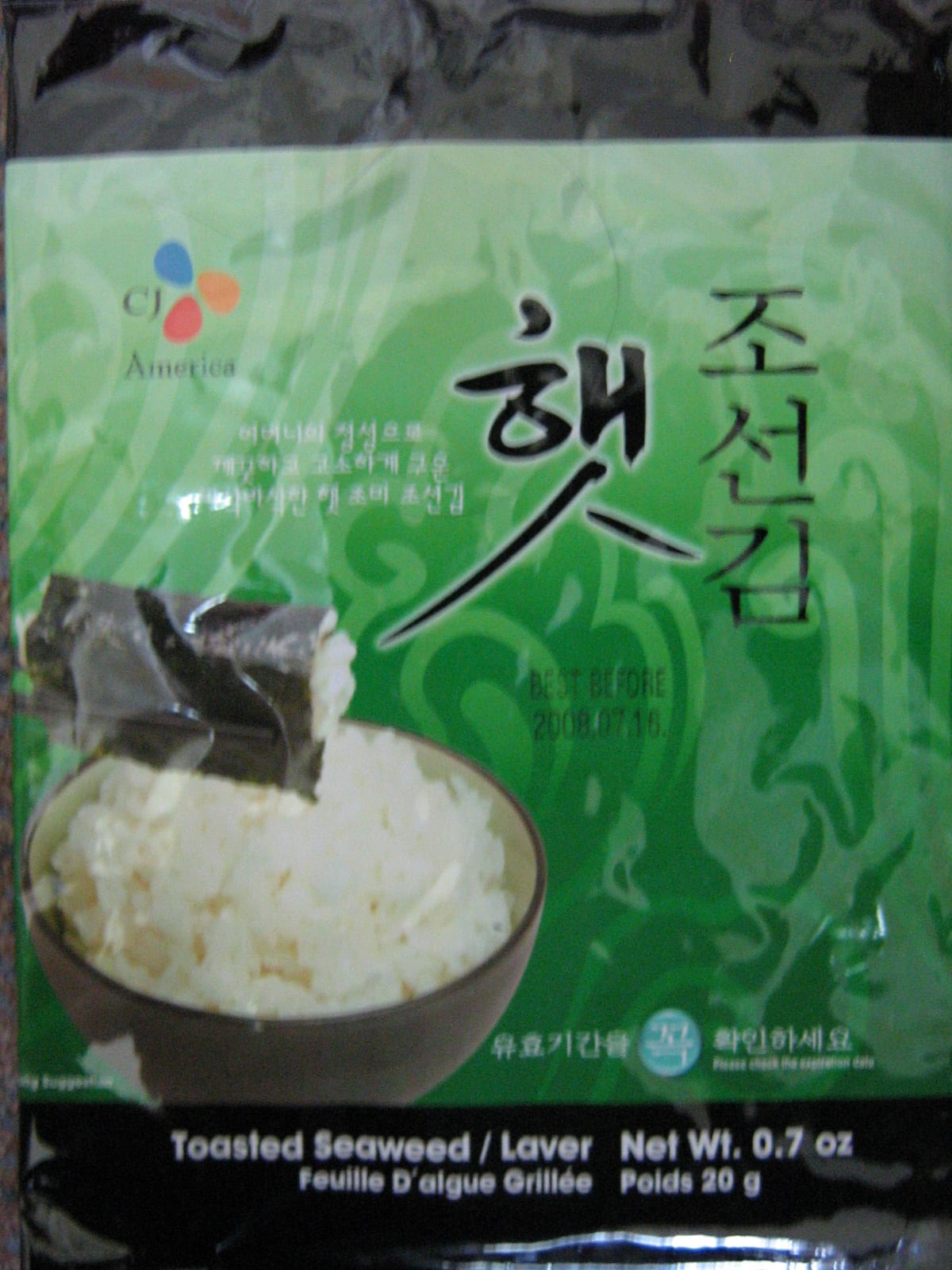
- 도시락김 (dosirak-gim) — the small lunchbox packs, usually 8 to 12 mini-sheets in a pack, sold in bundles. This is the format that became a global export and the one most visitors mean by "seaweed snack."
- 김자반 (gim-jaban) — crumbled seasoned gim, sold in a jar or bag, meant to be sprinkled over rice rather than eaten in sheets. Underrated, and the most practical thing to bring home.
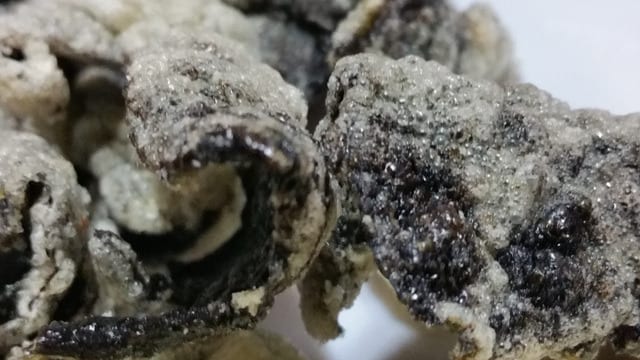
- 김부각 (gim-bugak) — gim coated in rice paste and fried. A different product entirely: crisp, thick, snack-like, and increasingly sold as a premium item.
What Happened to the Price, and Why
The 2024 squeeze is worth understanding because it explains why gim suddenly costs what it costs.
The raw material moved first. 물김 (mul-gim, wet seaweed straight from the water) went from about ₩980 per kg to ₩2,362 at landing — a 141% rise. Dried gim followed: a 속 of 100 sheets went from under ₩5,000 wholesale in 2022 to over ₩10,000, and by October 2024 individual sheets were being quoted at ₩135 each. National stocks fell to 49 million 속, 25% below the previous year.
Three things caused it at once:
- Exports drained domestic supply. The same demand that made gim a billion-dollar export took product off Korean shelves.
- Japan's crop failed. Rising sea temperatures hit the Japanese harvest, and buyers came to Korea instead.
- Stocks were already thin, so there was no cushion.
Korean consumers noticed because gimbap got more expensive, which is how a seaweed price becomes a national news story.
Where it stands now: two consecutive good 물김 harvests have left dried and seasoned gim prices flat through 2026. The government has also moved to stop it happening again — a dried-gim national stockpile is being built, with storage for 56 million 속 by 2028, about 30% of annual output, and a target of raising production from roughly 150 million 속 a year to over 180 million by 2030, against a projected 2030 demand of 210 million.
Korea Is Writing the World Standard
This is the part that will matter in five years and almost nobody outside the industry knows.
Gim has never had an international standard, which means every importing country applies its own rules — a non-tariff barrier by accident. Korea proposed a CODEX world standard for gim products, it was approved as new work at the 48th Codex Alimentarius Commission session in Rome, and the draft cleared mid-stage (step 5) review at the 49th session in Geneva in July 2026.
The draft covers what you would expect a standard to cover, and reading it tells you what actually varies between products:
- Product types: 마른김, 구운김, 조미김
- Permitted mixing ratios for other seaweeds — 파래 (green laver), 감태, 매생이
- Quality thresholds including moisture and acid value
- Food additives, packaging and labelling
If it is finally adopted, import rules standardise and the export ceiling rises; the stated ambition is $1.8 billion in exports by 2030. Practically, for a shopper, the interesting line is the second one: a bag labelled gim may legally contain other seaweeds, and the standard is being written partly to define how much.
What to Actually Buy
First purchase: a bundle of 도시락김. Small packs, low commitment, and the format Koreans eat most casually. If you like it, everything else follows.
Best value to carry home: 김자반. It is crumbled, so it does not shatter in luggage, it keeps far better than sheets once opened, and one jar seasons a lot of rice.
Best gift: a proper 재래김 or premium gift box. Korean gim gift sets are a real category — a 5-pack of 지도표 성경김 재래 전장김 (37g each) runs around ₩11,500 — and they read as a considered present rather than a snack.
Skip unless you cook: 김밥김 and 마른김. They are ingredients. Buying them as snacks is the most common visitor mistake, and the reason someone ends up chewing a tough, flavourless sheet and concluding they do not like gim.
Why It Works With Rice
Gim is salty, oily and crisp. Korean short-grain rice is bland, warm and soft. The pairing works on straightforward contrast, which is why the standard Korean move is to tear a seasoned sheet, lay it over a spoonful of rice, and eat it in one bite.
That also explains why 조미김 is the format for eating and 구운김 is the format for meals. Seasoned gim already brings the salt and oil; plain roasted gim lets you add your own, which matters if you are also eating stew or a salty side dish.
The lunchbox logic is the same one behind Korean dosirak culture: a small salty thing that makes a large bland thing worth eating.
Storage: The Part Everyone Gets Wrong
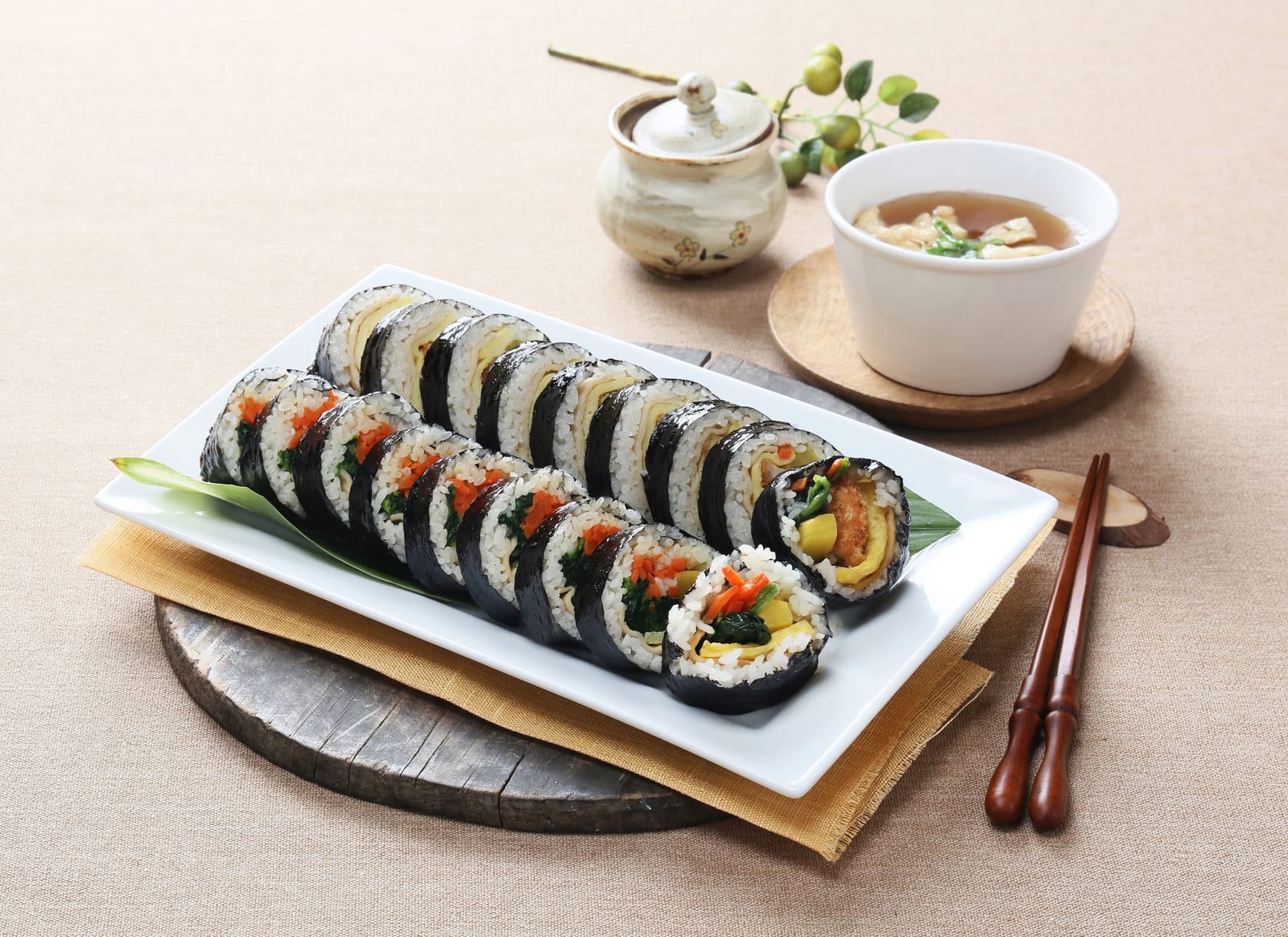
Gim's enemy is humidity, not time. A sheet that has gone soft has not spoiled; it has absorbed moisture, and it will taste like paper.
- Reseal immediately. Once air is in the bag, the clock starts.
- Keep the silica sachet in the bag. It is doing the actual work.
- Freezer is fine for large quantities and does not damage texture, because gim contains almost no water to crystallise.
- Do not refrigerate an opened pack loosely — a fridge is a humid place, and gim will pick up both moisture and other smells.
- Soft gim is recoverable. A few seconds in a dry pan brings the crispness back.
The Honest Part
- Gim is salty, and 조미김 is salty by design. A single lunchbox pack is small, but a bundle eaten in an evening is a meaningful amount of sodium.
- A bag labelled gim may contain other seaweeds. That is exactly why the CODEX draft is defining permitted ratios of 파래, 감태 and 매생이.
- Cheap bulk bundles are usually cheap for a reason — thinner sheets, more filler, more breakage. The price gap between a bulk bundle and a 재래김 gift box is not only packaging.
- Prices are stable now, not permanently low. The 2024 spike happened because a warming ocean cut Japan's harvest. That variable has not gone away.
- Miyeok is not gim. If you came looking for the birthday soup, that is a different seaweed and a different aisle.
For the wider pantry, use the Korean pantry starter kit, and for the convenience-store version of the same habit, the Korean convenience store breakfast guide.
Sources Checked
- Seoul Shinmun on gim production passing ₩1 trillion for the ₩632.4 billion to ₩1.2037 trillion jump (+90.3%), the $997 million 2024 export figure (+25.9%), and Korea's fishery production value passing ₩10 trillion for the first time since 1970.
- Asia Economy on the export record for the $1 billion forecast.
- Kyunghyang Shinmun and Seoul Shinmun on the 2024 price surge for 물김 landing prices rising from ₩980 to ₩2,362 per kg, the 속 wholesale price moving from under ₩5,000 to over ₩10,000, the ₩135 per-sheet quote, and stocks down 25% to 49 million 속.
- MBC climate report on the seaweed price shock for the Japanese harvest failure and sea-temperature cause.
- Etoday on the CODEX draft clearing mid-stage review and Herald Business for the July 2026 Geneva session, the draft's contents including permitted 파래·감태·매생이 ratios, and the 2030 export ambition.
- Etoday on the stockpile and supply plan for the 56 million 속 storage target by 2028, current output near 150 million 속, and the 180 million by 2030 goal.
FAQ
Q: Why do Koreans call gim the black semiconductor?
A: Because it became Korea's largest seafood export and behaves like a strategic commodity. 2024 production value was ₩1.2037 trillion, up 90.3% in a year, with exports of $997 million — the biggest ever for a Korean seafood product.
Q: What is the difference between 조미김 and 구운김?
A: 구운김 is roasted and unseasoned; 조미김 is roasted and seasoned with oil and salt. Seasoned gim is for eating with rice or snacking. Plain roasted gim is for meals where you control the salt — and it is the one to use if you are cooking.
Q: Which Korean seaweed should I buy as a first try?
A: 도시락김, the small lunchbox packs. Low commitment, pre-cut, and the format Koreans eat most casually. Avoid 김밥김 and 마른김 as snacks — those are cooking ingredients and taste tough and flat on their own.
Q: Why did Korean seaweed get so expensive?
A: In 2024 the wet-seaweed landing price rose 141%, dried gim wholesale doubled, and stocks fell 25%. Three causes at once: export demand pulling supply out of Korea, a failed Japanese harvest driven by rising sea temperatures, and thin existing stocks. Prices have been flat in 2026 after two good harvests.
Q: What is the best Korean seaweed to bring home?
A: 김자반, the crumbled seasoned kind. It does not shatter in luggage, keeps better than sheets after opening, and one jar seasons a lot of rice. For a gift, a 재래김 box — a 5-pack of 37g 지도표 성경김 runs around ₩11,500.
Q: How do I stop gim going soft?
A: Reseal immediately, keep the silica sachet in the bag, and freeze large quantities rather than refrigerating opened ones — a fridge is humid. Soft gim is not spoiled; a few seconds in a dry pan restores the crispness.
Q: Is gim the same as the seaweed in birthday soup?
A: No. That is 미역 (miyeok), a different seaweed sold in a different form. See EpicKor's miyeokguk guide.
The Short Version
Buy 도시락김 first, 김자반 to carry home, 재래김 as a gift, and leave 김밥김 and 마른김 alone unless you are cooking.
And if the price feels high for a snack, that is because it is not only a snack any more. Somewhere between 2023 and now, the thing in the folded bag became a billion-dollar export with a world standard being drafted for it.
You Might Also Like
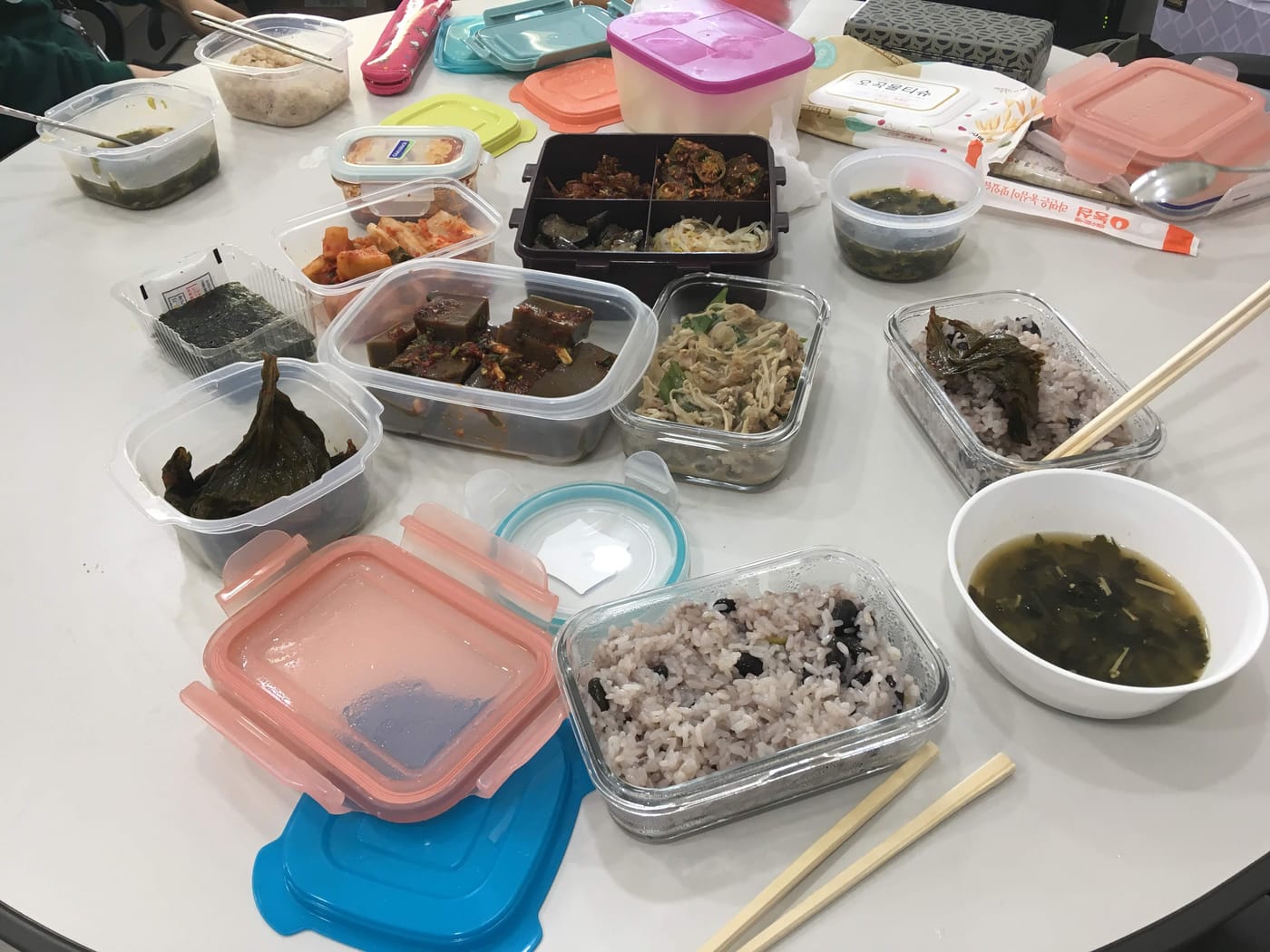
Korean Dosirak: The Lunchbox a Teacher Could Confiscate, and What Replaced It
In 1970s Korea a teacher opened your dosirak and could stop you eating it if the rice wasn't at least 30% barley. School meals ended the home lunchbox in 2003. What survives is a ₩4,000-6,000 convenience-store box that gave Korean two slang words.
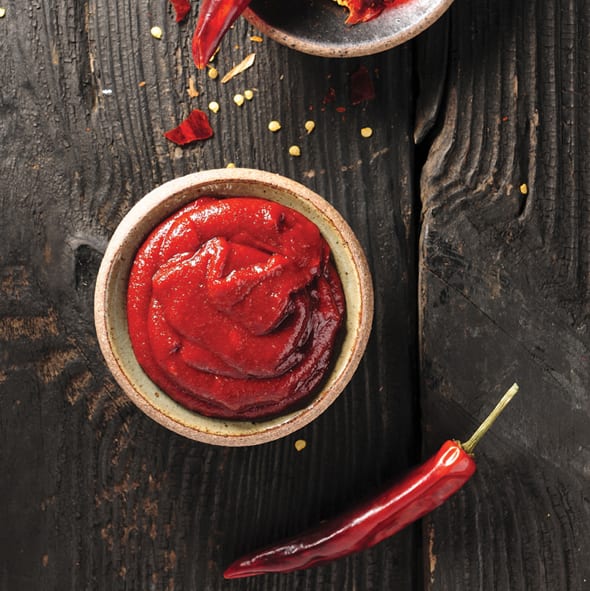
Korean Pantry Starter Kit: Gochujang Has a Printed Heat Number, and Nobody Tells You
Korea standardised gochujang spiciness in 2010 and prints the grade on the tub, so you can buy heat by number. Plus which of Korea's three soy sauces you actually need, and why jang prices jumped 16.8% this year.
Postick: The Korean Snack That Used to Come With a Ketchup Packet
Postick (포스틱) has been on Korean shelves since 1980, it is only 23% potato, and it shipped with a ketchup sachet until the sachet got too expensive. What it costs now, and the ramyun-powder trick Koreans use on it.