Korean Wellness Snacks: Olive Young's Own Brand Sold 30 Million Bags, and One Bag Is 240 Calories
Guides to Korean wellness snacks describe categories — protein chips, beauty teas, konjac jellies — and almost never name a product. That is a problem, because in an Olive Young aisle you are not choosing a category. You are choosing between bags.
So here is the specific answer. The K-wellness snack shelf at Olive Young is largely one brand: Delight Project (딜라이트 프로젝트), Olive Young's own health-snack label, relaunched in January 2021. It passed 30 million bags sold within three years, and its foreign sales grew roughly 30-fold a year over that period, driven by two products going viral as Korea souvenirs: the bagel chips (베이글칩) and the honey yakgwa (벌꿀약과).
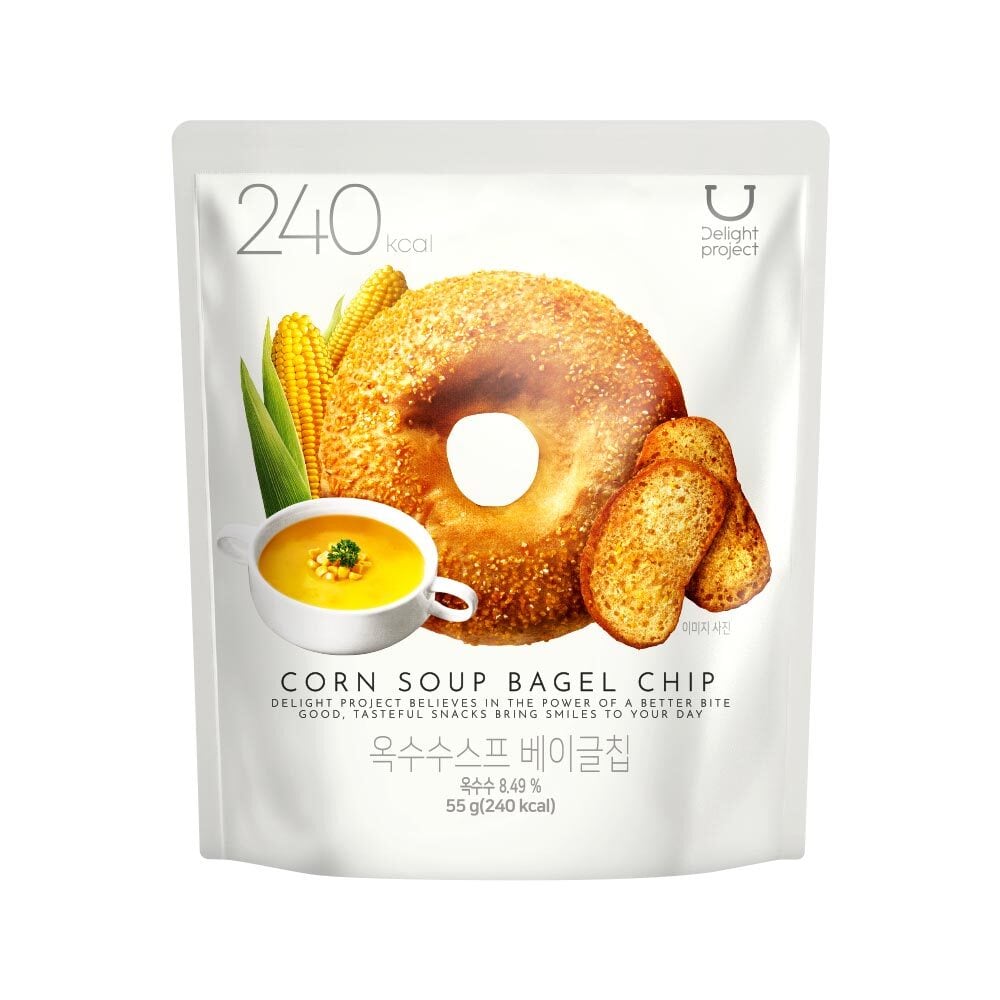
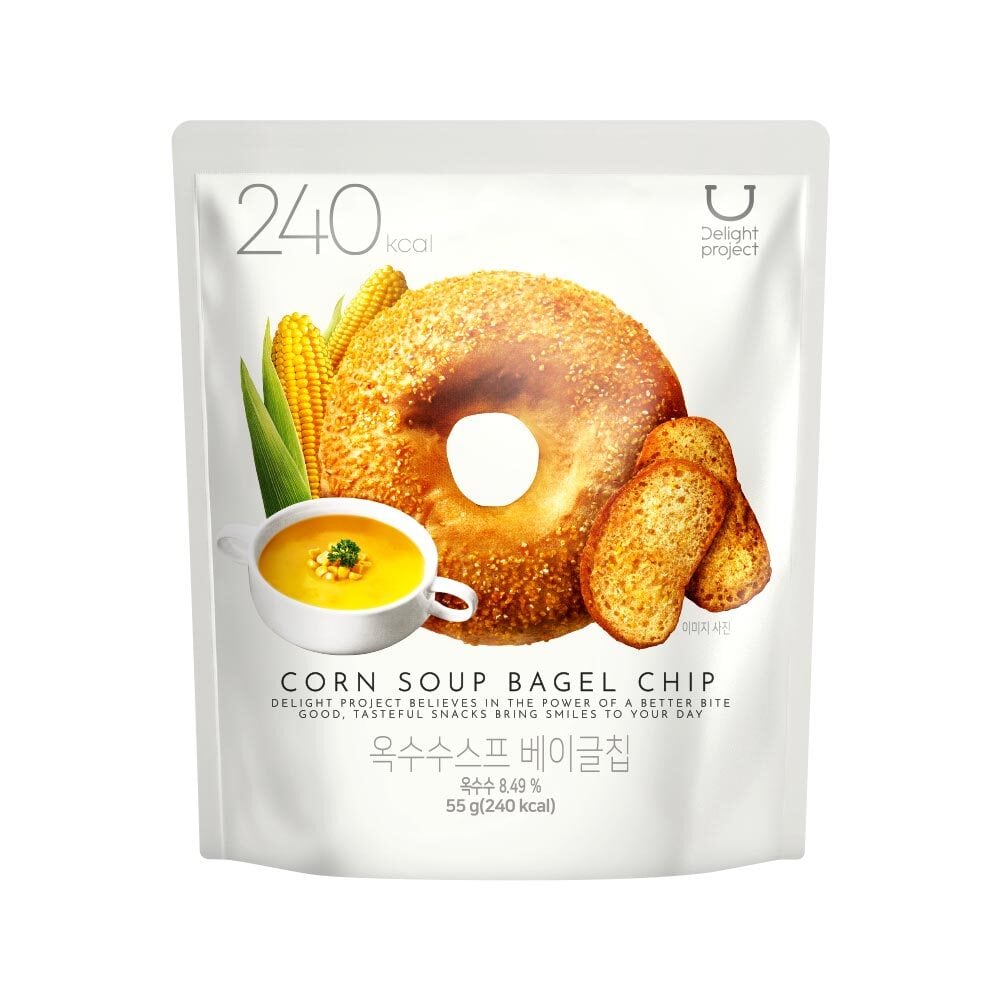
And here is the number that should shape how you shop it: a 55g bag of Delight Project bagel chips is 240 kcal. It is baked rather than fried, and the calorie count is printed in large type on the front — but 240 kcal is not diet food. It is a snack with a good label.
This guide gives you names, August 2026 prices, which pack size is actually worth buying, and what "zero" legally means in Korea.
Korean sweet potato snack bars — compare on AmazonAffiliate link. As an Amazon Associate, EpicKor earns from qualifying purchases at no extra cost to you.
What to Buy, and What It Costs
Prices are Olive Young, checked 8 August 2026. Korean retail promotions rotate monthly, so treat the discount column as the shape of the market rather than a fixed number.
| Product | Korean | Size | List / Aug 2026 | Per 10g |
|---|---|---|---|---|
| Bagel chips, single bag | 베이글칩 | 50–60g | ₩2,700 / ₩2,430 | ~₩405–440 |
| Bagel chips, large bag | 베이글칩 대용량 | 125g | ₩5,600 / ₩3,300 | ~₩264 |
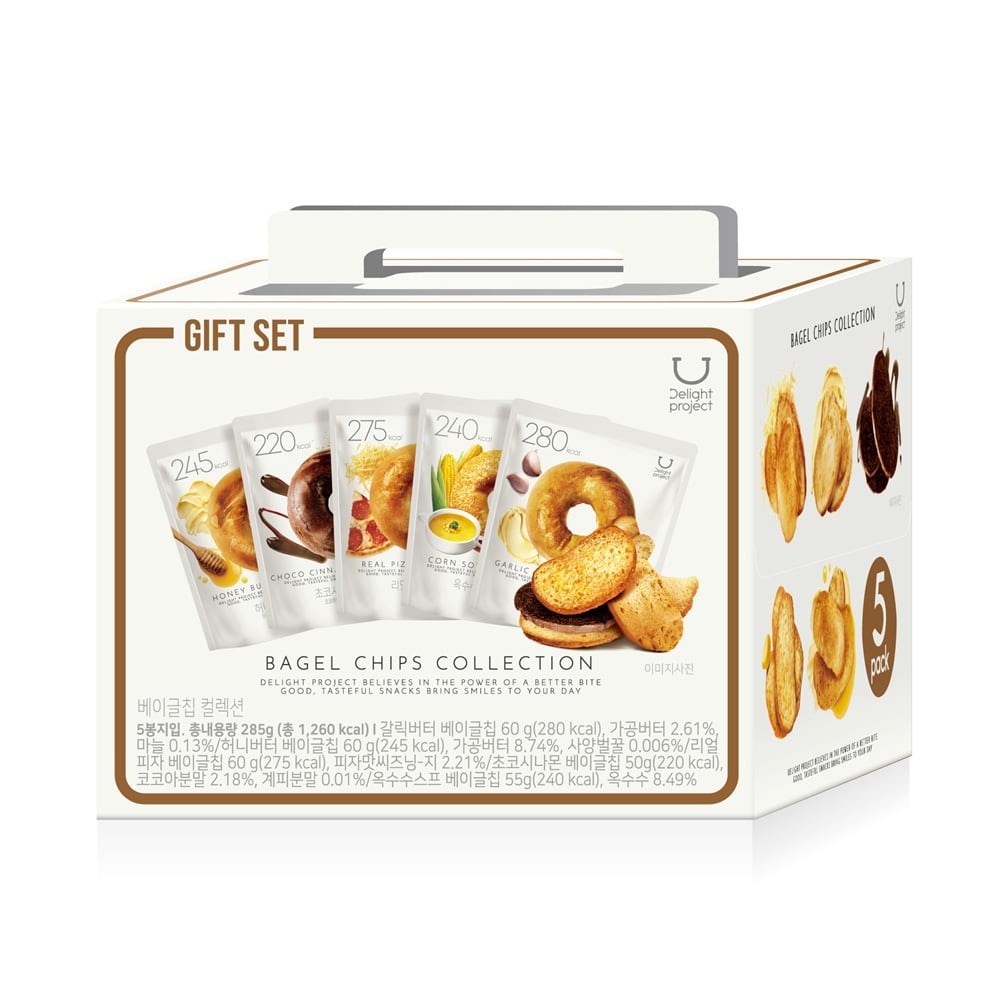
| Bagel chips, 5-pack gift set | 베이글칩 컬렉션 | 285g total | ₩13,000 / ₩7,900 | ~₩277 |
| Konjac water jelly, 6 flavours | 곤약워터젤리 | 130g pouch | Rotates with promotions | 12–16 kcal per pouch |
The single bag is the worst value by a wide margin — roughly 60% more per gram than the large bag. Buy the small one once to find a flavour you like, then buy the 125g bag or the gift set. Those two are nearly identical per gram, so choose by whether you want variety and a box, or one flavour and less packaging.
If you are buying for other people, the gift set is the honest pick: it is not a markup, it is the same value as bulk with a handle on it.
Read the Calorie Panel, Not the Brand
This is where the "wellness" framing needs a check, and Delight Project makes it easy because it prints the number on the front.
The five gift-set bags run 220 to 280 kcal each, for 50–60g of snack. That is between 4.4 and 4.7 kcal per gram — ordinary snack territory. Baking instead of frying changes the fat profile and the mouthfeel; it does not make a bag of chips into a light choice.
That is not a criticism of the product. It is genuinely tasty and the labelling is more honest than most snack brands anywhere. But the useful reading is: this is a better-made snack, not a substitute for eating less. If your goal is a low-calorie item, the konjac jellies are the category that actually delivers — a 130g pouch runs about 12–16 kcal, because it is mostly water and konjac fibre.
Pick by what you want the snack to do:
- Satisfaction, good ingredients, will actually finish the bag → bagel chips, 약과, dried sweet potato or mango
- Volume with almost no calories → konjac jelly
- Protein after walking 20,000 steps → protein bars and shakes, not chips
What "Zero" Legally Means in Korea
Korea's zero-drink shelf is enormous and the words on the label are regulated, so they are worth knowing.
Under Ministry of Food and Drug Safety labelling rules:
- 무당 / 무설탕 / "zero sugar" — under 0.5g of sugars per 100g or 100ml. Effectively none.
- 저당 (low sugar) — under 5g per 100g, or under 2.5g per 100ml. A much looser bar, and often mistaken for the first.
- 무가당 (no added sugar) — no sugars added, and no functional sugar substitutes like honey, syrups or oligosaccharide. Naturally occurring sugars can still be present.
Two things follow. First, 저당 is not 제로 — a "low sugar" drink can legally carry ten times the sugar of a zero one. Second, zero sugar is not zero calorie, and it says nothing about caffeine. A zero-sugar energy drink is still an energy drink.
The Rest of the Shelf
Bagel chips get the attention, but the brand's range is wider and some of it travels better.
말랭이 (dried fruit and sweet potato) — 망고 말랭이 and 고구마 말랭이 are chewy dried strips rather than crisps. These are the easiest thing in the aisle to bring home: light, sealed, no leak risk, and the sweet potato version tastes like Korean roasted sweet potato rather than generic dried fruit.
느타리 버섯칩 (oyster mushroom chips) — the one that surprises people. It is a real mushroom, sliced and crisped, and the texture is closer to a crisp than a snack made from vegetables usually manages. Buy one bag before committing; it is the most polarising item after the jelly.
벌꿀약과 (honey yakgwa) — co-developed with a designated food master (식품 명인), which is why it turns up as a gift more than as a snack. Yakgwa is a deep-fried honey pastry with several hundred years of history behind it, and this is the version most visitors meet first. EpicKor's yakgwa guide covers why it was banned twice and why it now sells out.
명인부각 (master-made bugak) — also a food-master collaboration. Bugak is vegetable or seaweed coated in rice paste and fried; it is the least internationally familiar item here and the one most worth trying in Korea rather than buying to carry.
곤약워터젤리 (konjac water jelly) — six flavours: plum, apple, green grape, orange, peach, pineapple. This is the low-calorie item of the range at roughly 12–16 kcal per 130g pouch, and the texture is the thing to test first.
Where to Find It
You do not need a special store, but the stores are not interchangeable.
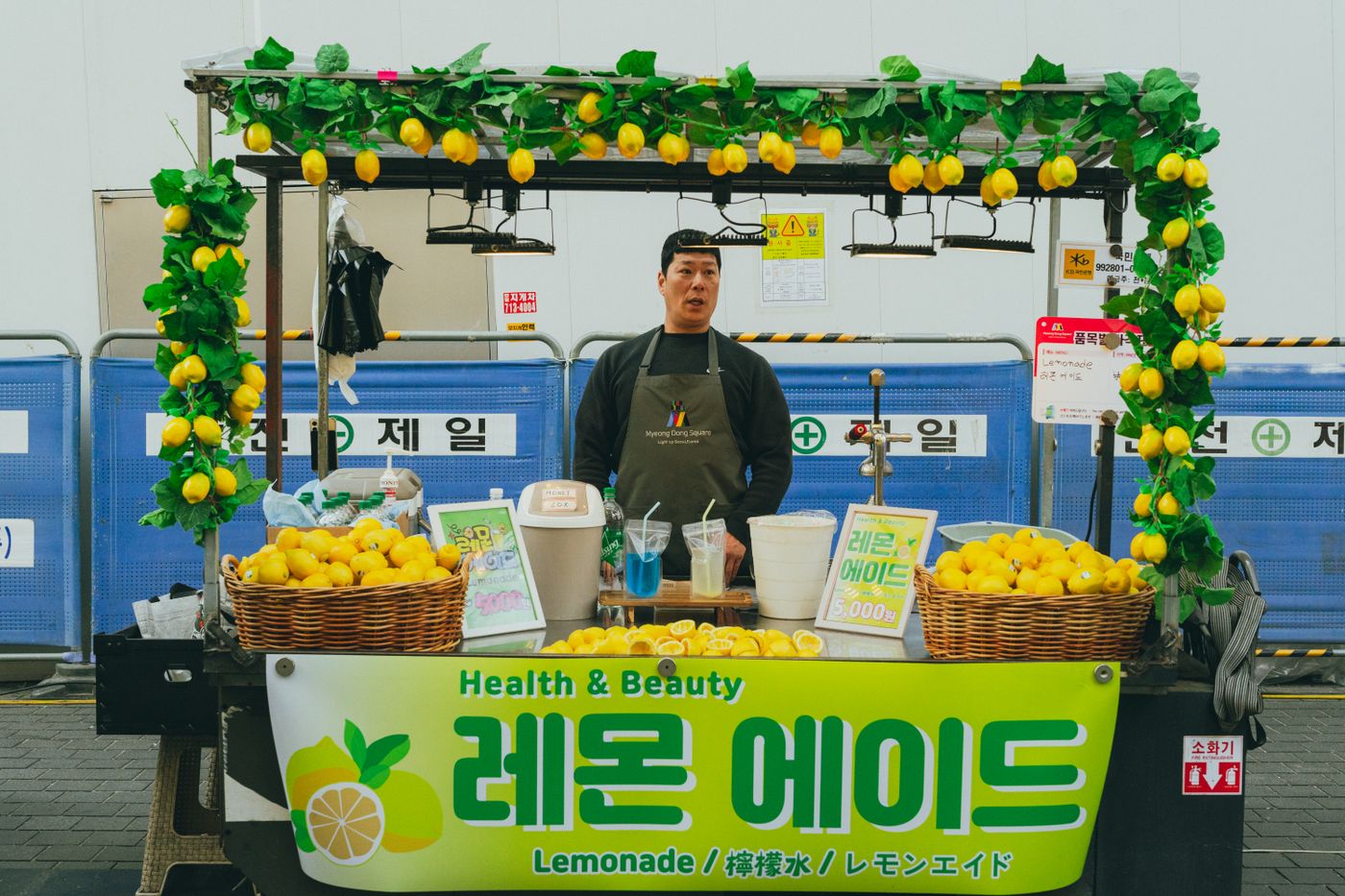
Olive Young is the Delight Project home and the only place with the full range in one aisle, including seasonal and collaboration editions. Branches in tourist areas (Myeongdong, Hongdae, Gangnam) stock the gift boxes deliberately; a neighbourhood branch may only carry singles.
Convenience stores — CU, GS25, 7-Eleven, Emart24 — are better for cold zero-sugar drinks, single jellies and one-off bars. Ranges rotate fast and vary by branch, so do not plan around a specific item.
Supermarkets and department-store food halls are where the tea, bulk boxes and giftable sets live. If you are worried about liquids in luggage, buy powders, tea bags, bars and sealed dry snacks instead of bottles.
Daiso is not a food stop but solves the kit: pouches, zip bags, tumblers, small containers. See EpicKor's Daiso Korea must-buy guide.
For broader food context, start with EpicKor's Korean grocery store tourism guide, Korean convenience store breakfast guide, and Korean tea and grain drinks guide. For the beauty-shopping side, compare with the Olive Young Korea shopping guide.
Why the Category Exists: 헬시플레저
The Korean word for this is 헬시플레저 (healthy pleasure) — the idea that a lighter choice should still be enjoyable rather than a punishment. It is why the packaging is cheerful, the flavours are things like corn soup and choco cinnamon, and the calorie count is a design feature rather than fine print.
It also explains the retail logic. Olive Young trained a generation of shoppers to read ingredient lists, compare formats and buy small routine items — for skincare. Delight Project is that same shopping behaviour pointed at snacks. The snack aisle learned from the skincare aisle, in the same shop.
That is why the category feels distinctly Korean even when the products themselves are not: baked bagel chips and konjac jelly exist elsewhere. The retail habit around them does not.
Reading a Label Without Korean
Start with the front, then the panel on the back.
- Calories are usually the largest number and often on the front. Delight Project prints them deliberately.
- Protein is frequently printed in English on products selling themselves on protein. If the number is small, you are buying branding.
- Sugars (당류) sit under carbohydrates in the panel.
- Caffeine (카페인) matters on anything tea, coffee, energy or "focus" flavoured.
- Allergens are the hardest to read quickly. If it matters medically, translate the panel rather than trusting the English front copy.
Korean wellness marketing is marketing, not dietary guidance. For ingredient basics, pair this with EpicKor's Korean ingredient label guide.
Mistakes Worth Avoiding
- Buying the single bag repeatedly. It is the most expensive way to eat this brand.
- Treating 저당 as 제로. They are different legal categories with a tenfold gap.
- Assuming zero sugar means low calorie or no caffeine. It means neither.
- Buying a full box before tasting. Konjac jelly texture in particular is polarising — buy one pouch first.
- Buying liquids to carry home. Dry, sealed items travel; bottles leak and hit liquid rules.
- Expecting the same stock next trip. Flavours rotate hard. Photograph the pack if you want to find it again — the Korean name on the front is what you will search.
Sources Checked
- CJ Olive Young corporate page for Delight Project and Newdaily on the brand passing 30 million bags for the January 2021 relaunch, cumulative sales, and the hit product list.
- CJ newsroom on foreign sales growth for the roughly 30-fold annual increase and the bagel chip / honey yakgwa souvenir effect.
- Olive Young product listings for August 2026 prices on the single bag, 125g bag and 5-pack gift set. Pack weights and calorie counts are read from the printed packaging in the official product images.
- The Fact on Korean sugar-labelling categories for the 0.5g / 5g / 2.5g thresholds separating 무설탕, 저당 and 무가당.
- Korea Times on the zero-sugar category and Harper's Bazaar K-wellness shopping report for market context.
FAQ
Q: What are Korean wellness snacks actually called?
A: At Olive Young the aisle is largely one own-brand: 딜라이트 프로젝트 (Delight Project), relaunched January 2021. Its best-known items are 베이글칩 (bagel chips), 벌꿀약과 (honey yakgwa), dried mango and sweet potato, oyster mushroom chips, and 곤약워터젤리 (konjac water jelly).
Q: How much do Delight Project bagel chips cost?
A: As of 8 August 2026, a single 50–60g bag lists at ₩2,700 and was on offer at ₩2,430; the 125g bag lists at ₩5,600 and was ₩3,300; the 5-pack, 285g gift set lists at ₩13,000 and was ₩7,900. The large bag is the best value per gram.
Q: Are Korean wellness snacks low calorie?
A: Mostly no. A 55g bag of bagel chips is 240 kcal, and the five gift-set flavours run 220–280 kcal each — normal snack density. The genuinely low-calorie item in this aisle is konjac jelly, around 12–16 kcal per 130g pouch.
Q: What is the difference between 제로 and 저당 in Korea?
A: 무설탕 or zero sugar means under 0.5g of sugars per 100g or 100ml. 저당 (low sugar) means under 5g per 100g or 2.5g per 100ml — up to ten times more. 무가당 means no sugars were added, which is a different claim again.
Q: Where do I buy these in Seoul?
A: Olive Young for the full Delight Project range and gift boxes, convenience stores for cold zero-sugar drinks and single jellies, supermarkets and department-store food halls for tea and bulk sets. Tourist-area Olive Young branches deliberately stock the gift boxes.
Q: Can I bring them home?
A: Dry sealed snacks travel easily and are the reason bagel chips and yakgwa became souvenirs. Check your destination's customs rules for anything with meat, dairy or supplement ingredients, and avoid packing bottles.
Q: Is Delight Project sold outside Korea?
A: Not through normal retail. If you want the same formats at home, sweet potato bars and honey yakgwa are the closest widely available equivalents.
The Short Version
The aisle has a name, and the name is Delight Project. Buy the 125g bag rather than the single, buy the gift set if it is for someone else, and read the number on the front — it is printed large because the brand is being honest, not because the snack is light.
If you want something that is genuinely low-calorie rather than well-made, walk past the chips and pick up the konjac jelly.
You Might Also Like
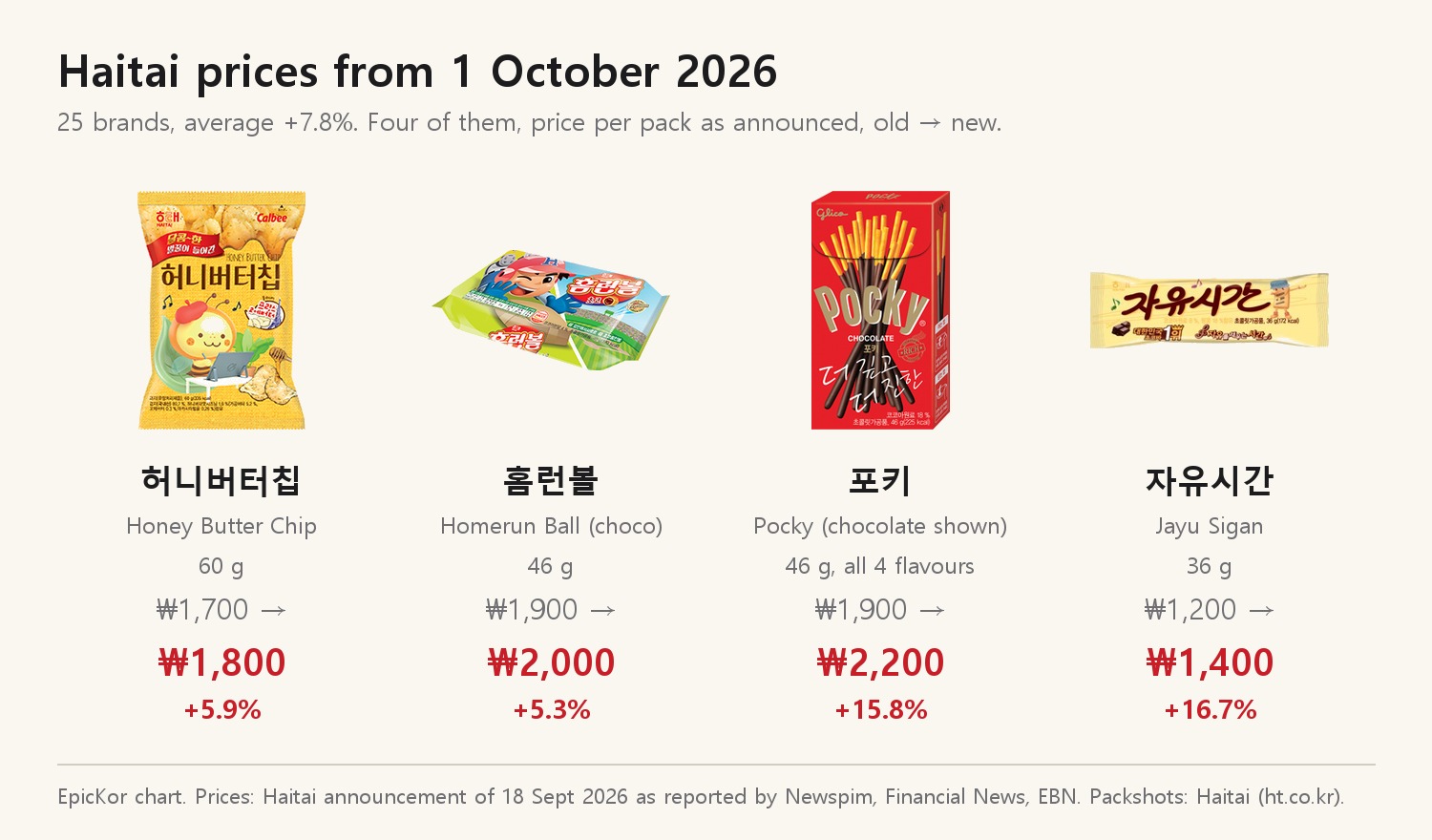
Korean Snack Prices From 1 October 2026: Haitai Raises 25 Brands by 7.8%, Pocky Jumps 15.8%, and 14 Packs Shrink Instead
Pocky goes from ₩1,900 to ₩2,200 in Korea on 1 October 2026, and Honey Butter Chip is on both of Haitai's lists: the 60 g bag rises ₩100 while other packs shrink instead. Every new price, the shrink list, and Ottogi's 20% rice rise.
Postick: The Korean Snack That Used to Come With a Ketchup Packet
Postick (포스틱) has been on Korean shelves since 1980, it is only 23% potato, and it shipped with a ketchup sachet until the sachet got too expensive. What it costs now, and the ramyun-powder trick Koreans use on it.
Hetbahn: What Korea's Instant Rice Is Made Of, and How to Heat It Without a Microwave
햇반 is 99.9% Korean rice and water plus 0.1% rice bran extract, sealed in a room cleaner than a hospital ward. The lid prints three cooking times and one of them needs no microwave at all. Prices, varieties, and the mistake almost everyone makes with the film.