Korean Ramyeon, Bag vs Cup: The Bag Has 60% More Noodles, and Korea Lost Its No.1 Ranking
The bag-versus-cup question has a physical answer, and it is printed on the packaging.
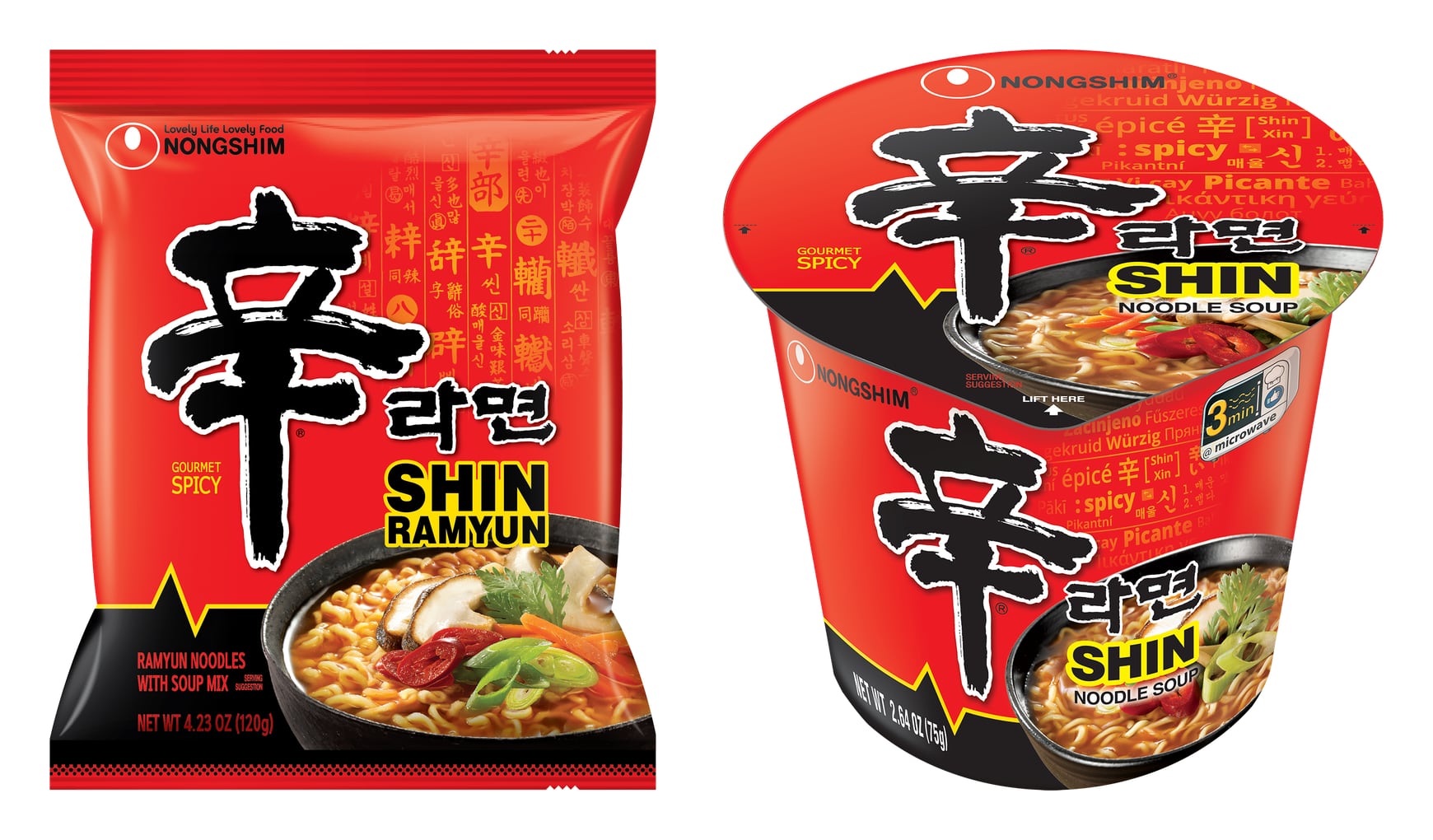
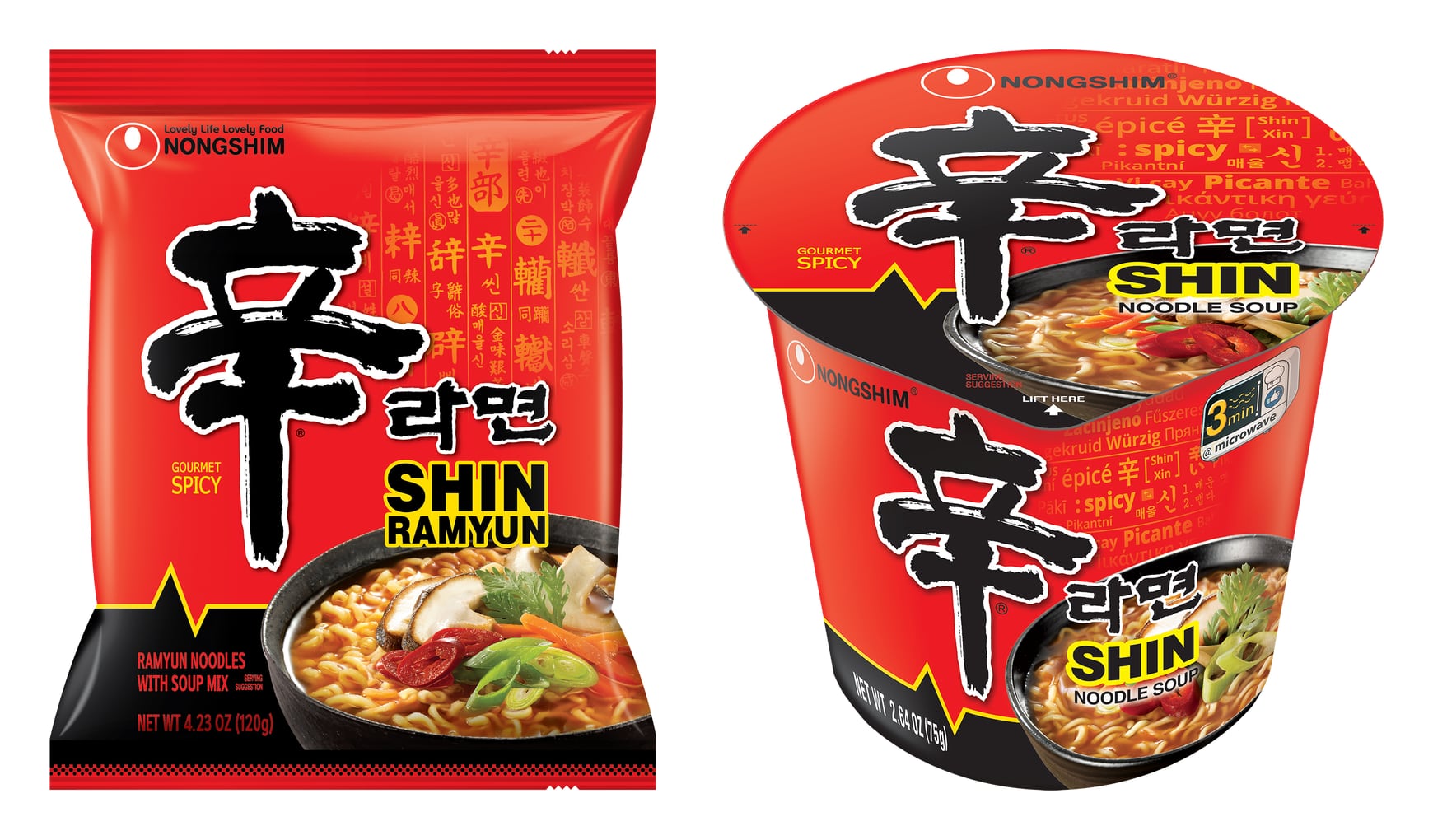
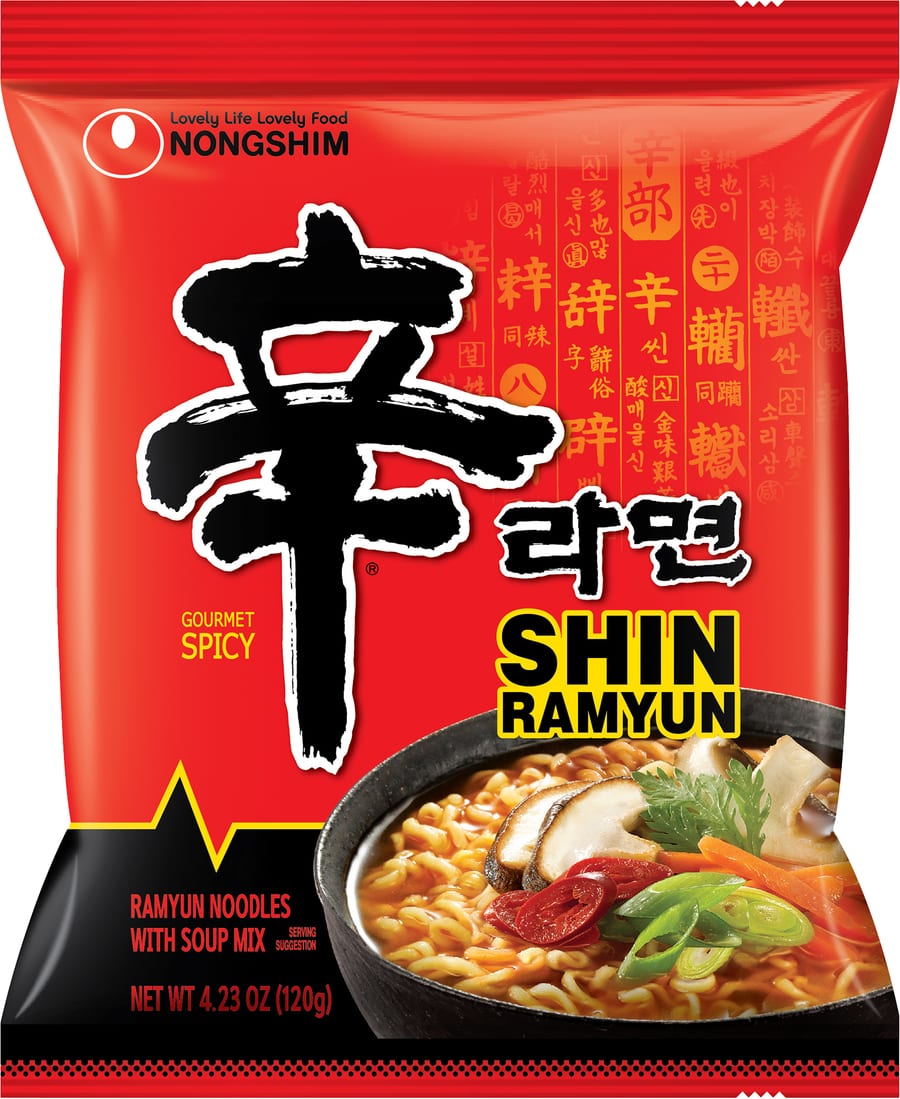
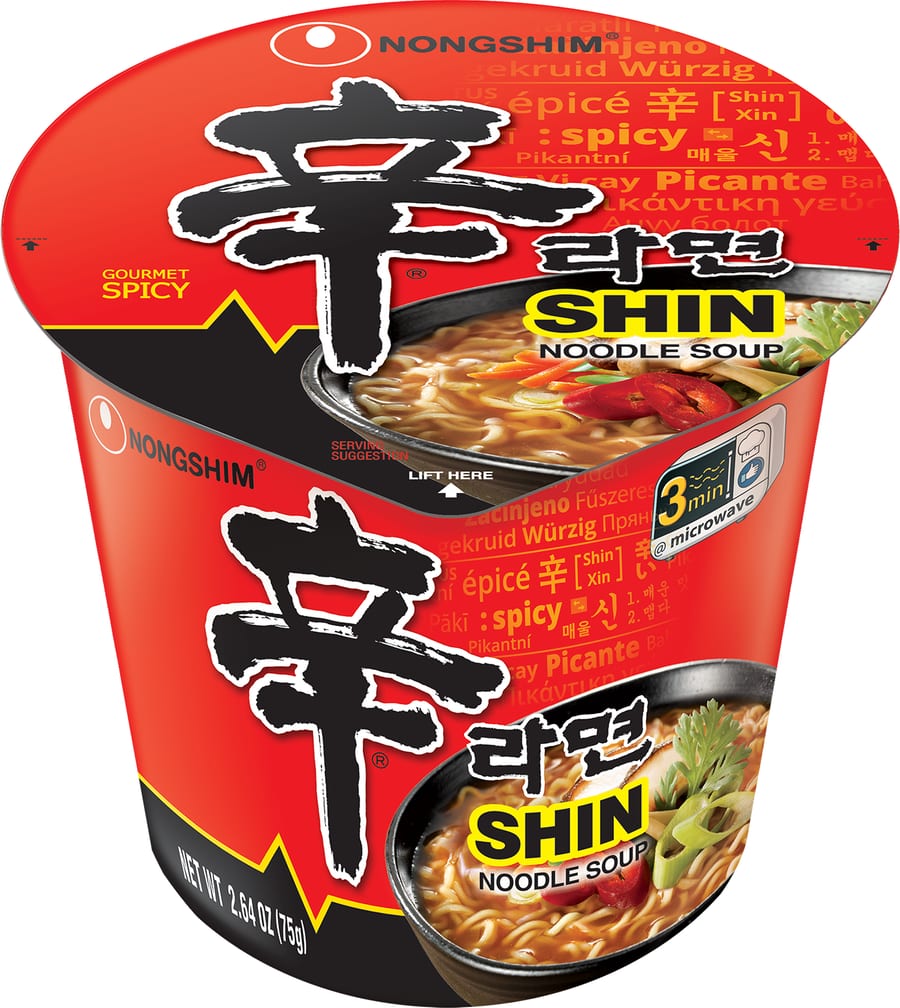
The same Shin Ramyun (신라면) is 120g in the bag and 75g in the cup. Same brand, same flavour system — 60% more noodles and a full-strength soup base in the bag, cooked in water you measured, in a pot that holds heat. The cup is not a smaller portion of the same thing; it is a different product engineered to cook in three minutes with whatever water a convenience-store dispenser gives you.
Once you see that, the whole decision resolves: bag when you control the kitchen, cup when you control nothing. Everything else in this guide is the interesting detail around that rule.
One correction to the thing everyone repeats, first. Koreans no longer eat the most instant noodles per person. By the latest count Koreans put away 79 packs a year each — about 4.1 billion servings nationally — and that is world No.2. Vietnam leads at 81, and has for three years running. Korea remains the country that exports the category's icons, which for a visitor is the more relevant fact anyway.
Shin Ramyun multipacks — compare on AmazonAffiliate link. As an Amazon Associate, EpicKor earns from qualifying purchases at no extra cost to you.
The Decision Map
| You are | Buy | Why |
|---|---|---|
| At home, have a pot | Bag | More noodles, stronger soup, water control. No contest. |
| In a convenience store at midnight | Cup | Hot-water dispenser and a window counter exist for exactly this. |
| At a Hangang park | Bag + the machine | The riverside cooker is built for bag ramyeon. This is the famous version. |
| In a hotel room | Cup | A kettle is enough. A bag needs a pot you do not have. |
| Taking ramyeon home as souvenirs | Bag multipacks | Cups are mostly air — terrible per suitcase litre. Bags stack flat. |
| Hiking or on an intercity bus break | Cup | Rest stops and trail shops sell hot water, not stoves. |
Why the Bag Actually Tastes Better
It is not nostalgia, and being precise about the reasons tells you how to cook it.
- Noodle mass. 120g versus 75g is a different meal. Cup noodles are also cut thinner so they can hydrate in still water — which is why they go soft faster.
- Soup concentration. The bag's powder is dosed for around 550ml of boiling, moving water. Cup soup is dosed to work at dispenser temperature, which caps how much depth it can carry.
- Heat. A pot on a burner keeps water at a rolling boil; a paper cup loses heat from the second you pour. That difference is texture: pot noodles stay springy (꼬들꼬들), cup noodles trend soft.
- Control. Using slightly less water than the packet says is the most common Korean adjustment. You cannot do that meaningfully in a cup.
If you want the bag result with cup convenience, that is exactly the machine the Hangang parks installed.
Recreate the pot version: As an Amazon Associate, EpicKor may earn from qualifying purchases. If bag ramyeon is your style, compare a Korean ramen cooking pot — the thin nickel-plated 양은냄비 boils fast, holds a rolling boil, and doubles as the serving bowl, which is the point.
Hangang Ramyeon: The ₩4,000 Version Worth Doing
The famous one. Convenience stores inside the Hangang parks — GS25 and 7-Eleven branches — sell bag ramyeon with a dedicated 즉석라면 조리기, an instant-ramyeon cooker combining an induction plate with a water dispenser. You pay for the ramyeon and a foil cooking bowl, carry it outside, and cook it yourself at the machine.
As of 2026 the going rate is about ₩4,000–4,800 depending on the store and toppings (egg, cheese, rice cake). Two machine quirks worth knowing:
- It dispenses about 400–450ml — slightly less water than the packet calls for — and runs roughly 3 minutes 30 seconds. The under-filling is deliberate, and it is why machine ramyeon comes out punchier than home ramyeon.
- The etiquette is self-service: cook, carry to a riverside table, bin the foil bowl after.
It is the best price-to-experience ratio in Seoul food: river, skyline, and a hot pot of noodles for under ₩5,000. Pair it with the Korean convenience store breakfast guide if you are building a whole cheap-eats day.
Reading the Shelf: Spice and Format
Korean ramyeon carries no standard printed heat scale (that grading exists for gochujang — see the Korean pantry guide), so the shelf skill is brand recognition:
- Mild lane: Ansungtangmyun (안성탕면), Jin Ramen Mild (진라면 순한맛), Sari Gomtang (사리곰탕).
- The reference point: Shin Ramyun (신라면) — genuinely spicy for a first-timer, ordinary for a regular.
- Above Shin: Yeul Ramen (열라면), Jin Jjambbong (진짬뽕) at the flavour end.
- The dare tier: Buldak (불닭볶음면) — which is a stir-fried sauce noodle, not a soup, and belongs to a different conversation.
Format matters as much as heat: soup ramyeon (국물라면) versus stir-fried sauce ramyeon (볶음면). A cup of Buldak still needs the hot water — you pour it off after the noodles hydrate, keeping only the sauce. Watching someone drain a Buldak cup into the convenience-store slop sink is a small Korean rite of passage.
For what happened to ramyeon pricing in 2026 — the premium tier, the ₩1,900 packet, the Samyang 1963 story — see EpicKor's Korean ramen went premium. This guide stays on the everyday shelf: as of August 2026 a standard bag runs about ₩1,000–1,200 at a convenience store (meaningfully less per pack in a mart multipack), and a cup runs about ₩1,400–1,700.
What to Add (Bag Version)
The Korean home canon, in order of how often it actually happens:
- An egg, in for the last 90 seconds. Stir for cloudy broth; do not stir for a poached island.
- Spring onion, always.
- A slice of processed cheese on top at the end — melts into the broth, rounds the heat. This is standard, not a hack.
- Rice, at the end. The last third of the broth plus a scoop of rice is a second course, not a leftover.
- Dumplings or rice cake when it needs to become dinner.
The one thing Koreans largely do not do: add vegetables until it becomes a virtuous soup. Ramyeon is not pretending to be anything.
Ramyeon Is Not Ramen, and the Other Two Formats
One distinction saves visitors real confusion: Korean 라면 means instant noodle culture. A Japanese-style ramen shop with house-made broth exists in Korea, but it is a different word in practice and a different price bracket. When a Korean says 라면, they mean the packet — including when a restaurant serves it.
Which leads to the two formats this guide has not covered:
- 분식집 라면 — snack-bar ramyeon, around ₩3,500–5,000. It is the same packet you can buy for ₩1,000, cooked competently in a 양은냄비 and served with kimchi. You are paying for the table, the banchan, and the option to add egg, cheese, or 떡. This offends some visitors until they realise the markup logic is identical to a cafe charging for espresso.
- PC방 라면 — ordered from your gaming seat, delivered cooked. The quality target is speed, not texture. It is part of the PC bang experience rather than a food decision.
Both prove the same point as the Hangang machine: in Korea the packet is an ingredient, and what you are choosing between is cooking contexts.
Cup Etiquette, Briefly
The convenience-store window counter is a legitimate dining room and nobody will look at you twice. The rules are the ones you would guess: bin your cup, wipe your spot, and do not hold four seats with one cup at 8am on a weekday. Hot water is free with purchase; so is the microwave. A cup at the counter with a triangle gimbap (삼각김밥) on the side is a complete Korean meal with a name — 편의점 한 끼 — not a sad compromise.
The Souvenir Math
Bags win, and it is not close. A cup is mostly protected air; a suitcase of cups carries a handful of meals. Bag multipacks stack flat, survive baggage handling, and the 4- and 5-packs are shrink-wrapped for exactly this.
Check your destination's meat-ingredient import rules before flying — some soup powders are meat-derived, and countries like Australia genuinely check. The Korean pantry starter kit covers what else earns luggage space.
Sources Checked
- Asia Economy on WINA per-capita rankings and Nongmin Shinmun for Vietnam at 81 servings per person (three straight years at No.1), Korea at 79 with about 4.1 billion servings nationally, and the trailing order (Thailand, Nepal, Indonesia).
- Korean reference material on 한강라면 for the machine's origin in Hangang park convenience stores, the ₩4,000–4,800 2026 price range, and the 400–450ml / ~3:30 dispensing behaviour.
- Nongshim official product pages for the 120g bag and 75g cup weights, read from the official pack photography used above.
FAQ
Q: Why does bag ramyeon taste better than cup ramyeon?
A: It is a different product, not a bigger one: 120g of thicker noodles versus 75g of thinner ones, soup dosed for boiling water versus dispenser water, and a pot that holds temperature versus a cup that sheds it. The gap is engineering, and no topping closes it.
Q: Do Koreans eat the most instant noodles in the world?
A: Per person, not any more — Vietnam has led for three consecutive years at 81 servings each, with Korea second at 79. Korea's total is about 4.1 billion servings a year, and it remains the category's biggest cultural exporter.
Q: How much is Hangang ramyeon?
A: About ₩4,000–4,800 in 2026, sold through GS25 and 7-Eleven branches inside the Hangang parks with a self-service cooker. The machine under-fills slightly — 400–450ml — which is why the result tastes stronger than home ramyeon.
Q: How much does regular ramyeon cost in Korea?
A: As of August 2026, roughly ₩1,000–1,200 for a standard bag at a convenience store, cheaper per pack in mart multipacks, and ₩1,400–1,700 for a cup. The premium tier that launched in 2026 runs ₩1,500–1,900 — covered in the premium ramen guide.
Q: What should I try first if I cannot handle spice?
A: Ansungtangmyun, Jin Ramen Mild, or Sari Gomtang. Treat Shin Ramyun as the calibration point: real heat for a beginner, baseline for a regular. Buldak is a sauce noodle, not a soup, and is the dare tier.
Q: Are cup noodles bad souvenirs?
A: Yes — they are mostly air and crush easily. Buy bag multipacks, and check meat-import rules for your destination before flying.
The Short Version
Bag when you have a pot, cup when you have nothing, and the Hangang machine when you are in Seoul with ₩5,000 and an evening. The bag is better because it is 60% more noodles dosed for boiling water — a fact the packaging has been printing all along.
You Might Also Like
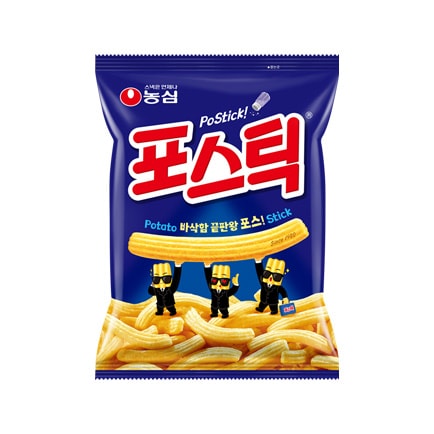
Postick: The Korean Snack That Used to Come With a Ketchup Packet
Postick (포스틱) has been on Korean shelves since 1980, it is only 23% potato, and it shipped with a ketchup sachet until the sachet got too expensive. What it costs now, and the ramyun-powder trick Koreans use on it.
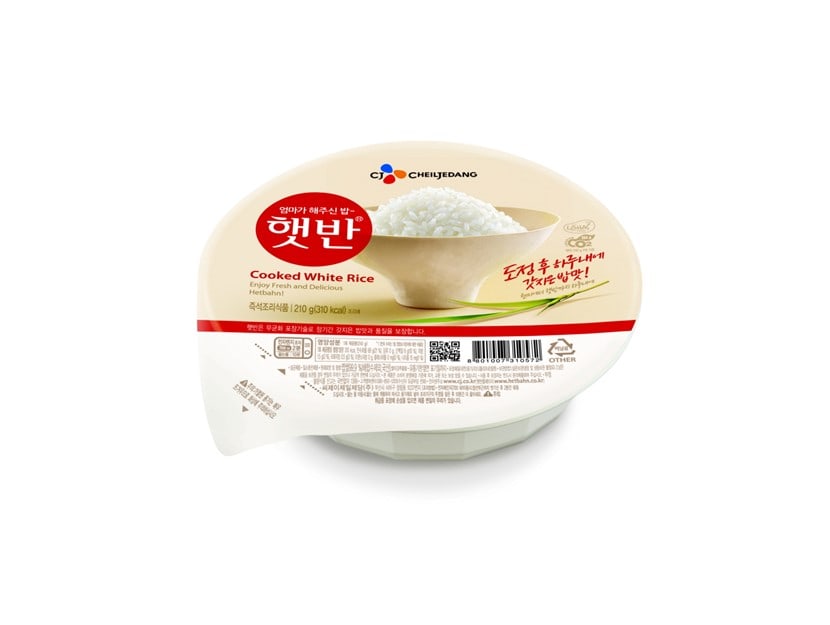
Hetbahn: What Korea's Instant Rice Is Made Of, and How to Heat It Without a Microwave
햇반 is 99.9% Korean rice and water plus 0.1% rice bran extract, sealed in a room cleaner than a hospital ward. The lid prints three cooking times and one of them needs no microwave at all. Prices, varieties, and the mistake almost everyone makes with the film.
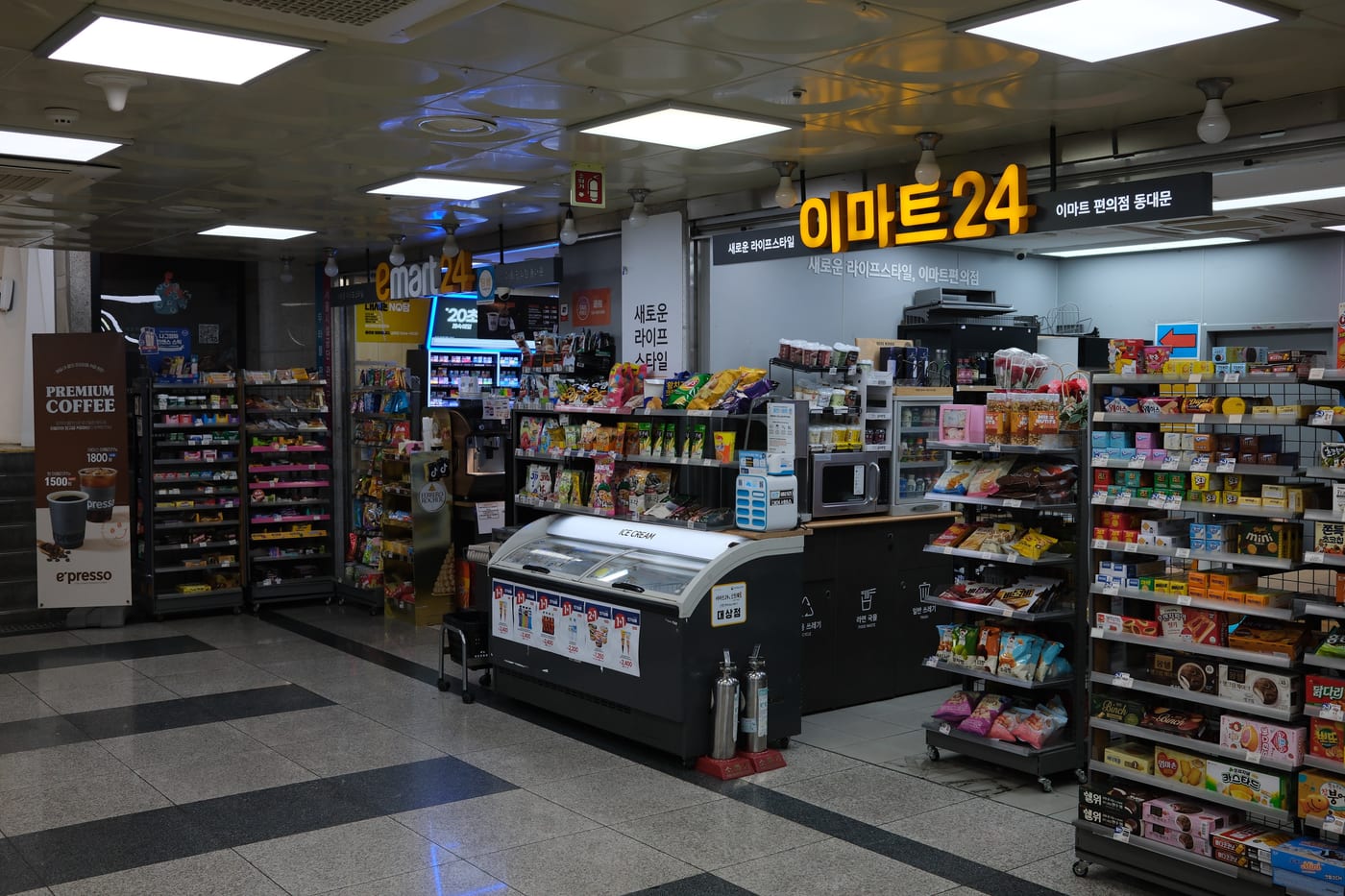
Korean Food Prices in August 2026: What Already Rose, and What Changes on the 25th
Four Korean food makers raised prices within three weeks, and Paris Baguette's 127-item increase lands on 25 August. The exact brands, dates and won amounts, why wheat and corn are behind it, and what it actually changes for a visitor.