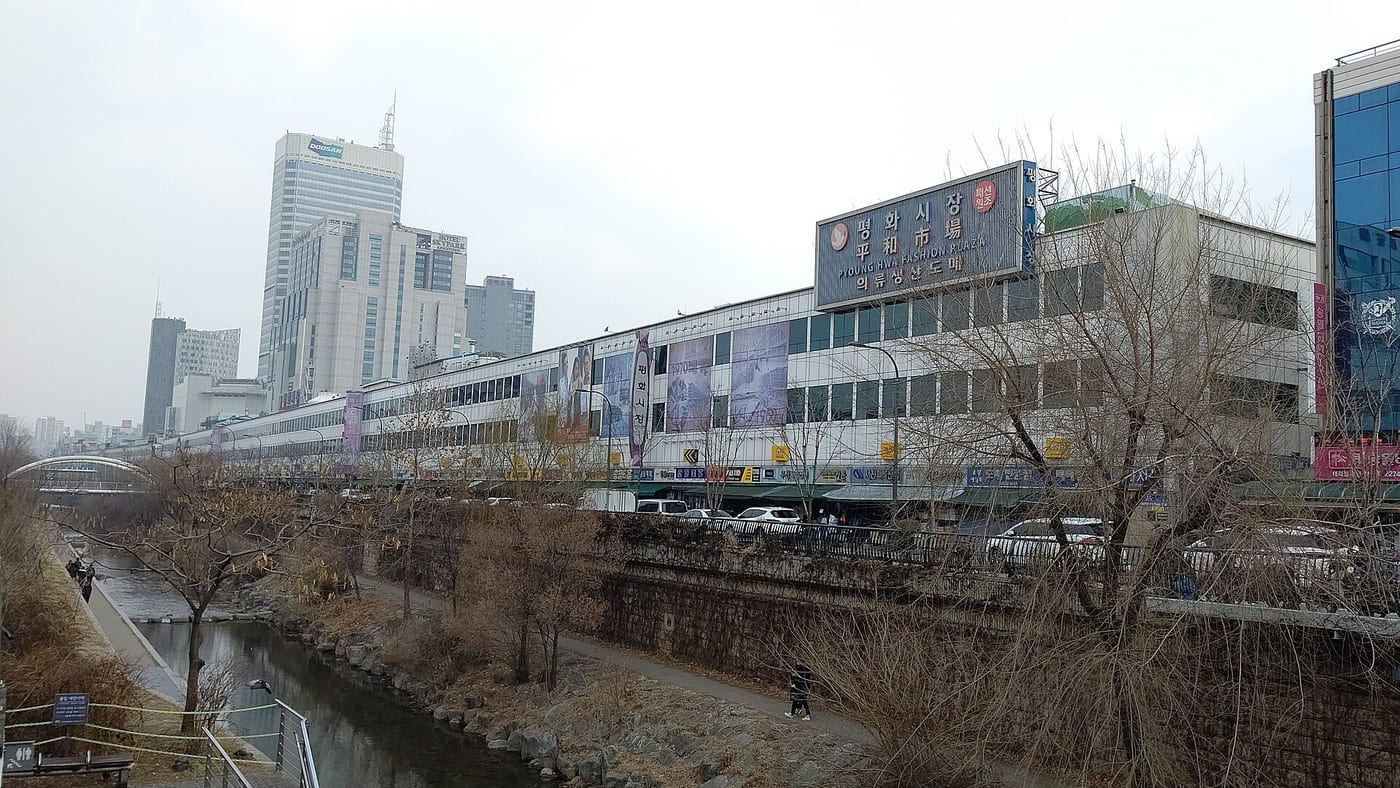
Korean Apparel Manufacturers 2026: Dongdaemun Sourcing Guide
An overseas-buyer guide to Korean apparel manufacturers and Dongdaemun sourcing: wholesale vs OEM, MOQs, sample rooms, quality checks, and export risk.
Quick Answer
Korea is a real sourcing market for apparel, but it is not a single thing. Overseas buyers usually mean one of three very different channels when they say "Korean clothing suppliers": the Dongdaemun wholesale market for fast, small-lot, trend-driven buying; OEM/ODM manufacturers for producing your own designs and labels; and brand or platform sourcing for finished Korean-branded goods. Each has its own minimum order quantity, lead time, and risk profile.
The single most common mistake is treating a Dongdaemun wholesale stall as if it were a factory. A wholesaler sells finished garments in small lots, often without doing the production themselves; a manufacturer produces to your spec with real minimums, tech packs, and sampling. Confusing the two wastes weeks.
This guide is written for overseas buyers, boutique owners, private-label brands, and sourcing teams who want a practical first map of Korean apparel manufacturers and the Dongdaemun ecosystem. It is not legal, customs, or trade-compliance advice.
Why Buyers Look at Korea for Apparel
Korea occupies a specific niche. It is not the cheapest garment-manufacturing country, and buyers chasing rock-bottom unit prices on basic tees will usually look elsewhere. What Korea offers is speed, trend responsiveness, small-lot flexibility, and design sensibility — the same qualities that made K-fashion a global reference point.
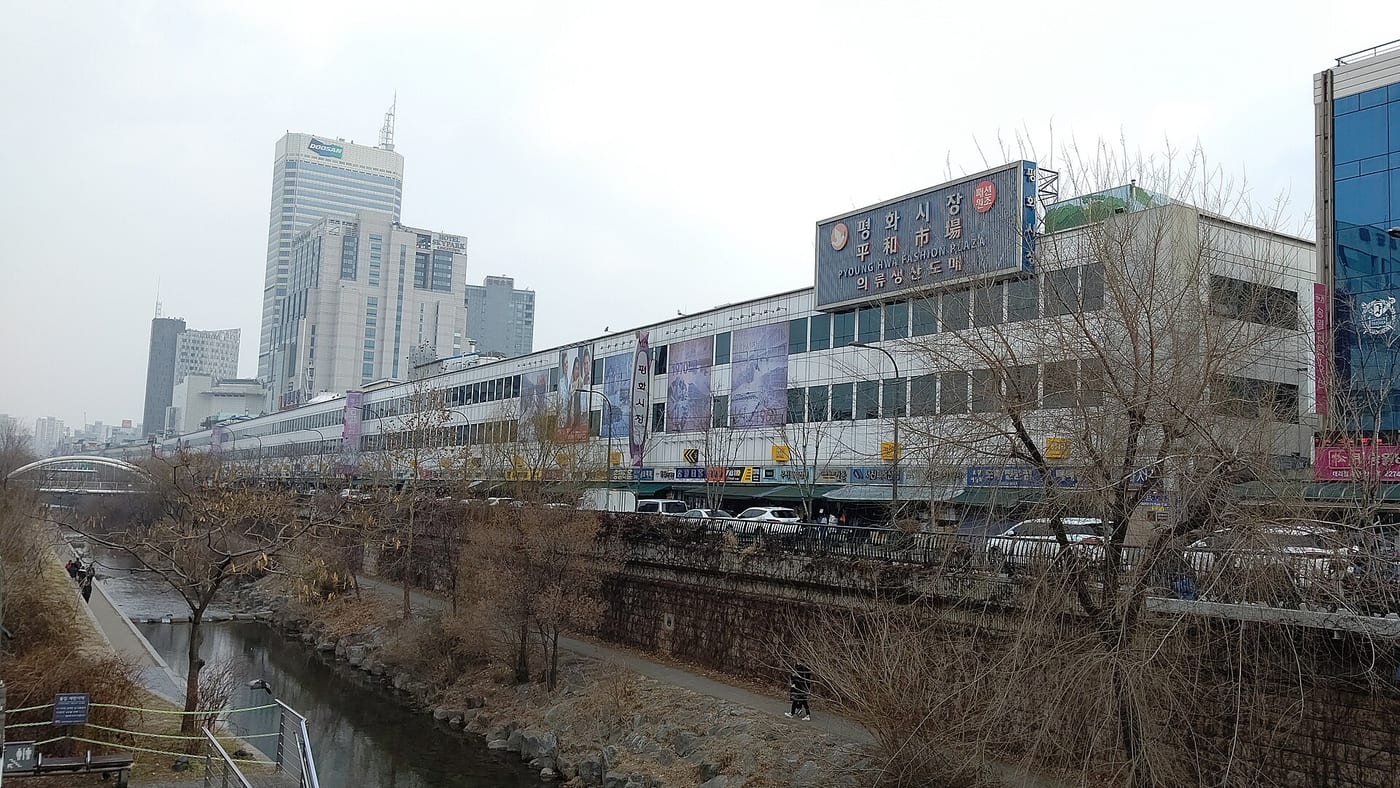
Dongdaemun in particular runs on a compressed cycle: designs move from sketch to sample to stall in a fraction of the time of a traditional supply chain, and the surrounding district packs design, fabric, trim, sewing, and wholesale into a few walkable blocks. For a buyer who needs on-trend styles in small quantities and fast, that density is the advantage. For a buyer who needs 50,000 identical units at the lowest possible cost, it usually is not.
The honest counterweight: "Made in Korea" is a positioning asset, not a quality guarantee, and the market's speed cuts both ways. The same system that ships trends fast can also ship inconsistent sizing, unstable stock, and quality that varies stall to stall. Your job is to separate the operators worth a relationship from the ones selling whatever moved this week.
The Three Channels, Separated
Do not run one undifferentiated search. Decide which channel matches your business first, because the sourcing path and the risks are different.
| Channel | What You Get | Typical MOQ | Best For |
|---|---|---|---|
| Dongdaemun wholesale | Finished, on-trend garments in small lots | Low (a few pieces per style upward) | Boutiques and buyers who resell existing styles fast |
| OEM (make to your spec) | Production of your design, your label | Higher; set by the factory | Brands with their own tech packs and designs |
| ODM (their design, your label) | Existing factory designs rebranded for you | Medium to high | Brands wanting a faster route to a private label |
| Brand / platform sourcing | Finished Korean-branded product | Varies by brand | Retailers reselling recognized K-fashion labels |
The wholesale route is where most first-time buyers start because the barrier is low — you can literally walk the market. But wholesale is a reselling model, not a manufacturing partnership: you are buying what exists, with limited control over consistency, exclusivity, or restocking. The OEM/ODM route is where control and customization live, at the cost of higher minimums, tech packs, sampling rounds, and a real vetting process. Know which one you actually need before you book a trip or send a single message.
How Dongdaemun Actually Works
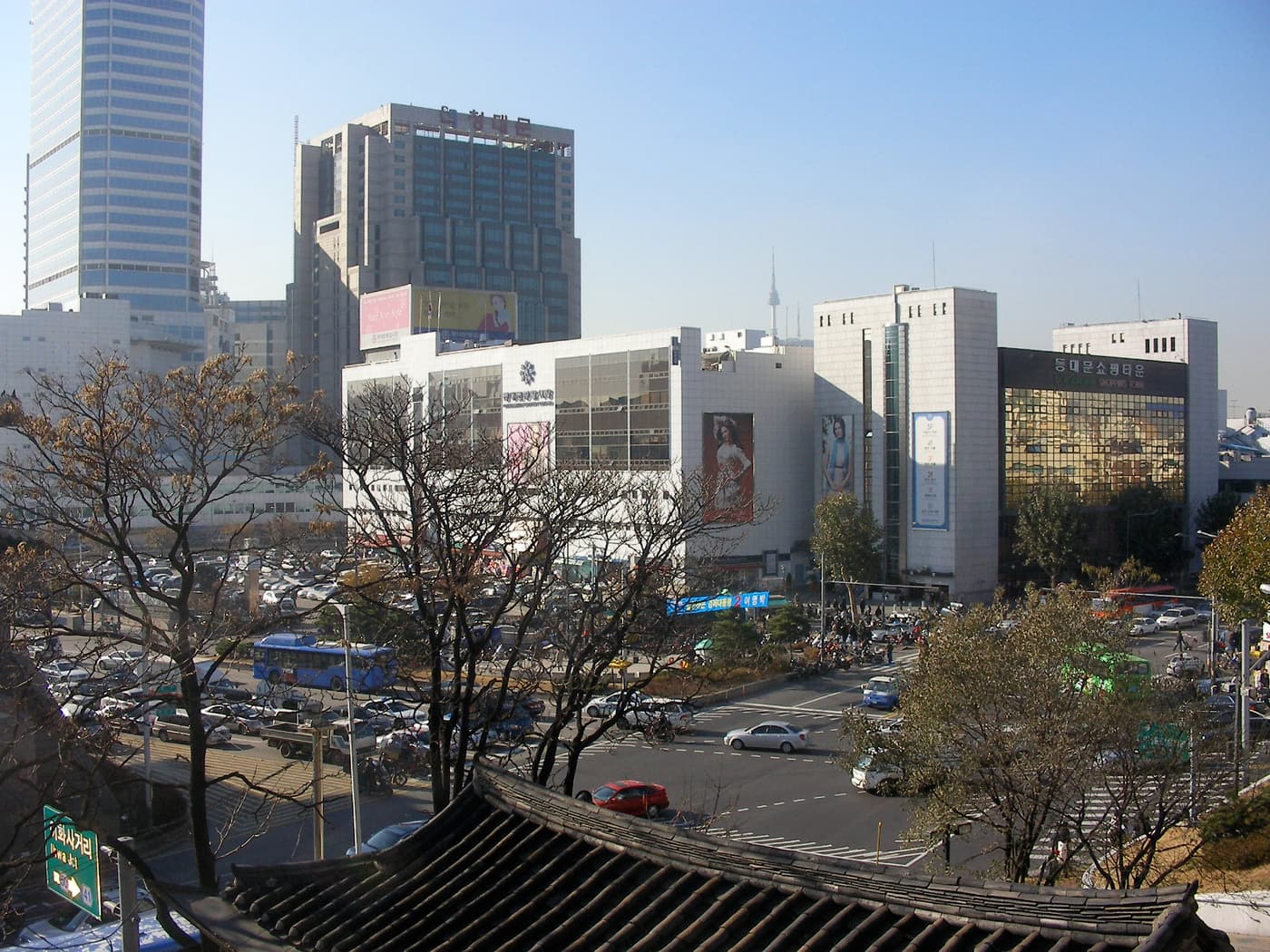
Dongdaemun is not one market; it is a stacked ecosystem. Broadly, it splits into a wholesale side that runs heavily overnight for retailers and resellers, and a retail side in the big shopping towers aimed at consumers. For sourcing, the wholesale buildings are where the business happens, and their rhythm — often late-night into early morning — is built around domestic retailers restocking for the next day.
A few structural realities shape how you buy there:
- Stalls are small and fast. Many wholesale sellers move quickly, expect decisiveness, and may not be set up for long English negotiations or export paperwork. Bring a clear list and, ideally, help with the language.
- Fabric and trim are next door. The surrounding district includes dedicated fabric and notions markets, which is why sample-to-production can happen so fast — but it also means "the same" garment can be remade with different materials.
- Sampling and sizing vary. Korean sizing is not Western sizing, and a wholesale sample is not a graded size set. Confirm measurements, not just labels.
- A sourcing agent or vendor can bridge the gap. For overseas buyers doing volume, a local agent who handles language, consolidation, quality checks, and shipping often pays for itself. Vet the agent as carefully as the supplier.
For the broader verification workflow that applies across Korean industries, start with EpicKor's how to find suppliers in Korea. The market-entry and matchmaking channels in the Korea trade shows for overseas buyers guide also apply to fashion, where trade fairs and pavilions can surface OEM partners you would never find on the wholesale floor.
Build the background before the first buying trip: As an Amazon Associate, EpicKor may earn from qualifying purchases. Buyers new to this market benefit from a short shelf of apparel sourcing and production books covering tech packs, grading, and factory relationships before walking a wholesale floor at 2 a.m.
Due Diligence: From Sample to Shipment
Whether you buy wholesale or commission production, the same discipline protects you. Speed is Dongdaemun's strength and its trap, so slow down at the checkpoints that matter.
| Step | What to Do | What Proves It |
|---|---|---|
| 1. Confirm the supplier's role | Establish whether they manufacture, wholesale, or trade | Factory address and business registration, not just a stall |
| 2. Order and measure a sample | Get a real sample and measure it against your spec | Graded measurements, fabric weight, construction quality |
| 3. Lock sizing and materials | Agree a size chart and exact fabric/trim in writing | An approved sample plus a written spec sheet |
| 4. Set QC and tolerances | Define acceptable defect rates and an inspection point | A pre-shipment inspection tied to the approved sample |
| 5. Map export and duties | Check labeling, fiber content, and your country's import rules | Your destination market's rules, confirmed locally |
| 6. Contract the terms | MOQ, lead time, restock ability, incoterms, payment | A written agreement that forbids silent substitution |
Two failure modes dominate this category. The first is the substitution swap: the approved sample is beautiful, the bulk order arrives in a cheaper fabric or a drifted fit. Guard against it with an inspection against the approved sample, not against a description. The second is the exclusivity assumption: a wholesale buyer believes a style is "theirs," then finds three competitors selling the same garment. Wholesale is not exclusive by default; if exclusivity matters, you are in OEM territory, and it must be contracted.
For the parallel logic in a different Korean category, the authorized-distributor and gray-market cautions in EpicKor's Korean cosmetics wholesale guide map neatly onto apparel: verify the role, verify the goods, and put the real terms in writing.
Getting the Goods Home
Export mechanics are where apparel deals quietly succeed or fail. Textiles carry destination-specific requirements — fiber-content labeling, care labeling, and sometimes country-of-origin and safety rules — that a wholesale stall will not manage for you. Decide early who owns each step: the supplier, your sourcing agent, or a freight forwarder.
Keep it concrete. Agree incoterms so it is unambiguous who pays and who is responsible at each leg. Confirm that labeling meets your destination market before production, not after the container lands. Consolidate small wholesale buys through an agent or forwarder rather than shipping stall by stall. And build in a QC gate before anything leaves Korea, because fixing a fabric or fit problem after export is slow and expensive. For the official procedure side, use Korea's customs and trade-support bodies rather than relying on a seller's assurance.
Get the import mechanics right: Compare importing and incoterms reference books covering quality agreements, labeling, and freight terms. In apparel, most losses are contract, labeling, and inspection failures, not sewing failures.
If your product depends on a licensed character rather than your own design, the licensing side works differently from manufacturing — EpicKor's ICONIX and Pororo deep dive explains how a Korean studio built and licenses one of the country's most valuable character IPs.
Frequently Asked Questions
Q: Is Dongdaemun a factory or a market? Primarily a wholesale and retail market. Many sellers are wholesalers offering finished garments in small lots, not the factories that made them. If you need production to your own spec, that is an OEM/ODM manufacturer, which is a different relationship with higher minimums.
Q: What is the difference between wholesale, OEM, and ODM for Korean apparel? Wholesale means buying existing finished garments in small lots to resell. OEM means a factory produces your design under your label. ODM means you rebrand a factory's existing design. Wholesale is fastest and lowest-commitment; OEM/ODM give control and customization at higher minimums.
Q: What are typical minimum order quantities? Dongdaemun wholesale can start at just a few pieces per style, which is why boutiques use it. OEM/ODM minimums are set by the factory and are substantially higher. Confirm the exact MOQ per style before planning, since it varies by supplier and product.
Q: Do Dongdaemun sellers handle export and shipping? Often not. Many wholesale stalls focus on domestic retailers and may not manage export paperwork, labeling, or international freight. Overseas buyers commonly use a sourcing agent or freight forwarder to handle consolidation, quality checks, and shipping.
Q: How do I avoid getting the wrong quality or fit? Order and measure a real sample, agree the size chart and exact materials in writing, and require a pre-shipment inspection against that approved sample. The two big risks are fabric or fit substitution in the bulk order and assuming exclusivity you never contracted.
Q: Is Korean apparel manufacturing cheap? Not the cheapest. Korea competes on speed, trend responsiveness, small-lot flexibility, and design rather than lowest unit cost. Buyers chasing the lowest price on basic goods usually look elsewhere; buyers who need fast, on-trend, smaller runs choose Korea for those strengths.
The Bottom Line
Korean apparel sourcing works when you match the channel to your business. Use Dongdaemun wholesale for fast, small-lot, on-trend buying; use OEM/ODM manufacturers when you need your own designs, labels, and control. Whichever you choose, verify the supplier's role, approve a measured sample, contract the real terms, and gate quality before export.
The suppliers worth a long relationship will answer sizing, materials, and exclusivity questions with documents and samples. The ones that answer with "trust me, it sells" have told you what you needed to know.
Sources and further reading:
More Business Guides
Korean Health Supplement Suppliers 2026: K-Supplement Sourcing Guide
An overseas-buyer guide to Korean health supplement suppliers: red ginseng, collagen, MFDS health functional food rules, GMP, and sourcing risk.
Korean Medical Device Suppliers 2026: Buyer Due Diligence Guide
A practical overseas-buyer guide to Korean medical device suppliers, dental implants, aesthetic devices, trade shows, MFDS checks, and sourcing risk.
How to Find Suppliers in Korea: Official Platforms, Verification, and First Contact
A practical Korea sourcing guide for overseas buyers comparing KOTRA, buyKOREA, tradeKorea, GobizKOREA, verification, and first contact.