Gisa Sikdang in Seoul: Where Korean Taxi Drivers Eat, What to Order and What It Costs
Last updated: 16 October 2026. Menus, prices, hours and walking distances were read from each restaurant's Naver Place listing (네이버 플레이스) on 16 October 2026. Owners enter these themselves, so a price can lag the wall menu; where we had an older dated price, we show it. History comes from Seoul City's own magazine and news site and from Korean newspapers. Sources are at the end. Dollar figures use about ₩1,340 to the US dollar (Federal Reserve rate, 9 October 2026).
A gisa sikdang (기사식당) is a "drivers' restaurant": a diner built for Seoul's taxi drivers. It has a car park, sells a full meal to one person, and gets the food out in minutes. The name is the whole pitch. If the drivers eat there, the reasoning went, the food must be good.
Most English guides to them stop at "cheap and fast." That was true once. On the menus restaurants list on Naver today, the classic dwaeji bulbaek (돼지불백, grilled pork with rice and side dishes) costs ₩12,000–13,000 ($9–10) at the famous names. In 2019 the same plates were ₩8,000–9,000. The Korea Consumer Agency's Seoul average for a kimchi-stew set meal, the standard cheap lunch, was ₩8,769 in August 2026.
So go for the right reasons: the format, the history and the grilled pork, not the bargain. Here is where they still cluster, what to order and how they work.
The long steel spoon and flat steel chopsticks waiting on every gisa sikdang table, for eating bulbaek at home: polished stainless spoon and chopstick set, on AmazonAffiliate link. As an Amazon Associate, EpicKor earns from qualifying purchases at no extra cost to you.
Quick Guide: Seoul's gisa sikdang by area (October 2026)
| Area | Restaurant (Korean name) | Order this | Listed price | Hours (Naver, Oct 2026) | Nearest station |
|---|---|---|---|---|---|
| Yeonnam-dong, Mapo | Gamnamujip Gisa Sikdang (감나무집기사식당), 25 Yeonnam-ro | Dwaeji bulgogi | ₩13,000 ($9.70) | 24 hours, every day | Hongik Univ., exit 3, about 8 min (510 m) |
| Seongbuk-dong | Seongbuk-dong Dwaeji Galbi (성북동돼지갈비 본점), 115 Seongbuk-ro | Dwaeji bulgogi baekban | ₩13,000 | 09:00–20:30, closed Tuesday | Hansung Univ., exit 6, then bus |
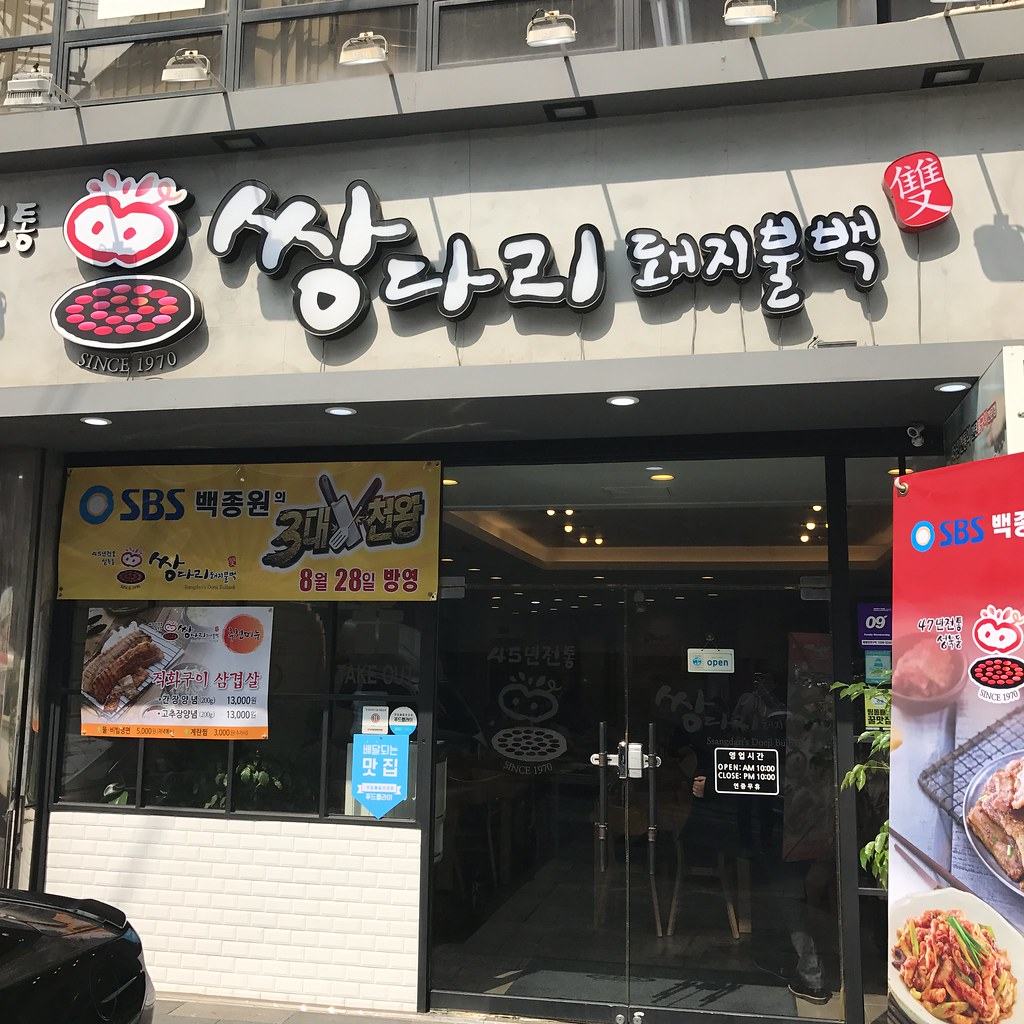
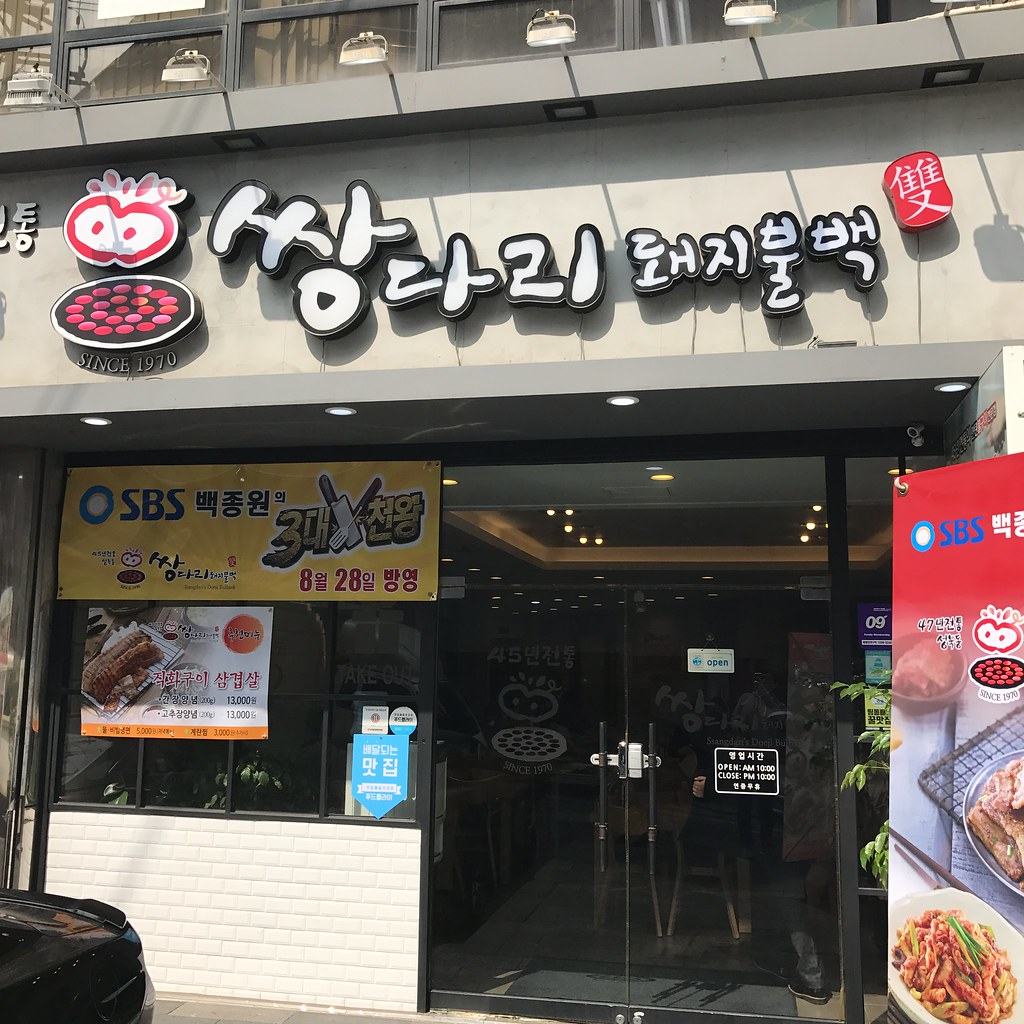
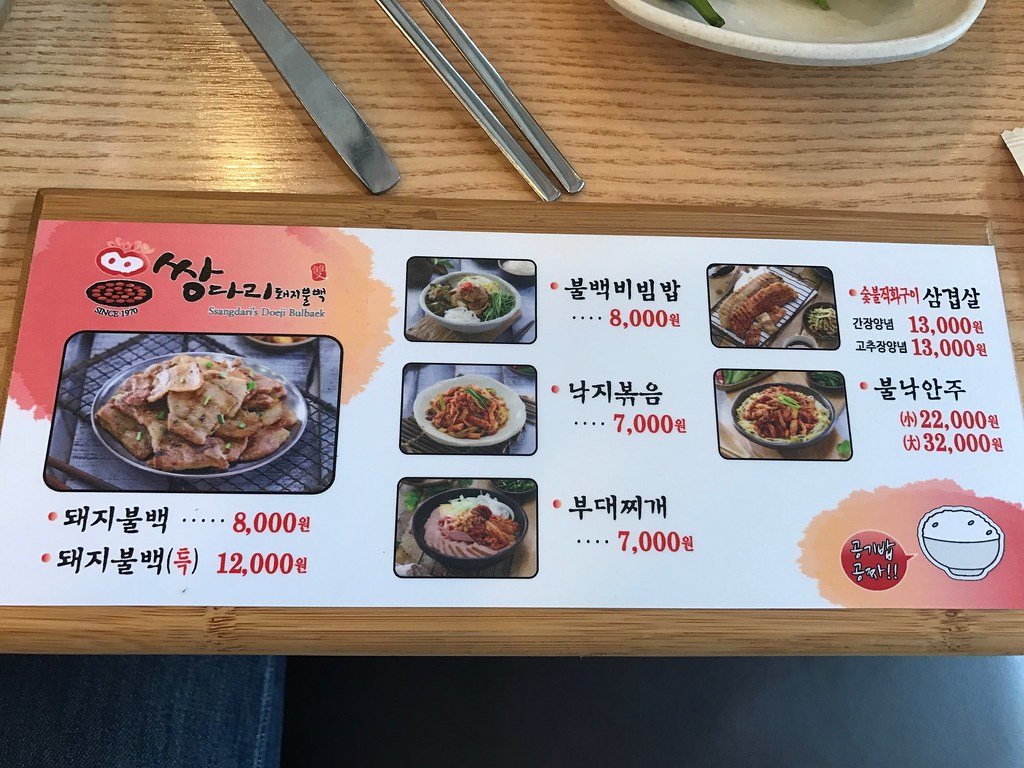
| Seongbuk-dong | Ssangdari Dwaeji Bulbaek (쌍다리돼지불백 본점), 4 Seongbuk-ro 23-gil | Dwaeji bulbaek | ₩13,000 | 09:30–20:50, closed Monday | Hansung Univ., exit 6, then bus |
| Seongbuk-dong | Geumwang Donkkaseu (금왕돈까스 본점), 138 Seongbuk-ro | Deungsim (loin) cutlet | ₩13,000 | 10:30–21:00, closed Monday | Hansung Univ., exit 6, then bus |
| Namsan, Jung-gu | Wonjo Namsan Wang Donkkaseu (원조남산왕돈까스), 107 Sopa-ro | Wang (king-size) cutlet | ₩14,500 ($10.80) | 10:00–22:00, closed Tuesday | Myeongdong, exit 3, about 10 min (443 m) |
| Hyochang-dong, Yongsan | Ilbeonji Gisa Sikdang (일번지기사식당), 164 Hyochangwon-ro | Ttukbaegi bulgogi, kimchi stew | ₩8,000 / ₩9,000 | 05:30–21:00, every day | Hyochang Park, exit 2, about 6 min (375 m) |
| Jayang-dong, Gwangjin | Songrim Sikdang (송림식당), 79 Jayangbeonyeong-ro | Dwaeji bulgogi baekban | ₩12,000 | 10:00–22:00 (weekends from 09:00) | Konkuk Univ., exit 4, about 13 min (777 m) |
| Mangwon-dong, Mapo | Sangam Sundaeguk (상암순대국), 124 Huiujeong-ro | Sundae-guk (blood-sausage soup) | ₩9,000 ($6.70) | 24 hours most days | Mangwon area, by bus or taxi |
Prices are what each restaurant lists on Naver Place, read 16 October 2026. The wall menu wins if they differ. Walking times are Naver's. "Then bus" for Seongbuk-dong: buses 1111, 2112 or Seongbuk 03 from Hansung University Station exit 6, per the Korea Tourism Organization's walking guide and the restaurants' own directions.
If you only go to one: Gamnamujip in Yeonnam-dong. It is open all night, a short walk from Hongik University Station, and it sits on the street Seoul City listed as heritage in 2016. If you want the history: take the bus up to Seongbuk-dong at lunch.
Maangchi's Big Book of Korean Cooking — the everyday Korean table, in English A baekban is home cooking served fast: rice, a stew, grilled meat and a spread of side dishes. Maangchi's second cookbook covers exactly that everyday food (over 140 recipes, per the publisher), which makes it the closest thing to a gisa sikdang menu you can cook from. As an Amazon Associate, EpicKor earns from qualifying purchases at no extra cost to you.
See Maangchi's Big Book on AmazonWhat to order: the gisa sikdang menu, decoded
Menus are in Korean, usually on the wall, and short. These are the words to look for.
| On the wall | Say it | What arrives |
|---|---|---|
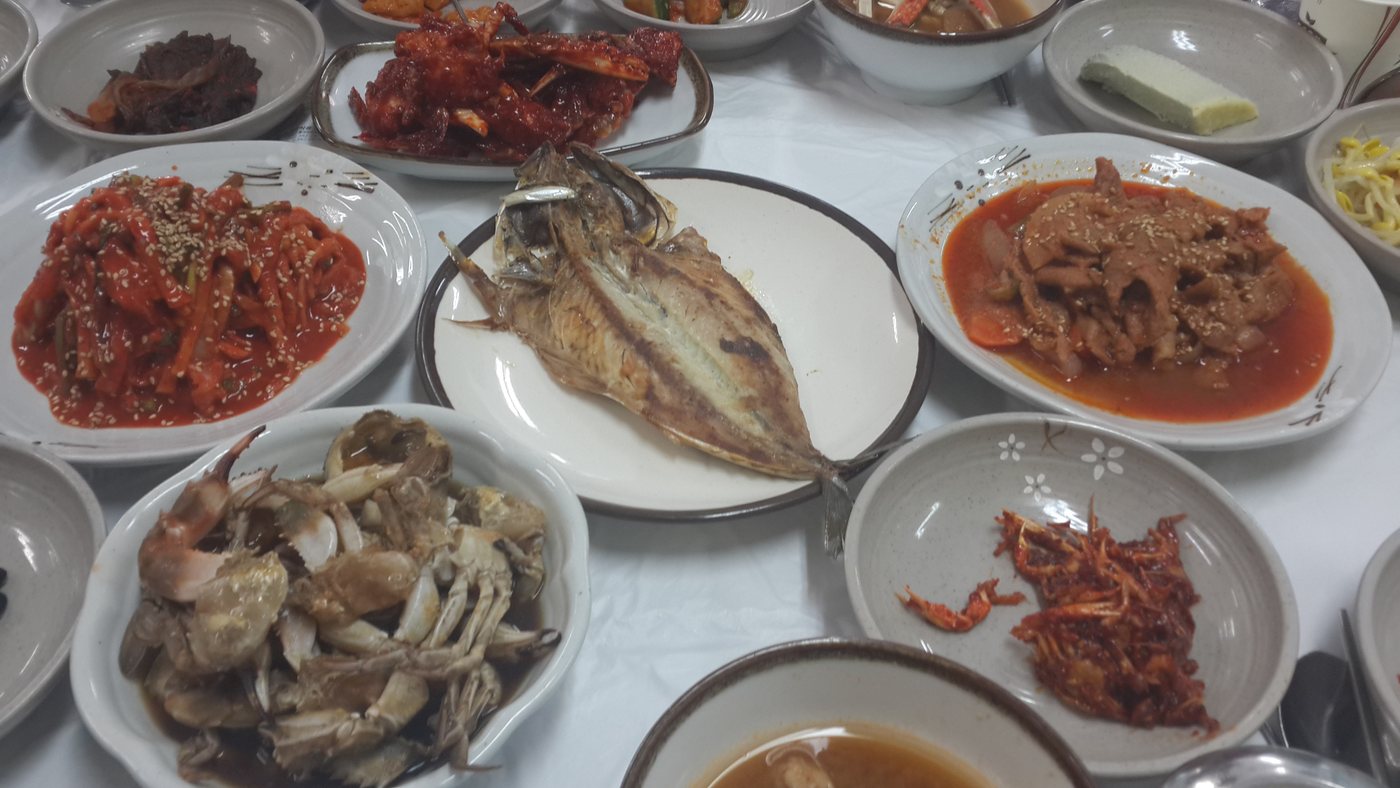
| 돼지불백 / 돼지불고기백반 | dwaeji bulbaek | Thin-sliced pork in a sweet soy or chilli marinade, grilled over charcoal briquettes or on a hot plate, with rice, soup, lettuce, ssamjang and side dishes. The signature dish. |
| 제육볶음 | jeyuk-bokkeum | Pork stir-fried in red chilli paste. Jeyuk is simply the old word for pork: the Standard Korean Dictionary gives 저육 (豬肉), "pig meat", as its original form. |
| 생선구이 (백반) | saengseon-gui (baekban) | Grilled fish, usually mackerel (고등어) or flatfish, with rice and side dishes. |
| 백반 / 가정식백반 | baekban | "Home-style set": rice, a soup or stew and whatever side dishes the kitchen made that day. |
| 김치찌개 / 된장찌개 | kimchi-jjigae / doenjang-jjigae | Kimchi stew or soybean-paste stew, with rice. |
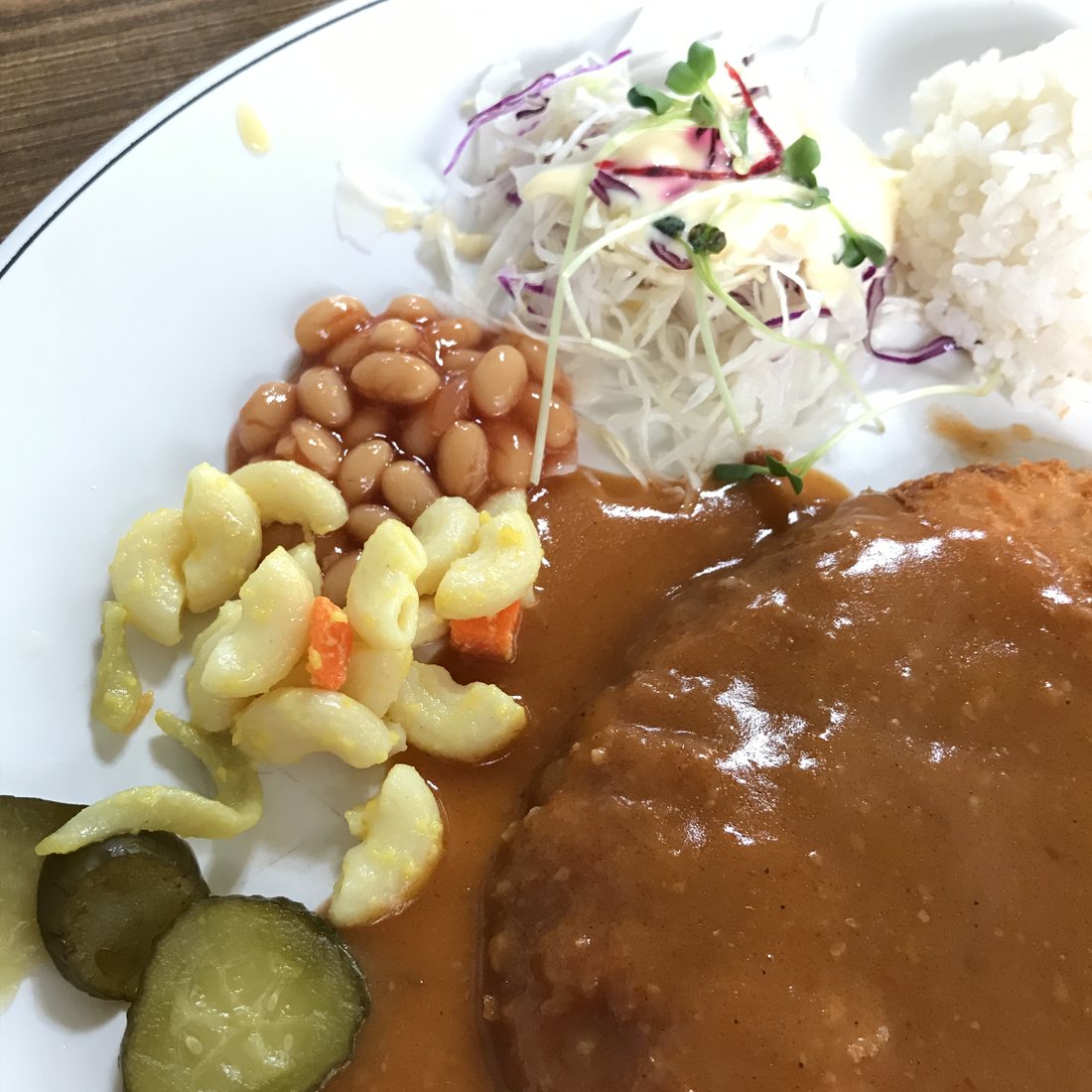
| 돈가스 / 왕돈까스 | donkkaseu / wang donkkaseu | Korean pork cutlet, pounded thin and wide, under brown sauce. "Wang" means king-size. |
| (특) after a dish | teuk | "Special": a bigger portion for a few thousand won more. |
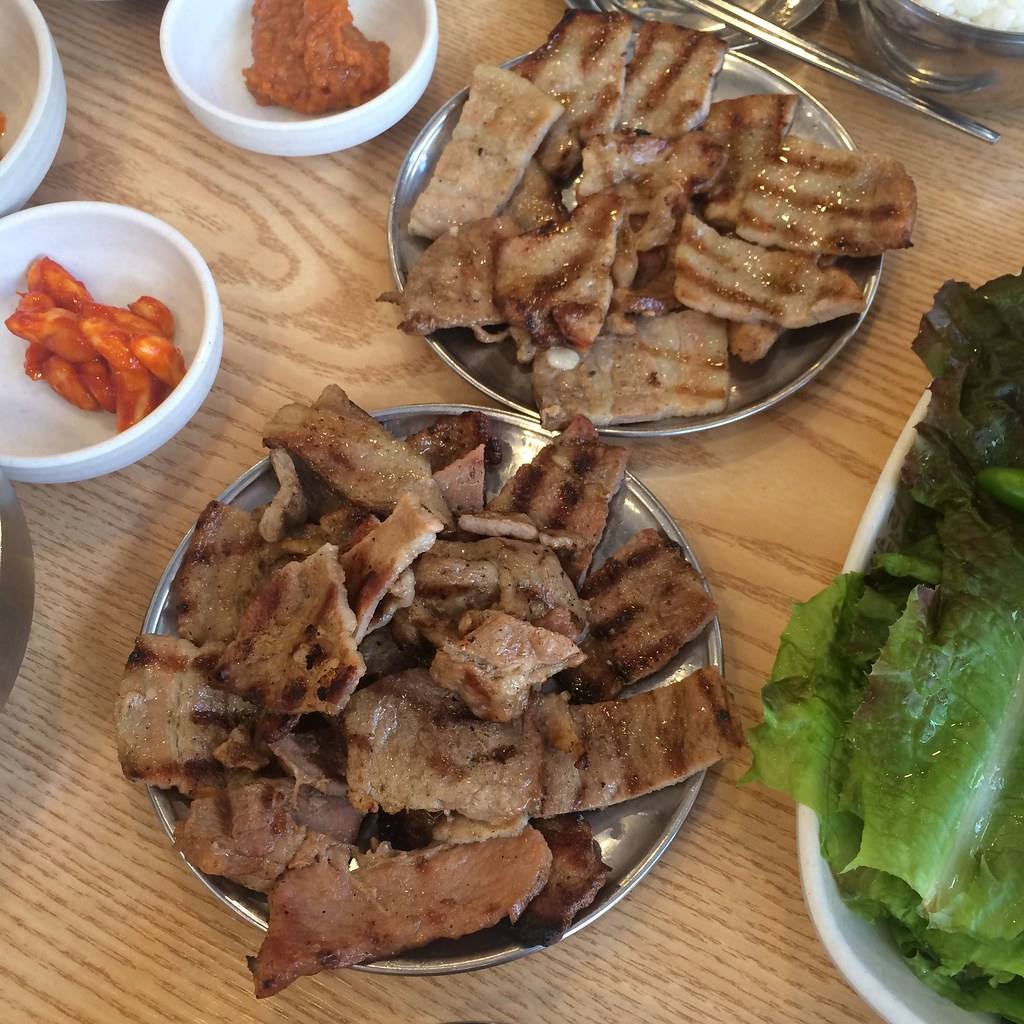
How to eat bulbaek: take a lettuce leaf, add a piece of pork, a dab of ssamjang (쌈장) and a slice of raw garlic or green chilli if there is one. Wrap it and eat it in one bite. Rice and soup come on the side.
You might like: Eating Alone in Korea: Honbap, Honsul, and the 9 Levels Koreans Rank It By
How a gisa sikdang works
The rules are simple, and most of them come from the driver's day. Seoul City's magazine Seoul Sarang (서울사랑) put it this way in 2019: Seoul had about 24,000 taxis in 1977, the subway was barely built, and some drivers covered 400–500 km a day. They needed somewhere to park, eat alone and leave.
- You can eat alone. This was the invention. Korean meat restaurants sold meat for two or more. "There was no such thing as one portion of meat," the Seongbuk-dong owner told the food writer Park Chan-il. "The drivers' diners broke that." (Bizhankook, 2016.) Today every dish on these menus is a one-person plate.
- It is fast. Seoul Sarang described the unwritten rule: the food comes out within five minutes, because the driver's car is waiting outside. Expect your tray before you've finished your water.
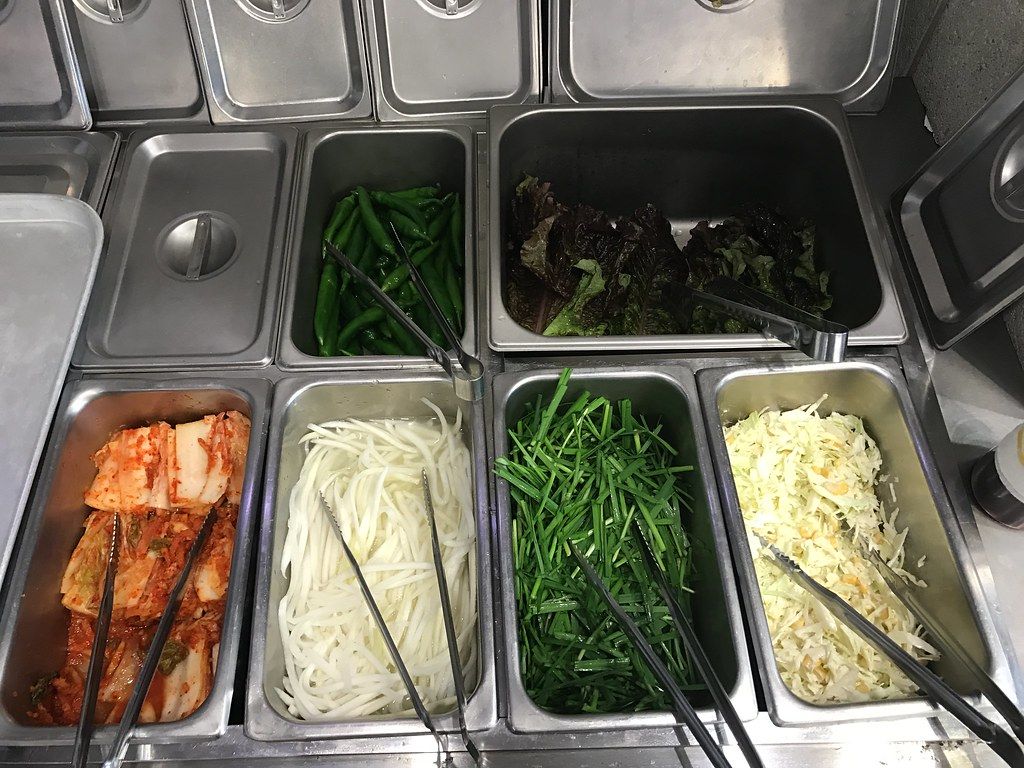
- Water, rice and side dishes are often self-serve. Look for a water cooler, steel cups and a refrigerated banchan counter. Ssangdari's menu board says 공기밥 공짜 ("rice is free"). At Gamnamujip you order and pay at the counter first, then help yourself to more rice and side dishes (its Siksin listing).
- You pay at the counter, usually by card. Some places want you to pay first, as above; at others you pay on the way out. Watch what the person ahead of you does.
- There is a car park, and that's no detail. In 2018 the newspaper Dailian found that only two diners were left on Yeonnam-dong's heritage street. One main reason: after the Gyeongui Line Forest Park opened in 2015, the nearby lots became paid public parking, and drivers stopped coming.
- Hours follow shifts. Gamnamujip is open around the clock; Ilbeonji in Hyochang-dong opens at 05:30. The old Seongbuk-dong places, on the other hand, close by about 21:00.
Ordering in Korean: point at the wall and say the dish plus 하나 주세요 (hana juseyo, "one, please"). For two of the same, 두 개 주세요 (du gae juseyo). If you sit alone at a four-seat table at noon, don't worry: at a gisa sikdang, that's normal.
Where to go, area by area
Yeonnam-dong and Mangwon (Mapo): the all-night option
Seoul City put the Yeonnam-dong drivers' diner street (연남동 기사식당거리) on its 2016 Seoul Future Heritage list. The list says the diners had served as "a rest stop for taxi drivers since the late 1970s." Within about a year of the listing, most had closed. By September 2018 only two were left: Gamnamujip and a pork-grill set-meal house.
Gamnamujip (감나무집기사식당) is the one to visit. It is at 25 Yeonnam-ro, opposite Building 105 of the Kolon apartments, open 24 hours, every day, with its own parking. On Naver it lists dwaeji bulgogi at ₩13,000, grilled fish ₩13,000, tofu stew ₩11,000 and stir-fried squid ₩14,000. In Seoul Sarang's 2019 guide, the same pork was ₩9,000. The walk from Hongik University Station exit 3 is about 8 minutes.
Nearby are two Mapo options GQ Korea picked in its June 2025 list of 18 driver favourites:
- Sigoljip Halmeonine Saengseon-gui (시골집할머니네생선구이), 102 Seongmisan-ro: a grilled-fish house open 06:00–22:00 daily. GQ gave its grilled-fish set at ₩10,000 in June 2025; there's no menu on Naver.
- Sangam Sundaeguk (상암순대국), 124 Huiujeong-ro in Mangwon-dong, despite the name: sundae-guk ₩9,000, open 24 hours on most days (Monday from 10:00, Sunday until 22:00).
You might like: Yeonnam-dong Seoul Guide: The Park Built on a Buried Railway
Seongbuk-dong: where it started
Seongbuk-dong Dwaeji Galbi (성북동돼지갈비) is the restaurant usually named as Seoul's first gisa sikdang. According to Seoul Sarang, it opened in 1970 and, in the owner's memory, began drawing drivers in 1973. GQ Korea gives 1971, so treat the exact year loosely. The pork is still grilled over yeontan (연탄, charcoal briquettes) and comes with a clear clam soup. Naver lists the dwaeji bulgogi baekban at ₩13,000 (GQ, June 2025: ₩12,000). It is at 115 Seongbuk-ro, near the Kansong Art Museum, open 09:00–20:30, and closed on Tuesdays.
Two more are a short walk along the same road:
- Ssangdari Dwaeji Bulbaek (쌍다리돼지불백), 4 Seongbuk-ro 23-gil, by the Ssangdari bus stop: briquette-grilled pork, ₩13,000 on Naver, special portion ₩18,000. It's open 09:30–20:50 and closed on Mondays, and it has a car park. Seoul City put it on the same 2016 Future Heritage list as "a briquette-grilled pork bulbaek house that started as a drivers' diner in 1970", and the Seongbuk-gu Office named it the district's first "Seongbuk-dong shop" (KTO walking guide).
- Geumwang Donkkaseu (금왕돈까스), 138 Seongbuk-ro, about 150 m uphill: a big Korean cutlet served with cream soup. Loin ₩13,000, tenderloin ₩14,000. Open 10:30–21:00, closed Mondays, with a half-hour break at 16:30 on weekends.
Getting there: take Line 4 to Hansung University Station (한성대입구역), exit 6, then bus 1111, 2112 or Seongbuk 03.
Namsan: the cutlet road
On Sopa-ro, the road up Namsan, the drivers' dish is the wang donkkaseu, a cutlet pounded as wide as the plate. Wonjo Namsan Wang Donkkaseu (원조남산왕돈까스), 107 Sopa-ro, told Seoul Sarang it had been open since 1977. Other houses on the road dispute who came first: in 2021, another owner said he opened the first shop named "Namsan Donkkaseu" in 1992 (Weekly Kyunghyang). On Naver it lists the wang donkkaseu at ₩14,500 (₩10,500 in 2019) and fish cutlet at ₩15,500. It is open 10:00–22:00, closed Tuesdays, open on public holidays. From Myeongdong Station exit 3 it is about 10 minutes uphill.
Hyochang-dong (Yongsan): the working street
Hyochang-dong still has a row of drivers' diners near Hyochang Park. It's less famous, and it's where the price squeeze shows. In July 2025 the Herald Economy (헤럴드경제) visited the street. Most menus had new prices stuck over the old ones, and a 77-year-old driver said meals had gone up ₩1,000–2,000 in a month. One owner had cut his side dishes from ten to about eight.
Ilbeonji Gisa Sikdang (일번지기사식당), 164 Hyochangwon-ro, opens at 05:30 every day and closes at 21:00. On Naver it lists ttukbaegi bulgogi ₩8,000, kimchi stew ₩9,000 and braised mackerel with aged kimchi ₩10,000. Those are the cheapest listed prices in this guide, so expect the wall to say a little more. It's about 6 minutes from Hyochang Park Station exit 2.
Jayang-dong and Yeoksam
- Songrim Sikdang (송림식당), 79 Jayangbeonyeong-ro, Gwangjin, by the Han River. GQ Korea dates it to 1981. Seoul Sarang said drivers took the first floor and other customers the second. Dwaeji bulgogi baekban ₩12,000 on Naver (₩8,000 in 2019, ₩11,000 in GQ's June 2025 list). Stews, including seonji (ox-blood) hangover soup, are ₩10,500. Open 10:00–22:00, 09:00 at weekends. It's about 13 minutes from Konkuk University Station exit 4.
- Ssangdari's Yeoksam branch (쌍다리돼지불백 역삼직영점), 71 Gangnam-daero 94-gil, the one in the photos above: about 4 minutes from Yeoksam Station exit 4, open 10:00–22:00 daily. It lists no prices on Naver.
O'Food gochujang, ssamjang and doenjang set — the three pastes behind a bulbaek tray Jeyuk is gochujang, the dip for your lettuce wrap is ssamjang, and the stew on the side is doenjang. One order covers all three if you want to rebuild a drivers' lunch at home. As an Amazon Associate, EpicKor earns from qualifying purchases at no extra cost to you.
See the O'Food paste set on AmazonWhat the prices say
| Dish and restaurant | 2019 (Seoul Sarang) | June 2025 (GQ Korea) | Oct 2026 (Naver) |
|---|---|---|---|
| Dwaeji bulbaek, Gamnamujip | ₩9,000 | — | ₩13,000 |
| Dwaeji bulgogi baekban, Songrim Sikdang | ₩8,000 | ₩11,000 | ₩12,000 |
| Dwaeji bulgogi baekban, Seongbuk-dong Dwaeji Galbi | — | ₩12,000 | ₩13,000 |
| Wang donkkaseu, Wonjo Namsan Wang Donkkaseu | ₩10,500 | — | ₩14,500 |
| For comparison: kimchi-stew set meal, Seoul average | ₩8,769 in August 2026 (Korea Consumer Agency, Chamgagyeok) | ||
The famous gisa sikdang now charge 38–50% more than in 2019, and more than Seoul's average set lunch. The drivers are thinning out too. Korea had about 102,000 company taxi drivers in December 2019 and about 72,000 three years later, and still only about 73,000 in October 2025 (Yonhap, citing the national taxi federation). Of about 164,000 owner-drivers in October 2025, 55.4% were 65 or older (Korea Transportation Safety Authority). Fewer drivers and dearer land and ingredients have pushed these places towards a broader lunch crowd, and towards Instagram.
Why go anyway
- It's the real working lunch. No tourist menu and no performance: just a tray, a timer in the cook's head and a room full of people with somewhere to be.
- Solo travellers are the point. The one-portion plate was invented here, decades before honbap (eating alone) had a name.
- Briquette-grilled pork. Grilling over yeontan gives bulbaek its smoky edge, and you rarely find it in tourist districts.
- The hours. A full hot meal at 03:00 in Yeonnam-dong, or at 05:30 in Hyochang-dong, is hard to beat.
When not to go (and what isn't great)
- If cheap is the goal. At ₩12,000–14,500 the famous names are no longer the bargain. A plain home-style baekban is cheaper: Eommasomssijjang (엄마솜씨짱), 157 Daeheung-ro, near Ewha Womans University Station exit 6, lists its set at ₩8,000 on Naver.
- At 12:00–13:00 on a weekday. Drivers and office workers fill the tables, and the room wants you out. Go at 11:00 or after 14:00.
- For a long, chatty meal. It's bright, loud and quick. Nobody will rush you in words, but the format does.
- If you're vegetarian. The stars are pork and fish, the soups are usually meat-based, and the side dishes often include fish sauce or salted seafood.
- Expecting a "hidden gem." Gamnamujip's reviews are mixed. Some diners love the portions; others find it ordinary for the price. A taxi driver Dailian interviewed on the street in 2018 said neither of the two surviving diners was the original: "the real original closed."
- Late in Seongbuk-dong. The old houses close around 20:30–21:00 and two shut on Mondays, one on Tuesdays. Check the day.
- With no Korean at all. Menus are Korean-only and staff are busy. Screenshot the dish names in the table above.
FAQ
Q: What is a gisa sikdang?
A: A "drivers' restaurant" (기사식당): a Korean diner built for taxi drivers, with parking, one-person portions and fast service. The format began in Seoul in the 1970s; Seongbuk-dong Dwaeji Galbi, opened in 1970, is usually named as the first.
Q: How much does a meal at a Seoul gisa sikdang cost?
A: As of October 2026, the well-known names list dwaeji bulbaek or a bulgogi set at ₩12,000–13,000 ($9–10) and a king-size cutlet at ₩14,500. Smaller diners list stews and set meals from about ₩8,000–10,500.
Q: What should I order at a gisa sikdang?
A: Dwaeji bulbaek (돼지불백), grilled marinated pork with rice, soup, lettuce and side dishes. Jeyuk-bokkeum (spicy stir-fried pork), saengseon-gui (grilled fish) and, on Namsan, wang donkkaseu are the other classics.
Q: Which gisa sikdang is open 24 hours?
A: Gamnamujip in Yeonnam-dong (25 Yeonnam-ro), about 8 minutes from Hongik University Station exit 3, is listed as open 24 hours every day. Sangam Sundaeguk in Mangwon-dong is open around the clock on most days.
Sources
- History, 1977 taxi numbers, the 400–500 km days, five-minute service, and 2019 prices and hours: Seoul Sarang (서울사랑), "서울 성장의 동반자, 서울 기사식당", December 2019, by Park Chan-il.
- "There was no such thing as one portion of meat" and the 1970 opening: Bizhankook (비즈한국), 20 September 2016.
- Yeonnam-dong street and Ssangdari on the 2016 Seoul Future Heritage list: Seoul Metropolitan Government, 2016 Future Heritage list (published 12 January 2017). The 2018 closures, the parking change and the driver's "real original" quote: Dailian (데일리안), 12 September 2018.
- 2025 prices for Seongbuk-dong Dwaeji Galbi, Songrim Sikdang, Sigoljip Halmeonine Saengseon-gui and Sangam Sundaeguk, and the 1971 and 1981 dates: GQ Korea, "서울 택시 기사들의 식당 18", 10 June 2025.
- October 2026 menus, prices, hours and walking distances: each restaurant's Naver Place listing, read 16 October 2026 (Gamnamujip place 12985100; Seongbuk-dong Dwaeji Galbi 11712517; Ssangdari 11707538 and Yeoksam 36259126; Geumwang 11591181; Wonjo Namsan Wang Donkkaseu 37717350; Ilbeonji 18718379; Songrim 11717380; Sangam Sundaeguk 40969300; Sigoljip 32382994; Eommasomssijjang 20890924).
- Seongbuk-dong walking route, bus numbers and the "Seongbuk-dong shop" designation: Korea Tourism Organization, "택시기사가 인정한 맛집 거리, 성북동 기사식당길".
- Gamnamujip ordering and self-service: Siksin listing.
- Hyochang-dong price rises and fewer side dishes: Herald Economy (헤럴드경제), 22 July 2025.
- Namsan "first Namsan Donkkaseu, 1992" claim: Weekly Kyunghyang (주간경향), 17 May 2021.
- Taxi driver numbers: Yonhap, 4 January 2026, citing the Korea Transportation Safety Authority and the national taxi federation.
- Seoul kimchi-stew set meal average, August 2026: Korea Consumer Agency Chamgagyeok, as reported by Wikitree, 17 September 2026.
- Jeyuk and jeoyuk: Standard Korean Language Dictionary, National Institute of Korean Language.
- Exchange rate: Federal Reserve H.10 via FRED (DEXKOUS), ₩1,342.13 on 9 October 2026.
The short version: take the bus up to Seongbuk-dong for a ₩13,000 briquette-grilled pork tray at lunch, or walk from Hongik University to Gamnamujip at any hour. Pay at the counter, help yourself to rice, and eat it with the drivers who are left.
You Might Also Like
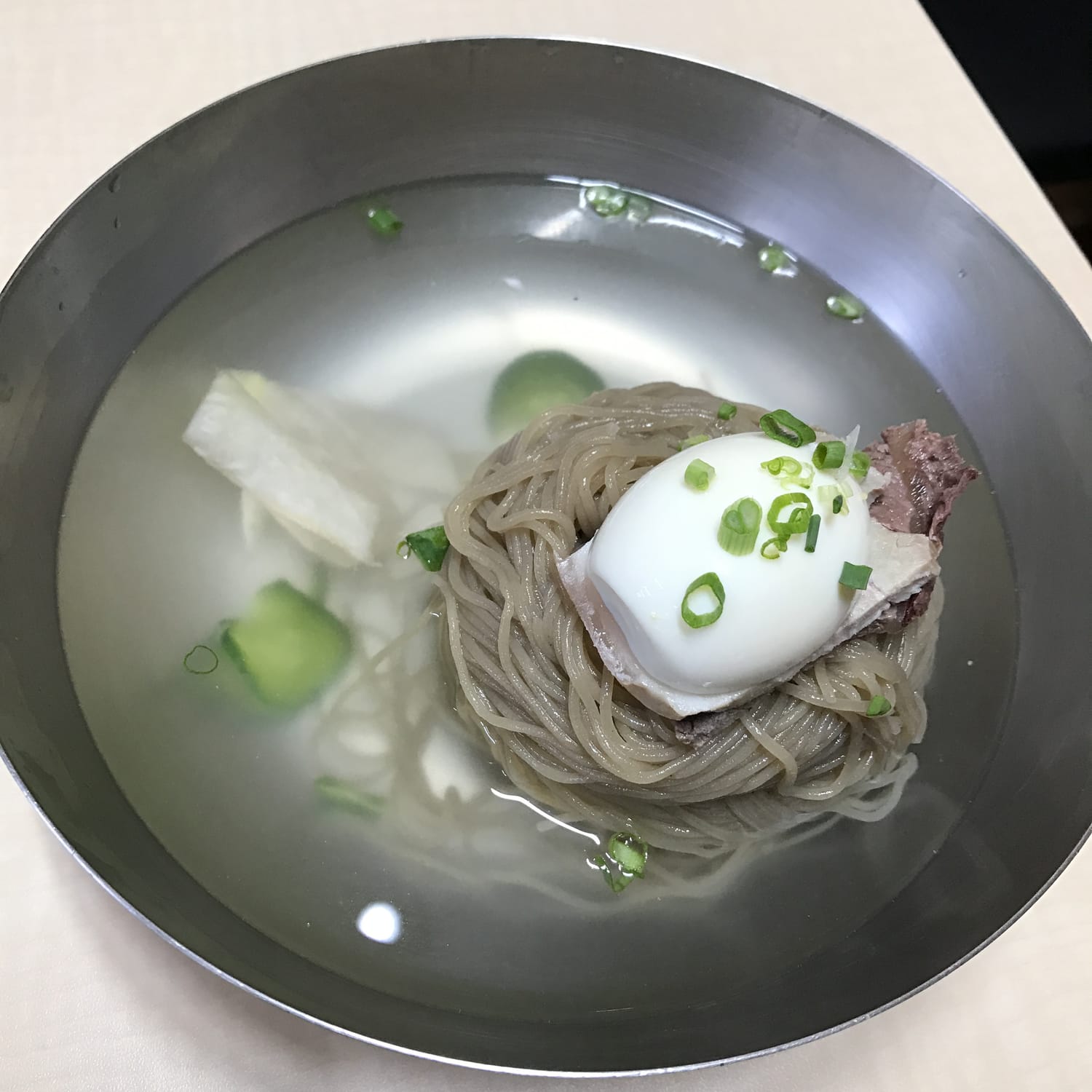
The One Korean Food Foreigners Never Learn to Love: Hamheung Naengmyeon, and Why Koreans Can't See the Problem
Foreigners who eat cheonggukjang and even hongeo still will not pay for this twice. A Korean creator who fed foreigners for years says naengmyeon was the overwhelming number one refusal, and Koreans, who rank it first every summer, cannot see why.
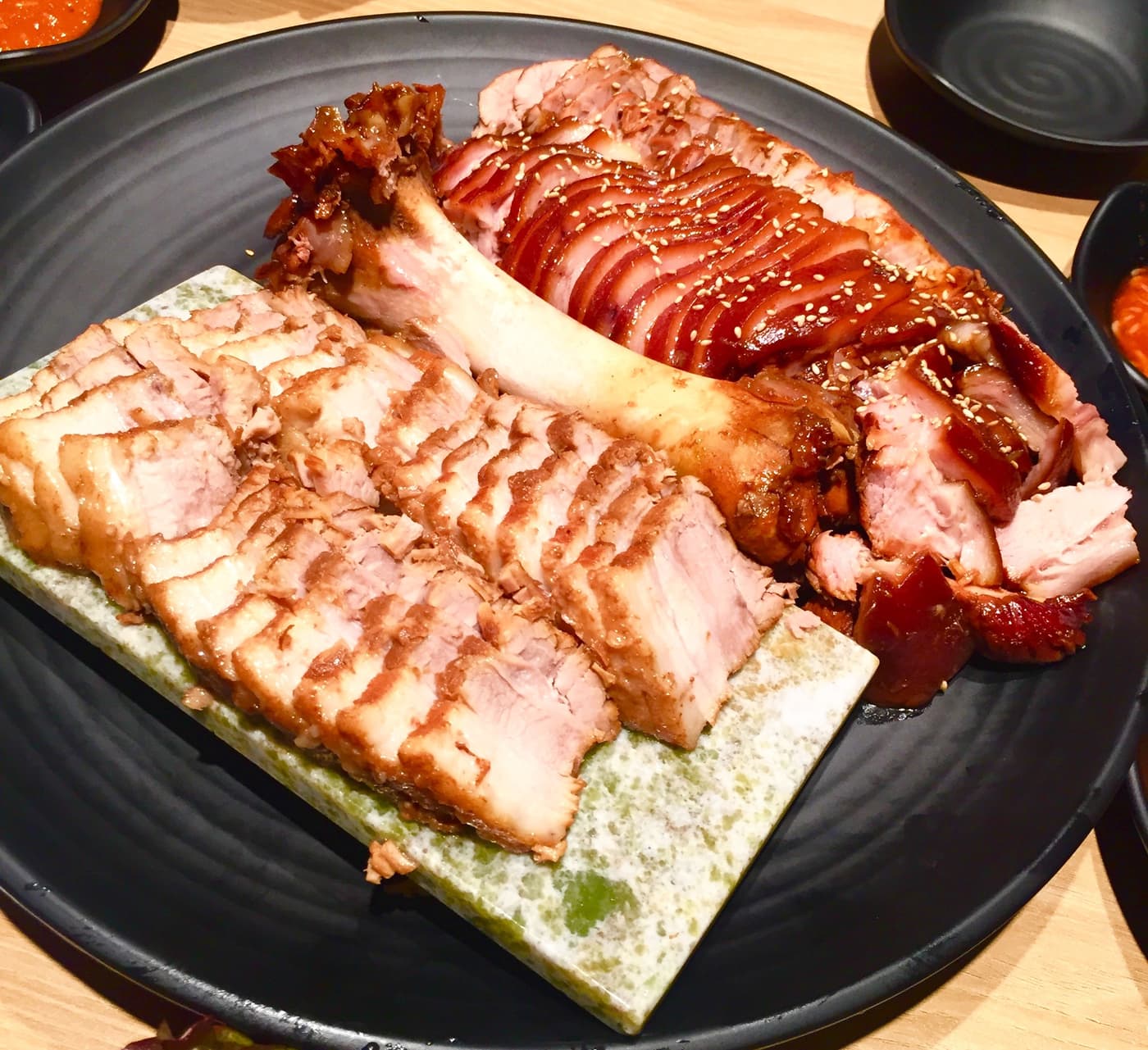
Jokbal vs Bossam: Which Korean Pork Dish Should You Order?
Jokbal and bossam share a menu, a price, and the same side dishes — but one is soy-braised trotter and the other is plain-boiled belly. Which to order, what a portion costs in August 2026, and why they are always sold together.
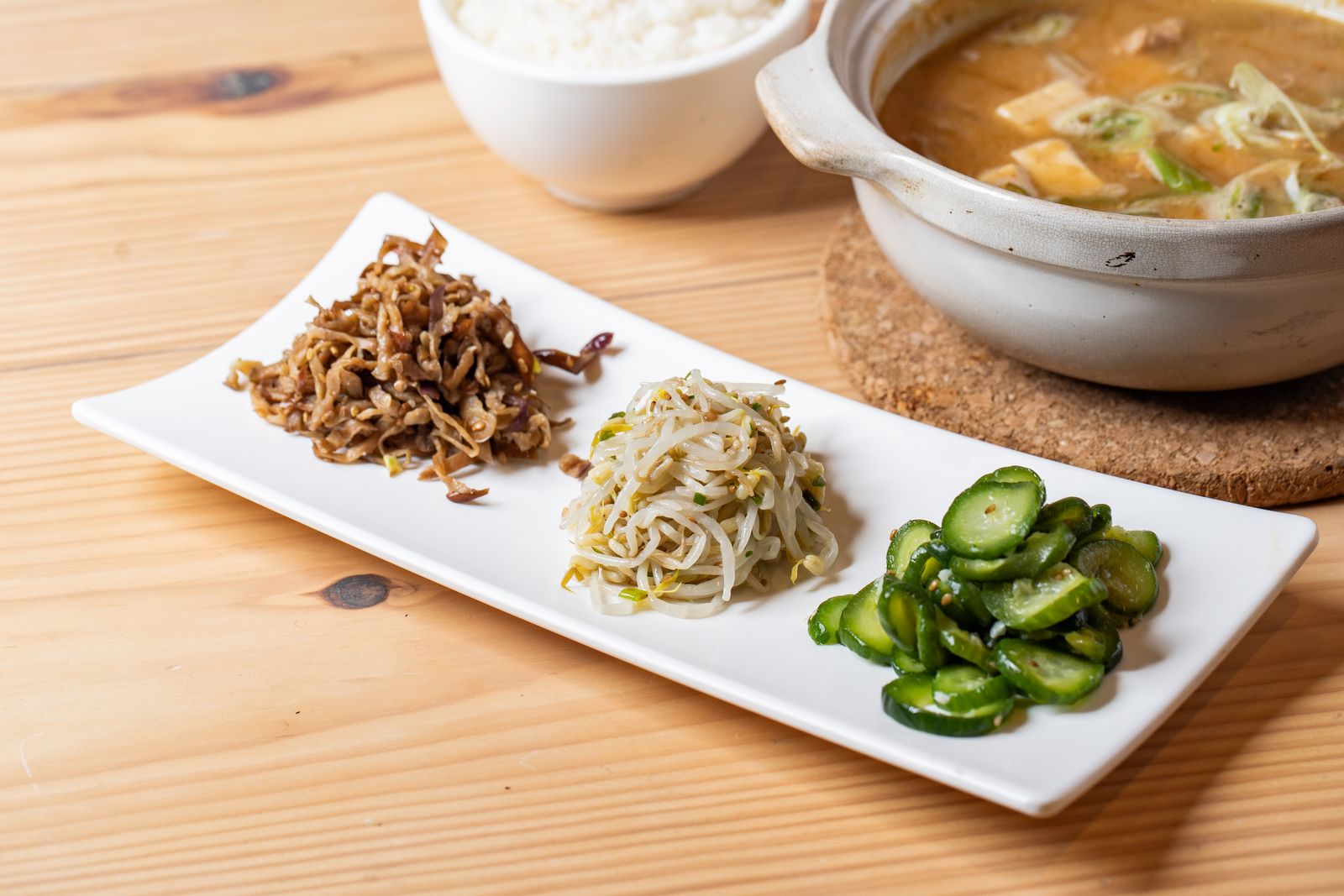
What Do Koreans Eat for Breakfast? 12 Real Meals, and Why a Third Skip It
About a third of Korean adults skip breakfast entirely, and people in their 20s score worst of any age group in the national health survey. What the other two-thirds eat, with August 2026 prices: gimbap ₩3,800, kimchi-jjigae set ₩8,654, abalone juk ₩18,900.