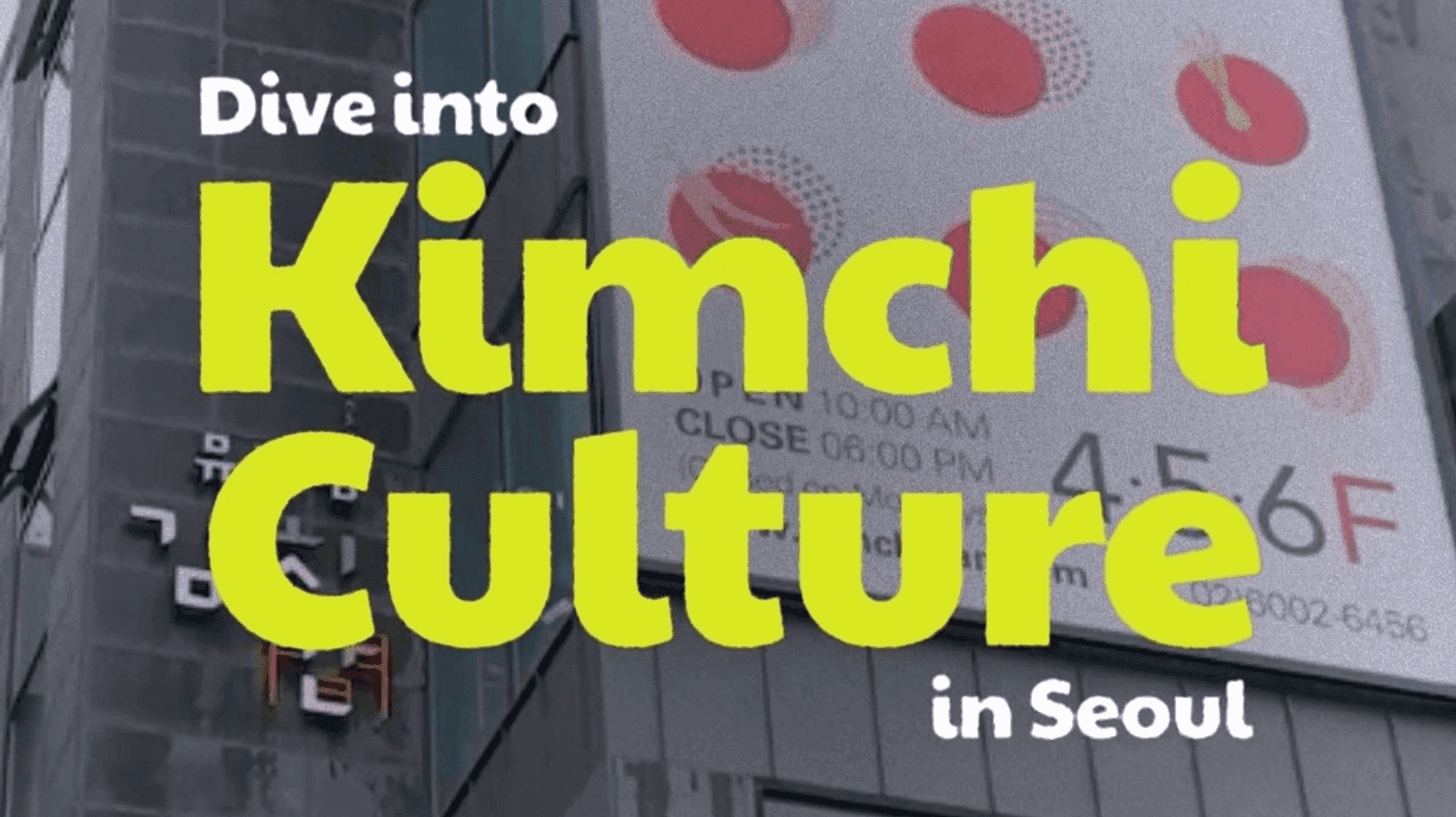
Museum Kimchikan Guide: Korean Kimchi, Kimjang, and Insadong Tips
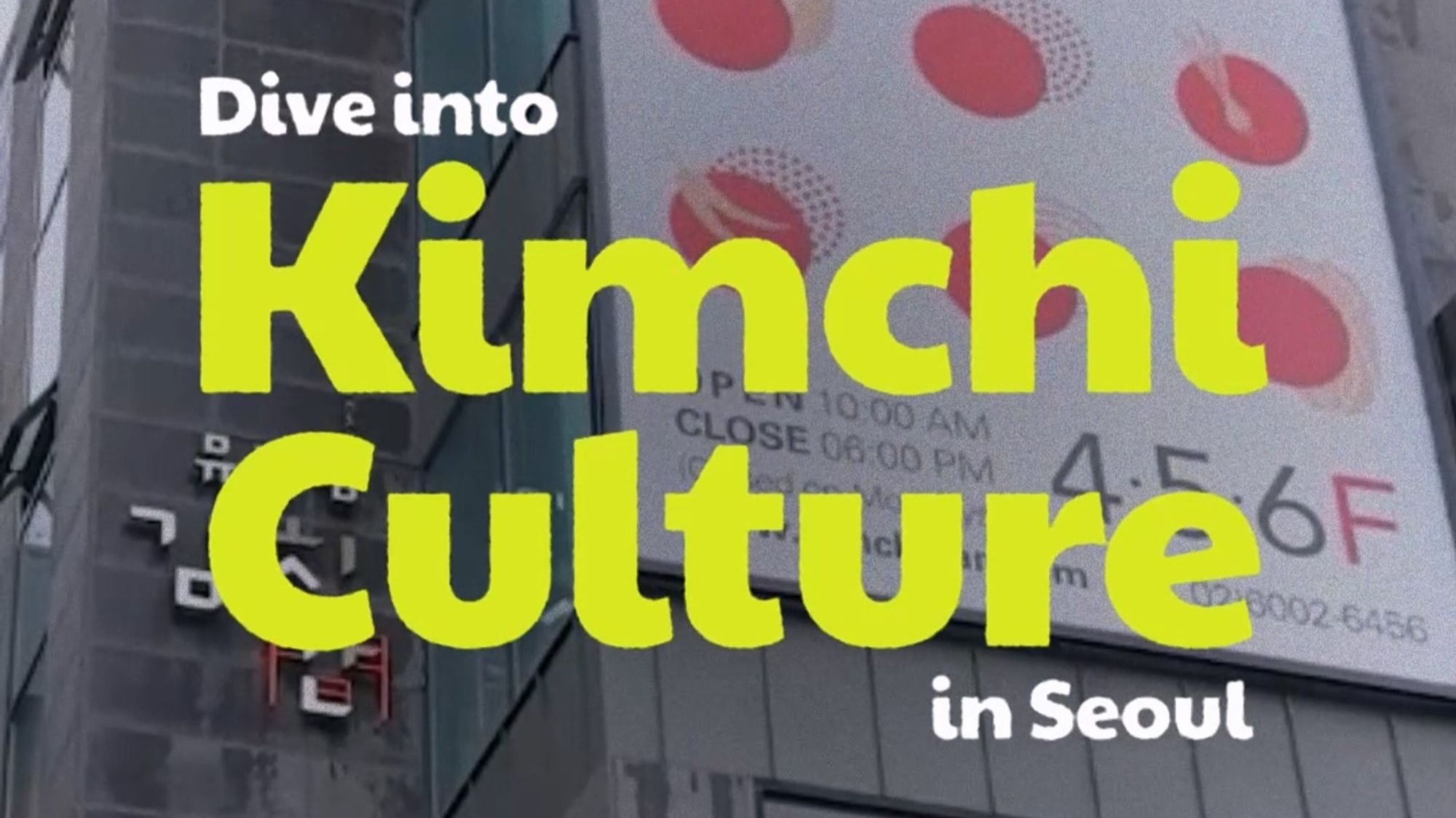
Museum Kimchikan is one of the easiest places in Seoul to understand why kimchi is more than a red side dish. It sits in Insadong, a neighborhood many travelers already visit for tea houses, crafts, galleries, souvenirs, and old Seoul atmosphere. That makes it a useful cultural stop: compact enough for a first trip, specific enough to teach something real, and close enough to combine with other Jongno-area plans.
The museum works best if you treat it as a kimchi literacy stop. You are not only looking at jars and cabbage. You are learning why kimchi changes by region, why fermentation matters, why kimjang became UNESCO-listed heritage, and why a small dish on a restaurant table can carry family memory, seasonal labor, and community care. If you want the bigger picture behind that — how kimchi and fermentation fit into the Korean diet and its longevity story — EpicKor's Korean diet secrets guide covers it.
This guide explains what Museum Kimchikan is, how to visit, what to know about kimjang, who should book an experience program, what food-allergy issues matter, and how to combine the museum with Insadong, Ikseon-dong, palaces, or a food day.
Korean kimchi stew with tofu — compare on AmazonAffiliate link. As an Amazon Associate, EpicKor earns from qualifying purchases at no extra cost to you.
Quick Answer: Is Museum Kimchikan Worth Visiting?
Yes, Museum Kimchikan is worth visiting if you are interested in Korean food, kimchi, fermentation, UNESCO kimjang culture, or a short indoor stop in Insadong. It is especially useful for travelers who keep seeing kimchi at restaurants but do not yet understand why it matters.
Here is what it costs and when you can actually get in:
| Detail | |
|---|---|
| Korean name | 뮤지엄김치간 (Museum Kimchikan) |
| Admission, adult (19+) | ₩5,000 |
| Primary / middle / high school | ₩3,000 |
| Kindergarten | ₩2,000 |
| Groups of 20+ | ₩4,000 adult · ₩2,000 student · ₩1,000 kindergarten |
| Hours | Tuesday–Sunday 10:00–18:00, last admission 17:30 |
| Closed | Every Monday, 1 January, Lunar New Year, Chuseok, 25 December |
| Where | Maru Art Center floors 4–6, 인사동길 35-4, Jongno-gu |
| Nearest stations | Anguk 안국역 (Line 3), Jonggak 종각역 (Line 1), Jongno 3-ga 종로3가역 (Lines 1/3/5) — about 6 minutes' walk from each |
Admission and hours checked August 2026 against the museum's own site. The museum moved to Insadong and reopened under this name on 21 April 2015.
At ₩5,000 this is one of the cheapest indoor stops in central Seoul, which matters for the decision it usually competes with: on a rainy Insadong afternoon it costs less than a café visit and takes about the same time.
The official Museum Kimchikan site lists opening hours as Tuesday to Sunday, 10:00-18:00, with final admission at 17:30, and closures on Mondays, January 1, Lunar New Year holidays, Chuseok holidays, and Christmas Day. VisitKorea's listing places the museum on the 4th to 6th floors of Maru Art Center at 35-4 Insadong-gil, Jongno-gu, Seoul, and describes exhibitions on kimchi culture, history, trajectory, efficacy, videos, samples, and individual or group experience programs. Check the official Museum Kimchikan site and the VisitKorea Museum Kimchikan listing before visiting because programs and fees can change.
| Visitor Type | Worth It? | Best Use | Watch Out |
|---|---|---|---|
| Food-curious traveler | Yes | Learn kimchi basics before eating more Korean food | Do not expect a huge museum. |
| Rainy-day Seoul planner | Yes | Indoor Insadong stop | Check Monday closures. |
| Family with children | Maybe | Short educational stop or program | Check age limits and program rules. |
| Serious fermentation nerd | Yes, but brief | Use it as a primer, then visit food markets | Depth may be lighter than an academic exhibit. |
| Traveler with food allergies | Maybe | View exhibits first | Programs may be limited by allergies. |
What You Learn Inside
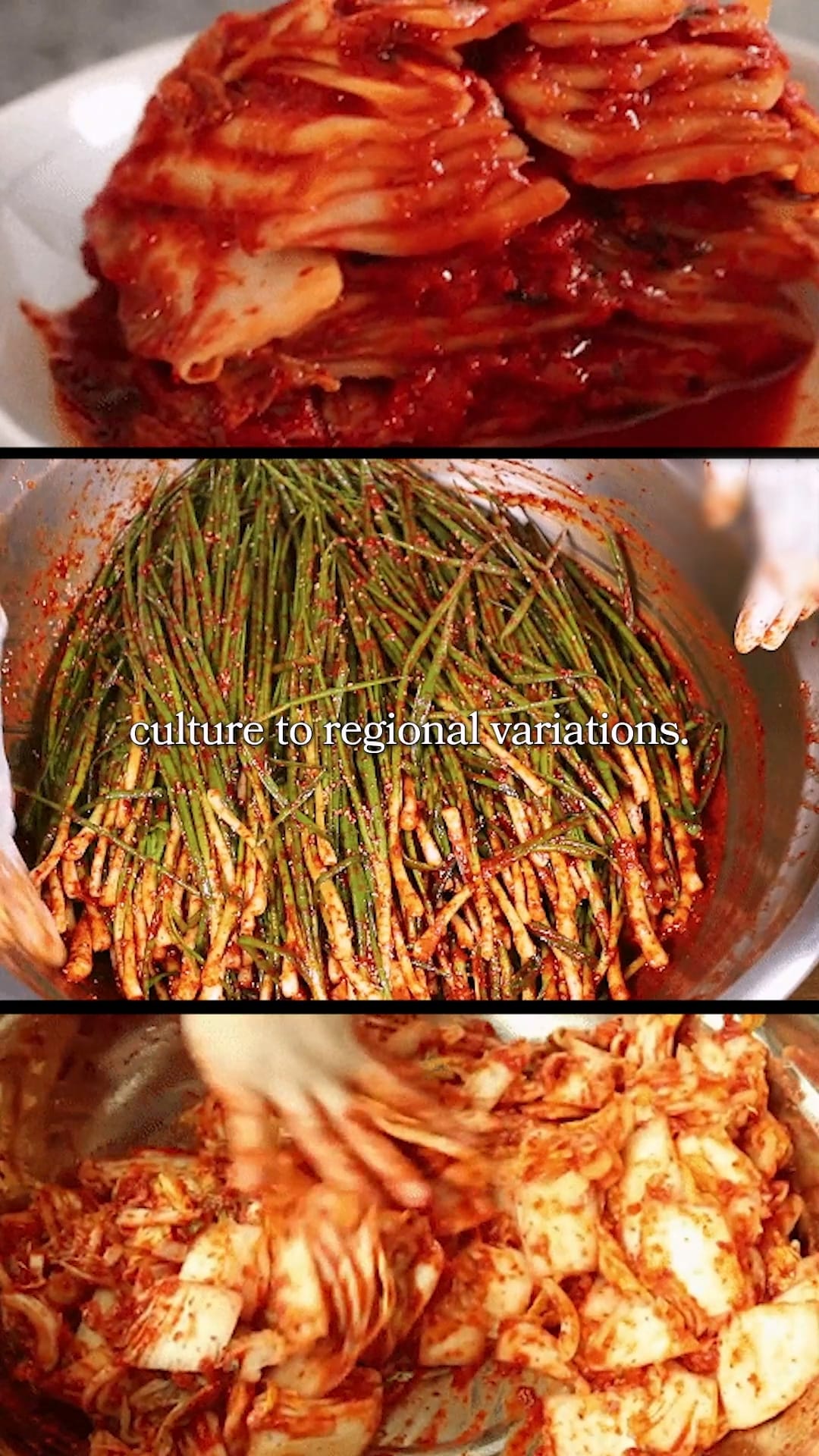
The museum's strongest value is structure. It separates kimchi into history, ingredients, fermentation, regional variation, and kimjang culture. That helps travelers move beyond the simple idea that kimchi is "spicy cabbage."
Kimchi can be cabbage, radish, cucumber, young radish greens, water kimchi, white kimchi, or many other forms. It can use seafood seasoning or stay lighter. It can be fresh, sour, aged, chopped, watery, crisp, mild, or fiery. It can be eaten as banchan, cooked into stew, grilled with pork belly, folded into fried rice, or used in pancakes.
For the table context, pair this guide with EpicKor's Korean banchan guide and free side-dish etiquette guide.
Kimchi curiosity at home: As an Amazon Associate, EpicKor may earn from qualifying purchases. If Museum Kimchikan makes fermentation feel less abstract, compare Korean kimchi stew with tofu as an easy flavor entry point.
See Korean kimchi stew with tofu on AmazonKimjang: Why UNESCO Matters
UNESCO inscribed Kimjang, making and sharing kimchi in the Republic of Korea on the Representative List of the Intangible Cultural Heritage of Humanity in 2013. UNESCO describes kimchi as preserved vegetables seasoned with spices and fermented seafood, an essential part of Korean meals across class and regional differences. It also emphasizes kimjang as a collective practice that reaffirms identity, strengthens family cooperation, and reminds communities to live in harmony with nature. See UNESCO's page on Kimjang, making and sharing kimchi.
That matters because kimjang is not only a recipe. It is a seasonal project. Families and neighbors historically prepared large amounts of kimchi for winter. Ingredients, weather, labor, storage, regional preferences, and family taste all mattered. The food carried planning and care.
Museum Kimchikan makes that heritage easier to grasp in a city setting. A traveler may not be invited to a real family kimjang, but the museum can explain why the practice became a cultural symbol.
Should You Book a Kimchi Experience Program?
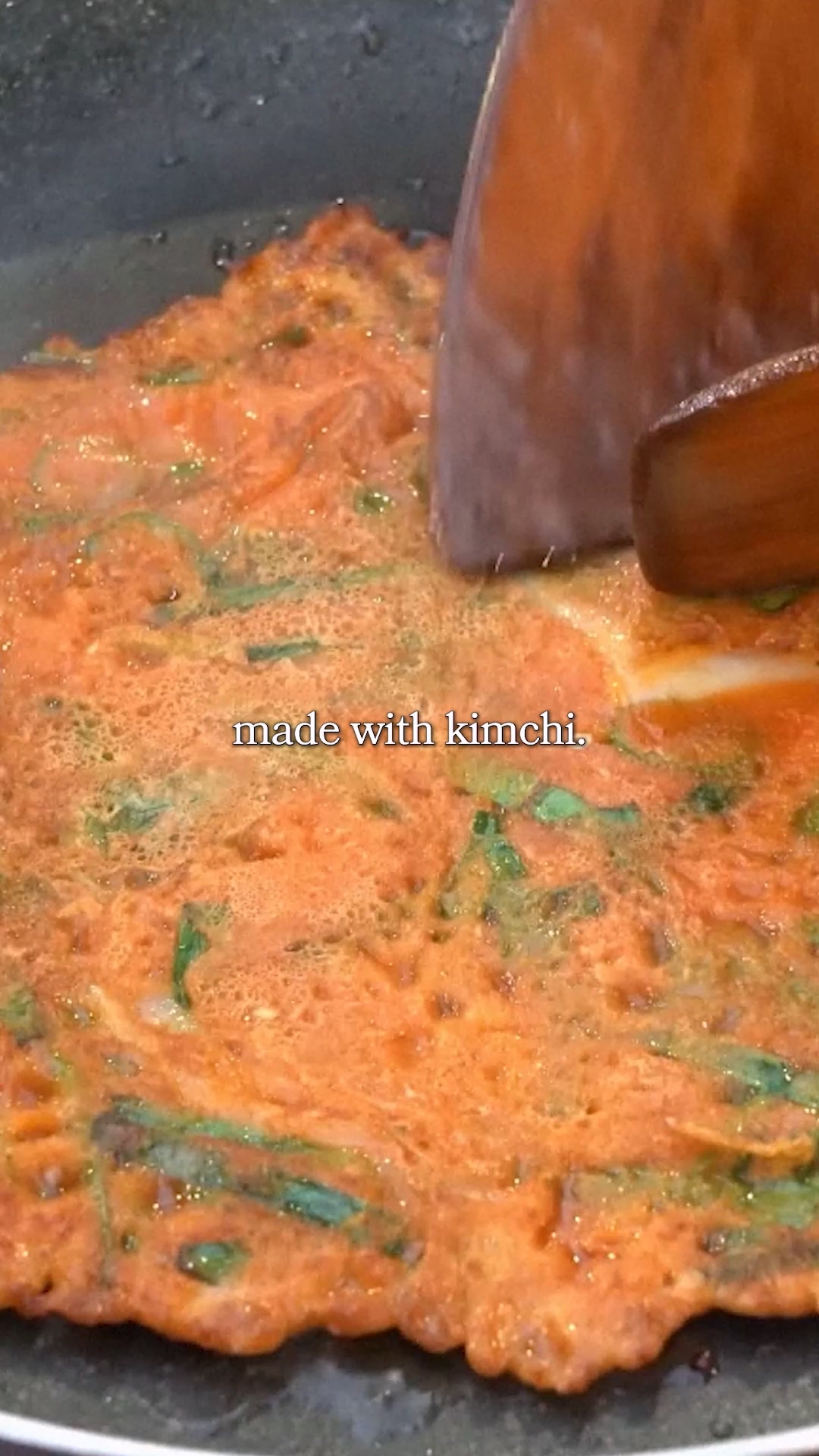
Book a program if you want a hands-on memory and can confirm the schedule, language support, allergy policy, and age rules. Museum Kimchikan's reservation page has included kimchi experience information and allergy-related notices, including that food allergies may limit participation and that very young children may not be eligible for some experiences. Always check the current program page before planning your day around it.
If you only want a quick cultural stop, the exhibit visit may be enough. If you cook, travel with children, or want a memorable food activity in Seoul, the experience can be more satisfying than another cafe stop.
Before booking, check:
- date and time;
- language support;
- total cost;
- age eligibility;
- food allergies;
- cancellation rules;
- whether admission is included;
- whether you can take the kimchi with you.
How to Fit Museum Kimchikan Into an Insadong Day
Museum Kimchikan is best as one part of a Jongno day. Do not cross Seoul only for the museum unless you are deeply interested in kimchi. Combine it with Insadong tea, Ssamziegil, Ikseon-dong alleys, Jogyesa Temple, Gyeongbokgung, Changdeokgung, or a traditional-drink bar.
| Route | Plan | Best For | Time Needed |
|---|---|---|---|
| Food culture route | Museum Kimchikan → Insadong lunch → tea house | Food-curious first-timers | 3-4 hours |
| Rainy-day route | Museum → Ssamziegil → cafe → Ikseon-dong | Indoor-heavy walking day | Half day |
| Heritage route | Palace → Insadong → Museum Kimchikan | History plus food | Full day |
| Traditional drink route | Museum → dinner → makgeolli bar | Food and fermentation theme | Evening add-on |
| Family route | Short exhibit → snack → craft/souvenir stop | Low-stress learning | 2-3 hours |
If the day includes makgeolli or traditional drinks, EpicKor's Korean drinks besides soju guide helps connect fermentation culture beyond kimchi.
Food Allergies and Dietary Restrictions
Kimchi can contain seafood, shrimp paste, fish sauce, anchovy, garlic, ginger, chili, wheat-containing seasonings, sesame, or other allergens depending on the recipe. White-looking or vegetable-looking kimchi is not automatically vegetarian or allergy-safe.
If you have serious allergies, do not rely on visual guessing. Contact the museum before booking an experience and carry a translated allergy card. If a program cannot safely accommodate your restriction, enjoy the exhibit instead and skip tasting or making activities.
This is also true at restaurants. Kimchi served as banchan may contain seafood-based fermentation ingredients. Vegetarian and vegan travelers should ask carefully.
What to Eat After the Museum
After Museum Kimchikan, choose food that lets you apply what you learned:
- kimchi jjigae for aged kimchi flavor;
- bossam with kimchi for pork-and-fermentation contrast;
- Korean barbecue with grilled kimchi;
- bibimbap with banchan;
- pajeon and makgeolli for fermented drink pairing;
- a home-style baekban meal with several side dishes.
You do not have to chase a famous restaurant. The point is to notice how kimchi changes the table. Sometimes the best lesson is a simple soup meal with excellent kkakdugi.
Table companion: Kimchi culture is easier to understand beside rice, wraps, and sauce, so compare Korean ssamjang sauce if you want a broader Korean table setup at home.
What Not to Expect
Do not expect Museum Kimchikan to replace a full food tour, family kimjang, or professional fermentation course. It is a curated museum in a tourist-friendly neighborhood. Its value is clarity and access.
Also do not expect kimchi to become one simple definition. The museum may actually make the category feel bigger. That is good. Kimchi is daily food, preserved food, regional food, family food, restaurant food, export product, and cultural symbol at once.
Who Should Prioritize It on a Short Seoul Trip?
Prioritize Museum Kimchikan if your Seoul plan already includes Insadong, palaces, temple stops, traditional drinks, cooking classes, or food shopping. The museum is strongest when it becomes a bridge between what you see and what you eat later. A traveler who visits the museum in the afternoon may notice the kimchi in a dinner stew differently that same night.
Skip or postpone it if your only full day in Seoul is already packed with Gyeongbokgung, Bukchon, Myeongdong, and a market. In that case, kimchi will still appear naturally at meals, and you can save the museum for a rainy day, second trip, or food-focused route.
The sweet spot is a half-day Jongno plan:
- start with a palace or Jogyesa Temple;
- move into Insadong for Museum Kimchikan;
- eat a Korean lunch or tea-house snack nearby;
- continue to Ikseon-dong, a makgeolli bar, or a craft/souvenir stop.
That route keeps the museum from feeling isolated. It also avoids the common travel mistake of crossing Seoul for one short indoor attraction, then losing the rest of the day to transit.
How Kimchi Changes After the Museum
After visiting, try paying attention to kimchi in three different settings. At a soup restaurant, notice whether the kkakdugi is sharp enough to reset the broth. At a barbecue table, notice how fresh or grilled kimchi cuts through pork fat. At a home-style baekban place, notice how kimchi sits beside other banchan rather than trying to dominate the meal.
This is where the museum's real value appears. It gives you vocabulary for food you were already going to eat. Instead of treating kimchi as one spicy object, you start seeing age, texture, acidity, region, salt, seafood, storage, and pairing. That small shift makes everyday meals more interesting.
Video Insight: The Kimchi Experience
FAQ
Q: Where is Museum Kimchikan?
Museum Kimchikan is in Insadong, Jongno-gu, Seoul, inside Maru Art Center. Check the official site for current directions before visiting.
Q: What are Museum Kimchikan's opening hours?
The official site lists Tuesday to Sunday, 10:00-18:00, with final admission at 17:30. It is closed Mondays and selected holidays.
Q: Do I need a reservation?
General visits may be possible without a program reservation, but experience programs and group visits can require booking. Check the current official program page.
Q: Is Museum Kimchikan good for children?
It can be, especially for a short educational stop, but age limits may apply to experience programs. Confirm before booking.
Q: Is kimchi vegetarian?
Not always. Many kimchi recipes include seafood or fish-based ingredients. Vegetarian travelers should ask carefully.
Q: What should I do near Museum Kimchikan?
Combine it with Insadong tea houses, Ssamziegil, Ikseon-dong, Jogyesa Temple, palaces, or a traditional Korean meal nearby.
You Might Also Like
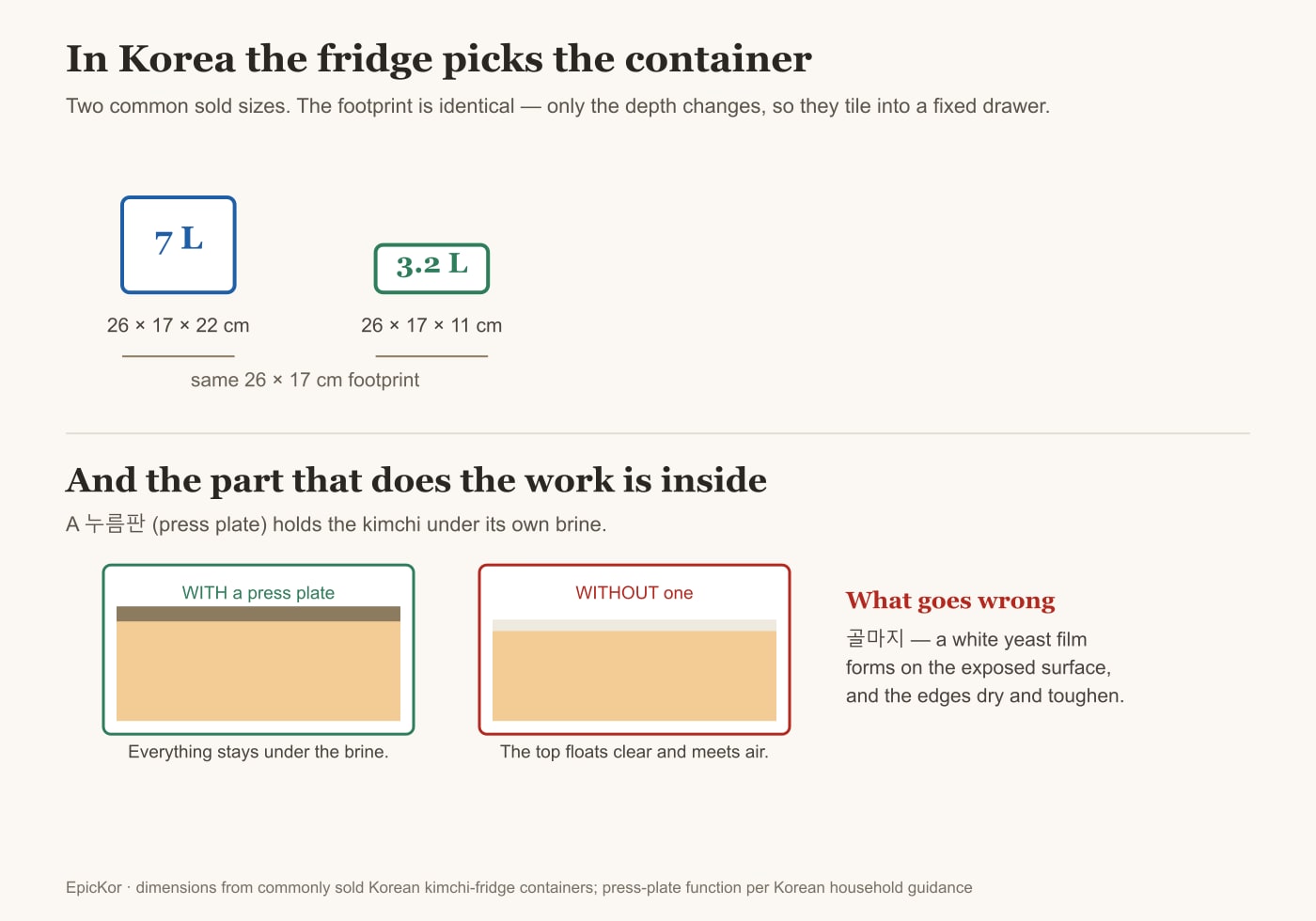
Korean Kimchi Containers: The Press Plate Matters More Than the Lid
English buying guides rank kimchi containers by lid. In Korea the fridge picks the size — 7L and 3.2L share a 26 × 17cm footprint so they tile — and the part that decides whether the kimchi survives is the 누름판, the plate that holds it under its own brine.
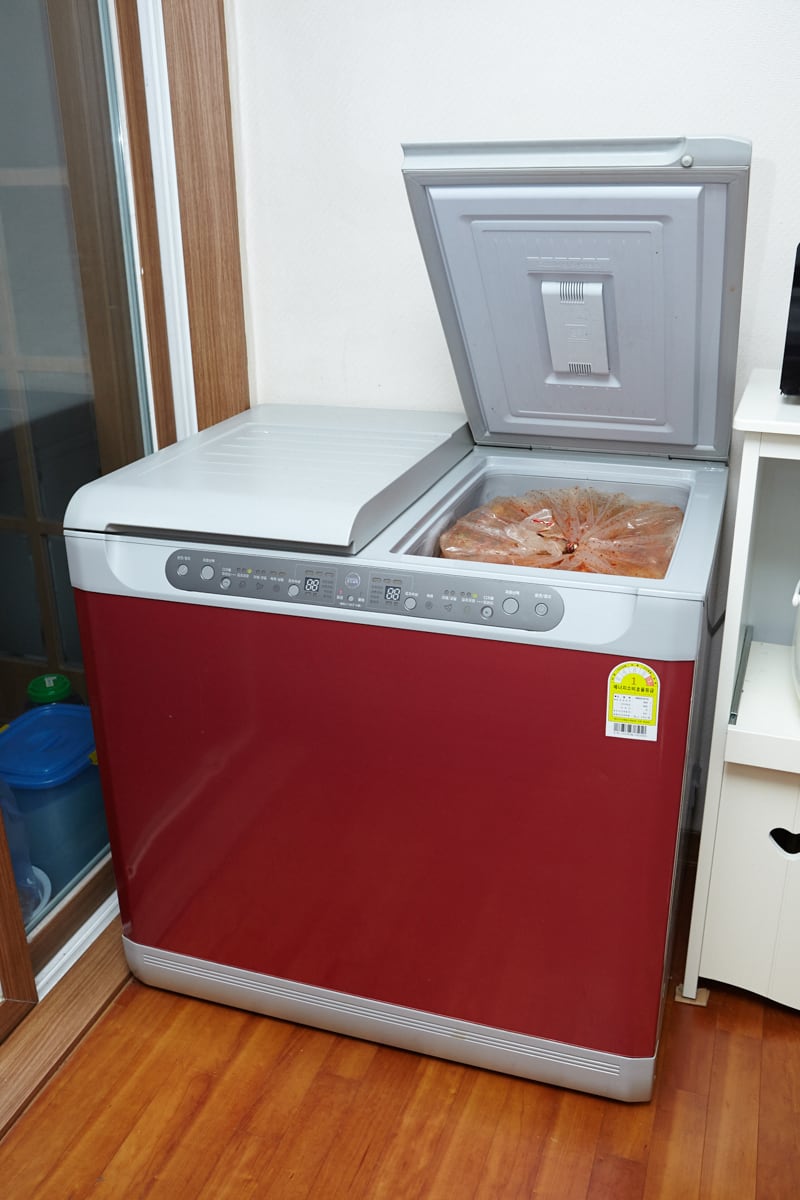
Kimchi Refrigerators Explained: Why Korea Built a Fridge for One Food
Korea invented a second refrigerator that exists only to store kimchi at the temperature of winter earth. Here is why it exists, how it works, what happened to the company that invented it six weeks ago, and what to check before buying one abroad.
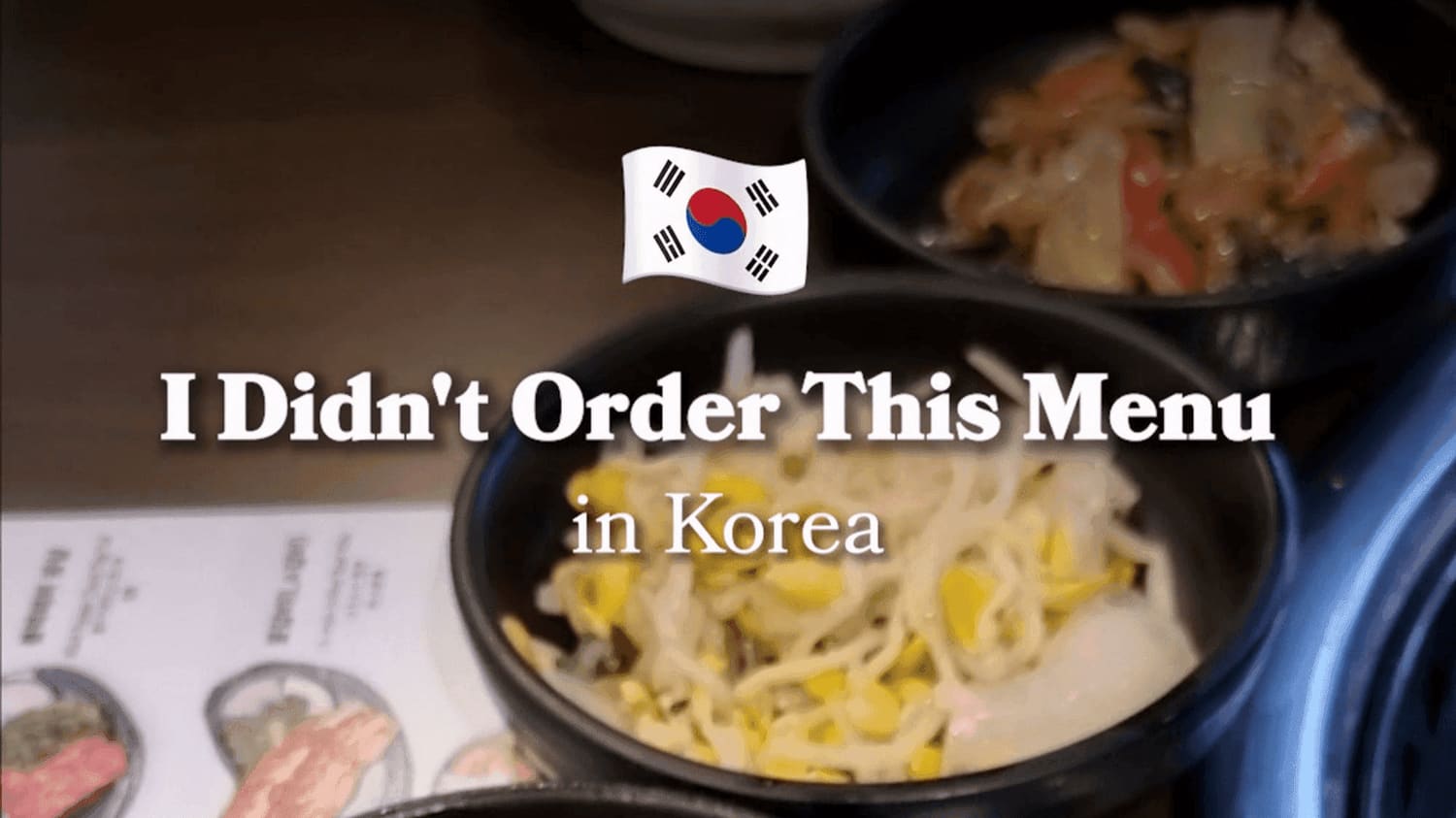
Korean Banchan Guide: Side Dishes, Kimchi, and Table Rules
A practical Korean banchan guide explaining side dishes, kimchi, namul, jang seasonings, table layout, refills, etiquette, and what to try first.