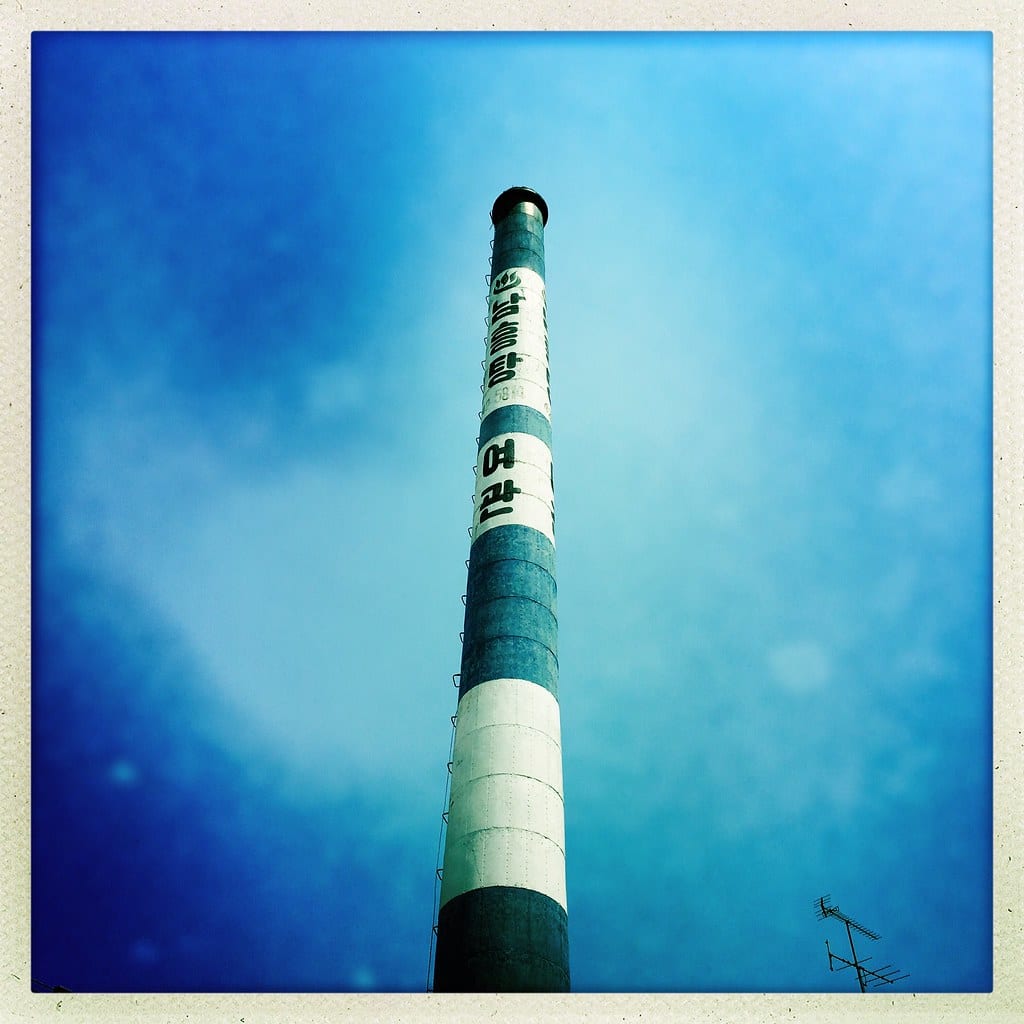
Korean Bathhouse Prices: What a Mogyoktang Costs in Every Region
Last updated: 20 October 2026. Bath prices are the government's personal-service price survey for September 2026 (provisional figures; source National Data Office, published on the Korea Consumer Agency's T-Price site, price.go.kr, read 20 October 2026). Bathhouse rules are from the Enforcement Rule of the Public Health Control Act as in force on 20 October 2026 (law.go.kr). Dollar figures use ₩1,342 to the US dollar (Federal Reserve, 9 October 2026). Sources are at the end.
Korean bathhouse prices in English guides still say "₩6,000 to ₩8,000". As of October 2026 that is out of date almost everywhere. The government's own survey puts a single adult entry to an ordinary public bath, the neighbourhood mogyoktang (목욕탕), at ₩11,000 in Seoul for September 2026, about $8.20 and the highest in the country. The cheapest region is Gwangju at ₩8,100 (about $6). Seoul's price was ₩7,308 in September 2020, so it has gone up by just over 50% in six years.
That is still the cheapest hot bath in Korea. Spa Land in Busan or Aquafield near Seoul costs ₩26,000, and a jjimjilbang (our first-timer guide) adds sauna rooms, a sleeping hall and food at a higher price. This guide is about the plain neighbourhood bath: what it costs in each region, what the ticket covers, and how to use one without looking lost.
The one thing every Korean bath regular brings: GOLDSANGSA green Italy towel scrub mitts (이태리타월), 4-pack, on AmazonAffiliate link. As an Amazon Associate, EpicKor earns from qualifying purchases at no extra cost to you.
Quick Guide: Korean bathhouse prices and rules, October 2026
| Question | Answer |
|---|---|
| Seoul price | ₩11,000 (≈ $8.20) for one adult entry, September 2026, the highest in Korea |
| Cheapest region | Gwangju ₩8,100 (≈ $6.04); Gyeongnam and Gyeongbuk ₩8,385 |
| Average of the 16 regions surveyed | About ₩9,235 (our simple average of the regional figures, not weighted) |
| Seoul, six years ago | ₩7,308 in September 2020; ₩10,769 in September 2025 |
| What the price is | The survey item is 성인 일반대중탕 1회 요금: one adult entry to an ordinary public bath, no sauna-room (jjimjil) floor |
| Scrub (세신, seshin) | Extra. About ₩20,000–40,000 from the bathhouse scrubber (Korea JoongAng Daily, August 2025) |
| Kids and the opposite-sex bath | From age 4 (48 months) a child may not go into the opposite sex's bath or changing room |
| Price list | By law the bath must post its price list at the counter |
| Big spa instead | Spa Land (Busan) and Aquafield ₩26,000; Cimer jjimjil ticket ₩40,000 (see our spa prices guide) |
All regional prices are the September 2026 survey, the latest month on price.go.kr. They are averages of a small sample of baths per region, and price.go.kr itself warns that regions are not strictly comparable because the surveyed baths differ. The bath on your corner can be a thousand won either side.
XL Korean exfoliating mitt, made in Korea, 10-pack — the bigger Italy towel If you are going to do the Korean scrub yourself instead of paying ₩20,000 or more for the scrubber, a mitt that covers your whole palm makes the back and legs much easier. Soak for fifteen minutes first, then scrub. The current price is on the listing. As an Amazon Associate, EpicKor earns from qualifying purchases at no extra cost to you.
See the XL Korean exfoliating mitt on AmazonWhat a bath costs in each region of Korea
This is the whole September 2026 survey for baths, as published on T-Price (참가격), the Korea Consumer Agency's price site, under 개인서비스요금 (personal-service prices; source line: National Data Office, 국가데이터처). The item is one adult entry to an ordinary public bath (성인 일반대중탕 1회 요금).
| Region | Adult bath, Sept 2026 | ≈ US$ | Men's haircut, same survey |
|---|---|---|---|
| Seoul (서울) | ₩11,000 (highest) | $8.20 | ₩13,308 |
| Gyeonggi (경기) | ₩10,586 | $7.89 | ₩14,483 |
| Gangwon (강원) | ₩10,222 | $7.62 | ₩16,444 |
| Chungbuk (충북) | ₩10,000 | $7.45 | ₩13,857 |
| Incheon (인천) | ₩9,667 | $7.20 | ₩13,833 |
| Daegu (대구) | ₩9,250 | $6.89 | ₩12,833 |
| Chungnam (충남) | ₩9,100 | $6.78 | ₩15,000 |
| Ulsan (울산) | ₩9,000 | $6.71 | ₩13,600 |
| Jeonbuk (전북) | ₩9,000 | $6.71 | ₩13,600 |
| Busan (부산) | ₩8,929 | $6.65 | ₩11,286 |
| Jeonnam (전남) | ₩8,833 | $6.58 | ₩15,556 |
| Daejeon (대전) | ₩8,800 | $6.56 | ₩15,600 |
| Jeju (제주) | ₩8,500 | $6.33 | ₩13,000 |
| Gyeongnam (경남) | ₩8,385 | $6.25 | ₩14,385 |
| Gyeongbuk (경북) | ₩8,385 | $6.25 | ₩14,077 |
| Gwangju (광주) | ₩8,100 (lowest) | $6.04 | ₩15,200 |
Seoul is the top, ₩2,900 above Gwangju. A Gwangju bath costs about three-quarters of a Seoul one. Busan, where many visitors first try a Korean bath, is ₩8,929, about ₩2,000 below Seoul. Only Seoul, Gyeonggi (₩10,586), Gangwon (₩10,222) and Chungbuk (₩10,000) reach ₩10,000.
A bath is cheaper than a men's haircut in every region. In Seoul the gap is ₩2,308; in Gwangju a haircut costs almost twice as much as a bath.
The survey has no separate line for Sejong, and it lists Gwangju and Jeonnam under a combined "Jeonnam-Gwangju" (전남광주) heading with a price for each.
You might like: Korea's Neighbourhood Bathhouses Are Disappearing, and the Bath Is Not: Where the Hot Water Went
How the price got here: Seoul from ₩7,308 to ₩11,000
Seoul's figure in the same survey was ₩7,308 in September 2020, ₩10,769 in September 2025 and ₩11,000 in September 2026: up ₩3,692, or 50.5%, in six years, and 2.1% in the last twelve months. The Korea Economic Daily, reporting the July 2026 figure (also ₩11,000) on 27 September 2026, put the two-year rise at 5.1%, from ₩10,462 in July 2024. Gwangju moved even faster, from ₩5,900 in September 2020 to ₩8,100.
Almost all of the rise came between 2020 and 2025, the same years in which hundreds of neighbourhood baths closed; our bathhouse decline story covers why, and where Koreans went instead. For a visitor the result is simple: guidebook prices of ₩6,000 to ₩8,000 are pre-2021 prices, and in Seoul you should now expect ₩10,000 to ₩12,000 at the counter.
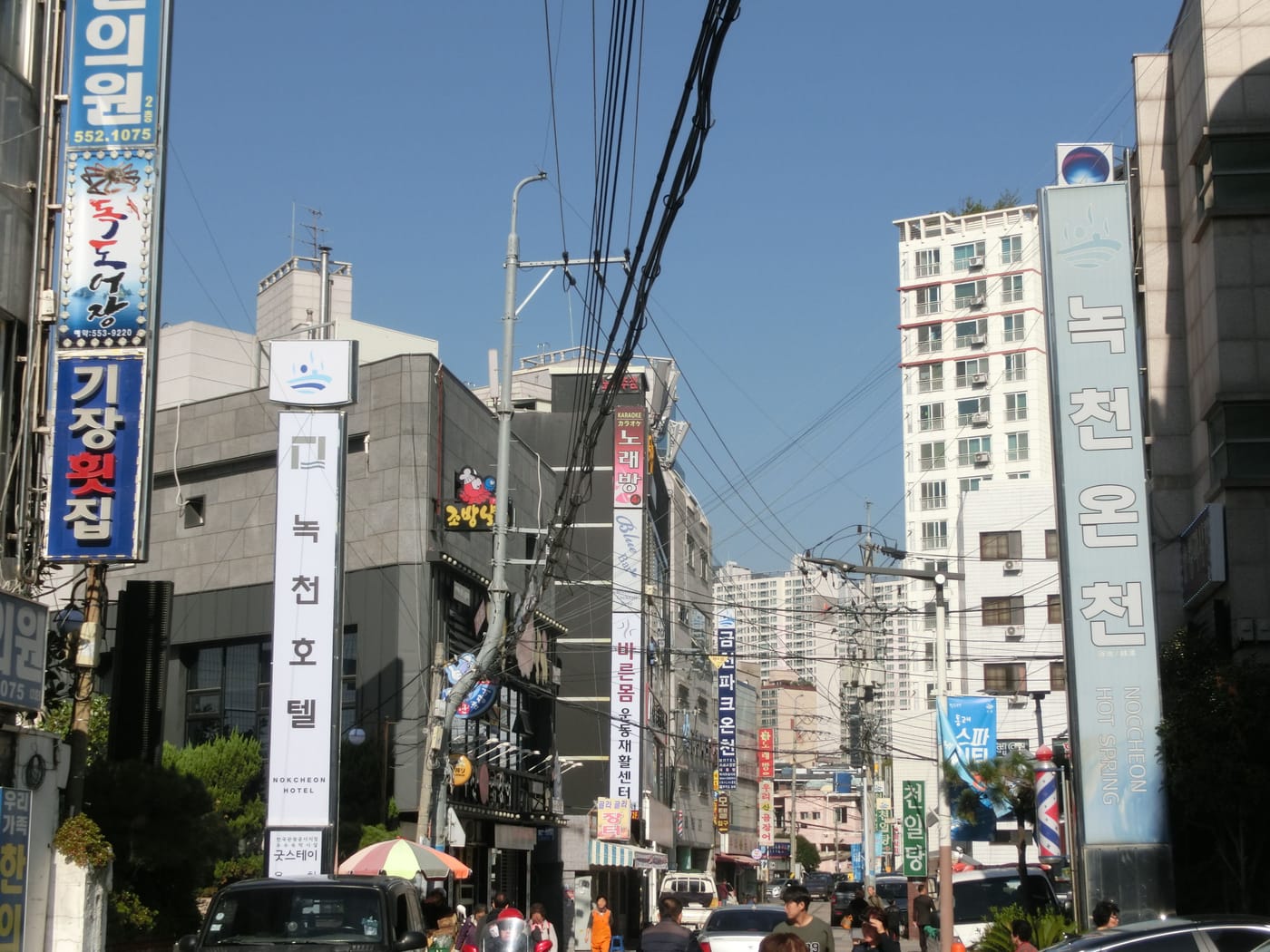
The price board at the counter usually uses four words: 대인 (dae-in) adult, 소인 (so-in) child, 목욕 (mogyok) the bath, and 찜질 (jjimjil) the sauna-room floor if the building has one. Rentals, such as sauna clothes or an extra towel, are listed separately.
What the ticket covers, and what costs extra
The ticket price covers the bath: the changing room, the showers, the hot and cold pools, and usually a dry or steam sauna inside the bath area. What it does not cover varies from bath to bath, so read the board at the counter (the law requires it to be posted there, see below).
| Item | Usually | What to do |
|---|---|---|
| Entry to the bath area | Included | Pay at the counter; you get a locker key |
| Towels | Some baths hand out small towels; others charge a small rental | Bring a quick-dry towel if you want to be sure |
| Soap, shampoo | Varies | Bring travel-size bottles; the counter often sells small items |
| Scrub mitt (Italy towel, 이태리타월) | Sold at the counter | Or bring your own |
| Scrub by the bathhouse scrubber (세신) | Extra, paid in the bath area | About ₩20,000–40,000 |
| Sauna-room floor (찜질) | Extra, if the building has one | Pay the jjimjil price instead of the bath price |
Rainleaf quick-dry microfiber towel — the bath towel that fits in a day bag Whether your bath hands out towels or charges for extras, a light towel that dries by the time you reach your next stop solves the problem. It also works at hot springs and hostels. The current price is on the listing. As an Amazon Associate, EpicKor earns from qualifying purchases at no extra cost to you.
See the Rainleaf quick-dry towel on AmazonHow to use a Korean bathhouse, step by step
The order matters more than any single rule, and the shower matters most.
- Find it. Look for the ♨ symbol and a sign ending in 탕 (tang, bath), or the words 목욕탕 (mogyoktang), 온천 (oncheon) or 사우나 (sauna). On Naver Map, search 목욕탕 for the nearest ones and their hours. A 24-hour place is usually a jjimjilbang, not a plain bath.
- Shoes off at the door. Put your shoes in the small shoe locker by the entrance and take its key.
- Pay at the counter and take the numbered locker key on its wristband. Men and women then go to separate floors or doors: 남탕 (namtang) is the men's bath, 여탕 (yeotang) the women's.
- Undress fully. Everything goes in the locker; Korean baths are nude, no swimsuits.
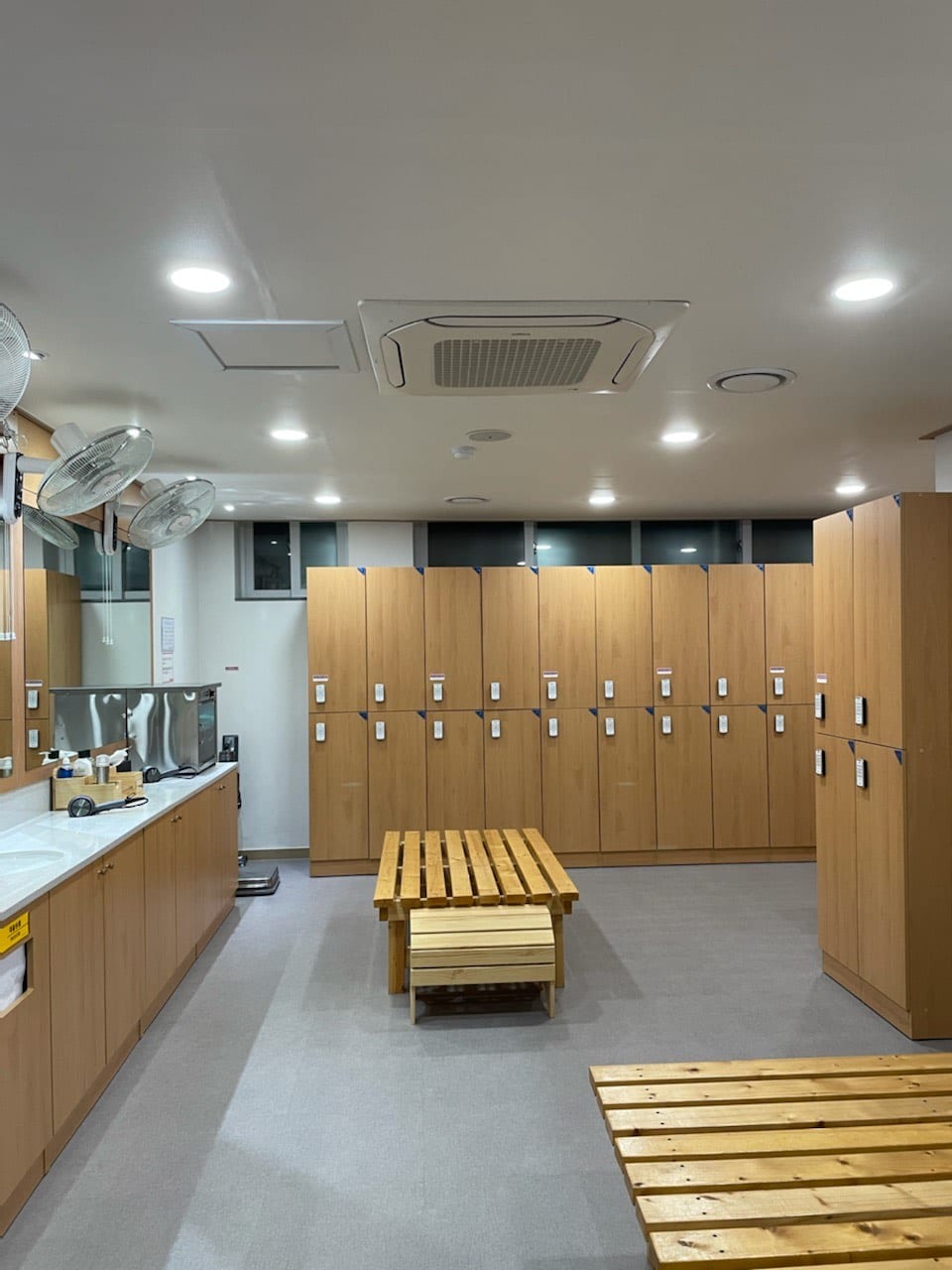
- Shower before you touch any pool, sitting on one of the low stools at the shower row.
- Soak, sauna, cold pool, repeat. Keep your head and hair out of the water.
- Scrub, if you want to, after at least fifteen minutes of soaking (see below).
- Rinse your stool and basin, and dry off before going back to the changing room.
The scrub: what seshin costs and how to ask
The Korean scrub is called seshin (세신) and, more informally, ttaemiri (때밀이). At a neighbourhood bath the scrubber works in a corner of the bath area on a covered bed or mat. Ask at the counter when you pay, or speak to the scrubber directly, and pay whoever the bath tells you to.
Korea JoongAng Daily, reporting in August 2025 on foreigners discovering the scrub, put the traditional walk-in scrub at bathhouses at about ₩20,000 to ₩40,000, about $15 to $30. Private one-person scrub studios, which have spread in Seoul since about 2022, charge far more, typically ₩50,000 to ₩80,000, and are covered in our bathhouse decline story.
Three things to know before you lie down:
- Soak first. The scrubber will ask you to soak for 15 to 20 minutes so the skin softens.
- It is rough on purpose. The grey rolls are dead skin. If it hurts, say 살살 (salsal, "gently") or 아파요 (apayo, "it hurts").
- You can do it yourself with a cheap green mitt from the counter: after soaking, in long strokes, then rinse well.
If you want a full spa massage instead, our Korean massage guide covers what you get and what it costs in Seoul.
The rules every bathhouse must follow, from the law
Bathhouses are licensed under the Public Health Control Act (공중위생관리법), and the Enforcement Rule's table of operator duties (별표 4) has several rules that affect visitors. These are from the version in force on 20 October 2026.
| Rule (in the law) | What it means for you |
|---|---|
| Men and women aged 4 (48 months) and over may not be admitted together to a bath or changing room | A father cannot take a daughter of 4 or older into the men's bath, and a mother cannot take a son of 4 or older into the women's. The limit was age 5 until 31 December 2020; it became 4 on 1 January 2021 |
| Staff in the bath, changing room and sauna must be the same sex as the bath (except for cleaning outside opening hours) | The scrubber in the women's bath is a woman; in the men's bath, a man |
| The price list must be posted at the counter | You can always check the price before paying |
| Towels, gowns and rental clothes must be laundered before being given out; bath water must be tested at least once a year | A bath can look tired, but what it hands you is meant to be clean |
| A sauna room must have a thermometer and a warning notice | The notice warns, among others, children under 5, anyone with a cold, systolic blood pressure of 180 or more, pregnancy, old age, or alcohol in the last 2 hours |
| Anyone too drunk to use the bath normally must not be admitted | The counter can turn you away after a night out |
| 24-hour bathhouses with sauna rooms must restrict unaccompanied teenagers at night (within 22:00–05:00, as each province sets) | Applies to jjimjilbang-type places, not to plain baths that close in the evening |
The age rule is the one families trip over. One parent with a child of the other sex aged 4 or above cannot use a neighbourhood bath together; a jjimjilbang's mixed sauna floor, in the clothes provided, or a room with its own bath, works.
Tattoos. The law above does not mention them, and we found no written tattoo rule for neighbourhood baths; the big spas have their own (our spa guide quotes them). A large tattoo may draw looks from older regulars. If in doubt, ask: 타투 괜찮아요? (tatu gwaenchanayo?, "Are tattoos OK?").
Bathhouse etiquette at a glance
| Do | Don't |
|---|---|
| Tie long hair up | Put your head under or swim |
| Keep the small towel out of the pool (on your head or on the side) | Dip your towel in the bath |
| Keep the shower spray pointed at yourself | Splash the person on the next stool |
| Speak quietly | Take phones or cameras into the bath area |
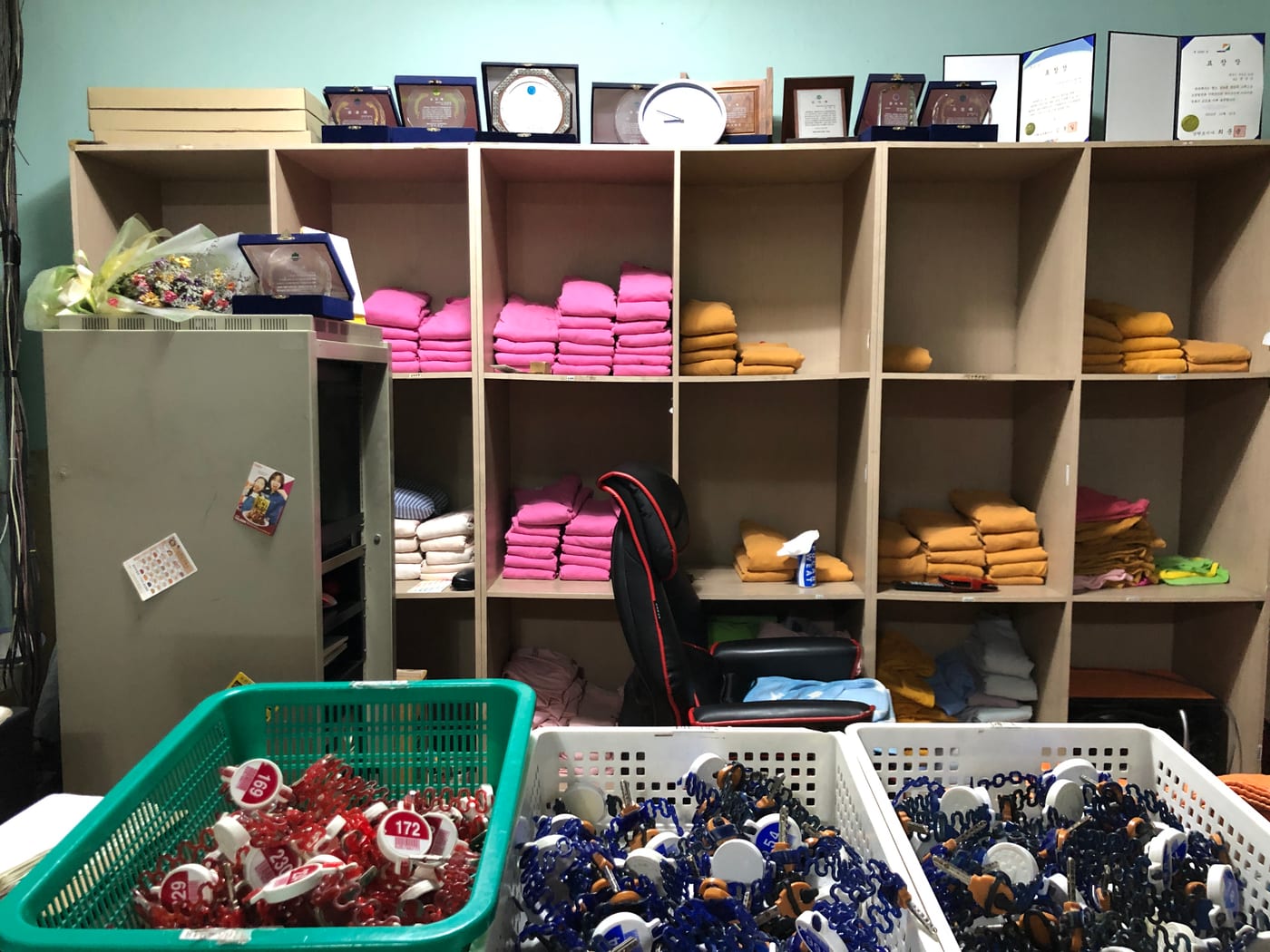
Bathhouse vs jjimjilbang vs big spa: which to choose
A mogyoktang is a bath. A jjimjilbang adds a mixed floor of heated sauna rooms in provided clothes, food and a sleeping area, often 24 hours. A big spa is the same on a larger scale, with a time limit.
| Neighbourhood bath (목욕탕) | Jjimjilbang (찜질방) | Big spa (Spa Land, Aquafield, Cimer) | |
|---|---|---|---|
| Price | ₩8,100–11,000 by region (Sept 2026 survey) | Usually a few thousand won more than the bath (no government survey) | ₩26,000 (Spa Land, Aquafield); Cimer jjimjil ticket ₩40,000 |
| What you get | Showers, hot and cold pools, sauna; separate by sex | The bath, plus sauna rooms, a sleeping hall, food; mixed floor in clothes | A large bath and jjimjil floor; pools at some |
| Time limit | Usually none within opening hours | Usually none; many open 24 hours | 4 hours (Spa Land), 6 hours (Aquafield), then overtime |
| Best for | An hour's hot soak and a scrub | A long evening, a cheap night, families | A spa day, foreign-friendly signage |
| Guide | This page | Jjimjilbang guide | Spa prices and tattoo rules |
For a hot bath and a scrub, the neighbourhood bath is the best-value hour in Korea: ₩11,000 in Seoul is less than half of Spa Land's ₩26,000. To stay for hours, sleep, eat, or bring a child of the other sex, go to a jjimjilbang.
You might like: Korean Spa Prices and Tattoo Rules: Spa Land Busan, Cimer and Aquafield
When not to go to a neighbourhood bath
- If you are one adult with a child of the other sex aged 4 or over. See the age rule above.
- If you are uncomfortable being nude among strangers. There is no swimsuit option at a mogyoktang. A big spa with a swimsuit water-park zone, such as Aquafield or Cimer, is the better fit.
- If you need it late at night. Plain baths close in the evening; a 24-hour jjimjilbang is the late option.
- If you have just been drinking. The counter can turn you away.
- If you want a spotless, modern room. Many neighbourhood baths are in old buildings; a big spa is newer.
FAQ
Q: How much is a Korean bathhouse in 2026?
A: In the government survey for September 2026, one adult entry averaged ₩11,000 in Seoul (about $8.20), the highest, and ₩8,100 in Gwangju, the lowest. Most regions are between ₩8,400 and ₩10,600. A scrub is extra.
Q: How much is a Korean scrub (seshin) at a bathhouse?
A: About ₩20,000 to ₩40,000 from the bathhouse scrubber (Korea JoongAng Daily, August 2025). Private scrub studios charge ₩50,000 to ₩80,000.
Q: What is the difference between a mogyoktang and a jjimjilbang?
A: A mogyoktang is a bath separated by sex, with showers, pools and a sauna, usually closing in the evening. A jjimjilbang adds a mixed floor of sauna rooms in provided clothes, food and a sleeping hall, often 24 hours, and costs more.
Q: Can I bring my child into the bath of the opposite sex?
A: Only if the child is under 4 (48 months). The Enforcement Rule of the Public Health Control Act forbids admitting males and females aged 4 or over together to a bath or changing room. The limit was 5 until the end of 2020.
Q: Do I have to be naked in a Korean bathhouse?
A: Yes. Everyone in the bath area is nude, and you shower before entering any pool. If you want to wear something, choose a big spa with a swimsuit zone.
Q: Are tattoos allowed in Korean bathhouses?
A: The bathhouse law does not mention tattoos and we found no written rule for neighbourhood baths. The big spas have their own. If yours are large, ask at the counter.
Sources
- Bath prices by region, September 2026, and the item definition (성인 일반대중탕 1회 요금): Korea Consumer Agency, T-Price (참가격), 지역별 개인서비스요금 (data: National Data Office, 국가데이터처), read 20 October 2026. September 2020 and September 2025 figures from the same page with the year and month changed, read 20 October 2026.
- Seoul July 2024–July 2026 comparison: Korea Economic Daily, "정장 1벌 1만7천원…세탁료 2년 새 23% 껑충", 27 September 2026.
- Bathhouse operator rules (age-4 rule, same-sex staff, posted price list, laundered towels, water testing, sauna warning notice, 24-hour youth restriction): Enforcement Rule of the Public Health Control Act (공중위생관리법 시행규칙), 별표 4, current version via the National Law Information Center, read 20 October 2026. The age change from 5 to 4: Ordinance of the Ministry of Health and Welfare No. 700, promulgated 31 December 2019, with the 별표 4 2-라-(2) amendment in force from 1 January 2021 (addenda, law.go.kr).
- Scrub prices: Korea JoongAng Daily, August 2025. Private scrub-studio prices: as cited in our bathhouse decline story.
- Big-spa prices: Spa Land, Aquafield and Paradise City Cimer official price pages, as quoted in our October 2026 spa guide.
- Exchange rate: Federal Reserve H.10 via FRED (DEXKOUS ₩1,342.13), 9 October 2026.
The short version: a Korean neighbourhood bath is ₩8,100 to ₩11,000 depending on the region, ₩11,000 in Seoul, plus ₩20,000 to ₩40,000 if you want the scrub. Shower first, leave your swimsuit at home, and if your child is 4 or older, check which door they go through.
You Might Also Like
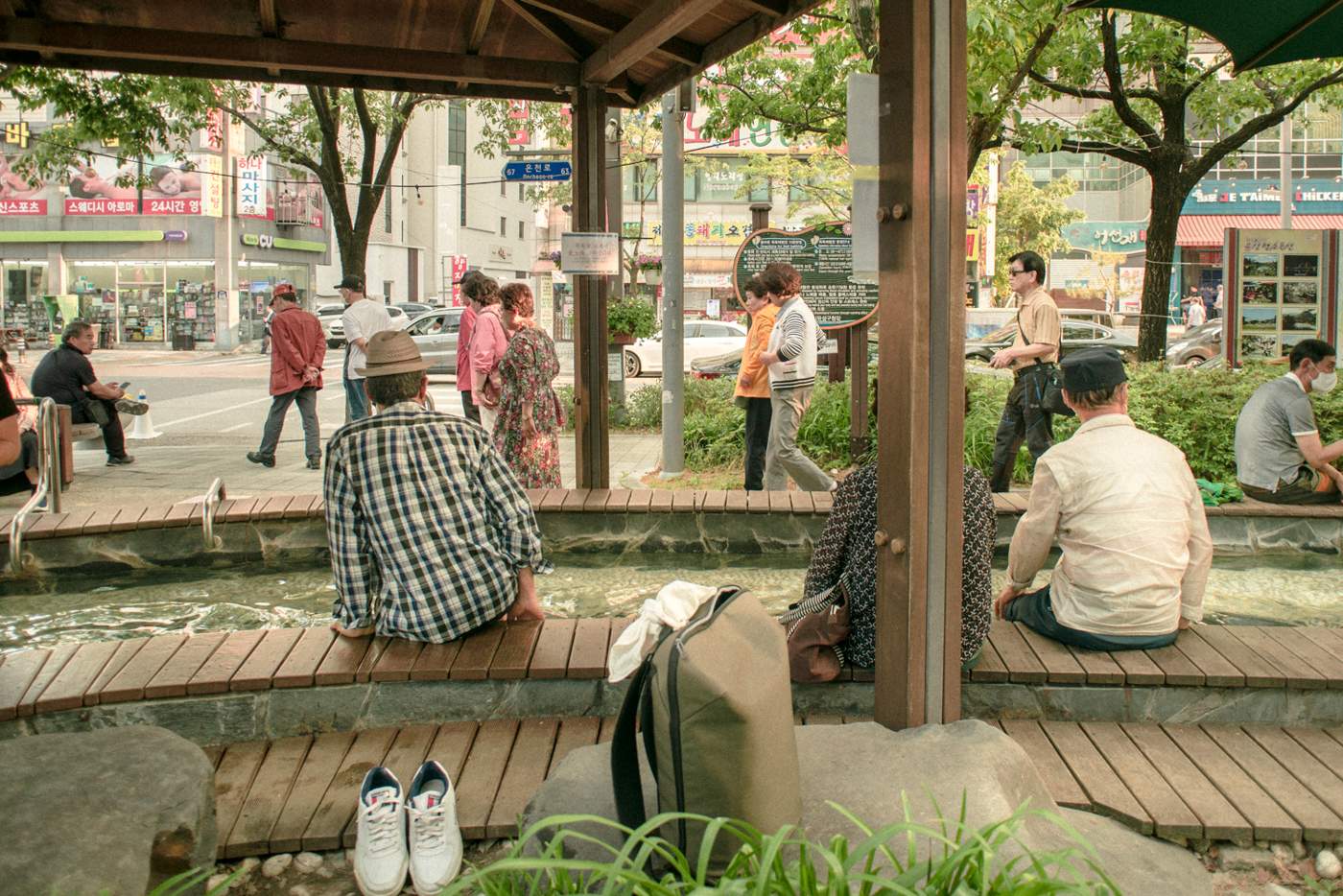
Hot Springs Near Seoul, Korea: Onyang, Dogo, Suanbo Prices and Trains
Korea's busiest hot spring in 2025 was Onyang, 90 minutes from Seoul by a ₩7,000 train: 3.52 million visits in the government's new count. Entry prices for Spavis, Paradise Spa Dogo and Suanbo, trains, and which towns are worth a night.
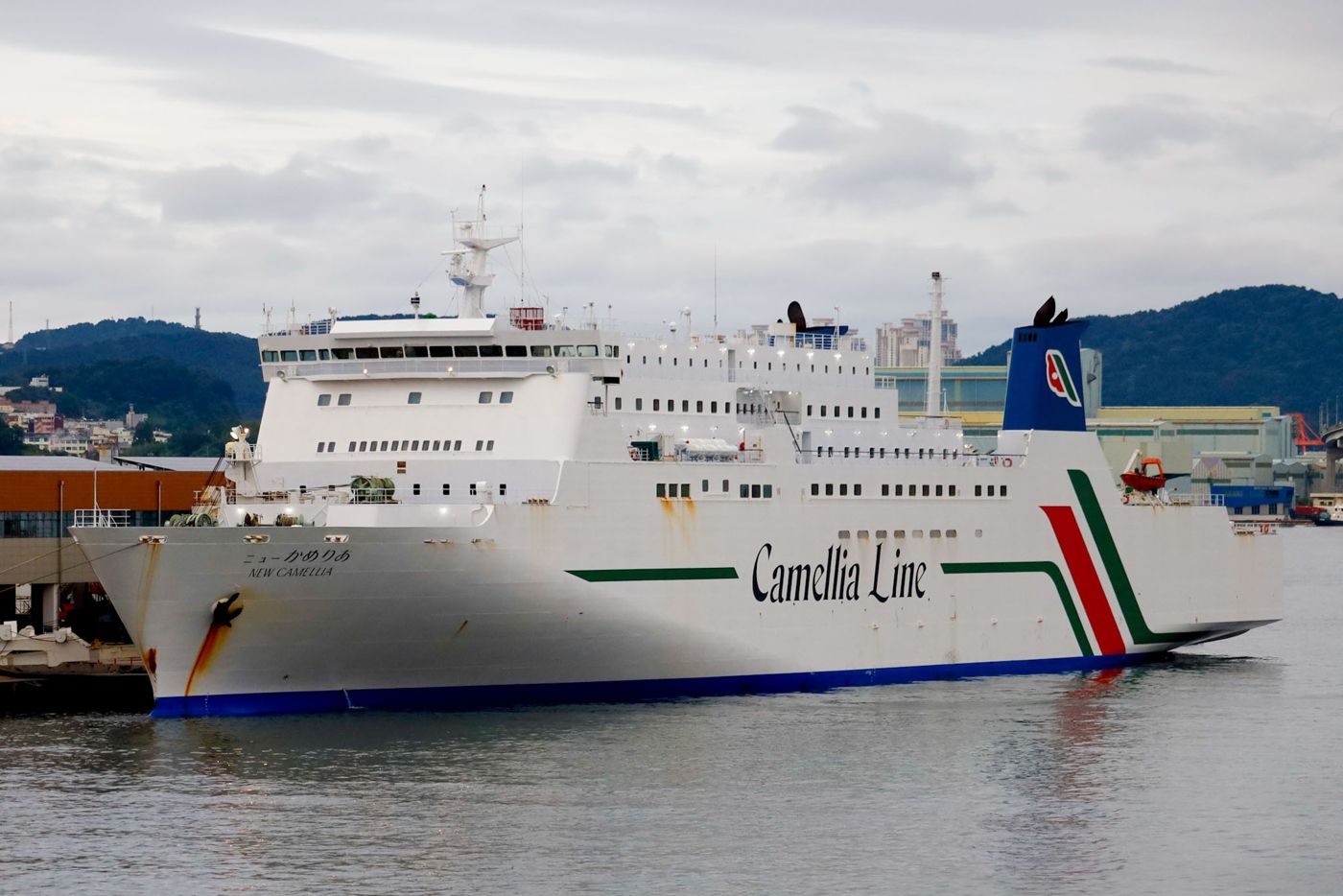
Busan to Fukuoka Ferry from Korea: New Camellia Fares, Times and Fees
From 1 October 2026 the New Camellia's Busan–Fukuoka fares start at ₩150,000 one way, with round-trip and student discounts gone. Fees on top, the overnight timetable, the Saturdays with no sailing, and why Queen Beetle is not coming back.
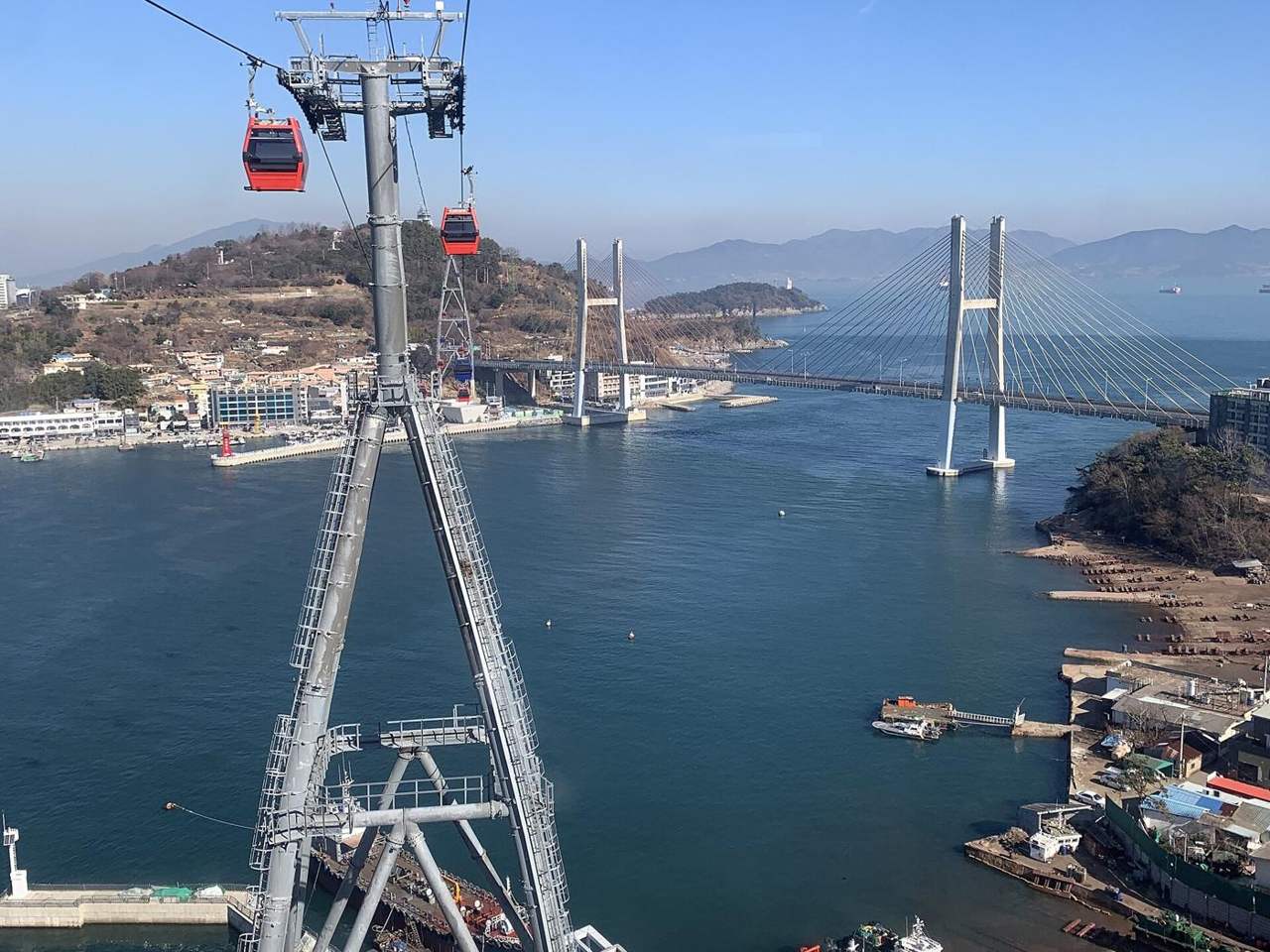
Where to Stay in Yeosu, Korea: Expo Station vs Yi Sun-sin Square vs Dolsan, by KTX and Cable Car
Yeosu's own room-rate register puts the median autumn weekend room at ₩60,000–70,000 near Expo station and the old town, and ₩245,000 on Dolsan. Plus the ₩45,400 KTX, the ₩17,000 cable car, cash-free buses and the Island Expo crowds.