Korean Jjimjilbang Guide: Sauna Etiquette and Tips
The scariest part of a Korean jjimjilbang is not the heat.
It is figuring out what to do with your shoes, your locker key, your clothes, your phone, your towel, and your nervous little sense of dignity.
That is why first-timers often hesitate. They know jjimjilbangs from K-dramas: matching shorts and T-shirts, sheep-head towels, roasted eggs, families lying on warm floors, someone drinking cold sikhye after sweating in a sauna room. It looks cozy from the outside. Then you arrive and realize there are two different zones, different clothing rules, a shoe locker, a wristband, gender-separated bath areas, communal dry saunas, and a very real possibility of doing the wrong thing in public.
Relax. The system is strange only once.
This guide explains how a jjimjilbang works, what to wear, what not to do, what to bring, what to eat, and how to enjoy the experience without turning your first visit into a cultural panic episode.
What a Korean Jjimjilbang Actually Is
A jjimjilbang is not just a spa.
It is closer to a Korean public bathhouse plus sauna complex plus rest lounge. Many places include hot baths, cold baths, showers, dry sauna rooms, heated floors, sleeping areas, massage services, snack counters, restaurants, and shared resting zones. Some are simple neighborhood facilities. Some are large multi-floor complexes. Some feel practical and old-school. Some feel polished and tourist-friendly.
What makes a jjimjilbang unique is the split between the wet bath area and the common sauna area.
The wet bath area is gender-separated. This is where you shower, use hot and cold baths, and sometimes get a body scrub. In this zone, people are normally naked. Swimsuits are not the standard. That can feel shocking if you come from a culture where public nudity is rare, but in the bath area Koreans usually treat it as normal, practical, and not especially dramatic.
The common sauna area is different. This is the co-ed area where people wear the provided jjimjilbang uniform, usually a T-shirt and shorts. This is where you move between dry sauna rooms, drink sikhye, eat roasted eggs, rest on the floor, chat quietly, watch TV, or nap.
ROUND LAB 1025 Dokdo Toner — on AmazonAffiliate link. As an Amazon Associate, EpicKor earns from qualifying purchases at no extra cost to you.
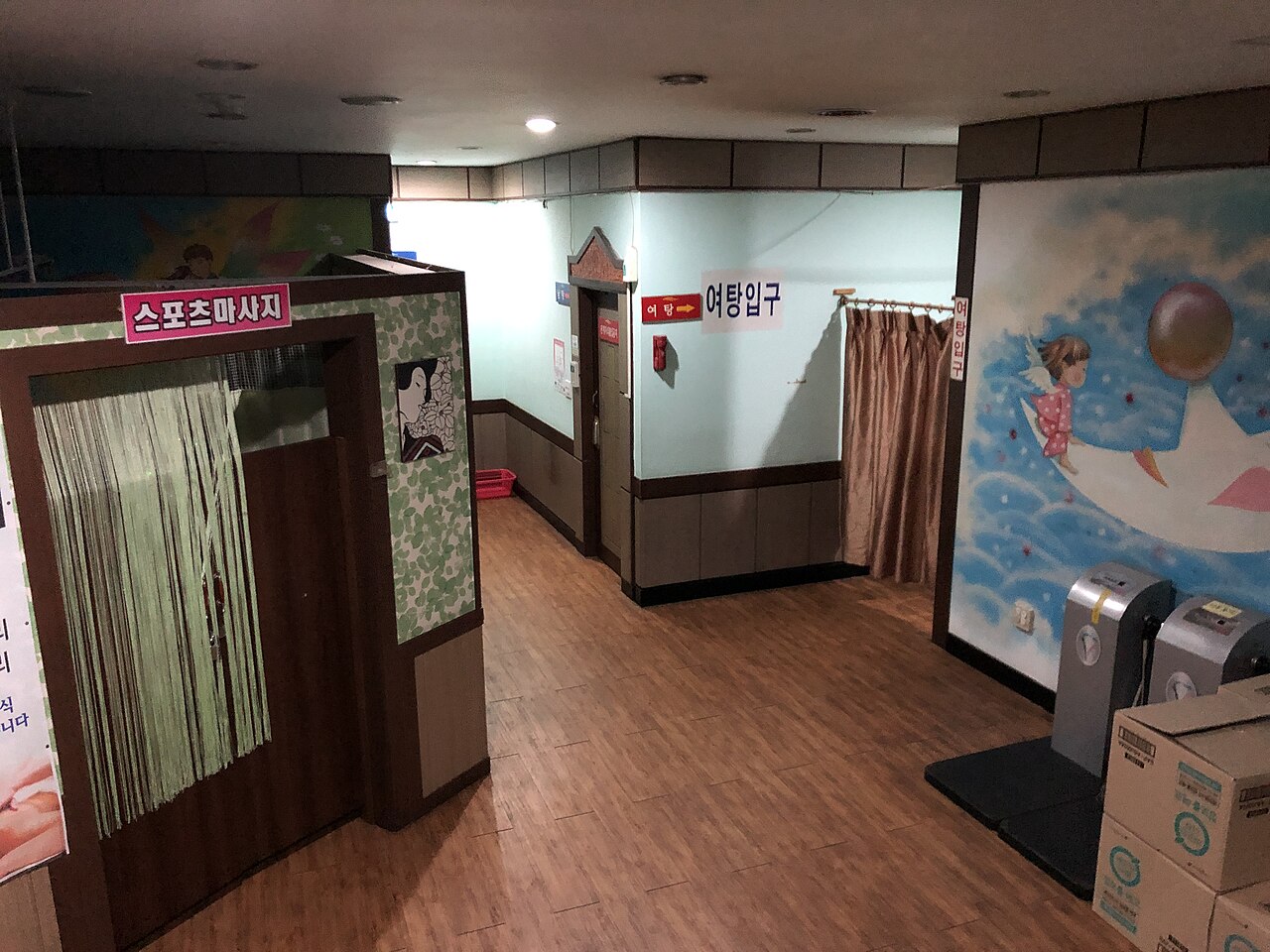
The Korean signs, bath-area entrances and shared floor space show how a jjimjilbang separates its wet and common zones. Photo by Choikwangmo9 via Wikimedia Commons, CC0.
Travel guides such as Lonely Planet's Korean bathhouse guide and Seoul first-timer guides describe this two-zone structure as the key to understanding the whole experience. Once you separate "bath area rules" from "common area rules," everything becomes much less confusing.
Think of it this way:
| Area | What You Wear | What Happens There | Beginner Rule |
|---|---|---|---|
| Wet bath area | Nothing, same-gender only | Shower, hot baths, cold baths, optional scrub | Shower before entering any bath |
| Common sauna area | Provided T-shirt and shorts | Dry saunas, snacks, resting, sleeping, family time | Keep your voice low and respect shared space |
The emotional shift is important too.
A Western-style spa often feels private, quiet, and appointment-based. A Korean jjimjilbang can feel more communal and casual. People may come with friends, parents, children, dates, or alone. Some treat it as a wellness stop. Some use it after work. Some stay late because it is cheaper than a hotel. Some just want to sweat, shower, eat eggs, and sleep on a warm floor.
In other words, the jjimjilbang is not only about beauty or detox. It is a small window into how Koreans share rest.
Spa-day shopping note: As an Amazon Associate, EpicKor may earn from qualifying purchases. For one low-risk post-sauna product to compare,. Start with ROUND LAB 1025 Dokdo Toner for lightweight Korean skincare hydration.
See ROUND LAB 1025 Dokdo Toner on AmazonThe First-Timer Flow: From Shoes to Sauna Rooms
Most first visits follow a similar pattern.
First, you pay at the entrance. Many jjimjilbangs give you a shoe locker key, wristband, or numbered key. In some places, the wristband also works like an internal payment tool. You can charge food, drinks, scrubs, or massages to it and settle when you leave. Do not lose it. Losing the key or wristband can mean an extra fee and a very awkward conversation.
Next, remove your shoes and put them in the shoe locker. This part feels familiar if you have already visited Korean homes, temples, some restaurants, or certain traditional spaces. Shoes stay outside the clean interior zone.
Then you enter the changing area for your gender. Find the locker number that matches your key or wristband. Store your clothes, bag, and valuables. Most jjimjilbangs provide a uniform and small towels. Larger towels, toiletries, or extra items vary by facility, so check before assuming everything is included.
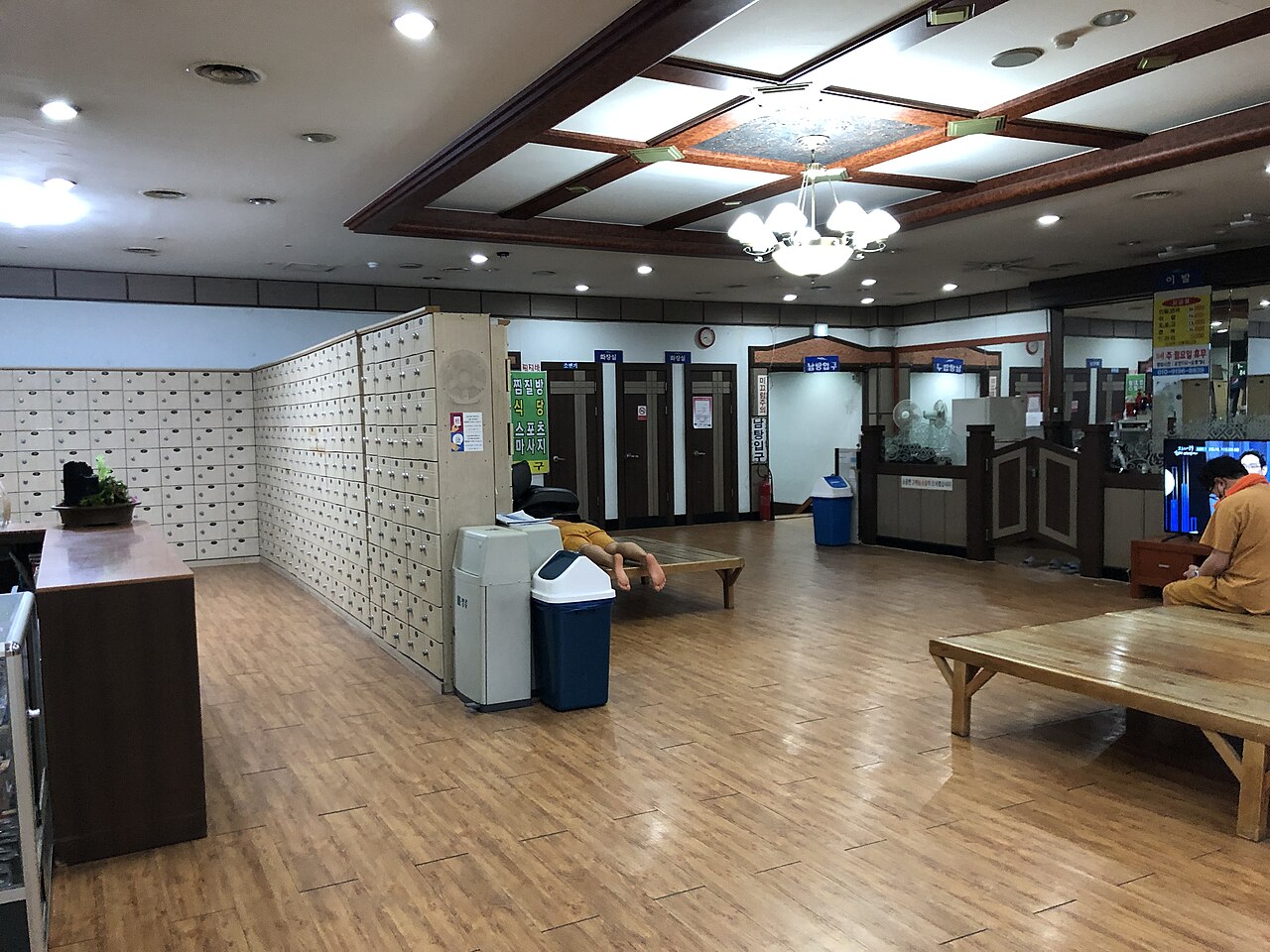
Lockers, towels, keys, and area signs are part of the first-timer flow. Photo by Choikwangmo9 via Wikimedia Commons, CC0.
Now comes the part that worries many visitors: the bath area.
If you are using the wet baths, remove your clothes and shower first. Do not go directly into the hot bath. Showering before entering shared water is one of the most important etiquette rules. Wash thoroughly, rinse soap off, then enter the baths.
After bathing, dry yourself enough before returning to the locker area. Put on the provided jjimjilbang clothes. Then move to the common sauna area, where men, women, families, and friends can relax together.
The dry sauna rooms may include different temperatures and themes: salt rooms, clay rooms, charcoal rooms, hot rooms, cooler rooms, oxygen rooms, or ice rooms. Every facility is different, so do not assume one exact layout. The beginner move is simple: start warm, not extreme. Stay a few minutes, leave before you feel dizzy, cool down, drink water, and repeat only if your body feels comfortable.
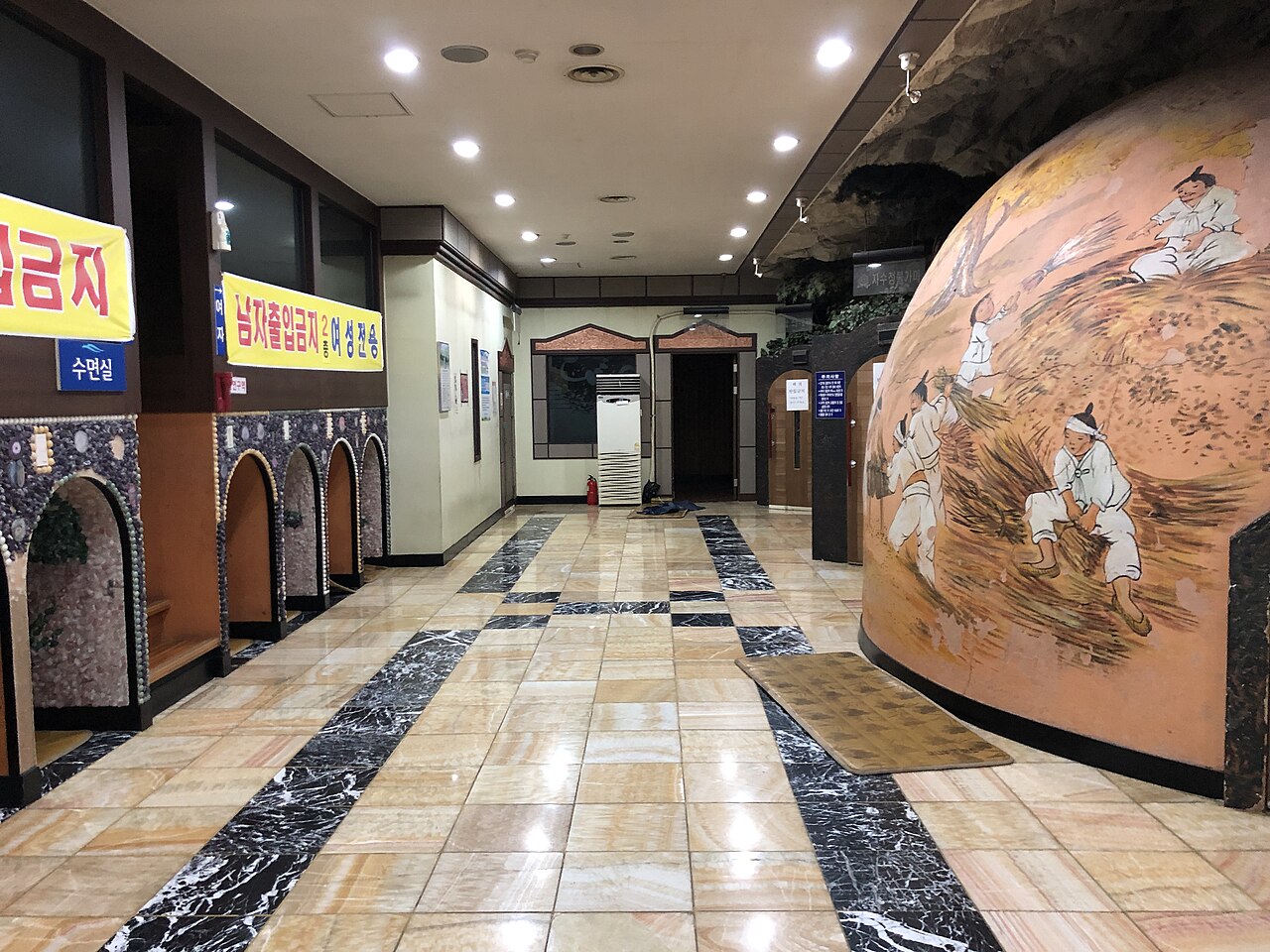
Many jjimjilbangs have different warm rooms and rest zones, so the layout can feel like a small indoor maze at first. Photo by Choikwangmo9 via Wikimedia Commons, CC0.
Do not turn your first jjimjilbang visit into a heat endurance contest.
The best rhythm is slow:
- Bath or shower first.
- Try one moderate dry sauna.
- Drink water or sikhye.
- Rest on the floor.
- Eat something small.
- Try another room if you still feel good.
If you start feeling lightheaded, leave the hot room immediately. If you have heart issues, blood pressure concerns, pregnancy-related concerns, or heat sensitivity, be conservative and check medical advice before using hot rooms. The jjimjilbang should make you feel reset, not heroic.
Etiquette Rules That Keep You From Looking Lost
Jjimjilbang etiquette is mostly common sense once you know which area you are in.
In the bath area, the biggest rule is cleanliness. Shower before entering the water. Do not put towels into the bath. Do not splash around. Do not stare at people. Do not use your phone or take photos. Bath areas are private spaces even though they are shared, and photography can be a serious violation.
In the common area, wear the provided clothes. Keep your voice low, especially in sleeping zones. Do not take up too much floor space with bags. Do not leave trash around. Do not open sauna doors and stand there chatting while the heat escapes. If people are sleeping, treat the space more like a quiet train car than a living room.
The towel culture is fun but optional.
You may see people fold a towel into a "sheep head" shape and wear it on their head. It is a cute K-drama image and a real jjimjilbang habit, but you do not need to perform it to be accepted. If you want to try it, look up the fold before you go or copy someone else quietly. If your towel looks more like a sad dumpling, that is fine. This is not an exam.
Body scrubs are another classic part of Korean bathhouse culture.
In many bathhouses, you can pay for a scrub where an attendant exfoliates your body with a rough mitt. It can feel intense if you are not used to it. The point is not luxury softness at first contact. The point is serious exfoliation. If your skin is sensitive, sunburned, irritated, recently treated, or prone to reactions, skip it or be very cautious. A light personal scrub at home may suit you better than a full bathhouse scrub.
This is where the jjimjilbang connects naturally with K-beauty, but not in the glossy way tourists expect.
Korean spa culture is not only serums and glass skin. It is washing properly, sweating, rinsing, exfoliating carefully, moisturizing after heat, and respecting what your skin can handle. If you are also interested in Korea's broader beauty-shopping route, EpicKor's guide to Korea's new tourist shopping route explains why Olive Young, pharmacies, and skin clinics have become part of modern travel planning.
What to Bring, Eat, and Buy Around the Experience
You do not need to bring much to a jjimjilbang.
That is one reason travelers like it. Most places provide the basic uniform and small towels. Many have shampoo, body wash, hair dryers, and toiletries, though quality and availability vary. If you are picky about skincare or hair care, bring your own travel-size products.
Here is a practical packing guide:
| Item | Bring It? | Why It Helps |
|---|---|---|
| Small skincare kit | Yes | Heat and bathing can leave your skin dry, especially in winter |
| Hair tie | Yes, if needed | Useful in hot rooms, showers, and sleeping areas |
| Earplugs | Yes, if staying overnight | Sleeping rooms can be noisy, and snoring is real |
| Big towel | Optional | Some facilities provide only small towels |
| Swimsuit | Usually no | Wet bath areas normally do not use swimsuits |
| Large suitcase | Avoid | Lockers may not fit big luggage comfortably |
The classic snack order is simple: roasted eggs and sikhye.
Roasted eggs are firm, brownish sauna eggs often associated with jjimjilbangs. Sikhye is a cold sweet rice drink that feels especially good after sweating. You may also see ramyeon, seaweed soup, rice dishes, banana milk, coffee, or simple cafeteria food depending on the place.
Food is part of the culture because jjimjilbangs are not built around quick in-and-out service. People linger. They sweat, eat, rest, talk, nap, sweat again, and turn the visit into a half-day rhythm.
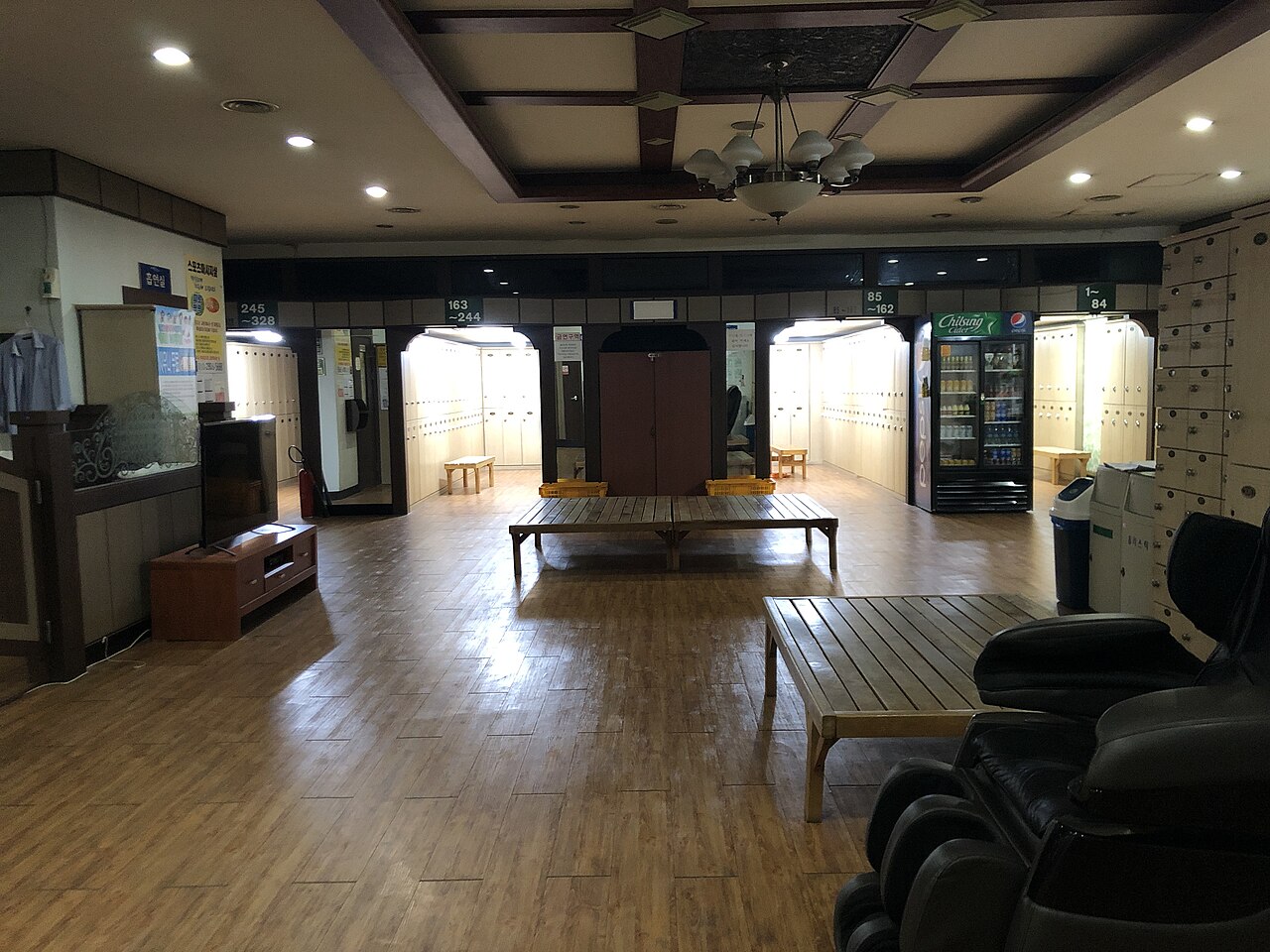
The common area is where the jjimjilbang starts feeling less like a spa appointment and more like a slow shared rest space. Photo by Choikwangmo9 via Wikimedia Commons, CC0.
If you are using the jjimjilbang as a travel recovery stop, go after a long walking day. Seoul can wear out your feet quickly. A bath, sauna, meal, and quiet rest can reset your body better than another cafe stop. Pair that with EpicKor's Seoul subway etiquette guide if you are moving around the city by train, because jjimjilbang visits often happen after busy transit days.
The shopping connection is simple too. You do not need a huge spa haul, but a few items make sense after you try the experience: gentle cleanser, body lotion, moisturizer, sunscreen for the next day, lip balm, hair treatment, or exfoliating towel if your skin tolerates it. Do not buy harsh scrub products just because the bathhouse scrub felt satisfying. Your skin at home may not want the same intensity every week.
Build a simple reset kit: Compare ROUND LAB 1025 Dokdo Cleanser after sweat, sunscreen, and subway dust; add Korean sweet potato snack bars if you want one light hotel-bag snack.
See ROUND LAB 1025 Dokdo Cleanser on AmazonYou might like: Korea's Neighbourhood Bathhouses Are Disappearing, and the Bath Is Not: Where the Hot Water Went
Is a Jjimjilbang Worth It for Travelers?
Yes, if you know what kind of experience you are choosing.
A jjimjilbang is worth it if you want a local-feeling rest day, a rainy-day plan, a late-night recovery stop, a budget-friendly overnight option, or a cultural experience that is not another palace, cafe, or shopping street. It is especially good after hiking, heavy walking, long flights, or several days of fast travel.
It may not be right for everyone.
If you are extremely uncomfortable with nudity, avoid the wet bath area and choose a facility where you can enjoy only the common sauna area, if that option exists. If you need privacy, quiet, soft bedding, and your own bathroom, do not treat a jjimjilbang as a hotel replacement. If you have health concerns around heat, circulation, pregnancy, alcohol, dehydration, or skin conditions, be cautious.
Also, do not assume every jjimjilbang is beautiful.
Some are clean and modern. Some are older and practical. Some are tourist-friendly. Some are neighborhood facilities where English is limited. Some famous places listed in older travel content may have closed or changed hours. Always check the venue's current hours, reviews, and rules before going.
For a first visit, choose convenience over fame.
Pick a place near your route, preferably with recent reviews and clear information. Go in the afternoon or early evening if you want less pressure. Bring a small bag. Give yourself at least two to three hours. Do not schedule an expensive dinner or tight appointment immediately after. You may leave sleepy, red-faced, and deeply unwilling to rush.
That is part of the charm.
The jjimjilbang is not trying to impress you every second. It is trying to make you stop.
You might like: Seoul Subway Last Train Times: Trains Stop Around 00:50 on Weekdays, 23:50 on Weekends, Station by Station
FAQ About Korean Jjimjilbangs
Q: What is a Korean jjimjilbang?
Simply put, a Korean jjimjilbang is a public bathhouse and sauna complex where people bathe, sweat in dry sauna rooms, rest in shared spaces, eat snacks, and sometimes sleep overnight. Bath areas are usually gender-separated, while the common sauna areas are shared and use provided clothes.
Q: Do I have to be naked in a jjimjilbang?
Simply put, yes, in the wet bath area. The bath area is gender-separated and normally does not use swimsuits. In the common sauna area, you wear the provided T-shirt and shorts.
Q: Can tourists go to a jjimjilbang alone?
Yes. Many people visit alone. A solo visit can be easier because you can move at your own pace, rest quietly, and leave when you feel done. Keep valuables locked and choose a well-reviewed facility for your first time.
Q: How long should I stay at a Korean spa?
For a first visit, two to four hours is enough. That gives you time to shower, use the baths, try a dry sauna room, drink something, eat a snack, and rest. Overnight stays are possible in some places, but they are not as comfortable as a hotel.
Q: What should I avoid at a jjimjilbang?
Avoid entering baths without showering, taking photos in bath areas, wearing a swimsuit in the wet bath zone, staying too long in extreme heat, drinking alcohol before sauna use, and treating sleeping areas like a loud hangout space.
The Smart Way to Try It on Your First Korea Trip
The best first jjimjilbang visit is not the most ambitious one.
Do not chase the hottest room, the longest overnight stay, the roughest scrub, or the most famous facility. Choose a clean, convenient place. Learn the two-zone rule. Shower before bathing. Wear the uniform in the common area. Drink water. Try eggs and sikhye. Rest longer than you think you need.
That is enough.
The real beauty of a Korean jjimjilbang is not that it is exotic. It is that it turns rest into something shared, practical, and ordinary. People are not there to perform wellness. They are there to recover from work, heat, cold, travel, stress, or a long day of walking through Seoul.
If you understand that, the whole place becomes less intimidating.
It stops being a mysterious Korean spa ritual and starts feeling like what it really is: a public permission slip to slow down.
And on a fast Korea trip, that may be the most useful thing you buy.
Before the next morning: After a jjimjilbang night, the product category that still matters the next day is sunscreen. Use this Korean SPF 50 search page to compare options before your trip, especially if your Seoul plan includes outdoor walking, markets, palaces, or cafe-hopping.
You Might Also Like
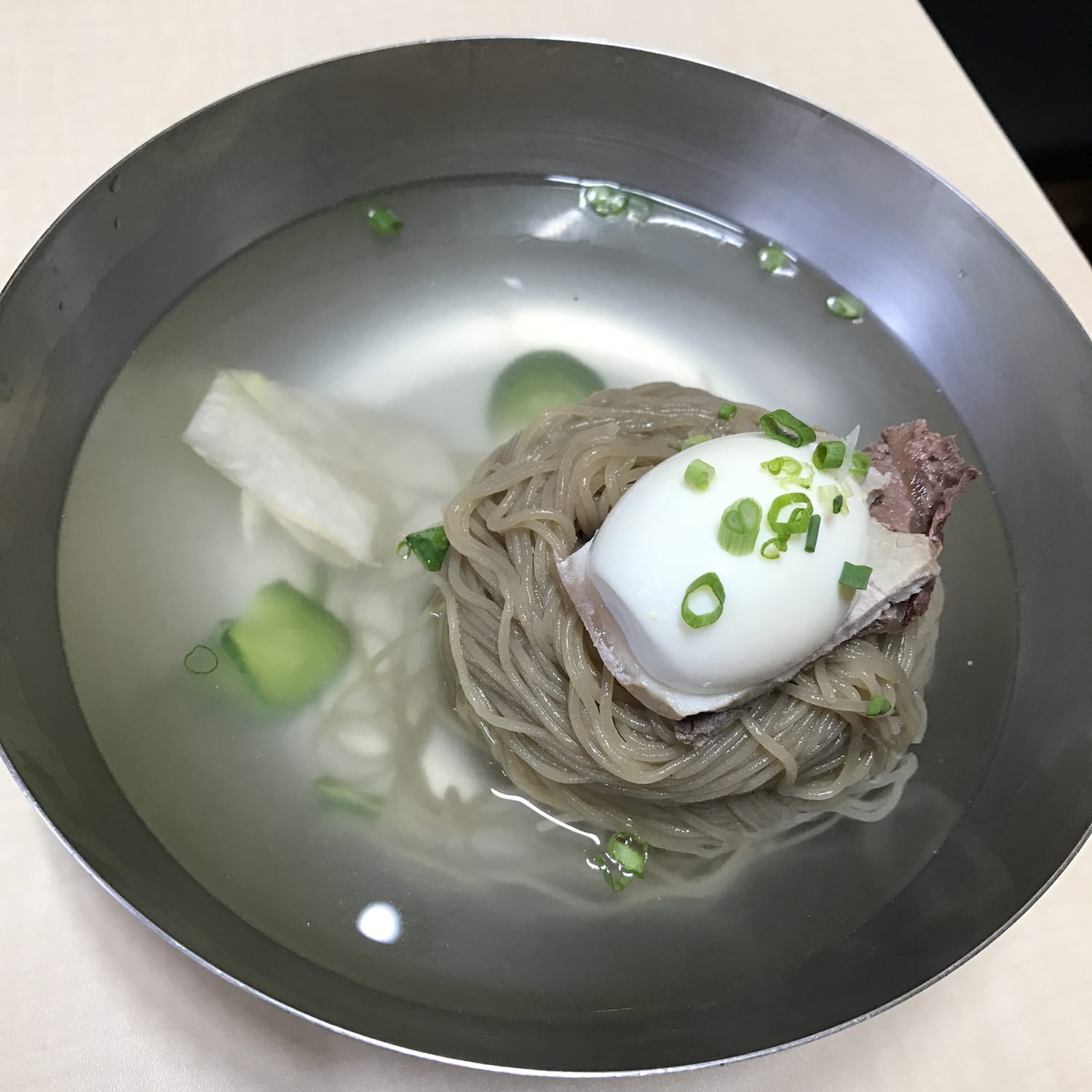
The One Korean Food Foreigners Never Learn to Love: Hamheung Naengmyeon, and Why Koreans Can't See the Problem
Foreigners who eat cheonggukjang and even hongeo still will not pay for this twice. A Korean creator who fed foreigners for years says naengmyeon was the overwhelming number one refusal, and Koreans, who rank it first every summer, cannot see why.
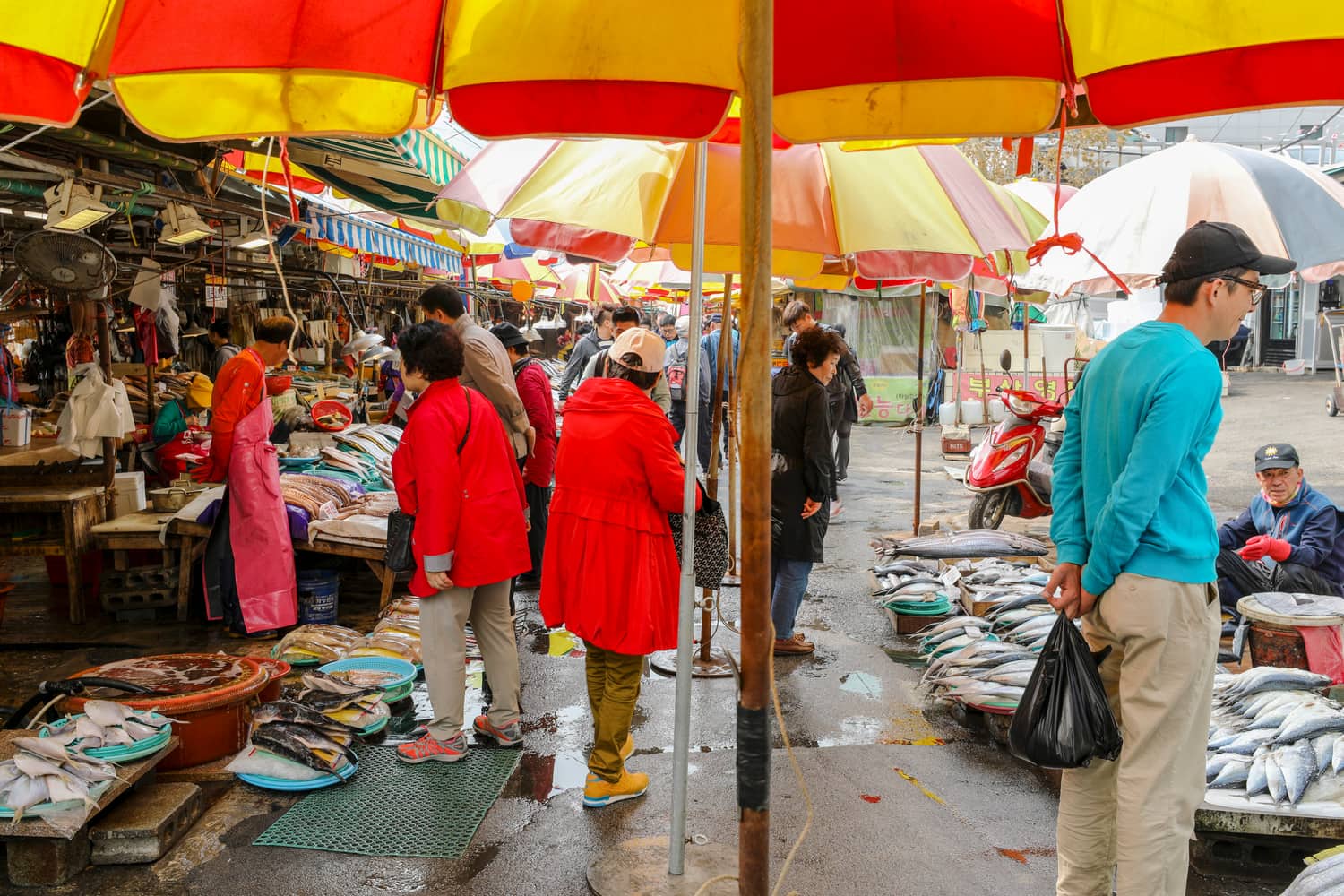
Why Do Koreans Stare at Foreigners? The 5% Country, and Where the Looking Actually Happens
In central Seoul nobody looks at you. In a provincial market, a small town or a subway car of grandmothers, they do. Korea only became a 5%-foreign country in 2025. Where the staring happens, what it means and does not mean, and what to do with it.
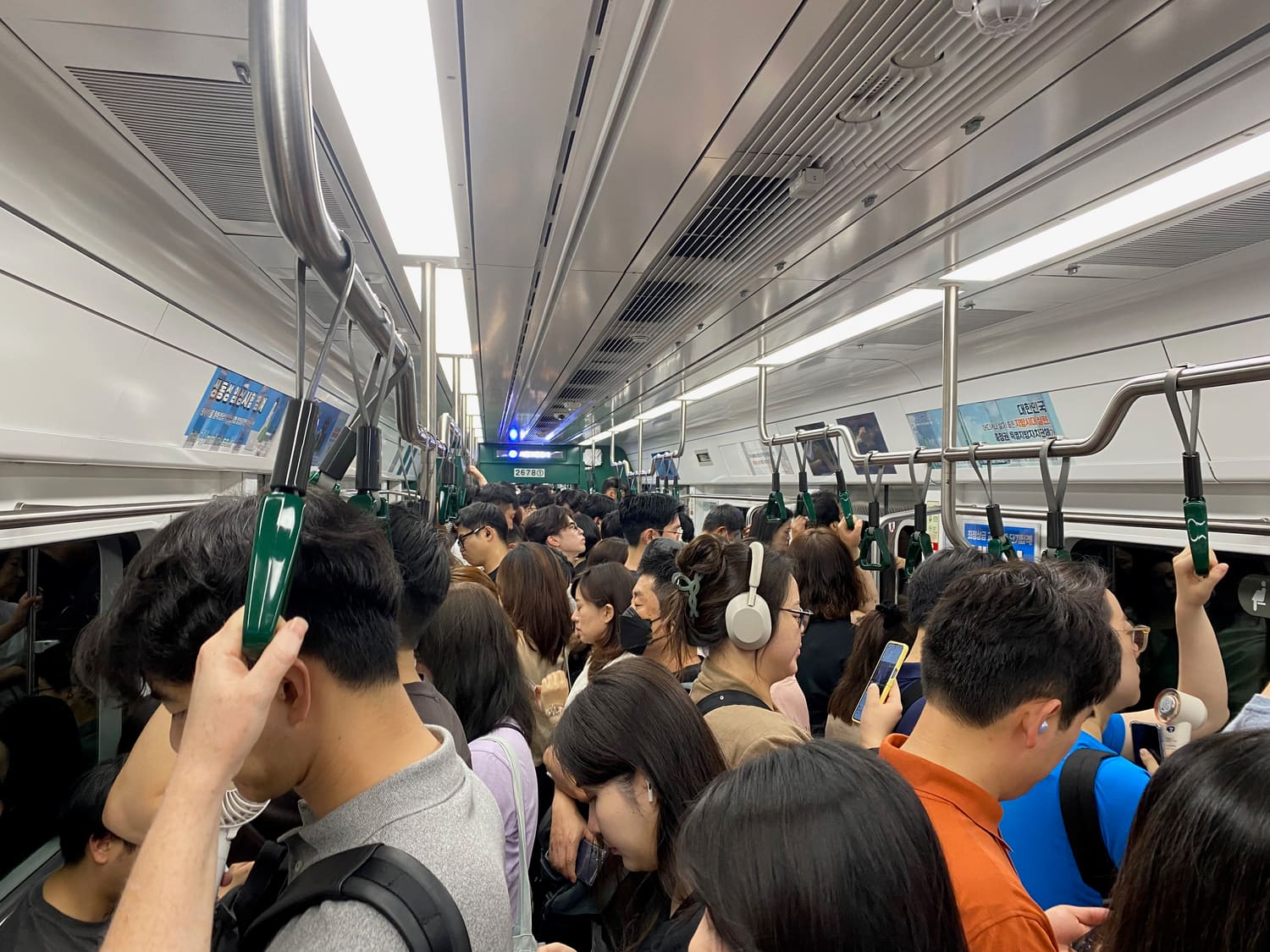
Why Koreans Seem Cold to Foreigners: The Gap Between How Korea Sees Itself and How You See It
Foreigners abroad rate Korea 82.3% favourable. Foreigners living in Korea rank Koreans 39th of 46 countries for friendliness, and 84% of Koreans say they would not trust a stranger. Where the gap comes from, and how to get to the other side of it.