Korean Sesame Oil: The Label Word That Means It Isn't Sesame Oil
English guides to Korean sesame oil are taste tests. Somebody buys seven bottles, ranks them by aroma, and tells you which one won. That is useful, and it is also the entire genre.
None of them mention the thing a Korean shopper checks first, because it is written in Korean on the back of the bottle: whether the product is 참기름 at all.
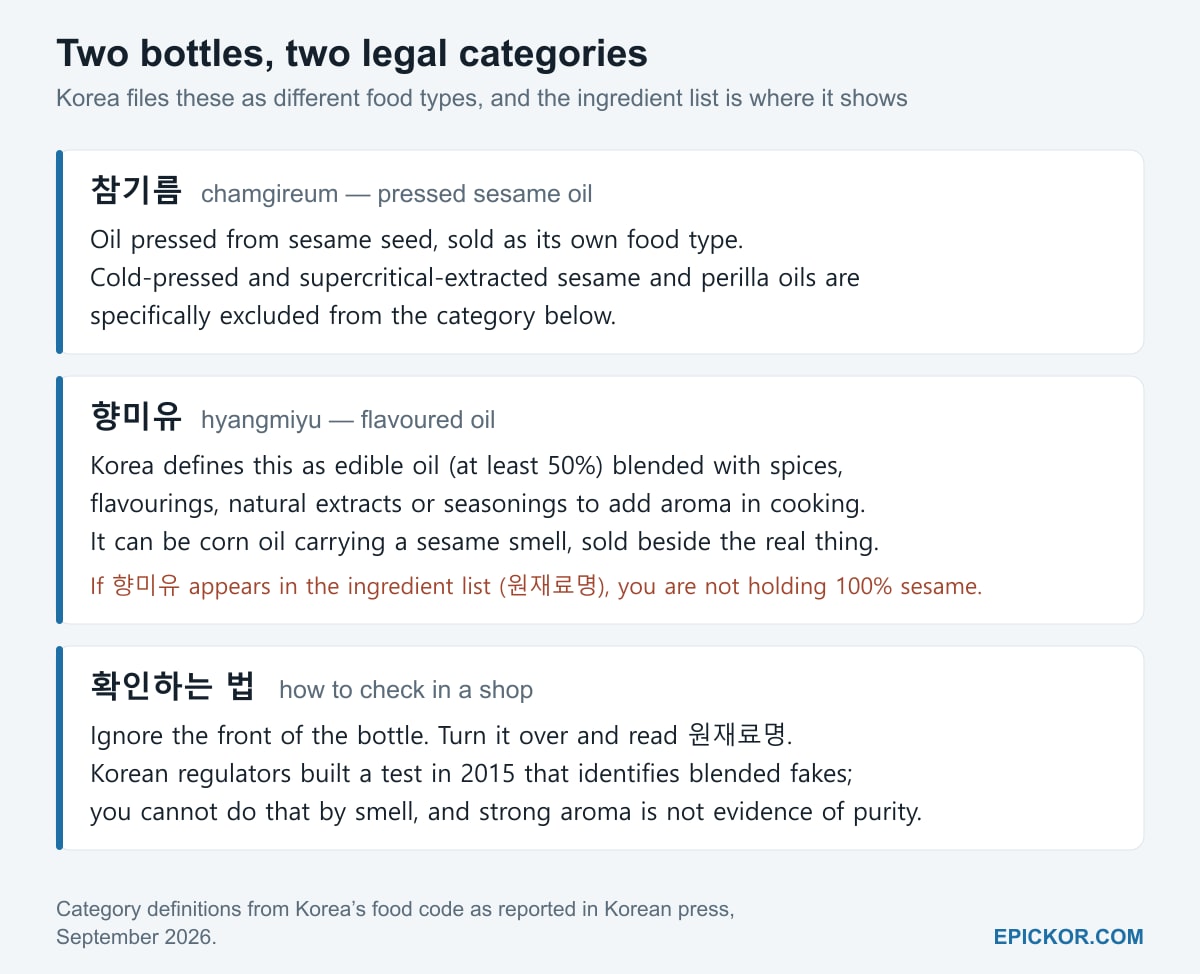
In Korea, "sesame oil" and "sesame-flavoured oil" are two different legal food types. A bottle can sit on the shelf beside the real thing, look almost identical, smell strongly of sesame, and be corn oil with an aroma added. There is a word for that, it appears in the ingredient list, and once you know it the shelf stops being confusing.
Then there is the other half of the shelf: the same volume of oil ranging from ₩3,500 to over ₩20,000, which has nothing to do with quality tiers and everything to do with where the seed was grown.
Quick Guide
| Question | Short answer |
|---|---|
| Korean name | 참기름 (chamgireum) — literally "true oil" |
| The word to avoid | 향미유 in the ingredient list — flavoured oil, not sesame oil |
| Where to look | 원재료명, the ingredient list on the back. Not the front |
| Imported price | About ₩3,500–5,500 per 500ml (₩700–1,100 per 100ml) |
| Korean-grown price | About ₩11,000 per 200ml, ₩20,000+ per 300ml |
| Why the gap | Korea grows only 8–12% of the sesame it consumes |
| The dipping sauce | 기름장 (gireumjang) — oil and salt, roughly 3:1 |
| Sesame or perilla? | 참기름 for fatty cuts, 들기름 for lean ones |
Ottogi 100% pure roasted sesame oil — a bottle that is actually sesameAffiliate link. As an Amazon Associate, EpicKor earns from qualifying purchases at no extra cost to you.
향미유: the word that changes what you bought
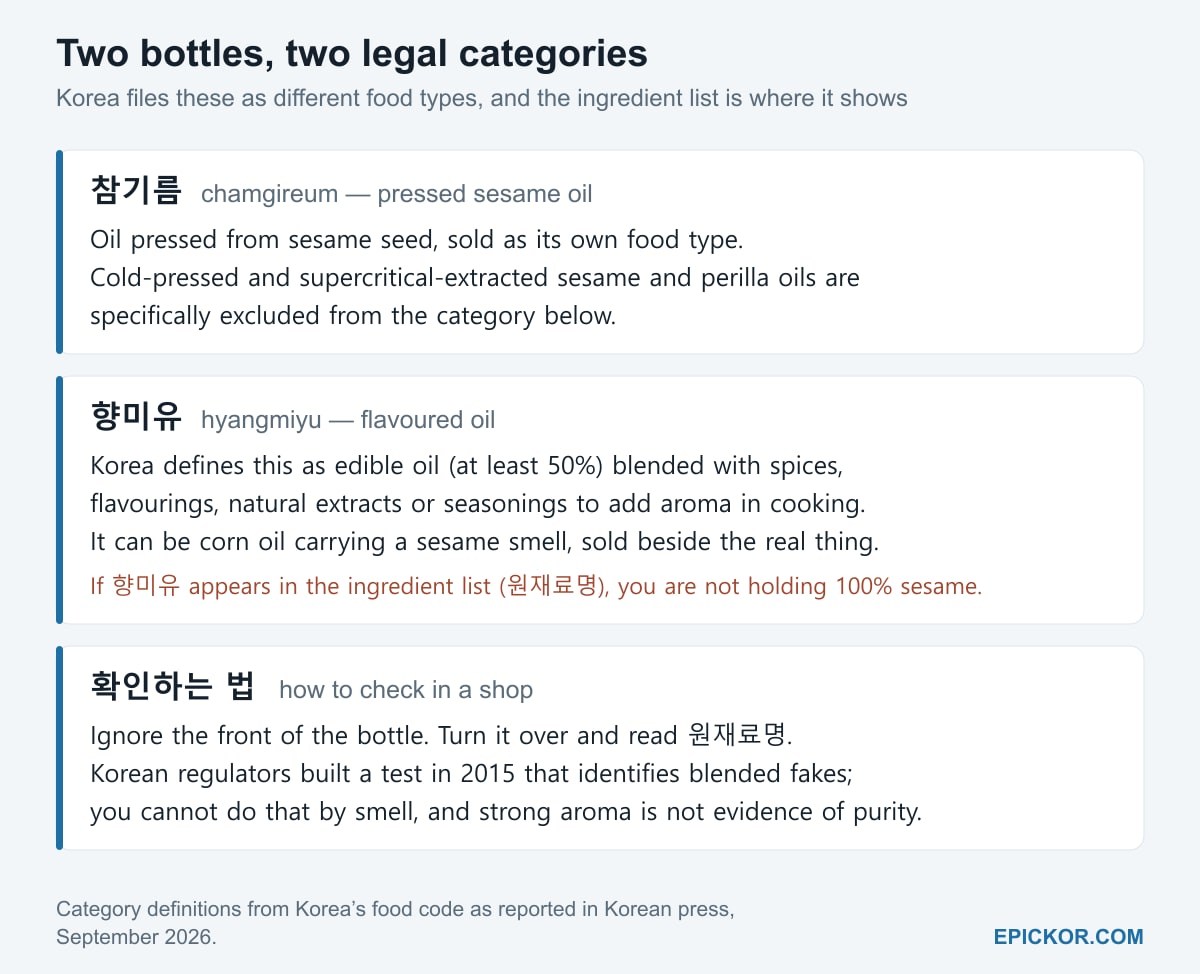
Korea's food code defines 향미유 (hyangmiyu) as edible oil — at least 50% of the product — blended with spices, flavourings, natural extracts or seasonings, for the purpose of adding aroma when cooking or processing food.
Read that again with a shopper's eyes. Half the bottle can be something else entirely, and the sesame character can come from added flavouring rather than from pressed seed.
The definition contains one detail that tells you how deliberate this boundary is: cold-pressed and supercritical-extracted sesame and perilla oils are specifically excluded from the 향미유 category. The law names the real processes and carves them out, which means the category exists precisely to hold everything that is not them.
So the check is mechanical:
Turn the bottle over. Read 원재료명. If 향미유 is in there, it is not 100% sesame.
You cannot do this by smell, and this is the part worth internalising. A strong sesame aroma is not evidence of purity — it is the exact property a flavouring is added to produce. Korean regulators developed a laboratory method in 2015 specifically because blended sesame oil could not be reliably identified any other way. If a national food-safety agency needed a lab test, your nose is not going to settle it in an aisle.
Korean consumer advice on spotting a fake, for what it is worth, runs the other direction from what people expect: the suspicious bottles are often the ones that smell too strong, or oddly artificial, and run thin rather than viscous.
You might like: Korea's Spam Gift Sets Explained: What the Numbers Mean and Which One to Buy
Why the same oil costs six times as much
Stand in front of the oil section in a Korean supermarket and the prices look irrational. They are not. They are almost entirely a question of where the sesame grew.
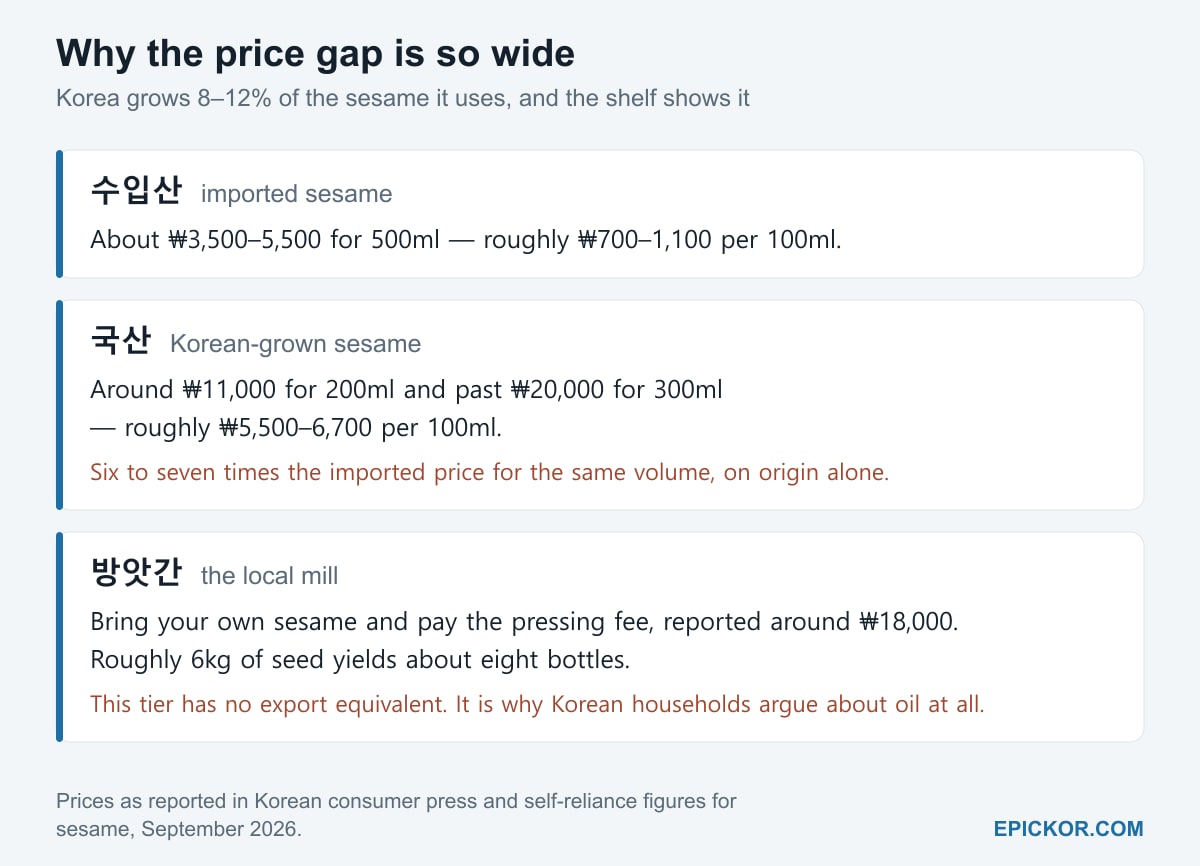
- Imported sesame: roughly ₩3,500–5,500 for 500ml — about ₩700–1,100 per 100ml.
- Korean-grown sesame (국산): around ₩11,000 for 200ml, and past ₩20,000 for 300ml — about ₩5,500–6,700 per 100ml.
That is six to seven times the price for the same volume, and the bottles can sit on the same shelf.
The reason is agricultural rather than culinary. Korea's sesame self-sufficiency runs at roughly 8–12%. Nearly nine-tenths of the sesame used in the country is imported, and domestic seed is priced accordingly. When a Korean recipe blog insists on 국산 참기름, it is not brand snobbery; it is a genuinely different and much scarcer input.
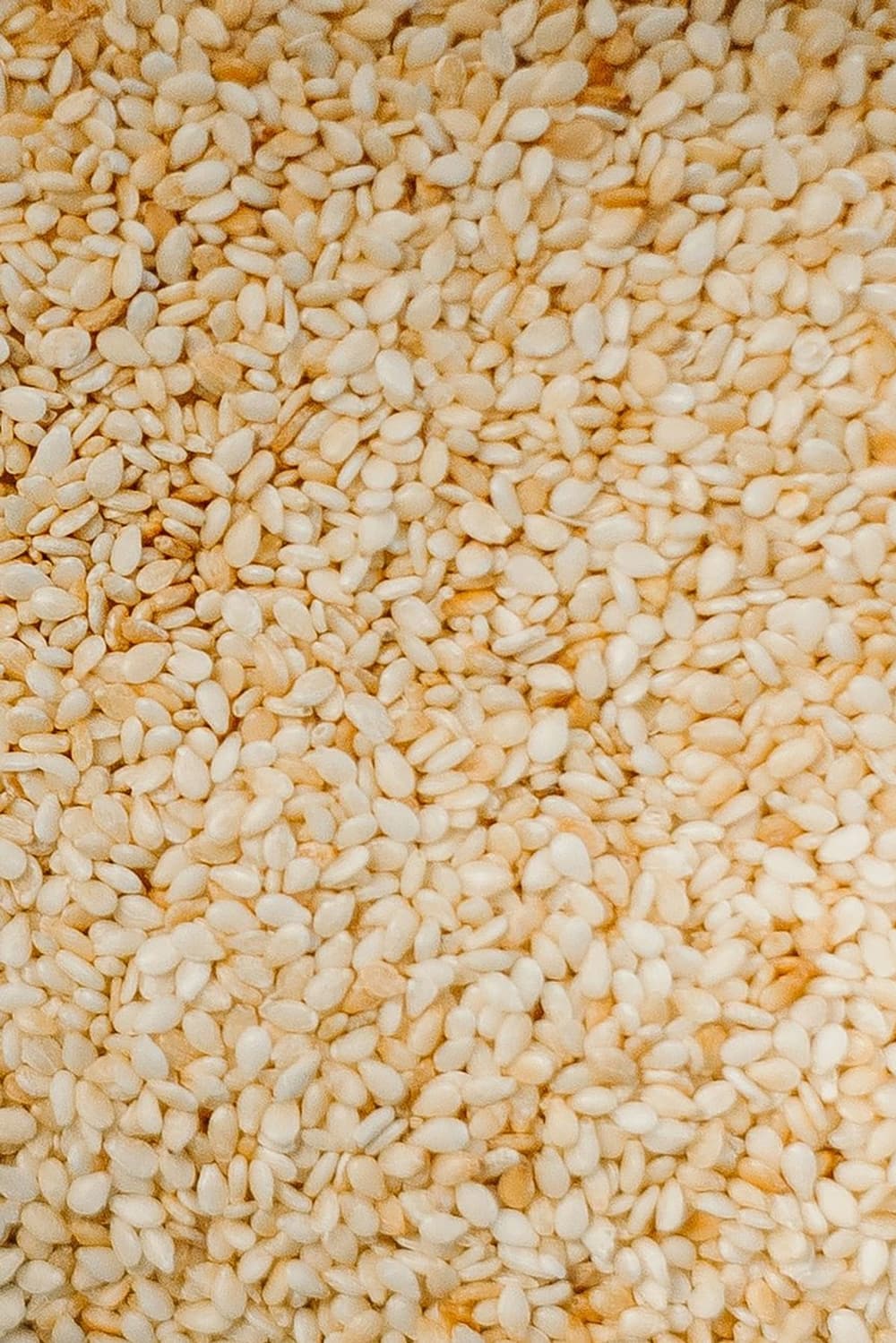
For most cooking, imported oil from a reputable Korean brand is the sensible buy, and it is what is available abroad anyway. The domestic bottle is worth it when the oil is the flavour rather than a background note — a finishing drizzle, a dipping sauce, cold namul.
The tier that never leaves Korea
There is a third option that no export catalogue contains, and it is the reason Korean families have opinions about sesame oil at all.
A 방앗간 (bangatgan) is a neighbourhood mill. You bring your own sesame — often bought at a market where you picked the seed yourself — and they press it in front of you. Reported pressing fees run around ₩18,000, and roughly 6kg of seed yields about eight bottles.
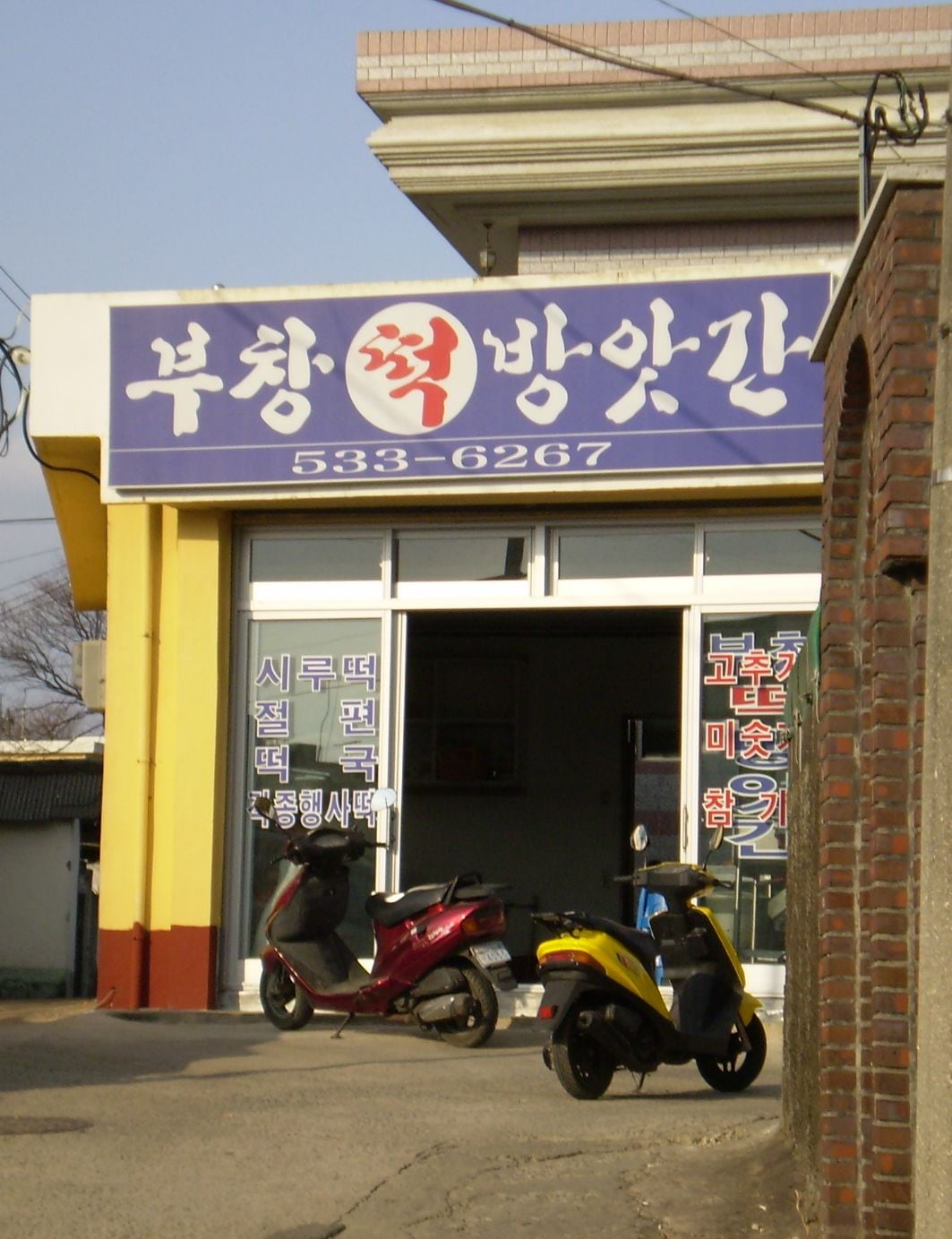
The oil that comes out of one of these is unfiltered, still warm, and does not keep as long as the supermarket version, which is exactly why it never became an export product. It is not a premium SKU. It is a service.
Understanding that this tier exists changes how you read Korean writing about sesame oil. When Korean sources talk about oil going stale, or about buying small bottles, they are often reasoning from fresh-pressed oil rather than from a sealed supermarket bottle with a long shelf life.
Buying abroad, the ingredient list still matters more than the brand. As an Amazon Associate, EpicKor earns from qualifying purchases at no extra cost to you. The two Korean supermarket standards are widely sold — Ottogi's 500ml roasted sesame oil and CJ Beksul's 320ml bottle — and both list sesame as the ingredient rather than a flavouring. Buy the smaller 320ml bottle if you cook Korean food occasionally rather than weekly: sesame oil is a finishing oil, it goes flat with air and light, and a big bottle you use twice a month is a worse buy than a small one you finish.
See Ottogi's 500ml roasted sesame oil on Amazon기름장: the sauce nobody can name
One of the most-searched things about Korean sesame oil in English is not about the oil. It is people trying to remember the name of that small dish of oil and salt that arrives with grilled pork.
It is called 기름장 (gireumjang) — literally "oil sauce". Some people call it 소금장, salt sauce, but 기름장 is the ordinary word.
It is as simple as it looks: sesame oil and salt at roughly 3:1, sometimes with minced garlic, black pepper or a pinch of gochugaru. That is the whole recipe.
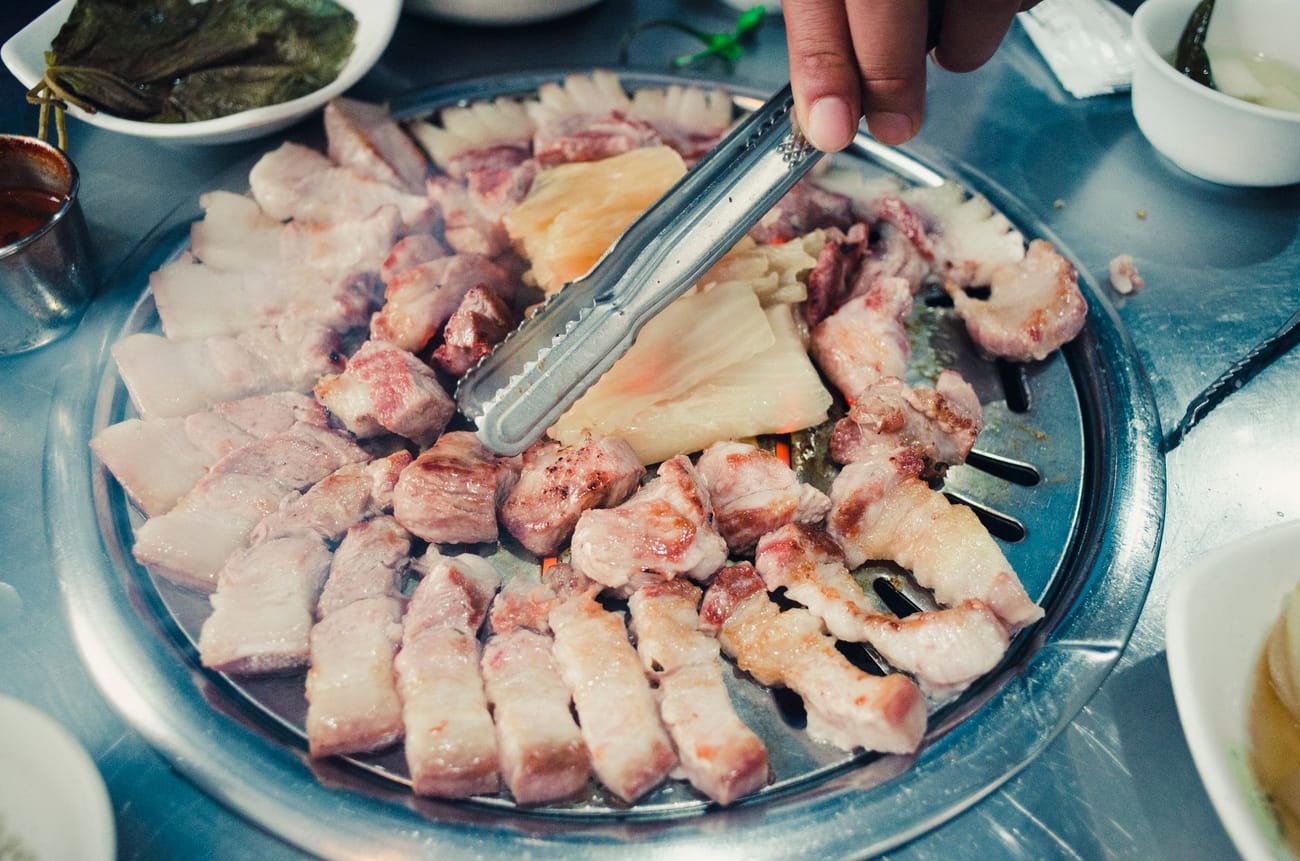
What makes it worth understanding rather than just copying is why it exists on a table that already has ssamjang. Korean explanations are consistent on the point: ssamjang and salted sauces are assertive and cover the meat, while 기름장 is deliberately mild — it carries the fat and lets the pork taste like pork. Two sauces on one table because they do opposite jobs.
Our guide to ssamjang, the sauce on the other side of the table covers the assertive one, and doenjang vs gochujang sorts out the two pastes it is built from.
Sesame or perilla in the dish?
Both are used, and Korean guidance splits them by cut:
- 참기름 (sesame) — nutty, rounded, heavier. Pairs with fatty cuts: beef, samgyeopsal.
- 들기름 (perilla) — sharper, greener, more aromatic. Pairs with lean cuts: neck, brisket.
If you have only had sesame oil, perilla is the one worth trying next; it is not a substitute so much as a different argument about what the meat needs.
Gireumjang is a three-item shopping list. As an Amazon Associate, EpicKor earns from qualifying purchases at no extra cost to you. Sesame oil, salt, pepper — that is the sauce. The one to spend on is the oil, so start with a 100% sesame Korean bottle, and if you want the version Korean sources recommend for leaner meat, add perilla oil alongside it. Both belong in the door of the fridge rather than beside the stove — heat and light are what flatten them.
How to store it, and why Korean advice sounds paranoid
Sesame oil is a finishing oil. Its value is aroma, and aroma is the first thing to go.
- Keep it away from heat and light. Not next to the hob, however convenient that is.
- Buy the size you will finish. The 320ml bottle is not a worse deal than the 500ml if the 500ml goes flat halfway through.
- Close it properly. Oxygen does most of the damage.
- Refrigeration is fine and will not solidify it the way olive oil does.
Korean advice on this is stricter than Western advice, and the 방앗간 explains why: much of the domestic conversation is about unfiltered fresh-pressed oil, which genuinely does not last. A sealed supermarket bottle is more forgiving — but the aroma still fades, and aroma is the entire reason you bought it.
FAQ About Korean Sesame Oil
Q: What is the oil and salt sauce at Korean BBQ called?
기름장 (gireumjang), literally "oil sauce". It is sesame oil and salt at roughly 3:1, sometimes with minced garlic or pepper. Some people call it 소금장. It exists alongside ssamjang because it is mild where ssamjang is assertive — it carries the fat instead of covering it.
Q: How do I tell real Korean sesame oil from fake?
Read 원재료명, the ingredient list on the back. If it contains 향미유, the product is a flavoured oil rather than pure sesame oil — Korea treats those as separate food types. You cannot judge it by smell; Korean regulators built a laboratory test in 2015 precisely because blended oil could not be identified otherwise.
Q: Why is Korean sesame oil so expensive?
Because of where the seed grew, not how it was made. Korea's sesame self-sufficiency is roughly 8–12%, so domestic seed is scarce. Imported-sesame oil runs about ₩700–1,100 per 100ml; Korean-grown runs ₩5,500–6,700 per 100ml — six to seven times more for the same volume.
Q: What is a 방앗간?
A neighbourhood mill. You bring your own sesame and pay a pressing fee — reported around ₩18,000, with about 6kg of seed making roughly eight bottles — and the oil is pressed in front of you. It is unfiltered and does not keep long, which is why this tier has no export equivalent.
Q: Should I buy sesame oil or perilla oil?
Both, eventually. Korean guidance pairs 참기름 with fatty cuts like samgyeopsal and beef, and 들기름 with leaner ones like neck or brisket. Perilla is sharper and greener; it is a different tool rather than a cheaper substitute.
Bottom Line
The English-language question about Korean sesame oil is which brand tastes best. The Korean question is what is actually in the bottle, and where did the seed come from — and both are answered on the back label rather than by tasting.
Read 원재료명. If 향미유 is listed, put it back. Then decide on origin: imported for cooking, Korean-grown when the oil is the flavour, and a 방앗간 if you happen to be in Korea with a bag of sesame and an afternoon.
And when the small dish of oil and salt arrives with the pork, it is 기름장 — three ingredients, one job, and the reason there are two sauces on the table instead of one.
Sources
- Korea's 식품공전 (food code) definition of 향미유, as reported in Korean press: edible oil (at least 50%) blended with spices, flavourings, natural extracts or seasonings to impart flavour in cooking or processing, with cold-pressed and supercritical-extracted sesame and perilla oils specifically excluded.
- 식품의약품안전처 (Ministry of Food and Drug Safety) — development of a method to identify sesame oil blended with other edible oils, reported 2015; Korean consumer guidance that 향미유 in the ingredient list indicates a product that is not 100% sesame.
- Korean consumer press on sesame oil pricing — imported oil at roughly ₩3,500–5,500 per 500ml against Korean-grown at about ₩11,000 per 200ml and over ₩20,000 per 300ml; sesame self-sufficiency of roughly 8–12%; 방앗간 pressing fees around ₩18,000 with about 6kg of seed yielding eight bottles.
- Korean reference entries on 기름장 — sesame or perilla oil with salt at roughly 3:1, optionally with minced garlic, pepper or gochugaru; also called 소금장; the pairing convention of sesame oil with fatty cuts and perilla oil with lean ones.
You Might Also Like
Korean Kimchi Containers: The Press Plate Matters More Than the Lid
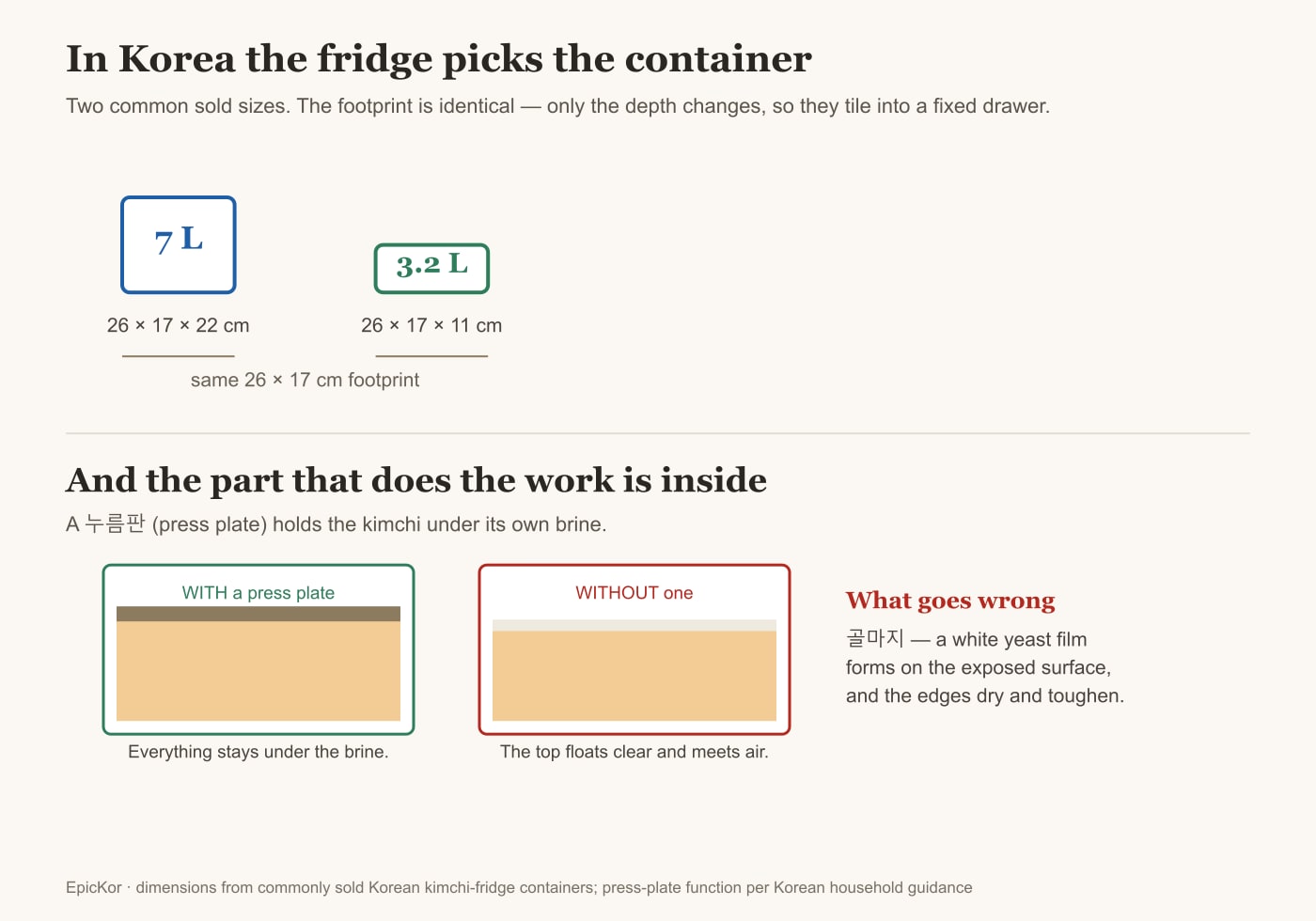
English buying guides rank kimchi containers by lid. In Korea the fridge picks the size — 7L and 3.2L share a 26 × 17cm footprint so they tile — and the part that decides whether the kimchi survives is the 누름판, the plate that holds it under its own brine.
Korean Ttukbaegi vs Dolsot, and Why Koreans Never Use Dish Soap
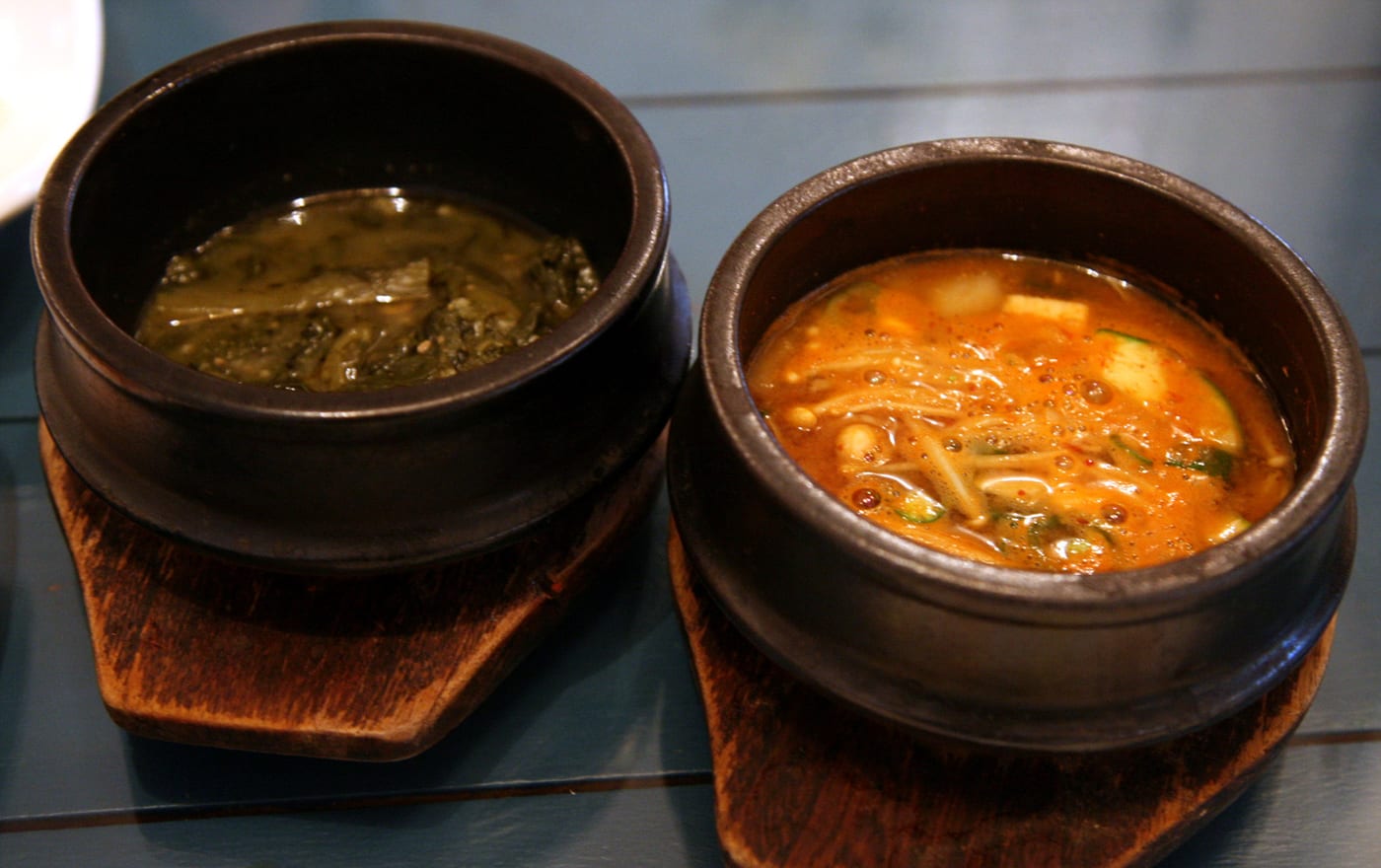
A ttukbaegi is fired clay, and fired clay is porous — which decides everything about owning one. No dish detergent, never water it while hot, and it will not work on induction. Here is how it differs from a dolsot and which one you actually want.
Doenjang vs Gochujang: Which Korean Paste Does Your Dish Need?
Doenjang and gochujang sit side by side on the same shelf, but one is roughly two thousand years old and the other could not exist before the 1600s. What each paste actually is, which dish needs which, and what a tub costs in 2026.