Doenjang vs Gochujang: Which Korean Paste Does Your Dish Need?
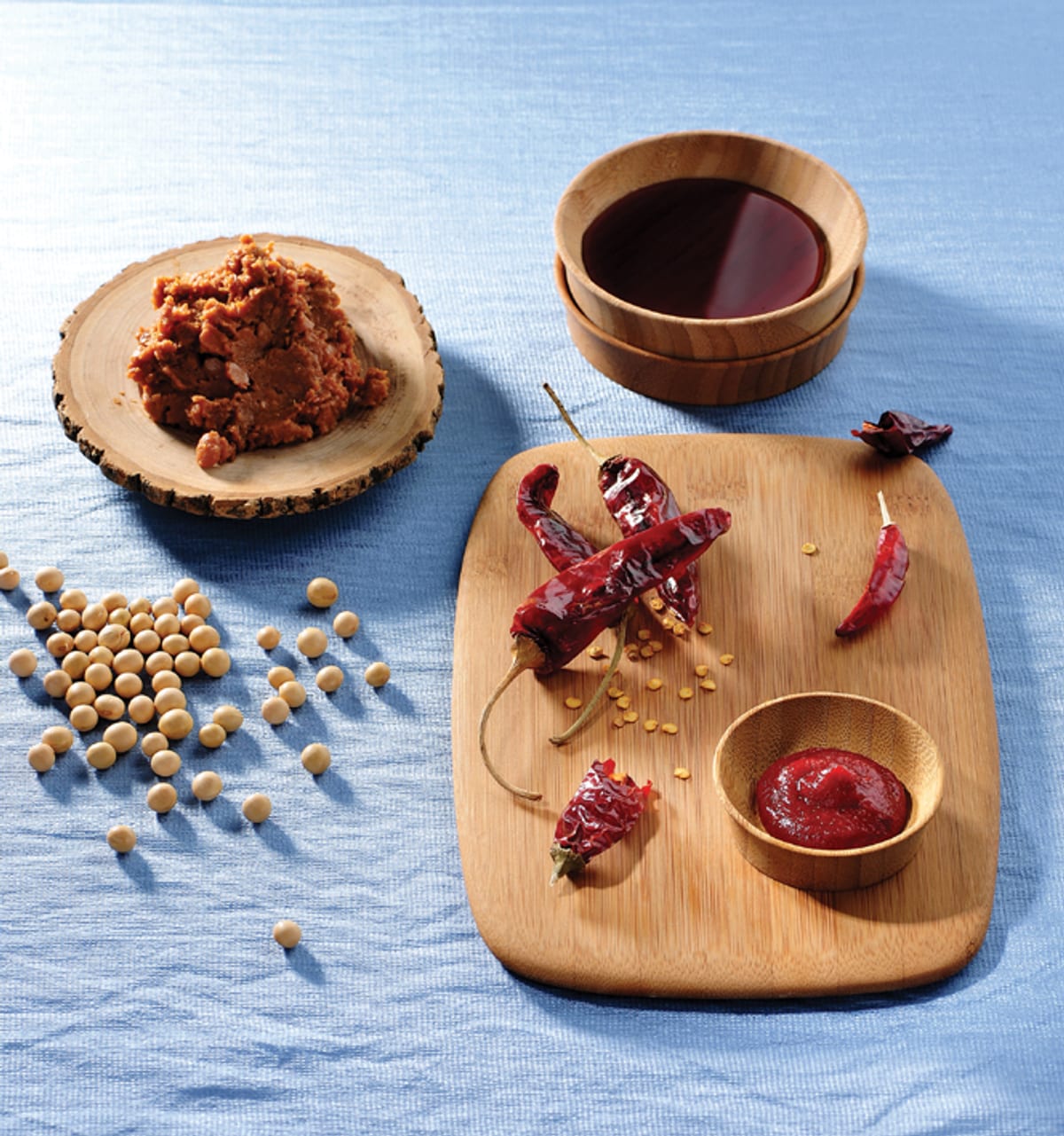
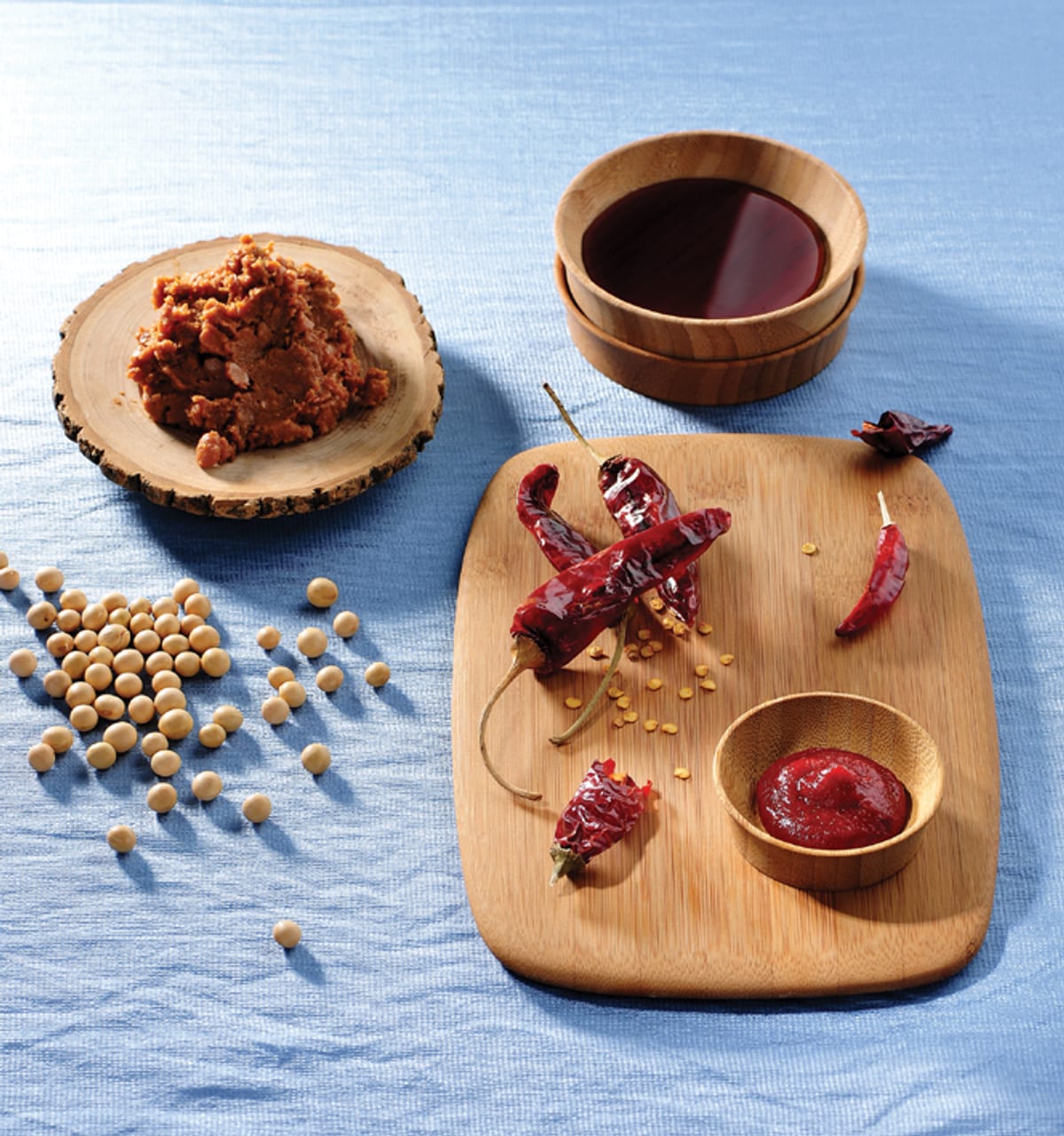
Stand in the sauce aisle of a Korean supermarket and you will see two brown-red tubs that look like variations on a theme. 된장 (doenjang) is the dull khaki one. 고추장 (gochujang) is the glossy scarlet one. Most English recipes describe them as "soybean paste" and "red chilli paste" and move on, as though the difference were mainly heat.
It is not. They are made by two completely different processes, they entered Korean kitchens roughly two thousand years apart, and swapping one for the other does not make a dish spicier or milder — it makes it a different dish.
The Short Answer
| 된장 Doenjang | 고추장 Gochujang | |
|---|---|---|
| What it is | Fermented soybean paste | Fermented chilli-and-grain paste |
| Core ingredients | Soybeans, salt, water — that is nearly all | Chilli powder, glutinous rice, meju powder, malt, salt |
| Colour / texture | Dull khaki-brown, coarse, some whole beans | Deep red, smooth, sticky |
| Tastes of | Salt and deep savoury funk. Not sweet | Sweet first, then heat |
| Age in Korea | Roughly two millennia | Impossible before the 1600s — see below |
| Made with a sibling | Yes — soy sauce comes out of the same jar | No |
| Use it for | Stews (된장찌개), soups, wraps, blanched-vegetable seasoning | Bibimbap, tteokbokki, marinades, stir-fries, dipping sauces |
| Price, 2026 | 해찬들 재래식 된장 rose about 10.1% YoY | Category average ₩18,716 in Q1 2026, +16.8% |
| Don't | Use it where you want red colour | Use it in a clear soup — it clouds and sweetens everything |
Price movement is Q1 2026 data reported by Seoul Economic Daily. Part of the rise is a policy change, not a harvest — the VAT exemption on jang products expired, which lifted shelf prices across the whole category.
Korean gochujang — compare on AmazonAffiliate link. As an Amazon Associate, EpicKor earns from qualifying purchases at no extra cost to you.
Doenjang Has a Sibling, and It Is Soy Sauce
Here is the fact that reorganises everything, and it is the one English food writing almost never carries.
Doenjang and Korean soy sauce are not two products. They are two halves of one process.
It starts with 메주 (meju) — cooked soybeans crushed, pressed into a brick, and hung to dry through winter while wild moulds and bacteria from the air colonise it. No commercial starter culture is added in the traditional method; the room does the inoculating.
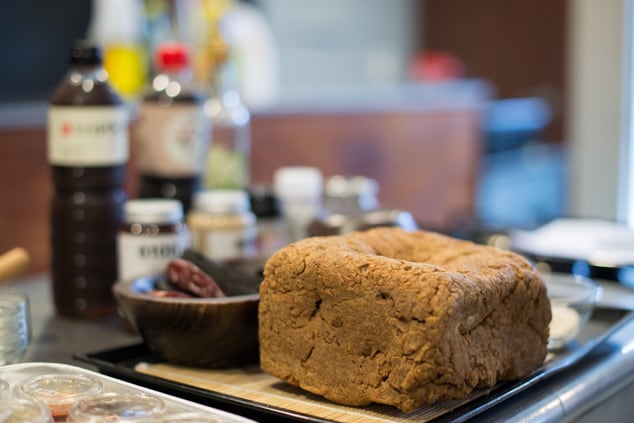
The dried brick then goes into an earthenware jar with brine and sits for roughly 60 days. During that time it separates. The liquid that draws off the top, dark and salty, is 간장 (ganjang) — soy sauce. The solids left behind, mashed and aged further, are 된장 (doenjang).
That separation has a name: 장 가르기, literally "splitting the jang." One jar, one fermentation, two products, decided by a ladle.
There is a further layer that turns the practice into something closer to heirloom-keeping. Households traditionally hold back some of the previous year's soy sauce — 씨간장, "seed soy sauce" — and add the new batch to it. A jar in a long-running household is therefore not this year's soy sauce. It is a continuous line, topped up annually, sometimes across generations.
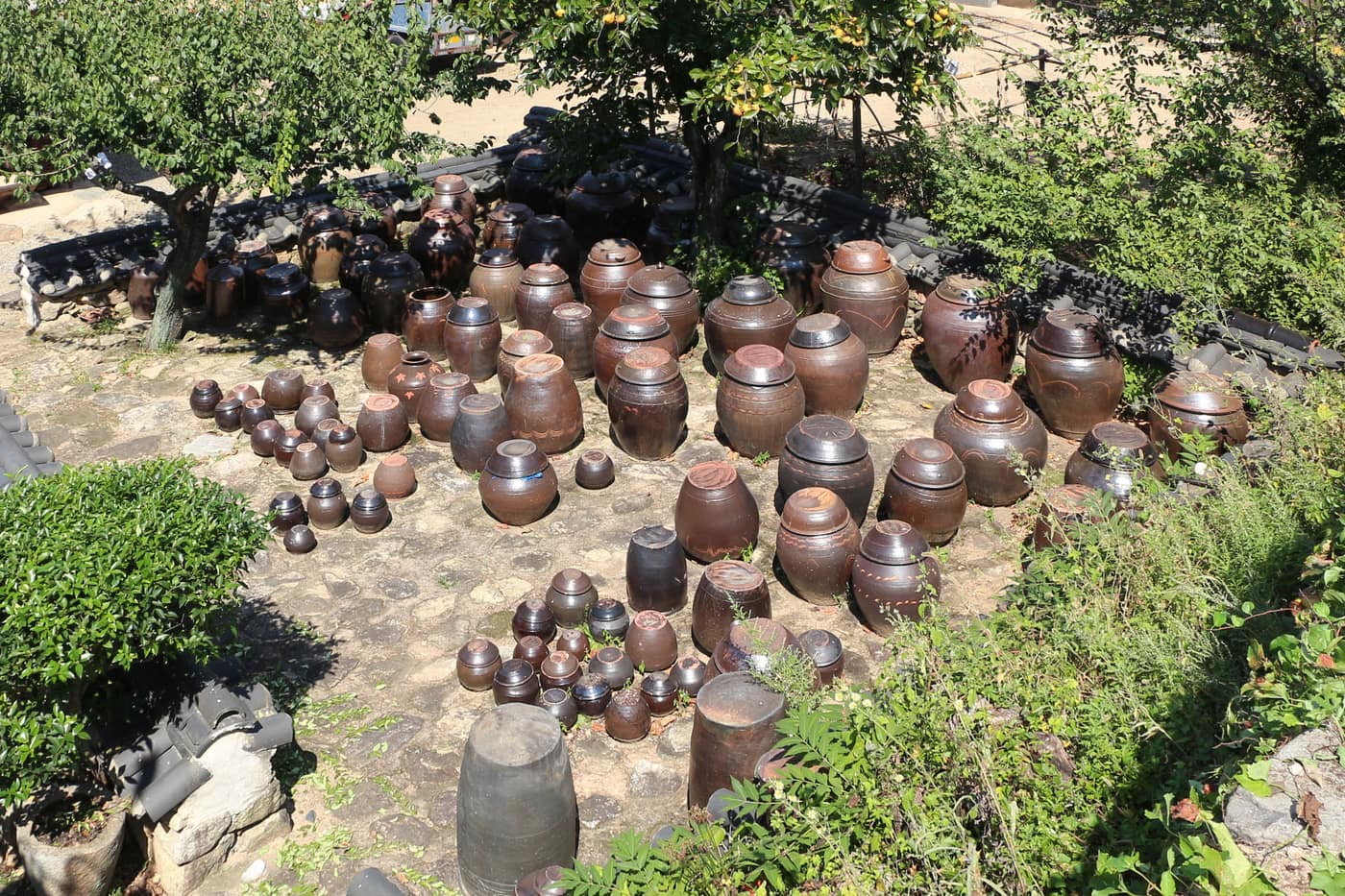
UNESCO inscribed this in December 2024, as "knowledge, beliefs and practices related to jang making." What was recognised was not a recipe but the whole chain — growing the soybeans, forming meju, splitting the jang, ageing it, and passing the seed soy sauce down. It had been a national intangible cultural heritage since 2018.
Gochujang Could Not Have Existed Before the 1600s
Now the other side, and this one surprises people who assume Korean food has always been red.
Chillies are not native to Korea. The earliest record is 《지봉유설》, written by Yi Su-gwang in 1614, which describes the chilli as having arrived by way of Japan. Later works — 《성호사설》 (1760) and 《오주연문장전산고》 — repeat that the introduction came from Japan and place it after the Imjin War (1592–98).
So there is a hard floor under the dish. Whatever Koreans were eating before roughly 1600, it was not gochujang, and it was not red.
The paste itself shows up in the record over the following century. 《산림경제》 documents chilli cultivation as it became normal. Recipes for the paste appear in 《소문사설》 (1740) and 《증보산림경제》 (1766), and 고초장 (苦椒醬) turns up in Joseon court records under King Yeongjo.
That gives you a rough shape worth carrying into the aisle: doenjang is an ancient staple; gochujang is an early-modern invention that took over. Korea's most internationally recognisable flavour is also its most recent one.
And gochujang is not made like doenjang at all. Instead of a meju brick in brine, it is a mixture — glutinous rice paste, chilli powder, powdered meju, and 엿기름 (malt) — blended and then aged. The malt matters more than most people realise: it converts starch into sugar, which is why a good gochujang tastes sweet before it tastes hot. If you have only met gochujang as "spicy," you have met a cheap one.
Buying one, not both: As an Amazon Associate, EpicKor may earn from qualifying purchases. If you are stocking a kitchen abroad and can only justify one tub, buy gochujang first — it appears in far more of the dishes people actually want to cook. Add ssamjang next, since it already contains doenjang and saves you a jar. Our [Korean pantry starter kit](/blog/277) covers the buying order in detail, including the heat number printed on Korean gochujang tubs.
See gochujang on AmazonWhich One Does Your Dish Need?
The practical rule: doenjang seasons liquid, gochujang seasons everything else.
| Dish | Paste | Why |
|---|---|---|
| 된장찌개 doenjang stew | Doenjang | It is the broth's entire personality |
| 김치찌개 kimchi stew | Neither, usually | The kimchi already brings acid and heat |
| 비빔밥 bibimbap | Gochujang | It has to coat rice without watering it down |
| 떡볶이 tteokbokki | Gochujang | Sweet-hot is the point |
| 제육볶음 spicy pork stir-fry | Gochujang | Marinade needs sugar to caramelise |
| 나물 blanched vegetables | Doenjang (a little) | Savoury depth without colour |
| 쌈 lettuce wraps | Ssamjang — the two blended | Neither alone is right; see our ssamjang guide |
| 미역국 seaweed soup | Neither | Clear soups take soy sauce, not paste |
The single most common mistake is treating gochujang as a chilli substitute. If a recipe calls for gochugaru — the dried chilli flakes — do not reach for gochujang. The flakes bring heat and almost nothing else. The paste brings heat, sugar, salt, glutinous rice body and fermented depth, and it will thicken and sweeten a dish that was supposed to stay light.
The reverse error is subtler: using doenjang where the dish wanted 된장 plus something. Doenjang on its own is aggressive and salty in a way that reads as unbalanced to palates raised on miso. Korean cooking almost always cuts it — with garlic, with a little gochujang, with sesame oil, with the starch water from washing rice.
Doenjang Is Not Miso, and the Difference Is the Mould
Visitors who know Japanese food often treat doenjang as Korean miso. They are relatives, not twins.
Both rely on Aspergillus moulds. The divergence is in how those moulds get invited.
Japanese miso is built on koji (麹) — rice or barley deliberately inoculated with a single cultivated strain, then mixed with steamed soybeans and salt. One organism, controlled conditions, shorter ferment. The result is mild, clean and noticeably sweet.
Korean doenjang is built on meju left to catch whatever the air provides — a mixed population of moulds and bacteria, over a much longer period. The result is stronger, funkier, higher in umami and distinctly less sweet.
That is why substituting one for the other disappoints in both directions. Miso in a doenjang stew tastes thin and sugary. Doenjang in miso soup tastes like it is trying to start a fight.
Be Honest About Which One You Will Use
Doenjang is the harder sell abroad. If you buy a tub, ask yourself whether you will genuinely make a stew. Doenjang exists to be simmered; it is not a condiment you will find yourself reaching for. A lot of first-time buyers use it twice and then keep it in the fridge for two years — it survives that, which is part of the problem.
Gochujang earns its shelf space faster. It works as a marinade, a sauce base, a dip component, and a spoonful stirred into things that are not Korean at all.
Check the heat number if you are buying in Korea. Korean gochujang tubs carry a GHU grade across five bands — the scale is a domestic standard most export packaging drops, and it is the difference between a paste your family will eat and one they will not. We covered how to read it in the pantry guide.
Traditional and factory-made are genuinely different products. Supermarket gochujang is often built on wheat flour or corn syrup rather than glutinous rice, and factory doenjang is inoculated with a single strain to make the result predictable. Neither is fake. But if you have tasted only the factory version and found it flat, that is a real observation, not a failure of your palate.
FAQ
Q: What is the difference between doenjang and gochujang?
Doenjang is fermented soybean paste — soybeans, salt and water, aged from a meju block — and it tastes salty and deeply savoury, not sweet. Gochujang is a fermented chilli paste made from chilli powder, glutinous rice, meju powder and malt, and it tastes sweet first and hot second. They are different processes, not different heat levels.
Q: Can I substitute gochujang for gochugaru?
No. Gochugaru is dried chilli flakes and brings heat with little else. Gochujang brings sugar, salt, starch and fermented depth on top of heat, so it will thicken and sweeten a dish that was meant to stay light. If a recipe wants flakes, use flakes.
Q: Is doenjang the same as Japanese miso?
No. Both use Aspergillus moulds, but miso uses koji — a single cultivated strain on rice or barley — and ferments for a shorter time, giving a mild, sweeter paste. Doenjang uses meju colonised by whatever moulds and bacteria the air supplies, over a longer period, giving a stronger, funkier, less sweet result. Substituting either way disappoints.
Q: How old is gochujang?
Younger than most people assume. Chillies reached Korea by way of Japan after the Imjin War of 1592–98, first recorded in Yi Su-gwang's 지봉유설 in 1614. Paste recipes appear in 소문사설 (1740) and 증보산림경제 (1766). Doenjang predates it by roughly two thousand years.
Q: Why do doenjang and soy sauce come from the same jar?
Because they are two outputs of one fermentation. A meju block sits in brine for about 60 days and separates; the liquid drawn off is ganjang (soy sauce) and the remaining solids become doenjang. Koreans call the step 장 가르기 — splitting the jang. Households often keep some of the previous year's soy sauce, 씨간장, and add each new batch to it.
Q: How much do doenjang and gochujang cost in Korea in 2026?
Gochujang averaged ₩18,716 in the first quarter of 2026, up 16.8% year on year — the steepest rise among tracked household staples. Traditional-style doenjang rose about 10.1%. Part of the increase came from the expiry of the VAT exemption on jang products, so it is a policy effect as much as an ingredient one.
The Takeaway
If you remember one thing, make it this: doenjang came out of a jar that also produced soy sauce, and gochujang came from a chilli that arrived by boat. One is the base note of Korean cooking. The other is the colour everyone recognises from across a room.
Buy the red one first. Learn what the brown one is for before you buy it.
The third bottle in that corner of the shelf is sesame oil, and it has a labelling trap the pastes do not — see the label word that means it isn't sesame oil before you buy one.
You Might Also Like
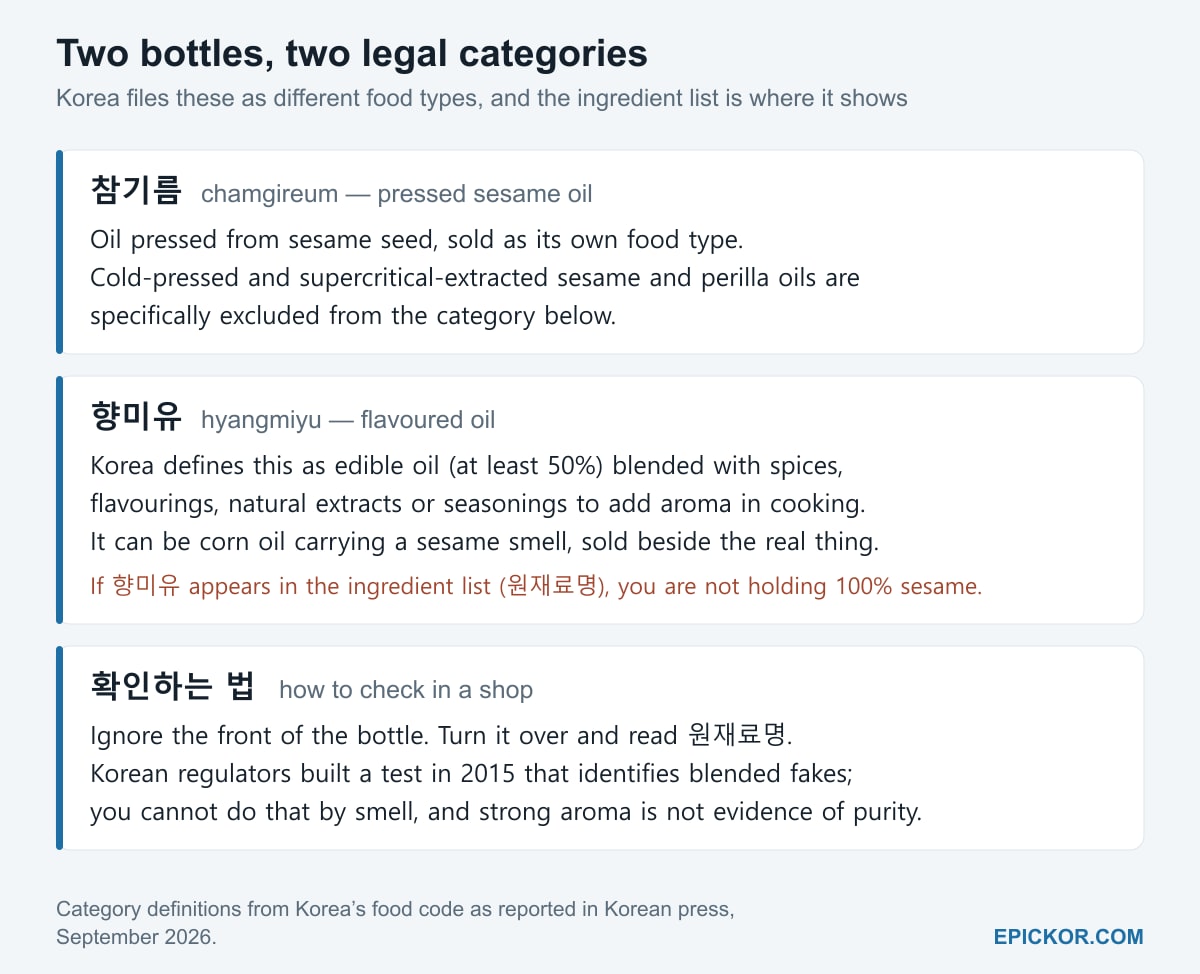
Korean Sesame Oil: The Label Word That Means It Isn't Sesame Oil
A bottle can look like Korean sesame oil and legally be corn oil carrying a sesame smell — Korea files that as 향미유, a separate food type. Imported oil runs ₩700–1,100 per 100ml; Korean-grown runs ₩5,500–6,700, because Korea grows 8–12% of its own sesame.
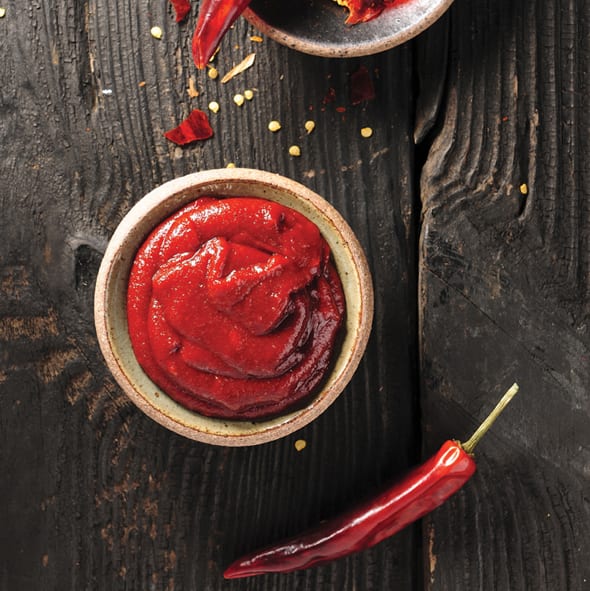
Korean Pantry Starter Kit: Gochujang Has a Printed Heat Number, and Nobody Tells You
Korea standardised gochujang spiciness in 2010 and prints the grade on the tub, so you can buy heat by number. Plus which of Korea's three soy sauces you actually need, and why jang prices jumped 16.8% this year.
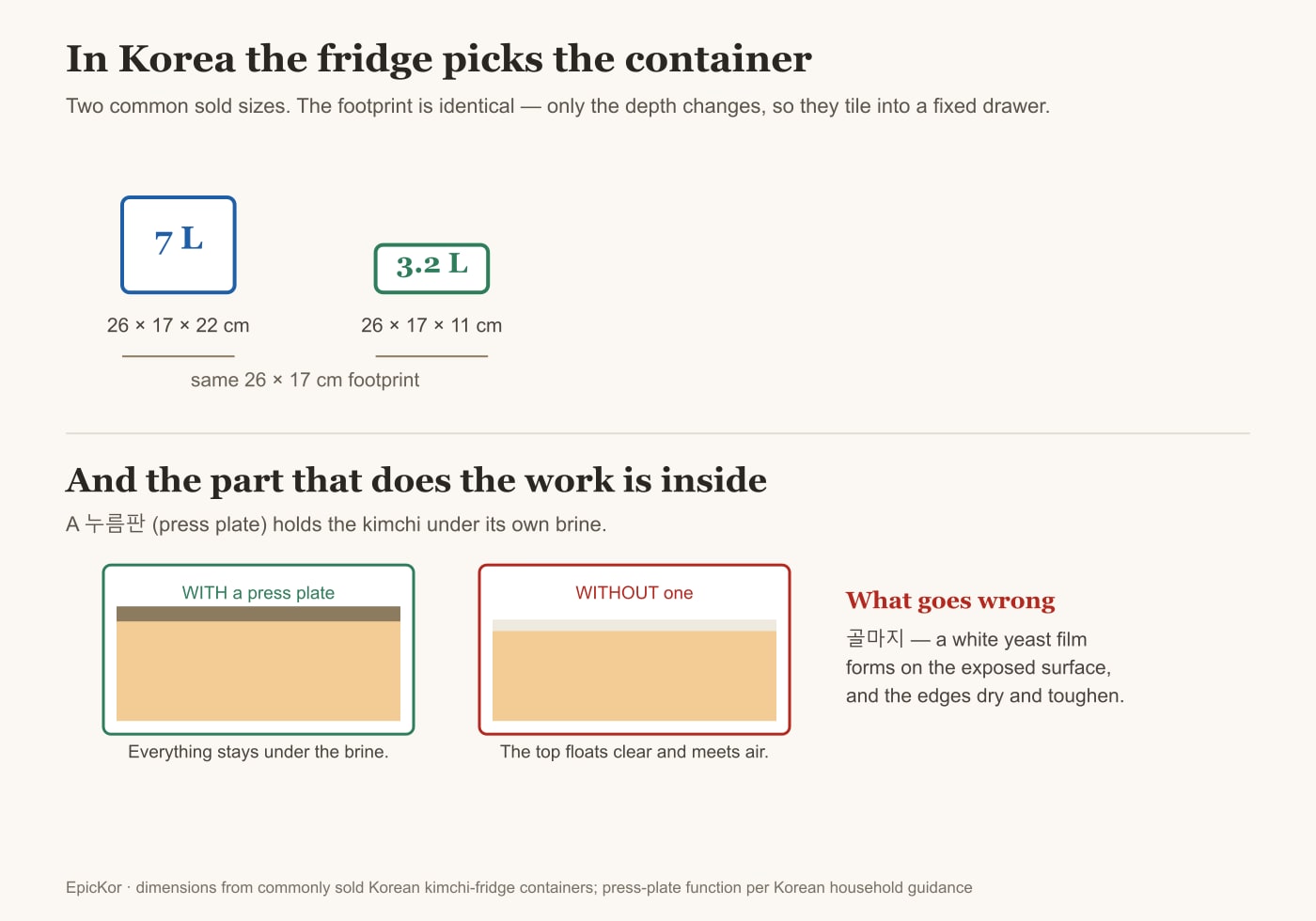
Korean Kimchi Containers: The Press Plate Matters More Than the Lid
English buying guides rank kimchi containers by lid. In Korea the fridge picks the size — 7L and 3.2L share a 26 × 17cm footprint so they tile — and the part that decides whether the kimchi survives is the 누름판, the plate that holds it under its own brine.