Where to Read Korean Webtoons: Naver vs Kakao, and the App Confusion
Here is a confusion we can measure: people search "is Naver Webtoon and WEBTOON the same," and the answers online are forum guesses.
The confusion is reasonable. Korean comics reach you through at least six apps with overlapping names — WEBTOON, Naver Webtoon, Naver Series, Kakao Page, Kakao Webtoon, Tapas — plus subscription services and a piracy swamp. Koreans navigate this instinctively; nobody wrote the map for everyone else.
This is the map. Who owns what (one of these companies is on the Nasdaq), which app fits how you read, how the strange free-but-not-free payment system works, and the honest answer about what you still cannot get legally in English.
| App | Owner | Best for | Model |
|---|---|---|---|
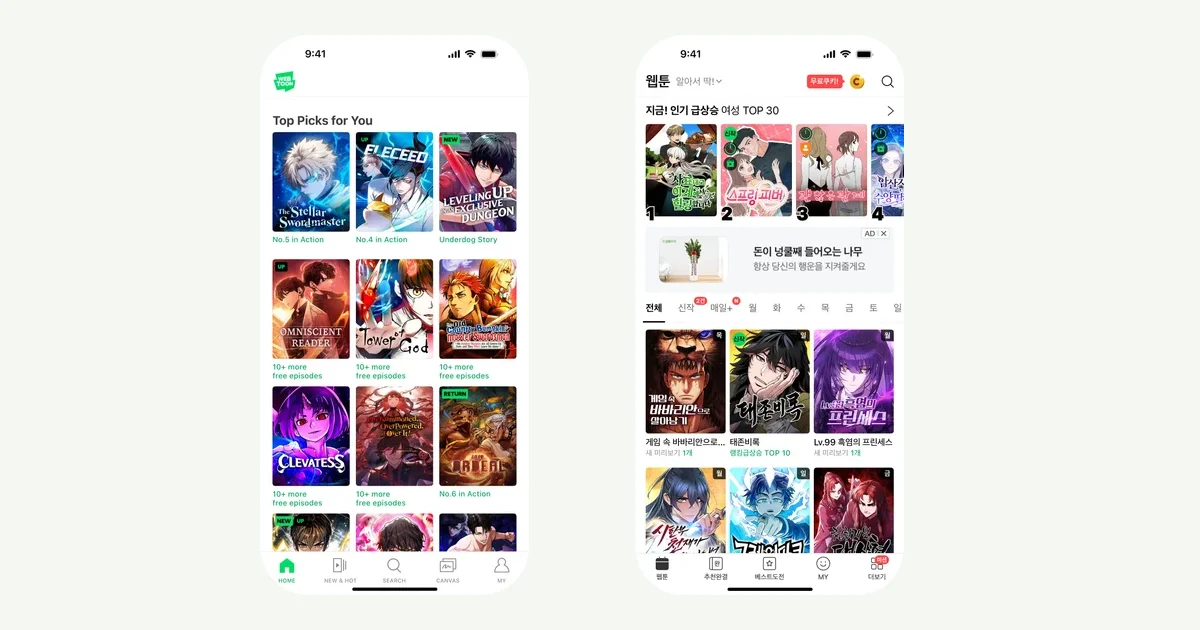
| WEBTOON | Naver (Nasdaq: WBTN) | English readers, official translations, originals | Free weekly episodes; coins for early access |
| 네이버웹툰 (Naver Webtoon) | Naver — same company | Reading in Korean, newest episodes first | Same, in Korean |
| Naver Series (시리즈) | Naver | Completed runs, binge-buying in Korean | Pay per episode / wait-free |
| Kakao Page (카카오페이지) | Kakao | Korean novels + webtoons; the binge library | Invented "wait until free" (기다무) |
| Kakao Webtoon (카카오웹툰) | Kakao | Korean readers; the old Daum lineage | Wait-until-free / cash |
| Tapas | Kakao Entertainment | Kakao's catalog in English | Ink/wait system |
| Manta | RIDI | Flat-fee subscription in English | Netflix-style monthly |
Tower of God Vol. 1 — the Naver Webtoon classic, printed by WEBTOON UnscrolledAffiliate link. As an Amazon Associate, EpicKor earns from qualifying purchases at no extra cost to you.
The Big Answer First: Yes, WEBTOON Is Naver
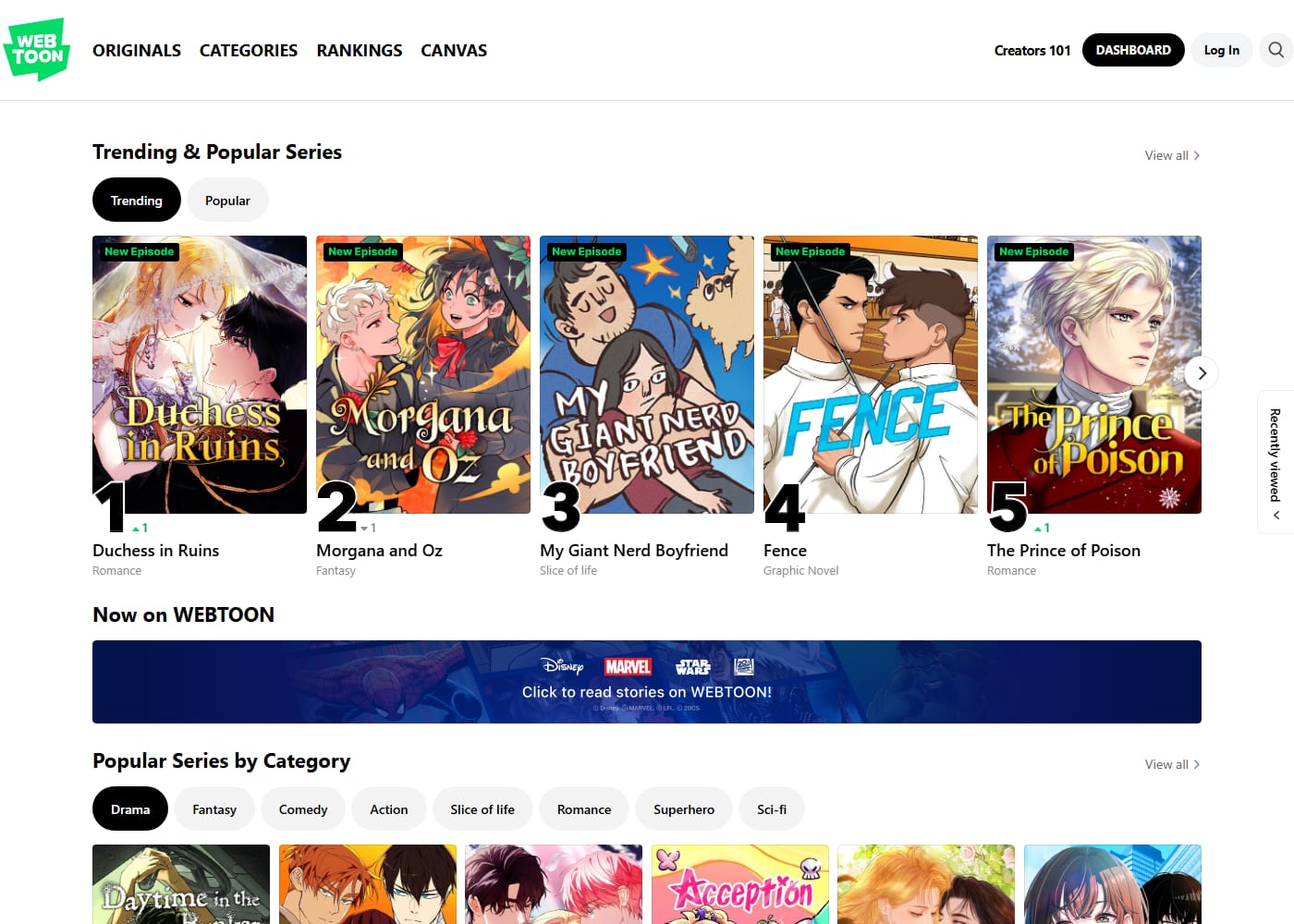
The question people literally type — is Naver Webtoon and WEBTOON the same — has a one-word answer: yes. Same company, different storefronts.
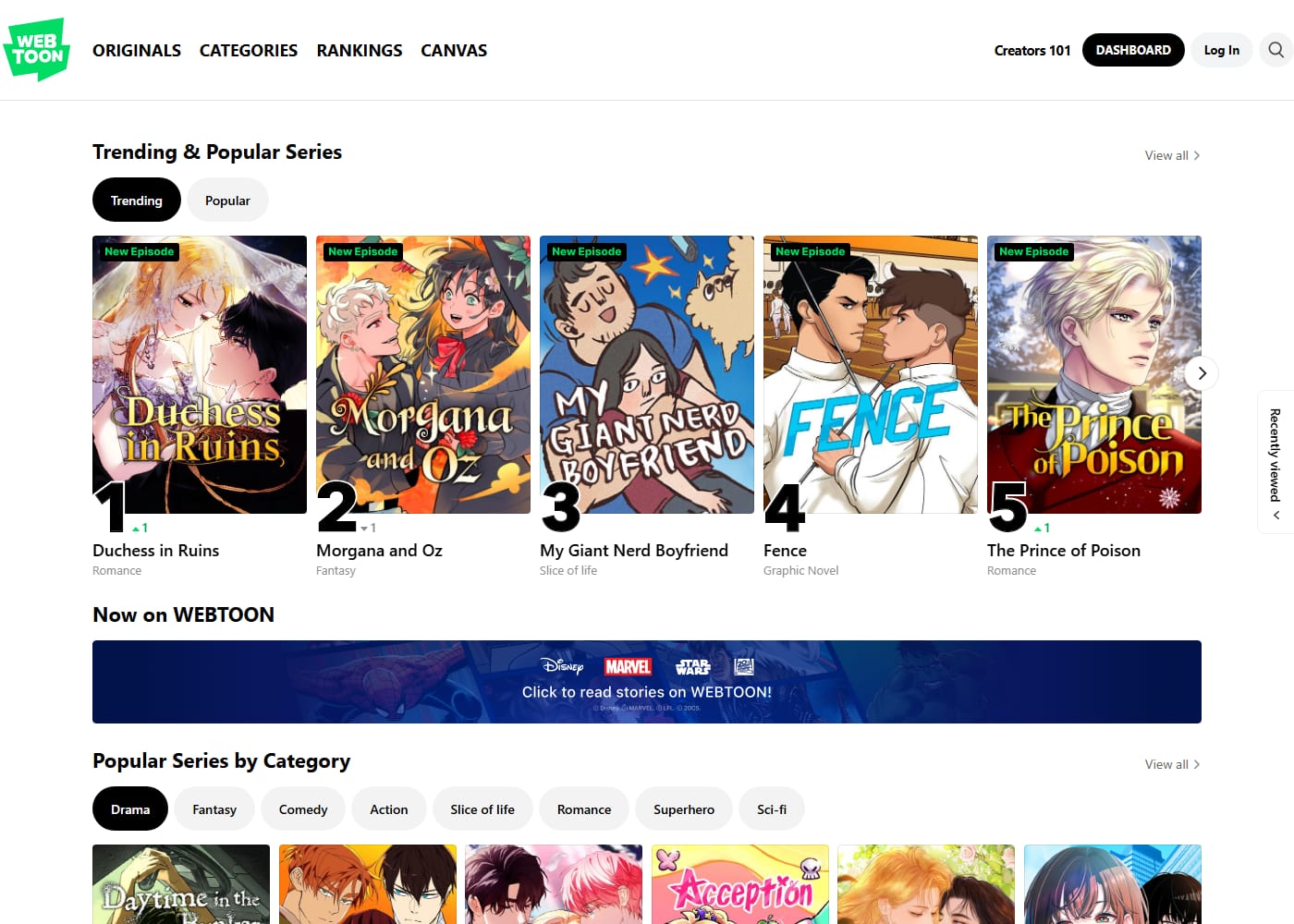
네이버웹툰 (Naver Webtoon) is the Korean original, the platform that turned the vertical phone-scroll comic into a national habit. WEBTOON — launched internationally as LINE Webtoon in 2014 — is the same company's global edition: official English translations of Korean hits plus a large stable of originals made for the global audience.
Lore Olympus 3-book boxed set — a WEBTOON Original, on the shelf The global edition's own originals now come back as print: this is the best-known one, collected in volumes 1–3 — the shelf version of a story made for the scroll, which is the direction the industry itself went. As an Amazon Associate, EpicKor earns from qualifying purchases at no extra cost to you.
See the Lore Olympus boxed set on AmazonAnd this is no longer just a Korean app with an export arm. The global business, WEBTOON Entertainment, listed on the Nasdaq in June 2024 — ticker WBTN, priced at $21, closing its first day up 9.5% at a valuation around $2.9 billion, with Naver holding 62.4 percent. The company that popularized comics you scroll with a thumb is a publicly traded American-listed company controlled from Seoul. Naver also owns Wattpad, the web-fiction platform, which is why webtoon adaptations of web novels keep appearing — the pipeline is in-house.
Which Naver app should you use? If you read in English: WEBTOON, full stop. If you read in Korean, or you want episodes months before translation: 네이버웹툰. If you want to binge a finished series in Korean and pay per episode: Naver Series (시리즈) is the box-set store.
The Kakao Side: The People Who Invented "Wait Until Free"
Korea's other tech giant runs the other half of the market, and its contribution to global reading habits is a business model.
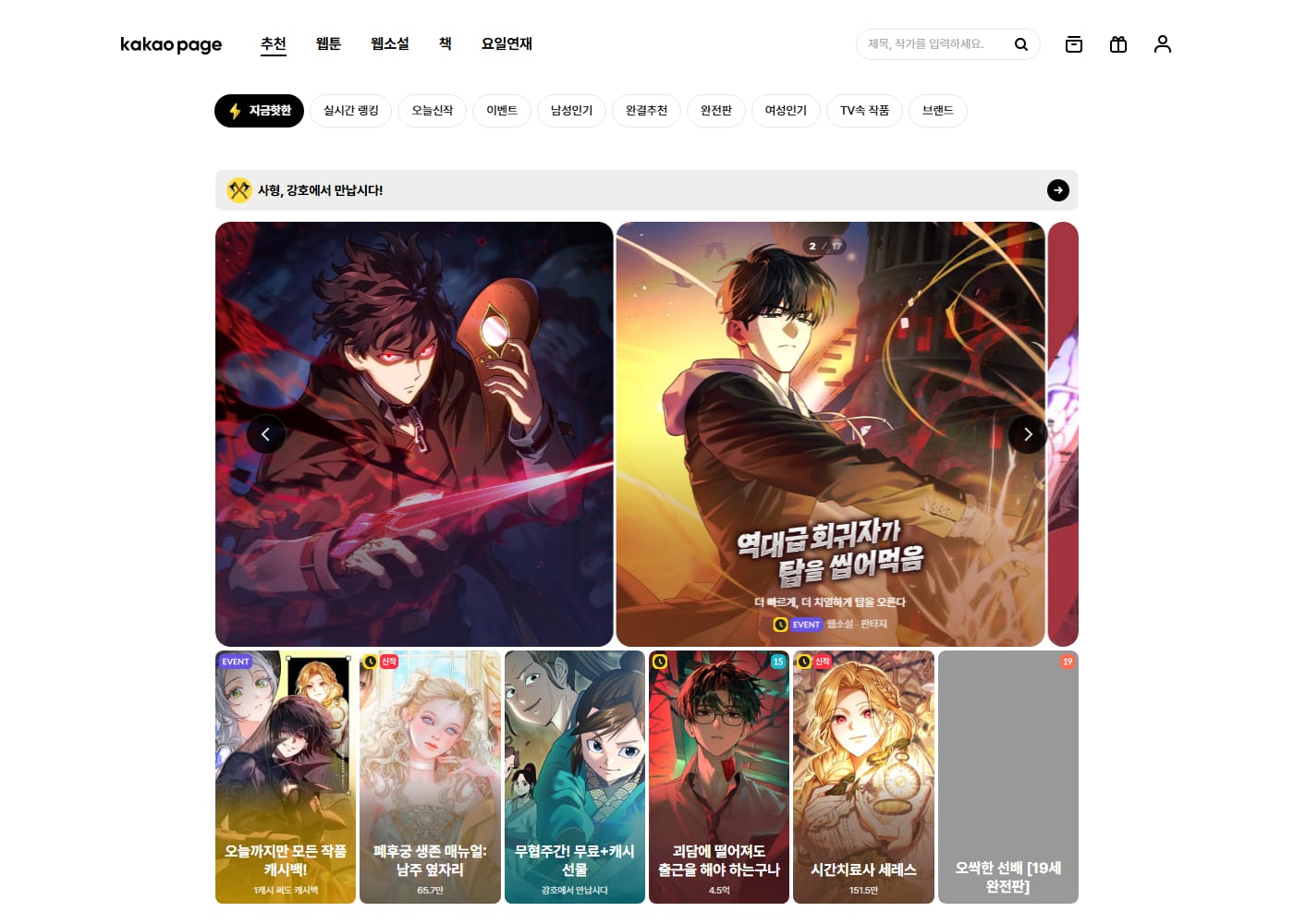
Kakao Page (카카오페이지), launched 2013, invented 기다리면 무료 — "wait until free" — in 2014: every episode unlocks free if you wait (typically a day or three per episode), or you pay a small charge to read now. It sounds minor. It rewired the economics of the entire industry, because it converts impatience — the exact emotion a cliffhanger manufactures — directly into revenue, while still letting patient readers finish everything for nothing. Nearly every Korean platform now runs some version of it.
Kakao Webtoon (카카오웹툰) is the webtoon-first sibling, and it carries the deepest lineage in the industry: it is the 2021 rebuild of Daum Webtoon, the platform that started webtoons as a category back in 2003 — before Naver entered. The student overtook the teacher long ago, but the ancestor is Kakao's.
For English readers, Kakao's door is Tapas — its North American platform — where much of the Kakao catalog lands in translation under an ink-and-wait system. And outside the two giants, Manta (run by RIDI, Korea's e-book company) sells the simplest deal in the industry: one flat monthly fee, everything in the catalog, no coins, no timers.
How the Money Actually Works
The system confuses newcomers because it is neither free nor paid — it is tiered patience:
- The current run is free, weekly. Like broadcast TV: a new episode a week, no charge, forever.
- The next few episodes exist already — and cost coins/cookies/ink (each app names its currency differently, ₩100–300 or a few cents per episode) to read early.
- Completed series flip to binge economics: wait-until-free timers per episode, or pay to marathon it tonight.
Two practical notes. First, the free tier is genuinely complete — a patient reader pays nothing, ever, and this is by design, not a trial. Second, the paid layer is what funds creators: Korean webtoon artists are paid through these platforms, which is the polite answer to why you should skip the aggregator piracy sites — beyond malware and screenshot-quality uploads, the official apps are literally the artist's paycheck.
The Weekday Ritual
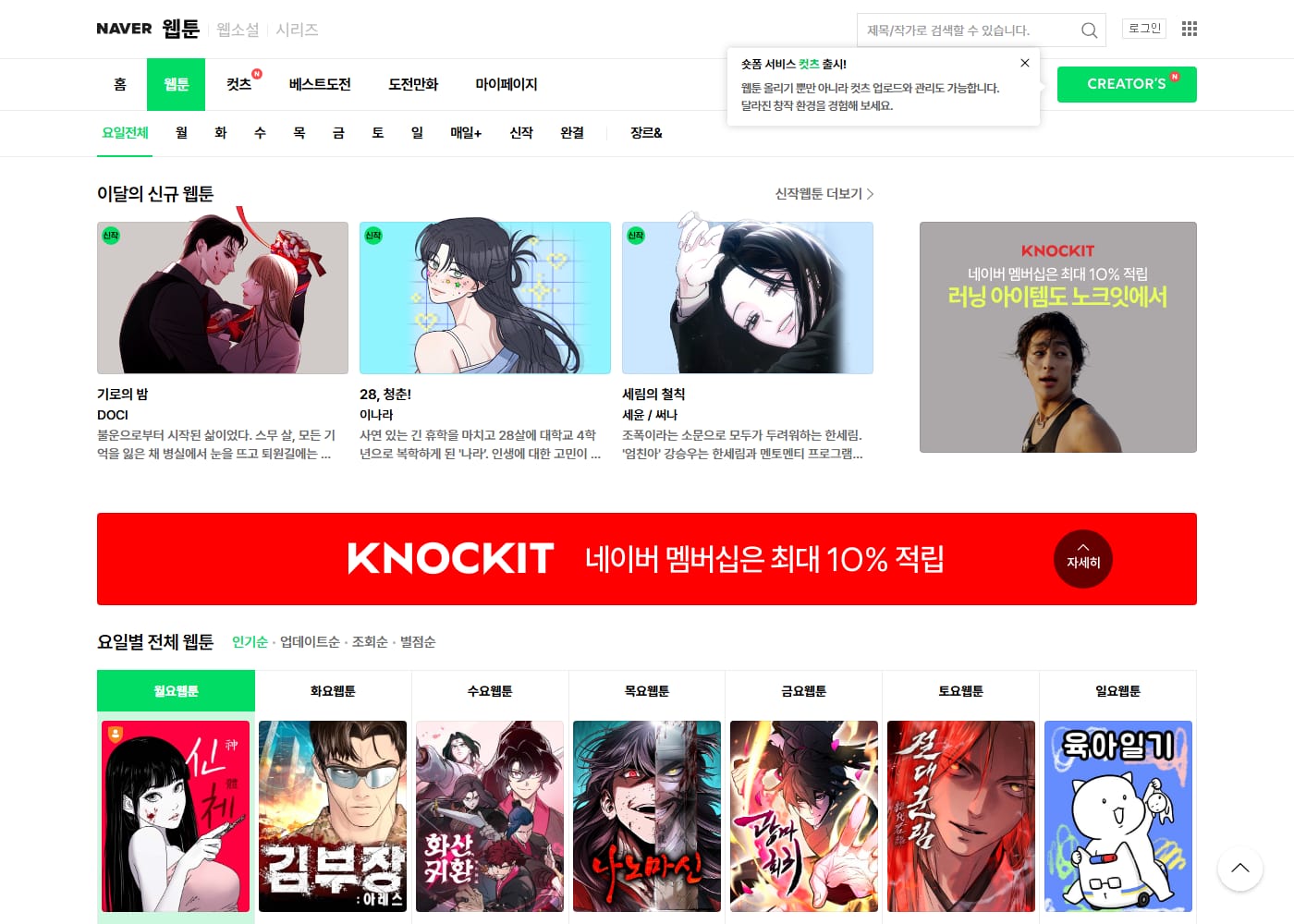
One habit worth adopting from Korean readers: series are tracked by day of the week. A Korean does not follow "Tower of God" so much as follow Monday — 월요웹툰, Monday webtoons, is a phrase, and each weekday tab on 네이버웹툰 is its own little prime-time schedule. The rhythm is the retention engine: a free episode arrives on your day, every week, like a broadcast slot, and the comment section under each episode functions as the live studio audience.
This is also why "catching up" and "keeping up" feel like different hobbies here. Catching up is the binge economy (timers, coins, box sets); keeping up costs nothing and takes five minutes a day. Most long-term readers end up doing both — bingeing into a series through the paid lane, then settling into its weekday for free.
Which App Fits Which Reader
- "I just want to read popular Korean series in English, free." → WEBTOON. The catalog of translated hits plus originals is the largest, and the weekly free model costs nothing.
- "I hate waiting and hate microtransactions." → Manta. One subscription, flat, done — the catalog is smaller but the deal is clean.
- "I'm learning Korean." → 네이버웹툰 or Kakao Page. Reading comics in Korean with picture context is a legitimately effective study habit, and the dialogue is how people actually text and talk. Pair it with a series you already read in English so you always half-know the meaning.
- "I finished the anime and need the rest of the story tonight." → The source is usually on Tapas (Kakao titles) or WEBTOON/Series (Naver titles) — search the exact title; adaptations keep the name.
- "I want the newest episodes the day they exist." → Korean apps only. Translation lags weeks to months; that gap is the entire spoiler economy on webtoon Reddit.
What You Still Cannot Get (The Honest Part)
The official English layer is large but not complete. Plenty of mid-tier and older Korean series have never been licensed, some translations end mid-series when licensing lapses, and adult-rated lines mostly stay Korea-only on separate platforms. When a series you want has no legal English home, the honest options are the Korean original (with a dictionary and patience) or waiting — the licensing pipeline moves fast now precisely because the Nasdaq listing made translation catalogs a growth metric.
Korean Grammar in Use: Beginning — the structured reference for the learning-Korean route Pair comics with one grammar book to decode the sentence patterns the speech bubbles keep reusing — webtoon dialogue is repetitive in exactly the way a learner wants. As an Amazon Associate, EpicKor earns from qualifying purchases at no extra cost to you.
See Korean Grammar in Use on AmazonFor the cultural side of all this — why the vertical scroll won, what manhwa versus manga versus webtoon actually mean, and how Netflix turned this industry into a script mine — our Korean webtoons explainer covers the history, and the K-drama foods guide covers what to eat while you binge the adaptations. If you need the next show itself, start with the best K-dramas of 2026.
FAQ
Q: Is Naver Webtoon and WEBTOON the same?
Yes — the same company. WEBTOON (launched globally as LINE Webtoon in 2014) is Naver Webtoon's international edition, with official English translations and global originals. The global business, WEBTOON Entertainment, has traded on the Nasdaq as WBTN since June 2024, with Naver holding 62.4 percent.
Q: Where do Koreans actually read webtoons?
Overwhelmingly on 네이버웹툰 and the Kakao pair (Kakao Page and Kakao Webtoon), organized around weekday release schedules. Naver Series handles completed-series binge buying. The English apps mirror these catalogs with a delay.
Q: What is the best free webtoon app?
WEBTOON, if you read in English — every ongoing series gives its current run free weekly, permanently. The paid layer only buys early access and faster bingeing. For a flat-fee alternative with no timers at all, Manta.
Q: What does "wait until free" mean on Kakao Page?
Kakao Page's 2014 invention (기다리면 무료): each episode of a completed series unlocks free after a waiting period — or you pay a small per-episode charge to read immediately. Patience reads free; impatience funds the industry. Most Korean platforms now use a version of it.
Q: Are webtoon aggregator sites legal?
No — the unofficial mirror sites republish without license or payment to creators. Beyond the legal and malware problems, the official apps are how Korean artists are actually paid, and their free tiers already carry the current run of nearly everything popular.
Q: Can I read webtoons to learn Korean?
It is one of the better study habits: everyday dialogue, picture context for meaning, and short daily episodes. Start with a series you already finished in English on WEBTOON, then reread it in Korean on 네이버웹툰 so the plot carries you through the vocabulary.
Sources Checked
- WEBTOON Entertainment's Nasdaq listing: IPO priced at $21 on June 26, 2024, first-day close up 9.5% at roughly a $2.9 billion valuation, Naver ownership 62.4% — company press release, Korea Times, SEC filings
- Platform histories: LINE Webtoon's 2014 global launch; Kakao Page's 2013 launch and the 2014 기다리면 무료 model; Kakao Webtoon as the 2021 successor to Daum Webtoon (2003) — Korean platform records and industry coverage
- The three storefronts as they render in August 2026 (screenshots taken directly for identification): webtoons.com, comic.naver.com, page.kakao.com
You Might Also Like
Korean Webtoons Explained: Manhwa vs Manga, and How to Read
A practical guide to Korean webtoons, Naver Webtoon, manhwa, Netflix adaptations, and why vertical comics became global culture.
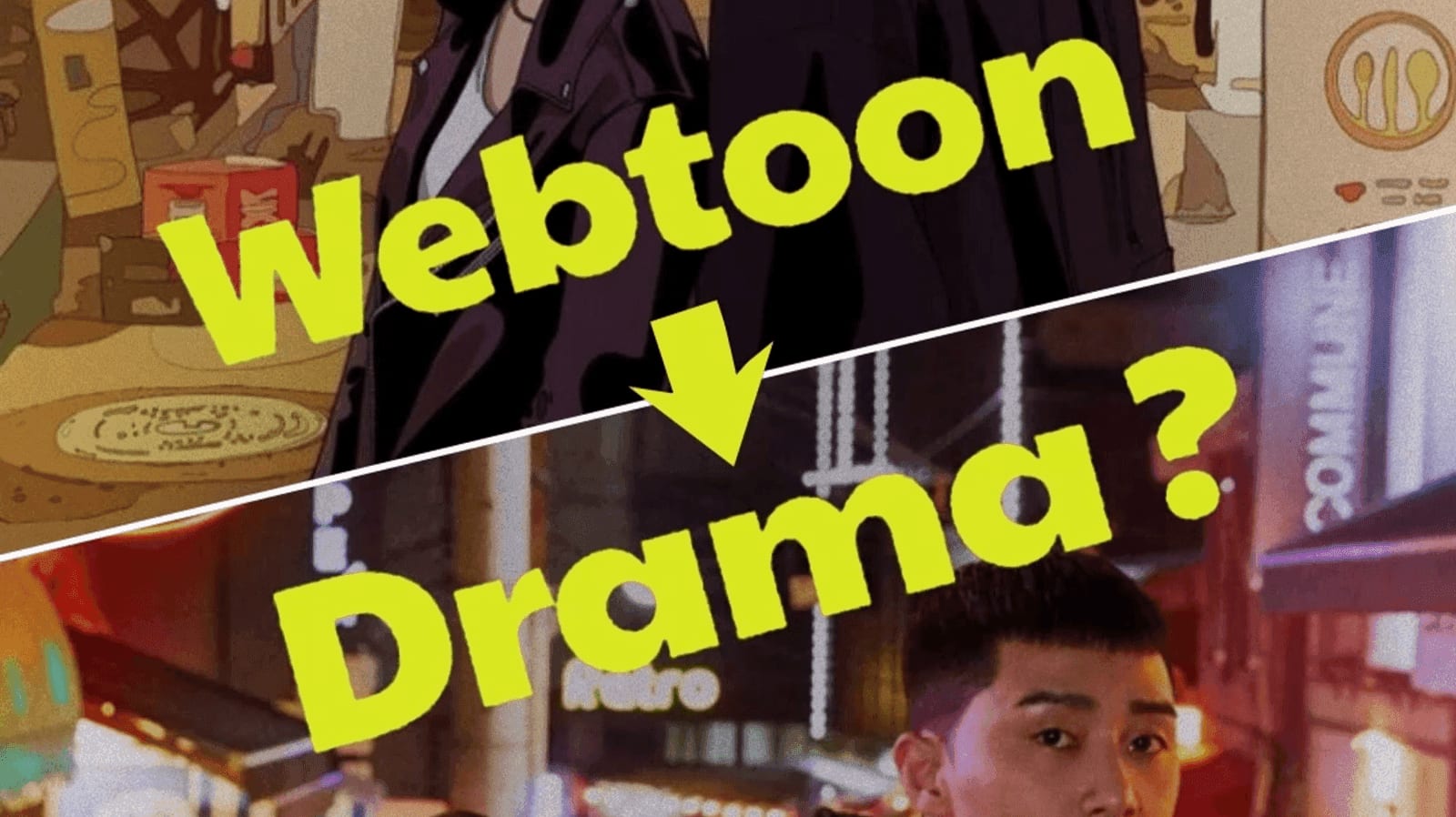
Why Korean Webtoons Become K-Dramas, and What Changes
Korea turns webtoons into dramas faster than any other country, and the adaptations rarely match the source. Here is why studios buy webtoons, what gets changed in the move to screen, and why some adaptations disappoint readers.
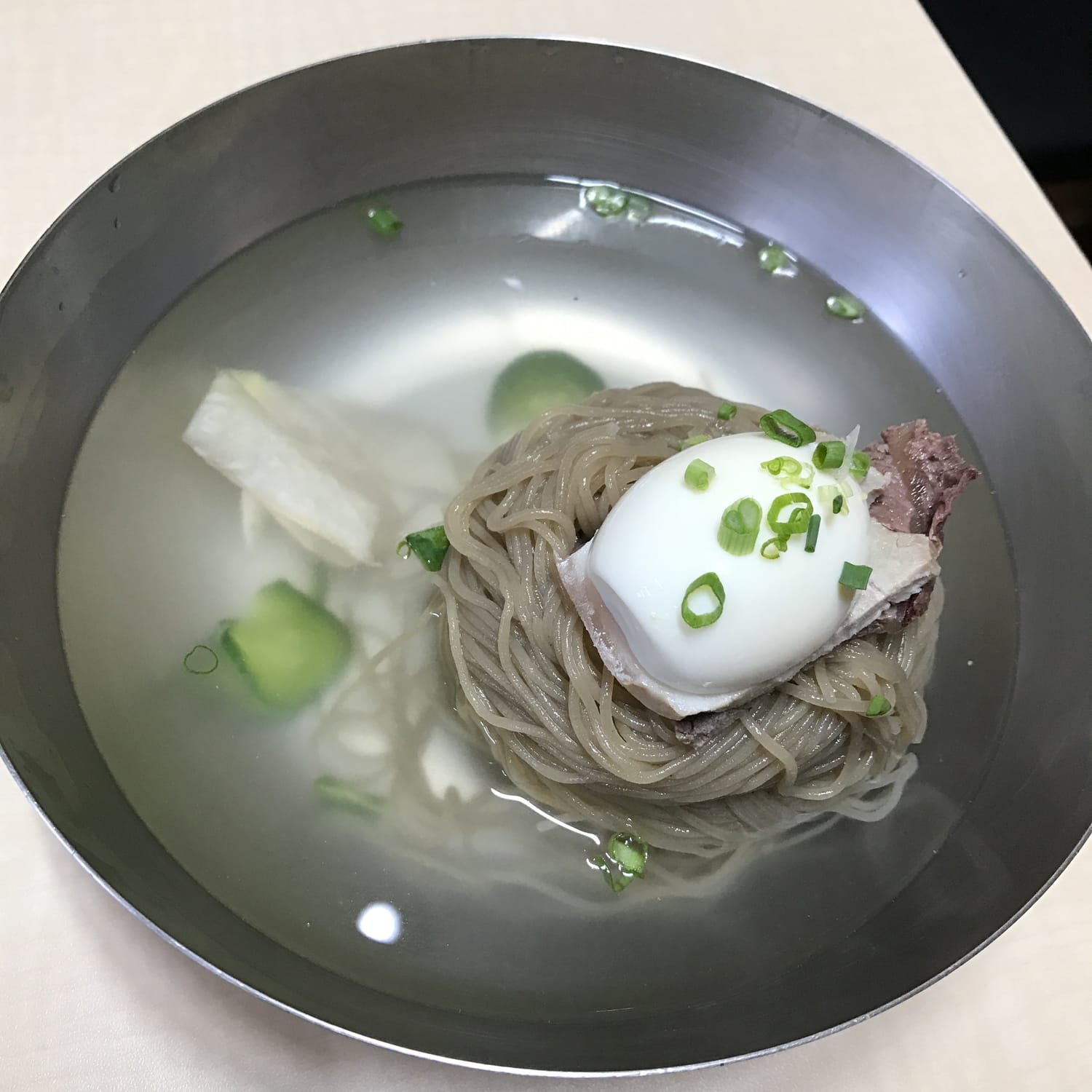
The One Korean Food Foreigners Never Learn to Love: Hamheung Naengmyeon, and Why Koreans Can't See the Problem
Foreigners who eat cheonggukjang and even hongeo still will not pay for this twice. A Korean creator who fed foreigners for years says naengmyeon was the overwhelming number one refusal, and Koreans, who rank it first every summer, cannot see why.