Milkis vs Calpis, and Whether Korea's Milk Soda Has Alcohol
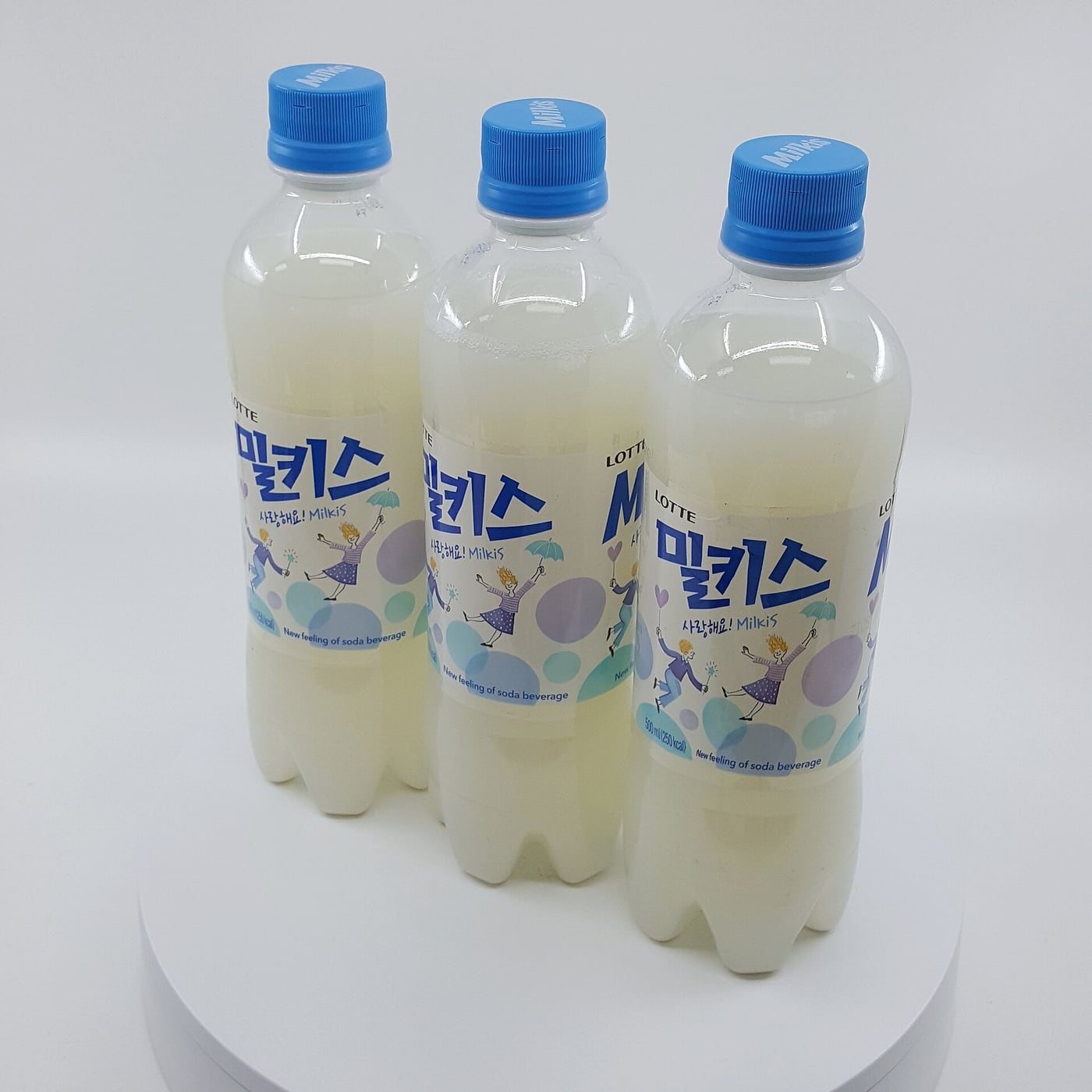
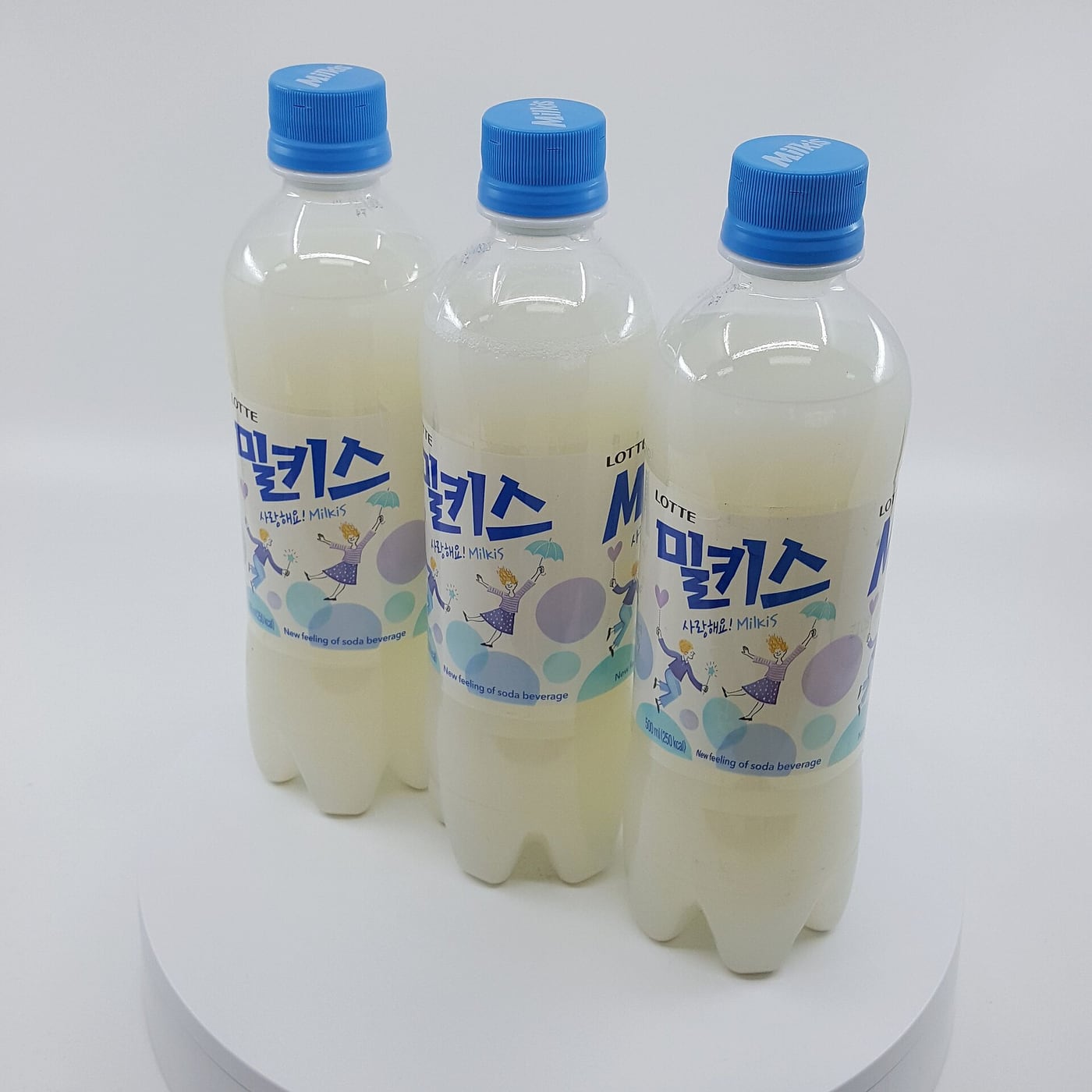
Korean-market 500 ml bottles. The slogan under the Hangul reads 사랑해요! Milkis, and along the bottom, "New feeling of soda beverage." Photo by validationset, CC BY 4.0, via Wikimedia Commons.
Milkis (밀키스) is a carbonated drink with milk in it. That sentence is where almost every English article stops, and it is why three of the most-searched questions about it go unanswered.
People ask whether it is the same thing as Calpis. They ask whether it contains alcohol. And they ask which of the flavours is actually worth buying — a question every existing guide answers by reviewing about half of them.
This covers all three, plus the two ways Koreans drink Milkis that do not appear in a single English write-up.
The Short Answer
| Detail | |
|---|---|
| Korean name | 밀키스 (Milkis) |
| Maker | Lotte Chilsung (롯데칠성음료) |
| Launched | April 1989 |
| Slogan on the bottle | 사랑해요! Milkis · "New feeling of soda beverage" |
| What it is | Carbonated, milk-containing soft drink — ready to drink |
| Calories | 130 kcal per 250 ml can · 250 kcal per 500 ml bottle |
| Alcohol | None. Zero. See below for why people keep asking |
| Zero-sugar version | 밀키스 제로, launched 17 February 2023 |
| Annual revenue | around ₩50 billion, with Lotte Chilsung publicly targeting ₩80 billion |
| Convenience-store price | ₩1,500 listed for the 250 ml can at GS25, often ₩1,000 on 2+1 |
| Best first buy | Original. Not a fruit flavour |
Milkis, Chilsung Cider and 2% Peach in one order — the Lotte variety pack, on AmazonAffiliate link. As an Amazon Associate, EpicKor earns from qualifying purchases at no extra cost to you.
If you only remember one line: Milkis is Korean and Calpis is Japanese, neither has alcohol in it, and Original is the flavour to buy first.
Milkis vs Calpis: They Are Not the Same Drink
This is one of the most-searched Milkis questions in English, and the answer is more clear-cut than the comparison suggests.
Calpis (カルピス) is Japanese, launched in 1919, and in its classic form it is a non-carbonated concentrate — a syrup you dilute with water yourself. The ready-to-drink carbonated version is a separate product line. Outside Japan it is sold as Calpico, a rename made for English-speaking markets for obvious reasons.
Milkis is Korean, from 1989, carbonated by default, and sold ready to drink. You do not dilute it. There is no concentrate.
| Milkis (밀키스) | Calpis / Calpico | |
|---|---|---|
| Country | Korea | Japan |
| Launched | 1989 | 1919 |
| Base form | Ready to drink | Concentrate you dilute (classic form) |
| Carbonated | Yes, always | No, in the classic form |
| Flavour direction | Milk-forward, sweet, strong fizz | Lactic, tangier, more yoghurt-like |
So they are not competitors in the way the search phrasing implies. They are two countries' answers to the same idea — dairy plus soft drink — arrived at seventy years apart.
The Rival Nobody Outside Korea Has Heard Of
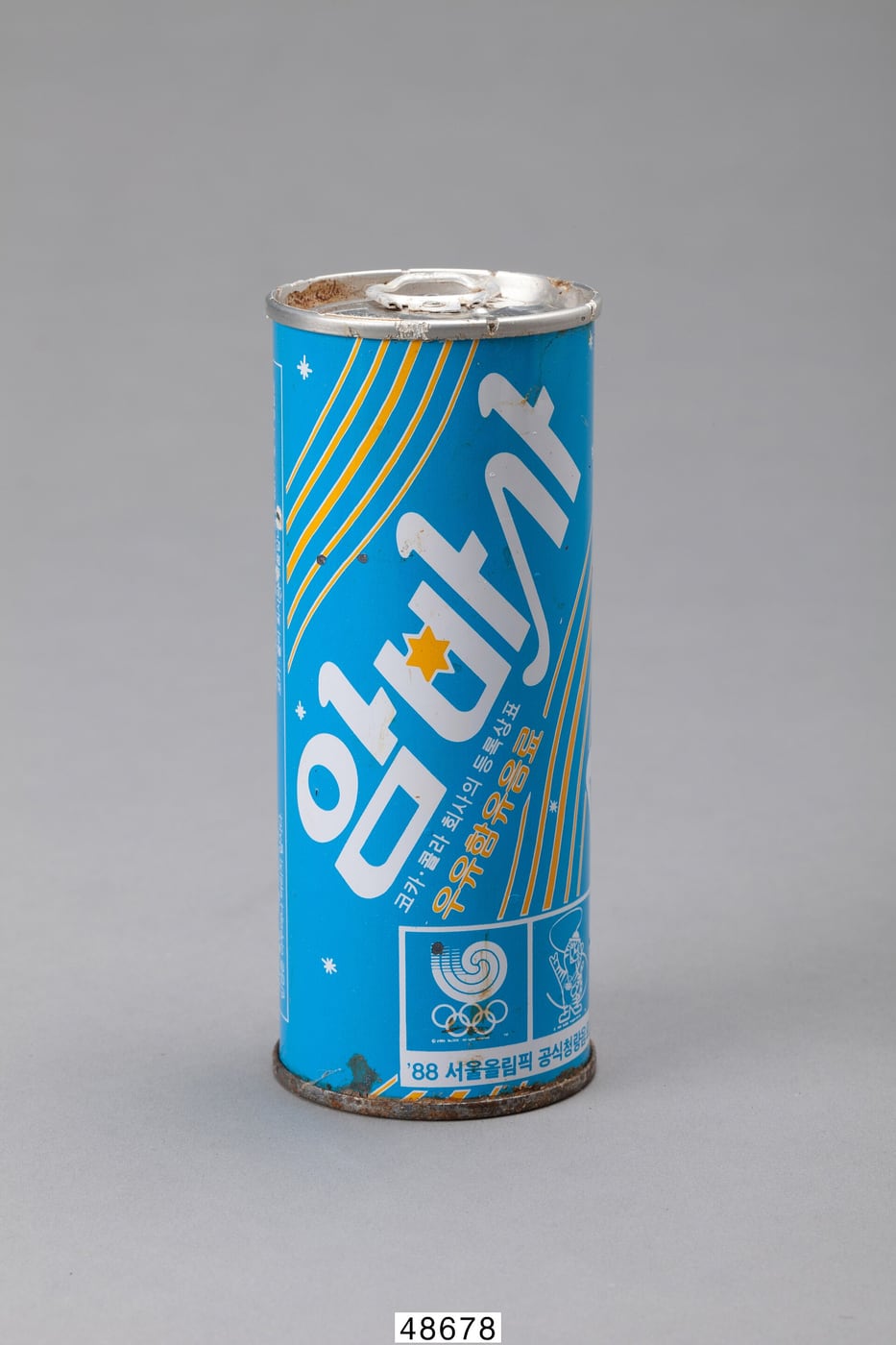
A 1980s Korean Ambasa can. Collection of the National Folk Museum of Korea, KOGL Type 1.
Milkis's actual rival is not Calpis. It is Ambasa (암바사), and the relationship is more interesting than the drink deserves.
Ambasa reached Japan in 1982 — seven years before Milkis launched. It is, chronologically, the elder. But in Korea the widespread perception runs the other way: Milkis is treated as the original and Ambasa as the imitation, and Ambasa sells considerably less.
The taste split, as Korean drinkers describe it:
- Milkis — sweeter, stronger carbonation, more forward milk flavour.
- Ambasa — less sweet, gentler fizz, and noticeably more yoghurt-like.
If Milkis reads as too sweet to you, Ambasa is the adjustment, and it is sitting in the same fridge. No English guide to Korean soft drinks will tell you it exists.
Lotte Korean soda variety pack (Milkis, Chilsung Cider, 2% Peach) — the cheapest way to find out whether milk-and-fizz works for you. Milkis travels better than most Korean drinks because it is shelf-stable and canned; the variety pack settles the question before you commit to a case. As an Amazon Associate, EpicKor earns from qualifying purchases at no extra cost to you.
See the variety pack on AmazonThe Flavours, and Which One to Pick
Milkis has run eleven flavours across its markets — original, orange, strawberry, mango, melon, banana, peach, apple, pineapple, grape and lemon — but that is the global catalogue, not what is in front of you.
Two things worth knowing before you order a variety pack:
Korea's own shelf is narrower than the export catalogue. Walk into a Korean convenience store and you will usually find original, sometimes one or two fruit flavours, and increasingly the zero version. The wide flavour spread is largely an export and online-retail phenomenon. If you came to Korea expecting a wall of eleven, that wall is not there.
The fruit flavours are variations on the same base, not different drinks. Every one is the same milky carbonated body with a fruit note laid over it. This matters for a variety pack: you are not sampling eleven experiences, you are sampling one experience eleven ways.
| Flavour | What it does to the base | Worth it? |
|---|---|---|
| Original | Nothing — this is Milkis | Start here. Everything else is a modification of it |
| Melon | Korean melon-soda register, closest to Korea's own ice-cream flavour vocabulary | The most "Korean-tasting" of the fruit line |
| Strawberry | Candy-strawberry, pink, sweetest of the set | If you already know you like sweet |
| Banana | Reads as banana milk with bubbles | Natural crossover if you like Korea's banana milk |
| Peach / mango / grape | Fruit note over milk, pleasant, interchangeable | Fine. Not a reason to buy the pack |
| Orange / lemon / pineapple / apple | Citrus and sharp fruit fight the milk rather than sit on it | The weakest idea in the range |
The honest ranking advice: the fruit flavours do not separate as much as a ranked list implies. Guides that rank all eleven are ranking small differences on a shared base. If someone tells you flavour number four is dramatically better than number seven, be sceptical.
Buy a single can of Original before you buy a case of anything. Milkis is genuinely polarising — the milk-plus-carbonation combination is either immediately pleasant to you or immediately strange. Nothing about the fruit versions changes that verdict.
"Does Milkis Have Alcohol?" — No. Here Is Why You Keep Seeing the Question
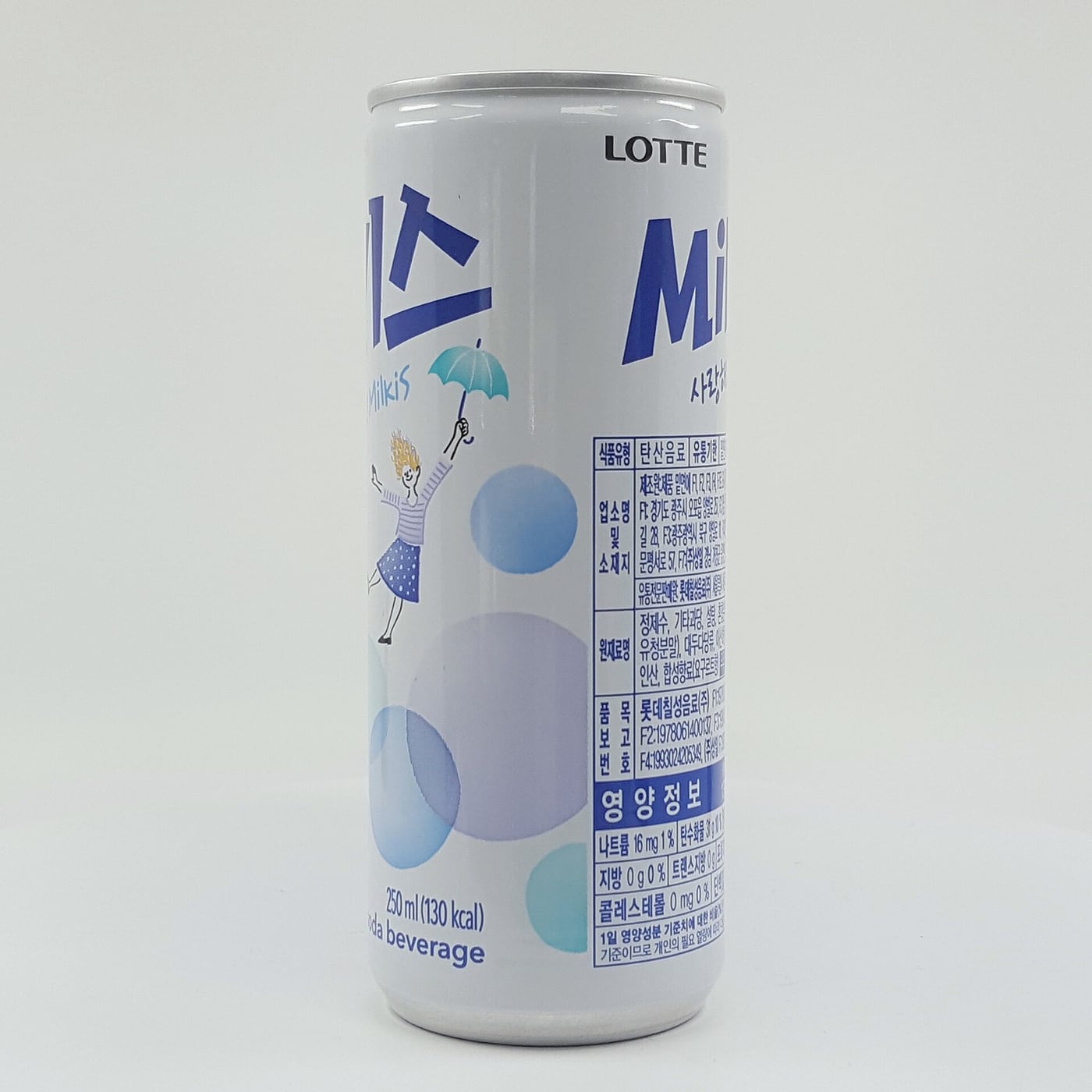
The Korean 250 ml can. The panel gives 250 ml (130 kcal), 0 g fat, 0 mg cholesterol, and lists whey powder among the ingredients. Photo by validationset, CC BY 4.0, via Wikimedia Commons.
Milkis contains no alcohol. The Korean can classifies it as 탄산음료 — carbonated soft drink. Children drink it.
The question is common enough to be its own search term, and there are two real reasons for it.
The look. It pours cloudy and pale, and a cloudy pale drink with a head on it reads as something fermented to a lot of people. Korea also has a genuinely alcoholic cloudy white drink — makgeolli — and the resemblance in a glass is close enough to cause a double-take.
And the more interesting reason: Koreans really do mix it with alcohol. So a foreign drinker who sees Milkis handed round a Korean table with soju on it can reasonably conclude the bottle itself is alcoholic. It is not. It is the mixer.
Which brings us to the part no English article covers.
How Koreans Actually Drink It
Search Milkis in Korean rather than English and the suggestions change completely. They are not about flavour or where to buy. They are about what to make with it.
1. As a soju mixer (밀키스주)
The Korean autocomplete for 밀키스주 fills with 밀키스주 비율 (the ratio), 밀키스주 타는 법 (how to mix it), and 밀키스주 만드는법. Koreans are not asking what Milkis is. They are asking how much soju to how much Milkis.
This is a whole genre in Korea — soju cut with a soft drink to soften it, the same instinct behind 소맥 (soju and beer) and the yoghurt-drink versions sold in bars. Milkis is a natural fit because the milk body rounds off soju's edge in a way a clear soda cannot.
If you are trying it: start closer to one part soju to three parts Milkis and adjust. Pour the Milkis last, gently, or the carbonation will foam over the glass. It is sweet, so it goes down faster than it should — treat that as a warning rather than a feature.
2. Poured over fruit punch (밀키스 화채)
화채 (hwachae) is Korean fruit punch: cut fruit in a bowl, chilled, with a liquid poured over. The traditional pour is water, sweetened water, or a fruit syrup. The modern shortcut is a soft drink — and Milkis is one of the standard choices, alongside Sprite-type sodas and yoghurt drinks.
밀키스 화채 레시피 and 밀키스 화채 만드는법 are both live Korean searches. The logic is the same as the soju one: the milk body turns a bowl of cut fruit into something closer to a dessert than a drink.
Watermelon is the default fruit, in summer, in a very large bowl, shared. If you have seen a photo of a hollowed-out watermelon full of fruit and pale liquid at a Korean picnic, that is what you were looking at.
What this tells you about the product
The English framing — "a creamy Korean soda" — treats Milkis as something you drink from the can. In Korea it is at least as often an ingredient. That is the single biggest gap between how the drink is described abroad and how it is actually used, and it is why a variety pack of eleven fruit flavours is a slightly odd way to meet it.
Milkis Zero, and the Second Wind
Lotte Chilsung launched 밀키스 제로 on 17 February 2023, and the timing was not arbitrary — Korea went through a sweeping zero-sugar wave across the 2020s that rebuilt the entire beverage aisle, from colas to soju to sikhye.
It worked. Milkis had been a steady performer at roughly ₩50 billion a year, and Lotte Chilsung has publicly talked about the brand reaching ₩80 billion — describing it as a second peak for a product that launched in 1989.
The zero version is also where the brand's marketing energy now sits, including character and creator collaborations aimed at a much younger audience than a 1989 soft drink would normally reach.
Practical note: the zero version keeps the milk body but the finish is thinner, which is the usual sweetener trade-off. If Milkis's appeal for you is the richness, the original is the one. If the appeal is the novelty of the flavour, zero loses less than you would expect.
What It Costs, and Where
| Where | Price | Notes |
|---|---|---|
| Korean convenience store | ₩1,500 for the 250 ml can | Unchanged since 2023. The can runs promotions often — Seven Eleven had it at 1+1 in April 2026, which is ₩750 a can |
| Korean supermarket, case | Much lower per unit | 30-can cases are the standard household purchase |
| Overseas Asian grocery | Varies | Usually original and one or two fruit flavours |
| Amazon | Varies | Multi-packs; the practical route outside Korea |
Three things to know if you are buying in Korea.
Never pay the shelf price for the can. Milkis is in a convenience-store promotion most months, and the discount is not small — Seven Eleven ran it 1+1 in April 2026, which takes a ₩1,500 can to ₩750. The tag shows 1+1 or 2+1 in large type on the shelf edge. Promotion history checked against Korean convenience-store listings (펴늬 세븐일레븐 밀키스 250ml) in August 2026.
The shelf price has not moved since 2023, which is worth noting because its stablemate did: Lotte Chilsung raised 500 ml Chilsung Cider from ₩2,300 to ₩2,500 on 1 August 2026. Milkis stayed at ₩1,500.
And the 500 ml bottle is better value than the can if you are not drinking it immediately, though the can is colder and the carbonation holds better.
Lotte Chilsung Cider (칠성사이다), 250ml x 6 — the other half of the Lotte fridge. You will not get the ₩750 promotion price abroad, so the only question worth asking is whether you like it enough to keep a case. Start with the six. As an Amazon Associate, EpicKor earns from qualifying purchases at no extra cost to you.
See Chilsung Cider on AmazonFor the rest of the fridge, our Korean convenience store food guide covers what to reach for alongside it, and Korea's drinks guide covers the alcoholic end of the same aisle.
FAQ About Milkis
Q: What does Milkis taste like?
A: Sweet, milky and strongly carbonated — closest to a lactic yoghurt drink with fizz, or a vanilla cream soda with the vanilla swapped for milk. It divides people immediately.
Q: Is Milkis the same as Calpis?
A: No. Calpis is Japanese, from 1919, and classically a non-carbonated concentrate you dilute; Milkis is Korean, from 1989, carbonated and ready to drink. Calpico is Calpis renamed for English-speaking markets.
Q: Does Milkis contain alcohol?
A: No. It is classified as a carbonated soft drink in Korea and children drink it. The confusion comes from its cloudy appearance and from Koreans commonly mixing it with soju.
Q: Which Milkis flavour is best?
A: Original. The fruit flavours are variations on the same base rather than distinct drinks, so buy one can of original before committing to a variety pack.
Q: How many Milkis flavours are there?
A: Eleven across its markets — original, orange, strawberry, mango, melon, banana, peach, apple, pineapple, grape and lemon. Korea's own convenience-store shelf usually carries far fewer.
Q: What is 밀키스주?
A: Milkis mixed with soju. Korean searches for it are dominated by ratio questions rather than what-is-it questions. Start around one part soju to three parts Milkis and pour the Milkis in last.
Q: How many calories are in Milkis?
A: 130 kcal in the 250 ml can and 250 kcal in the 500 ml bottle, printed on the Korean label. The zero-sugar version launched in February 2023.
Related Reading
- Korea Drinks Guide: Makgeolli, Somaek, Beer, and More — including the cloudy drink Milkis gets mistaken for
- Korean Convenience Store Food Guide: Dosirak and Snacks — the rest of the fridge
- Pororo Drink: Korea's Kids' Drink, Which Flavour to Pick and How to Open It — the children's shelf of the same aisle
- Vita 500: Korea's Vitamin Drink, and Why It Beat Bacchus to the Shelf — another Korean drink foreigners misread
You Might Also Like
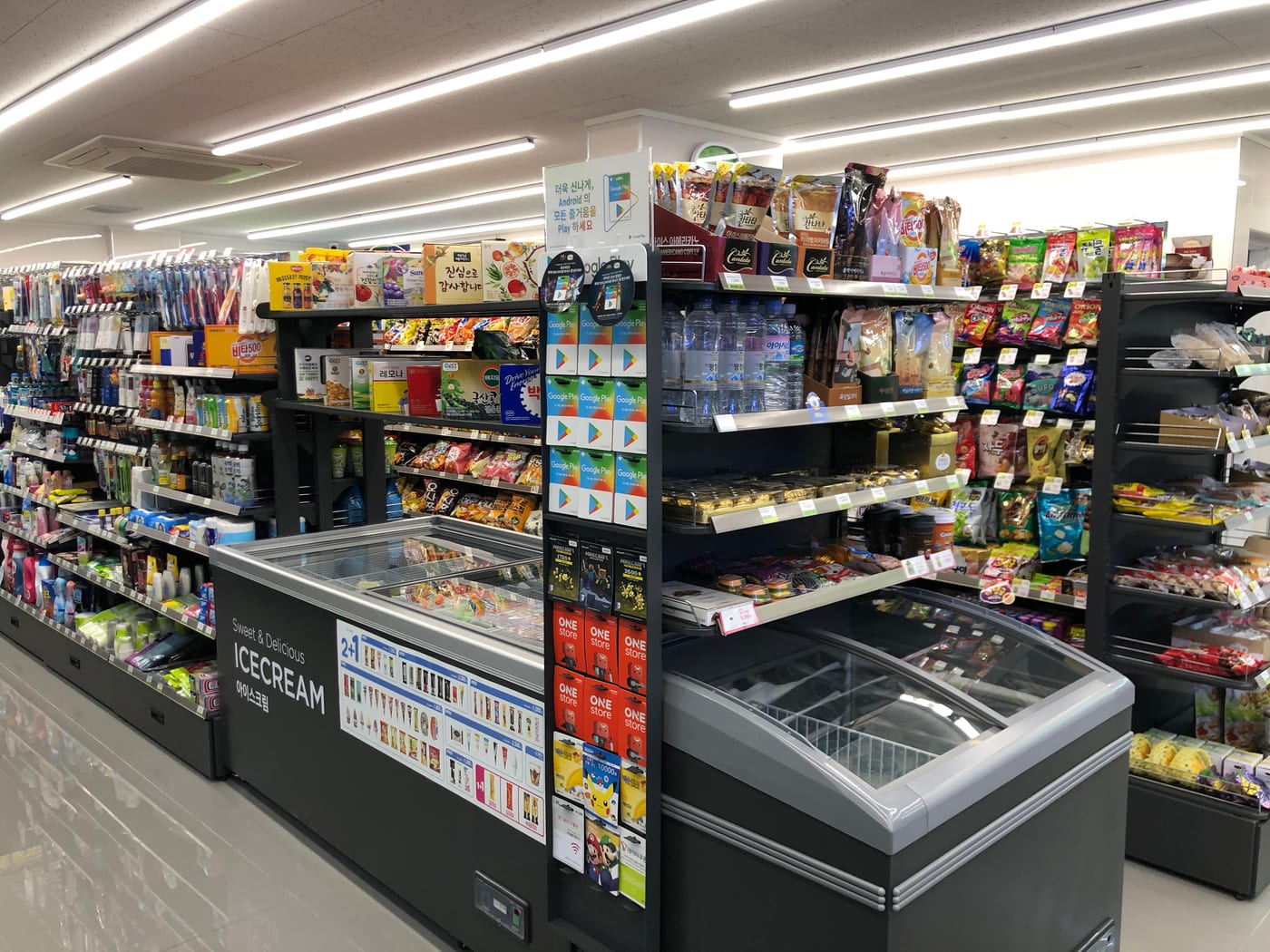
Delaffe: Korea's Convenience-Store Coffee Brand That Cut Its Price to ₩900
델라페 is not a drink, it is CU's own label — 150 million units a year, sold as a pouch you pour into a separate cup of ice. In March 2026 five of them dropped to ₩900, which makes the convenience store cheaper than Korea's cheapest café chain.
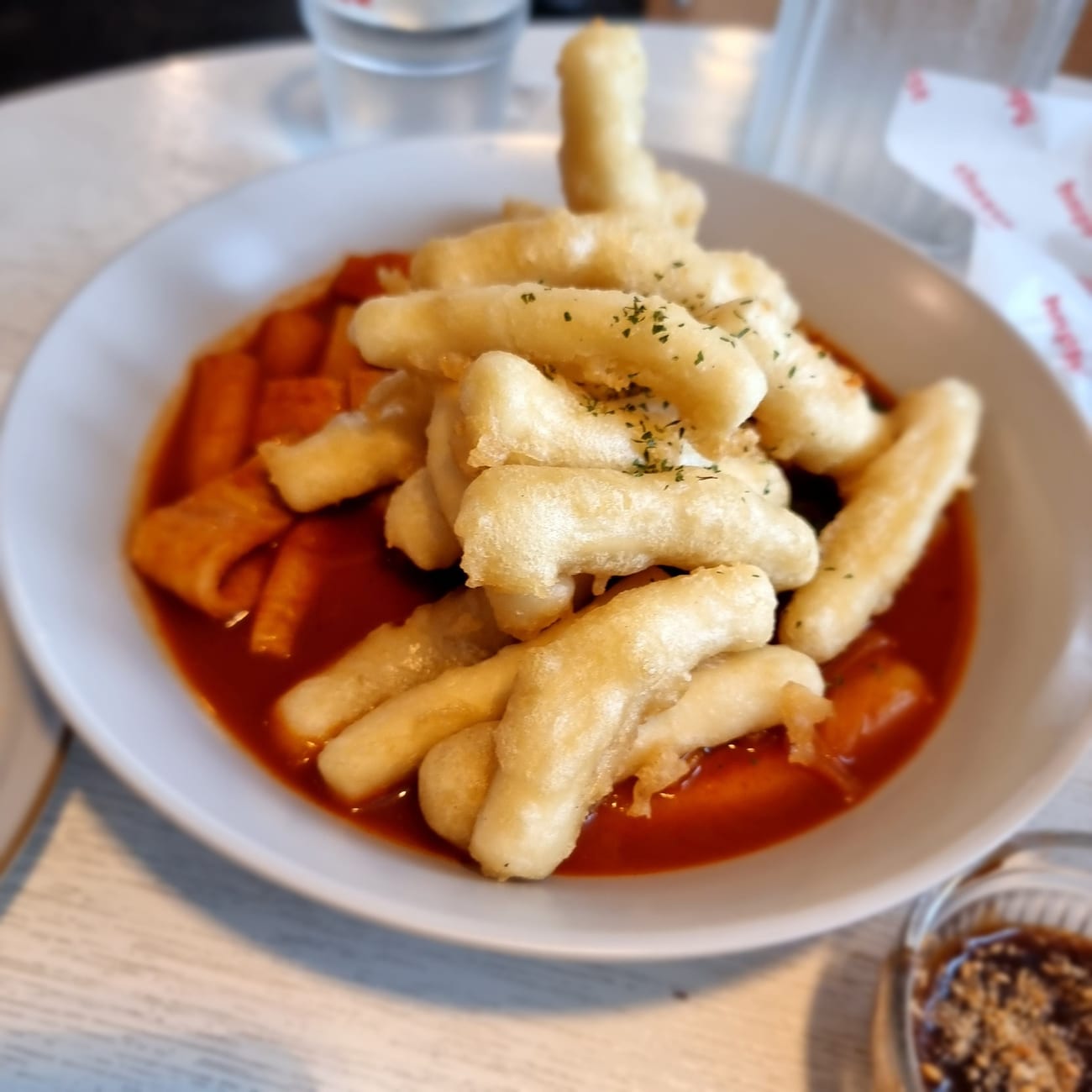
Coolpis: The Korean Drink That Exists to Put Out Tteokbokki
쿨피스 is on every spicy Korean table for a reason, and it is not the one people assume. It does not neutralise capsaicin — milk does. Launched 1980, 80 million units a year, and in 2026 its first new flavour since 2011.
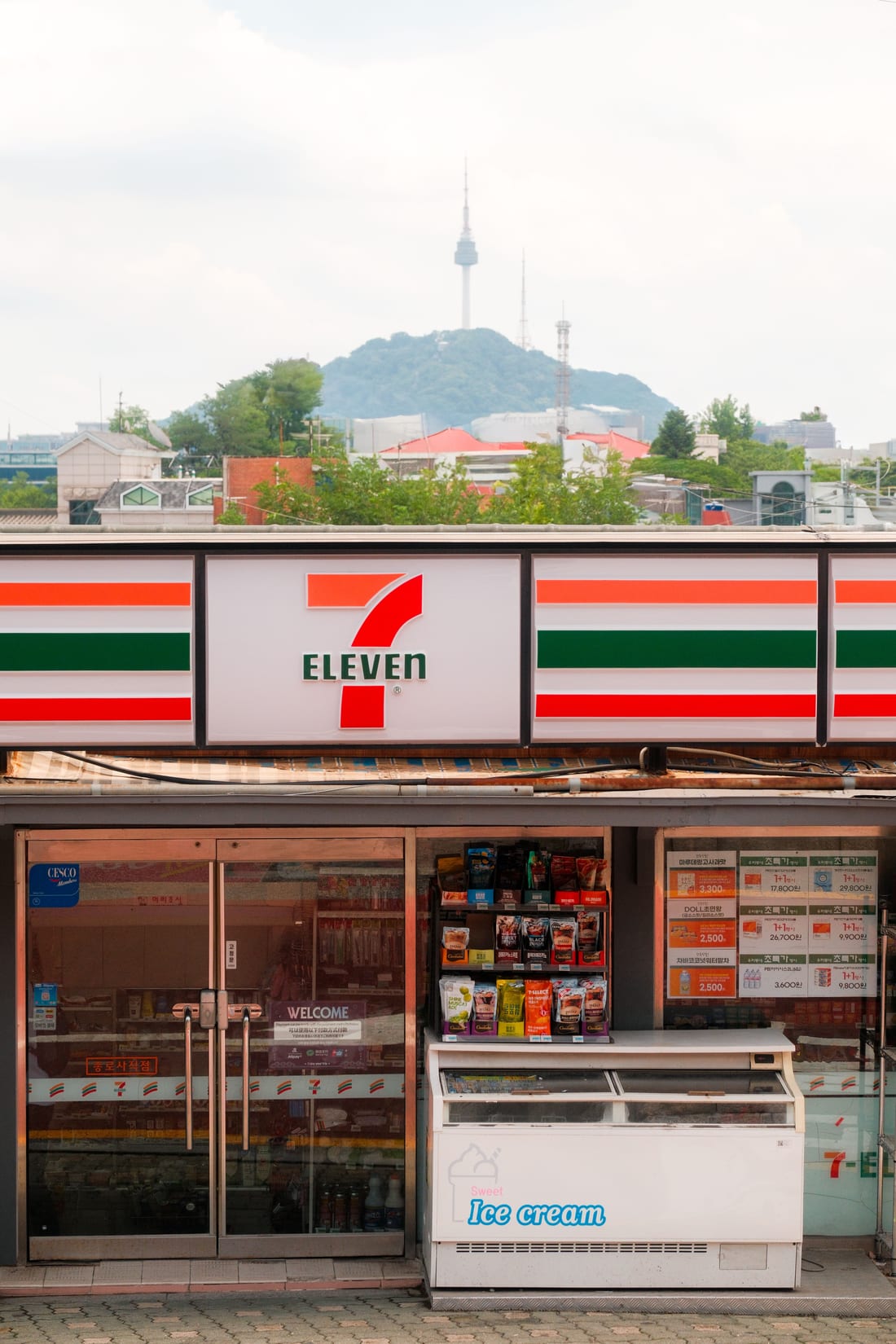
Korean Convenience Store Ice Cups: The Best-Selling Item Is a Cup of Ice
A cup of ice outsells everything else in a Korean convenience store. What it costs in August 2026 after June's price rise, why the drink is sold separately, what Koreans pour into it, and why the ₩800 cup tested cleaner than café ice.