Pororo Drink: Korea's Kids' Drink, Which Flavour to Pick and How to Open It
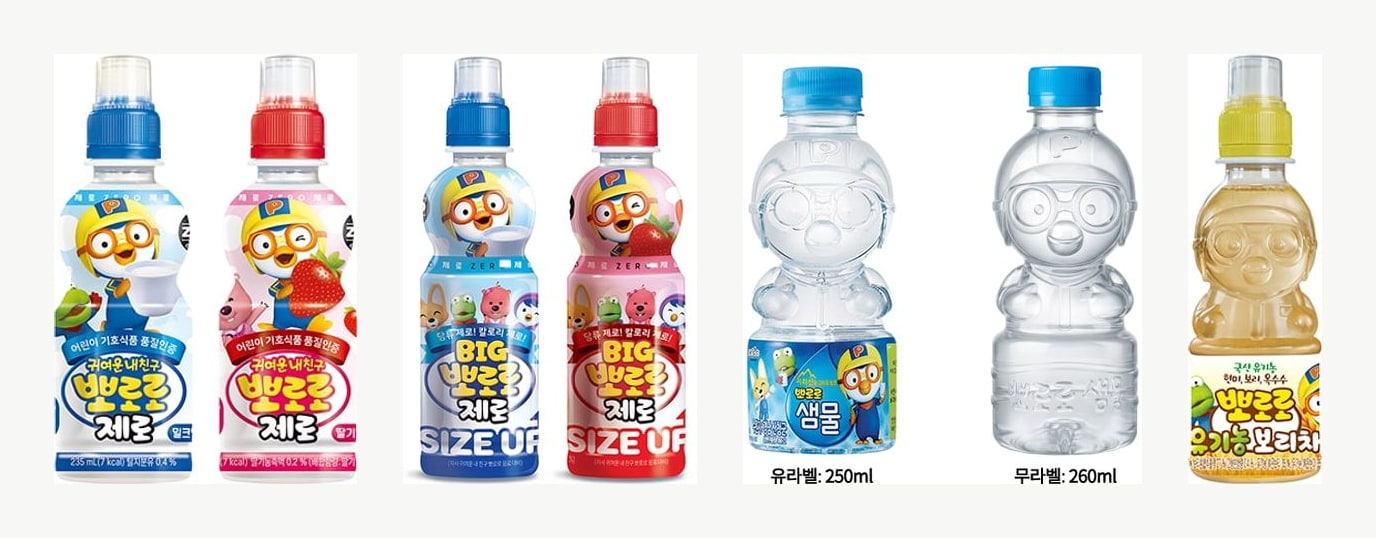
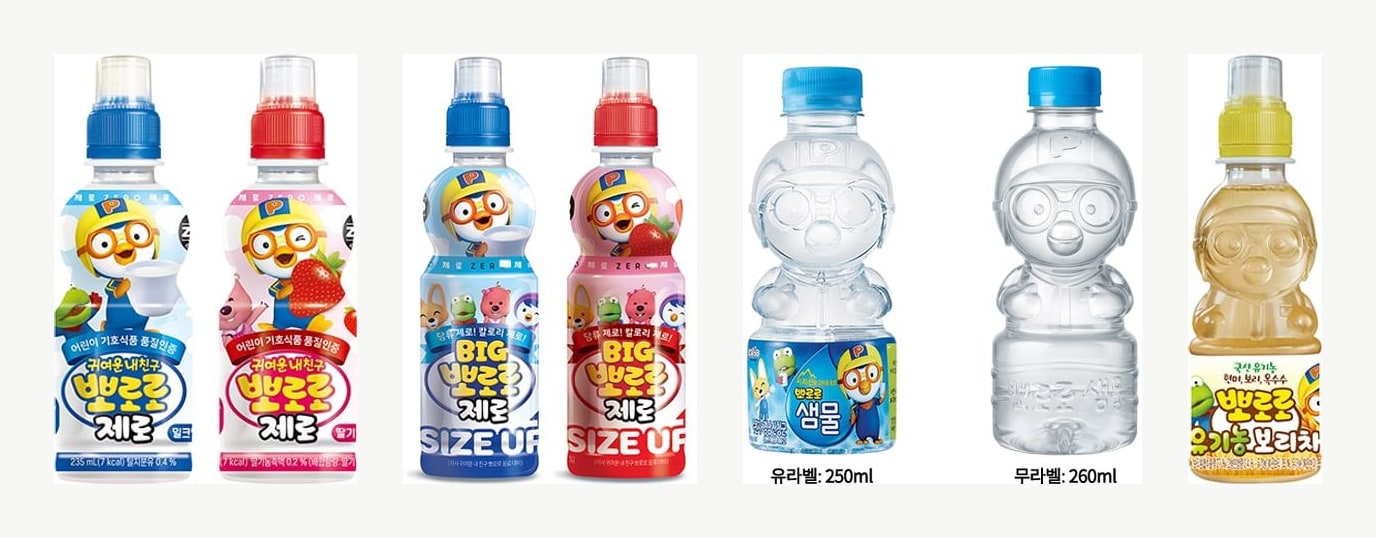
Part of Paldo's current Pororo line. Note the ribbed cap on the two bottles at left — that is the part everyone gets wrong. Product images: Paldo.
There is a small blue-and-white bottle with a cartoon penguin on it in every Korean convenience store fridge, usually on the lowest shelf where a five-year-old can reach it. It is Pororo drink (뽀로로 음료), and Paldo has sold roughly 800 million bottles of it since 2007.
It is also the Korean drink that foreign visitors most often fail to actually drink.
Search pororo drink how to open in English and you get TikTok clips. No article. People buy the bottle, twist the cap, tip it up, and get nothing — then assume it is defective. It is not. There is a step in the middle that is completely invisible until you know it exists.
This guide covers that, plus which of the flavours is worth your money, what the certification mark on the label actually means, and the one thing Korean parents check that English coverage never mentions.
The Short Answer
| Detail | |
|---|---|
| Korean name | 뽀로로 음료 (Pororo eumnyo) |
| Maker | Paldo (팔도) — licensed from the Pororo the Little Penguin animation |
| Launched | April 2007 |
| Standard size | 235 ml |
| Cumulative sales | ~800 million bottles (Paldo, April 2025) |
| Market position | No. 1 in Korea's children's drink category |
| Convenience-store price | ₩1,500 listed at CU and GS25 — very often on a 2+1 promotion |
| Cheaper route | 24-bottle box online, roughly ₩650–900 per bottle (August 2026) |
| Main flavours | milk, strawberry, apple, blueberry, shine muscat, peach, banana |
| Also sold as | Pororo Zero, Big Pororo Zero, spring water, organic barley tea, red ginseng |
| The catch | there is a foil seal under the cap — see below |
See Pororo drink packs on AmazonAffiliate link. As an Amazon Associate, EpicKor earns from qualifying purchases at no extra cost to you.
If you only remember one line: unscrew the cap, peel the foil off the bottle mouth, screw the cap back on, then pull the spout up.
How to Open the Bottle
This is the part that sends people to search engines, so it goes first.
The Pororo bottle uses a push-pull sports cap. The top of it is a ribbed cylinder with a hole through the middle — it looks like a small doughnut sitting on the neck. That cylinder is designed to lift, not to come off.
The failure happens because there are two separate closures, and the second one is hidden:
- The outer cap — the whole ribbed assembly. Unscrew it and set it aside.
- A foil or paper seal across the mouth of the bottle underneath. This is the one nobody expects.
So the sequence is:
- Unscrew the whole cap counter-clockwise and lift it off.
- Peel away the foil seal on the bottle mouth. It comes off in one piece.
- Screw the cap back on, firmly.
- Pull the ribbed cylinder upward with your fingers or teeth. It clicks up a few millimetres and opens the flow.
- Push it back down to close. It reseals well enough to go in a bag.
The two things people get wrong: they pull the spout up first and taste nothing because the foil is still there, or they peel the foil and then drink straight from the bottle mouth — which works, but defeats the point, because the cap is the reason this bottle exists.
That design is deliberate. The narrow spout limits flow rate, which is a choking and spill precaution for small children. Korean parents hand these to toddlers in car seats specifically because a tipped-over Pororo bottle does not empty itself onto the upholstery.
The Flavours, and Which One to Pick
The line has expanded well past the original. Here is the practical read.
| Flavour | Korean | What it actually tastes like | Pick it if |
|---|---|---|---|
| Milk | 밀크 | The signature. Sweet, milky, closest to a soft lactic drink | You want the one Koreans mean by "Pororo" |
| Strawberry | 딸기 | Candy-strawberry, pink, the most child-coded | You are buying for a child, or want the loudest one |
| Apple | 사과 | The mildest and least sweet-tasting of the fruit line | You find the milk one too heavy |
| Blueberry | 블루베리 | Deeper, slightly tart | You want something less obviously sugary |
| Shine muscat | 샤인머스캣 | Tracks Korea's shine-muscat boom — floral, grape-forward | You have had the Korean shine muscat trend explained to you and want to taste it cheaply |
| Peach / banana | 복숭아 / 바나나 | Rotating line members, not always stocked | You see it and you are curious |
| Organic barley tea | 유기농 보리차 | Not sweet at all. Roasted, nutty, caffeine-free | You want the version Korean parents actually buy on repeat |
| Spring water | 샘물 | Water. In a penguin-shaped bottle | The bottle is the point |
| Red ginseng | 홍삼쏙쏙 | Mild ginseng formulated for children | You want the most distinctly Korean item in the range |
The milk flavour is noticeably sweeter than Korea's adult milk-sodas such as Milkis or Ambasa. If you have tried those and found them mild, Pororo milk will still read as sweet. That is not an accident — the target drinker is four years old.
The two that surprise adults are the barley tea and the red ginseng. Barley tea (보리차) is the default household drink in Korea, served cold in summer and hot in winter, and Paldo simply put it in the penguin bottle. Red ginseng for children is an entire product category in Korea that has no real equivalent in most Western markets.
Trying the range at home: As an Amazon Associate, EpicKor may earn from qualifying purchases. Overseas the milk and strawberry flavours are the ones that travel — mixed-flavour Pororo packs are the cheapest way to work out which one your household reaches for before you pay convenience-store prices in Seoul.
Compare packs on AmazonRead the Label: It Is a Drink, Not a Juice
Here is the honest part, and it is the reason to look at the bottle before you hand it to a child.
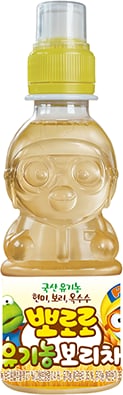
The barley tea version is the one Korean households buy repeatedly. It is unsweetened. Product image: Paldo.
Pororo's sweetened flavours are flavoured drinks, not fruit juice. The apple one is not pressed apples. Korean labels are explicit about this — the front of the bottle names the flavour, and the ingredient panel gives the actual juice percentage, which is low.
What the label does carry is a small mark reading 어린이 기호식품 품질인증 — Korea's quality certification for children's favourite foods, administered under the country's Special Act on Safety Control of Children's Dietary Life. It is a real regulatory mark, not marketing decoration, and it is visible on the Pororo Zero bottles in the photograph at the top of this page.
What it does not mean is "healthy." It means the product cleared a defined standard for a category aimed at children. If sugar matters to you, read the nutrition panel on the specific bottle in your hand rather than trusting the penguin.
The most useful thing to know: the barley tea and the spring water are the unsweetened members of the family, and they sit on the same shelf at a similar price. Korean parents who buy Pororo weekly are very often buying those two, not the strawberry.
Pororo Zero, and Why It Arrived When It Did
Paldo added a zero-sugar line in 2024, in both the standard 235 ml bottle and a larger "Big Pororo Zero."
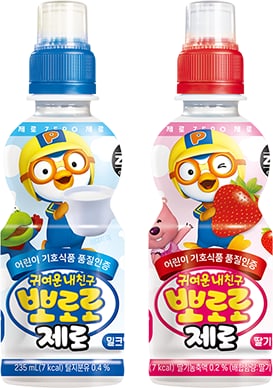
Pororo Zero, 235 ml — the size you will actually see in a convenience store fridge. Product image: Paldo.
This did not come out of nowhere. Korea went through a broad 제로 (zero) drink wave across the 2020s that reshaped the entire beverage aisle: zero-sugar sodas, zero-sugar soju, zero-sugar sikhye. A children's brand adding a zero line is that wave reaching the last shelf it had not touched.
If you are shopping for a child and the sugar is the objection, this is the answer the Korean market already produced. The taste trade-off is the usual one for sweetener-based drinks — a slightly thinner finish than the original.
The Bottle Is Half the Product
Pick up the spring water or the barley tea and you will notice the plastic itself is moulded into Pororo's head — the goggles, the hood, the beak, all in relief. It is not a printed label wrapped around a generic bottle.
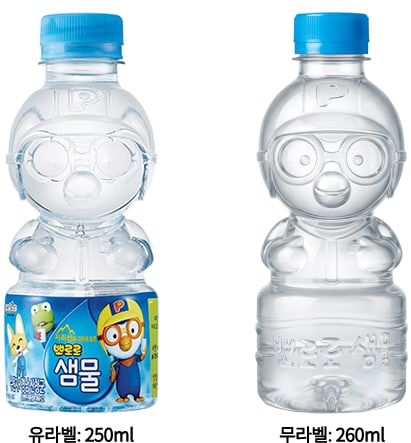
The spring water comes labelled at 250 ml and label-free at 260 ml. Product image: Paldo.
Two details worth knowing:
- The water is sold in a labelled 250 ml version and a label-free (무라벨) 260 ml version. Label-free bottles are a Korean recycling push that swept the bottled-water category — the branding moves to the cap and the shrink film disappears, so the PET is easier to recycle. Seeing it on a children's product is a good marker of how far that norm has spread.
- Empty bottles get kept. This is genuinely why the moulded bottle exists, and it is the part that does not show up in sales figures.
What It Costs, and Where to Buy It
| Where | Price | Notes |
|---|---|---|
| CU / GS25 convenience store | ₩1,500 per 235 ml bottle | Last published shelf price, from May 2023 promotion data. Frequently discounted to ₩1,000 on a 2+1 |
| Korean supermarket / online box | ₩15,700–21,200 per 24-bottle case | Roughly ₩650–900 a bottle, checked August 2026 |
| Overseas Asian grocery | Varies widely | Usually the milk and strawberry flavours only |
| Amazon | Varies | Multi-packs; the practical route if you are not in Korea |
Do not buy these one at a time in a convenience store if you are staying a while. The per-bottle gap between a convenience store and a 24-pack is roughly double. Convenience stores are for the moment you need one; the box is for a household.
The 2+1 promotion is worth watching for. Korean convenience stores run rotating monthly promotions, and Pororo appears in them regularly — the shelf tag will show 2+1 in large type, which means three bottles for the price of two.
If you are working out the wider convenience-store fridge, our Korean convenience store food guide covers what else is worth reaching for, and Korea's drinks guide covers the adult end of the same fridge.
Building a Korean drinks shelf: If the Pororo bottle is your entry point, the adult versions of the same idea are worth comparing — Milkis and Korea's other milk-sodas are what the milk flavour is training you for, and they ship far more reliably than the children's line.
Compare on AmazonHow Big This Actually Is
The numbers are worth stating because they explain why a children's drink gets its own aisle position.
- Launched April 2007 under licence from the Pororo the Little Penguin animation.
- First year: 5 million bottles. By 2014 it passed 50 million a year. By the mid-2010s it was running at roughly 100 million a year.
- At its tenth anniversary in 2017, Paldo reported 400 million cumulative bottles and about ₩200 billion in cumulative sales, and put its share of Korea's children's drink category at 40.7 percent — first place.
- By April 2025, cumulative sales had reached about 800 million bottles. The second 400 million took eight years, the first took ten.
- It is exported to around 40 countries, with Indonesia, China and Mongolia the strongest markets.
Two facts from that record are invisible in English coverage and worth carrying:
It has been halal-certified since 2018, by MUI, Indonesia's halal certification body. That is why the brand travels in Southeast Asia the way it does — a children's drink cannot enter those households without it.
In April 2025 Paldo signed Indofood's distribution arm, Indomarco, to supply Pororo drinks exclusively in Indonesia. Indofood is the largest food company in the country. A Korean children's beverage reaching that kind of distribution deal is a different scale of business from a novelty export.
What Korean Parents Actually Ask
Search the Korean web rather than the English one and the questions change completely. The two that come up constantly:
"몇 살부터?" — from what age? Korean parents ask this before buying, and the answer they settle on generally starts around the toddler stage for the sweetened flavours, earlier for the barley tea and water. This is a conversation English-language coverage of the product does not have at all.
"당 함량은?" — how much sugar? The reason the zero line and the barley tea both exist. Korean shoppers treat the sweetened flavours as an occasional item and the unsweetened ones as the everyday purchase.
If you take one thing from the Korean side of this product: the Pororo bottle is not one product, it is a shelf, and the part of the shelf Korean households buy most often is not the part that gets photographed.
FAQ About Pororo Drink
Q: Why can't I get any liquid out of my Pororo bottle?
A: There is a foil seal under the cap. Unscrew the whole cap, peel the seal off the bottle mouth, screw the cap back on, then pull the ribbed spout upward until it clicks.
Q: Is Pororo drink juice?
A: No. The sweetened flavours are flavoured drinks with a low juice percentage, listed on the ingredient panel. The barley tea and spring water are the unsweetened members of the range.
Q: What does the mark on the label mean?
A: It is Korea's 어린이 기호식품 품질인증, a quality certification for foods aimed at children, administered under Korea's Special Act on Safety Control of Children's Dietary Life. It is a regulatory mark, not a health claim.
Q: Which flavour should I try first?
A: Milk, if you want the one Koreans mean by "Pororo." Apple, if you find sweet milk drinks heavy. Organic barley tea, if you want what Korean households actually restock.
Q: Is Pororo drink halal?
A: The range has carried MUI halal certification since 2018, which is why it distributes widely in Indonesia and Malaysia. Check the individual bottle, since certification applies per product rather than per brand.
Q: Can adults drink it?
A: Yes, and plenty do. It is sweeter than Korea's adult milk-sodas, so treat the milk flavour as a dessert drink rather than a thirst-quencher.
Q: Where is it cheapest?
A: A 24-bottle case online, at roughly ₩650–900 per bottle, against ₩1,500 at a convenience store. If you are in Korea for more than a few days and you have a fridge, buy the case.
Related Reading
- Korean Convenience Store Food Guide: Dosirak and Snacks — what else is worth reaching for in the same fridge
- Korea Drinks Guide: Makgeolli, Somaek, Beer, and More — the adult end of the shelf
- Vita 500: Korea's Vitamin Drink, and Why It Beat Bacchus to the Shelf — another Korean drink that is not what foreigners assume
- Bacchus D vs F: Why Korea's Energy Drink Comes in Two Versions — the two-version trap, in a different bottle
You Might Also Like
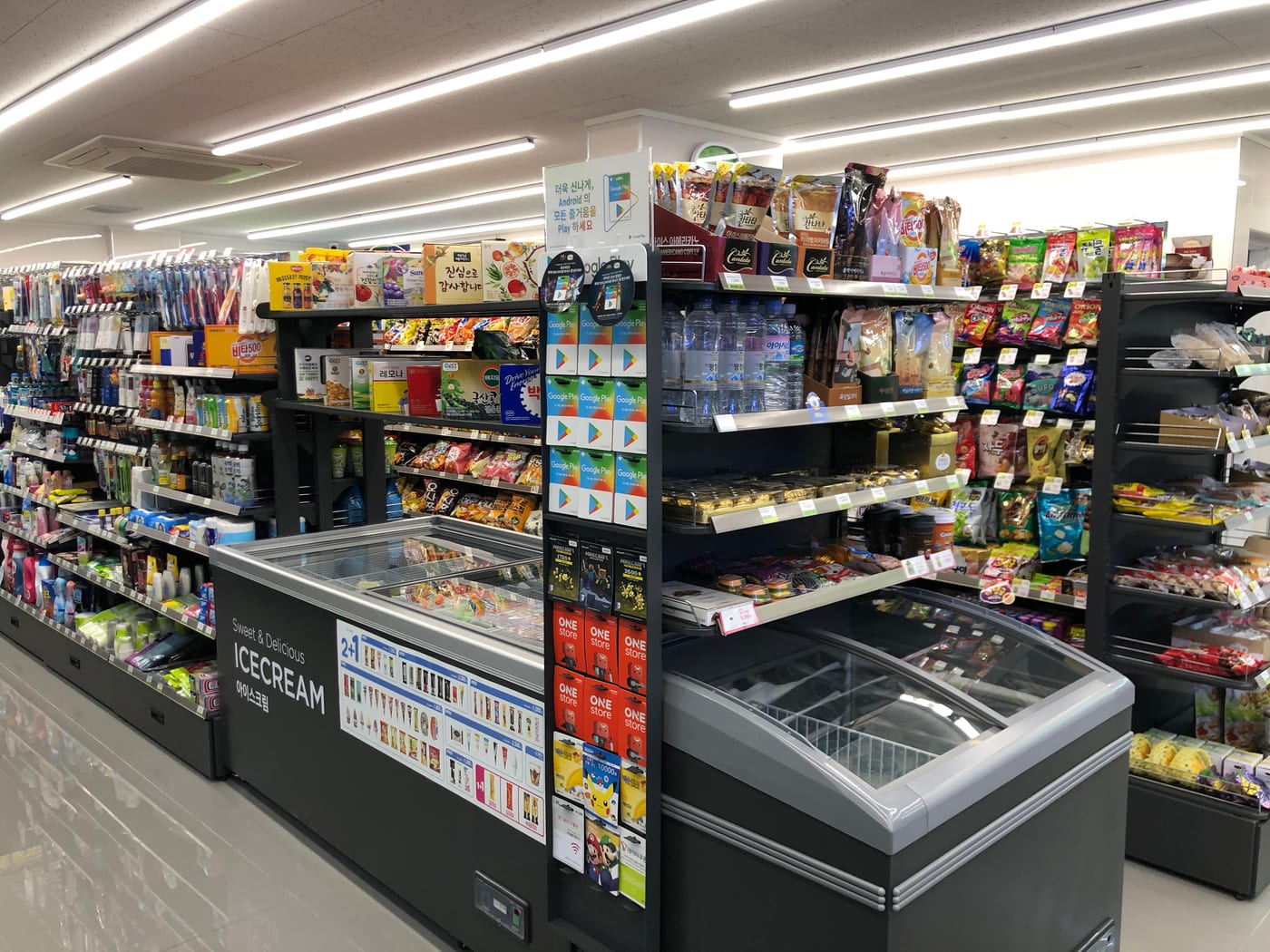
Delaffe: Korea's Convenience-Store Coffee Brand That Cut Its Price to ₩900
델라페 is not a drink, it is CU's own label — 150 million units a year, sold as a pouch you pour into a separate cup of ice. In March 2026 five of them dropped to ₩900, which makes the convenience store cheaper than Korea's cheapest café chain.
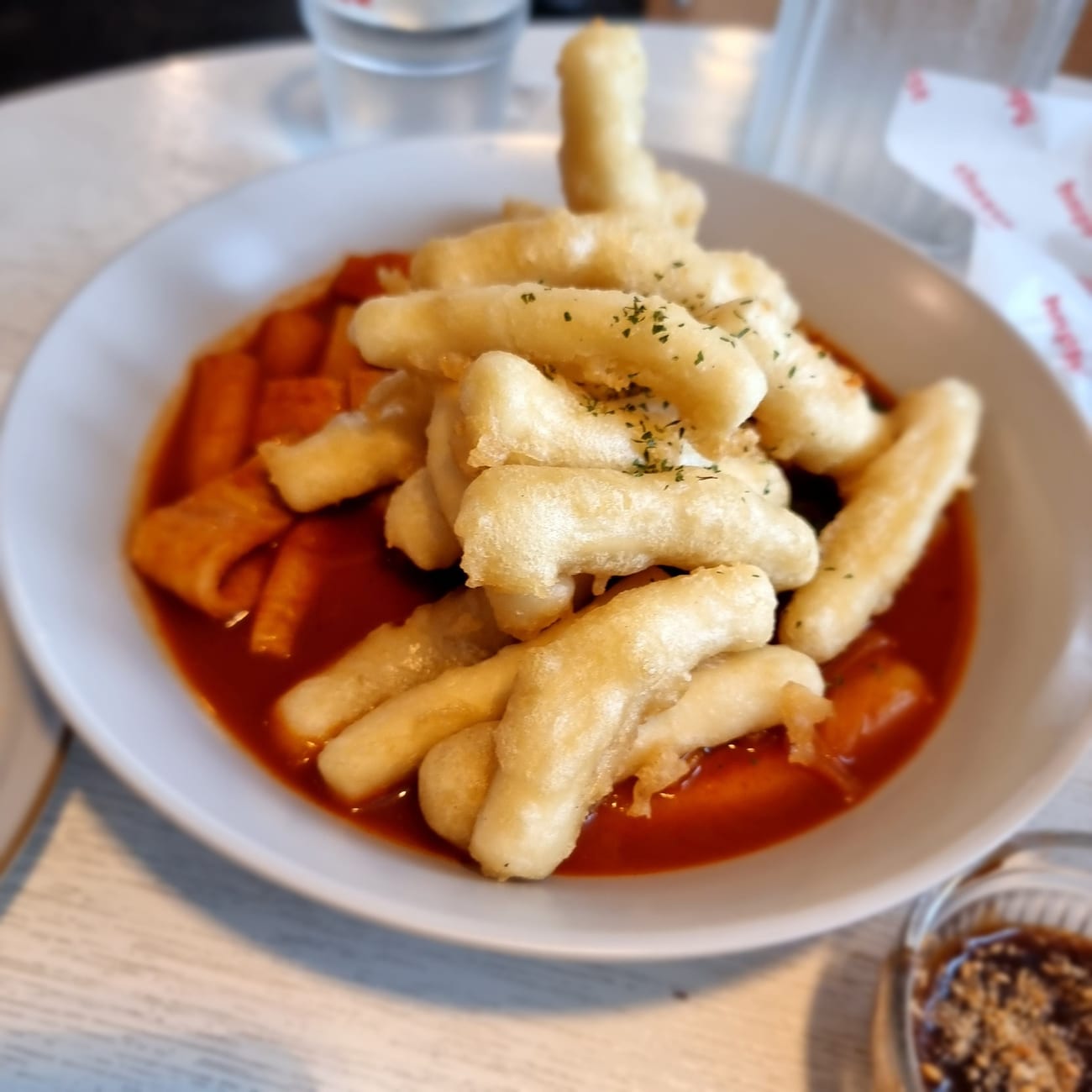
Coolpis: The Korean Drink That Exists to Put Out Tteokbokki
쿨피스 is on every spicy Korean table for a reason, and it is not the one people assume. It does not neutralise capsaicin — milk does. Launched 1980, 80 million units a year, and in 2026 its first new flavour since 2011.
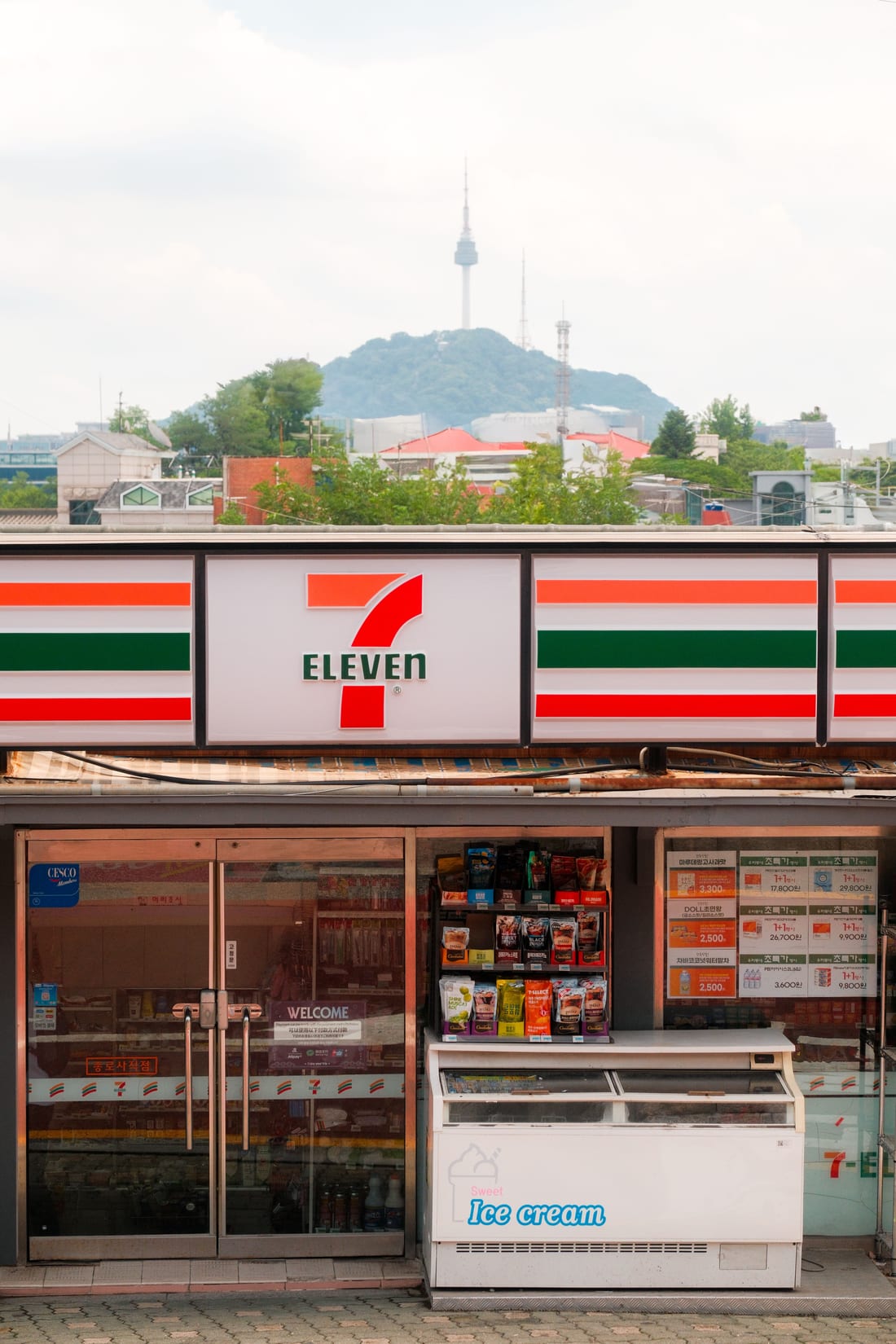
Korean Convenience Store Ice Cups: The Best-Selling Item Is a Cup of Ice
A cup of ice outsells everything else in a Korean convenience store. What it costs in August 2026 after June's price rise, why the drink is sold separately, what Koreans pour into it, and why the ₩800 cup tested cleaner than café ice.