Ansungtangmyun vs Shin Ramyun: Which Korean Ramyun to Buy First
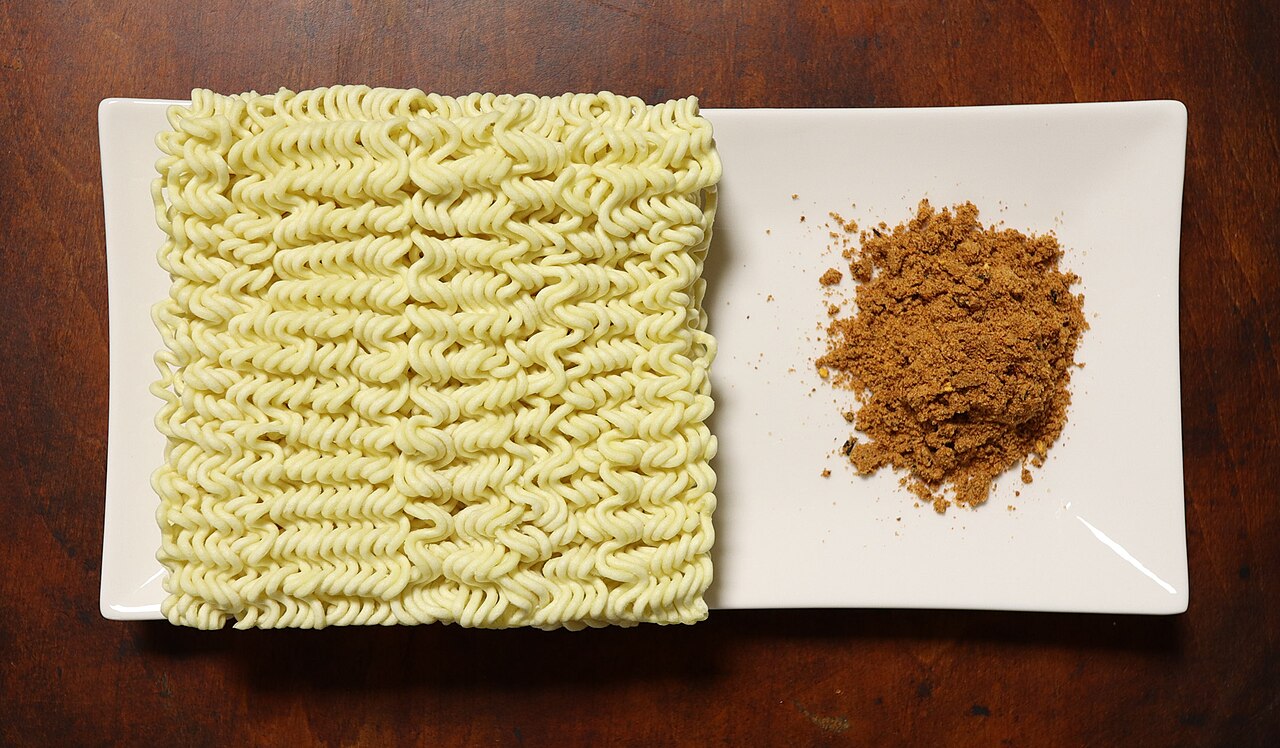
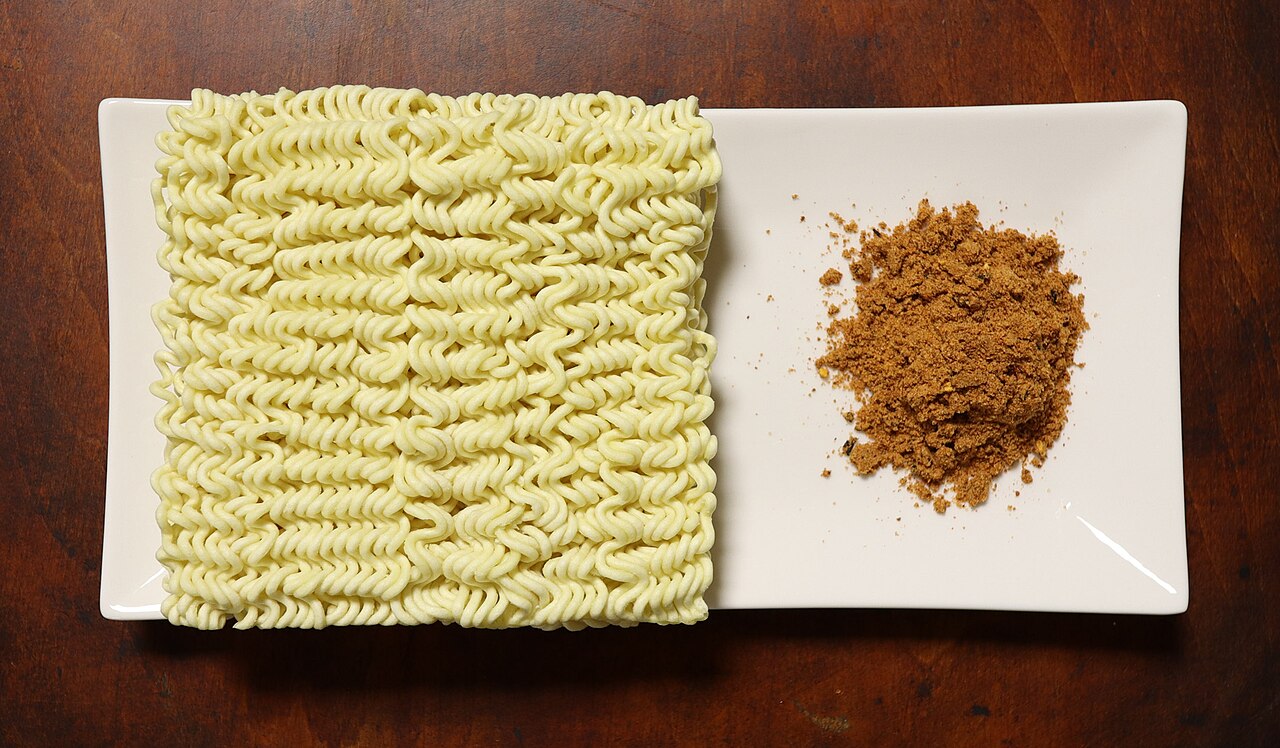
Ansungtangmyun's soup powder is brown. That colour is the whole answer. Photo by Mobius6, CC BY-SA 4.0.
Stand in a Korean convenience store aisle and two red-and-white bags dominate the shelf: Shin Ramyun (신라면) and Ansungtangmyun (안성탕면). Both are Nongshim. Both have been there for forty years. Both cost about the same.
Every English guide tells you the same thing: Shin Ramyun is spicy, Ansungtangmyun is milder. Pick according to your tolerance.
That is not the difference. It is not even close to the difference, and it sends people to the wrong bag.
The two soups are built on different bases. Shin Ramyun is a chili soup. Ansungtangmyun is a soybean paste (된장) soup. They do not sit on a single scale from mild to hot — they are two different flavours that happen to share a shelf. Choosing between them on heat alone is like choosing between tomato soup and mushroom soup by asking which is saltier.
Look at the two soup powders side by side and the argument is over before it starts.
The Short Answer
| Ansungtangmyun (안성탕면) | Shin Ramyun (신라면) | |
|---|---|---|
| Launched | 13 September 1983 | 1986 |
| Soup base | Soybean paste (된장) — savoury, nutty | Chili — direct heat |
| Soup powder colour | Brown | Red-orange |
| Heat | very low — around 570 SHU | 3,400 SHU (2,900 before 2017) |
| Dried vegetable packet | not part of the classic pack | yes, separate packet |
| Reads like | a Korean home soup | a spicy noodle |
| Buy it if | you want to taste Korean seasoning | you want the famous spicy bowl |
Compare Ansungtangmyun and Shin Ramyun on AmazonAffiliate link. As an Amazon Associate, EpicKor earns from qualifying purchases at no extra cost to you.
If you only remember one line: Ansungtangmyun tastes like Korean soup, Shin Ramyun tastes like Korean spice.
The Name Is a Place, Not a Flavour
Here is the first thing English coverage gets wrong, and it is a small piece of Korean geography.
Anseong (안성) is a real city in Gyeonggi Province, south of Seoul. Historically it was a grain belt and, more importantly, the site of a famous cattle market. It also gave Korean its everyday phrase 안성맞춤 (anseong-matchum) — literally "made to order in Anseong," used the way English uses "a perfect fit," because Anseong's craftsmen made things to measure.
When Nongshim launched the noodle in 1983, it borrowed that place name deliberately. Korean shoppers already associated Anseong with quality goods and with beef. Putting it on a soup-based ramyun was a shortcut to credibility.
So 안성탕면 breaks down as Anseong + tang (탕, soup) + myun (면, noodle). It is not a flavour word. It is a town, and the noodle is claiming that town's reputation.
신라면, by contrast, is built on 辛 (shin) — the Chinese character for pungent or spicy, which is also the family name of Nongshim's founder, Shin Choon-ho. The name says exactly what the product is. Two bags, two completely different naming logics.
What the Soup Powder Tells You
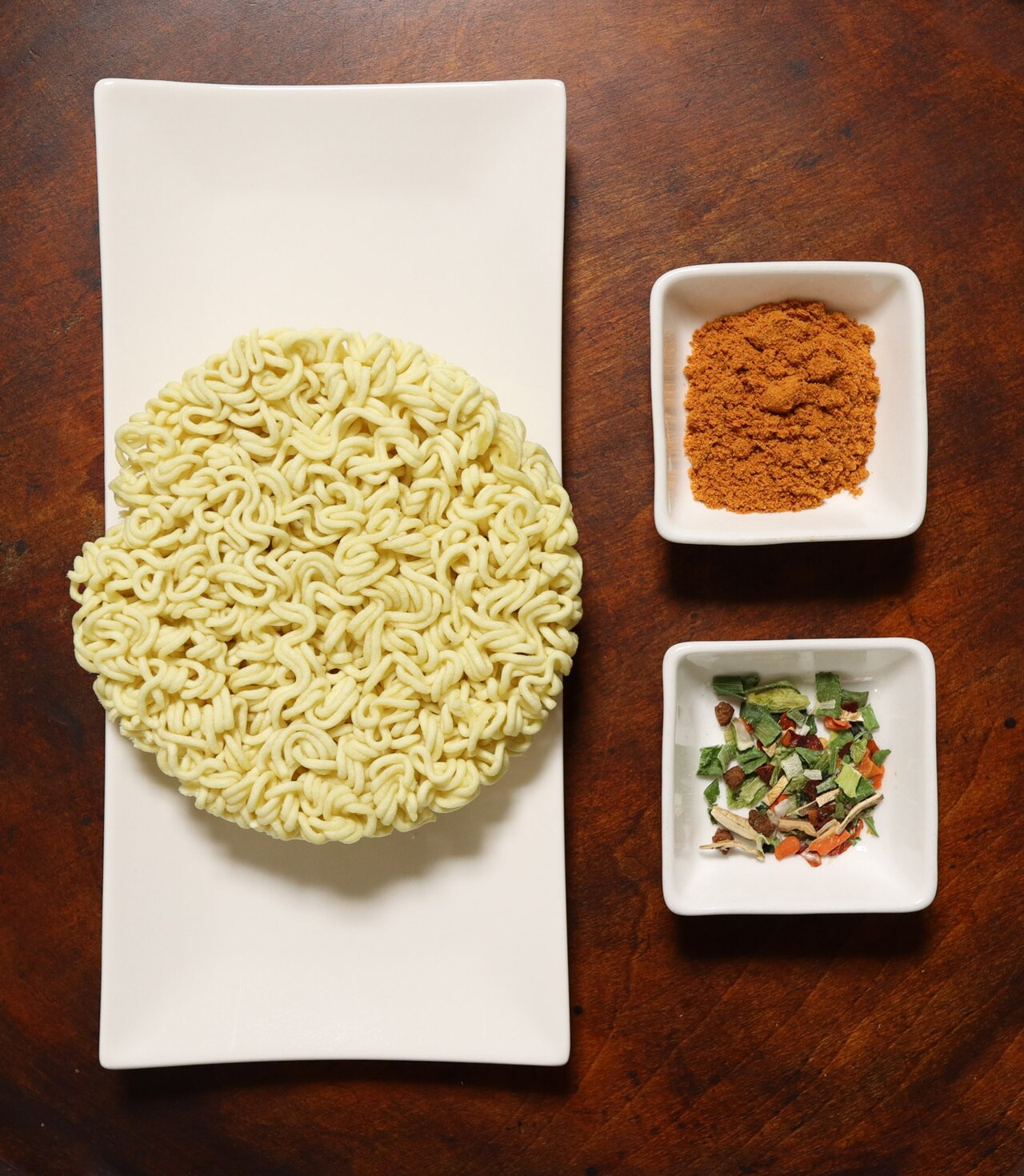
Shin Ramyun's powder is red-orange, and it ships with a separate dried vegetable packet. Photo by Mobius6, CC BY-SA 4.0.
Put the two packets next to each other — same photographer, same plate, same light — and you can see the product decision.
Ansungtangmyun's powder is brown. That colour comes from soybean paste and beef-broth seasoning. At launch, Korean coverage described it as tasting like 된장 우거지 해장국 — the soybean-paste-and-cabbage soup Koreans eat for a hangover. That is a very specific Korean reference, and it explains why the noodle feels comforting rather than exciting.
Shin Ramyun's powder is red-orange, and the pack includes a separate dried vegetable packet (건더기 스프) with shiitake, carrot, and spring onion. Ansungtangmyun's classic pack does not work that way — its character is in the broth, not in the garnish.
On the heat numbers
Ansungtangmyun's Scoville rating is published at around 570 SHU, which is genuinely low — below several noodles Koreans consider mild. Nongshim has even released a Scoville-zero variant, 순하군 안성탕면, made without chili powder at all.
Shin Ramyun sits at 3,400 SHU — about six times Ansungtangmyun.
The number is worth explaining, because the version circulating online is wrong in an interesting way. Korean forums pass around a progression showing Shin Ramyun getting steadily hotter: 1,320 SHU until 2012, then 2,700, then 3,400. Those first two figures did not come from Nongshim. They were published by Paldo, a competitor, in 2012 and 2014, while marketing its own spicy noodle against Shin Ramyun.
Nongshim's own account is different and simpler. Shin Ramyun was 2,900 SHU from its 1986 launch until 2016, and was raised once, in 2017, to 3,400 SHU — a single adjustment made as Korean taste moved hotter, not the staircase the forums describe.
So the honest summary is that Shin Ramyun did get spicier, once, by about 17%. The story that it has been creeping up for a decade is competitor marketing that outlived the campaign.
Which One Should You Actually Buy?
Buy Shin Ramyun first if you want the famous thing. It is the noodle Korea exported, the one in the films, the reference point everyone else is measured against. If your goal is "I want to try Korean instant noodles," this is the correct answer and there is no cleverness required.
Buy Ansungtangmyun first if you want to understand Korean seasoning. Soybean paste is the backbone of Korean home cooking — it is in the stews, the soups, the dipping sauce on a barbecue table. A bowl of Ansungtangmyun is the cheapest possible introduction to what that tastes like, and it costs about a dollar.
Buy Ansungtangmyun if heat genuinely bothers you — but buy it for the flavour, not as a consolation prize. That framing is what makes people feel they settled.
Buy both. They are around ₩1,000 each. Cook them on consecutive days rather than the same day, because the contrast is much clearer when your mouth has reset.
You might like: Korean Ramyun Guide: Shin, Buldak, Chapaghetti, and More
What They Cost, and Where Not to Buy Them
| Purchase | Korean | Price (2026) |
|---|---|---|
| Shin Ramyun, single bag, convenience store | 신라면 봉지 | about ₩1,000 |
| Ansungtangmyun, single bag, convenience store | 안성탕면 봉지 | similar, typically at or just under Shin |
| Either, five-pack at a mart | 5개입 | markedly cheaper per serving |
Nongshim has been holding bagged ramyun prices while raising cup noodles — its August 2026 increase covered cup ramyun, snacks and drinks but excluded bagged products entirely, and bagged noodles are roughly 63% of ramen sales. The ₩1,000 bag is a public price benchmark in Korea, which is why it moves so rarely.
The honest counter-recommendation: do not buy these one bag at a time. A convenience store is the right place to buy your first one of each. It is the wrong place to buy a week's supply — the five-packs at E-Mart, Homeplus or Lotte Mart cost meaningfully less per serving, and this is the single most avoidable grocery overspend for visitors.
Trying them before a trip: As an Amazon Associate, EpicKor may earn from qualifying purchases. If you want to taste the comparison at home, compare Ansungtangmyun against the far easier-to-find Shin Ramyun — Ansungtangmyun is the one most overseas shoppers have never actually seen.
Compare on AmazonHow Koreans Cook Each One
The two bags reward different treatment, which is another sign they are not the same product with a dial turned.
Ansungtangmyun takes egg well. A beaten egg stirred in near the end thickens the soybean broth into something closer to a home-style soup. Koreans also add tofu, mushrooms, or leftover kimchi — the base is savoury enough to carry solid ingredients without fighting them.
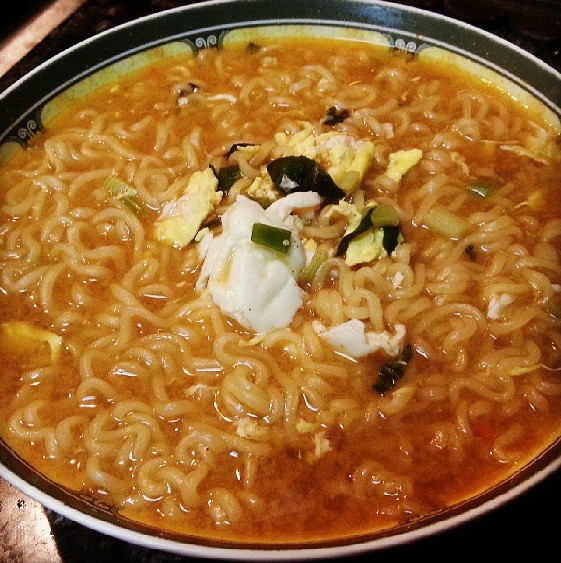
Cooked, with egg and spring onion stirred through. Photo by Debbie Tingzon, CC BY 2.0.
Shin Ramyun rewards restraint. Its broth is already assertive, so the common Korean additions are things that cut it rather than build on it: an egg, spring onion, sometimes a slice of processed cheese to round the chili. Piling in vegetables tends to muddy it.
A shared rule worth knowing: Koreans generally use slightly less water than the package says, and pull the noodles a little early. Instant noodles keep cooking in the residual heat, and a bowl that was perfect in the pot is soft by the time you sit down.
Why Ansungtangmyun Still Matters
A small piece of market history explains why this noodle is still on every shelf despite losing.
Ansungtangmyun launched in 1983 and became Korea's best-selling ramyun. Then Shin Ramyun arrived in 1986 and took the number one position in 1991 — and has essentially never given it back.
But Ansungtangmyun did not fade. It remains in Korea's top three by sales more than forty years after launch, which is unusual for a product that was dethroned. It survived because it was never really competing on the same axis. The people who buy it are not buying a less spicy Shin Ramyun; they are buying a soybean-paste soup.
That is the whole point of this comparison, and it is why "milder" is such a poor summary.
Building a Korean pantry: If the soybean-paste side is what appeals to you, compare Korean doenjang — the same ingredient that gives Ansungtangmyun its base, and the starting point for most Korean home soups.
Compare on AmazonFAQ About Ansungtangmyun and Shin Ramyun
Q: Is Ansungtangmyun just a milder Shin Ramyun?
A: No. They are built on different bases. Ansungtangmyun's soup is soybean paste (된장), which is why its powder is brown, and Shin Ramyun's is chili, which is why its powder is red-orange. The heat difference is real but it is a side effect of that, not the point of difference.
Q: Which one should a first-timer buy?
A: Shin Ramyun if you want to try the famous Korean noodle everyone references. Ansungtangmyun if you want to taste the soybean-paste seasoning that underpins Korean home cooking. Both are around ₩1,000, so buying both is a reasonable answer.
Q: How spicy is Ansungtangmyun?
A: Very mild — its published Scoville rating is around 570 SHU, lower than several noodles Koreans already consider gentle. Nongshim also sells 순하군 안성탕면, a variant made without chili powder at all, rated at zero.
Q: What does the name Ansungtangmyun mean?
A: It is a place name. Anseong (안성) is a city in Gyeonggi Province historically known for its grain and its cattle market, and for the phrase 안성맞춤, meaning a perfect made-to-order fit. Nongshim used the name in 1983 to borrow that reputation. The rest is 탕 (soup) and 면 (noodle).
Q: Is Ansungtangmyun still popular in Korea?
A: Yes. Shin Ramyun took the number one spot from it in 1991 and has held it since, but Ansungtangmyun has stayed in Korea's top three by sales for more than forty years — a rare thing for a product that lost its lead.
Q: Where is the cheapest place to buy them in Korea?
A: A large mart such as E-Mart, Homeplus or Lotte Mart, where five-packs cost significantly less per serving. Convenience stores charge a premium for single bags, so use them to sample and buy volume elsewhere.
The One Thing to Remember
Brown powder, red powder.
Ansungtangmyun is a soybean-paste soup that happens to be barely spicy. Shin Ramyun is a chili soup that happens to be famous. They are not two settings on one product, and picking between them on heat alone means most people never find out what the other bag actually tastes like.
Buy both. It costs about ₩2,000 to settle it yourself.
Sources and Further Reading
- Korean-language coverage of Ansungtangmyun's 13 September 1983 launch, the origin of the Anseong place name, and its early positioning around soybean-paste hangover soup
- Korean reporting on Ansungtangmyun's approximate 570 SHU rating and the Scoville-zero 순하군 안성탕면 variant
- Korean market coverage of Shin Ramyun's 1986 launch and its move to the number one sales position in 1991, with Ansungtangmyun remaining in the top three
- Nongshim's announced August 2026 price revision, which excluded bagged ramyun
- Image sources and licensing are documented in this post's
image-sources.md
Prices checked 2026. Retail pricing varies by store and promotion; confirm at the shelf. Published Scoville figures for Shin Ramyun differ between sources and are deliberately not stated as a single number here.
Ansungtangmyun vs Shin is part of EpicKor's Korean ramyun guide — every packet compared by soup base and verified Scoville, with current Korean prices.
Also in the section: The ramyun guide and Bag vs cup.
You Might Also Like
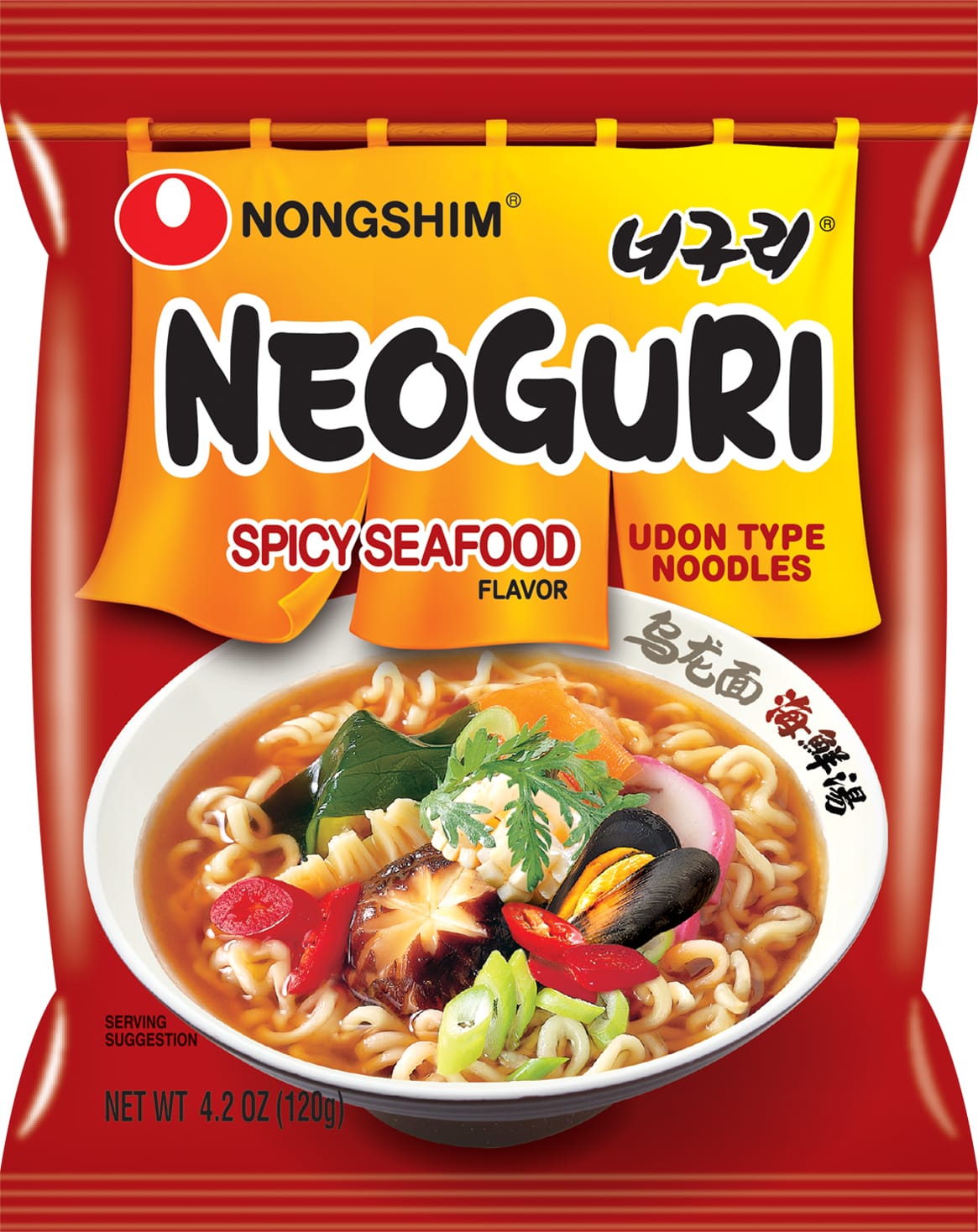
Neoguri Ramen Hacks: How Koreans Cook Korea's Seafood Udon Noodle
The green square in a Neoguri packet is a whole piece of Wando kelp, and Nongshim buys about 400 tonnes a year to put one in each bag. Most people outside Korea bin it. Here is what it does, how Koreans cook the noodle, and a straight answer on the recall.
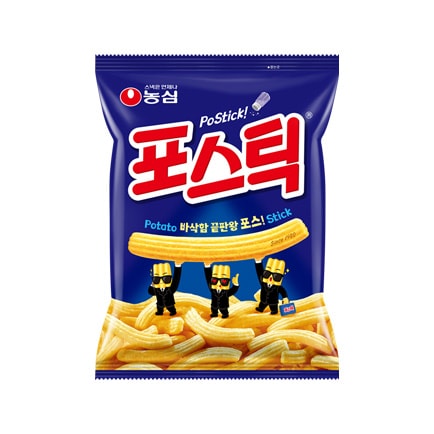
Postick: The Korean Snack That Used to Come With a Ketchup Packet
Postick (포스틱) has been on Korean shelves since 1980, it is only 23% potato, and it shipped with a ketchup sachet until the sachet got too expensive. What it costs now, and the ramyun-powder trick Koreans use on it.
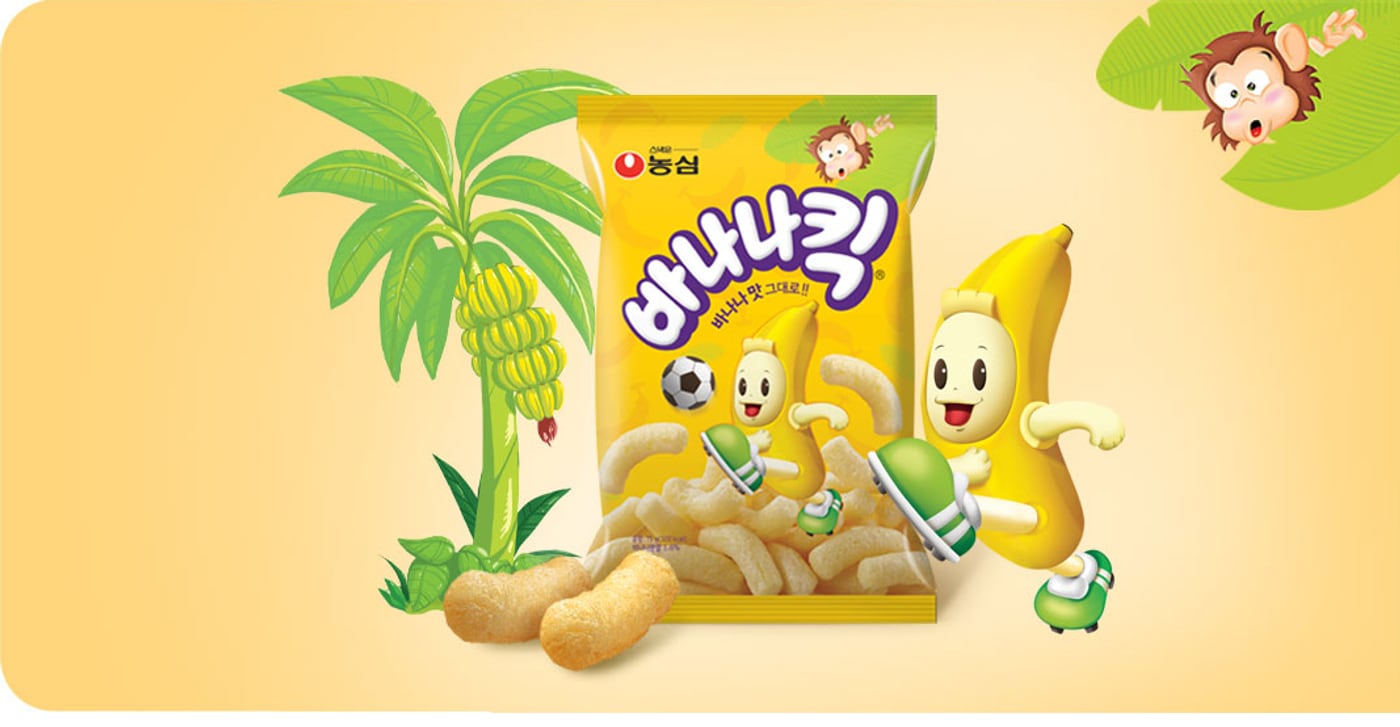
Banana Kick: Korea's Banana Snack Is 1.6% Banana, and That's the Point
It is a corn puff with 1.6% banana powder, and it dissolves — which is why a 12-month-old just made it go viral with 25.8 million views. Launch history, what Melon Kick and Mango Kick are, August 2026 prices, and who should skip it.