Neoguri Ramen Hacks: How Koreans Cook Korea's Seafood Udon Noodle
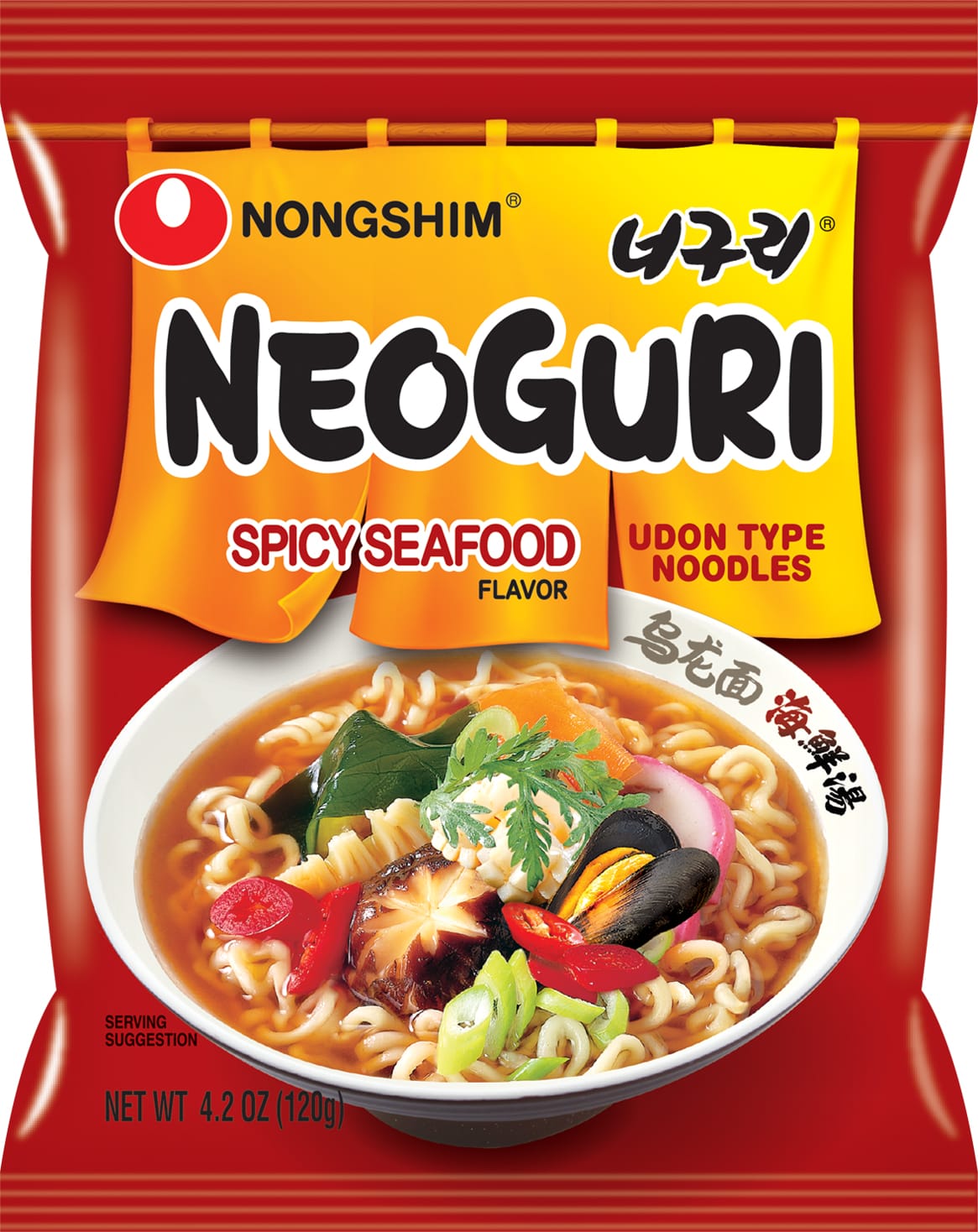
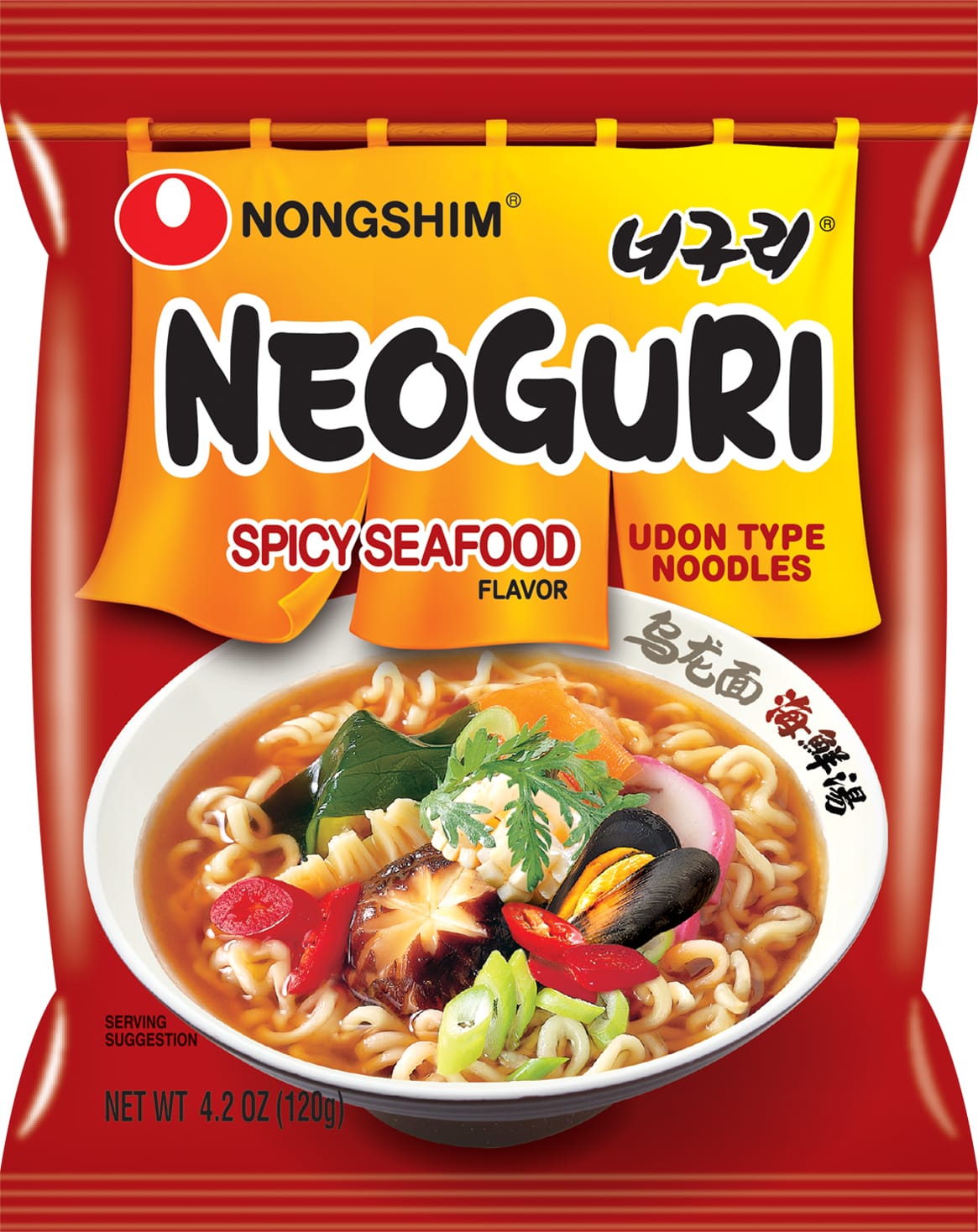
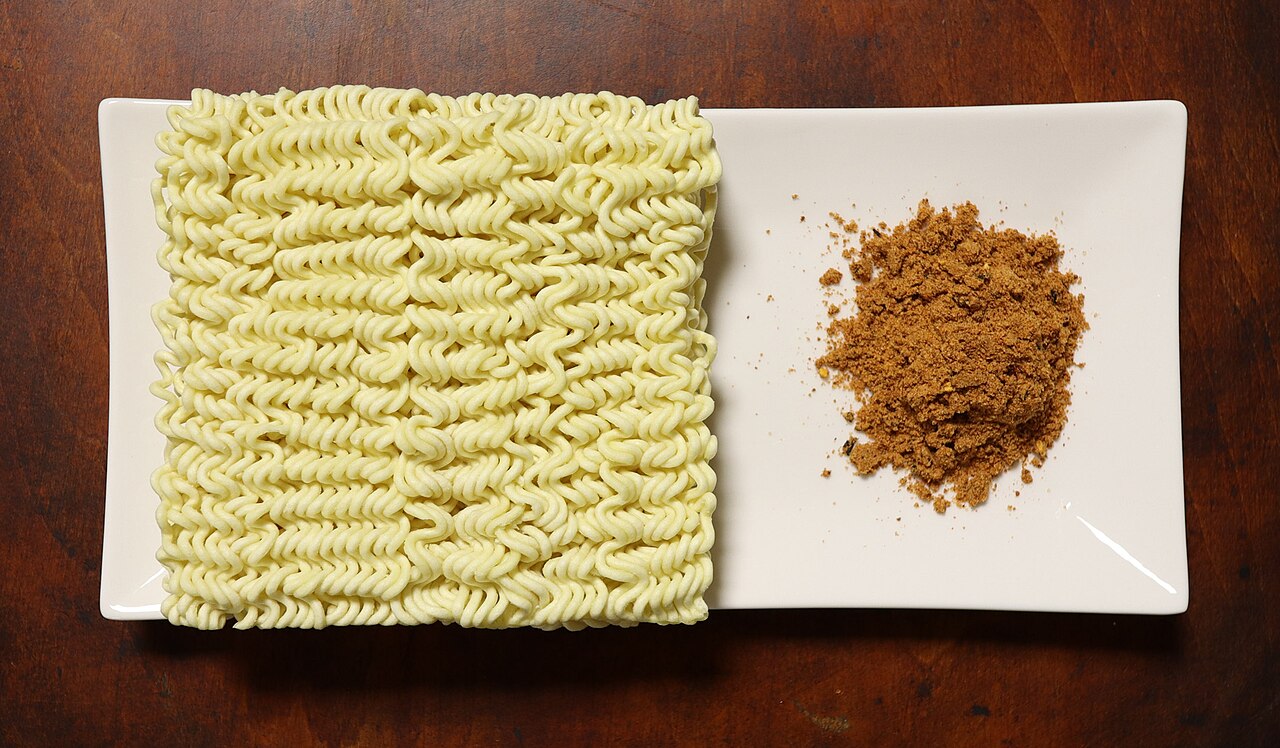
Look at the bowl on the front of the packet. That dark green square is not a garnish drawn by a designer — it is in the bag. Product image: Nongshim.
Open a packet of Neoguri (너구리) and something falls out that does not fall out of any other instant noodle: a stiff, dark green square about the size of a large postage stamp. It looks like packaging. A great many people outside Korea have picked it out and binned it.
It is kelp (다시마) — a whole piece of it, not a powder — and Nongshim buys roughly 400 tonnes of it a year to put one in each bag.
That single component explains almost everything about how this noodle is supposed to be cooked, and it is the reason neoguri ramen hacks is a live search with no proper answer written for it. This guide covers what the kelp is for, how Koreans actually cook the bag, the mild-versus-spicy question, the Chapaguri pairing that reached the Oscars, and a straight answer to the recall question people keep searching.
The Short Answer
| Detail | |
|---|---|
| Korean name | 너구리 (Neoguri) — it means raccoon dog |
| Maker | Nongshim (농심) |
| Launched | November 1982 |
| Noodle | Udon-type — much thicker than Shin Ramyun's |
| Soup | Seafood, anchovy-and-kelp forward, not chili-forward |
| The kelp | One whole piece of Wando (완도) kelp per bag |
| Kelp bought | ~400 tonnes a year; about 17,000 tonnes cumulatively since 1982 |
| Two versions | 얼큰한맛 (spicy, red bag) · 순한맛 (mild, green bag) |
| Bag price, Aug 2026 | unchanged — Nongshim's 1 August 2026 price rise excluded all bag ramyun |
| Cup price, Aug 2026 | ₩1,900 listed for 너구리 큰사발 at CU, often ₩1,267 on 2+1 |
| Famous as | half of Chapaguri (짜파구리), the "ram-don" from Parasite |
Compare Neoguri packs on AmazonAffiliate link. As an Amazon Associate, EpicKor earns from qualifying purchases at no extra cost to you.
If you only remember one line: leave the kelp in, use less water than the packet says, and do not overcook the thick noodles.
The Kelp Is the Product
Here is the fact that reframes the whole noodle, and it comes from the Korean side of the record.
When Nongshim developed Neoguri in 1982, it wanted a seafood udon flavour that tasted like a broth rather than a seasoning sachet. The decision it made was unusual then and remains unusual now: put a whole piece of kelp in the bag rather than grinding it into the powder.
The kelp comes from Wando (완도), an island county off Korea's south coast that is the country's kelp capital. That relationship has now run for more than forty years:
- Nongshim buys around 400 tonnes of Wando kelp a year, and announced a 450-tonne purchase for the 2024 season.
- Between the 1982 launch and 2019 it bought roughly 15,000 tonnes; cumulative purchasing has since passed about 17,000 tonnes — the largest kelp buying programme of any Korean food company.
That is not a marketing line. It is a supply contract with a fishing region, renewed every harvest, for a component most instant-noodle brands would have replaced with extract decades ago.
What the kelp is for: it releases glutamates as the soup boils, which is the savoury backbone the seafood flavour sits on. It is doing the job that a stock would do in a cooked-from-scratch soup. Removing it does not just lose a garnish, it removes the depth the rest of the packet was formulated around.
Eat it, or don't — but boil it. Korean opinion genuinely splits on whether to eat the softened kelp at the end. Plenty of people do. Plenty push it to the side. Nobody takes it out before boiling.
How Koreans Actually Cook It
These are the adjustments that come up constantly on the Korean web, and they are mostly about one thing: Neoguri's noodle is thick, so the rules that work for thin ramyun do not transfer.
1. Use less water than the packet says
The packet direction is written for a full, drinkable soup. Most Korean home cooks pull the water back by roughly a half cup to get a broth that clings to the fat noodle instead of sliding off it. If you have ever found Neoguri watery, this is why.
2. Give the noodles their full time, and no more
The udon-type noodle needs longer than a thin ramyun noodle to hydrate through — but it also goes soft and floury fast once it passes done. Set a timer rather than guessing. If you like it chewy, pull it about thirty seconds early and let the residual heat finish it in the bowl.
3. Put the kelp in at the start
In with the water, before the noodles. It needs the whole boil to give anything up.
4. Add an egg, but decide which kind
Two different results, and Koreans argue about both:
- Beaten and stirred in at the end — clouds the broth, makes it richer and softer.
- Cracked in whole and left alone — keeps the broth clear, gives you a yolk to break over the noodles.
For a seafood broth, whole is the more common choice, because a beaten egg mutes the anchovy-kelp edge that is the point of the soup.
5. The additions that suit this soup specifically
Neoguri's base is seafood, so it takes seafood additions better than a chili-based ramyun does. Frozen seafood mix, a handful of clams, or a few slices of fish cake (어묵) all belong. Cheese does not — it fights the kelp. Save cheese for Buldak.
A splash of something sharp at the end — a little vinegar, or kimchi brine — lifts the broth. This is the one "hack" that circulates in English as well, and it does work.
Mild or Spicy: The Two Bags
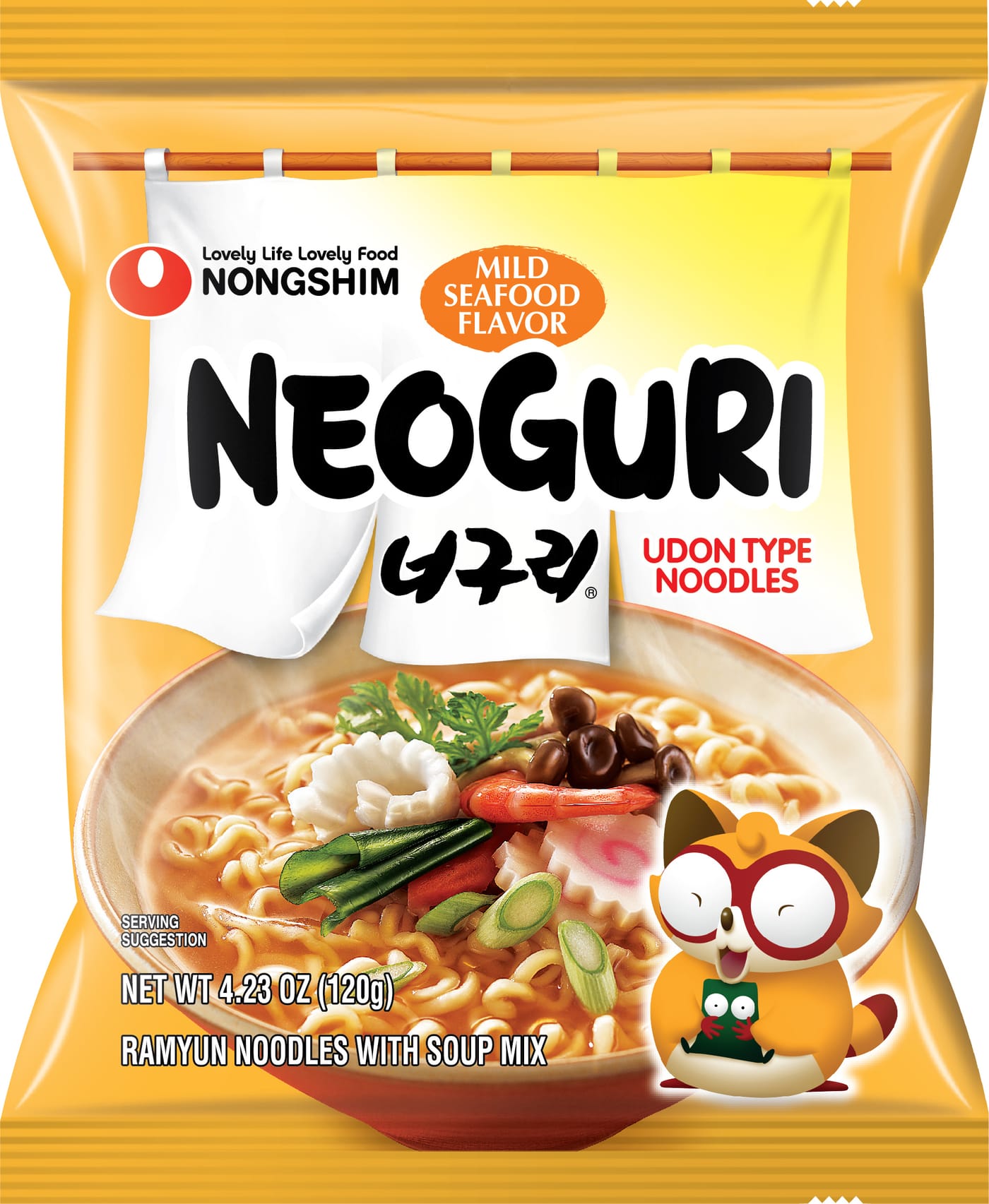
순한맛 — the mild green bag. Same kelp, same thick noodle, far less chili. Product image: Nongshim.
Neoguri ships in two, and outside Korea people frequently buy the wrong one because only the red bag gets exported reliably.
| 얼큰한맛 (Spicy) | 순한맛 (Mild) | |
|---|---|---|
| Bag colour | Red | Green |
| Heat | Moderate — noticeably below Shin Ramyun | Very low |
| Who buys it in Korea | Default adult purchase | Households with children; anyone who wants the seafood broth without heat |
| Availability abroad | Widely stocked | Harder to find |
| Best for | The standard Neoguri experience | Tasting what the kelp and anchovy actually do |
If you want to understand why Nongshim bothers with the kelp, buy the mild one. The spicy version is not hot by Korean standards, but chili still sits in front of the broth. Take the chili away and the seafood base is fully audible.
For where Neoguri sits against Korea's other big bags, our Ansungtangmyun vs Shin Ramyun comparison covers the two that dominate the same shelf, and the Korean ramyun guide maps the wider range.
Chapaguri: The Half of Neoguri That Went to the Oscars
The single most famous thing Neoguri does is not eaten on its own.
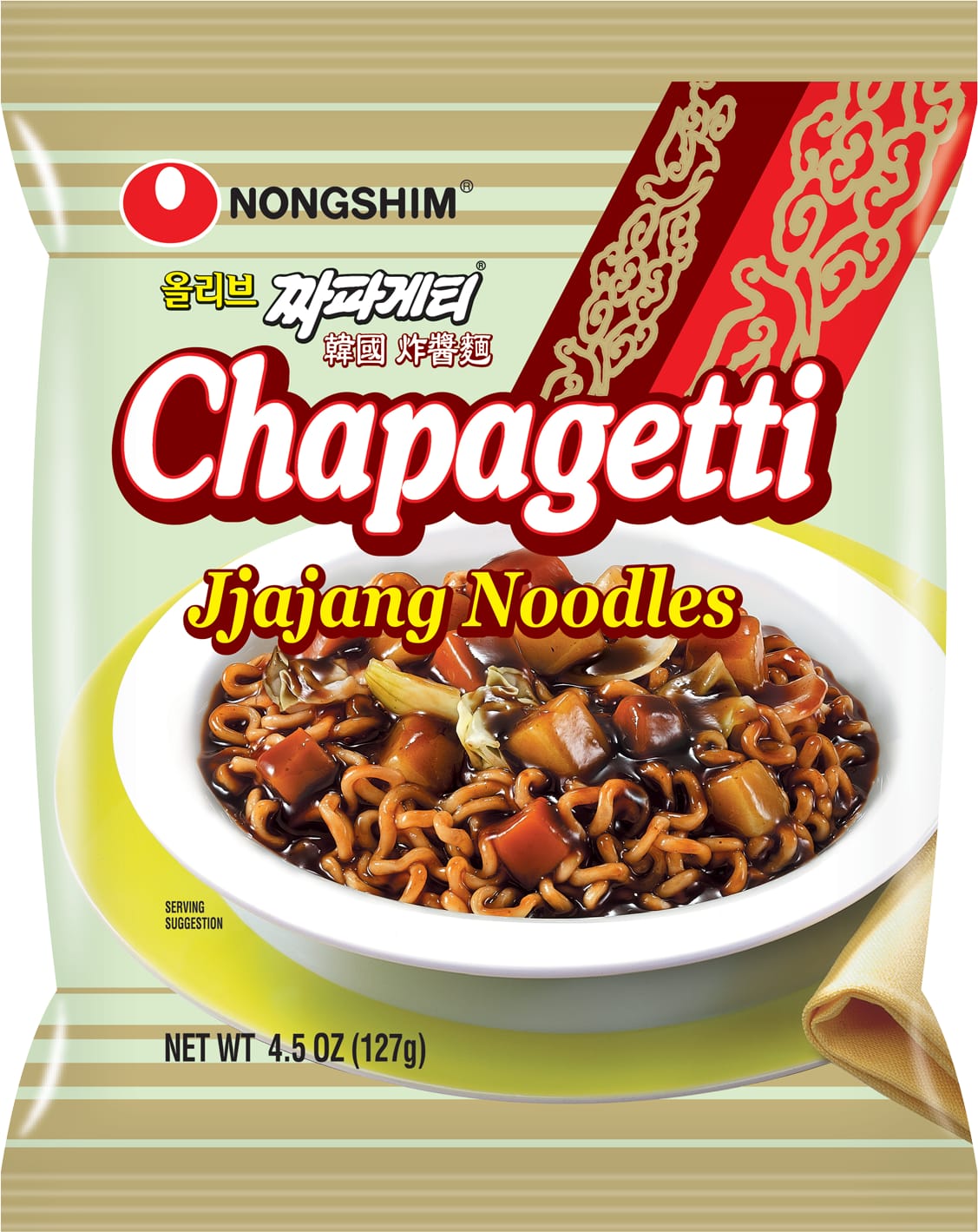
The other half. Chapagetti is a black-bean sauce noodle with no broth — the opposite construction to Neoguri. Product image: Nongshim.
Chapaguri (짜파구리) is Chapagetti plus Neoguri, cooked together into one pan. It existed as a Korean home hack for years before Parasite put it on screen in 2019, where the English subtitles rendered it as "ram-don."
The construction, briefly:
- Boil both noodle blocks together in one pot. Neoguri's is thicker, so it sets the timing.
- Drain nearly all the water, keeping only a few tablespoons.
- Add Chapagetti's black-bean powder and oil, plus about half of Neoguri's soup powder. All of Neoguri's sachet makes it too salty — this is the step people miss.
- Stir off the heat until the sauce emulsifies and coats.
- The film version adds seared sirloin. The home version does not.
The result is a dry, savoury, black-bean noodle with the seafood heat running underneath it. It is genuinely good, and it is the reason chapagetti and neoguri is a search term in English at all.
Making Chapaguri at home: As an Amazon Associate, EpicKor may earn from qualifying purchases. You need both bags, and only one of them is easy to find — Chapagetti is the half most overseas shoppers do not already have in the cupboard, and buying it as a multipack is far cheaper than one bag at a Korean grocer.
Compare on Amazon"Is Neoguri Linked to Cancer?" — The Honest Answer
This gets searched, it deserves a straight answer, and English coverage either ignores it or reprints a 2021 headline without the resolution. Here is the sequence.
In August 2021, Neoguri exported to Europe was recalled. European testing found ethylene oxide in seasoning from batches produced on 27 January and 3 March 2021, at 7.4 and 5.0 ppm against an EU limit of 0.05 ppm. Ethylene oxide is classified as a group 1 carcinogen by the International Agency for Research on Cancer. Ireland's Food Safety Authority separately recalled a batch of Shin Kimchi noodle soup, and Thailand's FDA froze shipments while it checked.
Nongshim's position was that what was detected was 2-chloroethanol (2-CE), not ethylene oxide. The two are related — 2-CE is a breakdown product — and this is where it becomes a regulatory disagreement rather than a purely factual one: the EU and Taiwan treat the two as the same substance for limit purposes, while Korea and the United States treat them as different. So the same laboratory result produces a violation in one jurisdiction and not in another.
What this means practically:
- It concerned specific export batches from early 2021, not the product line generally, and those batches were withdrawn.
- The limit exceeded was the EU's, which is among the strictest in the world and is set at a level where any detection is effectively a failure.
- The underlying dispute is about how a residue is classified, not about whether Nongshim added something.
What we are not going to tell you is that this is a non-issue or that it is a scandal. It is a five-year-old regulatory action on identified batches, with a live definitional disagreement between food authorities behind it. If you want current status for your own country, its food safety authority publishes recall notices — that is the source to check, not a food blog, and not this one.
Halal, and Why People Ask
neoguri ramen halal is a common search, and the answer is not uniform across the range.
Nongshim operates halal-certified production for products destined for Muslim-majority markets, and separately sells non-certified versions elsewhere. Certification applies per product and per production line, not per brand. A packet bought in Malaysia and a packet bought in a US grocery are not automatically the same specification.
The reliable method: read the actual packet in your hand. A certified product carries the certifying body's mark on the packaging. If the pack in front of you does not have one, treat it as not certified, regardless of what a listing elsewhere says.
What It Costs in Korea Right Now
| Format | Price | Notes |
|---|---|---|
| 너구리 bag (봉지) | not raised in the August 2026 round | See below — this is more interesting than it sounds |
| 너구리 큰사발 (large cup) | ₩1,900 listed at CU | Frequently ₩1,267 effective on a 2+1 promotion, checked 3 August 2026 |
| Multipack at a supermarket | Lower per unit | The normal Korean household purchase |
There is a live piece of context here worth knowing if you are shopping in Korea this month.
On 1 August 2026, Nongshim raised shipment prices across 43 brands by an average of 5.8 percent — cup noodles up about 6.0 percent, snacks 5.5 percent, drinks 7.7 percent — citing packaging and material costs driven by the exchange rate and fuel.
Bag ramyun was excluded entirely. Nongshim left every bagged noodle out of the increase, including Shin Ramyun, explicitly framing it as holding the line on staple prices. Bag ramyun is about 63 percent of its noodle revenue.
So as of this month: the Neoguri cup got more expensive and the Neoguri bag did not. If you are buying in a Korean convenience store and the price difference between the cup and the bag looks wider than you expected, that is why.
FAQ About Neoguri
Q: What is the green square in the Neoguri packet?
A: A whole piece of dried kelp (다시마) from Wando. It is an ingredient, not packaging. Put it in the water at the start of the boil.
Q: Should I eat the kelp?
A: Your choice — Koreans genuinely disagree. What is not optional is boiling it, because that is where the soup's savoury depth comes from.
Q: How spicy is Neoguri?
A: The red bag is moderate and sits below Shin Ramyun. The green bag (순한맛) is very mild. Neoguri's identity is seafood broth rather than heat.
Q: What is Chapaguri?
A: Chapagetti and Neoguri cooked together and drained into a dry black-bean noodle. It appeared in Parasite subtitled as "ram-don." Use all of the Chapagetti sachet but only about half of Neoguri's, or it will be too salty.
Q: Is Neoguri safe after the 2021 recall?
A: The 2021 action covered identified export batches, which were withdrawn, and rested on a disagreement over whether 2-chloroethanol should be counted as ethylene oxide — the EU and Taiwan say yes, Korea and the US say no. For current status in your country, check your national food safety authority's recall notices.
Q: Is Neoguri halal?
A: Some production is halal-certified for Muslim-majority markets and some is not. Certification is per product and per line, so read the mark on the packet you are actually holding.
Q: Why is it called "raccoon dog"?
A: 너구리 is the Korean word for the raccoon dog, and Nongshim's long-running advertising line was "너구리 한 마리 몰고 가세요" — roughly, "take a raccoon home with you." The name is a mascot, not a description of the food.
Related Reading
- Ansungtangmyun vs Shin Ramyun: Which Korean Ramyun to Buy First — the two bags that share Neoguri's shelf
- Korean Ramyun Guide: Shin, Buldak, Chapaghetti, and More — the wider range
- Carbo Buldak Guide: Why Korea's Creamy Spicy Ramen Went Global — the noodle cheese actually belongs in
- Korean Convenience Store Food Guide: Dosirak and Snacks — what to pair it with
You Might Also Like
Ansungtangmyun vs Shin Ramyun: Which Korean Ramyun to Buy First
Ansungtangmyun is not just a milder Shin Ramyun. It is built on soybean paste while Shin Ramyun is built on chili, so the two taste different rather than differently hot. Here is the real difference, and which one to start with.
Postick: The Korean Snack That Used to Come With a Ketchup Packet
Postick (포스틱) has been on Korean shelves since 1980, it is only 23% potato, and it shipped with a ketchup sachet until the sachet got too expensive. What it costs now, and the ramyun-powder trick Koreans use on it.
Banana Kick: Korea's Banana Snack Is 1.6% Banana, and That's the Point
It is a corn puff with 1.6% banana powder, and it dissolves — which is why a 12-month-old just made it go viral with 25.8 million views. Launch history, what Melon Kick and Mango Kick are, August 2026 prices, and who should skip it.