Korean Home Reset Culture: Why Seoul Apartments Feel Organized
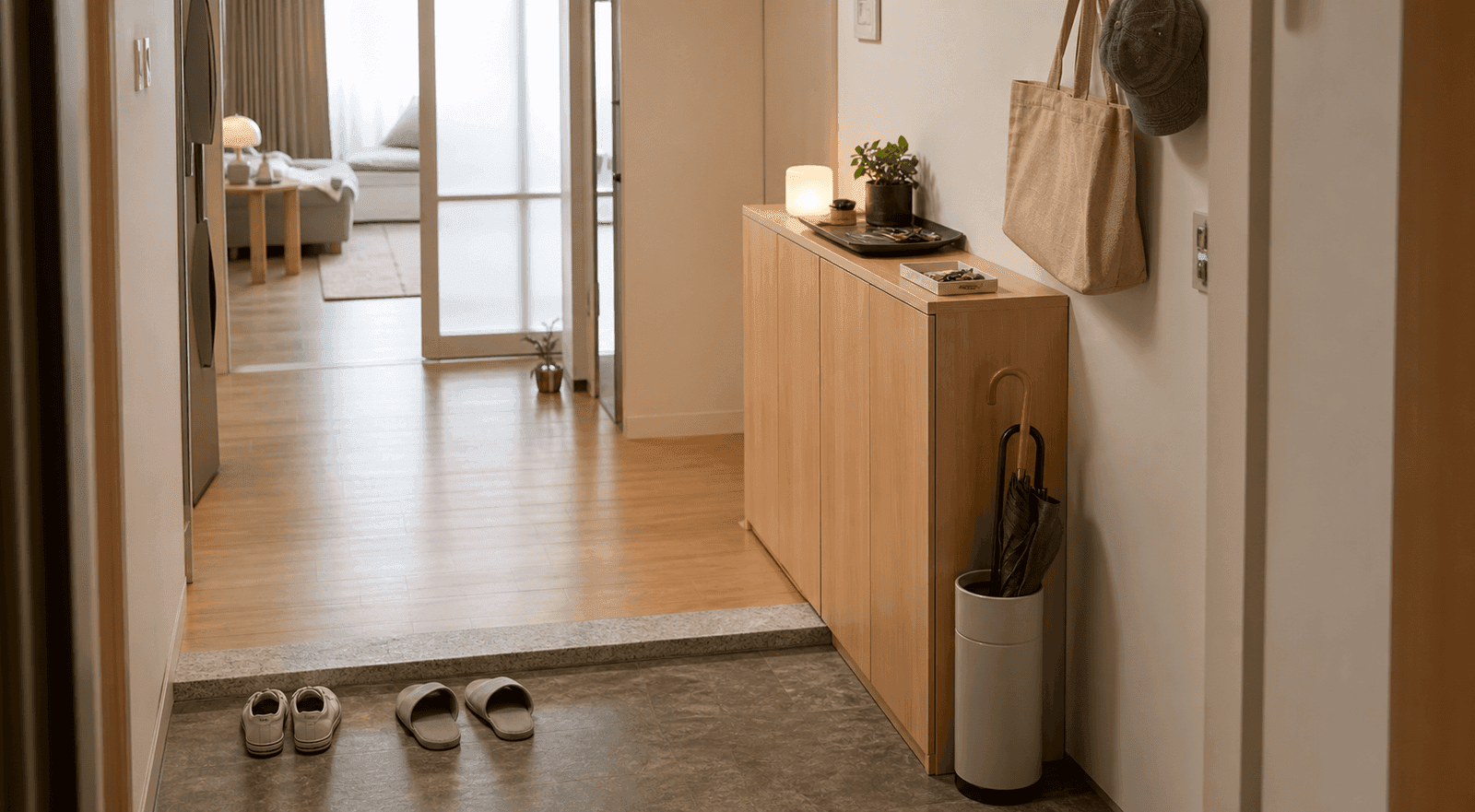
Korean home reset culture is one of those things travelers notice without knowing what to call it. A Seoul apartment, guesthouse, or friend's home may be small, but it often has a clear rhythm: shoes stop at the entrance, bags land in one place, laundry dries near the window, floor space stays usable, slippers appear, trash is separated, and the room gets reset before the next part of the day.
This does not mean every Korean home is perfectly clean. Real homes are real homes. People are busy, tired, messy, and human. But Korean living spaces often have built-in pressure toward reset because the home has to work hard. A compact apartment may need to be bedroom, dining area, laundry zone, work corner, storage unit, and recovery space at the same time. If one routine collapses, the whole room feels chaotic.
That is why this topic can do well on social media. It is not only "Korean apartments are aesthetic." It is more useful than that. It explains why certain Korean home habits feel efficient: shoe-off entryways, floor culture, folding laundry racks, dehumidifiers, small trays, modular storage, indoor slippers, and the evening reset.
Indoor slippers and house shoes — compare on AmazonAffiliate link. As an Amazon Associate, EpicKor earns from qualifying purchases at no extra cost to you.
Quick Answer: What Is Korean Home Reset Culture?
Korean home reset culture is the habit of restoring a small living space to a usable state throughout the day. It usually starts with a shoe-off entrance, then continues through laundry, floor space, dishes, trash separation, storage, and bedtime setup. The goal is not perfect minimalism. The goal is making a compact home work again.
The basic system is:
- Stop outside dirt at the entryway.
- Give bags, keys, cards, and umbrellas fixed landing spots.
- Keep floor space usable because the floor often matters.
- Dry laundry efficiently without a large dryer room.
- Control humidity with ventilation, dehumidifiers, or moisture absorbers.
- Reset the low table, bedding, and chargers before sleep.
- Separate trash and recycling before it becomes one giant pile.
If you like Korean daily-life systems, pair this with EpicKor's Korean floor culture and home habits guide, Korea coin laundry guide, Korea summer packing list, and lost items in Korea guide. Home reset is part of the same practical culture: keep things moving, keep space functional, and do not let small friction become a big problem.
The Entryway Does More Than Hold Shoes
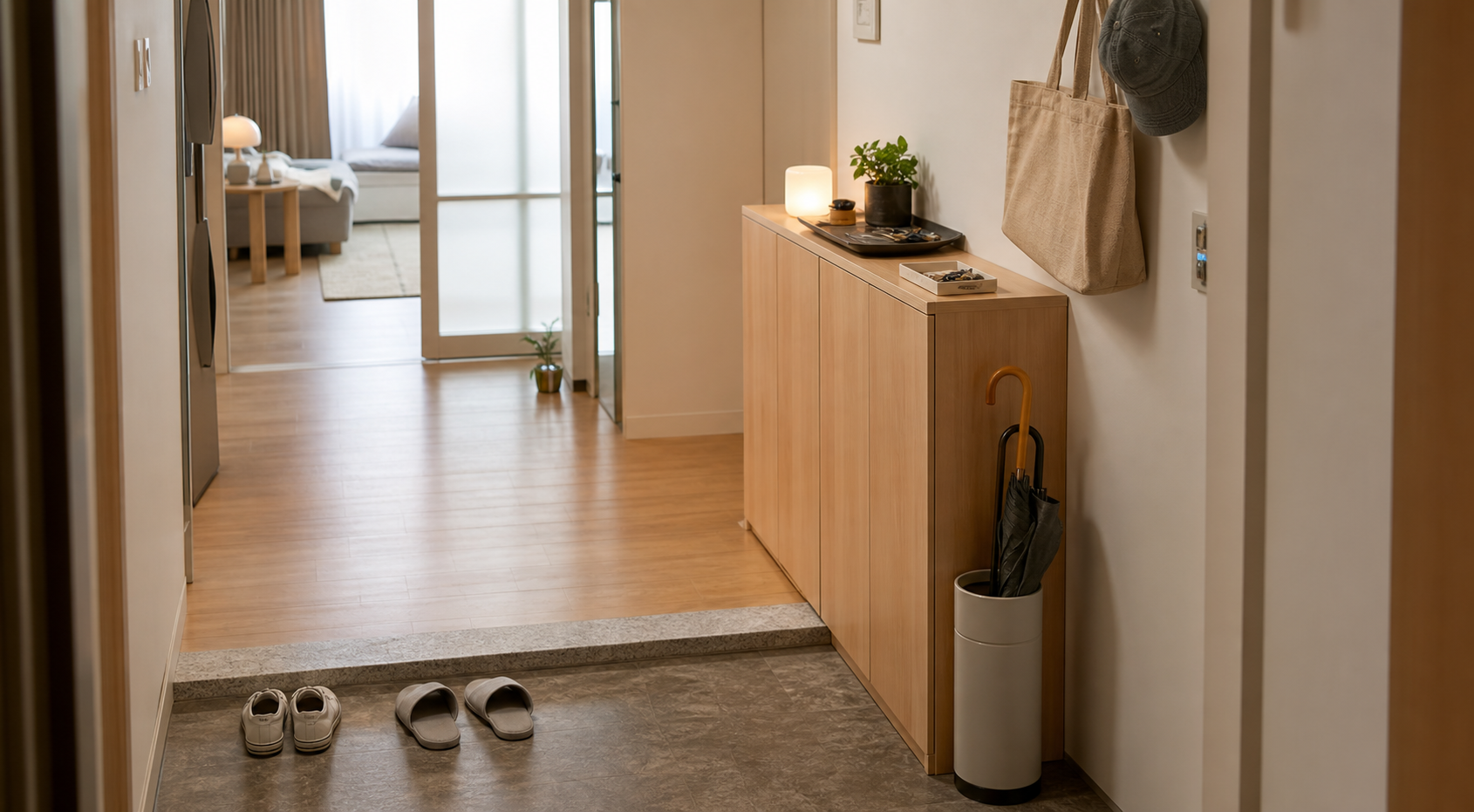
The Korean entryway, or shoe-off threshold, is not only a cultural symbol. It is a practical filter. Outside shoes stop there. Slippers, socks, indoor sandals, umbrellas, deliveries, shopping bags, recycling bags, and keys all compete for a small zone. If the entryway fails, clutter spreads into the living area fast.
This is why many Korean homes use shoe cabinets, umbrella stands, small hooks, trays, and narrow shelves. The goal is not to make the entrance look like a magazine. The goal is to prevent the rest of the home from becoming the entrance.
For travelers, this explains why Airbnb or guesthouse instructions may feel specific. Do not wear shoes inside. Do not block the entrance with luggage. Keep wet umbrellas contained. Put trash in the right spot. These are not random rules. They protect the reset system.
Floor Space Has To Stay Usable
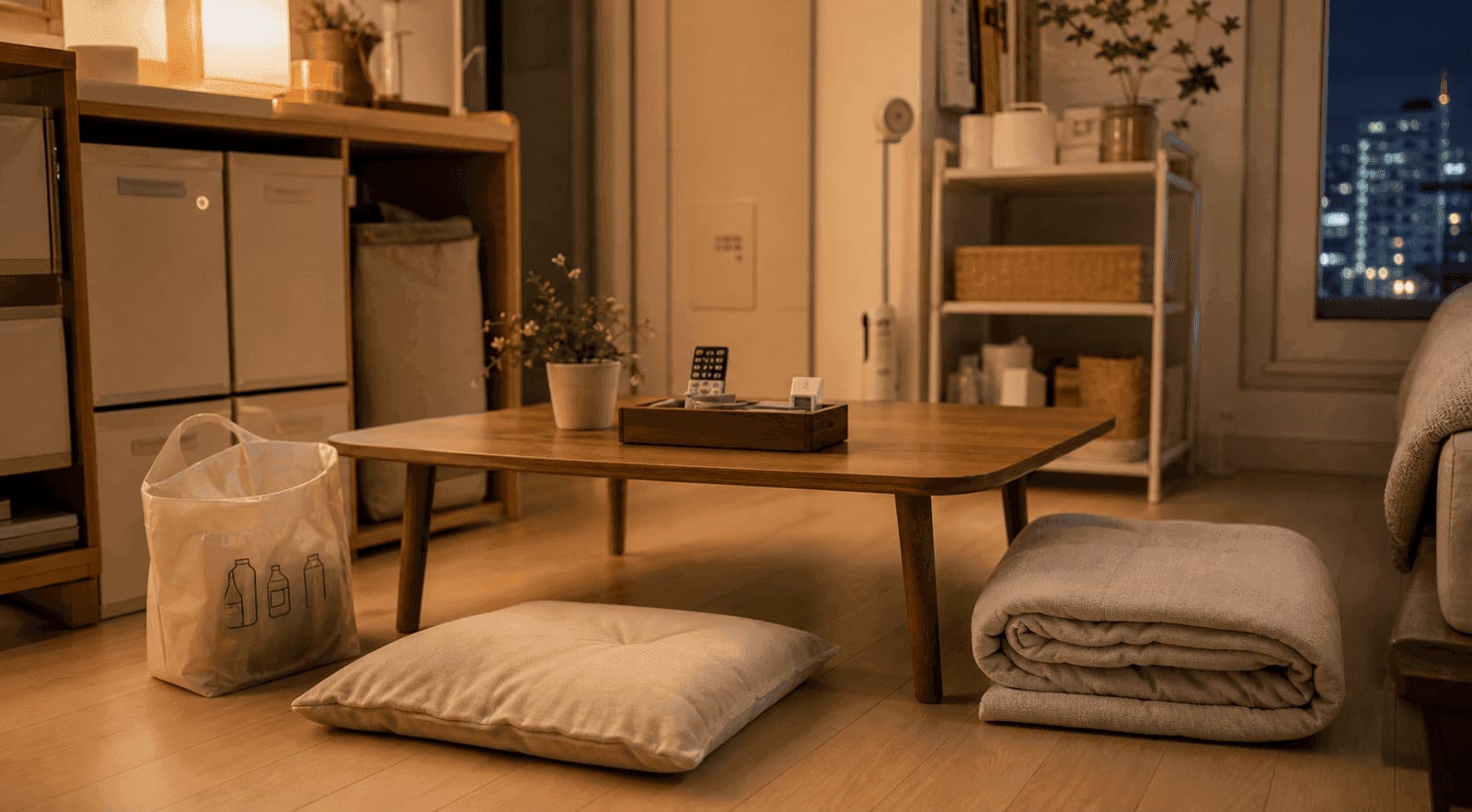
Korean homes often treat the floor as living space, not just walking space. Even when a home has a sofa and bed, the floor may still be used for folding laundry, eating at a low table, stretching, packing, sitting with friends, opening delivery food, playing with children, or spreading out a suitcase.
That changes the logic of organization. If the floor is covered with shoes, bags, boxes, and cords, the home loses an entire layer of function. A small apartment cannot afford that. The reset is not only visual. It is spatial.
This also explains why compact furniture matters: folding tables, stackable stools, floor cushions, storage boxes, narrow shelves, and rolling carts. The furniture has to move or compress because the room changes jobs during the day.
Laundry Is A Daily Space Problem
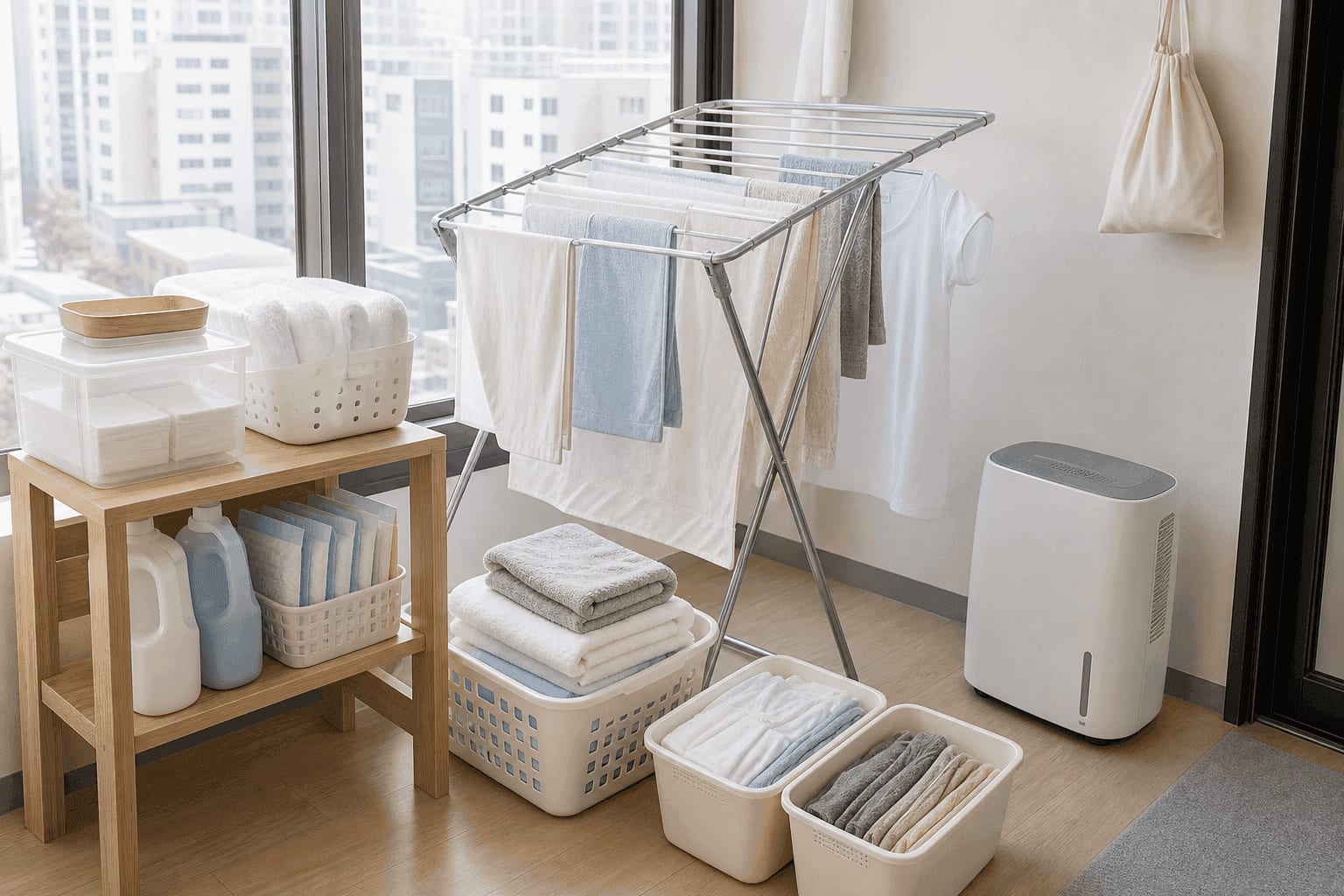
Many visitors assume laundry is about machines. In Korean apartments, laundry is also about space, air, humidity, and timing. A compact home may not have a large dryer room. Clothes may dry on a rack near a window, in a utility area, on a balcony, or with help from a dehumidifier.
This is why laundry can shape the whole room. A drying rack opens, the walking path changes, towels need air, socks need clips, and damp clothes can make the room feel smaller. If laundry is not reset, the home feels unfinished.
The rack is the piece of equipment this whole routine turns on, and Korean ones are built for the problem: a made-in-Korea folding rack with stainless rods, flat-dry shelves and wheels folds thin enough to disappear behind a door, which is the entire design brief in an apartment where the rack has to vanish every evening. EpicKor may earn from qualifying purchases. The wheels matter more than they sound — a rack you can roll to the sunny side of the room and then roll away is a rack that actually gets folded.
The practical routine is:
There is also an appliance that exists specifically for this problem, and it is in a lot of Korean entryways: the clothing care machine, which steams and shakes worn clothes instead of washing them. See what the LG Styler actually does for why Korea invented a closet that shakes your coat.
- wash smaller loads more often;
- use a foldable rack;
- leave airflow around towels and denim;
- separate damp and dry items quickly;
- avoid letting laundry become background furniture;
- fold and put away before the rack becomes permanent architecture.
Travelers feel this too. If you stay in Korea for more than a few days, you may need a coin laundry, hotel laundry, detergent sheets, a travel laundry bag, or a drying strategy. That is why EpicKor's Korea coin laundry guide matters more than it sounds.
Humidity Is Part Of The Reset
Korea's rainy season and humid summer can make home reset harder. Damp towels, wet shoes, umbrellas, laundry, bathroom steam, and closed windows all add friction. That is why dehumidifiers, moisture absorbers, ventilation habits, and quick drying routines become part of practical home life.
Humidity changes storage too. Shoes need air. Closets need space. Bedding needs to dry. Bathrooms need ventilation. A room that looks organized but smells damp does not feel reset.
For tourists, this matters in summer and rainy season. Do not stuff wet clothes into a suitcase. Winter has its own version of the same logic — Koreans heat the surface they sleep on rather than the whole room, which is why the heated mattress pad is a household staple rather than a novelty. Do not leave damp towels in a pile. Use laundry bags, open windows when appropriate, and keep a compact umbrella separate from dry items. A Korea trip can become messy fast if moisture gets into every layer of your bag.
Storage Is About Frequency, Not Perfection
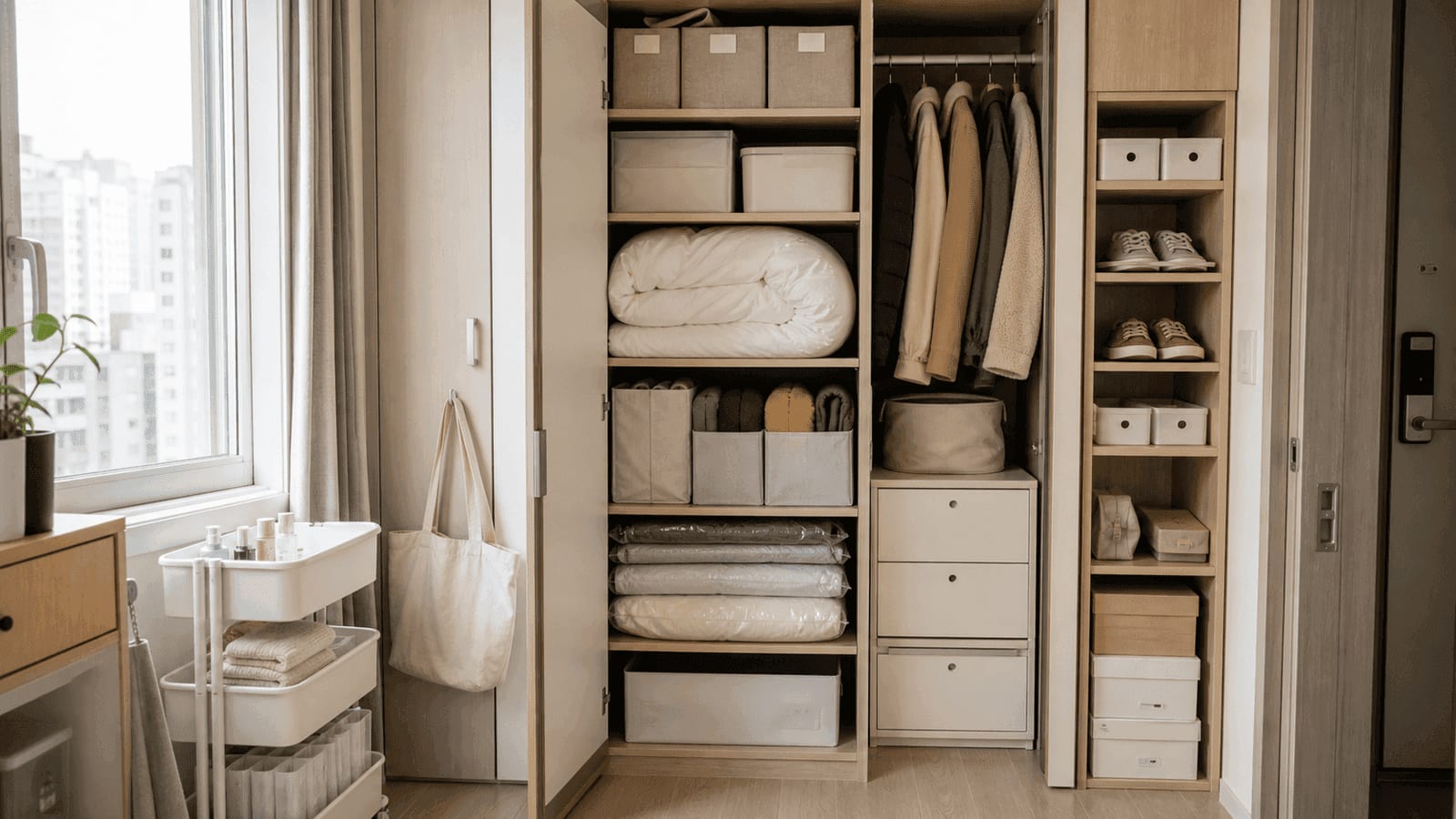
Korean home reset is not about hiding everything. It is about making frequent items easy to reach and infrequent items easy to contain. This is why you see trays, baskets, slim drawers, plastic bins, wall hooks, closet organizers, and small cabinets. The system works when it matches how often things move.
Daily items need visible or semi-visible homes:
- slippers;
- keys;
- transit card;
- mask or tissues;
- umbrella;
- phone charger;
- laundry bag;
- reusable shopping bag;
- skincare pouch;
- trash bags.
Seasonal or occasional items can go deeper: winter bedding, guest blankets, large suitcases, extra shoes, festival gear, and bulk supplies. A common mistake is putting daily items in deep storage because it looks clean for five minutes. Then the system fails because nobody wants to open three boxes for a charger.
The Evening Reset
The evening reset is the part that looks most satisfying on camera. It is also the part that makes the next morning easier. It can be small:
- Put shoes and slippers back in place.
- Clear cups and wrappers.
- Fold the blanket.
- Set the charger.
- Put laundry in the basket.
- Reset the low table.
- Check the bag for tomorrow.
- Move trash or recycling to the right spot.
This takes less time than a full clean. That is the point. Reset is not deep cleaning. It is restoring the room enough that you do not wake up inside yesterday's mess.
Korean life has many versions of this. Office workers reset bags after commuting. Students reset desks after study cafes. Travelers reset hotel rooms after shopping. Families reset dining tables after delivery food. The exact routine changes, but the logic stays the same: small space, high use, quick recovery.
How To Try A Korean Reset At Home
Do not copy the aesthetic first. Copy the friction logic.
Ask:
- Where do shoes, bags, and keys create chaos?
- What item do I use every day but never give a home?
- What surface becomes a dumping ground?
- What laundry problem keeps repeating?
- What floor space do I need back?
- What do I wish were ready before morning?
Then build one small reset zone. The entrance is easiest. Put a tray, hook, shoe rule, umbrella spot, and indoor slippers in one place. After that, build a laundry reset: bag, drying space, detergent, and folding routine. Then fix one table or charging corner.
Tourist Mistakes In Korean Homes
The first mistake is treating the entryway like a luggage zone. If you put a suitcase across the shoe area, everyone has to step around it.
The second mistake is wearing outdoor shoes inside because "just one second" feels harmless. In a shoe-off home, it is not harmless. It breaks the clean-zone logic.
The third mistake is ignoring trash separation. Korean waste rules can vary by accommodation, but you should follow the host or building instructions. Do not mix food waste, recyclables, and general trash because you are leaving soon.
The fourth mistake is leaving damp towels or clothes wherever they land. Humidity makes small spaces worse.
The fifth mistake is assuming small means simple. Small homes can require more discipline because every object is closer to every other object.
FAQ
Q: Is every Korean home perfectly organized?
No. Korean homes are real homes, and real homes get messy. The point is that many Korean living spaces have strong reset systems because compact apartments need quick recovery.
Q: Why do Koreans take shoes off indoors?
It keeps outside dirt at the entrance and protects the indoor living zone. It also fits floor-based home habits, where the floor may be used for sitting, eating, folding laundry, or resting.
Q: What is the easiest Korean home reset habit to copy?
Start with the entryway. Create a fixed place for shoes, slippers, keys, cards, umbrellas, and bags. If the entrance works, the rest of the home stays cleaner longer.
Q: Why do Korean homes use drying racks so often?
Many apartments have compact laundry setups, and not every home uses a large dryer the way some countries do. A folding rack lets laundry dry without needing a separate laundry room.
Q: Is Korean home reset culture minimalism?
Not exactly. It is more practical than aesthetic minimalism. The goal is not owning nothing. The goal is keeping small, heavily used spaces functional.
Final Take
Korean home reset culture works because it is not one big clean. It is a series of small returns: shoes to the entrance, laundry to the rack, floor back to use, table back to calm, trash into the right stream, and tomorrow's bag ready before sleep.
That is why it feels satisfying. A Korean home reset does not need a huge apartment or expensive storage system. It needs one clear rule for where the mess stops, and one realistic routine for making the room usable again.
You Might Also Like
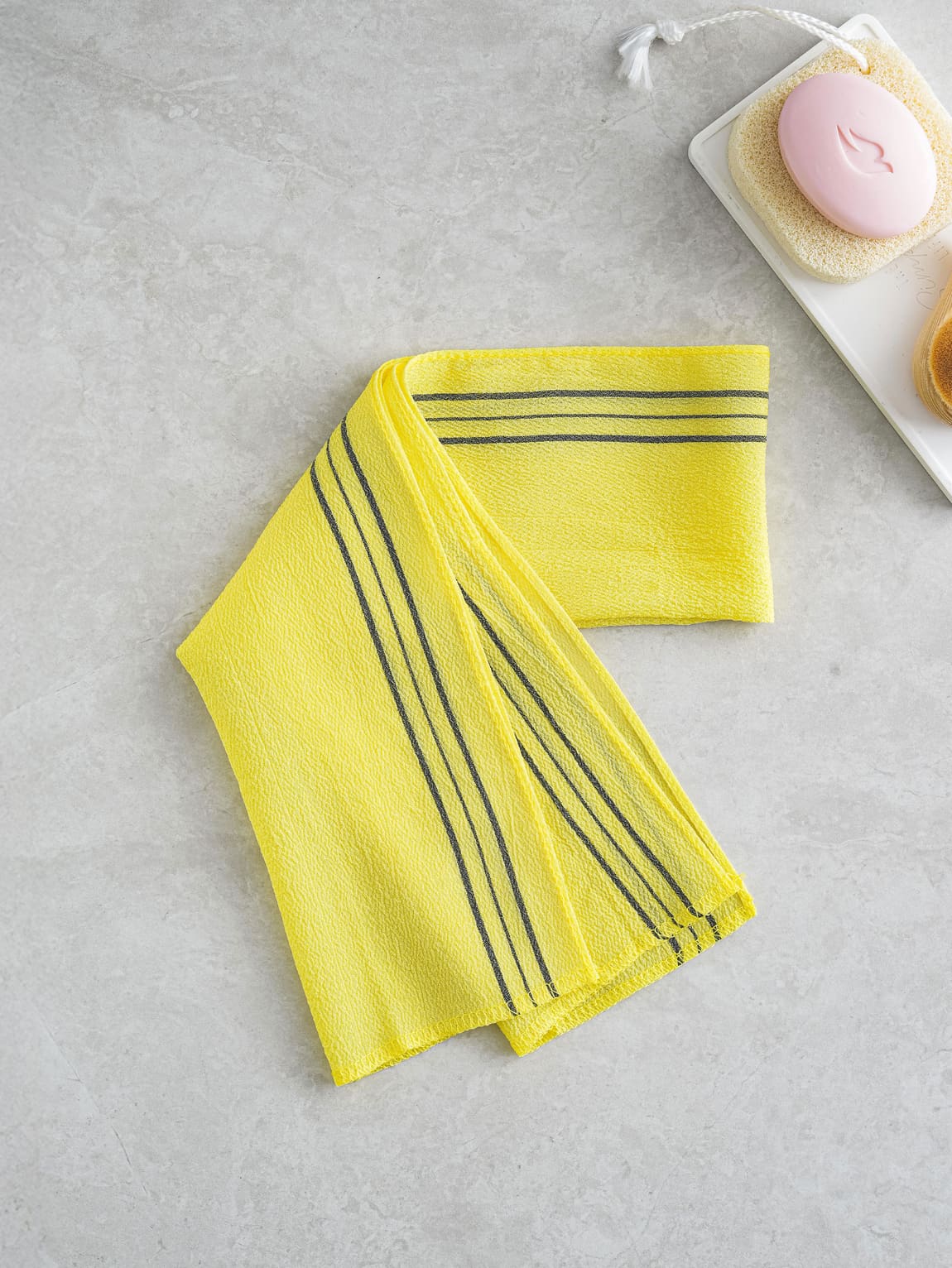
Korean Exfoliating Towels: What the Colours Mean, and How Often to Use One
English listings sell Korean exfoliating towels by a colour code — pink soft, blue coarse, green standard. Korean sources have no such code; green was simply the first one made. The real variable is the soak, and Korean dermatologists cap use at once a week.
Korean Stone Beds: What They Cost, and Why Anyone Sleeps on Rock
A Korean stone bed is a slab of granite in a wooden frame, heated from underneath, and the entry model costs ₩3,470,000 — about $2,510. Here is what 돌침대 actually is, why Koreans buy it, and the one thing Korean doctors say you must add to it.
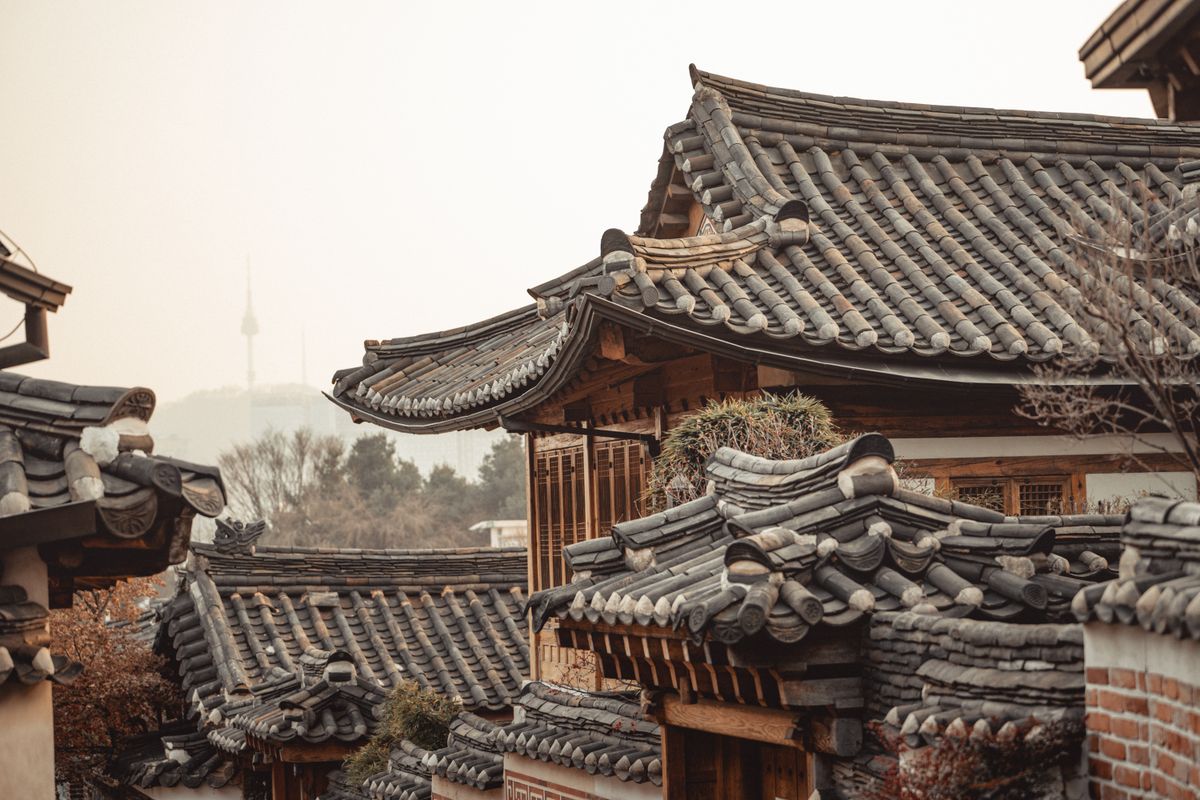
Korean Floor Culture: Shoes Off, Ondol On, and the Boiler Dial That Is Not Room Temperature
Why Korean homes start at the floor, and the numbers nobody translates: the 온돌 dial reads water temperature, not air, so 50 is normal and 20 is cold. Plus what heating costs per MJ and the decibel line that makes floor noise a legal matter.