Why Koreans Wear All Black in Winter: The Long Padding Story
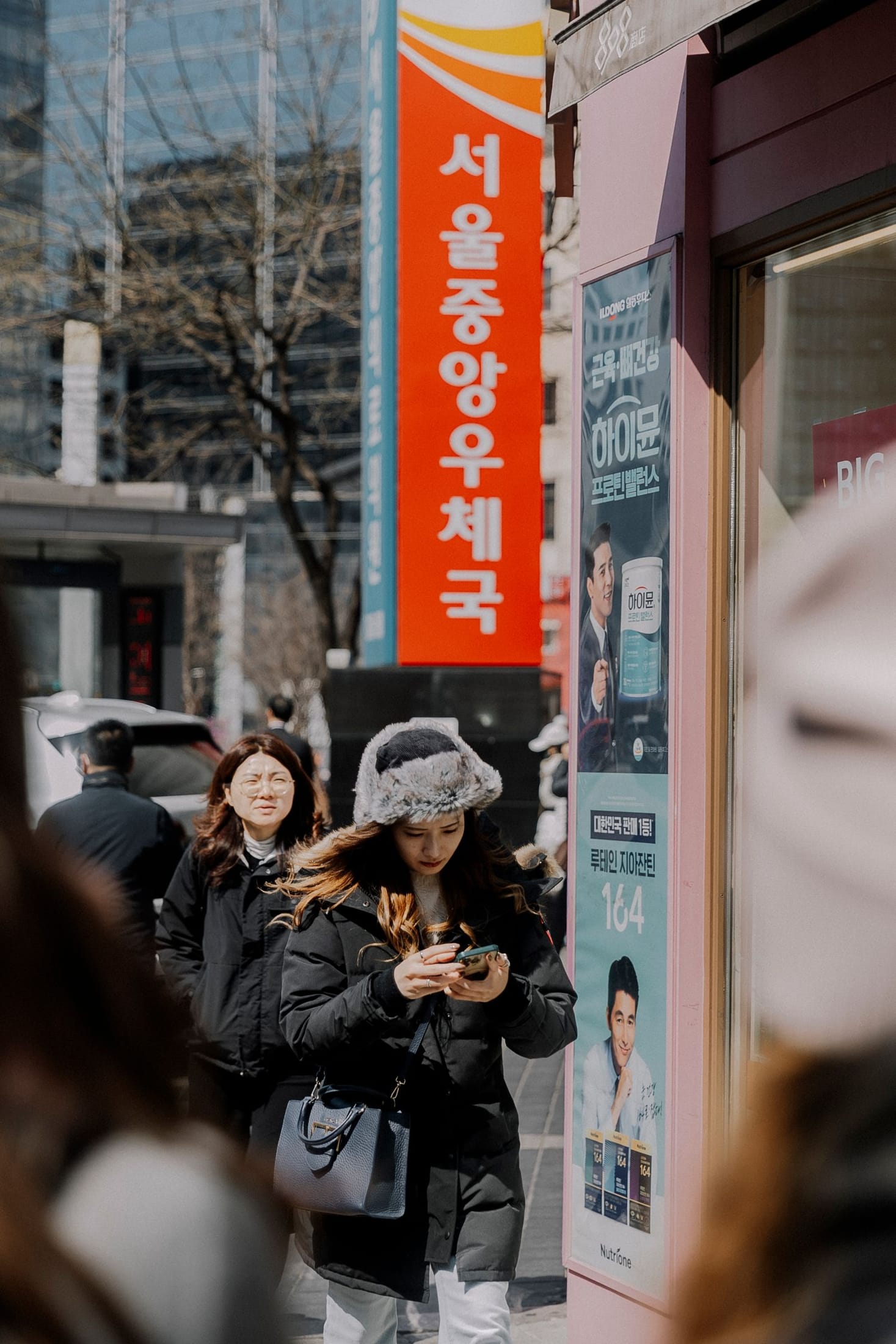
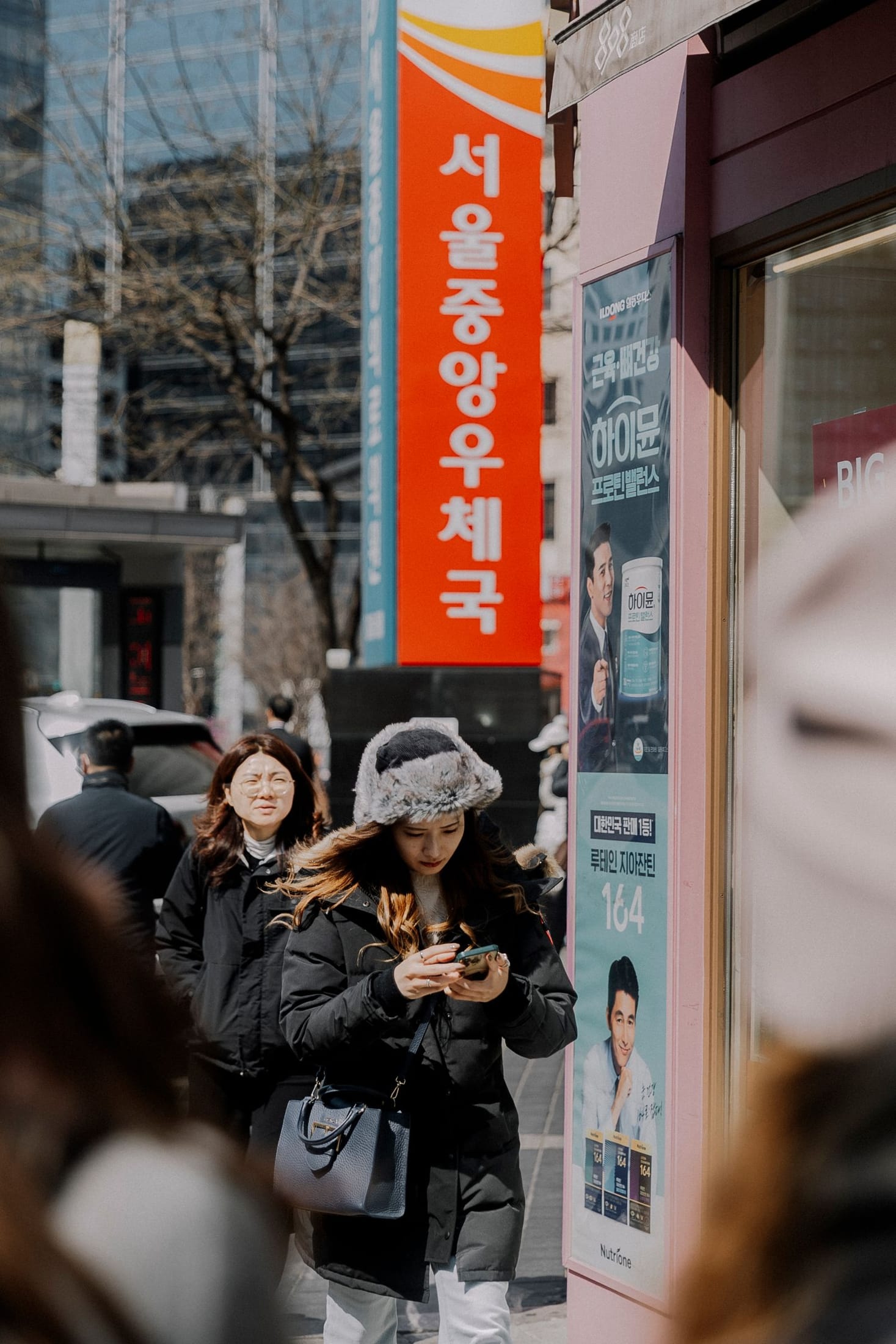
Step out of any Seoul subway exit on a January morning and you will notice it within seconds: almost everyone is wearing black. Black padded coats, black scarves, black gloves, black boots. The question of why Koreans wear all black in winter is one of the most common things first-time visitors ask, and the answer is more interesting than "Koreans just like black." It is a mix of a very real fashion event, everyday practicality, and a cultural preference for blending in rather than standing out.
This guide walks through where the all-black winter uniform came from, why it persists, what Koreans actually wear underneath it, and how to pack if you want to stay warm in Seoul without looking like a lost ski instructor.
The Short Answer
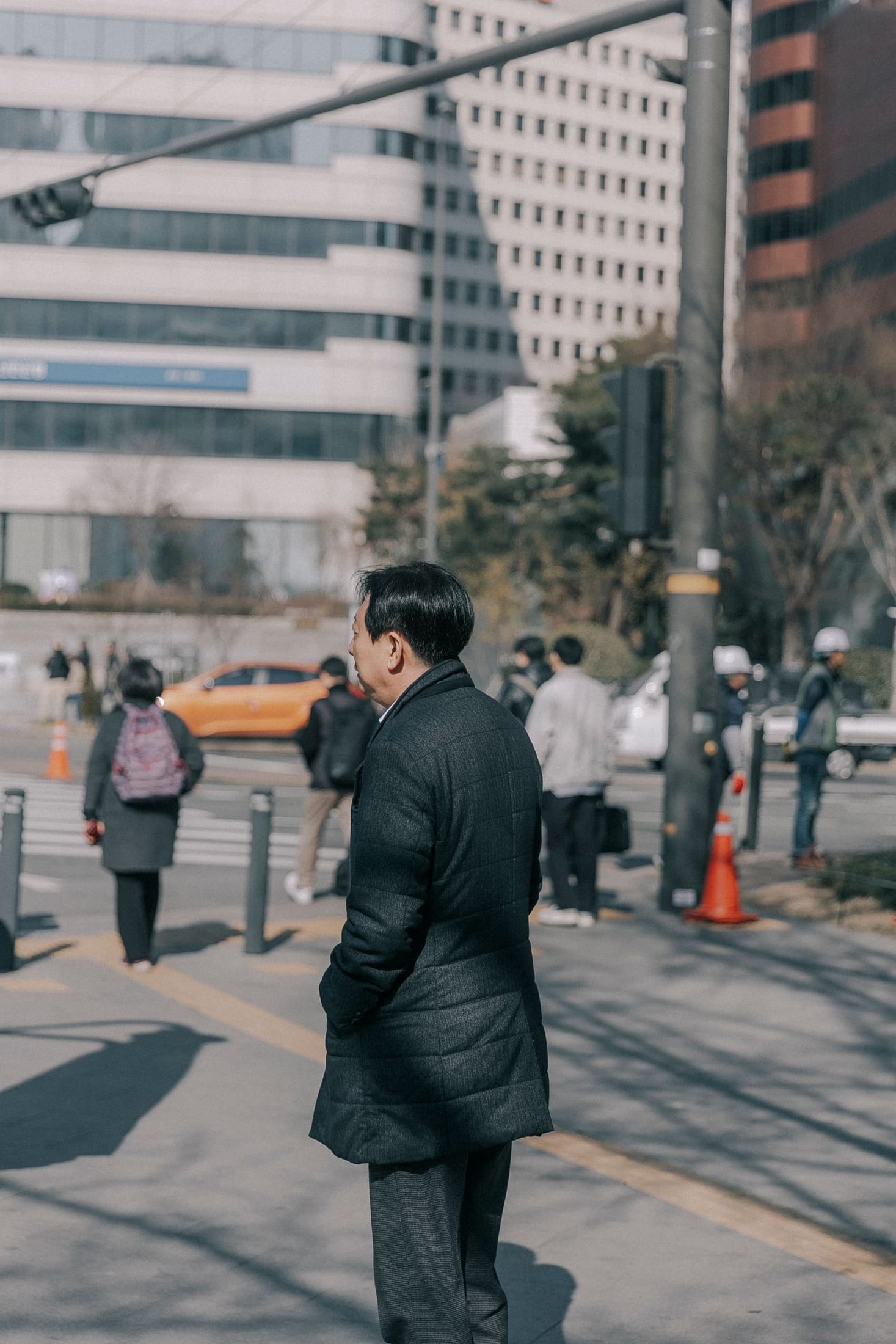
Koreans wear so much black in winter for three overlapping reasons. First, the "long padding" boom that peaked around the 2018 PyeongChang Winter Olympics made ankle-length black down coats a national default, especially for students. Second, black is practical: it hides slush stains, matches everything, and survives years of commuting. Third, Korean street style generally favors muted, coordinated tones, and in a dense city where everyone sees everyone, not standing out is often the most comfortable choice.
None of this means Koreans dislike color. Spring in Seoul is full of pastel knits, and summer brings bright prints. The all-black look is best understood as winter survival mode with a strong sense of style discipline.
Korean-made INLIFE hand warmers, 30-pack — on AmazonAffiliate link. As an Amazon Associate, EpicKor earns from qualifying purchases at no extra cost to you.
What Exactly Is "Long Padding"?
"Long padding" (롱패딩) is the Korean term for an ankle-length or knee-length padded down coat, essentially a wearable duvet. The style existed for years on film sets and sports benches, where staff and substitute players needed to stay warm while standing still. It jumped into everyday fashion in the winter of 2017-2018, when limited-edition bench coats tied to the PyeongChang Winter Olympics sold out and triggered nationwide waiting lines.
That winter created a feedback loop. Students bought long padding because it was genuinely the warmest option for walking to school and academies. Parents approved because one coat could last several winters. Retailers responded with rows of nearly identical black models, because black was what sold. Within two seasons, the school-gate scene in much of Korea looked like a penguin colony, and the image stuck.
| Coat Style | Typical Use in Korea | Strengths | Trade-offs |
|---|---|---|---|
| Long padding (knee/ankle length) | Students, commuters, anyone outdoors long | Maximum warmth, covers thighs, lasts years | Bulky indoors, everyone has one |
| Short padding / puffer jacket | Casual weekends, milder days | Easy to move in, pairs with layers | Cold legs on the coldest days |
| Wool coat | Offices, dates, dressier looks | Sharp silhouette, professional | Needs heavy inner layers in deep winter |
| Fleece / padded vest | Indoor-outdoor errands, layering | Light, cheap, stackable | Not enough alone in January |
Why Black, Specifically?
Ask Seoul commuters why their winter coat is black and you will hear the same few answers on repeat, and they are all rational.
Black survives the commute. Korean winters combine snow, road salt, city dust, and packed subway cars. A light-colored down coat shows every smudge; a black one looks presentable for months between washes. When a coat is worn daily from November to March, dirt resistance is not a small thing.
Black is a long-term investment. There is a common Korean saying that black never goes out of style. Many people would rather buy one good black coat that works for five winters than a trend color that feels dated in two. In a country where quality outerwear is a meaningful expense, the safe color wins.
Black coordinates with everything. Korean fashion places heavy emphasis on overall coordination. A black outer layer makes every inner outfit look intentional, which matters when you are dressing in a hurry for a 40-minute commute.
Building a Seoul-proof winter look: As an Amazon Associate, EpicKor may earn from qualifying purchases. If the long padding logic is winning you over, compare long padded coats for fill weight, length and hood design before the cold season starts — and buy the cheap half of the Korean system too, because the coat is only part of it: Korean-made hand warmers are what actually go in the pocket, sold by the packet in every Korean convenience store from November.
See Korean-made hand warmers on AmazonThe Culture Part: Why Blending In Feels Right
There is also a genuinely cultural layer to the all-black phenomenon, and Koreans talk about it openly. A widely quoted proverb, monan dol-i jeong matneunda (모난 돌이 정 맞는다), translates roughly as "the stone that sticks out gets hit by the chisel." It captures a social instinct: drawing too much attention to yourself can invite friction, so matching the group is often the low-stress choice.
In practice this is less about conformity pressure and more about comfort. When the visual baseline of a subway car is black and charcoal, wearing the same palette lets you disappear into the crowd and get on with your day. Many Koreans describe the all-black commute outfit the way office workers elsewhere describe a work uniform: one less decision, zero risk, always appropriate.
The same instinct shows up in other corners of daily life, from the quiet behavioral codes covered in our Seoul subway etiquette guide to the coordinated "one team, one look" energy of school and company outings. Fashion is simply the most visible example.
It is worth adding what this is not. It is not mourning dress, it is not a rule, and it is not permanent. The same person wearing head-to-toe black in January may show up in lavender knits in April. Seoul's fashion districts run the full color spectrum the moment temperatures rise, as any walk through the brand stores in our K-fashion shopping guide makes clear.
What Koreans Actually Wear Under the Black Coat
The all-black exterior hides a carefully layered system. If you want to copy the local playbook rather than just the color, this is the typical stack on a proper cold day:
- Heat-tech style base layer. Thin thermal tops and leggings are near universal from December onward.
- A knit or hoodie mid-layer. Usually in a neutral tone that can stand alone indoors, because Korean cafes and subways are heavily heated.
- The padded coat. Long for the coldest stretch, short for milder weeks.
- Accessories that do real work. Beanies, scarves wrapped high, touchscreen gloves, and disposable hot packs (핫팩) from any convenience store, often one in each pocket.
The rhythm of a Seoul winter day means you constantly move between minus-temperature streets and plus-25-degree interiors. Locals dress for fast transitions: coats that unzip quickly, layers that peel off in a heated cafe, and nothing so precious it cannot be stuffed under a restaurant chair. After the cold walk, the payoff is one of Korea's great winter pleasures, whether that is street food steam or a scalding sauna session like the ones in our jjimjilbang guide.
| Month | Typical Seoul Range* | What Locals Wear |
|---|---|---|
| November | Roughly 2°C to 12°C | Wool coats, short padding, light scarves |
| December | Roughly -5°C to 4°C | Long padding appears, base layers begin |
| January | Roughly -8°C to 2°C | Full long padding, hot packs, maximum layers |
| February | Roughly -5°C to 5°C | Long padding early, lighter coats late |
*Temperatures are approximate seasonal ranges for planning, not forecasts. Cold snaps below -12°C happen most winters, so check the forecast for your travel dates.
Is the All-Black Era Fading?
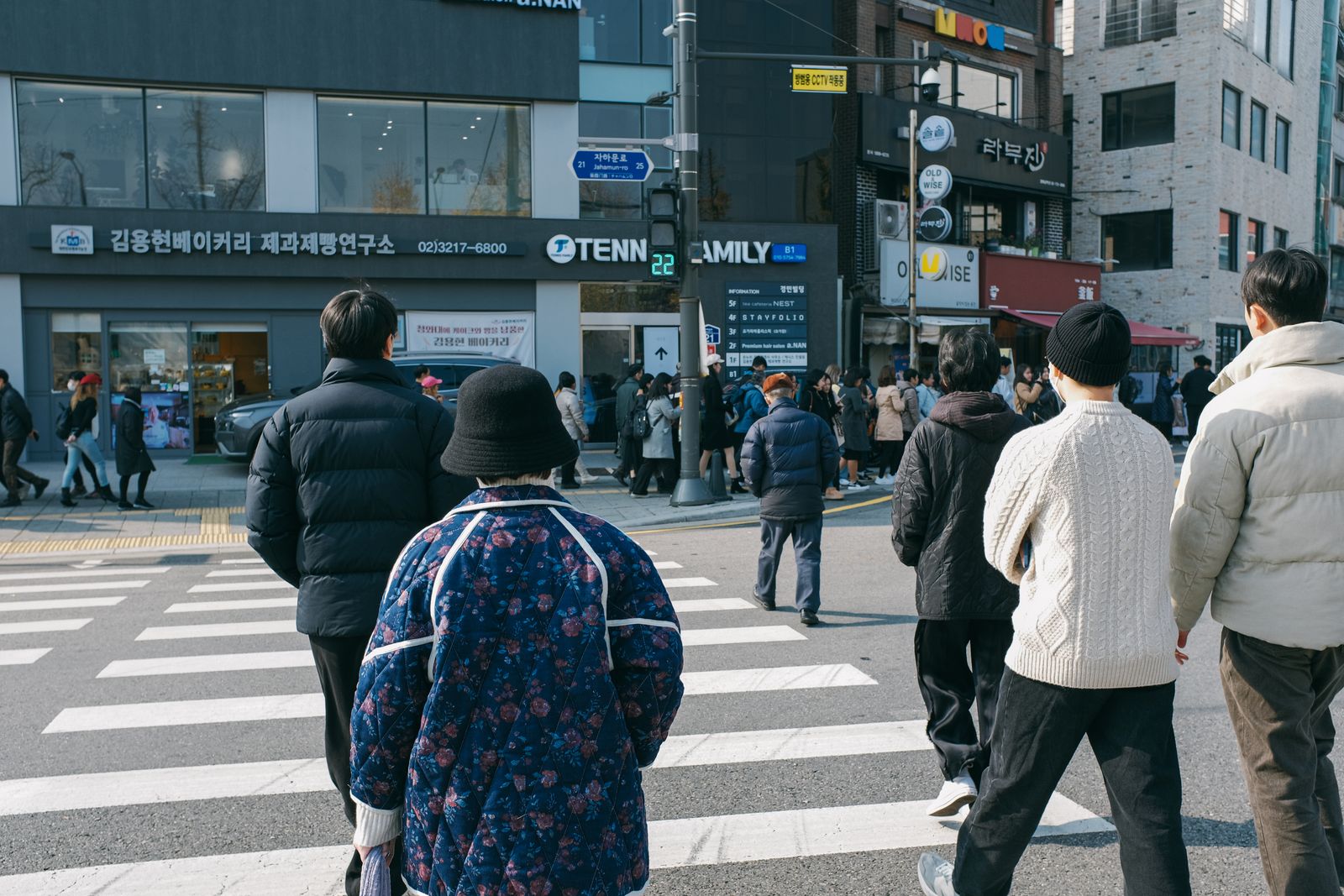
Slowly, yes, at the edges. Recent Seoul winters have brought more cream, silver, and khaki puffers, more colorful beanies, and a wave of "grandpa chic" and vintage styling among younger Koreans, a shift we covered in our piece on Korea's senior chic trend. Fashion media in Korea regularly declares the long padding era over, and short padded jackets and wool coats have reclaimed ground in office districts.
But stand at a school gate or a suburban bus stop in January and the verdict is clear: reports of long padding's death are exaggerated. The coats already hang in millions of closets, they still work, and Korean consumers see no reason to replace something excellent because a trend piece said so. The black winter uniform persists for the same reason it started. It solves the problem.
How to Pack for a Korean Winter Trip
If you are visiting between December and February, you do not need to dress like a local, but the local logic is worth borrowing.
- Bring or buy one serious insulated coat. Wind on the Han River and at palace courtyards cuts hard. If your warmest coat is a fashion jacket, budget for a padded coat purchase in Korea, where winter outerwear is abundant and often cheaper than at home.
- Pack thermal base layers. They compress to nothing in a suitcase and change everything on a -10°C morning.
- Plan for heated interiors. Wear layers you can shed in one motion; cafes, museums, and subways run warm.
- Buy hot packs on arrival. Every convenience store sells them all winter; locals stick them in pockets and even shoes.
- Dark colors hide travel grime. Ten days of subway rides, street food, and snow slush are kinder to a dark coat, which is exactly the point of the whole phenomenon.
Cold-season packing shortcut: Before you fly, build the small winter kit: thermal base layers, touchscreen gloves, a flat travel wallet for the transit card you will not want to dig for with cold hands, and a box of hand warmers so the cold never dictates your itinerary.
See flat travel wallet on AmazonYou might like: Seoul Winter Festa 2026: confirmed dates, Cheonggyecheon lantern hours, the free Gwanghwamun market and the ₩1,000 skating rink
FAQ
Q: Do Koreans only wear black in winter?
No. Black dominates the winter streetscape, but Korean fashion is highly seasonal. Spring and summer bring pastels, brights, and bold prints. The all-black look is a cold-season default, not a year-round rule.
Q: Is wearing black connected to mourning in Korea?
Not in daily fashion. Black or other dark, subdued clothing is worn at funerals, as in many countries, but the winter street look has no mourning meaning. It is practical, coordinated everyday clothing.
Q: What is long padding exactly?
It is the Korean nickname for a knee-to-ankle-length padded down coat, popularized nationwide around the 2018 PyeongChang Winter Olympics. It remains the warmest mainstream option for long outdoor waits and commutes.
Q: Will I stand out as a tourist if I wear bright colors in Seoul?
You may be visually noticeable in a sea of black, but nobody will mind. Seoul is a fashion-forward city and tolerant of every style. Wear what keeps you warm; comfort matters more than palette.
Q: How cold does Seoul actually get in winter?
January typically swings between roughly -8°C and 2°C, with cold snaps pushing well below -12°C in most years. Wind chill makes it feel colder, which is why locals favor long, windproof padding.
Q: Should I buy a padded coat in Korea instead of bringing one?
If you lack serious winter outerwear, buying in Korea is a good plan. Winter coats are sold everywhere from markets to department stores across a wide price range, and you get the local fit and style as a souvenir that works.
Sources
You Might Also Like
Korean Home Reset Culture: Why Seoul Apartments Feel Organized
A Korean home reset culture guide explaining shoe-off entryways, laundry drying, floor living, storage, dehumidifiers, and small apartment routines.
The One Korean Food Foreigners Never Learn to Love: Hamheung Naengmyeon, and Why Koreans Can't See the Problem
Foreigners who eat cheonggukjang and even hongeo still will not pay for this twice. A Korean creator who fed foreigners for years says naengmyeon was the overwhelming number one refusal, and Koreans, who rank it first every summer, cannot see why.
Why Do Koreans Stare at Foreigners? The 5% Country, and Where the Looking Actually Happens
In central Seoul nobody looks at you. In a provincial market, a small town or a subway car of grandmothers, they do. Korea only became a 5%-foreign country in 2025. Where the staring happens, what it means and does not mean, and what to do with it.