Korean Subway Snacks Guide: Deli Manjoo, Hotteok, Food
Korean subway snacks are not a formal food category, but they should be.
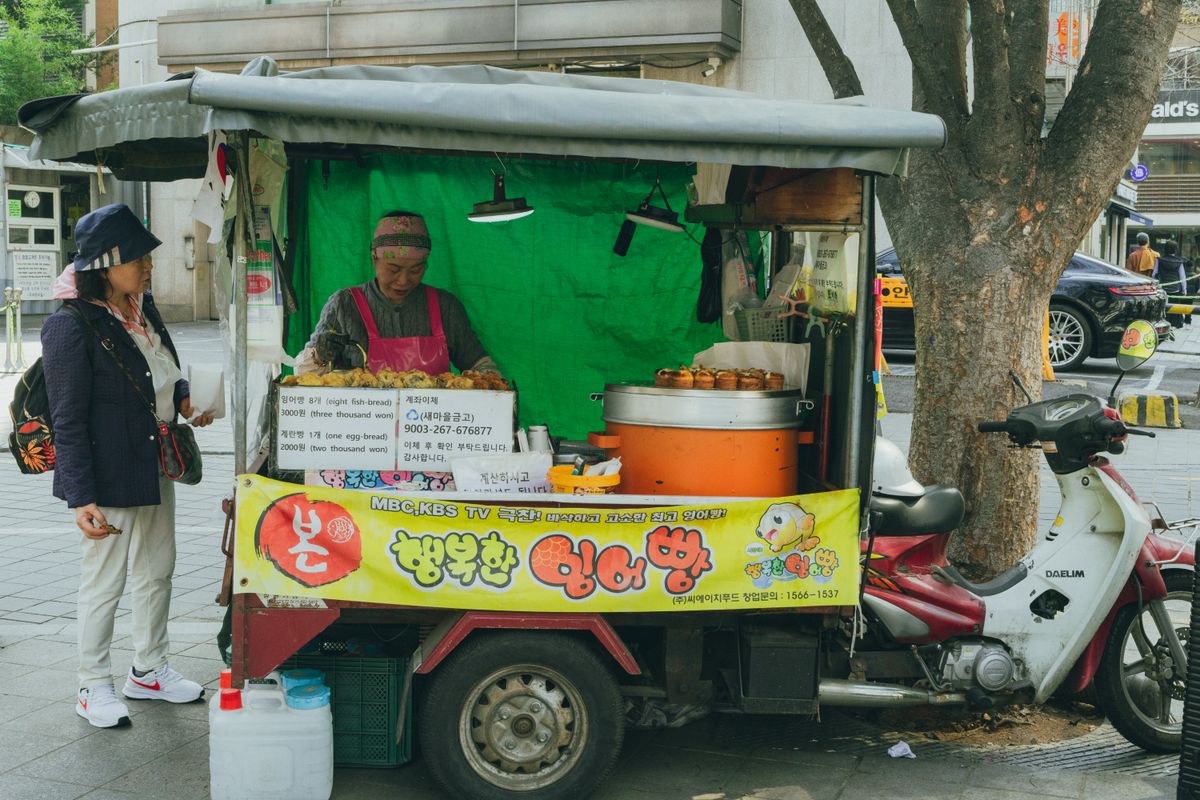
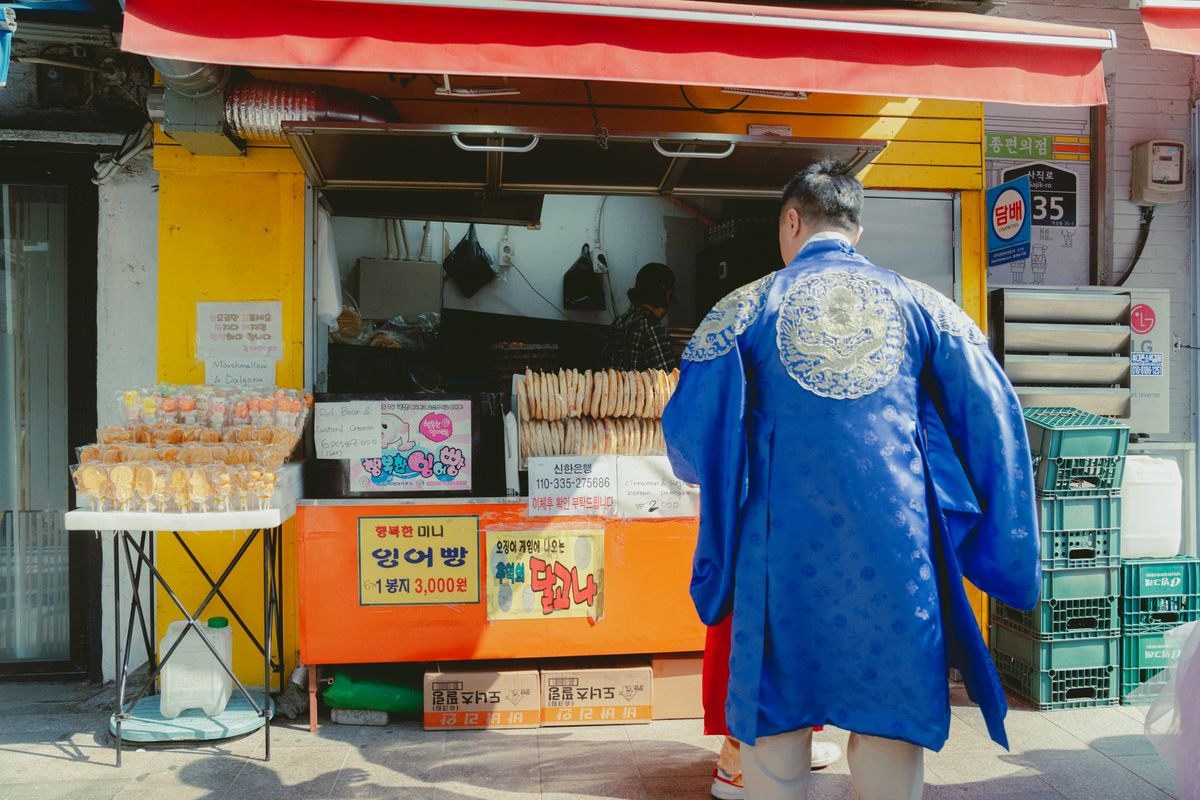
They are the foods that ambush you when you are not planning to eat: Deli Manjoo smell drifting through a station corridor, fish-shaped bread near an exit, hotteok in cold weather, mandu steam outside a market, corn dogs on a busy shopping street, egg bread at a winter stand, and convenience-store triangle gimbap when your transfer ran too long.
This is not fine dining. It is movement food. Seoul is a city where people are always walking to the next train, cafe, office, academy, department store, concert, clinic, or date. Snacks near stations exist because the city moves fast and hunger does not wait for a reservation.
If you already know EpicKor's Deli Manjoo guide, this is the wider map: what else to eat, where station snacks fit, and how tourists should try them without confusing subway culture with restaurant culture.
Quick Answer: What Korean Subway Snacks Should Tourists Try?
Start with these:
- Deli Manjoo if you want the famous sweet custard smell.
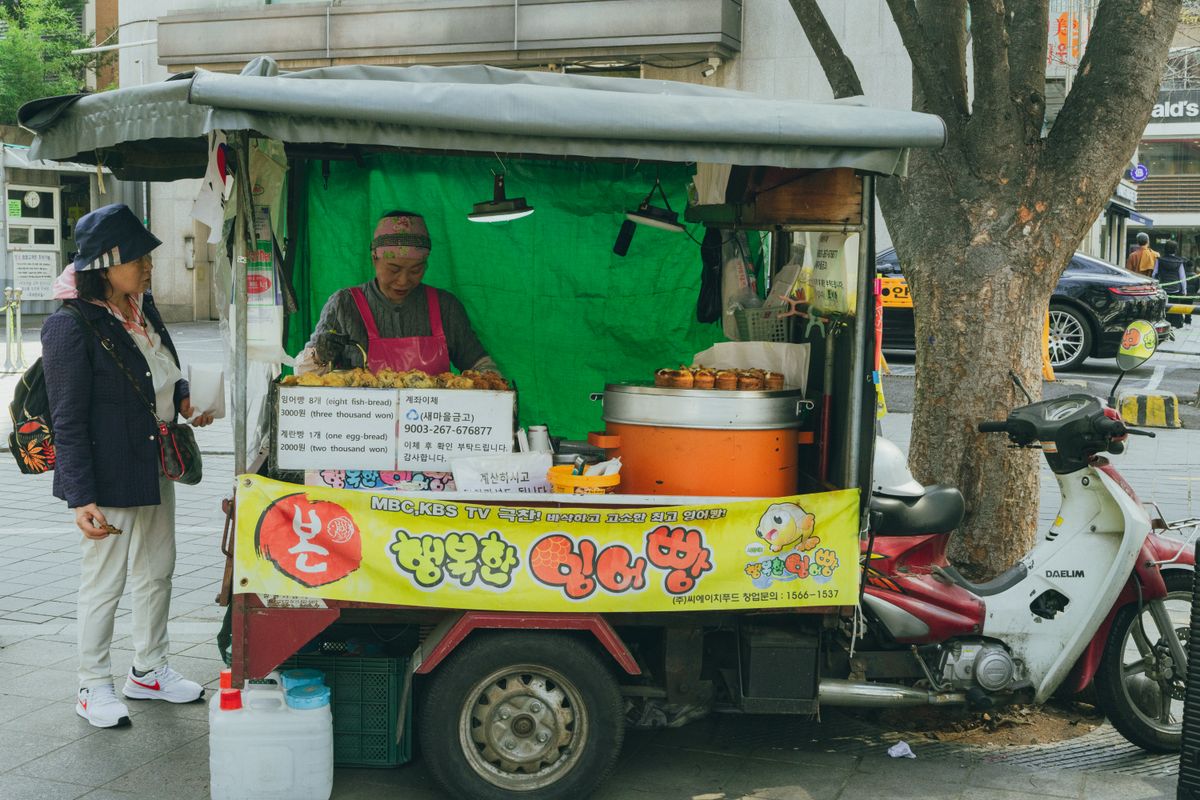
- Bungeoppang or fish-shaped bread if you want the winter street-snack classic.
- Hotteok if you want sweet, hot, chewy, syrupy comfort.
- Mandu if you want a savory steam-table snack.
- Korean corn dogs if you want the social-media street-food moment.
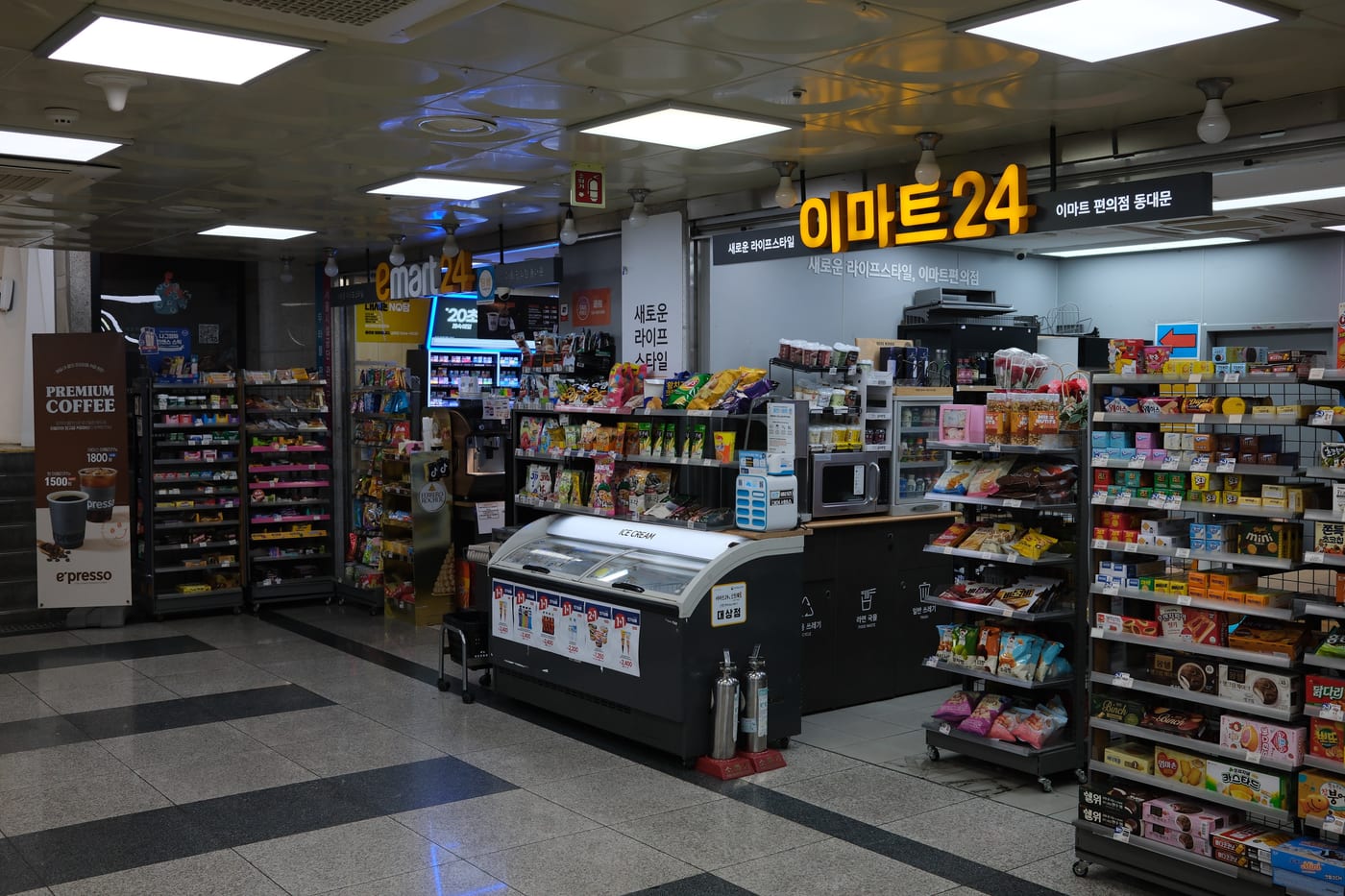
- Triangle gimbap if you need a convenience-store commuter bite.
- Egg bread if you see it in season.
- Roasted chestnuts or corn if you are near a market stall.
The key is not to force a checklist. Station snacks are best when they interrupt the day naturally. If you smell Deli Manjoo near Myeongdong, try it. If you see a fish-bread stand on a cold night, stop. If you are late for a train, grab triangle gimbap and move.
Korean honey yakgwa — compare on AmazonAffiliate link. As an Amazon Associate, EpicKor earns from qualifying purchases at no extra cost to you.
Why Station Snacks Work In Korea
Korea's station-snack culture makes sense because stations are not only transport points.
Many Seoul stations are shopping zones, food corridors, meeting points, underground malls, bus connections, commuter tunnels, and neighborhood entrances. A station can connect an office district, market, department store, clinic street, university area, and apartment neighborhood at the same time.
That creates snack demand from every direction:
- workers between shifts
- students after academy
- tourists between neighborhoods
- couples waiting for each other
- shoppers carrying bags
- commuters who skipped breakfast
- people heading home too tired to cook
The snack does not need to be fancy. It needs to be fast, warm, cheap enough, portable enough, and memorable enough that you remember the smell later.
The Deli Manjoo Effect
Deli Manjoo is the best example because it often wins before you see it.
The smell arrives first: warm cake, custard, sugar, vanilla, and nostalgia. Then you notice the small corn-shaped cakes and the machine turning them out. The genius is not complexity. It is sensory timing.
Tourists search for Deli Manjoo because it feels oddly specific. It is not just "a Korean snack." It is a commuter snack with a shape, smell, and station memory. That is why EpicKor's original Deli Manjoo article keeps getting search traction. People want to know what that thing was.
But Deli Manjoo also teaches the bigger rule: Korean station snacks are often more about context than ingredients. A custard cake eaten from a paper bag in a moving city feels different from the same flavor on a plate.
Sweet Korean Subway Snacks
Sweet station snacks are easiest for tourists because they do not require much explanation.
| Snack | What It Is | Best Moment | Tourist Tip |
|---|---|---|---|
| Deli Manjoo | Small corn-shaped cakes with custard filling | Station corridor or shopping route | Eat warm. The smell is part of the experience |
| Bungeoppang | Fish-shaped bread, often with red bean or custard | Cold evening walk | Look for busy stands so turnover is fresh |
| Hotteok | Sweet pancake with syrupy filling | Winter market stop | Careful: the inside can be very hot |
| Egg bread | Small bread with egg baked into it | Snack breakfast or late afternoon | More filling than it looks |
| Roasted chestnuts | Warm chestnuts sold in street or market areas | Cold-weather walking route | Good for sharing while walking slowly |
Sweet snacks work especially well near Myeongdong, markets, older shopping streets, university areas, and winter walking routes. The exact locations change, but the pattern stays: high foot traffic plus a smell that pulls people sideways.
Build a Korean snack night at home: As an Amazon Associate, EpicKor may earn from qualifying purchases. Deli Manjoo and bungeoppang are best fresh, but if this guide made you want Korean sweets, Korean honey yakgwa is the closest shelf-stable cousin, and a 50-piece Korean snack box covers the rest of the station shelf in one order.
See Korean honey yakgwa on AmazonSavory Station Snacks
Savory snacks are where Korea's "just one bite" logic becomes a meal.
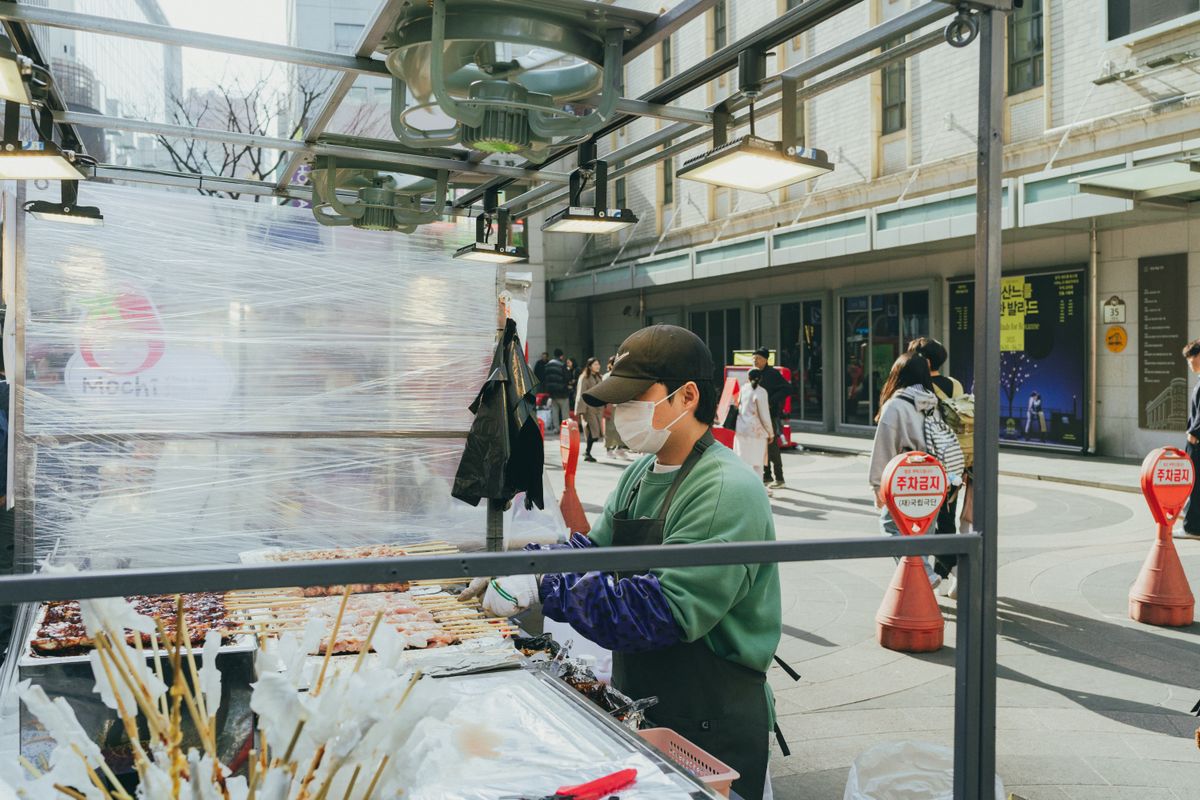
Mandu can be quick and satisfying. Korean corn dogs are fun, especially in shopping districts. Tteokbokki is more of a sit-or-stand snack than a walk-and-eat snack, but it often appears near transit-heavy areas. Gimbap, triangle gimbap, and convenience-store hot foods can become commuter meals when time is tight.
The difference between sweet and savory snacks is mess.
Sweet bread can be carried more easily. Tteokbokki sauce can betray you. Hot mandu can steam your glasses. Corn dogs can be bigger than expected. Triangle gimbap solves logistics because it is packaged, but it feels less romantic.
The smarter tourist approach is:
- sweet snack for walking
- savory snack when you can stop
- convenience-store snack when you are moving fast
- market snack when you want atmosphere
What Each Snack Actually Costs
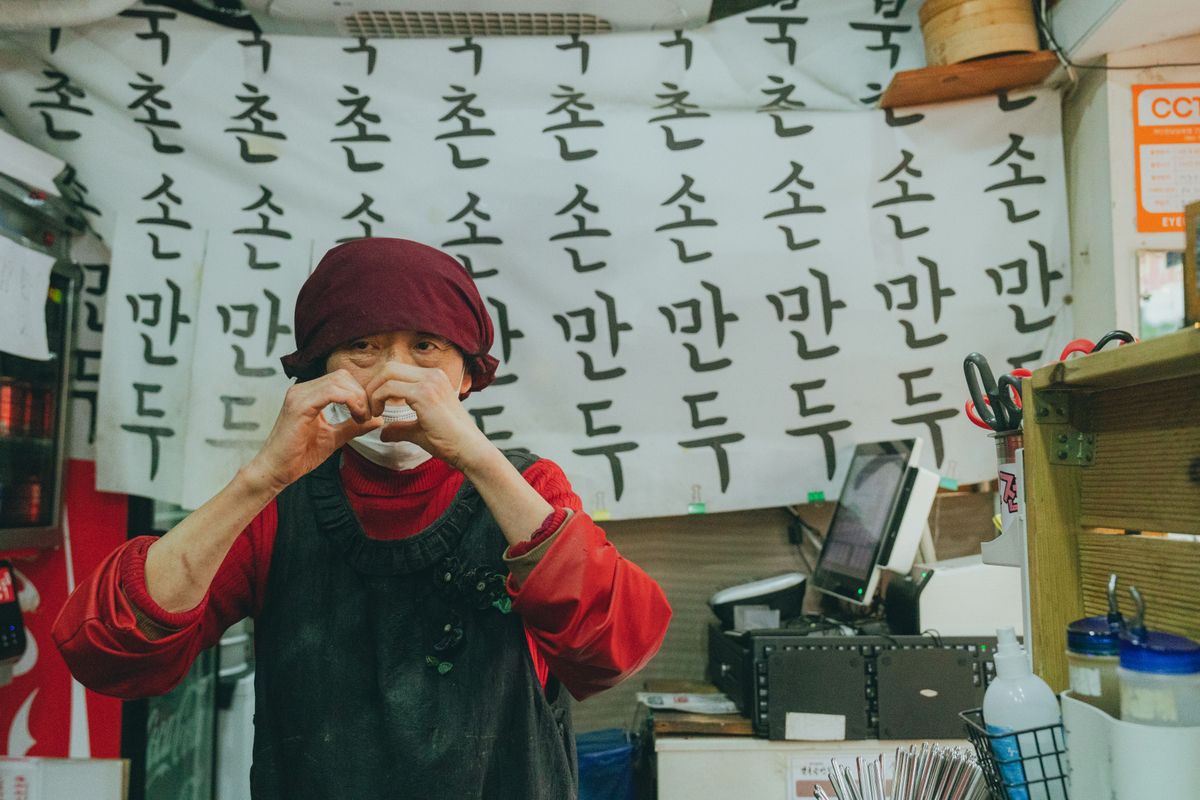
Street and station snacks in Korea are cash-adjacent, sold in small numbers, and priced in a way that has moved a lot in the last few years. Knowing the current range keeps you from either overpaying at a tourist-heavy stall or assuming a price you read on an old blog still holds.
| Snack | Korean | Typical price (July 2026) |
|---|---|---|
| Fish-shaped bread | 붕어빵 | around ₩1,000 each, often 3 for ₩2,000 |
| Egg bread | 계란빵 | around ₩1,500 each |
| Hotteok | 호떡 | ₩1,500 plain, ₩2,000–3,000 filled or seed-style |
| Deli Manjoo | 델리만쥬 | ₩3,000 small to ₩10,000 extra large bag |
| Corn dog | 핫도그 | ₩3,000–5,000 depending on coating |
Budget roughly ₩8,000–12,000 for a snack walk with three or four items shared between two people. That is less than one sit-down meal, which is the entire appeal.
The price shift that Koreans actually talk about
Fish bread is the reference point, and its inflation became a small national running joke. It used to be a coin snack — three for ₩1,000 was normal within living memory. By late 2024 the Korean press was writing headlines like "1마리에 1000원이라고요?" — "A thousand won for one fish?" Egg bread followed the same curve: three for ₩1,000 in the early 2000s, then ₩500 each, now about ₩1,500.
If an English-language guide tells you fish bread costs 500 won, that page has not been updated in roughly a decade.
Koreans Built an App Because These Stalls Keep Disappearing
Here is the detail that explains more about Korean street snacks than any list of foods, and it is almost never mentioned in English.
Korean has a real-estate term, 역세권 (yeoksegwon), meaning "within walking range of a subway station" — the thing that sets apartment prices. Koreans took that word and built a joke on it: 붕세권 (bungsegwon), "within fish-bread range." Whether your neighborhood has a fish-bread stall you can walk to is treated, semi-seriously, as a quality-of-life measure.
That joke turned into infrastructure. Because these stalls are seasonal, unlicensed, mobile, and often gone the following week, Koreans crowd-source their locations. The best-known app, 가슴속3천원 (Gaseumsok 3,000-won, "three thousand won in my chest"), had roughly 900,000 users and about 15,000 registered stalls as of 2023, with users confirming locations on site because stands move so often. A second app, 붕세권, does the same thing under the slang name itself.
Two things follow from this, and both are practical:
- A stall you loved may genuinely not be there next week. This is not bad luck. It is how the trade works, and locals accept it.
- Do not plan a trip around one specific stand you saw in a video. Plan around a station area that reliably has several.
Where To Try Korean Subway Snacks
Do not search only for one famous stall. Search for the right environment.
Good environments include:
- Myeongdong Station and nearby shopping streets
- traditional markets near subway exits
- university neighborhoods
- older commercial districts
- underground shopping malls
- transfer-heavy stations
- food alleys near major exits
- convenience stores inside or near stations
The best snack may not be in the station itself. It may be outside Exit 6, one alley away, inside an underground corridor, beside a market entrance, or near a bus stop where people are still moving.
If your trip includes shopping, snacks become part of route planning. EpicKor's Korea tourist shopping route guide and Daiso Korea guide can help you group neighborhoods so you are not crossing Seoul just to chase a snack.
Etiquette: Can You Eat On The Subway?
This is where tourists need care.
Buying snacks near a station does not mean you should eat messy food on the train. Seoul subways are generally clean, crowded, and etiquette-sensitive. A small sealed drink or packaged bite is different from saucy tteokbokki, steaming mandu, or a strong-smelling snack inside a packed car.
The safer rule:
- Eat near the stall.
- Eat outside the gate.
- Eat in a designated food area.
- Eat after exiting.
- Avoid messy, hot, or strong-smelling food inside trains.
EpicKor's Seoul subway etiquette guide explains the quiet rules tourists miss. Station snacks are part of the city, but the train itself is not a picnic table.
How To Build A Snack Walk
When to skip the station snack
Being honest about this saves you a wasted stop.
- Skip a stall with no queue and no steam in cold weather. Fish bread and hotteok are only good hot off the iron. A stall with a tray of pre-made ones sitting out has already lost the thing you came for.
- Skip fried snacks as a takeaway. Corn dogs and fried items go soft within minutes. Eat them standing there or do not buy them.
- Do not treat these as souvenirs. None of it survives a flight. Buy a shelf-stable snack instead if you want to bring something home.
- In summer, expect fewer stalls, not the same ones. Fish bread and hotteok are cold-weather trades. If you visit in July, the honest answer is that a convenience store or a bakery will serve you better.
If you want to turn this into a fun half-day, do not chase ten foods. Build a small snack walk.
Example route logic:
- Start near a shopping station.
- Try one sweet snack.
- Walk one or two streets.
- Try one savory snack.
- Take a cafe break.
- Buy packaged snacks for later.
- Use the subway to move to dinner, not to eat dinner.
This works in Myeongdong, Hongdae, Euljiro, Gwangjang Market-adjacent areas, and other dense neighborhoods where snacks, cafes, shopping, and transit sit close together.
The trick is pacing. Korean street snacks are small until they are not. A corn dog, hotteok, mandu, Deli Manjoo, coffee, and tteokbokki can turn into a full meal without asking permission.
What To Buy For Home
Fresh station snacks are hard to recreate exactly.
Deli Manjoo is best warm. Hotteok is best from a griddle. Bungeoppang is best from the mold. Mandu is best steaming. Trying to recreate the exact Seoul station moment at home can be disappointing if you expect a perfect copy.
Instead, recreate the mood.
Buy:
- Korean snack boxes
- yakgwa or sweet tea snacks
- seaweed snacks
- ramen
- instant coffee
- Korean sweets
- a simple plate or cup that reminds you of the trip
If you want to cook at home, add Korean pantry basics instead of chasing a single station snack. Gochujang, ssamjang, ramen, seaweed, and kimchi stew packs are more repeatable. For that shelf, start with the Korean pantry starter kit, then narrow snack choices with the Korean seaweed snack guide and coffee choices with the Korean instant coffee mix guide.
Bring the snack mood home: For a station-snack-inspired night, a Korean snack box and yakgwa honey cookies keep the flavour memory alive; the O'Food kitchen essentials box is the step up if you would rather cook than snack. The goal is not to fake a Seoul station.
See Korean snack box on AmazonWhat To Skip
Skip snacks that are cold, stale, messy, or clearly sitting too long.
A busy stall is usually better than a lonely stall because turnover matters. For fried snacks, look for freshness. For hot snacks, watch whether they are being made or simply held. For packaged snacks, check expiration dates and ingredient labels, especially if you have allergies or dietary restrictions.
Also skip over-planning. Korean subway snacks are not a museum checklist. They are small interruptions. If you force the day around them, they lose some of their charm.
FAQ
Q: What is the most famous Korean subway snack?
Deli Manjoo is one of the most searchable station snacks because of its sweet custard smell and corn-shaped cakes. Fish-shaped bread and hotteok are also classic Korean street snacks near transit and market areas.
Q: Can I eat Deli Manjoo on the subway?
It is better to eat it near the stall or after exiting. Seoul subway etiquette favors keeping trains clean and avoiding strong smells or messy foods in crowded cars.
Q: Where can I find Korean subway snacks in Seoul?
Look near busy station exits, shopping districts, traditional markets, underground malls, university areas, and convenience stores near transit hubs. Myeongdong is a good starting point for many tourists.
Q: Are Korean street snacks expensive?
Most casual station and street snacks are relatively affordable, but prices vary by neighborhood, season, portion, and tourist area. Bring a card and some backup cash.
Q: What Korean snacks should I bring home?
Fresh station snacks are hard to pack. Bring sealed Korean snacks, yakgwa, ramen, seaweed snacks, instant coffee, or pantry items instead.
The Bottom Line
Korean subway snacks are the edible version of Seoul's pace.
They are fast, warm, sensory, and tied to movement. Deli Manjoo smells like a transfer. Fish-shaped bread feels like winter. Mandu steam feels like a market entrance. Triangle gimbap feels like a commuter compromise that somehow works.
Do not turn them into a checklist. Let one interrupt you. That is when they taste most Korean.
You Might Also Like
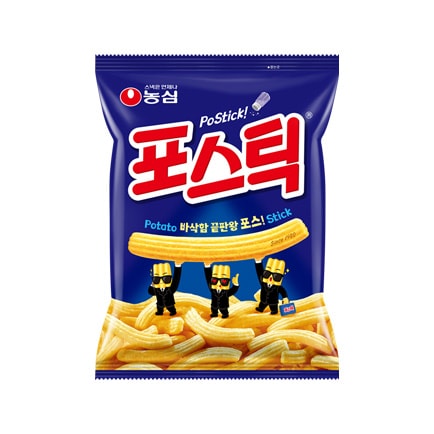
Postick: The Korean Snack That Used to Come With a Ketchup Packet
Postick (포스틱) has been on Korean shelves since 1980, it is only 23% potato, and it shipped with a ketchup sachet until the sachet got too expensive. What it costs now, and the ramyun-powder trick Koreans use on it.
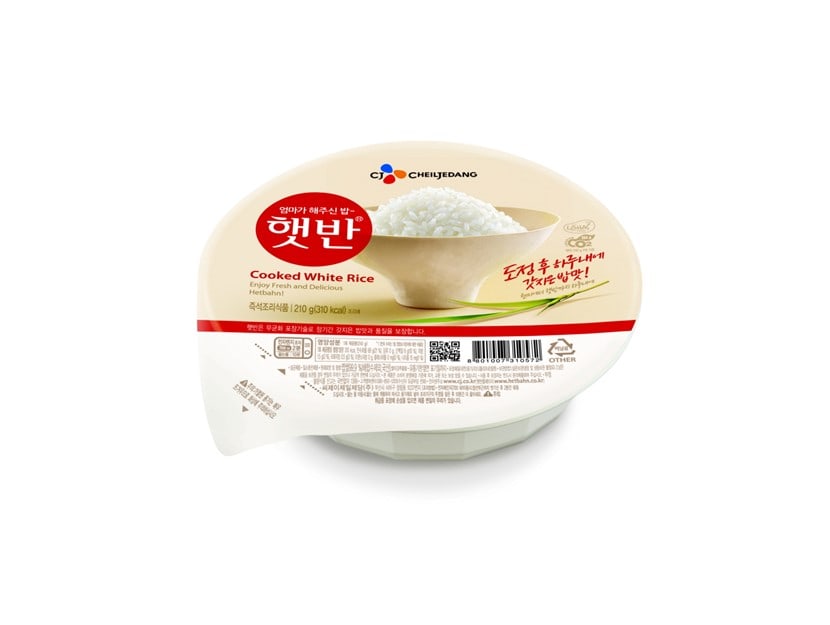
Hetbahn: What Korea's Instant Rice Is Made Of, and How to Heat It Without a Microwave
햇반 is 99.9% Korean rice and water plus 0.1% rice bran extract, sealed in a room cleaner than a hospital ward. The lid prints three cooking times and one of them needs no microwave at all. Prices, varieties, and the mistake almost everyone makes with the film.
Korean Food Prices in August 2026: What Already Rose, and What Changes on the 25th
Four Korean food makers raised prices within three weeks, and Paris Baguette's 127-item increase lands on 25 August. The exact brands, dates and won amounts, why wheat and corn are behind it, and what it actually changes for a visitor.