Korea Rainy Season Guide: What to Pack for Jangma
Korea's rainy season can make a Seoul trip feel completely different from the photos you saved. For the wider month-by-month choice around jangma, heat, foliage, and snow, start with EpicKor's best time to visit Korea weather guide. For the cultural reason umbrellas appear so quickly in Korean streets, pair this with EpicKor's Korea umbrella culture and rainy-season guide.
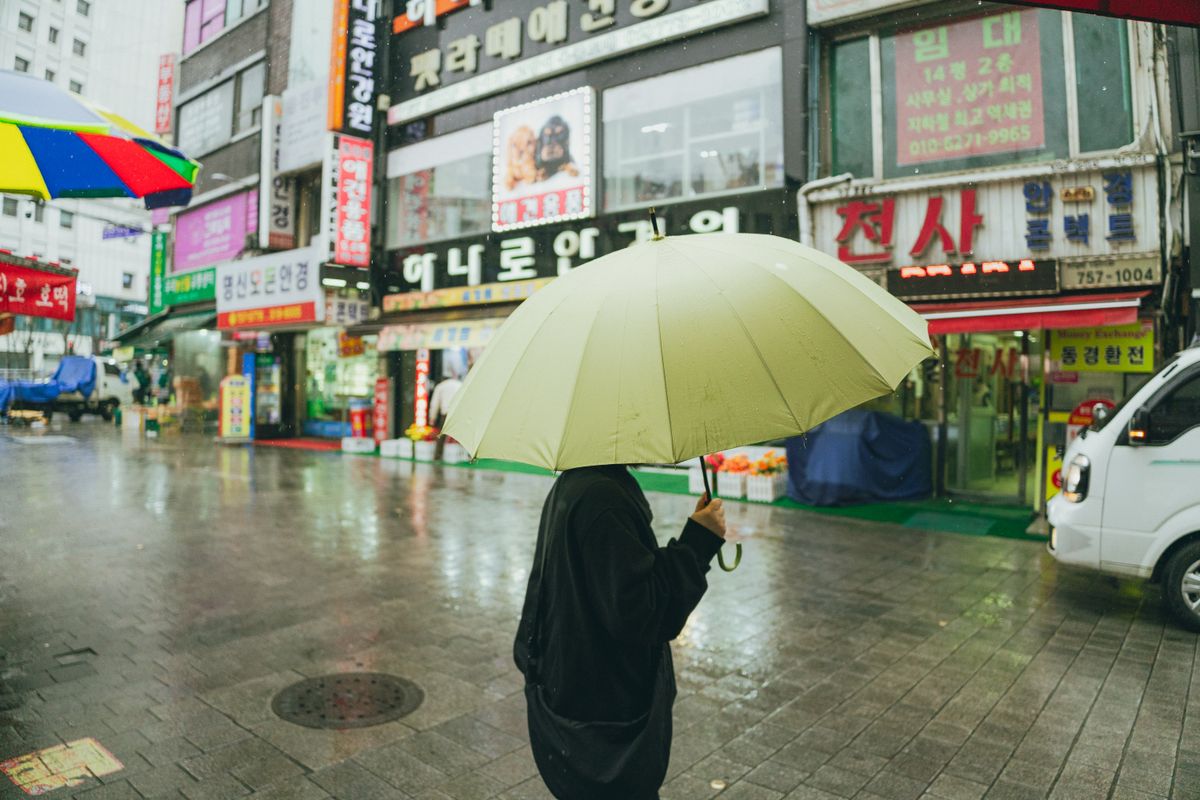
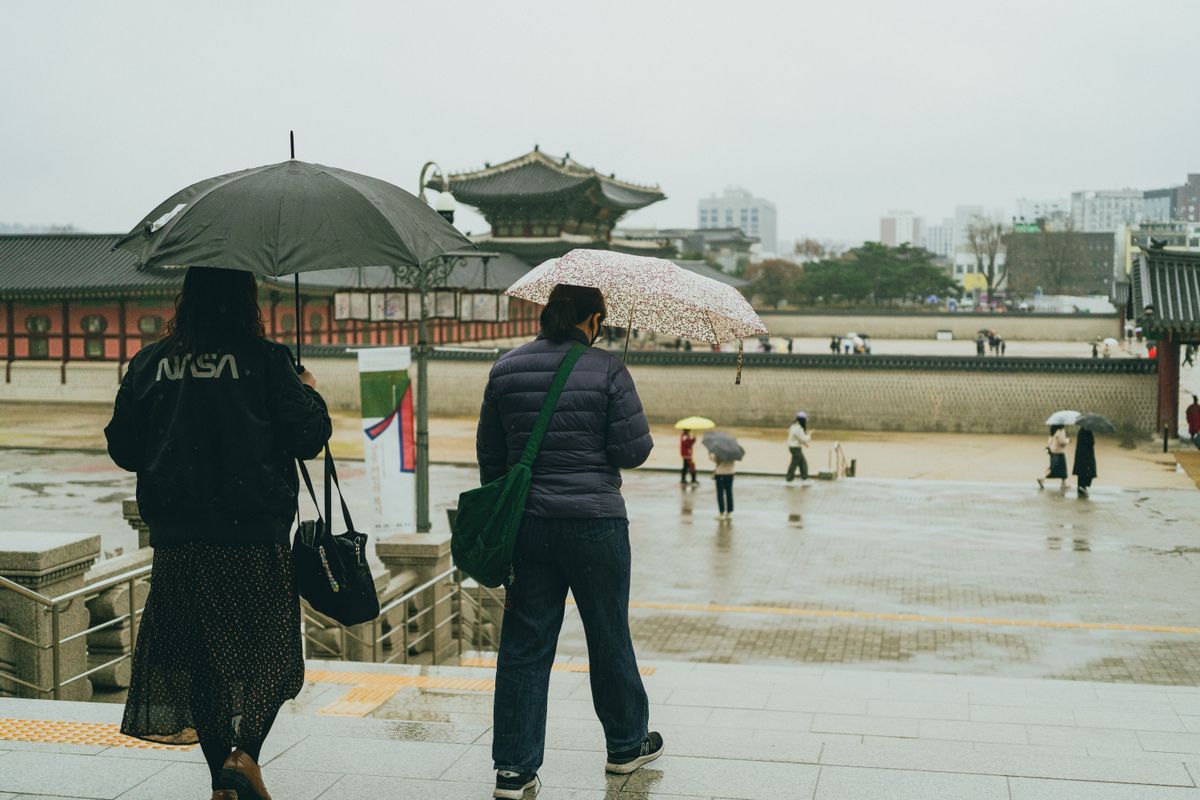
The sky turns gray. Side streets flood faster than expected. Umbrellas appear everywhere. Subway stations feel humid. Shoes stay damp. Cafe stops become more useful. Palace walks still work, but only if you dress for rain instead of pretending it is a normal summer day.
In Korea, this rainy stretch is called jangma, often translated as the long rain. It usually falls around June and July, though the exact start and end vary by year and region. For travelers, the important point is simple: if your Korea trip lands in late June or July, you should pack for rain before you pack for style.
This guide explains what to bring, what to wear, how to adjust your itinerary, and which mistakes make jangma harder than it needs to be.
Korea travel essentials — compare on AmazonAffiliate link. As an Amazon Associate, EpicKor earns from qualifying purchases at no extra cost to you.
Quick Answer: What Should Tourists Pack For Korea's Rainy Season?
Pack a compact umbrella, light rain jacket, quick-dry shoes or sandals, extra socks, waterproof pouch, small towel, plastic bag for wet items, breathable clothes, and a backup indoor plan for each day.
Do not rely only on a fashion umbrella, canvas sneakers, heavy denim, or a single pair of shoes. The problem is not one dramatic storm. The problem is repeated dampness.
The East Asian rainy season is linked to a persistent seasonal front across Korea, Japan, China, and nearby regions. Public summaries commonly describe Korea's rainy season as running from June into mid-July, while Seoul climate summaries show July as one of the wettest periods. You should still check the latest daily forecast from the Korea Meteorological Administration before changing major plans.
The practical rule is this:
Pack like you will be wet twice in one day, not once.
What Jangma Feels Like
Jangma is not always movie-style heavy rain.
Some days are steady and gray. Some days are humid with sudden downpours. Some days begin dry, rain hard in the afternoon, and feel sticky at night. The part travelers underestimate is how long things stay damp.
Your shoes may not dry overnight. Your jeans may feel heavy. Your hair may not behave. Paper shopping bags may weaken. A short walk from the subway to your hotel can be enough to soak your socks.
That does not mean you should cancel Korea. Seoul is very usable in the rain because subway coverage is strong, cafes are everywhere, department stores are comfortable, and many attractions have indoor alternatives. But you need to change the way you plan the day.
If you already read EpicKor's Seoul heatwave travel guide, rainy season is the wet version of the same lesson: Korea's summer is not only about temperature. Humidity, shade, transit, and recovery stops matter.
What To Wear
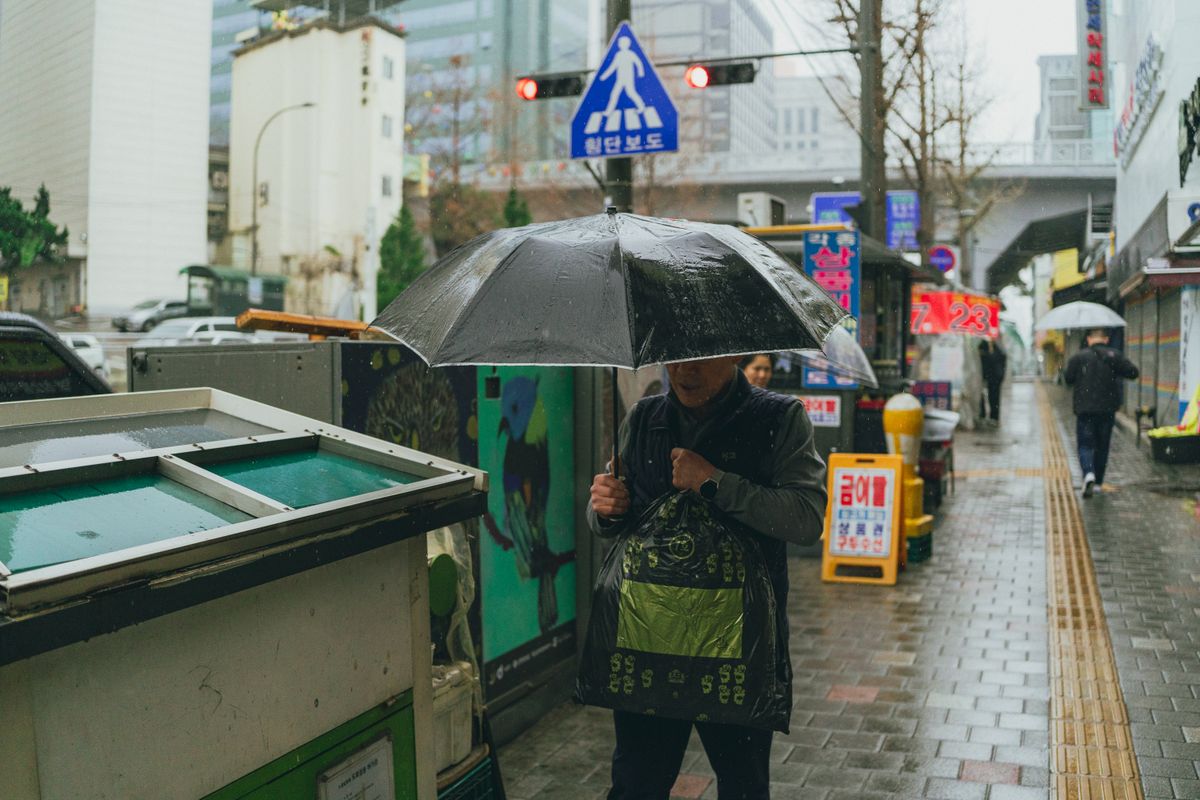
Choose clothes that dry quickly and do not become miserable when damp.
Light trousers, activewear, breathable shirts, thin layers, and synthetic fabrics usually work better than heavy denim or thick cotton. A rain jacket is useful if it is light. A heavy jacket can become too hot because jangma is humid, not cold.
Shoes matter more than almost anything else. If you bring only one pair of white canvas sneakers, you may regret it. Quick-dry walking sandals, water-resistant sneakers, or a second backup pair can save the trip.
Do not wear shoes that become slippery on subway stairs. Seoul has many underground transfers, tiled floors, and wet station entrances. Grip matters.
Packing Checklist
Your rainy-season bag should be small but deliberate.
| Item | Why you need it | Best choice | Common mistake |
|---|---|---|---|
| Compact umbrella | Rain can restart many times | Small but sturdy travel umbrella | Buying the cheapest one after it starts raining |
| Waterproof pouch | Protects phone, passport copy, battery | Zip pouch or sealed bag inside backpack | Letting everything sit loose in one tote |
| Extra socks | Wet socks ruin long walking days | Thin quick-dry socks | Packing only thick cotton socks |
| Small towel | Useful before cafes, taxis, and trains | Microfiber travel towel | Depending on tissues only |
Amazon Associate disclosure: EpicKor may earn from qualifying purchases. Before a jangma-season Korea trip, compare compact umbrellas, waterproof pouches, small towels, and other travel essentials.
Compare Korea travel essentials on AmazonBest Seoul Plans During Rainy Season
Rain does not make Seoul boring. It just changes which plans are efficient.
Department stores, underground malls, museums, large cafes, bookstores, COEX, The Hyundai Seoul, beauty shopping, and food streets with covered sections become more attractive. Palaces and hanok villages can still be beautiful in the rain, but you should treat them as shorter photo walks, not all-day wandering plans.
For shopping-heavy days, EpicKor's Korea tourist shopping route works well in rainy season if you reduce outdoor transitions. Olive Young, Daiso, Musinsa, pharmacies, department stores, and skin clinics can be grouped by neighborhood so you are not crossing the city in wet shoes.
Food plans are also easier than scenic plans. Korean soups, stews, kalguksu, jeon, hotteok, and cafe stops feel especially good on rainy days. The trick is not to overbook. Rain makes movement slower.
Plans To Be Careful With
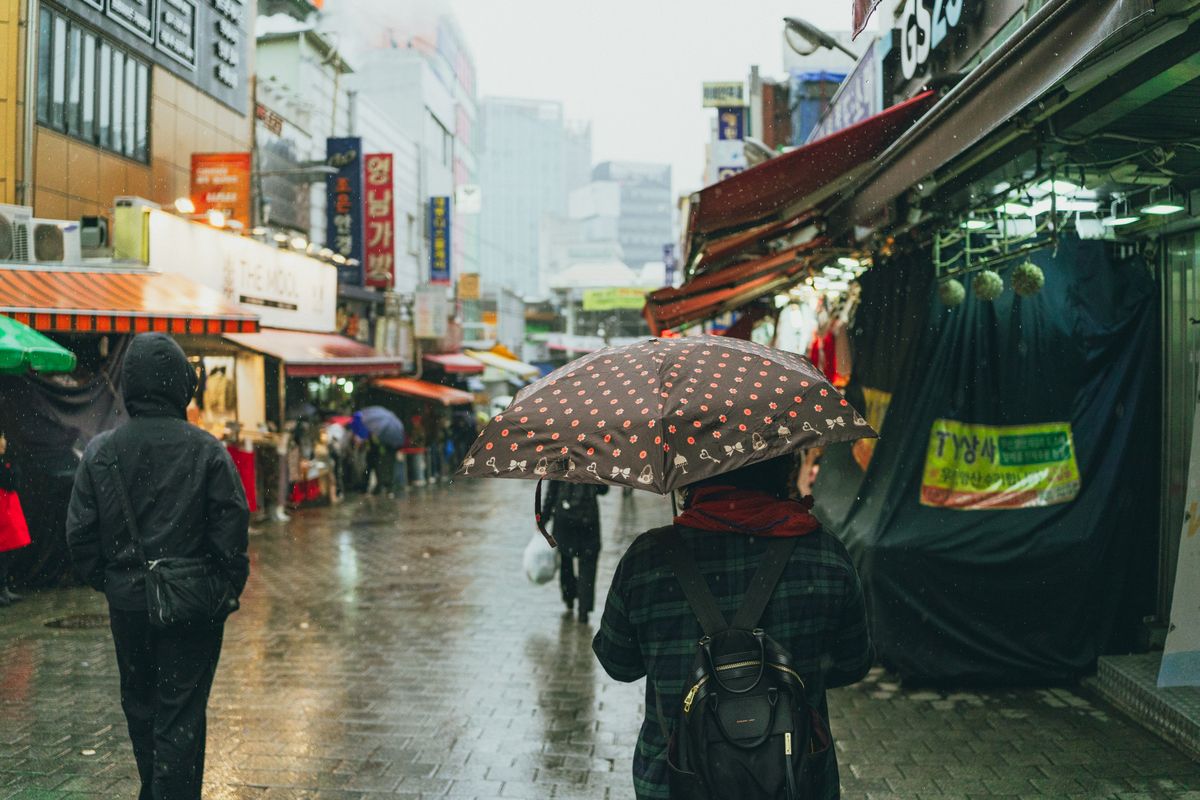
Be careful with mountain hikes, long Han River picnics, beach days, outdoor festivals, observatory views, and tight day trips during heavy rain.
That does not mean they are impossible. It means you should check the forecast, transport alerts, and refund rules before committing. Korea's mountain trails can become slippery, and scenic viewpoints may lose their value under thick cloud.
If you are planning a summer festival like Boryeong Mud Festival or Waterbomb Seoul, rainy season planning becomes even more important. Wet events can still be fun, but lightning, transport delays, and soaked bags are different problems from ordinary rain.
Subway And Street Strategy
Use the subway as your rainy-day backbone.
Seoul's underground network lets you avoid a lot of surface walking, especially around major stations. Many shopping centers, department stores, and food courts connect directly or indirectly to stations. This matters during jangma because the hardest part is often not the main attraction. It is the ten-minute walk between exits.
Look at exits before you leave the train. A different exit can reduce exposed walking. If you are meeting someone, choose a station exit inside or under cover, not a random street corner.
Taxi apps can help, but rain increases demand. Do not assume a taxi will appear instantly at closing time or after a storm begins.
Shoes, Laundry, And Hotel Reality
Your hotel room may become a drying station.
Bring at least one plastic bag for wet socks or clothes. If your shoes are soaked, remove insoles if possible, stuff them lightly with paper, and give them airflow. Do not count on overnight drying in a humid room.
If your trip is longer than a few days, choose accommodation with laundry access or plan a laundromat stop. Rainy season makes "I'll rewear this" less realistic.
Skin, Hair, And Comfort
Rainy season is humid, so heavy products can feel uncomfortable.
If you are doing K-beauty shopping, choose travel-friendly items that match the weather: sunscreen, blotting paper, light moisturizer, pimple patches, and gentle cleanser. Heavy creams or complicated new routines are not ideal when you are sweating and getting rained on.
Korean sunscreens and sun sticks are useful even in rainy season because UV exposure still matters between showers and during cloudy outdoor walks.
Compare Korean sunscreens on Amazon Compare Korean sunscreens on AmazonFor hair, expect humidity. A hat may help, but it can also trap heat. The best solution is usually accepting a simpler style and carrying a small towel or hair tie.
How To Build A Rainy Day Itinerary
Start each day with one anchor plan, one indoor backup, and one flexible food stop.
For example, you might plan Gyeongbokgung in the morning, switch to a museum or department store if rain gets heavy, then end with a soup or cafe stop nearby. That is better than booking four outdoor photo spots across three neighborhoods.
Rainy season rewards tighter geography. Pick one area and do it well.
Good rainy-day clusters include:
- Myeongdong, Euljiro, and department store food halls.
- COEX, Starfield Library, and Bongeunsa if rain lightens.
- Yeouido, The Hyundai Seoul, and indoor dining.
- Hongdae, Yeonnam cafes, and nearby shopping.
- Gwanghwamun museums, bookstores, and palace views if rain is manageable.
The hidden benefit of this style is recovery time. During jangma, a "simple" outdoor transfer can cost more energy than expected because you are managing puddles, umbrellas, crowds, slippery stairs, and wet bags at the same time. A compact itinerary gives you room to stop, dry off, buy socks, charge your phone, or wait out a heavy shower without feeling like the whole day is falling behind. That flexibility is often what separates a good rainy Korea trip from a stressful one.
FAQ
Q: When is Korea's rainy season?
Korea's jangma season usually falls around June and July, often from late June into mid-July, but the exact dates vary by year and region. Check the Korea Meteorological Administration forecast close to your travel dates.
Q: Should I cancel my Korea trip during rainy season?
Usually no. Seoul still works well because of subways, cafes, museums, shopping centers, and indoor food options. You just need more flexible planning.
Q: Are umbrellas easy to buy in Korea?
Yes, convenience stores often sell umbrellas when it rains. Still, bringing a better compact umbrella can be smarter because emergency umbrellas may be basic and sell out in busy areas.
Q: What shoes are best for jangma?
Choose shoes with grip that can handle wet pavement. Quick-dry sandals, water-resistant sneakers, or a backup pair are better than heavy canvas shoes.
Final Take
Korea's rainy season is not a reason to avoid Seoul. It is a reason to pack smarter.
The travelers who struggle are usually the ones who brought one pair of shoes, planned too many outdoor transfers, and treated rain as a small inconvenience. During jangma, rain shapes the whole day.
Bring the right shoes, protect your phone, keep your route compact, and build indoor backups. Then rainy Seoul becomes atmospheric instead of exhausting.
You Might Also Like
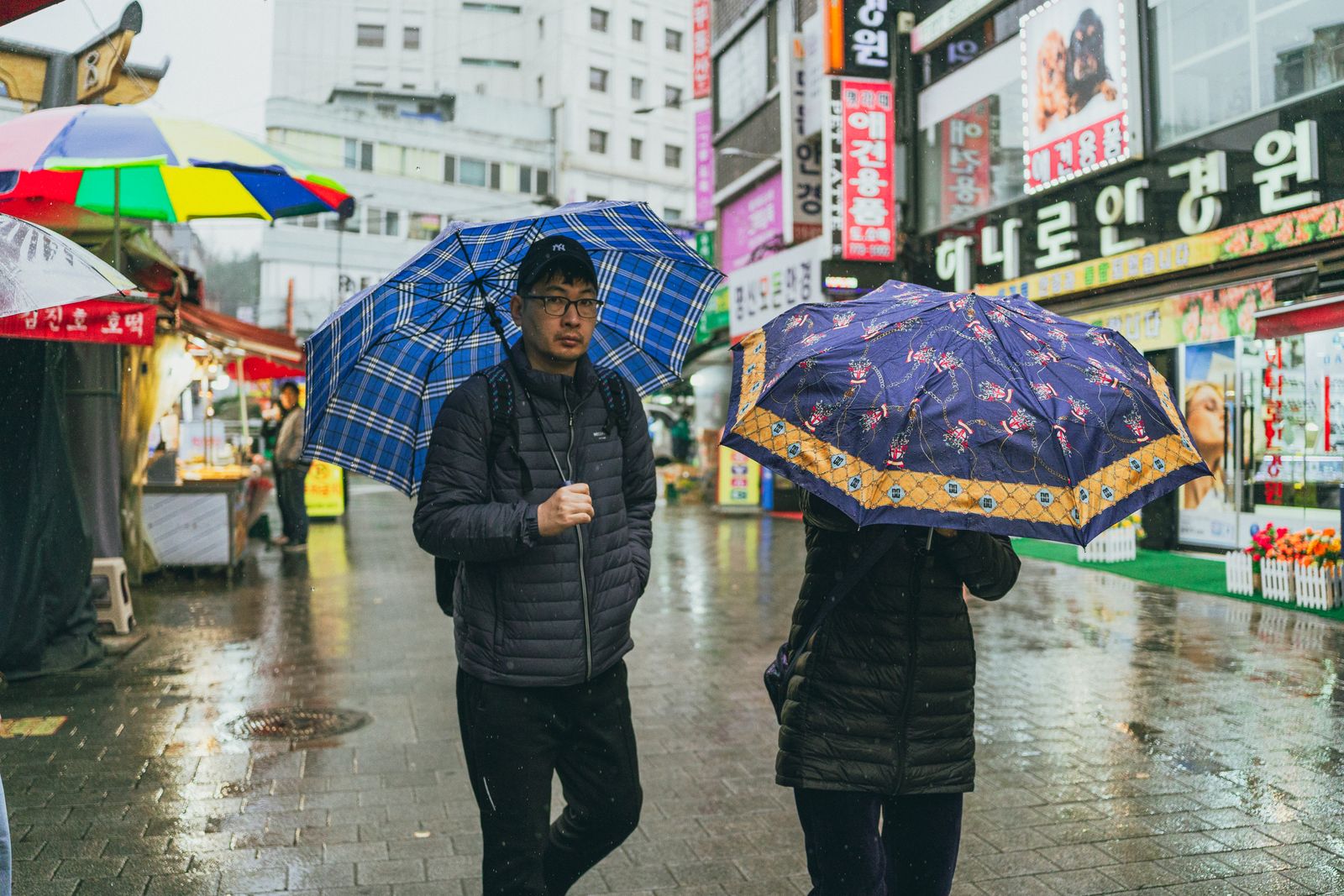
Seoul Rainy Day Itinerary: Indoor Routes for Jangma
A Seoul rainy day itinerary for 2026: indoor routes for jangma, shopping, cafes, museums, markets, and food when Korea gets wet.
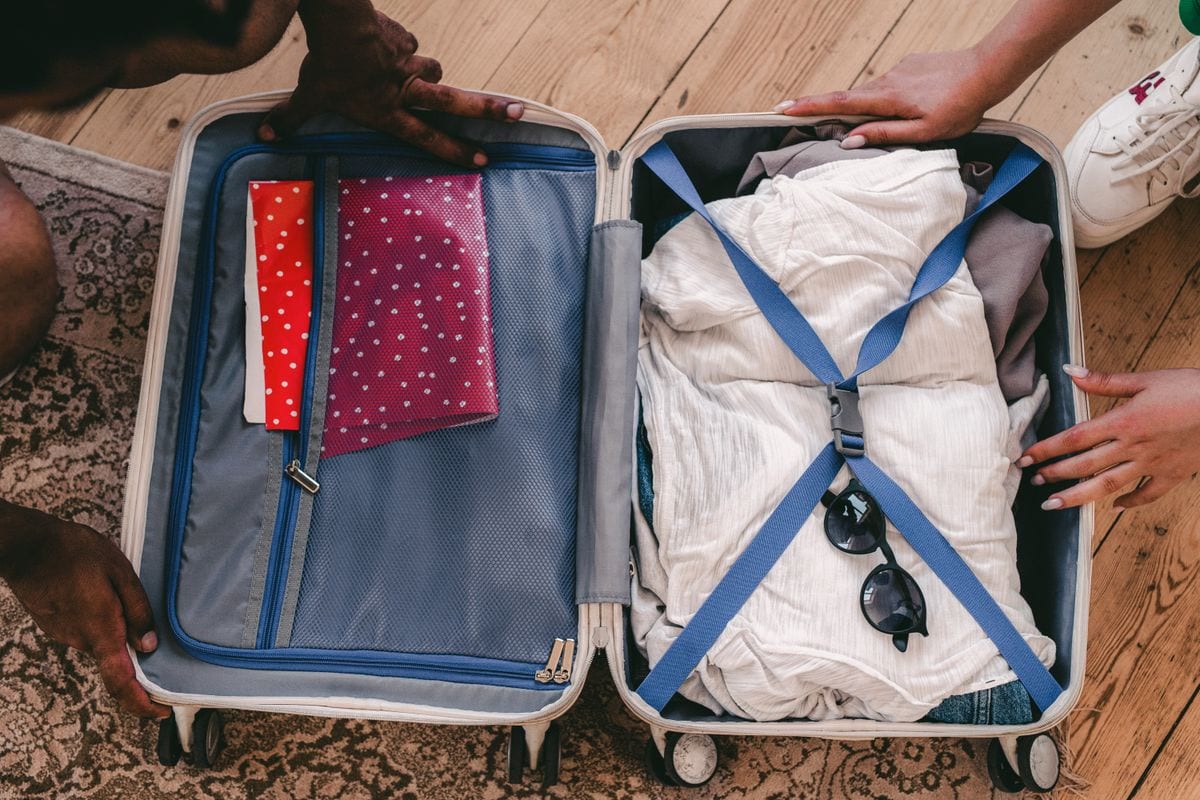
Korea Summer Packing List: July and August Essentials
A Korea summer packing list for July and August: what tourists need for heat, rain, mosquitoes, festivals, payments, and airport days.
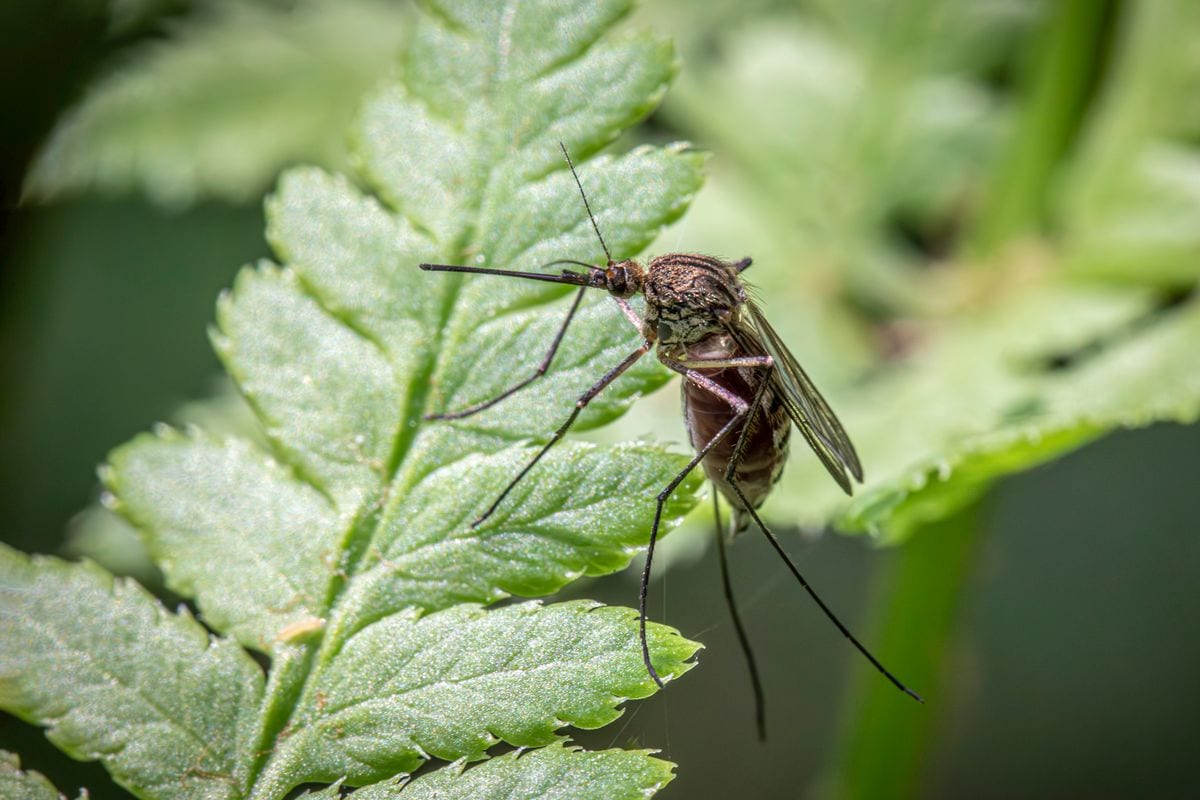
Korea Mosquito Season Guide: Packing and Local Buys
A Korea mosquito season guide for tourists: when bites are likely, what to pack, what to buy locally, repellents, clothing, and summer travel habits.