EpicKor.Korea, explained.

Browse Card News

Pick another visual guide

All Card News ->
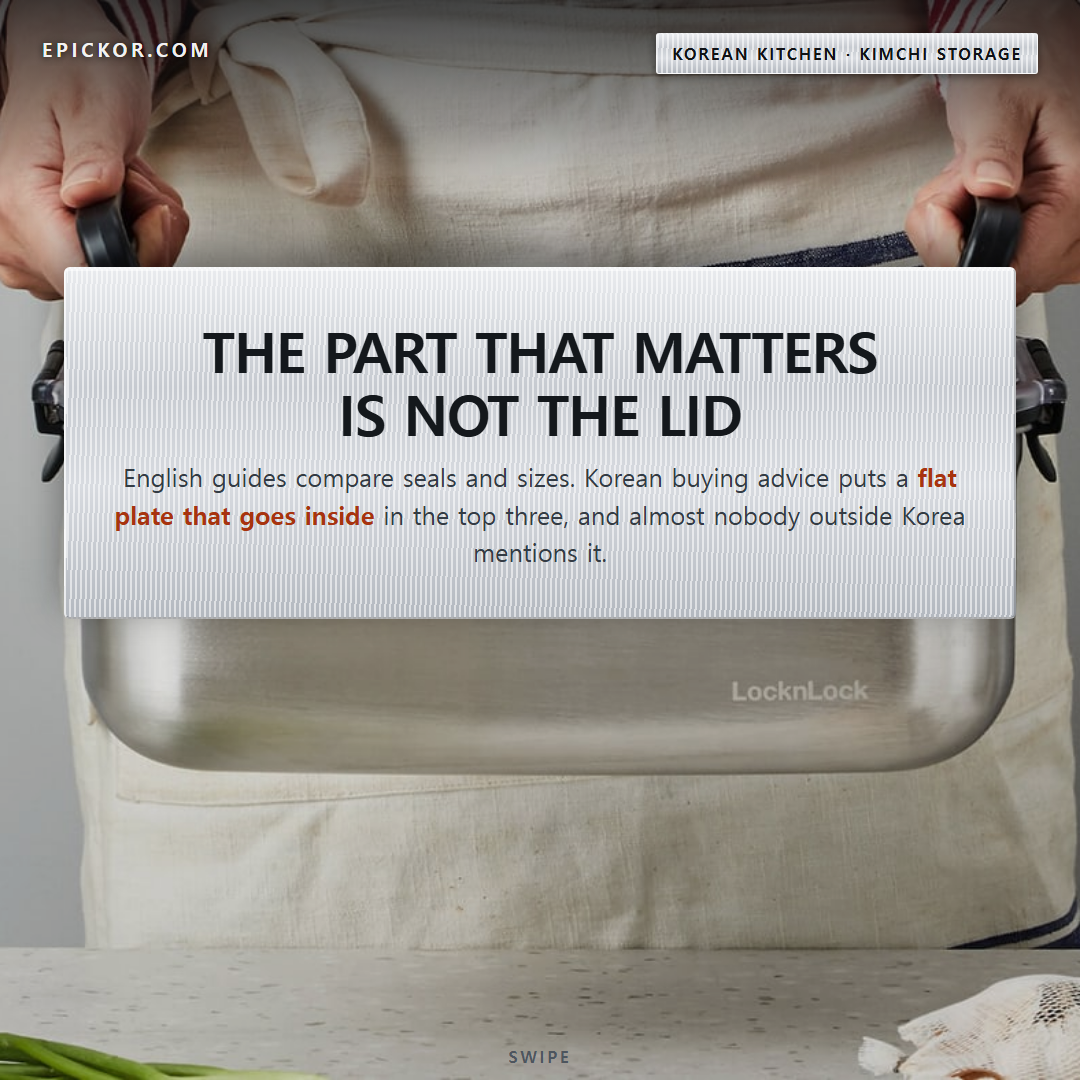
Two hands lifting a large brushed stainless kimchi container by its folding handles, kimchi visible through the clear lid
1 / 7
THE PART THAT MATTERS IS NOT THE LID. English guides compare seals and sizes. Korean buying advice puts a **flat plate that goes inside** in the top three, and almost nobody outside Korea mentions it.
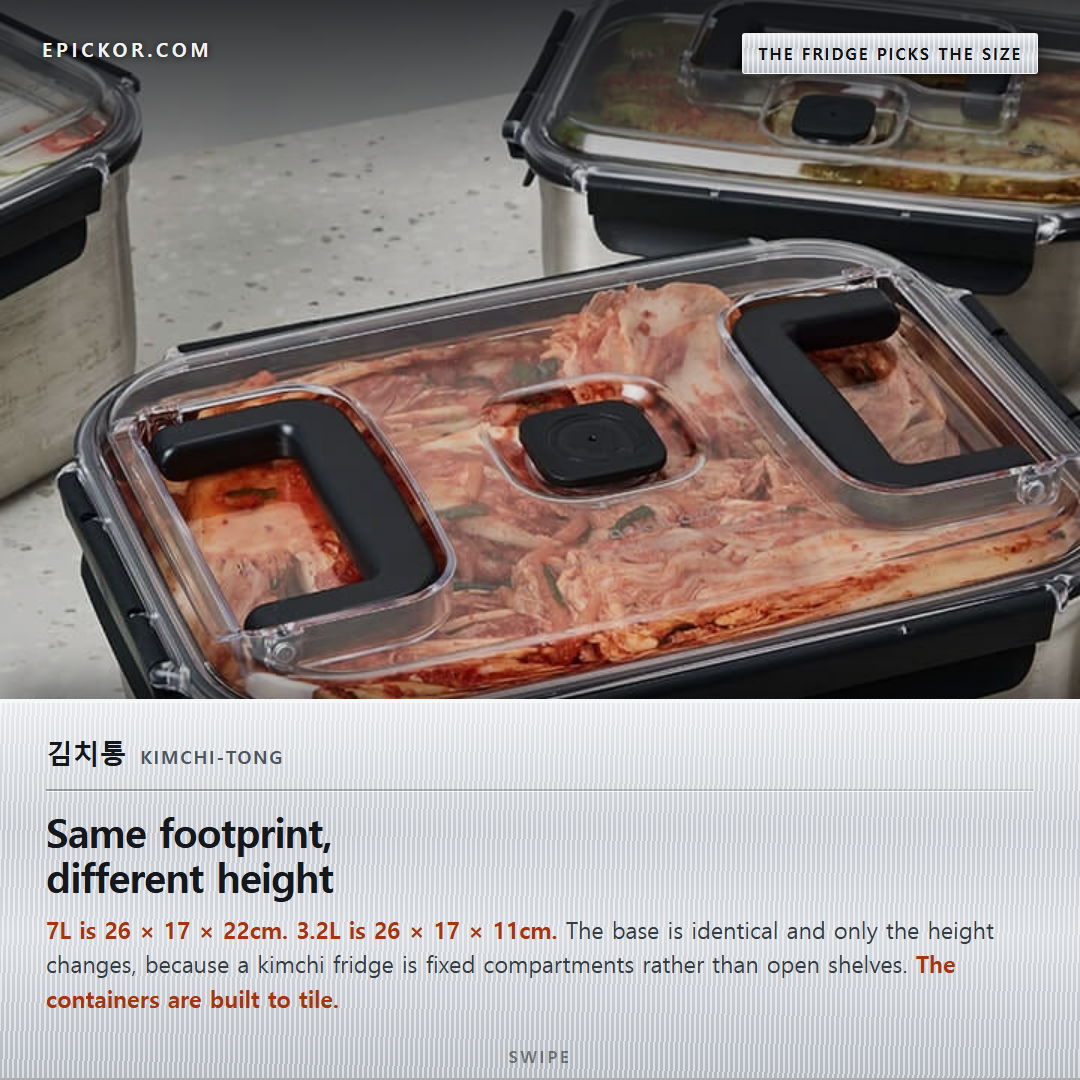
Two rectangular brushed stainless 김치통 (kimchi containers) with clear locking lids, side by side on a plain ground
2 / 7
Same footprint, different height. **7L is 26 × 17 × 22cm. 3.2L is 26 × 17 × 11cm.** The base is identical and only the height changes, because a kimchi fridge is fixed compartments rather than open shelves. **The containers are built to tile.**
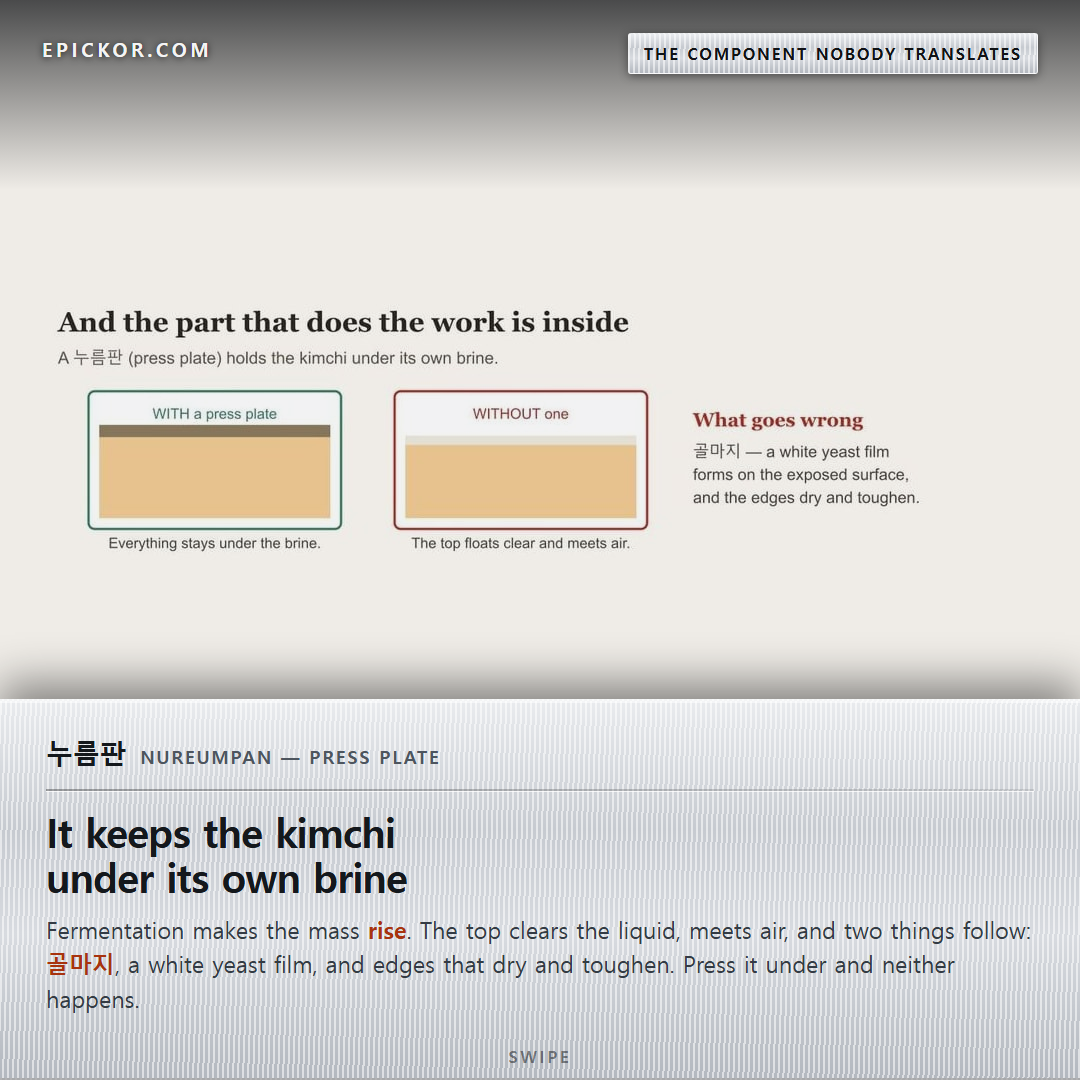
EpicKor diagram — the 7L and 3.2L containers drawn to scale on one footprint, and a cross-section of kimchi held under brine by a 누름판 (press plate) against kimchi floating above the brine without one
3 / 7
It keeps the kimchi under its own brine. Fermentation makes the mass **rise**. The top clears the liquid, meets air, and two things follow: **골마지**, a white yeast film, and edges that dry and toughen. Press it under and neither happens.
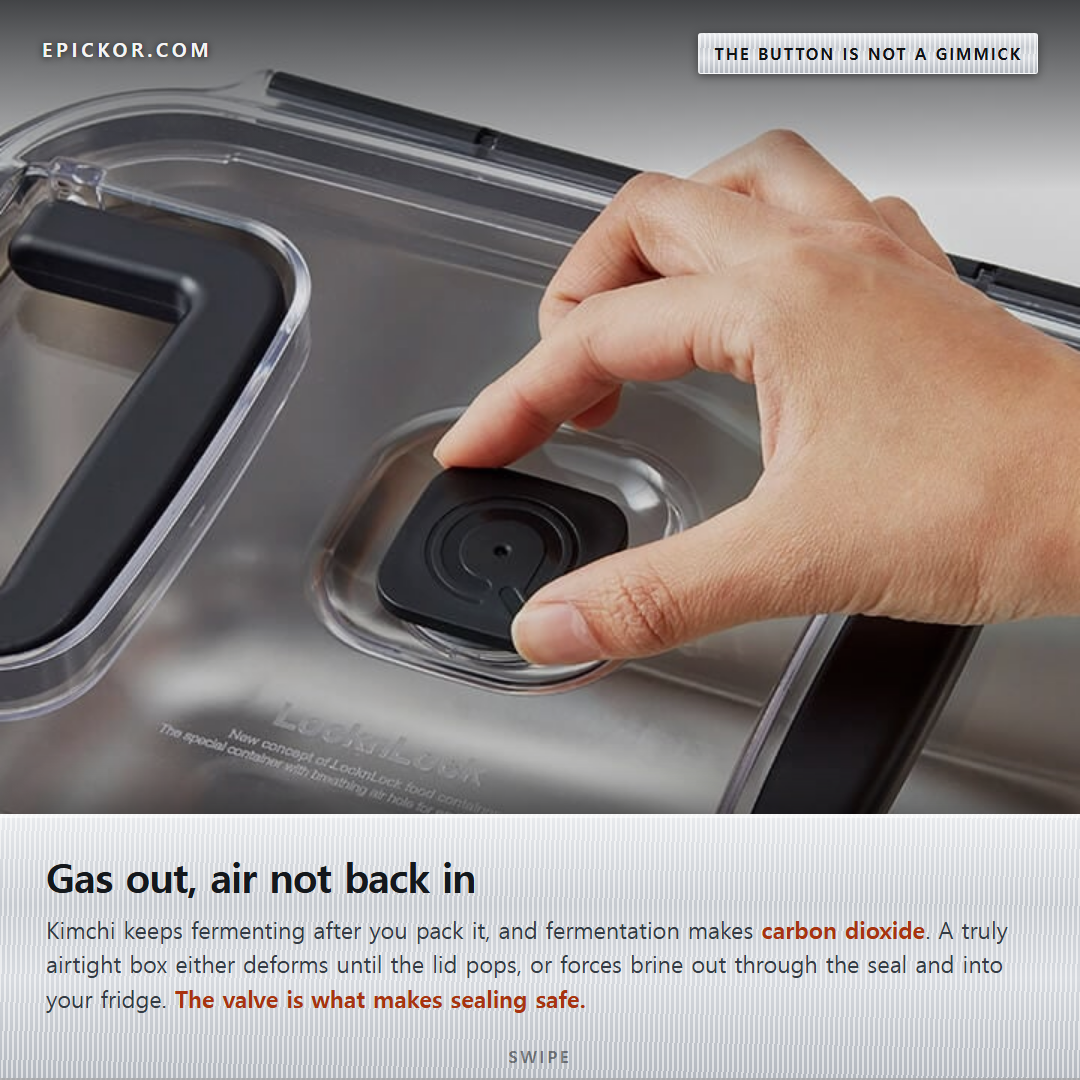
A hand pressing the round one-way air valve set into the clear lid of a stainless kimchi container
4 / 7
Gas out, air not back in. Kimchi keeps fermenting after you pack it, and fermentation makes **carbon dioxide**. A truly airtight box either deforms until the lid pops, or forces brine out through the seal and into your fridge. **The valve is what makes sealing safe.**
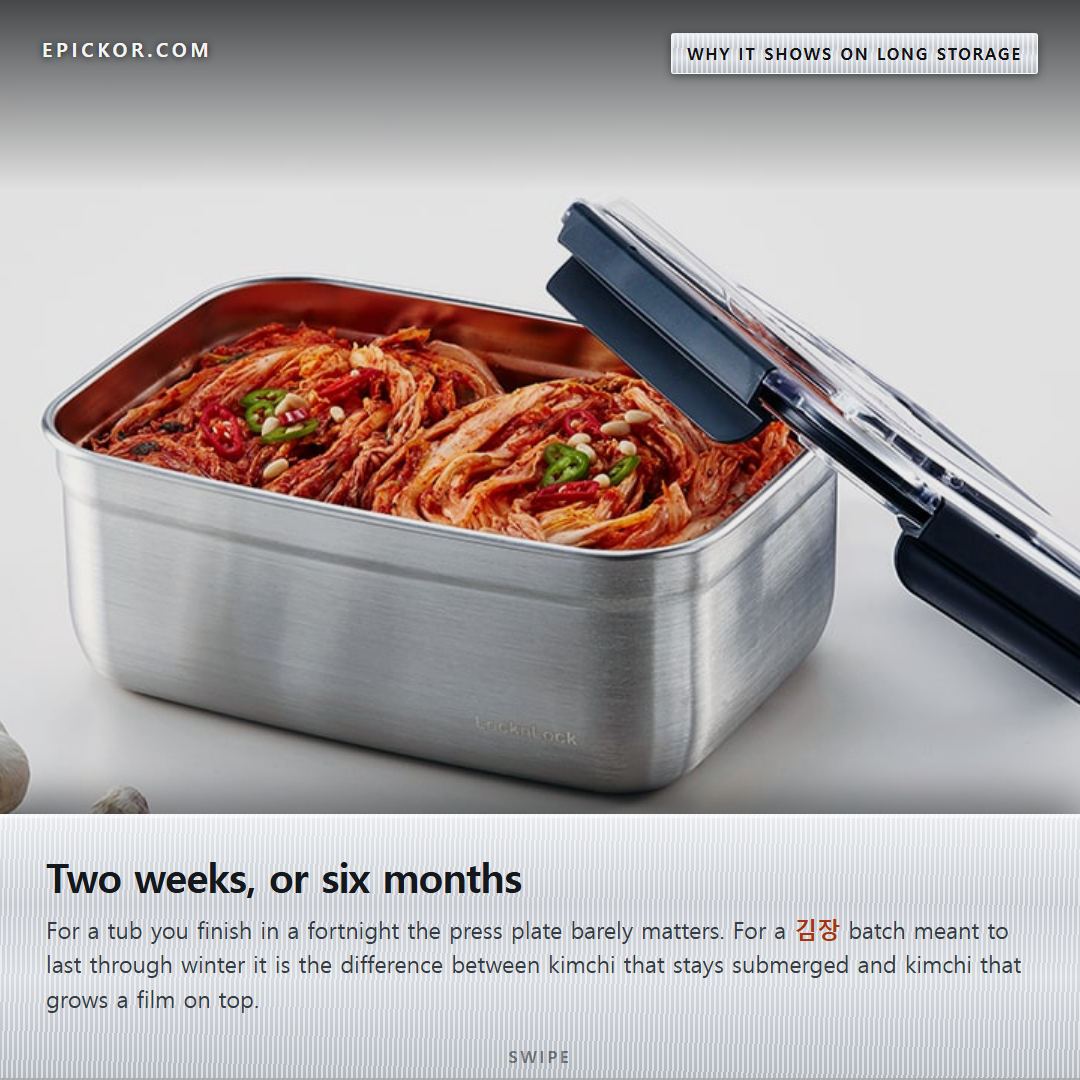
An open brushed stainless kimchi container packed with whole cabbage kimchi, its clear lid propped beside it and garlic on the counter
5 / 7
Two weeks, or six months. For a tub you finish in a fortnight the press plate barely matters. For a **김장** batch meant to last through winter it is the difference between kimchi that stays submerged and kimchi that grows a film on top.
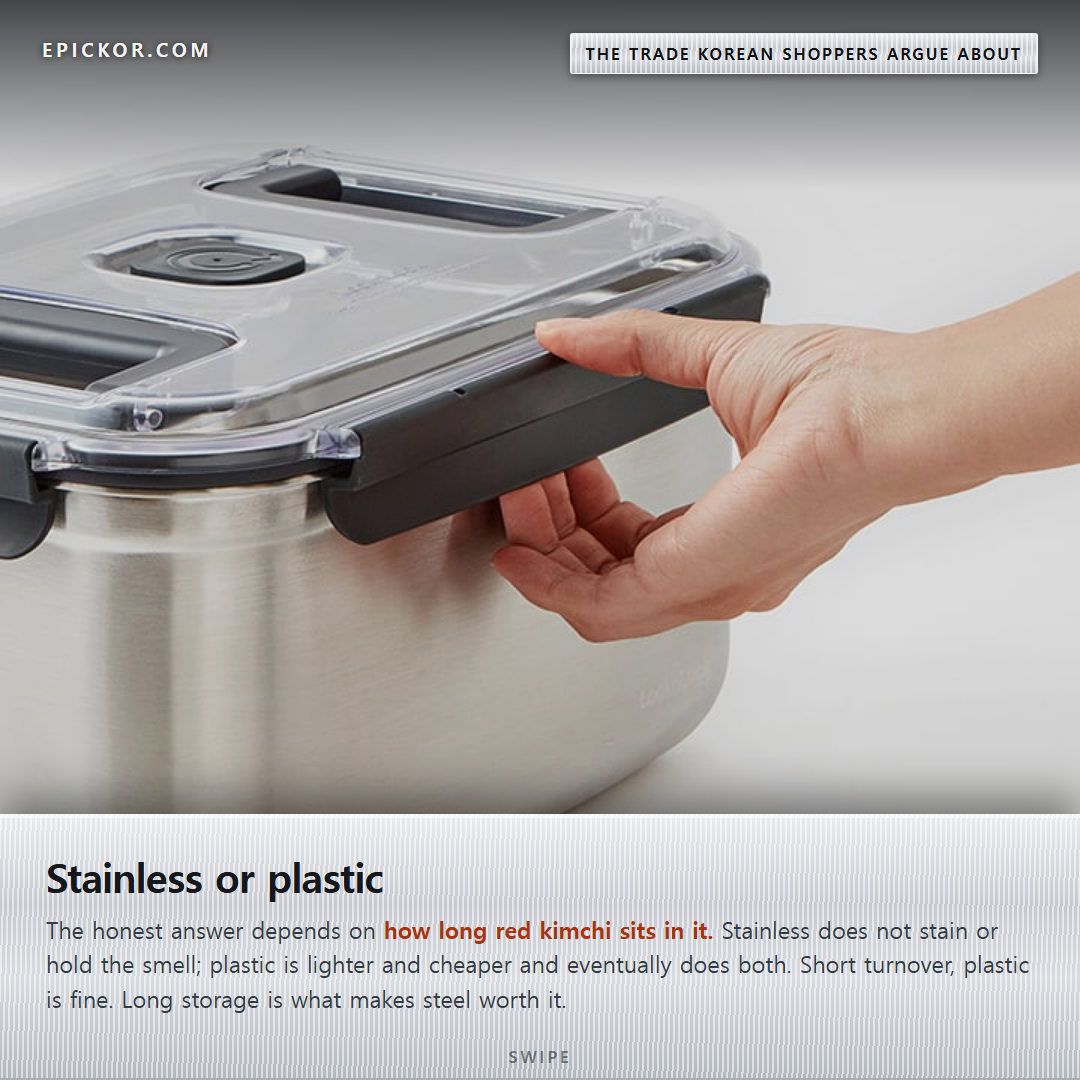
A hand releasing the locking latch on the clear lid of a brushed stainless kimchi container
6 / 7
Stainless or plastic. The honest answer depends on **how long red kimchi sits in it.** Stainless does not stain or hold the smell; plastic is lighter and cheaper and eventually does both. Short turnover, plastic is fine. Long storage is what makes steel worth it.
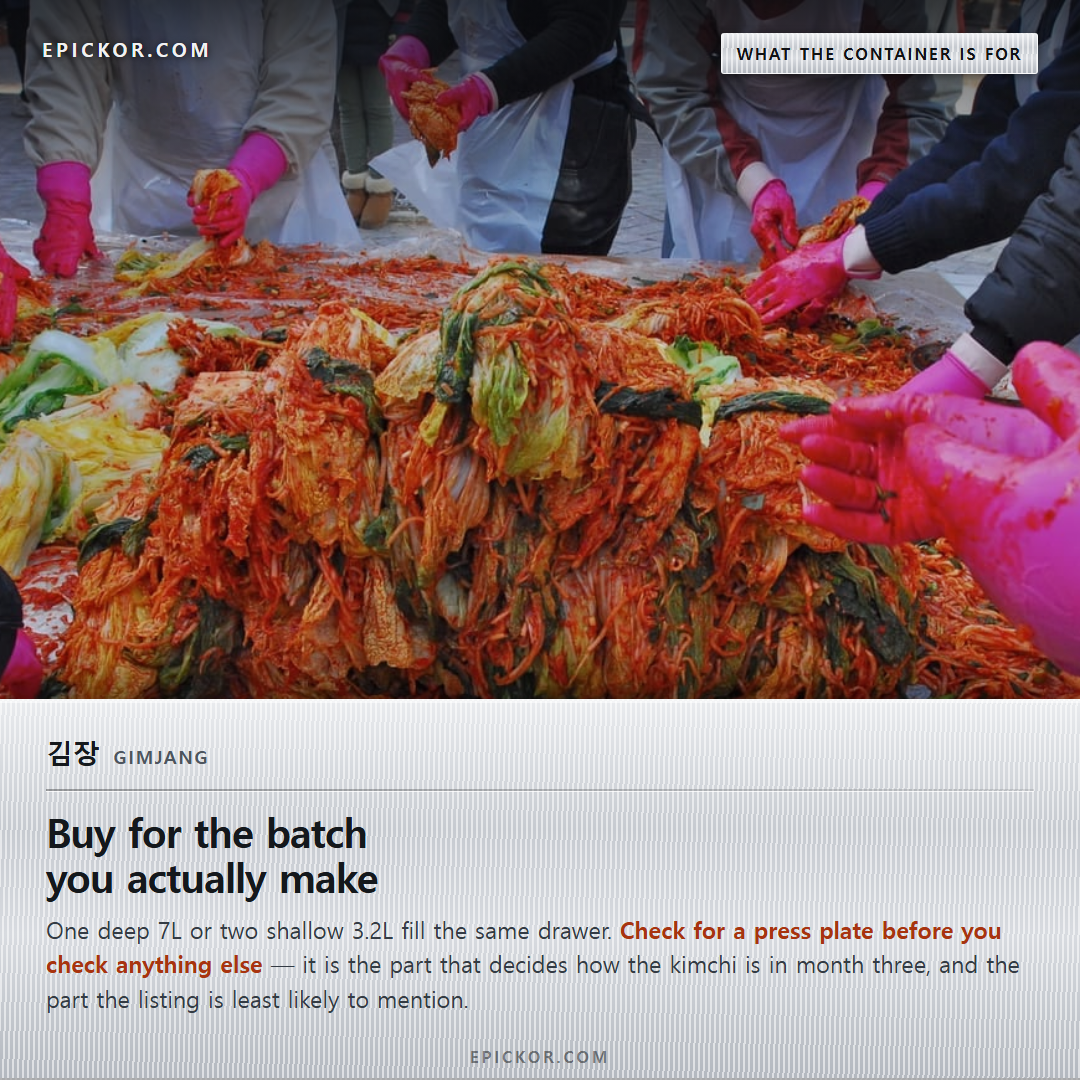
김장 (gimjang) — a long outdoor table of people making kimchi together, trays of salted cabbage and red seasoning in front of them
7 / 7
Buy for the batch you actually make. One deep 7L or two shallow 3.2L fill the same drawer. **Check for a press plate before you check anything else** — it is the part that decides how the kimchi is in month three, and the part the listing is least likely to mention.

Card 1 / 7

KOREAN KITCHEN · KIMCHI STORAGE

THE PART THAT MATTERS IS NOT THE LID

English guides compare seals and sizes. Korean buying advice puts a flat plate that goes inside in the top three, and almost nobody outside Korea mentions it.

More Card News

Recent visual guides, kept compact for quick browsing.

All Card News ->