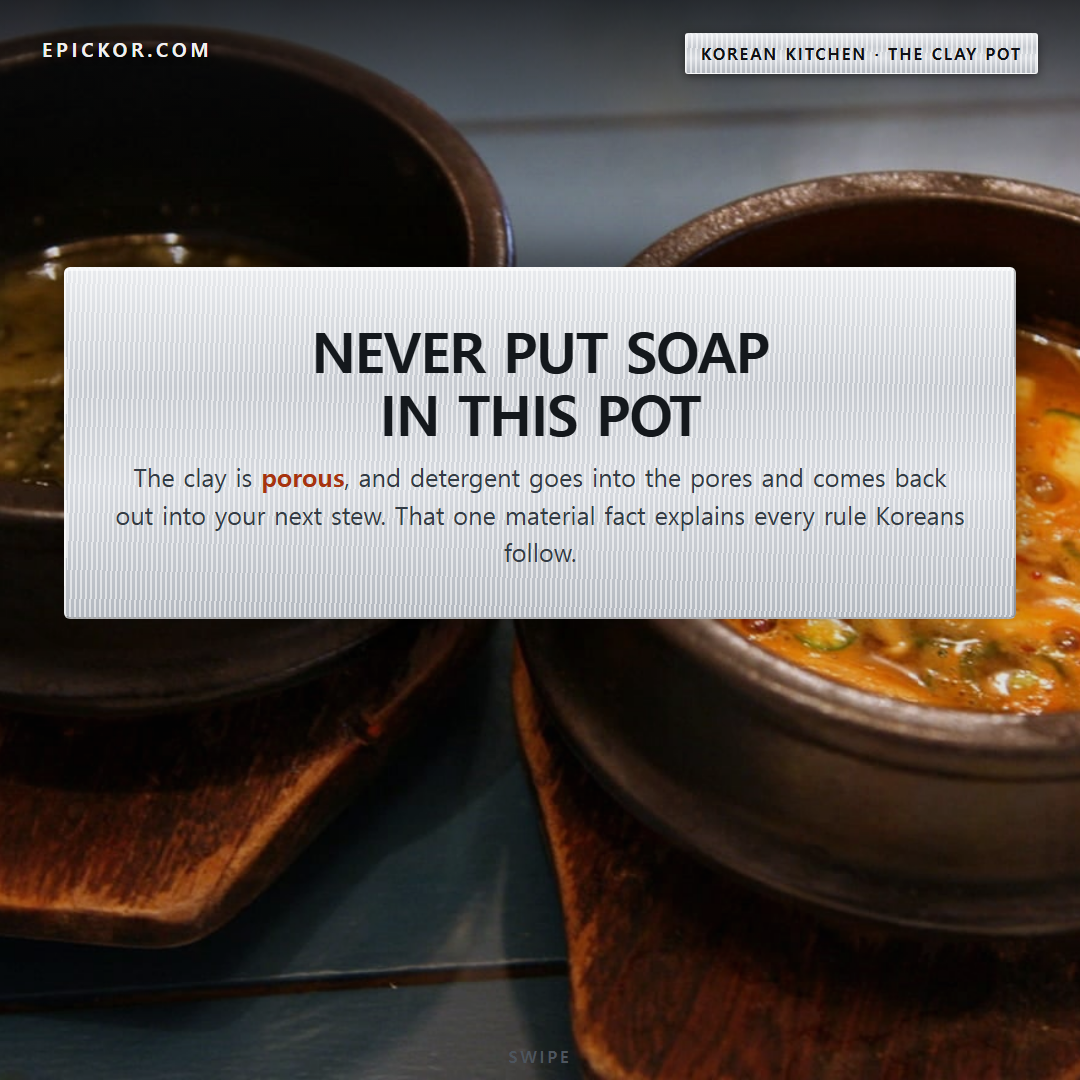
NEVER PUT SOAP IN THIS POT. The clay is **porous**, and detergent goes into the pores and comes back out into your next stew. That one material fact explains every rule Koreans follow.
2 / 7
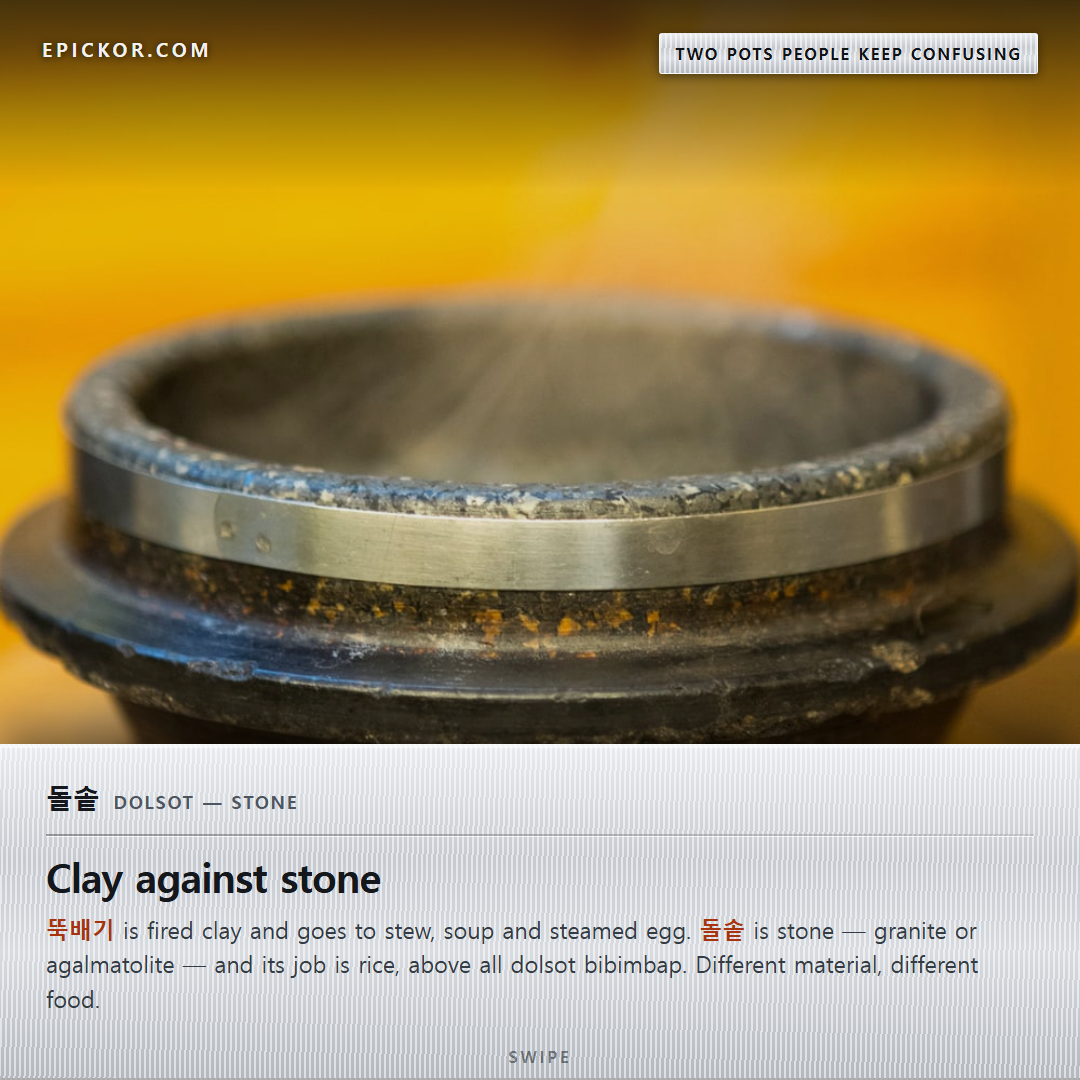
Clay against stone. **뚝배기** is fired clay and goes to stew, soup and steamed egg. **돌솥** is stone — granite or agalmatolite — and its job is rice, above all dolsot bibimbap. Different material, different food.
3 / 7
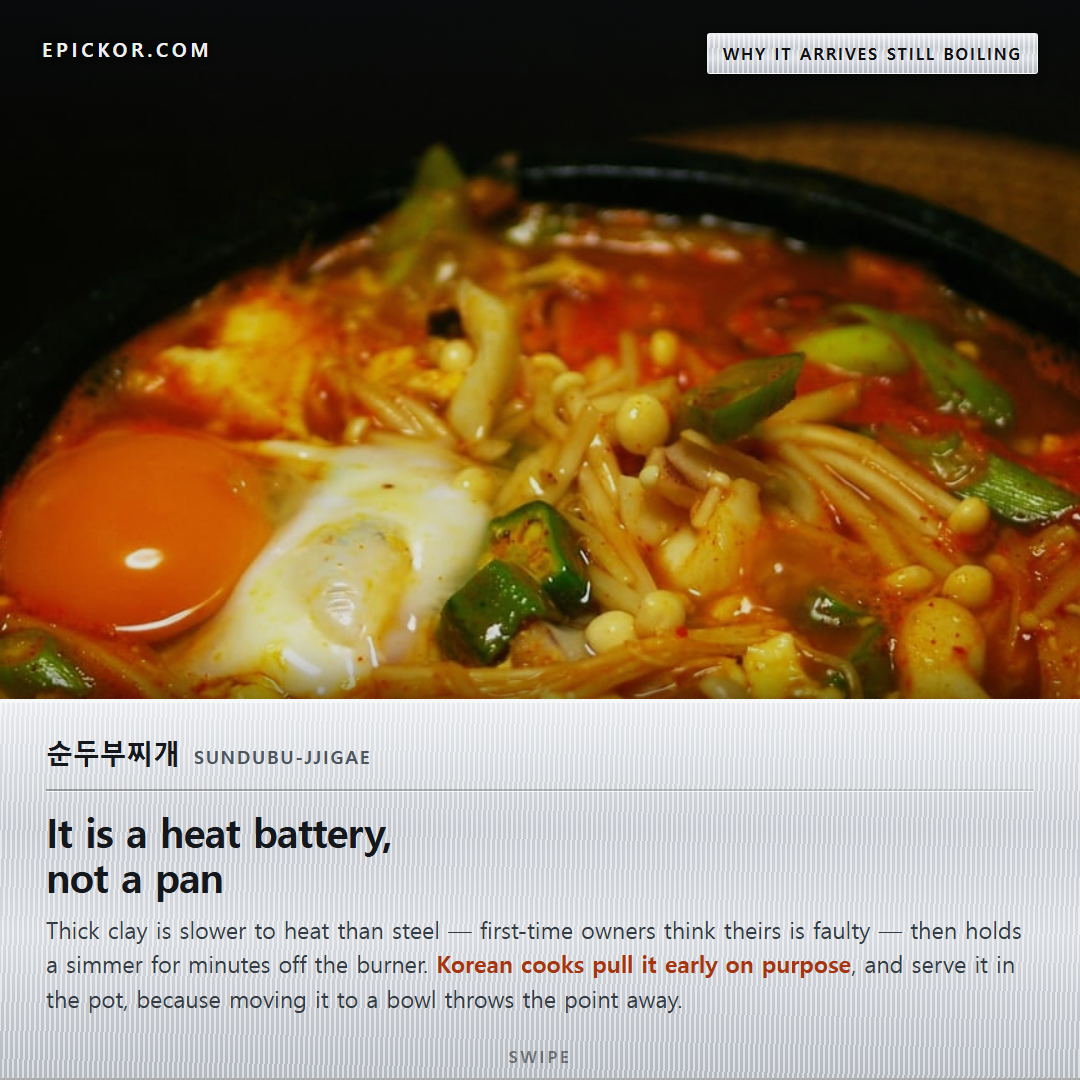
It is a heat battery, not a pan. Thick clay is slower to heat than steel — first-time owners think theirs is faulty — then holds a simmer for minutes off the burner. **Korean cooks pull it early on purpose**, and serve it in the pot, because moving it to a bowl throws the point away.
4 / 7
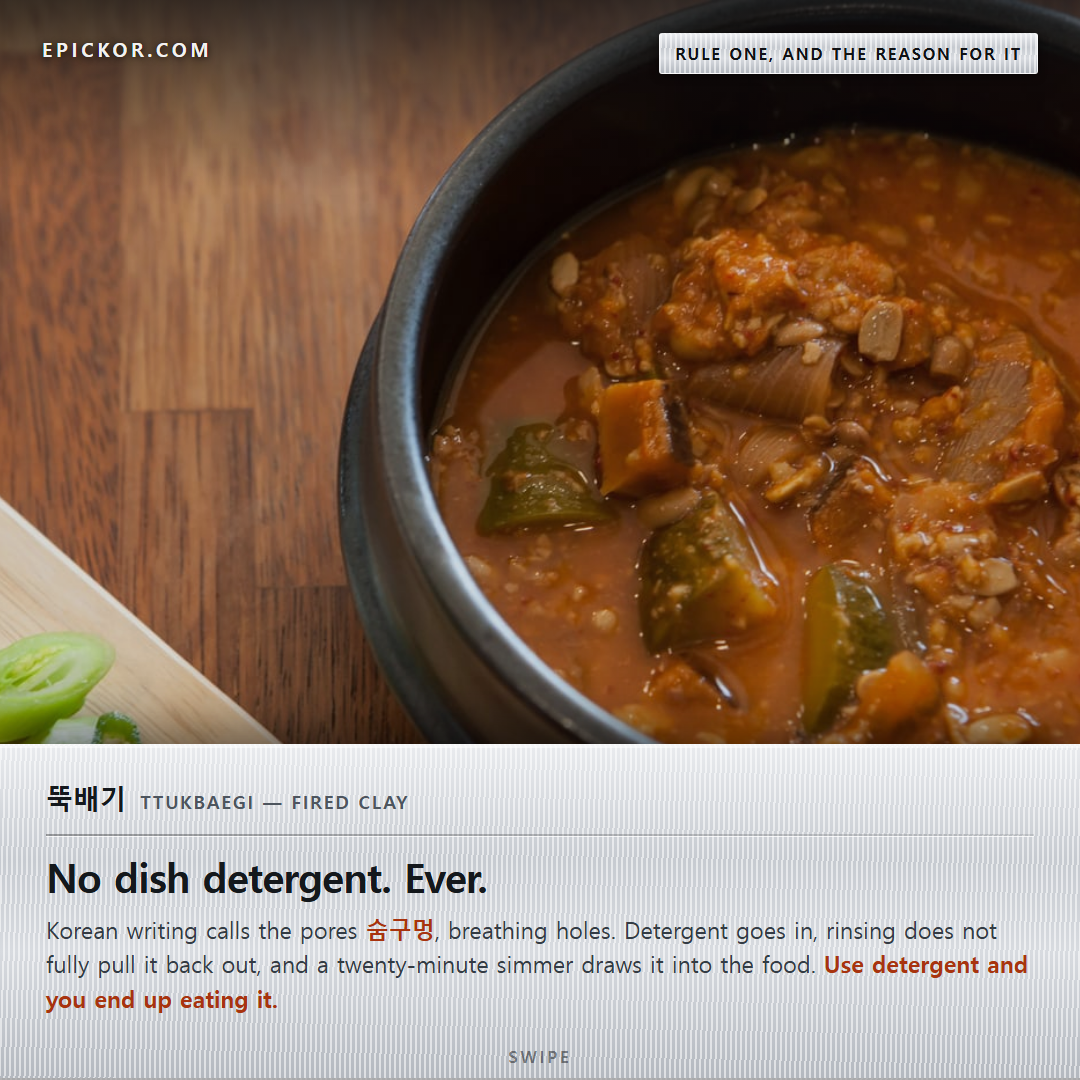
No dish detergent. Ever.. Korean writing calls the pores **숨구멍**, breathing holes. Detergent goes in, rinsing does not fully pull it back out, and a twenty-minute simmer draws it into the food. **Use detergent and you end up eating it.**
5 / 7
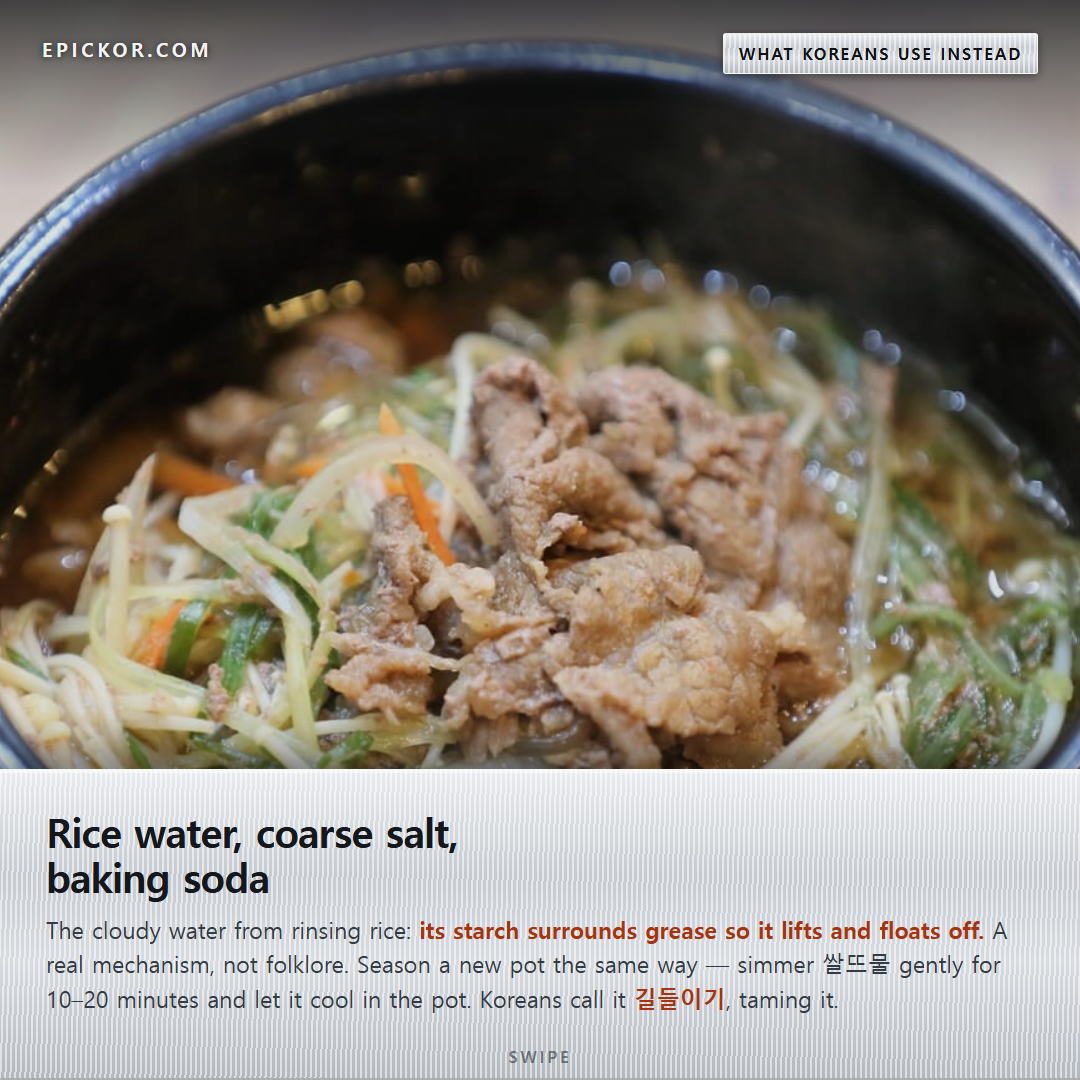
Rice water, coarse salt, baking soda. The cloudy water from rinsing rice: **its starch surrounds grease so it lifts and floats off.** A real mechanism, not folklore. Season a new pot the same way — simmer 쌀뜨물 gently for 10–20 minutes and let it cool in the pot. Koreans call it **길들이기**, taming it.
6 / 7
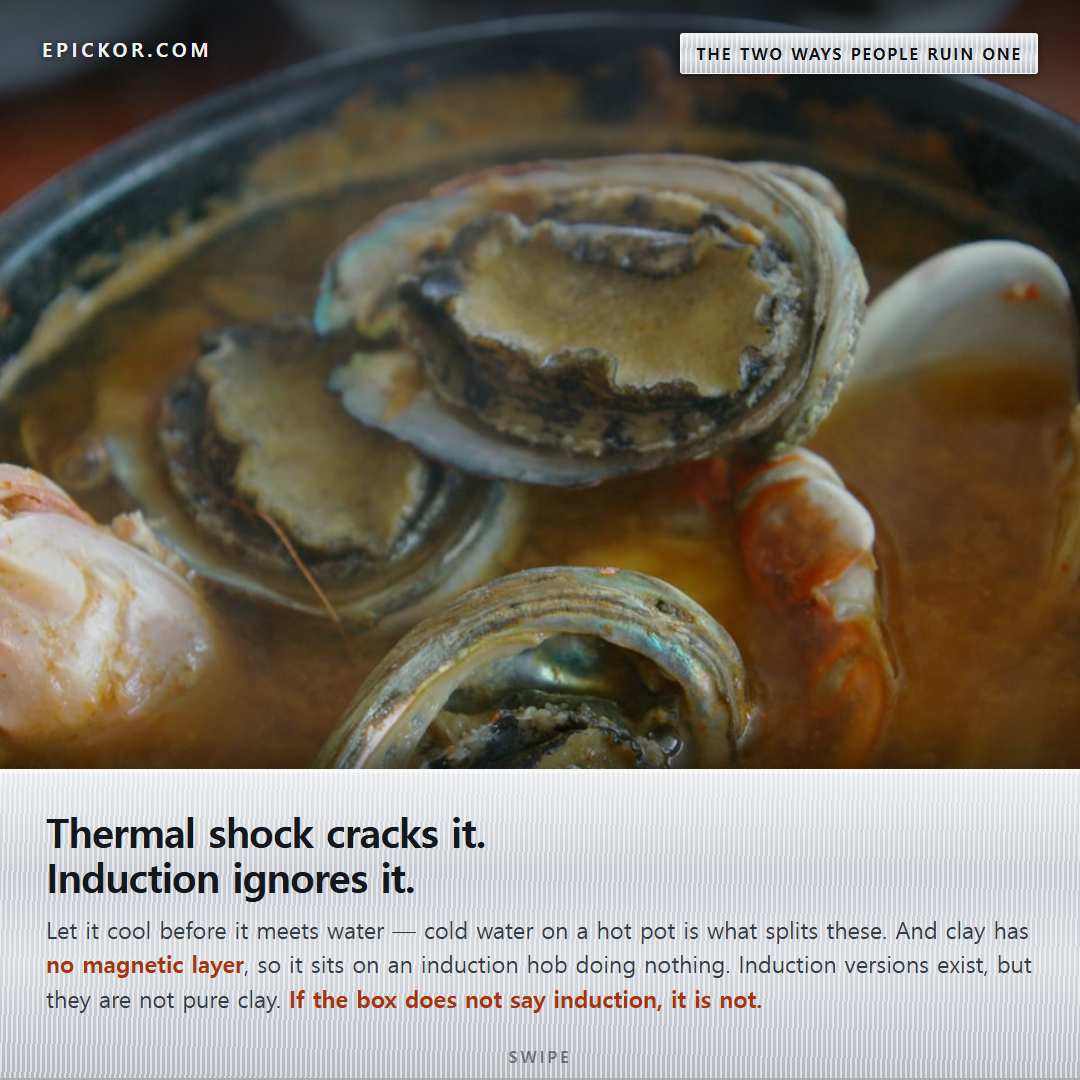
Thermal shock cracks it. Induction ignores it.. Let it cool before it meets water — cold water on a hot pot is what splits these. And clay has **no magnetic layer**, so it sits on an induction hob doing nothing. Induction versions exist, but they are not pure clay. **If the box does not say induction, it is not.**
7 / 7
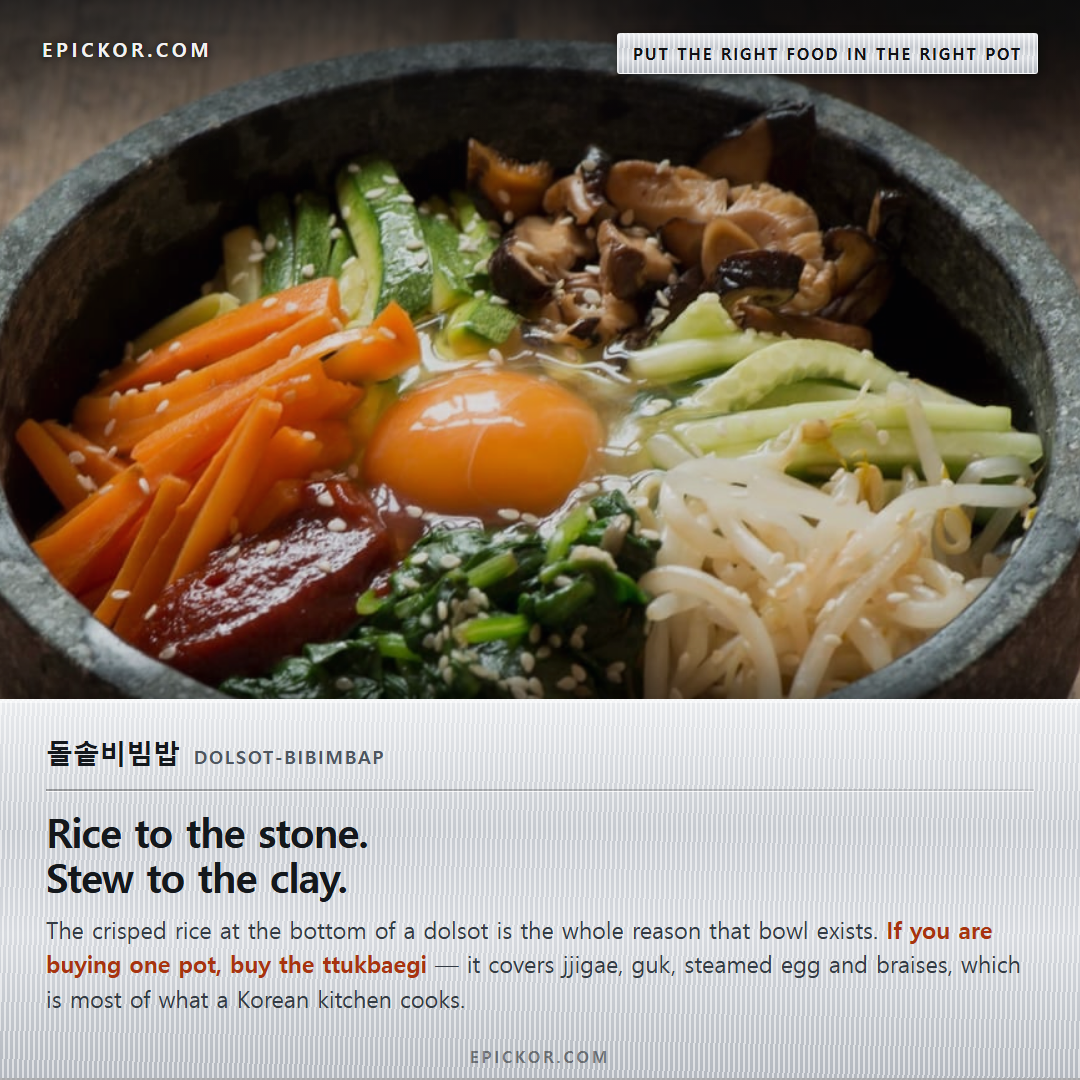
Rice to the stone. Stew to the clay.. The crisped rice at the bottom of a dolsot is the whole reason that bowl exists. **If you are buying one pot, buy the ttukbaegi** — it covers jjigae, guk, steamed egg and braises, which is most of what a Korean kitchen cooks.
Card 1 / 7
KOREAN KITCHEN · THE CLAY POT
NEVER PUT SOAP IN THIS POT
The clay is porous, and detergent goes into the pores and comes back out into your next stew. That one material fact explains every rule Koreans follow.
More Card News
Recent visual guides, kept compact for quick browsing.