K-Beauty OEM/ODM in Korea: What Overseas Brands Should Check First
A practical K-beauty OEM/ODM guide for overseas brands covering manufacturer roles, MFDS cautions, samples, documents, and first contact.
Quick Answer
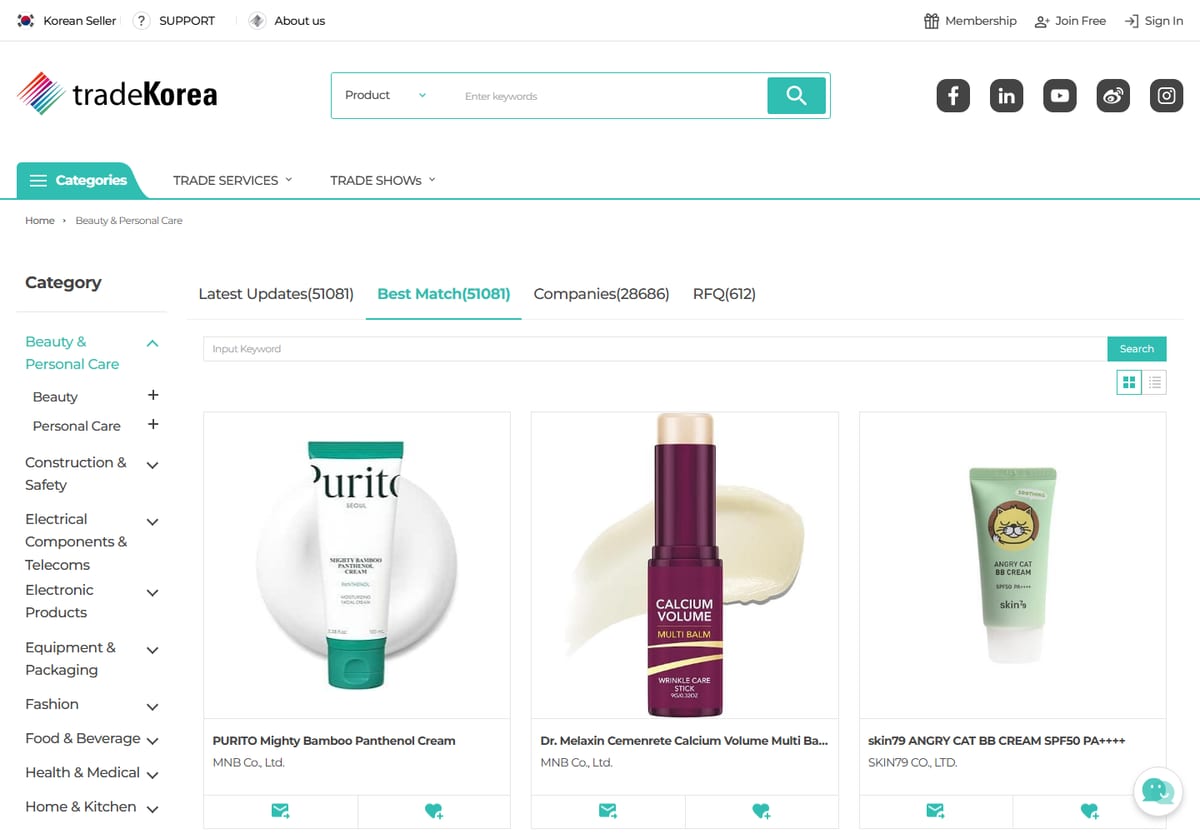
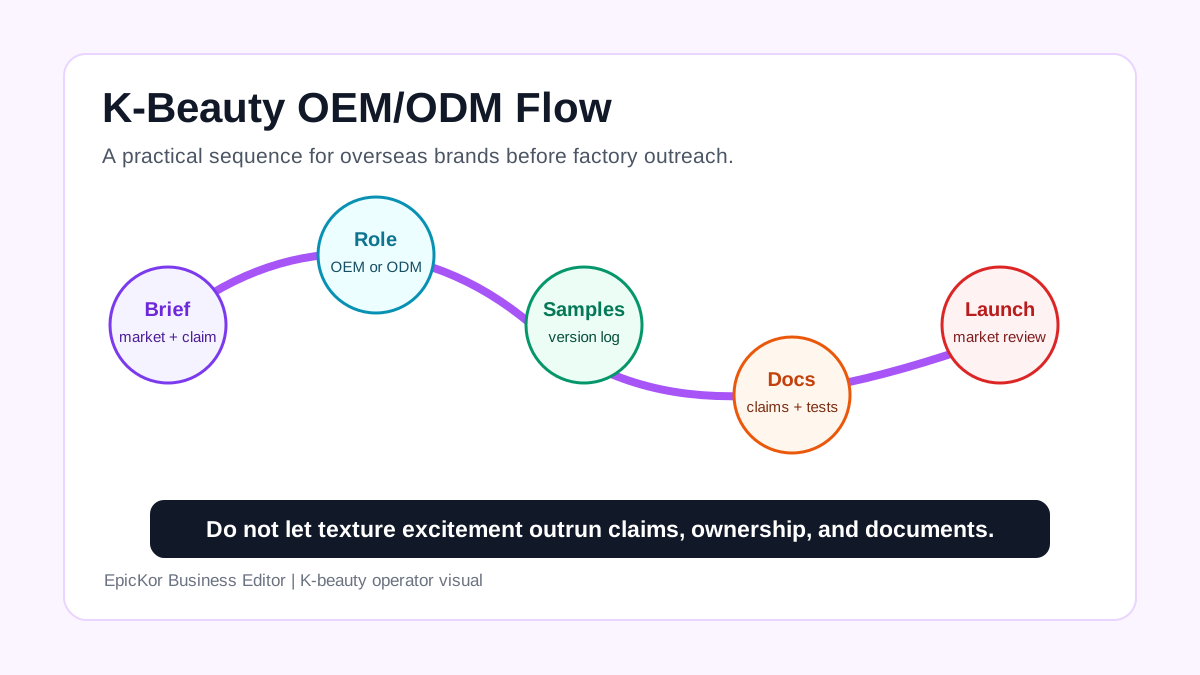
If you want to make a K-beauty product in Korea, do not start by asking for a factory list. Start by deciding whether you need OEM, ODM, finished-product wholesale, or a brand-authorized distributor. Then screen Korean manufacturers by product category, regulatory readiness, sample process, documentation quality, export experience, intellectual-property boundaries, and communication discipline.
Korea is strong in beauty manufacturing, but the label "K-beauty" does not remove basic operator risk. An overseas brand still needs to understand what it owns, what the manufacturer owns, which claims are allowed, which functional-cosmetic rules may apply in Korea, and what compliance is required in the destination market.
Use this guide as the first screen before outreach. It is not legal or regulatory advice. For claims, ingredients, labels, import rules, and product safety, use qualified regulatory counsel or a specialist for the markets where you will sell.
OEM, ODM, Distributor, or Brand Owner?
The words sound simple until the first quotation arrives. Beauty sourcing in Korea often involves several roles at once.
| Role | What It Usually Means | Good Fit | Buyer Risk |
|---|---|---|---|
| OEM | The manufacturer produces to your specification, formula direction, packaging brief, or brand requirements. | Brands that already know the concept, positioning, and technical requirements. | You may carry more development responsibility and need clearer ownership documents. |
| ODM | The manufacturer offers existing or semi-developed formulas and concepts that your brand can adapt. | Smaller brands that need speed, proven textures, or concept support. | You must clarify exclusivity, formula ownership, claim support, and similar products sold to others. |
| Finished-product wholesale | You buy completed branded products from a seller, distributor, or wholesaler. | Retailers, resellers, and importers testing Korean beauty demand. | Authorization, gray-market exposure, batch traceability, and marketplace policy risk. |
| Brand-owner partnership | You work with the Korean brand that owns the product and may control distribution rights. | Importers seeking legitimate brand supply or regional rights. | Exclusivity and territory language must be precise, not assumed from a friendly email. |
If your goal is a product under your own brand, OEM or ODM is usually the conversation. If your goal is to resell Korean skincare that already exists, you are closer to wholesale or brand distribution. The two paths use different questions, different contracts, and different risk controls.
For that resale path, read the Korean cosmetics wholesale guide before you ask for prices. Finished branded K-beauty inventory depends on authorization, channel permission, batch proof, expiry dates, and marketplace documentation, not only product popularity.
The Regulatory Check Buyers Should Notice Early
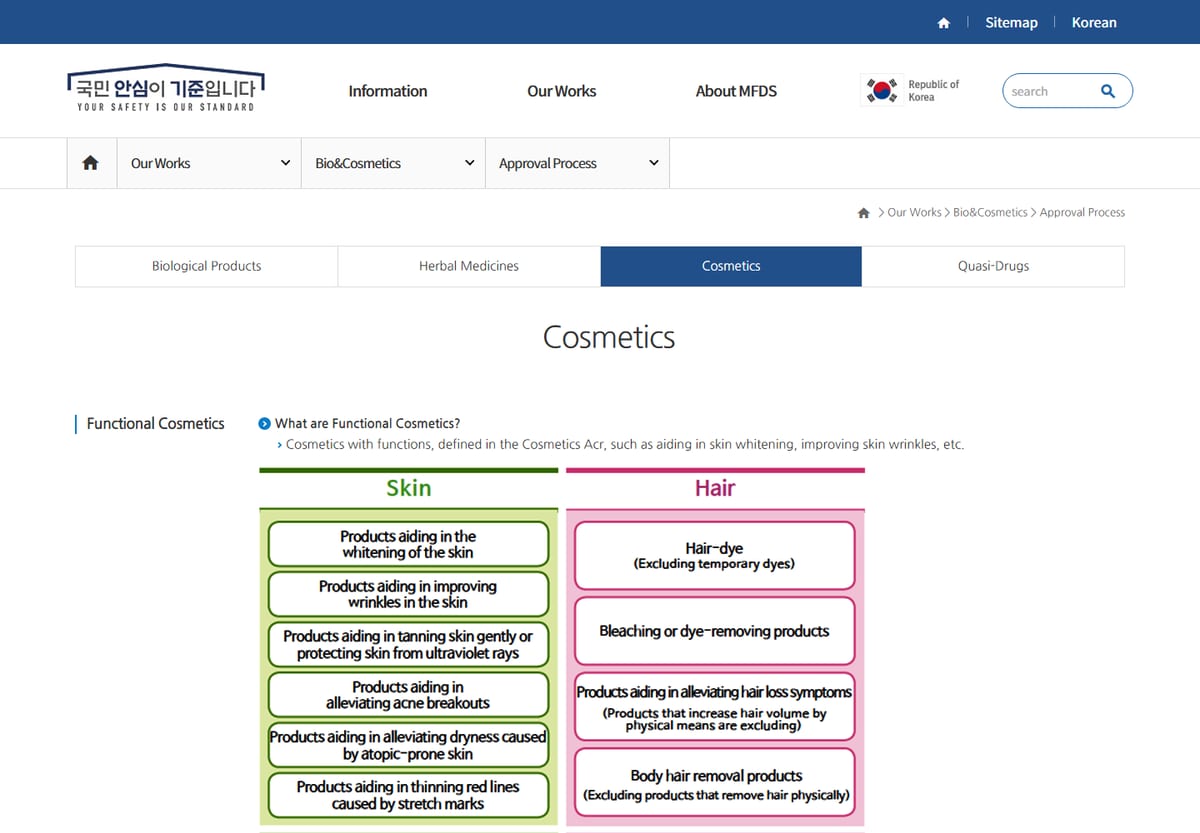
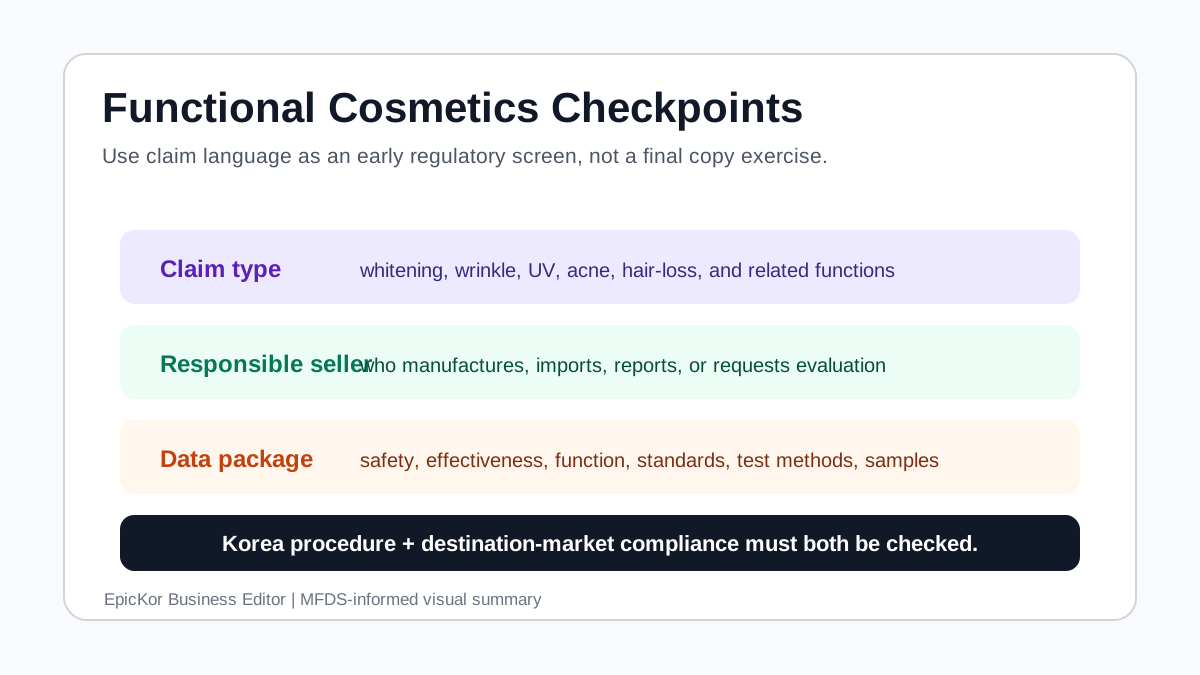
Korean cosmetics conversations often move quickly from "texture" and "trend" to "claim." That is where buyers need caution. MFDS explains functional cosmetics as cosmetics with legally defined functions such as whitening, wrinkle improvement, UV protection, acne-related functions, atopic-prone dryness, stretch-mark-related functions, hair-dye and hair-loss symptom categories, and hair-removal products in certain contexts.
MFDS also states that a responsible seller who intends to manufacture or sell functional cosmetics by manufacturing or importing them must undergo MFDS evaluation or submit a report under the Cosmetics Act. Its public page lists review steps and data requirements, including safety, effectiveness, function data, SPF and PA data where relevant, standards, test methods, and samples.
The practical point is not that every skincare product is a functional cosmetic. The point is that claim language matters. "Brightening," "whitening," "anti-wrinkle," "acne," "hair loss," and SPF-related claims can trigger special attention. Your supplier may understand Korean procedures, but your brand still needs to confirm what can be said in the country where the product will be sold.
Beauty operator note: As an Amazon Associate, EpicKor may earn from qualifying purchases. If this is your first private-label beauty project, compare cosmetics product-development books before supplier calls so your brief covers claims, packaging, testing, and launch assumptions.
What To Prepare Before Contacting a Korean Manufacturer
A good K-beauty manufacturing inquiry should not be a mood board only. It should include enough commercial and technical information for the supplier to decide whether the project is real.
Prepare the product category, target customer, target market, desired format, texture reference, ingredient preferences, restricted ingredients, claim direction, packaging type, expected first quantity range, timeline, target landed cost, certification needs, and whether you want OEM, ODM, or a ready formula. If you already have a benchmark product, use it carefully as a sensory reference, not as an instruction to copy another brand.
For sunscreen, acne, whitening, wrinkle, hair-loss, or other claim-sensitive products, say that claim support and regulatory review are required before final copy. For clean beauty, vegan, cruelty-free, halal, or natural claims, ask what documents the supplier can provide and which claims are certification-backed versus marketing language.
How To Screen K-Beauty OEM/ODM Partners
The first screen should combine category fit and process maturity. Ask whether the company has experience with your product type: toner, ampoule, sheet mask, cleanser, sunscreen, cushion, hair care, body care, makeup, device-adjacent beauty product, or salon product. A factory that is strong in sheet masks may not be right for sunscreen. A packaging-focused partner may not control formula development.
Then check the development process. How many sample rounds are typical? What is the expected lead time for lab samples and pilot samples? Who owns the formula? Are stock formulas exclusive or non-exclusive? Can they support English ingredient lists, INCI names, batch documentation, stability tests, compatibility checks, and export documents? What happens if the packaging supplier changes? How are rejected batches handled?
Communication is part of due diligence. A serious supplier does not need perfect English, but they should answer specific questions, identify unknowns, and separate confirmed facts from "possible" claims. If every answer is yes, every lead time is short, and every claim is easy, slow down.
Sample Stage Mistakes
The sample stage is where K-beauty feels exciting and risky at the same time. Textures are persuasive. Packaging can look premium. A pleasant sample can make a buyer forget about claims, ownership, pricing, minimum order quantities, and repeatability.
Control the sample stage with a simple log: sample version, date received, formula or concept reference, scent, texture, packaging, supplier comments, stability status, claimed functions, ingredient list, and what changed from the previous round. If you test samples with potential customers, record feedback by use case rather than by vague preference.
Do not treat a sample as final just because it feels good. Ask whether the sample formula is scalable, whether the same texture can be produced at your expected MOQ, whether the ingredient list is final, whether fragrance can change, whether packaging compatibility has been checked, and whether claims are supported.
Where To Search for Korean Beauty Suppliers
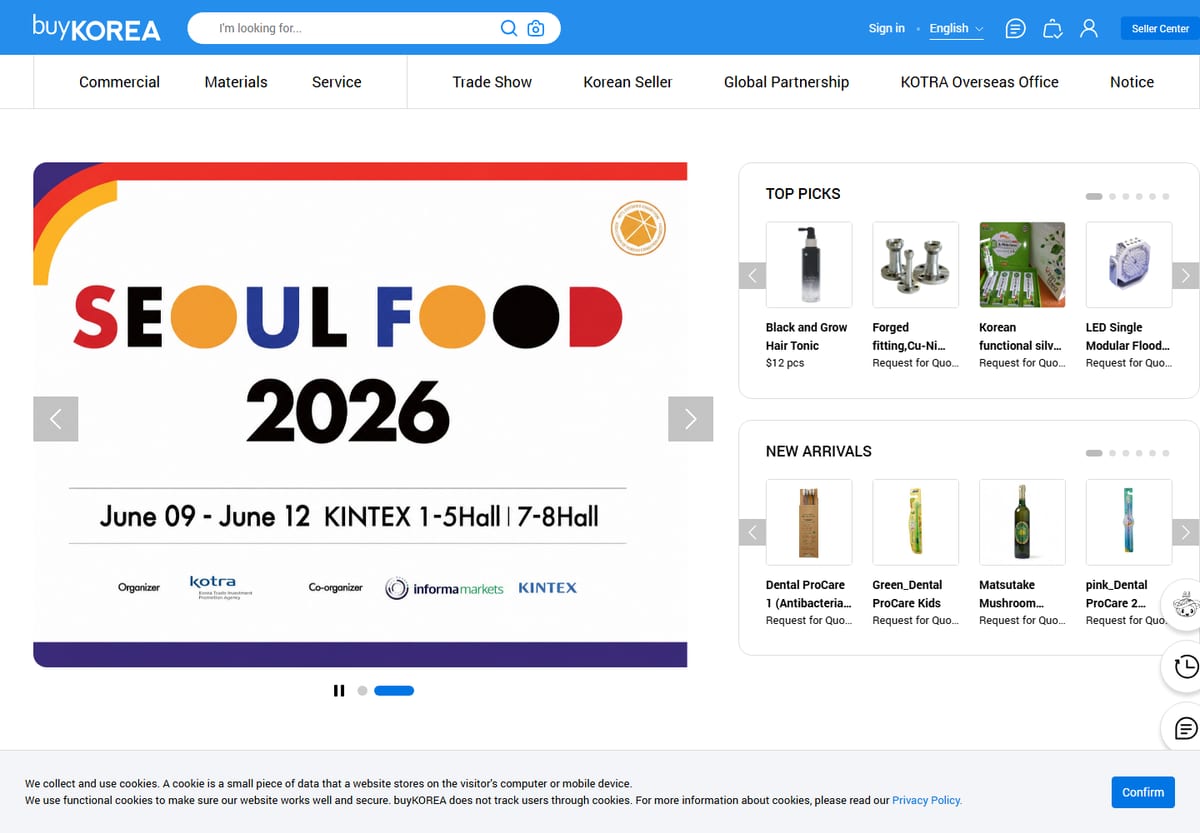
For first discovery, use general Korea supplier paths and then narrow by category. tradeKorea's category structure includes beauty and personal care, and buyKOREA also carries Korean seller and product discovery paths. GobizKOREA can be useful for Korean SME product discovery. Start there, then compare each candidate with the company's own website, event participation, certificates, and direct communication.
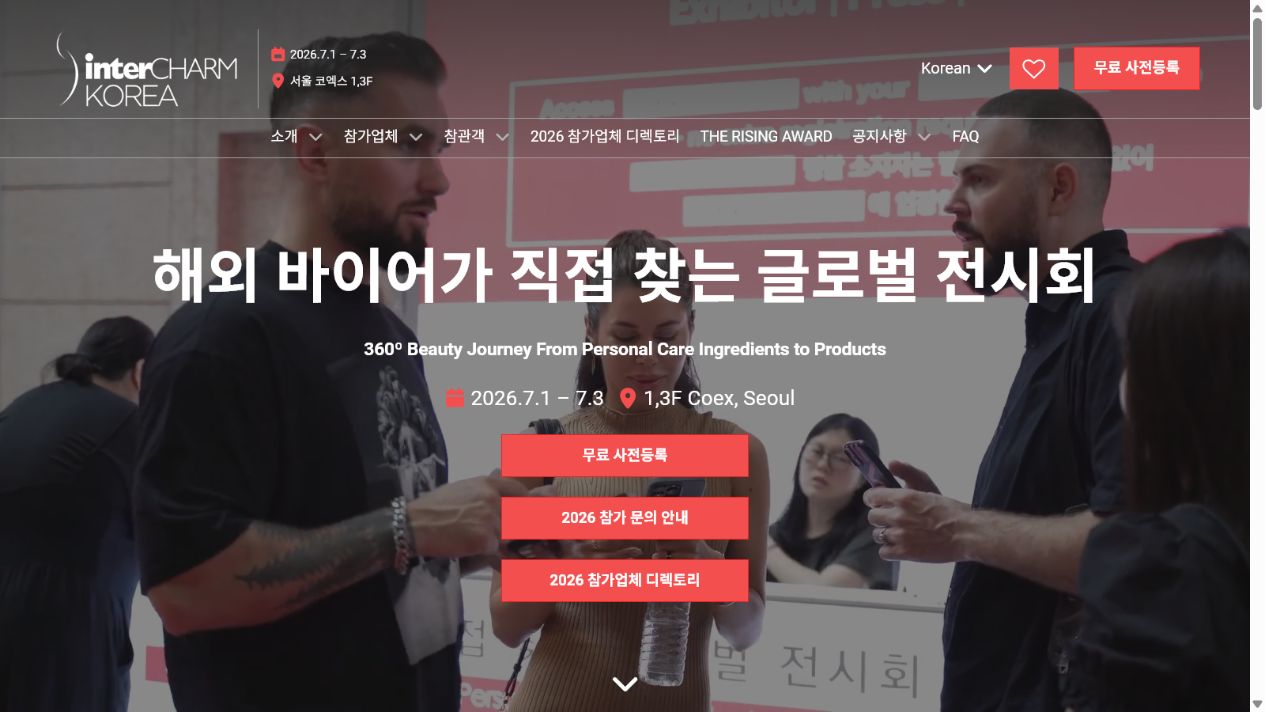
If you are still mapping the overall Korea supplier process, read How to Find Suppliers in Korea. If you plan to meet manufacturers in person, pair this with Korea Trade Shows for Overseas Buyers.
Launch planning check: For early project control, compare product-development notebooks or document organizers. A clean sample and document trail is more useful than a folder full of screenshots.
FAQ
For a public-company example of how Korean ODM, research, manufacturing, packaging coordination, and global factories connect, read EpicKor Business's COSMAX deep dive. It is an editorial company study, not a supplier endorsement.
Q: Is Korean ODM better than OEM for a small beauty brand?
ODM can be better if you need speed, concept support, and access to existing development work. OEM can be better if you already control the brief, formula direction, or product specification. The right choice depends on ownership, exclusivity, timeline, target market, and how much technical work your team can manage.
Q: Can a Korean manufacturer handle all compliance for my country?
Some manufacturers can support documents and regulatory coordination, but you should not assume they own your destination-market compliance. Labels, claims, ingredients, importer obligations, testing, and marketplace rules should be reviewed for the market where you sell.
Q: What is the first question I should ask a K-beauty OEM/ODM supplier?
Ask whether they are the manufacturer, ODM developer, trading company, brand owner, or distributor for the product type you want. That answer shapes every later question about pricing, ownership, samples, claims, and documents.
Q: Are functional cosmetics the same as regular cosmetics in Korea?
No. MFDS describes functional cosmetics as cosmetics with legally defined functions, and its public page explains evaluation/reporting paths and data requirements. If your concept involves whitening, wrinkle, UV, acne, hair-loss, or similar functional language, treat it as a regulatory checkpoint from the beginning.
Q: Should I ask for exclusive formula rights?
Ask, but be precise. Exclusivity can mean territory, time period, formula, concept, packaging, ingredient combination, or just brand presentation. A vague promise is not enough. Put the exact scope in written commercial and legal documents.
Sources and Further Reading
More Business Guides
Korean Cosmetics Wholesale Guide 2026: Authorized Distributors, Gray Market Risk, and Where Buyers Should Look
A Korean cosmetics wholesale guide covering authorized distributors, gray-market risk, sourcing platforms, category checks, and documents.
COSMAX Deep Dive 2026: The ODM Engine Behind Global K-Beauty
A public-info COSMAX deep dive explaining Korean beauty ODM, global factories, R&D, brand services, buyer checks, and expansion risks.
Korean Apparel Manufacturers 2026: Dongdaemun Sourcing Guide
An overseas-buyer guide to Korean apparel manufacturers and Dongdaemun sourcing: wholesale vs OEM, MOQs, sample rooms, quality checks, and export risk.