Korea's AI Exam Cheating Crisis 2026: Smart Glasses, the Tax Exam Confession, Suneung Rules and the Penalties Coming
Last updated: 20 November 2026. Every figure below was read in Korean from government releases (Ministry of Employment and Labor, Korea Policy Briefing) and Korean news reports dated between 13 October and 19 November 2026, listed at the end. Rules are marked in force or proposed. Nothing proposed had been passed into law by 20 November. Dollars are at ₩1,335 = US$1 (Bank of Korea ECOS, 17 November 2026), rounded.
Korea's AI exam cheating crisis reached the suneung on 19 November 2026. The Ministry of Education caught 98 cheaters on the day of the college entrance exam (수능, suneung), five of them using a device during the test, including one pair of smart glasses. Four days earlier, the top scorer of the 63rd national tax accountant exam (세무사 시험) had confessed that he passed by filming the questions with a micro camera and reading answers from generative AI. Since then the government has ordered an audit of all 528 national qualification exams held this year, and parliament has seen at least six bills.
This guide is for anyone who sits an exam in Korea: students, foreign residents taking TOPIK, TOEIC or TEPS, and applicants for licences. It sets out which devices are banned, why wearing smart glasses now counts as using them, what the penalty is today, what is only proposed, and the dates to watch.
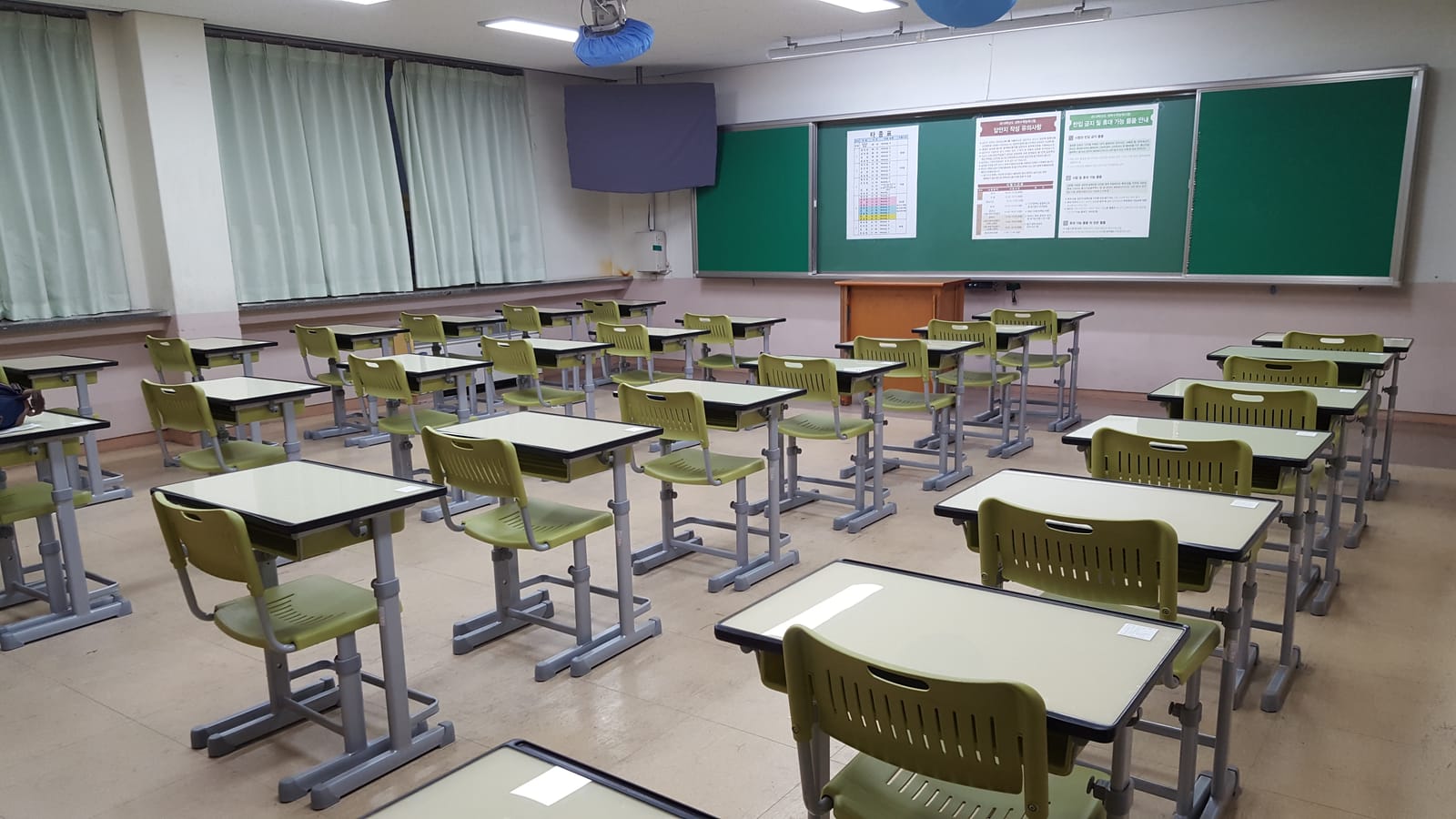
Sitting TOPIK II with no devices allowed? TOPIK Master Final Actual Test II has 10 timed mock papers to practise on, on AmazonAffiliate link. As an Amazon Associate, EpicKor earns from qualifying purchases at no extra cost to you.
Watch the 43-second summary:
Quick Guide: AI Exam Cheating Rules in Korea (20 November 2026)
| Exam | Smart glasses and devices | Penalty now (in force) | What is proposed |
|---|---|---|---|
| Suneung (수능, college entrance) | All electronics banned. Smart glasses must be handed in before period 1; wearing them counts as use | That year's exam void + barred from the next year's suneung (1 year, set in the Higher Education Act) | 10 years (government, DP leader); bills of 3–5 years. Needs a law change |
| TOPIK (한국어능력시험) | Smart watches, smart glasses, earphones, all wristwatches handed in before the test | Test void; suspension of up to 4 years for the worst cases | Up to 5 years for using AI devices or brokers; 2 years for merely carrying one (plan of 29 Sept 2026, start date not set) |
| TOEIC (Korea, YBM) | AI glasses caught twice in May 2026 | Score void; up to 5 years barred | No change announced |
| LEET (법학적성시험, law school test) | All glasses wearers' frames checked since July 2026 | July 2026 case: score cancelled + 4-year ban | Law schools' association studying new measures |
| National qualifications (tax accountant, technical licences) | New AI and camera devices targeted; radio detectors coming | Result void; 3 years for technical qualifications, 5 years for the tax accountant exam | Year-end package from the labour ministry; criminal bill of up to 5 years' prison |
The short version: in every Korean exam, having a smart device on you during the test is already treated as cheating, whatever you did with it. The length of the ban is what parliament is now arguing about.
Korean Grammar in Use: Intermediate — the Darakwon grammar book for TOPIK levels 3 and 4 If you are sitting TOPIK in Korea, every domestic site now has device detectors, so the only edge left is preparation. It is Darakwon's standard grammar book for the middle levels. Skip it if you are still on Hangul; start with free past papers on the official TOPIK site first. As an Amazon Associate, EpicKor earns from qualifying purchases at no extra cost to you.
See Korean Grammar in Use: Intermediate on AmazonWhat happened: three cases that set this off
The tax accountant exam confession (15 November)
On the morning of 15 November, the man who placed first in the 63rd tax accountant exam sent a written confession to the Seoul Metropolitan Police Agency through his lawyer, and told his story on a lawyer's YouTube channel the same day. By his own account, he used a micro camera to photograph the questions, sent them to a generative AI tool and read the answers off a screen. He said he did this in both rounds, in April and July (Seoul Shinmun, 15 November).
In round 1 he got 159 of 160 questions right, 397.5 points out of 400, missing one question in public finance. In tax law (세법학개론), the subject he scored perfectly in, this year's average was 30.18 and 74.21% of candidates fell below the subject's pass floor (과락률) (Wikitree, 17 November). He handed nine devices to police, including a micro camera, a laptop and a phone. No smart glasses or earphones were among them, so this was not the "AI glasses" method that had been in the news all autumn.
He appeared at the police agency as a suspect on 17 November. Police are considering obstruction of official duties by deception (위계에 의한 공무집행방해) and obstruction of business (업무방해). The National Tax Service has started proceedings to void his pass and bar him from the exam for five years; he gets a hearing before a final decision (MTN, 16 November). EpicKor is not naming him.
The July LEET smart glasses case
On 19 July 2026, at a LEET test site in the Seoul area, a man in his 20s passed the pre-exam glasses check wearing ordinary frames, then switched to AI smart glasses during period 2, logical reasoning (추리논증). A proctor caught him. It was the first smart-glasses case since the LEET began in 2008. In August, the Korean Association of Law Schools (법학전문대학원협의회) cancelled his score and barred him for four years, and police opened an investigation (Seoul Shinmun, 14 October).
The LEET perfect-score allegation
A separate, unconfirmed allegation spread online around 15 November about a candidate who scored full marks on the LEET. On 16 November an official of the law schools' association said he had not been caught cheating at the test and that it saw no need for an investigation. On 18 November two lawyers filed criminal complaints, which Seoul police took up. He denied the allegation, and it was never confirmed. He was found dead on 19 November. The cause has not been announced. Police said on 19 November that they would continue the case (Financial News, 18 and 19 November).
If you or someone you know is struggling, in Korea call 109 (24 hours); elsewhere, findahelpline.com.
The suneung on 19 November: 98 caught
The 2027 suneung was held on Thursday 19 November 2026, with 551,864 registered candidates, 2,310 fewer than last year (Kyunghyang Shinmun, 15 November). It was the first suneung run under an explicit smart-glasses rule.
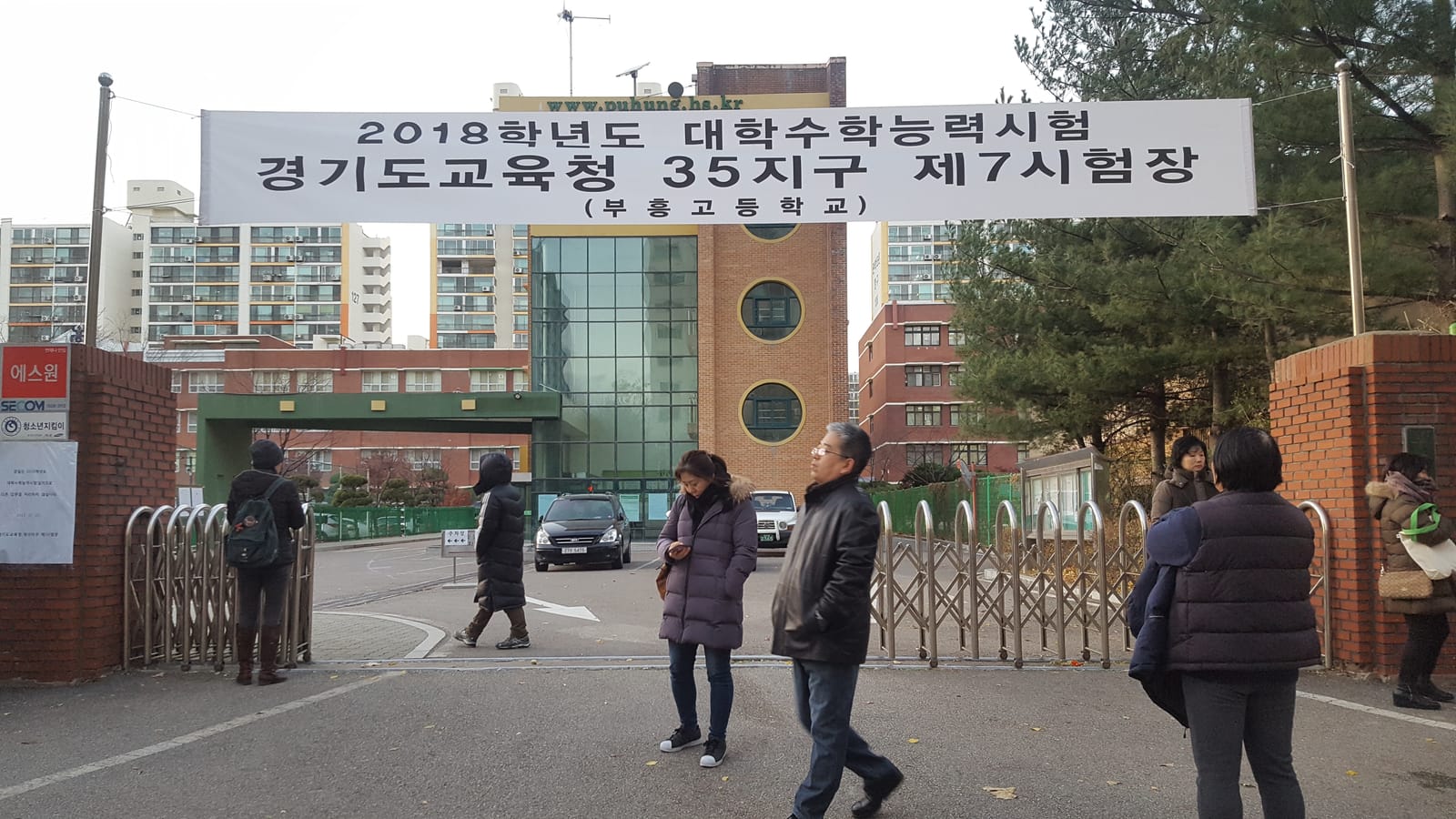
At a 7 p.m. briefing, Vice Minister of Education Choi Eun-ok gave the day's count as of the end of period 4 (4:37 p.m.) (Kyunghyang Shinmun, 19 November):
| How they were caught | People |
|---|---|
| Phone gave itself away when the ministry sent emergency alert texts (위급재난문자): 8:30 a.m. 31, 2:21 p.m. 11, 2:57 p.m. 7 | 49 |
| Device found on the candidate in other checks (includes 2 found by Wi-Fi signal detection in Seoul) | 44 |
| Device used or found in use during the exam | 5 |
| Total treated as cheaters | 98 |
The five in-exam cases were: smart glasses in South Chungcheong (충남); a small camera and wireless earphones found on a candidate in Gyeonggi; a smartphone used to photograph the question paper in Seoul; and one person each in Seoul and Gyeonggi using a smartphone in the toilet. The count was a same-day figure and may still change.
The emergency texts are a simple trick. An emergency alert makes a switched-on phone sound or light up, so a phone that should have been handed in gives itself away. Half of the day's catches (49 of 98) came that way.
Radio-frequency detectors were not used. The ministry said in its 29 October plan that it would check whether a detector being developed for exam rooms could be supplied to test sites at next year's suneung, in November 2027.
What was in place, under a government order announced by Prime Minister Han Seong-suk on 17 November: glasses taken off, laid on the desk and checked before period 1, then checked again each period while worn, with metal detectors if a proctor was suspicious; about 8,400 extra staff (roughly 1,800 smart-device staff and 6,600 corridor proctors) on top of the usual team (Financial News, 17 November). Separately, under the ministry's 29 October plan, at least one dedicated glasses checker was assigned to each of the 1,312 test sites (YTN, 16 November).
What counts as cheating now
Across Korean exams, possession is the offence.
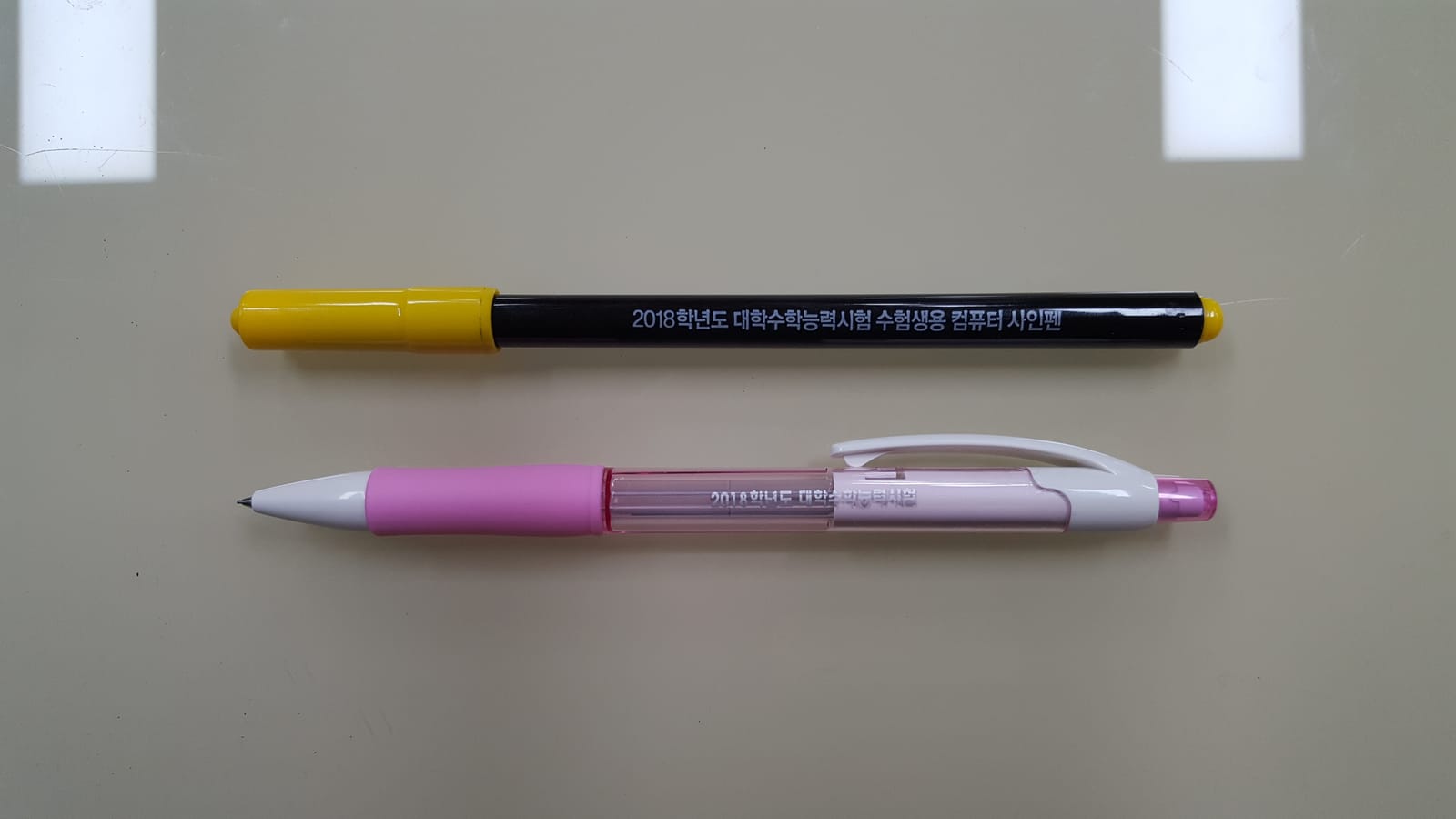
- Suneung. All electronics are banned from the room: phones, smart watches, smart glasses, tablets, Bluetooth earphones, electronic dictionaries. Smart glasses had to be handed to the proctor before period 1. If you are found wearing them during the test, it is cheating under Article 19 of the suneung administration rules (관리규정) "regardless of whether they were actually used" (실제 사용 여부와는 관계없이). Refusing a proctor's request to check your belongings can also count (Korea Policy Briefing, 16 November).
- National technical qualifications (기술자격, run on Q-Net by HRD Korea). Cheating ends the test or voids the result on the spot, and under Article 10(6) of the National Technical Qualifications Act you cannot sit any national technical qualification exam for three years.
- TOPIK. At round 109, all wristwatches, analogue as well as digital, had to be handed in before the test, along with smart watches, smart glasses, earphones, power banks and e-cigarettes. Keeping one on you, even at break, can be treated as cheating (see our TOPIK 2027 guide).
- TOEIC in Korea. The YBM Korea TOEIC Committee announced on 9 June 2026 that proctors had caught two candidates wearing AI smart glasses at the May sessions. Scores are voided if cheating is confirmed, and a candidate can be barred for up to five years (Korea Times, 10 June).
- University exams. On 3 October a candidate at the University of Seoul's science essay exam (논술) swapped to smart glasses after the ID check; he was removed and given a three-year exam ban. On 10 October Yonsei caught a candidate doing the same in its math essay exam, despite a new check in which proctors try on candidates' glasses (Weekly Kyunghyang, 13 October).
Beyond the exam rules, criminal law already applies. The government says serious cases, such as using a smart device, will be reported for obstruction of official duties by deception, which carries up to five years in prison (Financial News, 17 November). A police "exam cheating TF" started on 16 November to look at online confessions and at sellers and buyers of hidden cameras.
For foreigners: TOPIK, TOEIC and TEPS
If you are a foreign student or resident, the exam you are most likely to sit in Korea is TOPIK, and it was moving on AI cheating before the suneung did.
On 29 September 2026 the Ministry of Education and the National Institute for International Education (국립국제교육원, NIIED) published a TOPIK reform plan. On cheating it proposes (Financial News, 29 September):
- Up to 5 years of suspension for proxy test-taking, leaking questions, forging ID, using an AI device to solve questions, or working with a broker. The current maximum is four years.
- 2 years for simply carrying an AI device or phone, or trying to search on your own.
- Universities would not receive your TOPIK scores during the ban.
- Moving the rules from a presidential decree into an Act. The start date had not been set.
Two things are already in place. Radio detectors that pick up AI-glasses signals have been installed at all TOPIK test sites in Korea, with overseas sites to follow next year, which is further than the suneung went. And only a physical ID is accepted: passport or residence card, not a mobile ID, because screen IDs had been forged. NIIED said three smart-glasses cases had been caught so far.
TEPS, the Seoul National University English test, had a smart-glasses case in April 2026 (Weekly Kyunghyang, 13 October). We found no official sanction figure for it, so check the TEPS centre's own rules before you sit.
A practical rule for any test in Korea: if it has a battery, hand it in or leave it at home. That includes ordinary-looking glasses with a camera, a smart ring and, at TOPIK, an analogue watch. If you need prescription glasses, expect a proctor to take them off you and look at them, perhaps more than once.
You might like: TOPIK 2027 in Korea: Every Test Date, PBT vs IBT Fees and the ₩50,000 Fee Support That Closed in October
Penalties now vs penalties proposed
The 10-year ban is a proposal. As of 20 November, no bill on exam cheating had passed.
| Proposal | Who | What it would do | Status |
|---|---|---|---|
| Suneung ban from 1 year to 10, applied to this year's cheaters; admissions cancelled, 10-year bar from university admission | Government (PM address, 17 Nov); DP leader Kim Min-seok | Needs a Higher Education Act amendment, because "1 year" is written into the law | Proposed |
| Ban of 3 years | Rep. Lee In-seon (PPP, filed 11 Nov); Rep. Park Sun-won (DP) | Higher Education Act amendment | Filed |
| Ban of 5 years | Rep. Ko Min-jung (DP), Rep. Kim Moon-soo (DP), Rep. Kim Hee-jung (PPP) | Higher Education Act amendment; Kim Moon-soo's would share cheating records among universities | Filed |
| National Exam Fairness Protection Act (국가시험 공정성 보호법) | Rep. Ahn Gyu-baek (DP) | Up to 5 years' prison or ₩50 million (about US$37,500); for profit or by exam staff, up to 7 years or ₩70 million (about US$52,400) | Filed |
| Criminal Act amendment | Rep. Park Sun-won (DP) | Heavier penalties for obstructing an exam with AI or ICT devices | Filed |
| Special committee on exam fairness | Rep. Ahn Gyu-baek (DP) | 18 members; report to the plenary session by 31 January 2027 | Proposed resolution |
Source: Korean Center News, 17 November, from the bills as filed. The Ministry of Education itself had proposed going from one year to three on 29 October (SBS Biz, 29 October), before the tax exam confession pushed the debate to ten. The People Power Party's policy chief, Im Yi-ja, also said the party would push a special act on exam-cheating penalties.
One open question is retroactivity. The government wants a new ban to apply to the 98 people caught on 19 November. Whether a longer ban can legally apply to an offence committed before the law changed is exactly what parliament will have to settle, so treat "retroactive 10-year ban" as a political aim, not a rule.
What the government is changing
National qualification exams. After an emergency meeting on 15 November, the Ministry of Employment and Labor (고용노동부) announced on 16 November (Korea Policy Briefing):
- An audit of every national qualification exam held in 2026 for AI-assisted cheating, using the patterns in the tax case. MTN put the scope at 528 exams (491 technical, 37 professional), screened for unusually high scores, sudden pass-rate jumps and large gaps between subjects.
- A re-check of tax accountant passers' scores from the past 3 to 5 years by a task force of the finance ministry, the National Tax Service and HRD Korea (한국산업인력공단) (MTN, 16 November).
- Online and offline reporting centres for cheating.
- Radio detectors being developed by the Korea Communications Agency (KCA, 한국방송통신전파진흥원), to be brought in as soon as possible, plus more proctors per site and longer proctor training. HRD Korea's tighter supervision, including more CCTV, applies from next year's tax accountant exam (MTN, 16 November).
- A comprehensive plan by the end of 2026.
Suneung. Beyond the 19 November measures, the government says it will work with global tech companies and telecoms after the exam to trace AI service access logs and phone records for cheating that was not caught on the day. A reporting centre (수능 부정행위 신고센터) on the Ministry of Education website takes tips after the exam.
Bar exam and LEET. The Ministry of Justice is reviewing radio detectors to find smart glasses at the bar exam (변호사시험) and has tightened the rule that devices are handed in first. According to an official of the law schools' association, which has checked the glasses of every glasses-wearing LEET candidate since July, it is studying further steps (Korean Center News, 16 November).
Timeline of 2026 cases
| Date (2026) | Event |
|---|---|
| April | Smart glasses caught at a TEPS test site. Round 1 of the 63rd tax accountant exam |
| May | Two TOEIC candidates caught in AI glasses (announced 9 June). A man in his 40s caught at a fire-safety engineer exam and referred for a summary indictment |
| July | Round 2 of the tax accountant exam |
| 19 July | LEET: smart glasses caught in period 2, first since 2008. August: score cancelled, 4-year ban |
| 29 September | TOPIK plan: up to 5-year bans, detectors at all domestic sites |
| 3 October | University of Seoul essay exam: candidate removed, 3-year ban |
| 10 October | Yonsei essay exam: candidate caught after swapping glasses |
| October (reported by 13 Oct) | The suneung exam plan lists smart glasses as a prohibited item |
| 29 October | Education ministry plan: criminal complaints, 1-year ban to 3, a glasses checker at every site (SBS Biz, 29 October) |
| 15 November | Tax accountant exam top scorer confesses to AI cheating; labour ministry emergency meeting |
| 16 November | Audit of all 2026 national qualification exams; tax passer re-check; police exam cheating TF |
| 17 November | PM address: 8,400 extra staff, 10-year ban plan. Bills of 3–5 years and a criminal bill filed |
| 18 November | Criminal complaints filed over the LEET perfect-score allegation, which the candidate denied |
| 19 November | Suneung: 98 caught, 5 using devices. Police say the case of the LEET candidate at the centre of the allegation continues (see the LEET section above; helpline 109) |
What to watch next
- Before 11 December: a cheating review committee (부정행위심의위원회) decides the 98 cases, including appeals. Scores go out on 11 December.
- By 31 December: the labour ministry's comprehensive anti-cheating package for national qualification exams, and the first results of the 528-exam audit.
- Bills: whether the Education Committee merges the 3-, 5- and 10-year proposals, and whether any new ban can reach this year's cheaters.
- By 31 January 2027: the report of the special committee on exam fairness, if the resolution creating it passes.
- Police: the tax accountant case, the July LEET case, and the hidden-camera sellers being looked at by the police TF.
- TOPIK: the start date for the new 2- and 5-year bans. Registration for the first 2027 sitting opens on 8 December, as listed in our TOPIK guide.
You might like: Korea's Exam Day: Why Planes Stop for Suneung and How to Plan Around It
FAQ
Q: Is wearing smart glasses in a Korean exam cheating even if I don't use them? A: Yes, at the suneung. The administration rules treat wearing smart glasses during the test as cheating "regardless of whether they were actually used". The result is void and you lose the next year's suneung. TOPIK, TOEIC and national qualification exams also treat carrying a smart device during the test as cheating.
Q: Is there a 10-year ban for suneung cheating now? A: No. The ban in force is one year, written into the Higher Education Act. The government and the Democratic Party leader want ten years, and bills propose three or five. None had passed by 20 November 2026.
Q: How many people were caught cheating at the 2026 suneung? A: 98 on the day, as of 4:37 p.m. on 19 November: 49 through emergency alert texts, 44 with a device found on them, and 5 caught with a device in use during the test, one with smart glasses. Final decisions come before scores are released on 11 December.
Q: What happened with the tax accountant exam? A: The 63rd exam's top scorer confessed on 15 November that he used a micro camera and generative AI in both rounds. Police are investigating, and the National Tax Service has started proceedings to void his pass with a five-year ban. Past passers from the last 3 to 5 years are being re-checked.
Q: Can I wear a watch to TOPIK? A: No. At round 109 all wristwatches, analogue included, had to be handed in, along with smart watches, smart glasses and earphones. Domestic TOPIK sites now also have radio detectors for AI glasses.
Q: Is the LEET perfect-score cheating claim true? A: It was never confirmed. An official of the law schools' association said the candidate was not caught cheating at the test, and he denied the allegation. Police said on 19 November that they would continue the case.
Sources
- 2027 suneung cheating count, breakdown and 11 December timetable: Kyunghyang Shinmun, 19 November 2026 (Ministry of Education briefing). Registered candidates: Kyunghyang Shinmun, 15 November 2026.
- Education ministry plan of 29 October (criminal complaints, 1-year to 3-year proposal, one checker per site, detectors next year): SBS Biz, 29 October 2026. 1,312 test sites and dedicated checkers: YTN, 16 November 2026.
- PM address measures (8,400 staff, glasses checks, AI access-log tracking, 10-year plan, criminal charge, police TF): Financial News, 17 November 2026.
- Suneung "wearing counts as use" rule, Article 19, and the National Technical Qualifications Act three-year bar: Korea Policy Briefing, 16 November 2026.
- Labour ministry audit and measures: Korea Policy Briefing, 「올해 실시 국가자격시험 전수조사」, 16 November 2026. Tax task force, 528 exams, NTS proceedings: MTN, 16 November 2026.
- Tax accountant confession, method and round 1 result: Seoul Shinmun, 15 November 2026; devices, score and subject averages: Wikitree, 17 November 2026.
- July LEET case and penalty: Seoul Shinmun, 14 October 2026; YTN, 17 November 2026.
- Law schools' association statement, LEET and bar exam measures: Korean Center News (Yonhap), 16 November 2026. Complaints and police: Financial News, 18 November 2026; Financial News, 19 November 2026.
- Bills and special committee: Korean Center News, 17 November 2026.
- University of Seoul, Yonsei, TEPS, TOEIC and fire-safety exam cases: Weekly Kyunghyang, 13 October 2026. TOEIC sanctions: Korea Times, 10 June 2026.
- TOPIK cheating plan, detectors and ID rule: Financial News, 29 September 2026; Ministry of Education and NIIED press release 「토픽 개편 및 시행 확대 방안」, 29 September 2026, as cited in our TOPIK guide. Round 109 banned items: same guide.
- Helplines: Korea's 24-hour mental health crisis line 109; international directory findahelpline.com.
- Exchange rate: Bank of Korea ECOS, ₩1,335.0 per US dollar, 17 November 2026.
You Might Also Like
Travel Insurance for Korea: Required? What Care Costs Without It
Korea asks visa-free and K-ETA visitors for no travel insurance, and tourists cannot join its national scheme. Uninsured, a regional ER charges ₩68,070 to walk in. The hospital papers you need to claim, and what each one costs.
Korea's Year-End K-pop Shows 2026: SBS Gayo Daejeon at KINTEX on 24–25 December, Who Can Attend, How to Get There
SBS Gayo Daejeon 2026 runs two days for the first time: 24–25 December at KINTEX, Ilsan, with 44 acts. Who can get in (fan clubs, foreigner-only packages), the last GTX-A train at 00:42, the ₩4,200 fare, and what KBS and MBC have and have not announced.

Korean Funeral Etiquette: How Much Money to Give and What to Do at the Funeral Hall
Korean funeral etiquette for foreigners: ₩100,000 is now the most common condolence envelope (61.8% in a May 2026 survey of 1,500 adults); 25.7% give ₩50,000 or less, the legal cap for officials. The envelope, the bows, the meal and when to go.