Korean Marathon Runner Died in Seoul: Korea's Running Backlash, Rules and Real Costs
Last updated: 17 October 2026. Facts about the 11 October race come from the organising committee's notice as reported by Korean newspapers. Survey figures, complaint counts, prices and race fees come from Korean press, Garmin Korea's own press releases and Nike Korea's store, read on 17 October 2026. Sources are at the end. Dollar figures use about ₩1,342 to the US dollar (Federal Reserve rate, 9 October 2026).
Korea's running boom has reached its awkward stage. In 2024 the country logged 1,008,122 race entries across 254 races, up from about 9,000 in 2020. We covered that rise, and the crews that came with it, in our guide to Seoul running crew culture. In the autumn of 2026 the story changed. A young runner died in a Seoul half marathon. Strangers then turned her death into a social-media workout trend. And a dog-shaped GPS route began sending packs of runners through Seochon's one-car alleys.
None of this means you shouldn't run in Seoul. It does mean the city you're running in is tired of runners, and you should know why before you lace up. Below: what happened, what Koreans are angry about, what the rules say, and what running here actually costs in October 2026.
The flat waist pouch that holds a phone, T-money card and room key on a Han River run: SPIbelt Original running belt, on AmazonAffiliate link. As an Amazon Associate, EpicKor earns from qualifying purchases at no extra cost to you.
Quick Guide: Running in Korea Right Now (October 2026)
| Question | Short answer |
|---|---|
| What happened at the Seoul half marathon? | On 11 October 2026 a woman in her twenties collapsed at 20.6 km of the 2026 Seoul Race half marathon, about 500 m from the finish, and later died in hospital. The cause has not been made public. |
| What is an 애도런 (aedo-run, "memorial run")? | Runners posting their own run, with distance and time, "in memory of" the runner who died. Many Koreans called it self-promotion. |
| Do Koreans dislike running crews? | In an April 2026 Embrain survey, 44.9% viewed crews unfavourably and 33.9% favourably. 70.6% said some restriction is unavoidable. |
| What is the 댕댕런 (daengdaeng-run, "doggy run")? | An ~8 km loop from Gwanghwamun past Gyeongbokgung and through Samcheong-dong and Jongno. Its GPS track draws a dog on the map, and it's the route residents complain about. |
| What does a GPS watch cost in Korea? | Garmin Korea's list prices run from ₩399,000 (Forerunner 70) to ₩1,490,000–1,890,000+ (fēnix 9 series). |
| What does a big marathon cost? | ₩70,000–150,000. JTBC Seoul and Chuncheon charge ₩150,000 for the full marathon and ₩100,000 for 10 km. |
| Are group runs restricted? | Locally, yes. Banpo Sports Complex: groups of five or more must keep 2 m between runners. Seokchon Lake: Songpa asks groups of three or more not to run together. |
| What do I actually need? | Shoes you already own, your phone and a free app. The rest is optional. |
Garmin Forerunner 165 — Garmin's entry GPS running watch If the Korean price list below makes you wince, this is the model Garmin sells to beginners in the US. It has built-in GPS, pace and heart rate and free coached plans, without fēnix money. Most first-time runners in Seoul use their phone and never need it. As an Amazon Associate, EpicKor earns from qualifying purchases at no extra cost to you.
See the Forerunner 165 on AmazonWhat Happened at the 2026 Seoul Race
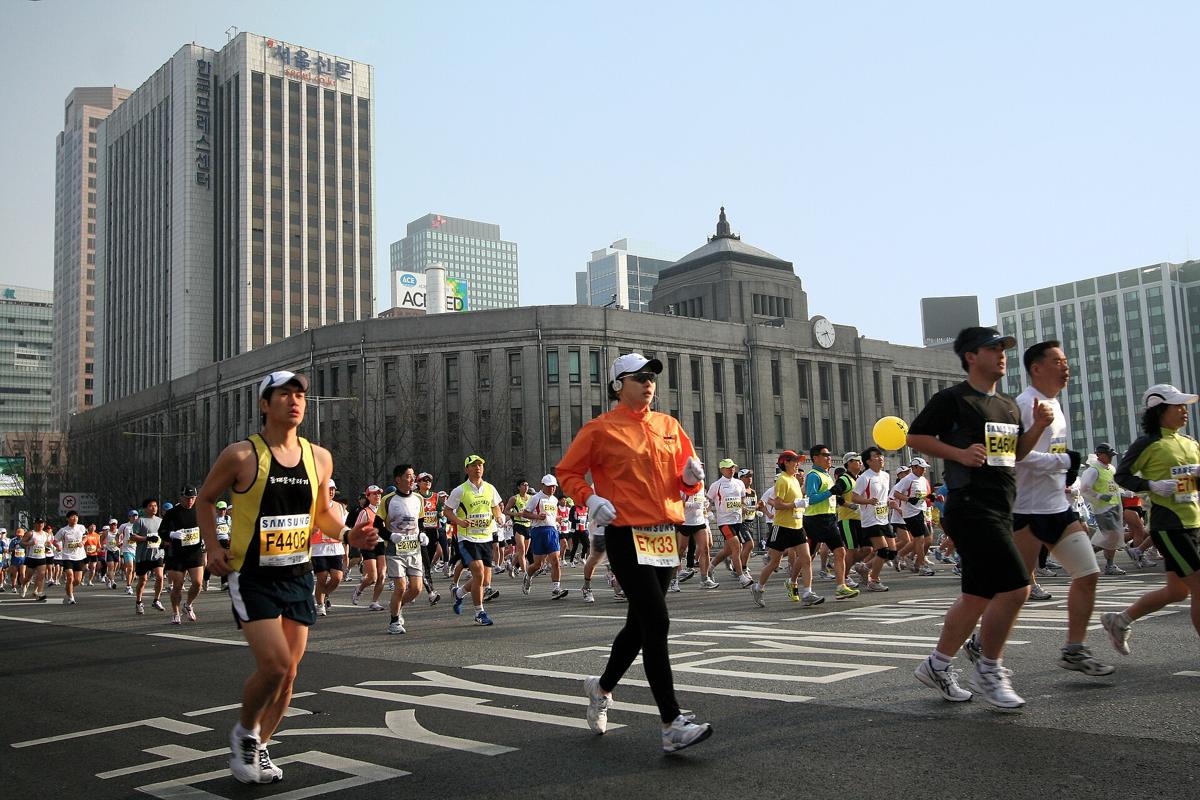
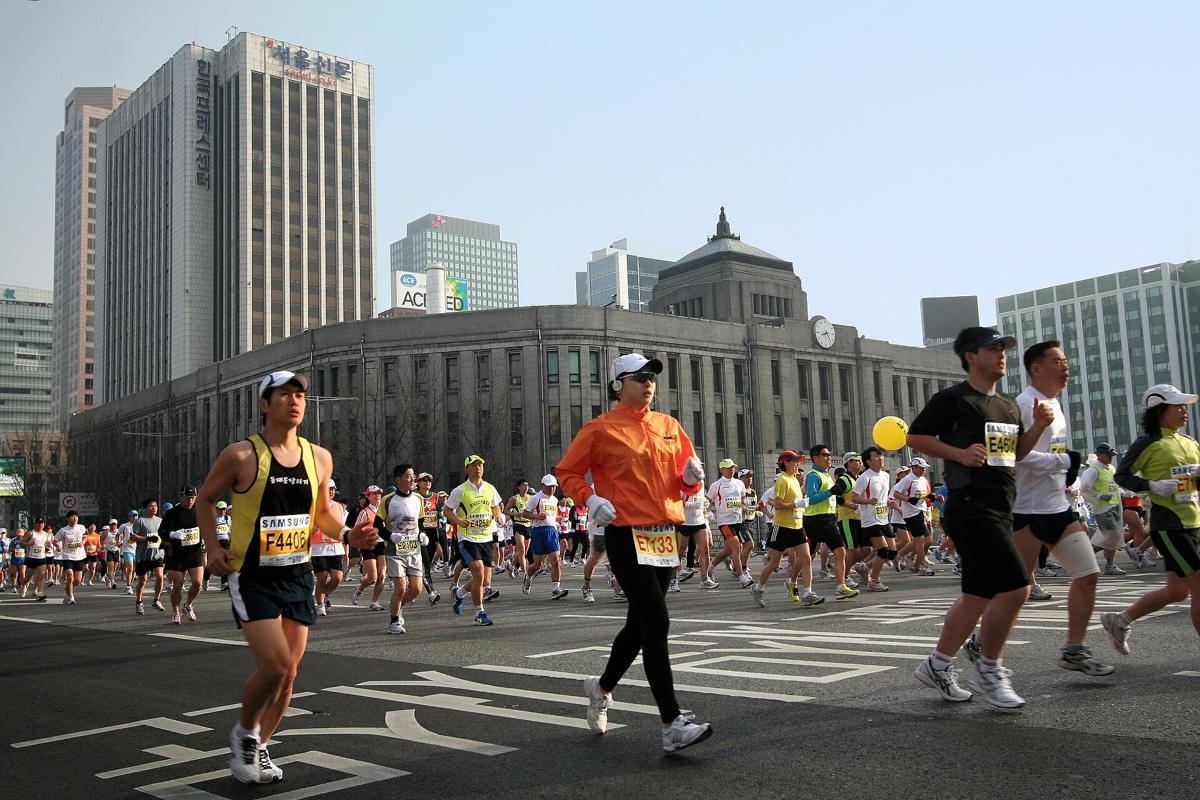
The 2026 Seoul Race (서울레이스) was held in central Seoul on Sunday 11 October 2026. It started at Seoul Plaza at about 7:30 a.m. About 12,000 runners took part across a half marathon and an 11 km race, on a course through Jongno, Euljiro, Namdaemun, Dongdaemun and along Cheonggyecheon.
At about 8:49 a.m., a woman in her twenties running the half marathon collapsed at the 20.6 km mark, on Cheonggyecheon-ro in Jongno. That was roughly 500 m before the finish. According to the organising committee, a race official called 119 and performed CPR at the scene. She was taken to hospital by ambulance after first aid and died there. The committee announced her death on 12 October. It offered condolences to her family and said it would "closely review the matter and take the necessary follow-up measures." It has not said what those measures are.
What is not known: the cause of death. As of 17 October, no official cause had been published. Korean reports that use the words "cardiac arrest" are not citing an official diagnosis. Neither the organiser nor the authorities have linked the death to heat, the course or the medical cover. We are not naming her: she was a private person, and that matters for what happened next.
Korean coverage that week turned to what is known about race deaths in general. Kormedi, a Korean health outlet, cited a large US study published in the New England Journal of Medicine in 2012. It covered about 10.9 million marathon and half-marathon runners and found that cardiac arrests cluster in the final quarter of a race or just after the finish. Hwang Young-cho, Korea's 1992 Olympic marathon champion, put it more bluntly on his YouTube channel: "The person who knows how to give up is the person who runs well." He worried that amateurs were racing undertrained and pushing for times because of social media.
The 애도런 (Memorial Run) Row
Within days, some Korean runners started posting what they called an 애도런 (aedo-run), a "mourning run." On Threads and Instagram, runners went out "for her" and posted the proof: the distance, the time, sometimes a run shaped into a drawing. Some posts promised that "we'll run the remaining 500 m for her."
One post set it off. On 16 October a runner shared photos of a pre-dawn run dedicated to her, with the GPS record attached: 25.01 km in 2 hours 29 minutes. Korean outlets picked it up within hours. The Financial News headline quoted a commenter calling the whole thing "grotesque" (기괴하다). News1 led with another: "Her parents are crying and asking people to stop."
The criticism, as Korean outlets summarised it:
- It turns grief into a workout log. "If you really mourn, mourn quietly. Running alone is understandable; displaying it on social media is not."
- It uses a stranger's name and face. Posters were sharing her name and photos without her family's consent. Commenters called that a form of 2차 가해 ("secondary harm") to the bereaved.
- It advertises the poster. The detail people fixed on was the record screenshot itself.
A minority defended it. Some said runners grieve in their own way, and pointed to CrossFit gyms and running clubs abroad that hold memorial workouts for members who have died. One Threads user conceded it "doesn't quite fit Korean sentiment yet." That clash is the story. Korean funeral culture is quiet and family-led. Proof-posting and "인증" (verification) culture are the engine of the running boom. In this case they collided.
What this means for you: if you join a Seoul run this autumn, don't post a tribute to someone you didn't know. It will read as the thing Koreans are angry about.
You might like: Han River Running Guide: Seoul Routes and Night Safety
Why So Many Koreans Are Annoyed: The Numbers
The memorial-run row landed on a public that was already irritated. In April 2026 the market-research firm Embrain Trend Monitor asked 1,000 Koreans aged 13 to 59 about runners and crews:
| Embrain Trend Monitor, April 2026 (n = 1,000, ages 13–59) | Share |
|---|---|
| Unfavourable view of running crews | 44.9% |
| Favourable view | 33.9% |
| Reason: crews block pedestrians and feel threatening (multiple answers) | 68.2% |
| Reason: they disrupt safe, comfortable use of public space | 59.9% |
| Reason: it looks like socialising or dating is the real point | 53.2% |
| Some restriction on crews is unavoidable | 70.6% |
| Usually run alone (share of respondents who run) | 78.9% |
Read that last line again. Most Korean runners run alone, so the dislike isn't of running. It's of the pack. The Ministry of Culture, Sports and Tourism's 2025 National Sports Survey found that running's share among people who exercise regularly rose from 4.8% in 2024 to 7.7% in 2025, as reported by the Korea Economic Daily. More runners on the same paths and alleys means more friction, and formal complaints keep coming in. Jongno District logged 7 running-related complaints in 2025 and 5 in January–September 2026. The Seoul Jungbu Park Leisure Center logged 44 in 2025.
Those are small numbers. The anger in comment sections is much larger than the paperwork. That gap is why districts put up banners rather than bans.
The 댕댕런: A Dog Drawn on the Map Through Seochon's Alleys
The newest flashpoint is a GPS drawing. GPS art runs (드로잉런, "drawing runs") are routes planned so that your watch's track draws a picture on the map. The famous one in Seoul is the 댕댕런 (daengdaeng-run, "doggy run"). 댕댕이 is Korean internet slang for a dog.
- The route: about 8 km. It starts at the Gwanghwamun Woldae (the restored royal terrace in front of the gate) and runs past Gyeongbokgung, Cheong Wa Dae and Samcheong-dong, then through Jongno and along Cheonggyecheon back to the start.
- Why it boomed: TV host Jeon Hyun-moo ran it on MBC's I Live Alone (나 혼자 산다), and the screenshot of the dog is perfect for proof-posting.
- Other shapes: a sweet potato (고구마) around the edge of Yeouido, and a chick (병아리) in Seoul Forest.
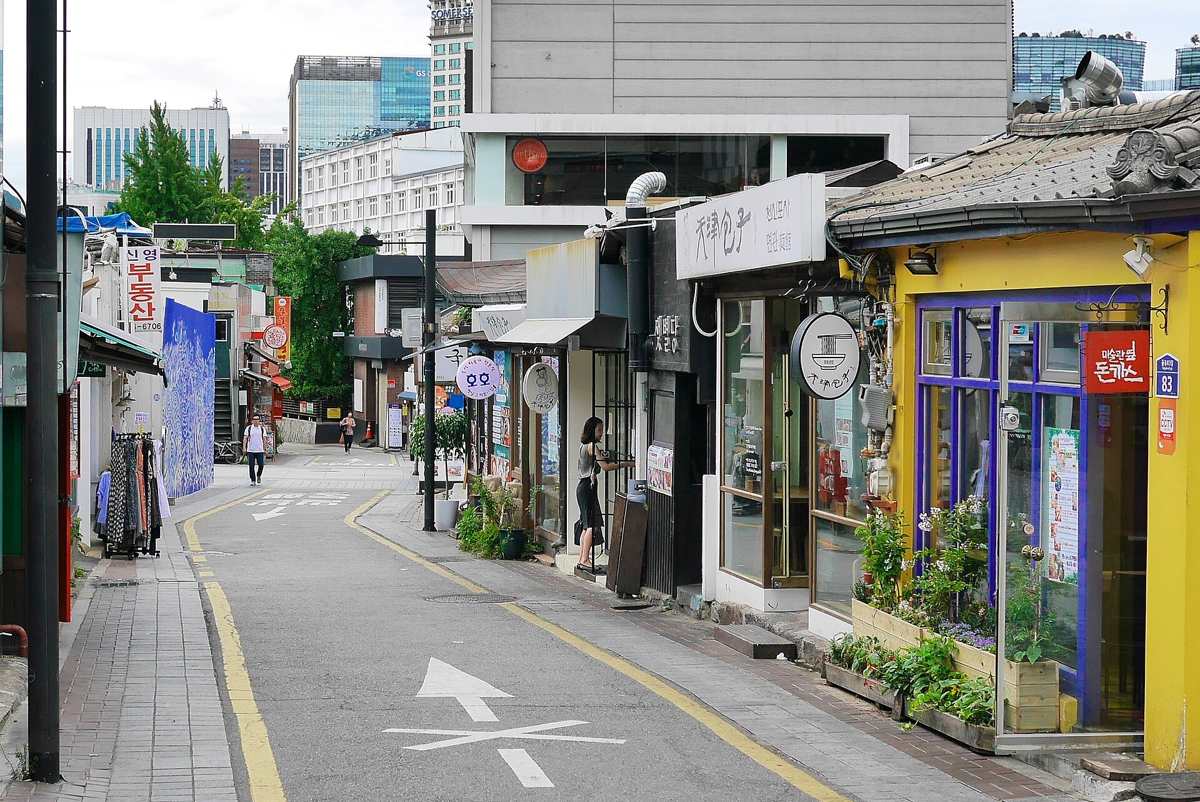
The trouble is the nose. To close the dog's snout, the GPS track has to pass through a particular alley near the Tongui-dong post office on Jahamun-ro. A Korea Economic Daily reporter walked the course on 8 October. The alley is so narrow that one car fills most of it, with no separate pavement, and trees, planters and shop signs squeeze the edges. Runners can't skip it, or the drawing breaks. Residents told the reporter that runners who aren't given room sometimes swear at the people walking there. One pedestrian told JTBC News in September: "We didn't do anything wrong."
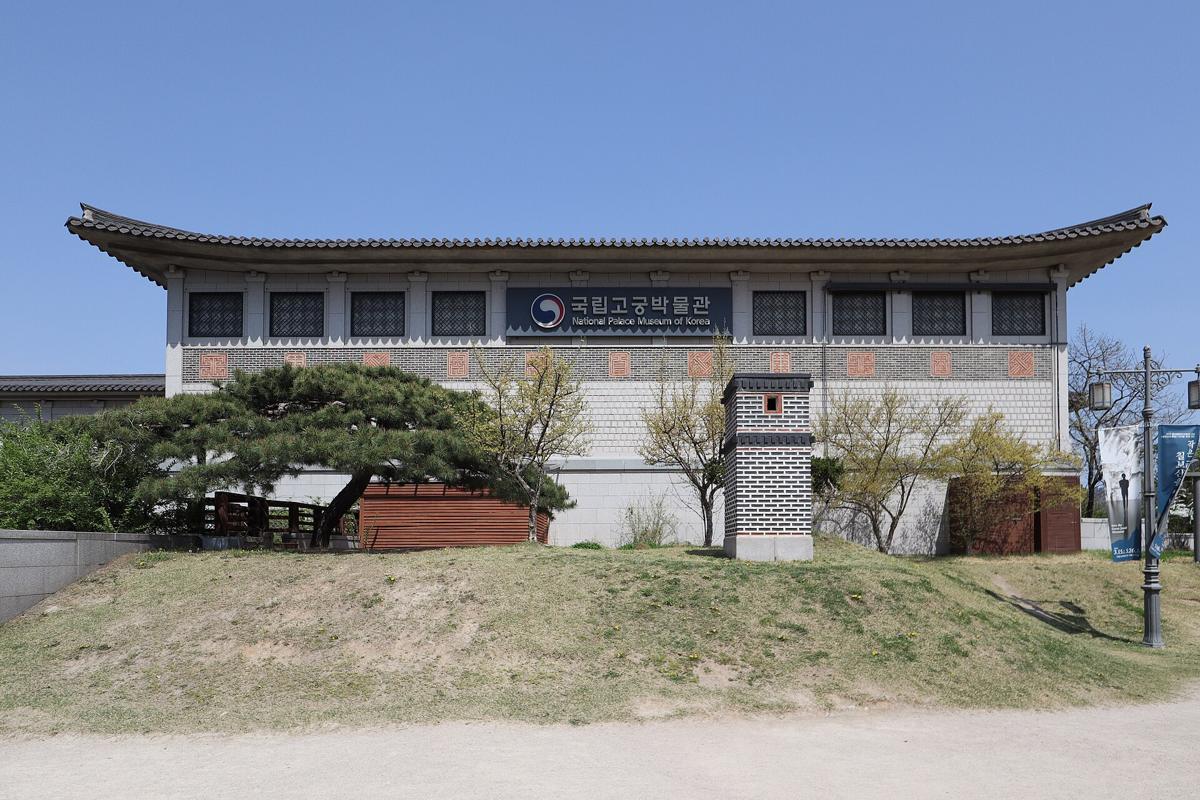
Then there were the lockers. The National Palace Museum of Korea, beside Gyeongbokgung, has free lockers for museum visitors. Runners began using them as a free bag drop for the doggy run. On 3 September the museum posted on Instagram asking people to stop storing running gear "for a while." Its sign read "러닝용품 그만" ("no more running gear"). JTBC reported that drinks were being left behind because visitors can't take them into the galleries. When runners objected, the museum softened the wording into a thank-you note.
The official response so far is soft. Jongno District has hung banners asking runners to follow running etiquette. In December 2025 the Presidential Security Service said it would not close the doggy-run route after the presidential office moved back to Cheong Wa Dae. Not everyone is against the runners, either. Sports brands in Seochon and Bukchon now rent gear and hold bags, and a district official told the Korea Economic Daily that the routes are bringing in visitors. Lee Eun-hee, professor emerita at Inha University, suggested that districts, residents, cultural sites and running companies agree walking zones, group rules and bag-storage options together.
Should you run it? You can. It's a public route and nobody will stop you. But run it early on a weekday, alone or in pairs. Walk the nose alley. Store your bag at a paid locker or a running hub, never the museum. Your map will still show a dog.
What Running in Korea Costs Now (October 2026)
Running used to be the cheap sport. In Korea it no longer is, and the gear has become part of the show. Garmin is the badge. Runners wear the watch to the office and to dinner, and the price list explains why it reads as a status item:
| Item (Korea, October 2026) | Korean price | About |
|---|---|---|
| Garmin Forerunner 70 (entry GPS watch, launched May 2026) | ₩399,000 | $297 |
| Garmin Forerunner 170 / 170 Music | ₩479,000 / ₩559,000 | $357 / $417 |
| Garmin Forerunner 570 | ₩799,000 | $595 |
| Garmin Forerunner 970 (top running model) | ₩1,089,000 | $811 |
| Garmin fēnix 9 (from) | ₩1,490,000 | $1,110 |
| Garmin fēnix 9 Pro AMOLED / Pro Solar (from) | ₩1,690,000 | $1,259 |
| Garmin fēnix 9 Pro leather-band model (from) | ₩1,890,000 | $1,408 |
| Nike Alphafly 3 carbon-plate racer (list / on sale at Nike Korea) | ₩339,000 / from ₩237,300 | $253 / $177 |
| Nike Vaporfly 4 | ₩309,000–319,000 | $230–238 |
| adidas Adizero Adios Pro 4 | ₩299,000 | $223 |
| Running-shoe rental at a Bukchon run hub (two hours) | ₩5,000 | $3.70 |
Garmin prices are Garmin Korea's recommended retail prices from its own press releases. The fēnix 9 figures are "from" prices: bigger sizes and finishes cost more, so the top of the fēnix range costs more than ₩1,890,000. Shoe prices are read from Nike Korea's store and a Korean running specialist. The rental is what the JoongAng Daily paid at the New Balance Run Hub in Bukchon in March 2026, with a passport or ID left as a deposit.
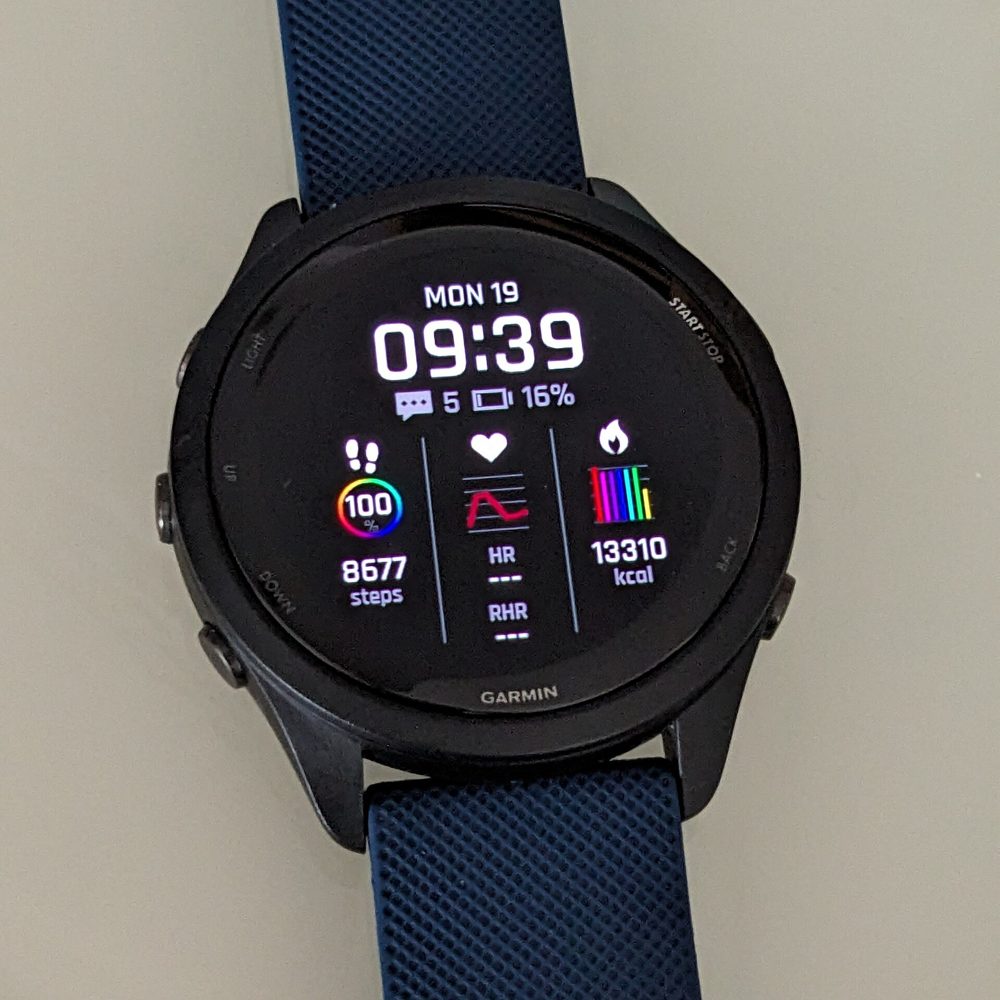
The money is part of the resentment. To a lot of non-runners, a ₩1.5 million watch and ₩300,000 shoes on a riverside path read less as health and more as display. Add a pack of eight blocking a footpath for a group photo, and you have the "running crew 민폐 (public nuisance)" image that the running crew guide describes.
Race Entries: The Prices, the Sell-Outs and How Foreigners Get In
Fees have climbed too. The Seoul Economic Daily reported on 29 August 2026 that Korean marathon fees now run from ₩70,000 to ₩150,000. Chuncheon and JTBC Seoul sit at the top: ₩150,000 for the full marathon and ₩100,000 for 10 km. Daegu charges ₩80,000 for the same 42.195 km. JTBC raised its fee this year, and runners complained: "That's the price of a pair of shoes" and "for this money I'd rather run two races in the provinces."
| Race | Date | Fee (full / 10 km) | Entry status, 17 Oct 2026 |
|---|---|---|---|
| Chuncheon Marathon (춘천마라톤) | Sun 25 Oct 2026, 09:00, Gongjicheon Bridge | ₩150,000 / ₩100,000 | Closed. General entry opened 14 July (full) and 16 July (10 km), first come, first served |
| JTBC Seoul Marathon (JTBC 서울마라톤) | Sun 1 Nov 2026 | ₩150,000 / ₩100,000 | Closed. 32,000 places |
| Seoul Marathon (서울마라톤, the Dong-A race) | Sun 21 Mar 2027, Gwanghwamun Square | Check the organiser | Closed. General entry ran in June 2026; full-marathon runners had to submit a past official record first |
Korea's big races fill on the day entry opens or go to a lottery (JTBC), so plan a year ahead. Overseas runners have a separate route for JTBC Seoul: an international allocation sold through the World's Marathons platform. Its listing for the 1 November race showed a refund deadline of 4 September; check the page for whether places remain. For the March race, the Seoul Marathon runs English-language registration through its own site, seoul-marathon.com. If you missed both, look at the smaller 10 km and half-marathon races on autumn and spring weekends. They're cheaper and sell out more slowly.
The Rules Now in Force
There is no Seoul-wide law against group running. The rules are local, and they target the behaviour that annoys people:
- Banpo Sports Complex (반포종합운동장), Seocho: since 1 October 2024, groups of five or more must keep 2 m between runners. Staff can warn you or ask you to leave.
- Seokchon Lake (석촌호수), Songpa: the district asks groups of three or more not to run together on the lakeside path.
- Seongbuk and Jongno: banners asking for single-file running and etiquette. There's no fine.
- The National Palace Museum: its lockers are for museum visitors only.
- Han River parks: governed by Seoul's Han River Park ordinance, last amended 13 July 2026. It has no group-size cap that we could find. The shared-path rules in our Han River running guide still apply: keep right, no speakers, and watch for bikes.
At races, the lesson of 11 October is your own to apply. Line up at a pace you've trained for. Drink before you're thirsty. And if something feels wrong in the final kilometres, stop. Hwang Young-cho was talking to amateurs, and the medical data back him.
What a Beginner Actually Needs (Honest Version)
| You'll be told you need… | What you actually need in Seoul |
|---|---|
| A Garmin | Your phone and a free app (Strava, Nike Run Club, Garmin Connect). A watch helps only once you train for times. |
| Carbon-plate racers | Shoes you already run in. Carbon plates are race-day tools, and the Korean price is ₩300,000+. |
| A crew | Nothing. Most Korean runners run alone (78.9%). Join a crew for company, not permission. |
| A marathon bib | A 5 km riverside loop. The Han River paths are free, lit and open every night. |
| The doggy run | Any loop at 7 a.m. on a weekday. You'll get the same palace views without the alley fight. |
Don't buy anything for one run. If your luggage has no room for running shoes, rent a pair for ₩5,000. If you run at night by the river, a light matters more than a watch.
Noxgear Tracer2 — a light-up reflective running vest Most of Seoul's running happens after dark, on paths shared with bikes and e-scooters. A lit vest makes you visible from both directions, and it's the one item here that we'd pack before a watch. As an Amazon Associate, EpicKor earns from qualifying purchases at no extra cost to you.
See the Tracer2 vest on AmazonSo: Crew, Doggy Run or Race?
| If you want… | Do this | Skip this |
|---|---|---|
| Company and a Seoul night | A brand run club or an open crew night on the Han River (see our crew guide) | Group photos on the path, speakers |
| The famous picture | The doggy run, early on a weekday, in pairs, walking the nose alley | Weekend afternoons, the museum lockers |
| A Korean race | A 10 km or half in spring or autumn, entered months ahead | Expecting a JTBC or Chuncheon bib two months out |
| Just a run | A 5 km Han River loop from a subway station | Buying gear first |
FAQ
Q: Did a runner die at a marathon in Seoul in October 2026?
A: Yes. A woman in her twenties collapsed at the 20.6 km mark of the 2026 Seoul Race half marathon on 11 October 2026, about 500 m from the finish. She died in hospital, and the organising committee announced her death on 12 October. No official cause had been published as of 17 October.
Q: What is an 애도런 (memorial run) in Korea?
A: A run dedicated to someone who has died, posted on social media with its distance and time. After the Seoul Race death many runners posted one. Korean commenters widely criticised them as self-promotion that used a stranger's name and photo without her family's consent.
Q: What is the 댕댕런 in Seoul?
A: An approximately 8 km GPS-art route from Gwanghwamun past Gyeongbokgung, Cheong Wa Dae and Samcheong-dong, back via Jongno and Cheonggyecheon. On a GPS map the track draws a dog. Its narrow alley sections have drawn complaints from residents.
Q: Are running crews banned in Seoul?
A: No. Rules are local: groups of five or more must keep 2 m apart at Banpo Sports Complex, and Songpa asks groups of three or more not to run together at Seokchon Lake. Elsewhere, districts rely on etiquette banners.
Q: How much is a Garmin watch in Korea?
A: Garmin Korea lists the Forerunner 70 at ₩399,000, the Forerunner 970 at ₩1,089,000 and the fēnix 9 from ₩1,490,000. Pro leather-band versions start at ₩1,890,000 (October 2026).
Sources
- Seoul Race facts (time, 20.6 km, response, organiser's statement): NoCut News (English), 12 October 2026; start, course, 12,000 runners and location: iNews24; Cheonggyecheon-ro location and that no cause was disclosed: Bizcheck (비즈체크).
- Marathon cardiac-arrest research and Hwang Young-cho's remarks: Kormedi (코메디닷컴), 14 October 2026.
- The memorial-run row: Financial News (파이낸셜뉴스), 16–17 October 2026; Wikitree, 16 October 2026; News1, 16 October 2026.
- Survey: Kukmin Ilbo (국민일보), 30 April 2026, reporting Embrain Trend Monitor.
- Doggy-run alley, complaint counts, 2025 National Sports Survey, other districts, museum wording change, expert suggestion: Korea Economic Daily (한국경제), 11 October 2026.
- JTBC News report and Jongno banners, via Newsis / Mediadale, 15 September 2026. Route, museum Instagram request, Jeon Hyun-moo: Twig24, 4 September 2026. Presidential Security Service decision: Twig24, 14 December 2025.
- Garmin prices: Garmin Korea press releases — fēnix 9 series, Forerunner 70/170, Forerunner 570/970.
- Shoe prices: Nike Korea store, read 17 October 2026; Racement (레이스먼트). Shoe rental: Korea JoongAng Daily, 26 March 2026.
- Race fees and complaints: Seoul Economic Daily (서울경제), 29 August 2026, via Nate News. JTBC Seoul Marathon: official race overview; entry platform: Runable; overseas entry: World's Marathons. Chuncheon: official site. Seoul Marathon 2027: official site and KorMarathon.
- Seongbuk single-file banners: Munhwa Ilbo. Banpo and Seokchon rules: Seoul Shinmun, 1 October 2024. Han River ordinance: National Law Information Center.
- 2020–2024 race-entry figures: National Police Agency data to the National Assembly, as reported in our running crew guide.
- Exchange rate: Federal Reserve H.10 via FRED (DEXKOUS), ₩1,342.13 on 9 October 2026.
The short version: run in Seoul, but run the way Koreans wish runners would. Go alone or in twos, early, to one side, and without a speaker or a photo stop on the path. And leave the grief of strangers to their families.
You Might Also Like
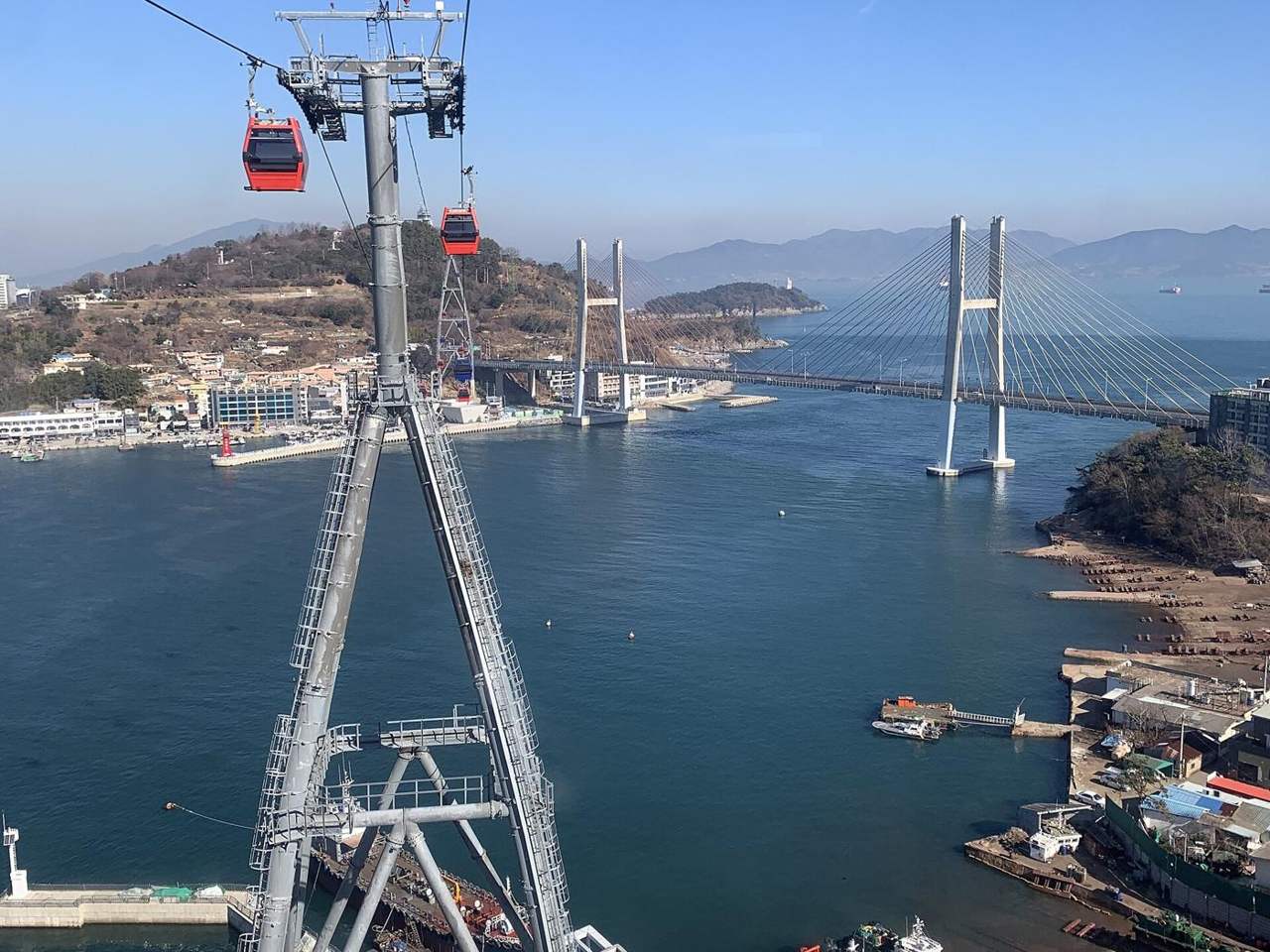
Where to Stay in Yeosu, Korea: Expo Station vs Yi Sun-sin Square vs Dolsan, by KTX and Cable Car
Yeosu's own room-rate register puts the median autumn weekend room at ₩60,000–70,000 near Expo station and the old town, and ₩245,000 on Dolsan. Plus the ₩45,400 KTX, the ₩17,000 cable car, cash-free buses and the Island Expo crowds.
Ferry to Jeju from Korea's Mainland: Which Routes Still Run, Fares, Crossing Times and Ferry vs Flying
Six ferry routes reach Jeju Port in October 2026: Mokpo, Wando, Jindo, Chuja–Wando, Nokdong and Samcheonpo. Yeosu, Busan and Incheon no longer sail. Fares from ₩29,850, crossings of 1½ to 6½ hours, and when flying wins.
Where to Stay in Sokcho for Seoraksan, Korea: Seorak-dong vs the Beach vs Daepo, by Bus 7-1's Last Ride
The last bus out of Seoraksan's Sogongwon leaves at 20:35 (route 7-1), and after 19:00 there are only two. Sokcho buses cost ₩1,530 by card. When Seorak-dong, Sokcho Beach, Daepo or downtown is the right base.