Han River Running Guide: Seoul Routes and Night Safety
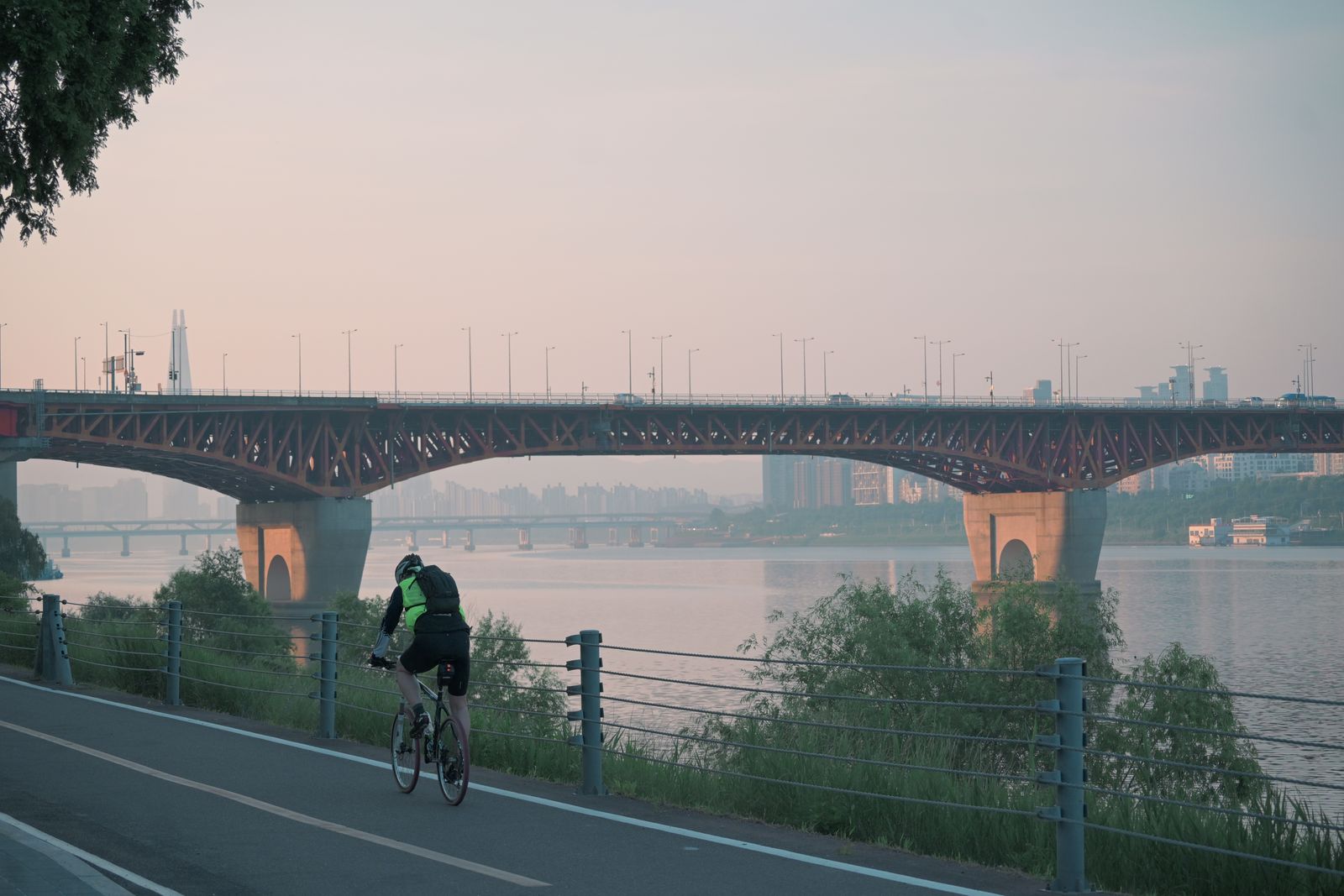
Han River running is one of the easiest ways to experience Seoul as residents do. The parks are broad, the skyline changes every few kilometers, bridges create natural distance markers, and convenience stores make a post-run drink or instant ramen unusually easy. You can run at sunrise with commuters, after work with a crew, or late enough to see bridge lights reflected across the water.
The popularity also creates friction. Runners share the river corridor with walkers, children, dogs, cyclists, picnickers, event crowds, and delivery vehicles. The most important "new rule" is not a citywide ban on groups of five. It is a simpler public-space rule: keep your group compact, stay out of bicycle lanes, and never block the path for a photo.
The Short Answer: How to Plan Your First Run
Choose one Hangang park, start near a subway station, and run an out-and-back route instead of trying to navigate across several bridges. Yeouido is convenient for a first visit, Ttukseom offers strong skyline energy, Banpo works well for an evening landmark run, and Jamwon or Jamsil can feel more training-focused depending on the section.
Check temperature, humidity, fine dust, rain, and river notices on the day. Carry water when facilities may be closed, keep to pedestrian paths, and use lights or reflective details after dark. Seoul's Smart Seoul Map includes a Hangang Park Guide for current facility locations.
| Area | Best For | What to Expect | Planning Note |
|---|---|---|---|
| Yeouido Hangang Park | First-time visitors and flat loops | Open lawns, events, convenience facilities, skyline views | Can be crowded on weekends and festival days |
| Banpo and Jamwon | Night scenery and bridge landmarks | Banpo Bridge, riverside cafes, busy evening traffic | Check fountain and event schedules separately |
| Ttukseom | Energetic social runs | Young crowds, sports facilities, broad river views | Busy near major entrances in warm weather |
| Jamsil | Longer steady efforts | Extended paths and connections toward eastern parks | Confirm construction or event diversions |
Anker 10,000mAh power bank — on AmazonAffiliate link. As an Amazon Associate, EpicKor earns from qualifying purchases at no extra cost to you.
Do not judge distance by how close a bridge looks. The river is wide, access ramps curve, and a bridge crossing can add more than expected. An out-and-back route lets you turn when you reach half your planned time.
Why Running Crews Became So Visible
Running crews fit contemporary Seoul unusually well. They offer scheduled social contact without requiring a full evening of drinking, provide accountability after office hours, and turn fitness into a visual community. Matching shirts, group photos, and branded social accounts make crews look larger than the number of runners actually on the path.
The best crews are structured. They publish pace groups, appoint leaders and sweepers, brief members on crossings, and move photos away from active paths. Beginners benefit from knowing that someone will not leave them behind. Experienced runners gain partners for intervals or long runs.
Problems appear when the group treats public space like a private event. Running four or five abreast, shouting through a quiet section, cutting across bicycle traffic, or stopping under a bridge for a photo can create genuine collision risk. A large group may also require event approval if it becomes an organized public activity rather than an informal run.
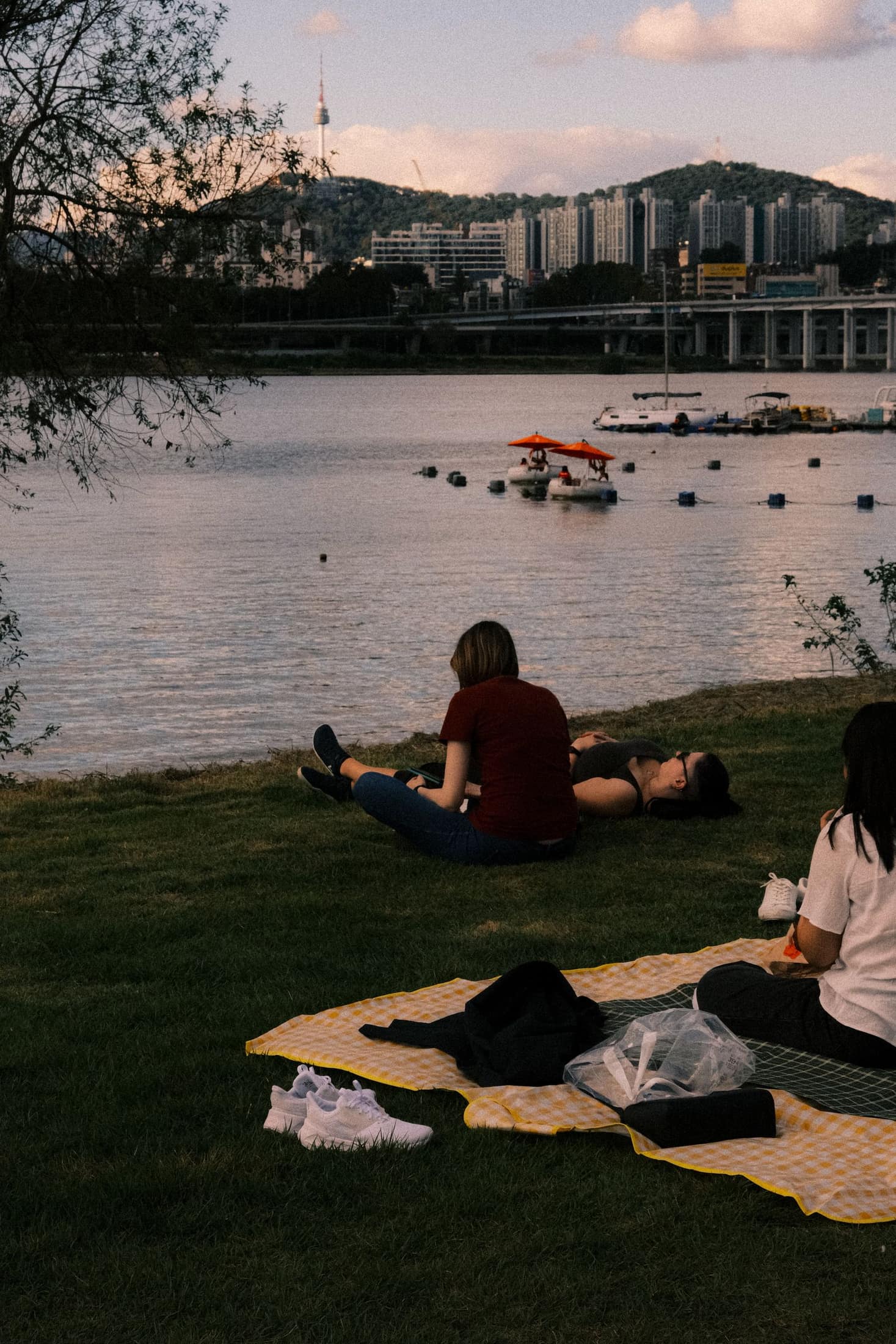
Some media reports and local signs have recommended limiting crew size in congested locations. That is not the same as a universal Seoul law making "five runners" illegal. Official city park information emphasizes minimizing inconvenience and preserving ordinary public use. Follow posted signs at the exact park and date you visit, because temporary event and safety controls can change.
The clearest documented case is Seocho District's, which from 1 October 2024 required groups of five or more at 반포종합운동장 to keep two metres between runners — a specific rule at a specific place, not a city-wide ban. EpicKor's Seoul running crew guide covers that backlash, the crews that meet weekly, and how a visitor joins one.
SPIbelt running belt — holds phone, T-money card and hotel key without bouncing. A Han River run ends at a subway gate, so you need the card on you; a belt beats a pocket on a 10K. Carry a 10,000mAh power bank only if it will not bounce. As an Amazon Associate, EpicKor earns from qualifying purchases at no extra cost to you.
See the SPIbelt on AmazonThe Shared-Path Rules That Matter
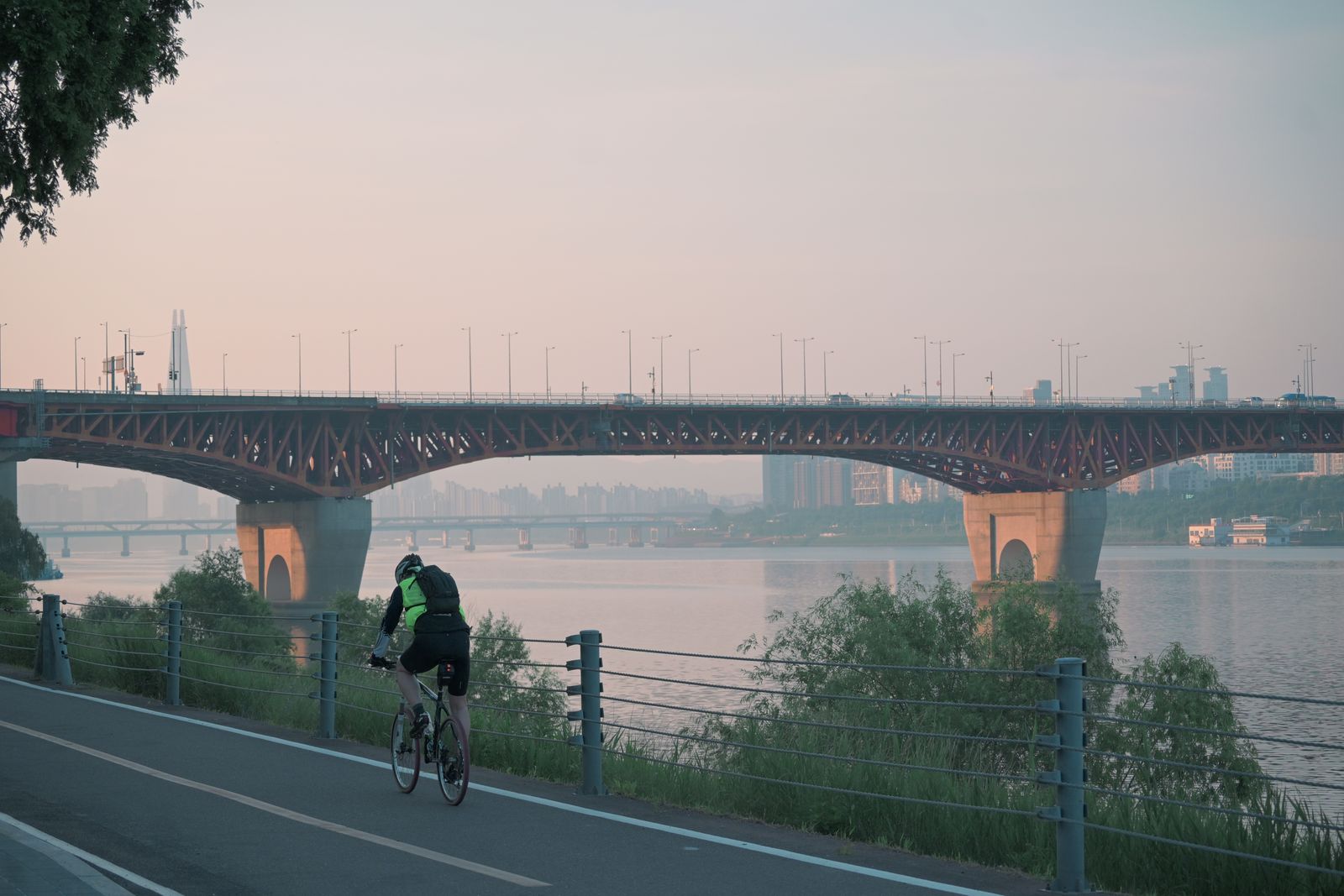
Hangang parks often have separate or visibly differentiated bicycle and pedestrian paths, but crossings and merges are common. A cyclist traveling quickly has less time to react than a runner expects. Before changing direction, look behind you rather than relying only on hearing; bikes can be quiet.
Run predictably on the pedestrian side, follow painted arrows and local signs, and pass without forcing someone toward the cycle lane. If you need to stop, step completely off the active path. At night, avoid wearing all black without reflective detail.
| Moment | Safer Runner Behavior | Why It Matters |
|---|---|---|
| Passing a walker | Move over early and pass with visible space | Sudden close passes can startle people and dogs |
| Crossing a bike lane | Look both ways and cross directly | Bicycles approach faster and more quietly than expected |
| Running with a crew | Use pairs or single file in narrow sections | Keeps half the path available to other users |
| Taking a photo | Leave the path before gathering | Prevents sudden stops and blocked sight lines |
| Using earphones | Keep enough awareness to hear bells and warnings | Shared paths require information from behind |
Treat bridge underpasses carefully. Sight lines shorten, surfaces may be damp, and runners can emerge from side ramps. Slow down if the route is unfamiliar.
Night Running: The Best View and the Biggest Trade-offs
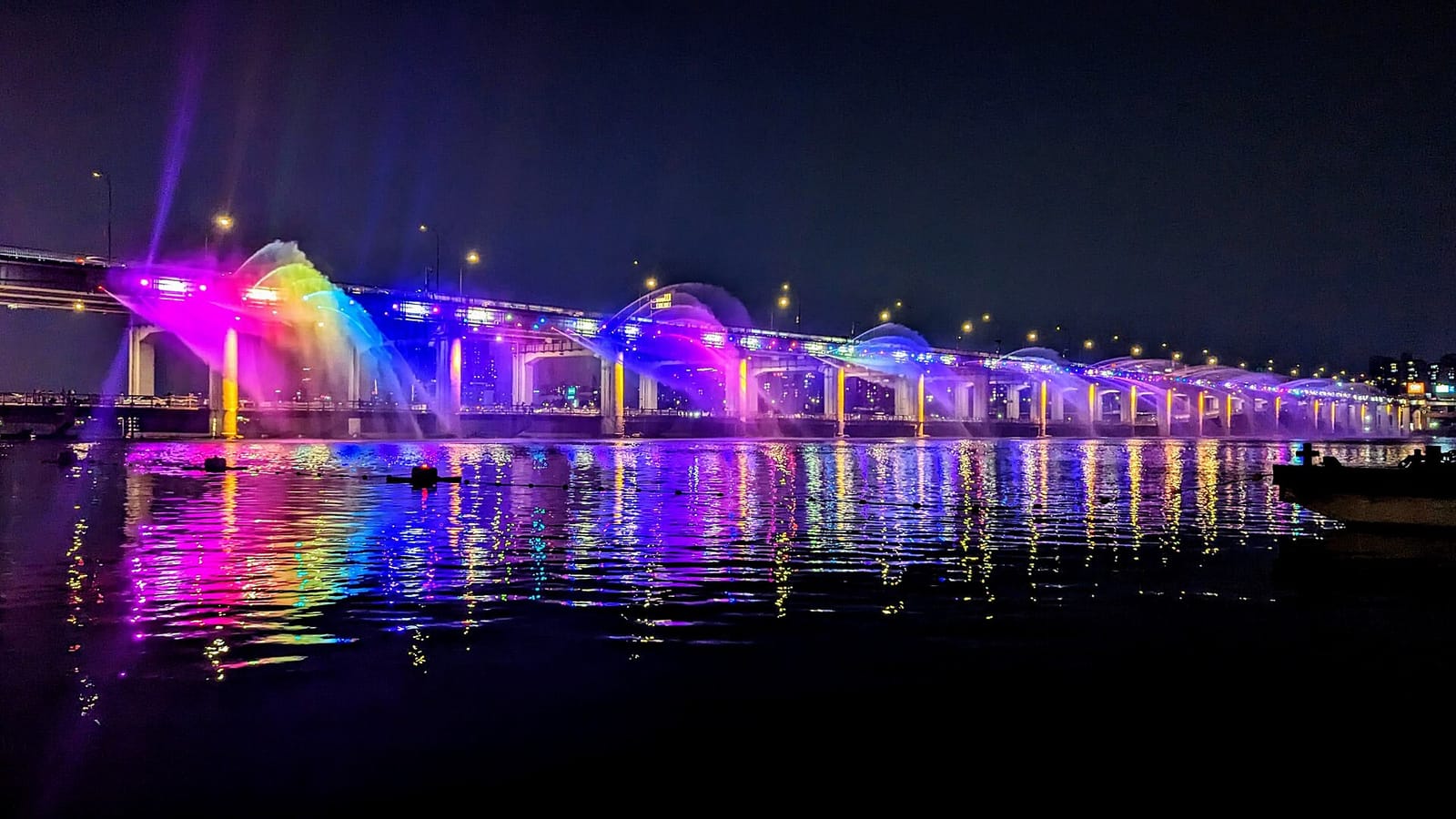
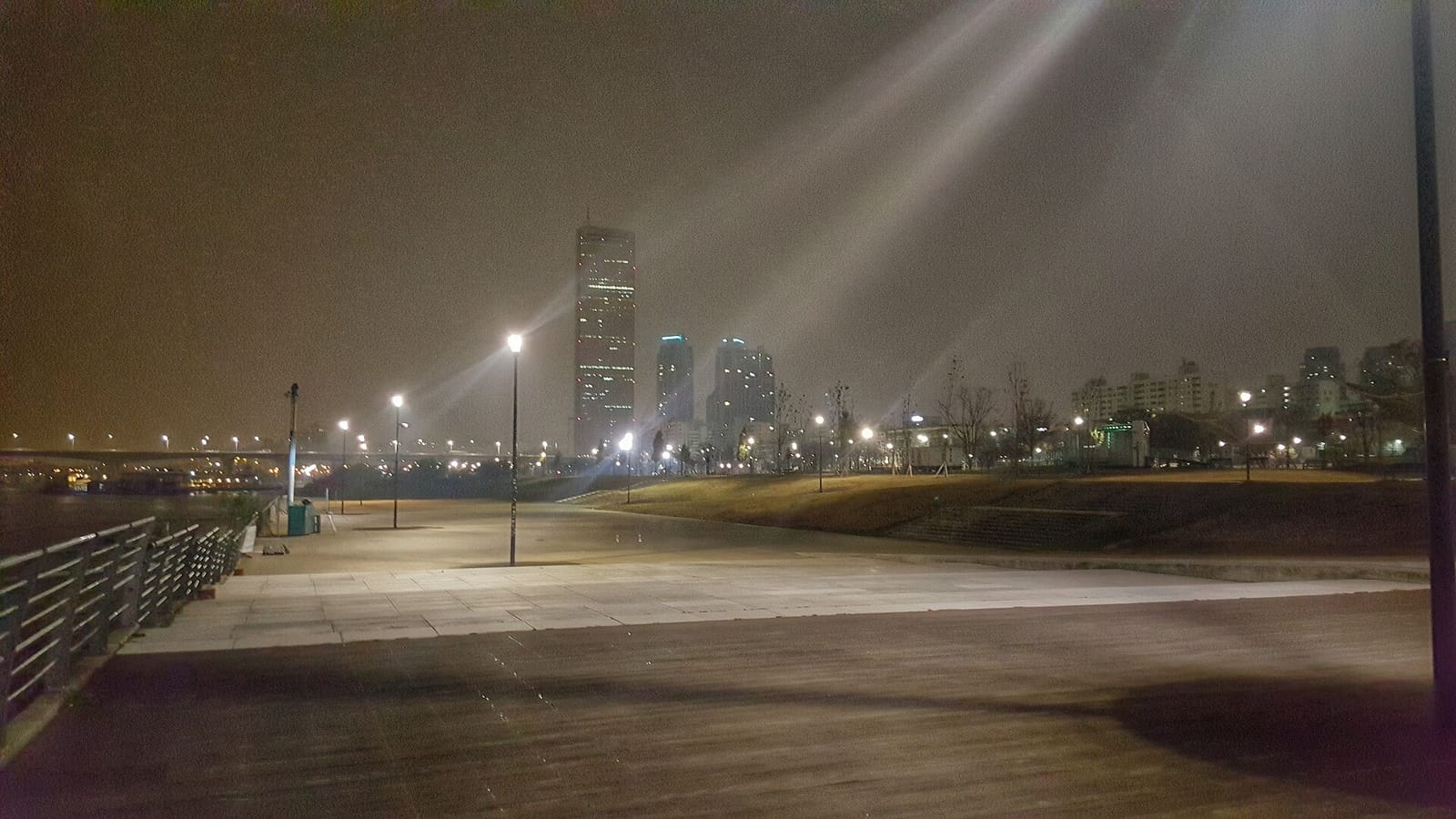
Night running is popular because Seoul summers can be hot and humid, office schedules end late, and illuminated bridges transform the route. Banpo Bridge, Yeouido's towers, and the eastern skyline create a run that feels connected to the city even when the path itself is quiet.
The trade-off is visibility. River paths include dark transitions, temporary construction, wet pavement, insects, and clusters of people sitting close to the route. Use a small light or reflective band, slow down around crowds, and keep emergency contact and identification with you.
Do not assume every facility operates all night. Public toilets, convenience stores, water fountains, lockers, and lighting conditions vary by park and season. Verify a critical facility on the current map rather than relying on an old blog post.
Solo runners should use busier sections, share a route, and avoid isolated detours when tired. Seoul's emergency numbers are 112 for police and 119 for fire or ambulance. Our broader Seoul safety guide explains the tourist helpline and lost-property process.
Weather, Air Quality, and Seasonal Timing
Seoul's four seasons create four different running plans. Spring is comfortable but can bring fine dust and yellow dust. Summer combines heat, humidity, monsoon rain, and evening mosquitoes. Autumn is often the easiest season for longer runs. Winter can be clear and beautiful, but wind beside the river makes the temperature feel lower and shaded ice can remain.
Check official weather and air-quality information before starting. When heat warnings are active, shorten the route, reduce intensity, and avoid the hottest hours. After heavy rain, river access can be restricted or muddy even when the sky has cleared. Obey barriers; the Hangang is a managed floodplain, not just a park.
Winter runners should prioritize traction and layers that can vent. The all-black Seoul winter look is practical, but a reflective outer detail is more important beside a mixed-use path. Our guide to Korean long padding and winter clothing explains how residents layer for the cold transitions between outside and heated interiors.
Facilities, Lockers, Water, and Post-run Food
Facility density is one reason Hangang running feels accessible. Major parks have toilets, information points, food options, bicycle rental, or sports facilities, but the exact combination differs. The city's Hangang Park Guide is the best starting point for current locations.
Carry your own water for a long or hot run even if a map shows fountains. A closed fountain or a line at a convenience store should not become a health problem. For a short cool-weather run, a transit card and small soft flask may be enough.
Post-run convenience-store ramen is part of the social ritual, but it is not recovery magic. Hydrate first, especially in summer, and remember that alcohol beside the river can worsen dehydration. Pack out what you bring and use designated waste areas.
Sawyer 20% picaridin, 3oz — the river path is exactly where Seoul mosquitoes are worst after dark. Carry-on legal, and it does not damage synthetic running kit the way DEET can. Follow the directions rather than applying it near your eyes mid-run. As an Amazon Associate, EpicKor earns from qualifying purchases at no extra cost to you.
See Sawyer picaridin on AmazonThree Easy Route Formats
For a 20- to 30-minute introduction, start at a major park entrance, run along the river for ten to fifteen minutes, and return the same way. This is the safest format when you do not know the ramps.
For a landmark run, choose one bridge as your turnaround point. Confirm whether your approach stays on the same bank; crossing a bridge may require finding a staircase or ramp away from the water.
For a longer point-to-point run, plan the exit before the start. Some river sections are far below street level or separated from subway stations by large interchanges. Save the final station and access ramp in your map app, carry a transit card, and leave energy for the climb back into the city.
If the river is crowded or weather is poor, Seoul has alternatives. Parks, palace walls, and dedicated tracks can offer a better training session than forcing a scenic route. The point is to experience the city, not to prove that one specific path works in every condition.
FAQ
Q: Is there a ban on Han River running groups of five or more?
There is no clear citywide rule that makes every group of five illegal. Local recommendations, congestion controls, or posted rules may apply in specific places, so follow current signs and keep groups compact.
Q: Is it safe to run along the Han River at night?
Popular sections are well used, but conditions vary. Choose active routes, use reflective details, share your plan, and avoid isolated or flooded areas.
Q: Can runners use the bicycle path?
Use designated pedestrian or running space wherever provided. Cross bicycle lanes carefully and never assume cyclists can stop quickly.
Q: Where is the easiest first Han River run?
Yeouido is a practical introduction because of transit, flat paths, landmarks, and facilities. Ttukseom and Banpo are also strong choices depending on your hotel and preferred scenery.
Q: Are water fountains and toilets always open?
No. Availability varies by park, season, maintenance, and time. Check the current Hangang Park Guide and carry water when it matters.
Q: Do I need to join a running crew?
No. Solo and pair running are common. A crew can provide pace support and community, but an out-and-back route is easier for a first independent run.
Sources
You Might Also Like
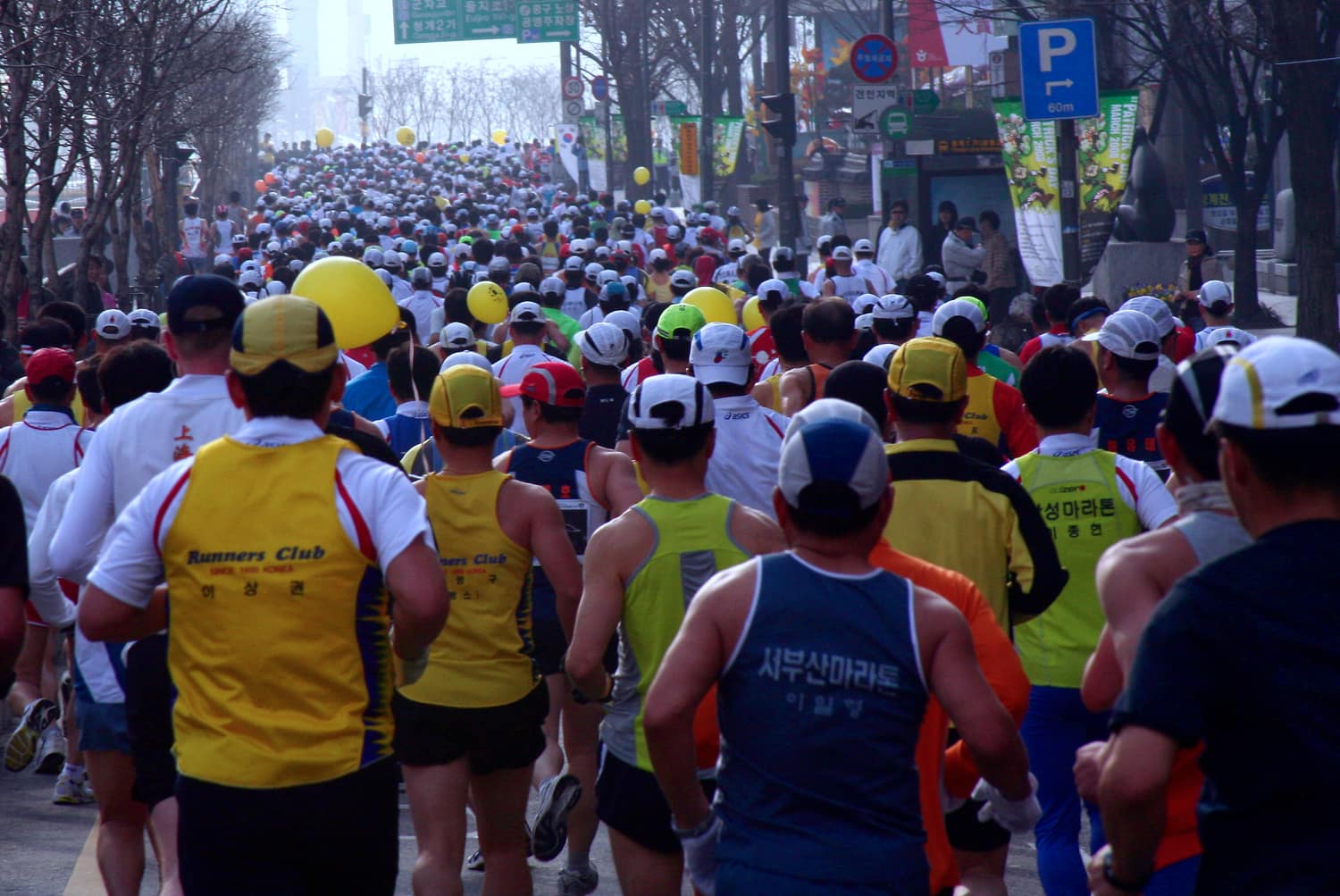
Seoul Running Crew Culture: Why Korea Runs At Night
Korean marathon entries went from about 9,000 in 2020 to 1,008,122 in 2024, and the backlash arrived with them — Seoul districts now cap group runs at five. Named Han River crews, the etiquette that became regulation, and how a visitor joins.
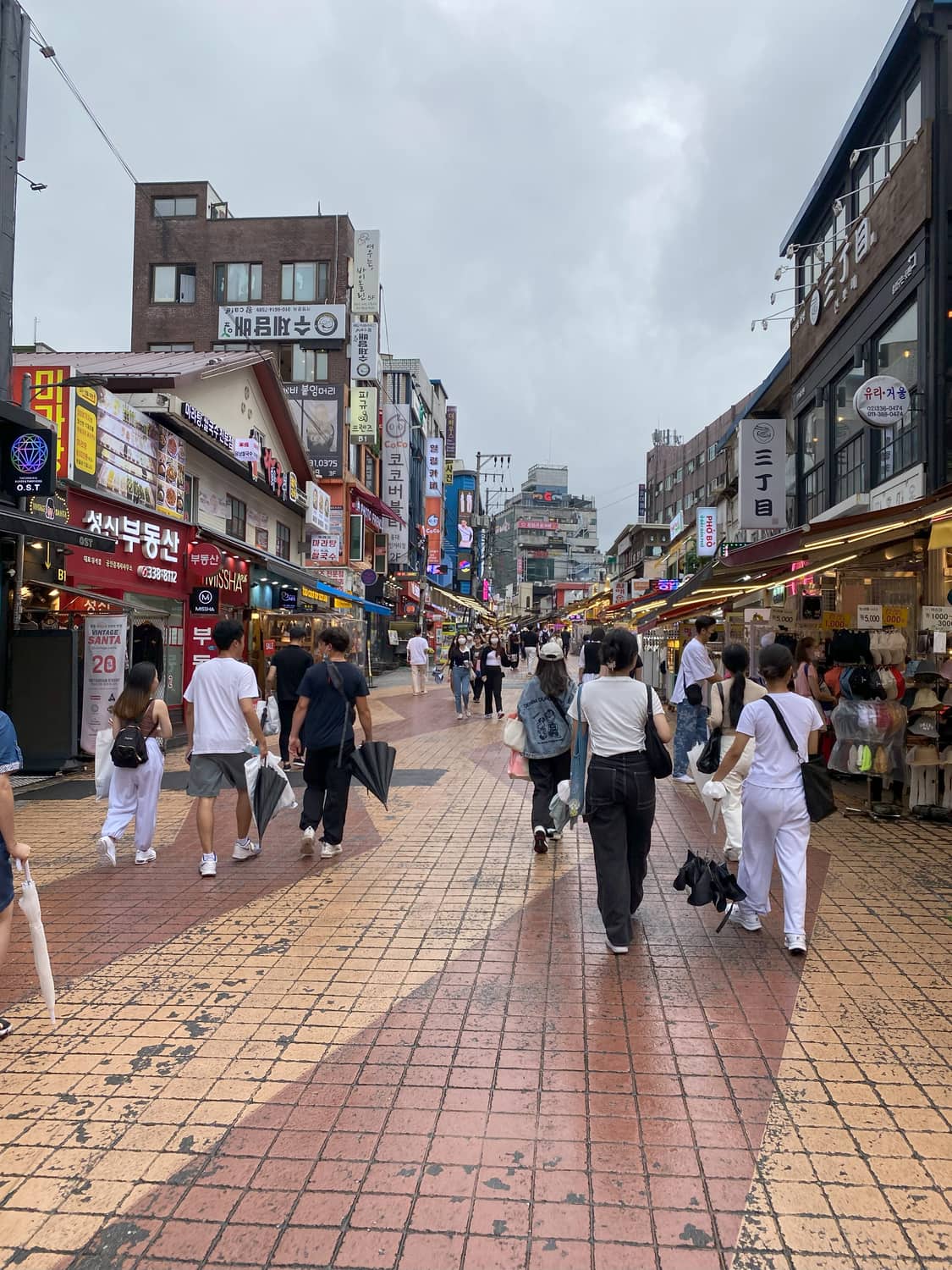
Do Koreans Speak English? Ask Someone Under 35 — What Actually Happens on a Seoul Street
Yes, if you ask the right person. Stop a Korean in their twenties or thirties on a Seoul street and you will almost always get an answer in English. The forum answer that says otherwise is twenty years old. Who to ask, how to ask, where English is built in.
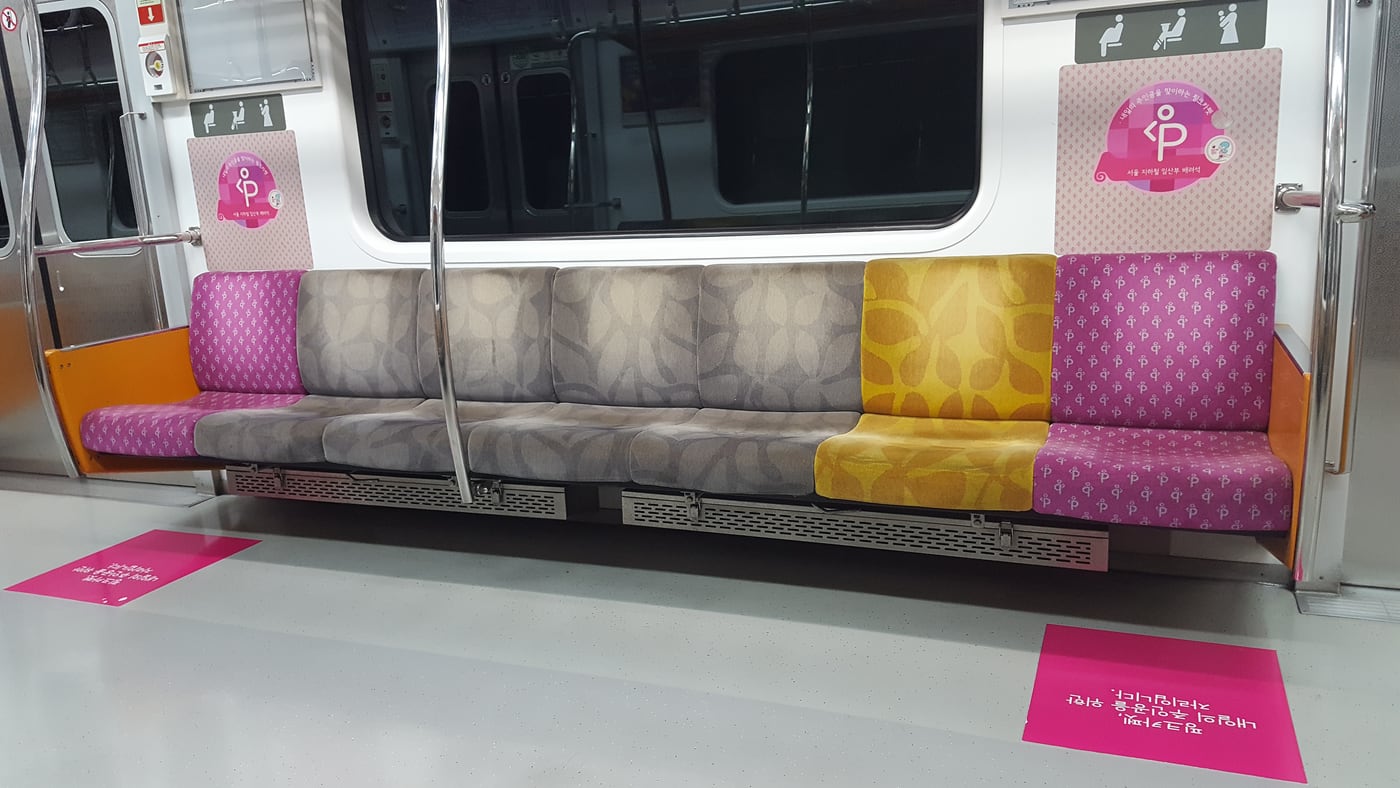
Seoul Deleted Its Women-Only Parking: What Korean Gender Policy Actually Is in 2026
Most English writing on Korean gender policy describes rules that were removed, renamed, or never existed. Seoul scrapped women-only parking in 2023, the ministry was renamed in 2025, and the famous five-point exam bonus went to men and ended in 1999.