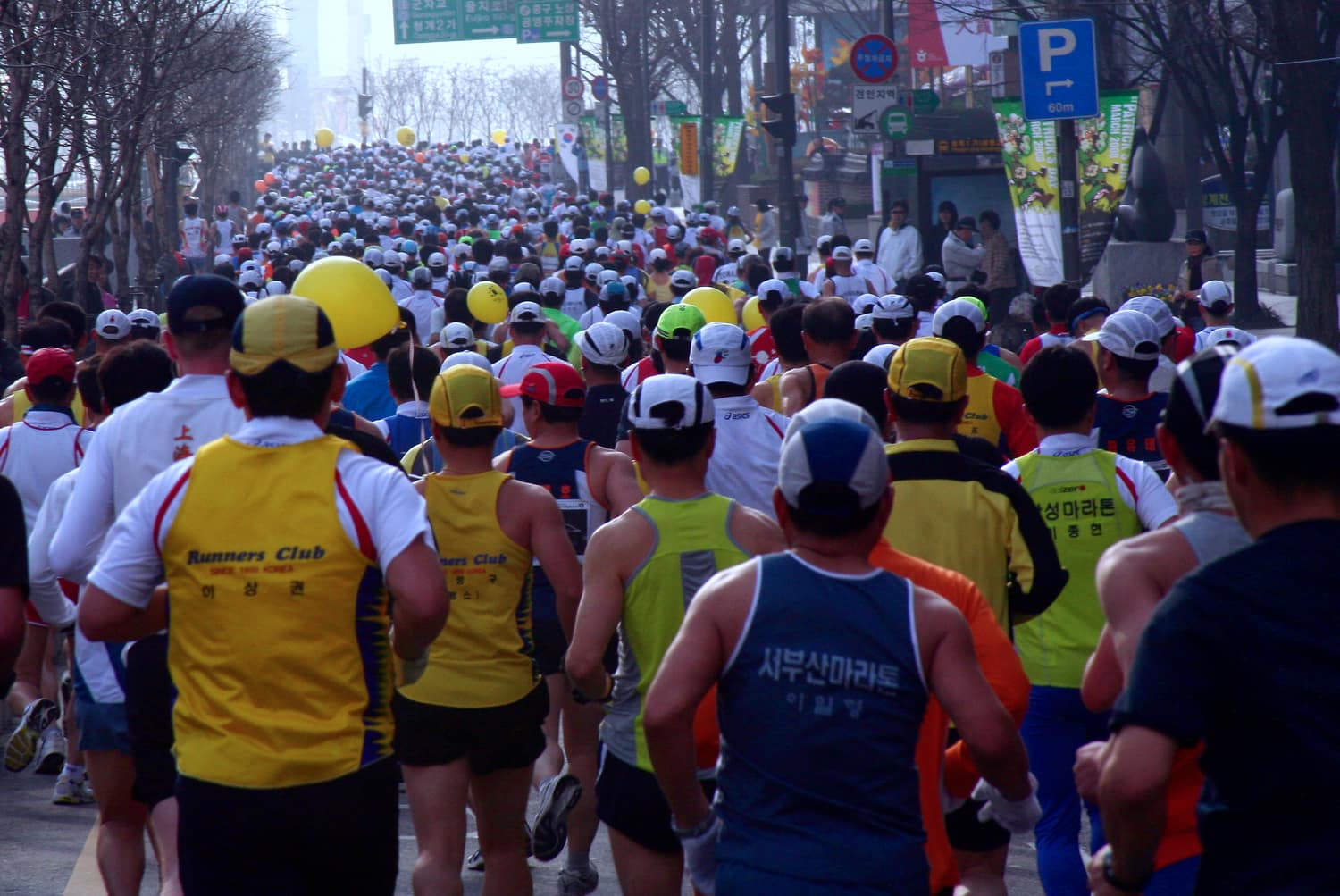
Seoul Running Crew Culture: Why Korea Runs At Night
Seoul running crew culture is not just about exercise. It is one of the clearest ways to see how young urban Koreans are rebuilding social life around health, routine, and low-pressure community. A night out in Seoul can still mean barbecue, beer, karaoke, or a club. But for more people, it can also mean meeting at the Han River, running five kilometers, stretching under bridge lights, and grabbing a drink from a convenience store after.
That shift matters because it gives Seoul a different kind of lifestyle image. The city is not only cafes, shopping, beauty clinics, and late-night food. It is also riverside paths, reflective bands, GPS watches, group photos, recovery drinks, and runners who want connection without a loud room.
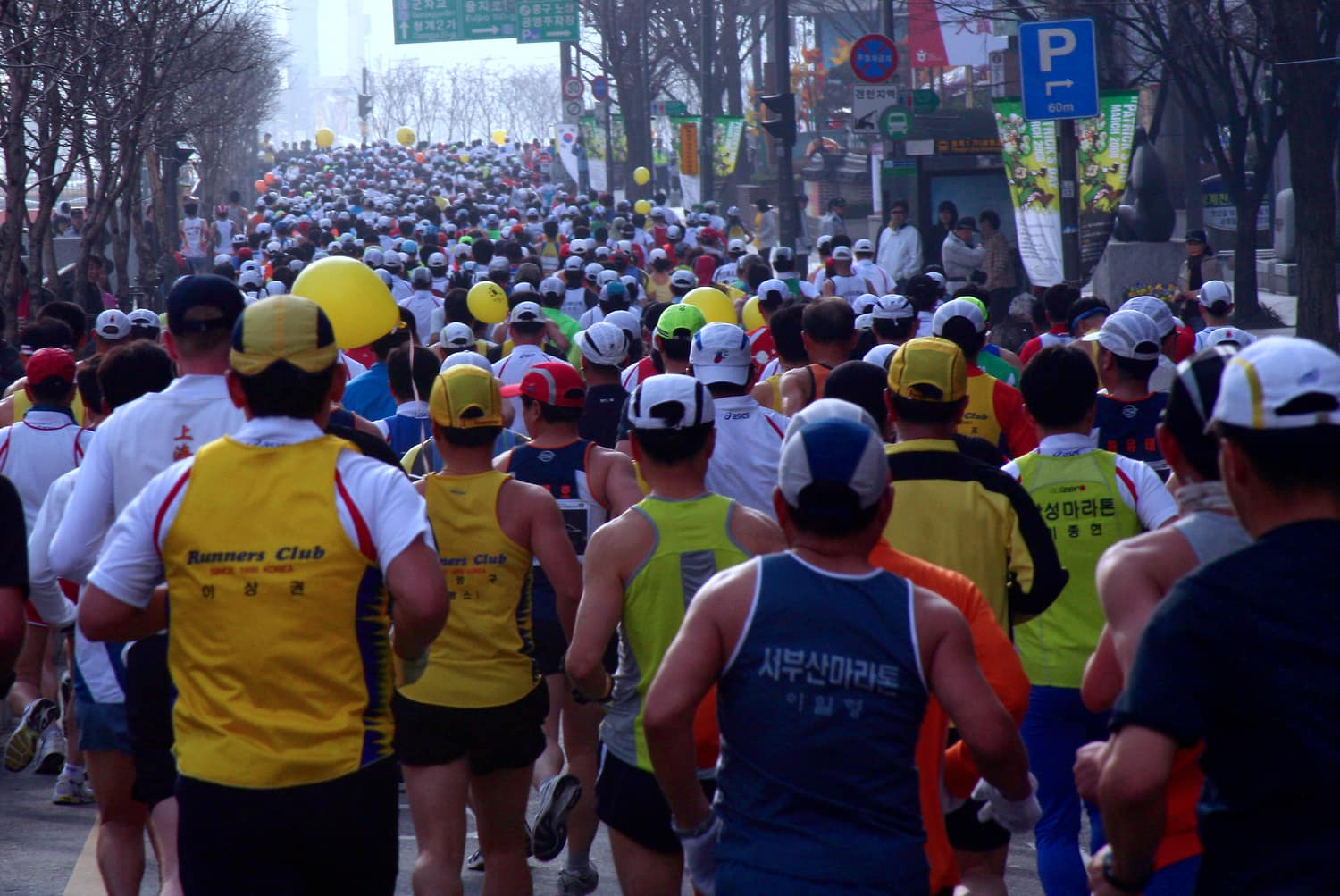
Quick Answer: Why Are Running Crews Popular In Seoul?
Running crews are popular in Seoul because they combine fitness, friendship, routine, and city identity. The Han River gives runners long, flat, scenic routes. Night runs fit work schedules and summer heat. Group runs make exercise less lonely. They also create a softer social scene than dating apps, bars, or office networking.
For travelers, the trend is useful because it explains why Seoul's riverside parks can feel alive after dark. People are not only strolling or eating chicken by the river. They are training, socializing, taking photos, and building weekly rituals.
SPIbelt running belt — on AmazonAffiliate link. As an Amazon Associate, EpicKor earns from qualifying purchases at no extra cost to you.
The Boom Has Numbers, And They Are Extraordinary
This is not a mood. It is one of the fastest shifts in how Koreans spend their evenings, and it is measurable.
Figures the National Police Agency submitted to the National Assembly count the marathon and road-race entries registered in Korea each year:
| Year | Race entries nationwide |
|---|---|
| 2020 | about 9,000 |
| 2021 | about 30,000 |
| 2022 | about 320,000 |
| 2023 | about 730,000 |
| 2024 | 1,008,122, across 254 races |
Read the 2020 figure carefully — that year was flattened by the pandemic, so the true starting point is lower than normal and the multiple is flattered. But even measuring from 2022, entries tripled in two years. Searches for 러닝 (running) rose about 270% year on year through 2025, and the share of Koreans who said they had jogged or run in the past two years went from 23% in 2021 to 32% in 2023.
One number you will see everywhere deserves scepticism. Korean media routinely reports "러닝 인구 1000만" — ten million runners, roughly one in five Koreans. Korean analysts have pushed back: national survey data puts participation in running over the previous year at about 7.5%, which against a population of 48.7 million aged 10 and over works out closer to 3.65 million. Still a very large number, and still a boom. Just not the one on the headline.
Money followed. Consumer spending on running goods rose fastest not among people in their twenties (177% in 2024) but among people in their thirties (232%) and forties (225%) — which tells you something about who is actually filling the riverside paths at 8pm on a Tuesday.
Why The Han River Works So Well
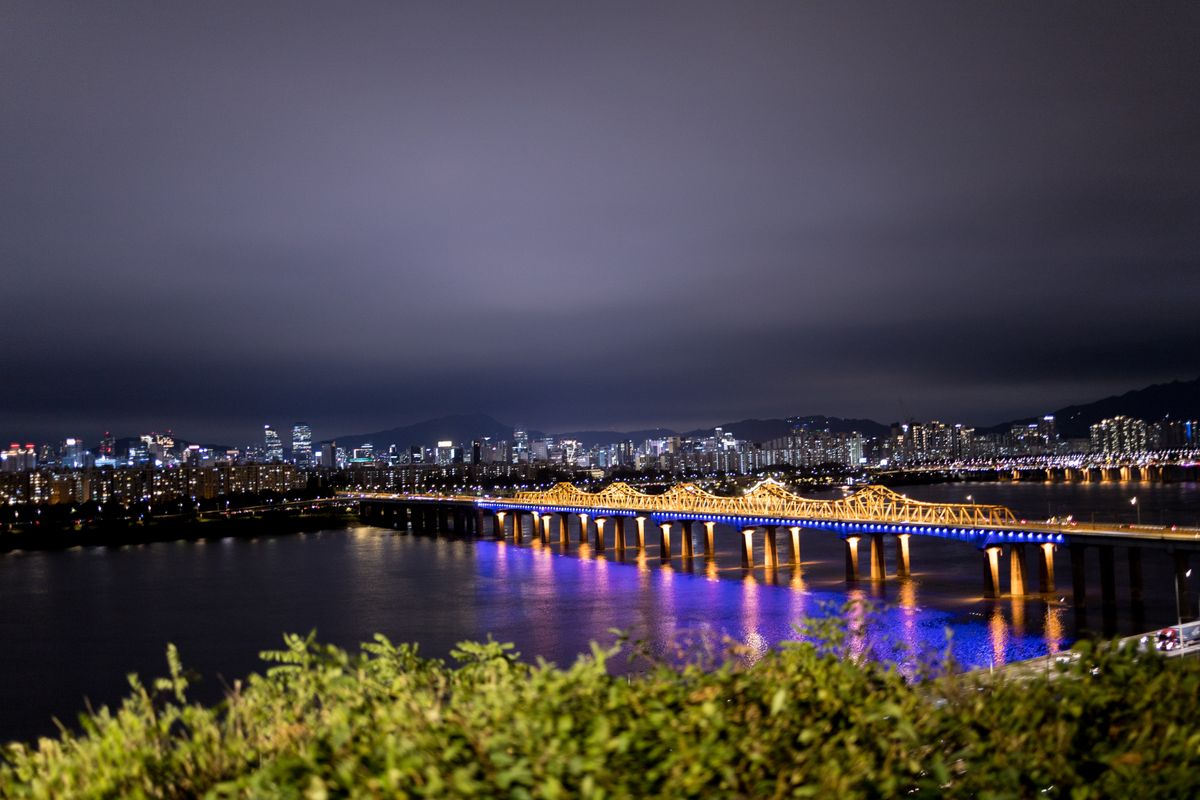
The Han River is the backbone of Seoul running culture because it solves several problems at once. It has open space in a dense city. It has bridges that make routes feel measurable. It has convenience stores, benches, bike paths, toilets, and transit connections. It is scenic enough for first-timers and practical enough for repeat runners.
The river also creates a shared identity. A runner in Gangnam, Yeouido, Mapo, Jamsil, or Ichon may have a different neighborhood life, but the river links those areas into one visible fitness map. This is why Han River content performs well on social media. The background says Seoul immediately.
Running As Social Life
The biggest mistake is thinking running crews are only for serious athletes. Some crews are fast and structured, but many are social. They create an excuse to show up, move, talk, and belong without needing a long dinner plan.
This fits a larger global pattern. Run clubs in many cities have become alternatives to dating apps, networking events, and nightlife. Seoul adds its own version: fast city rhythm, polished athleisure, cafe culture, river routes, and group photos that turn a workout into a social artifact.
For someone who already understands EpicKor's Han River nap competition guide, this is the active version of the same Seoul idea. The river is where the city releases pressure. Some people nap. Some picnic. Some ride bikes. Some run with strangers who become part of the week.
What A Seoul Running Crew Night Looks Like
A typical casual run might look like this:
- Meet near a subway station or riverside landmark.
- Store small items or carry a light belt.
- Warm up as a group.
- Run an easy pace route, often three to seven kilometers.
- Stop for photos or regroup points.
- Cool down and stretch.
- Buy water, electrolyte drinks, or light snacks.
- Chat, exchange handles, and decide whether to join again.
The atmosphere depends on the crew. Some feel like training clubs. Some feel like friend groups. Some are brand-led or event-based. Some are loosely organized through Instagram or chat groups. The common thread is low-friction repetition.
The Etiquette Tourists Miss — Which Became Actual Regulation
Here is the part that separates this guide from a mood piece: in Korea, running-crew etiquette stopped being a matter of manners and became a rule.
Through 2024 the boom produced a backlash sharp enough to get its own phrase — 러닝크루 민폐, roughly "running crews as a public nuisance." Complaints piled up about packs taking over shared paths, and about two specific behaviours: stopping mid-track to take 인증샷 (the proof-shot group photo) and running with a speaker strapped to the waist playing music aloud.
On 1 October 2024, Seocho District (서초구) put a rule in force at 반포종합운동장, the sports complex beside the Banpo stretch of the Han River. Groups of five or more running together must keep two metres of spacing between each runner — which in practice ends pack running on the track. The district said it had logged nine formal complaints in September alone, and more by phone. Other districts followed, and Korean reporting afterwards described the crowds at 석촌호수 and 청계천 as visibly thinner.
Whether that response was proportionate was argued about at length in Korea, and reasonable people landed on both sides. But for a visitor the practical lesson is uncomfortable and worth sitting with: the two things that got Korean running crews regulated are the two things a tourist is most likely to do — stop the group for a photo, and bring the music. If you join a crew in Seoul, you are joining a scene that is currently on its best behaviour and knows it.
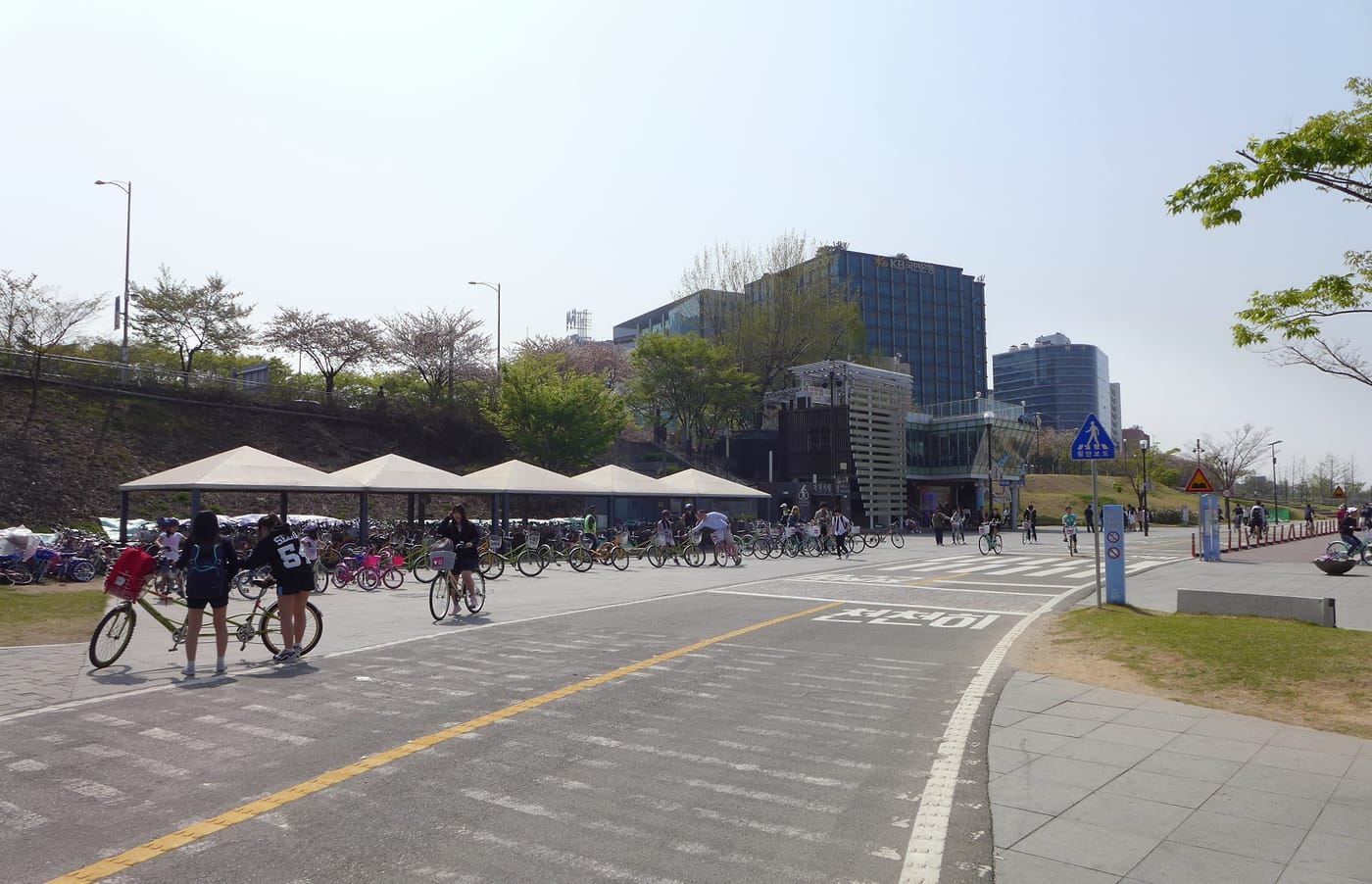
Beyond that, Seoul's river paths are shared with walkers, cyclists, couples, families, delivery riders, and other runners. A crew that takes over the whole path becomes a problem quickly.
Good behavior is simple:
- stay to one side;
- avoid sudden stops in the middle of the path;
- keep music low or use one earbud;
- watch bikes and scooters;
- do not block convenience-store entrances;
- avoid loud group photos where people are trying to pass;
- carry trash until you find the right bin;
- check weather and air quality before pushing pace.
This overlaps with EpicKor's Seoul rainy day itinerary, Seoul heatwave travel guide, and Korea travel apps setup. Running in Seoul is still Korea travel. Weather, navigation, transit, and shared-space manners all matter.
| Need | Best Choice | Why It Works In Seoul |
|---|---|---|
| Route | Han River path near a subway station | Easy meeting point and safer return home |
| Timing | Dusk or evening | Cooler weather and better social energy |
| Gear | Phone belt, light, water, towel | Enough for transit, photos, and cooling down |
| Social style | Easy pace and post-run chat | Less pressure than bars or formal meetups |
Crews That Actually Meet, And When
The article you are reading used to describe running crews without naming a single one, which is not much use if you want to go. These are five Seoul crews documented in Korean coverage as of late 2025, with their regular nights.
| Crew | Area | Regular session | Where they post |
|---|---|---|---|
| JSRC (Jamsil Running Club) | 잠실 Jamsil | Friday 20:00, 5–8km | Instagram @jsrc_official |
| EES (Eighty Eight Seoul) | City streets | Thursday evening, "Sunset, Runset" | @eightyeightseoul |
| Seoul Venus (서울비너스) | Han River / track | Friday 19:30 | @seoulvenus |
| 1000 CAL CLUB | 남산 Namsan, Han River, tracks | Mostly Sundays | @1.000calclub |
| 와우산30 (Wausan30) | 홍대 Hongdae | Tuesday evening, "Tuesday Ritual" | @wausan30 |
Two things to understand before you turn up.
Instagram is the schedule, not a formality. Most Korean crews have no membership system and no website. Seoul Venus, which grew out of the women's training sessions at PRRC (Private Road Running Club) back in 2013, has no signup process at all — the run is announced on Instagram each week and you come. That means the table above tells you the pattern, not next week's plan. Check the account before you travel across the city.
Not every crew wants a visitor, and that is fine. Some are friend groups that happen to run. Some are brand-run events with registration. Some post in Korean only. Read the last few posts before you show up, and if the run is clearly a closed group, take the hint rather than the spot.
If you would rather run alone first — which is the sensible order — EpicKor's Han River running guide covers the actual routes, where the lockers and water are, and what night running on the river is really like.
Seasons Change The Run
Seoul running culture changes dramatically by season. Spring and fall are the easiest. The air feels better, the river is photogenic, and group runs can stretch into long post-run conversations. Summer is more complicated because humidity, heat, and sudden rain can make a casual plan feel rough. Winter can be beautiful, but riverside wind is real.
This is why night running makes sense. In summer, the evening can be the only time that feels reasonable. In spring and fall, it turns the run into a social event after work. In winter, early evening keeps the plan from becoming too late and too cold. The schedule is not random. It is Seoul adapting to work hours and weather.
If you are visiting, avoid judging the culture from one day. A quiet rainy Tuesday and a perfect Friday evening are different worlds. On the right night, the river can feel like a moving social feed: runners, cyclists, couples, photographers, office workers, students, and tourists all sharing the same line of city light.
The Pace Problem
The biggest anxiety for newcomers is pace. Nobody wants to join a crew and become the person everyone waits for. Seoul crews handle this in different ways. Some publish pace groups. Some split into beginner and advanced routes. Some quietly expect you to know whether you can keep up. Some are social enough that pace barely matters.
If you are unsure, message first or choose a solo test route. Run the distance at your own pace before joining the group. If you cannot understand the crew's signup notes, that is already a sign to be careful. Translation apps help, but running safety and pace expectations should be clear before you arrive.
For content strategy, this is a strong angle because it turns the topic from "running is cool" into a practical guide. Readers need to know what to wear, where to go, how to avoid awkwardness, and how to join without slowing the group down. That makes the article useful beyond the trend headline.
It also creates future content paths beyond one guide. Seoul has enough running angles for neighborhood route guides, rainy-season running, winter river wind, beginner-friendly loops, post-run convenience-store food, marathon travel, and what to pack if you want to run while visiting Korea. That makes running a real EpicKor category, not just a social trend post.
Is It A Dating Scene?
Sometimes, but not always. Running crews can be social enough to feel date-adjacent, especially when people are tired of apps and want to meet through activities. But it is better to treat a run crew as a community first. If you join only to flirt, the energy becomes obvious and uncomfortable.
The better approach is to show up consistently, respect the pace, talk naturally, and let the social side happen after the run. The cool-down is where conversation usually opens up. The run itself is not a speed-dating event.
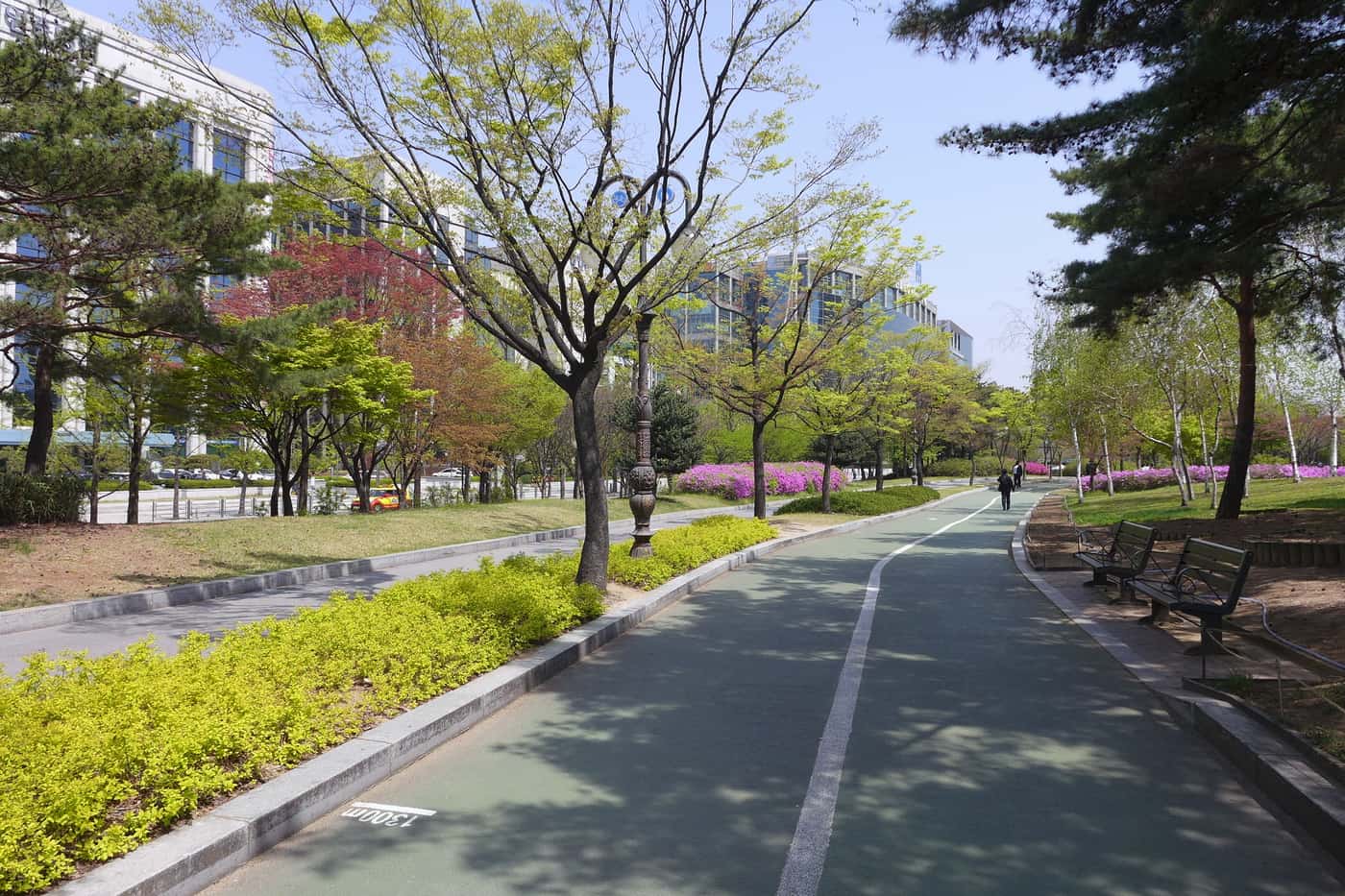
How Travelers Can Try It
If you are visiting Seoul, you do not need to join a formal crew to understand the culture. Walk or jog a short Han River route at dusk. Watch how groups gather near bridges, convenience stores, and subway exits. Notice the mix of serious and casual runners. Pay attention to the gear: light belts, black outfits, small towels, hydration, and phones ready for photos.
If you do want to join a public run, check the organizer's language, pace, registration rules, and meeting point. Do not assume every group welcomes drop-ins. Some are private friend circles. Some require signups. Some are brand events. Some are English-friendly; many are not.
Pack light. Seoul transit rewards compact gear. Heavy bags make post-run movement annoying, especially if you are moving from the river to a cafe, shower, or hotel.
If you want to go further than a group run, the race at the top of the Korean calendar is the 서울마라톤, run as the Dong-A Marathon and now in its 96th edition. The 2026 running is on 16 March 2026, with the full marathon starting at 광화문광장 (Gwanghwamun Square) and the 10K at the Jamsil sports complex. Entry is ₩100,000 for the full and ₩80,000 for the 10K. Registration opens the previous year and the full course can close early from the priority round alone, so this is a plan-ahead race rather than a decide-on-the-trip one. Annual membership, which secures a place, runs ₩150,000.
There is one more practical detail: the after-run plan may last longer than the run. A simple five-kilometer route can become convenience-store drinks, a cafe stop, a subway ride with new friends, or a dinner plan. If you are traveling, build margin into your schedule. Do not book a tight restaurant reservation immediately after a group run unless you are comfortable leaving early.
Also think about showers. Many visitors imagine running from the hotel and returning directly. That works if you stay near the route. If not, you may need a towel, fresh shirt, deodorant, and a realistic transit plan. Seoul is very functional, but a sweaty subway ride after a humid run is not the best version of the city.
FAQ
Q: Are Seoul running crews beginner-friendly?
Some are, but not all. Look for pace notes, beginner labels, route distance, and registration instructions before joining. If the crew looks performance-focused, start with a casual public run or your own easy Han River jog.
Q: Where is the best place to run in Seoul?
The 한강 (Han River) is the easiest starting point because it is scenic, flat, and connected to many neighborhoods. 여의도 Yeouido, 반포 Banpo, 잠실 Jamsil, 이촌 Ichon, and 뚝섬 Ttukseom are the popular stretches, each with its own subway access.
Q: Do I need special gear for Seoul night runs?
You need less than you think: comfortable shoes, reflective details, water, a phone belt, and weather-aware clothing. In summer, run later and hydrate. In winter, layer lightly because riverside wind can feel colder than the street.
Q: How big is running in Korea, really?
Marathon and road-race entries reached 1,008,122 across 254 races in 2024, up from roughly 730,000 in 2023 and about 320,000 in 2022. The widely repeated "ten million runners" headline is disputed — survey-based estimates put people who ran at all in the past year closer to 3.65 million.
Q: Is there a rule about group running in Seoul?
In some places, yes. From 1 October 2024, Seocho District required groups of five or more running together at 반포종합운동장 to keep two metres between runners, effectively ending pack running there. It followed complaints about crews blocking paths, staging group photos on the track, and playing music from waist speakers. Other districts introduced similar limits.
Q: How much does the Seoul Marathon cost?
The 2026 Seoul Marathon (96th Dong-A Marathon) on 16 March 2026 charges ₩100,000 for the full marathon and ₩80,000 for the 10K. The full course often closes during priority registration, so it is not a race you can decide on once you have arrived.
Q: Can a tourist join a Korean running crew?
Sometimes. Check whether the group accepts visitors, whether the instructions are in English, and whether registration is required. Be respectful, stay at the posted pace, and do not treat the crew like a tourist attraction.
Sources: 러닝크루 민폐 논란, 서초구 5인 이상 제한 — 뉴시스, 2024-10-08 · 산책로 단체 달리기 제한 — 서울신문, 2024-10-01 · 마라톤 참가자 100만 명 돌파 (경찰청 자료) · "러닝 인구 천만"의 진실 — 검증 기사 · 서울을 달리는 러닝 크루 5 — 하입비스트, 2025-10 · 2026 서울마라톤 공식
You Might Also Like
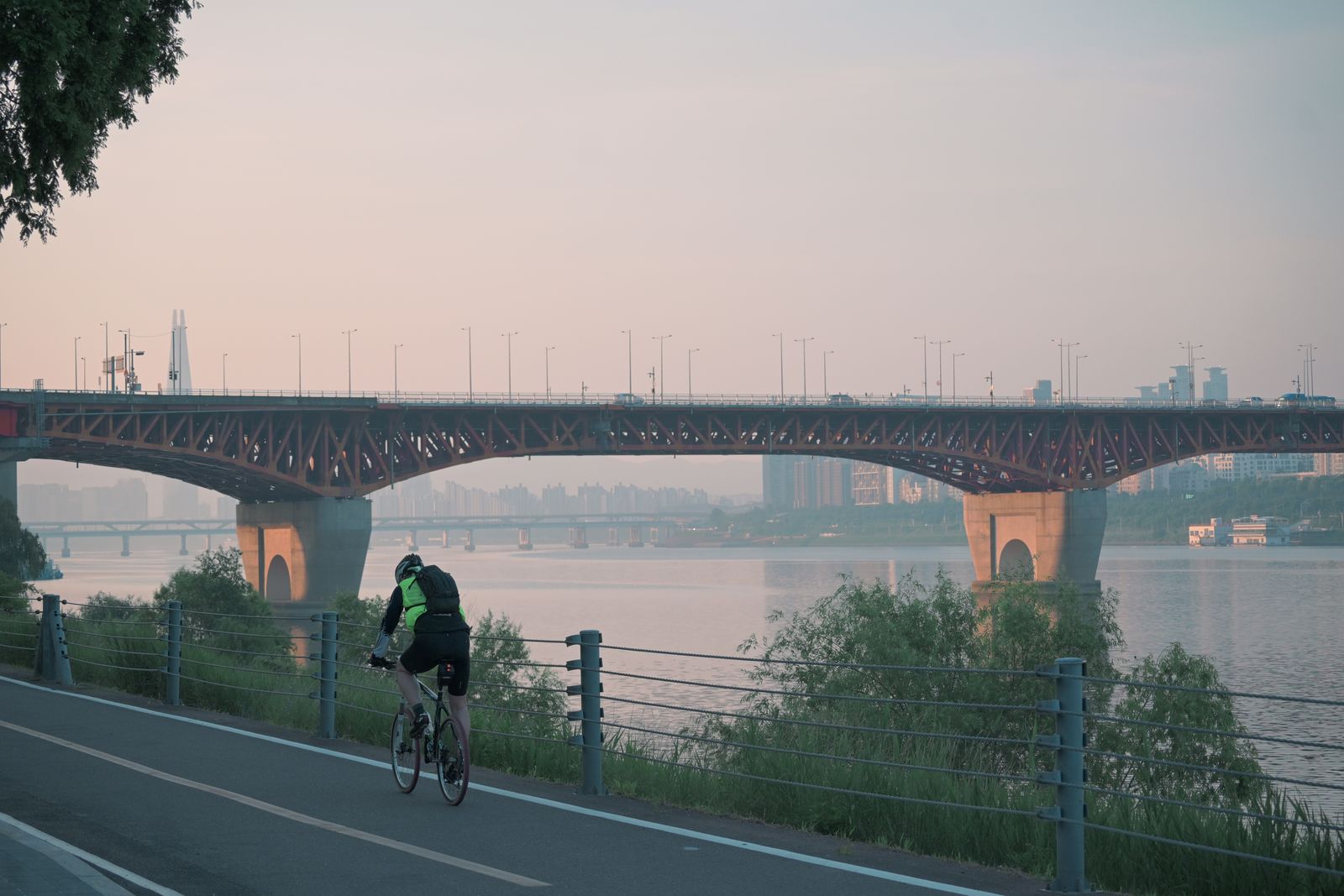
Han River Running Guide: Seoul Routes and Night Safety
How to run along Seoul's Han River: route choices, night-running safety, crew etiquette, bike-path awareness, facilities, weather, and packing tips.
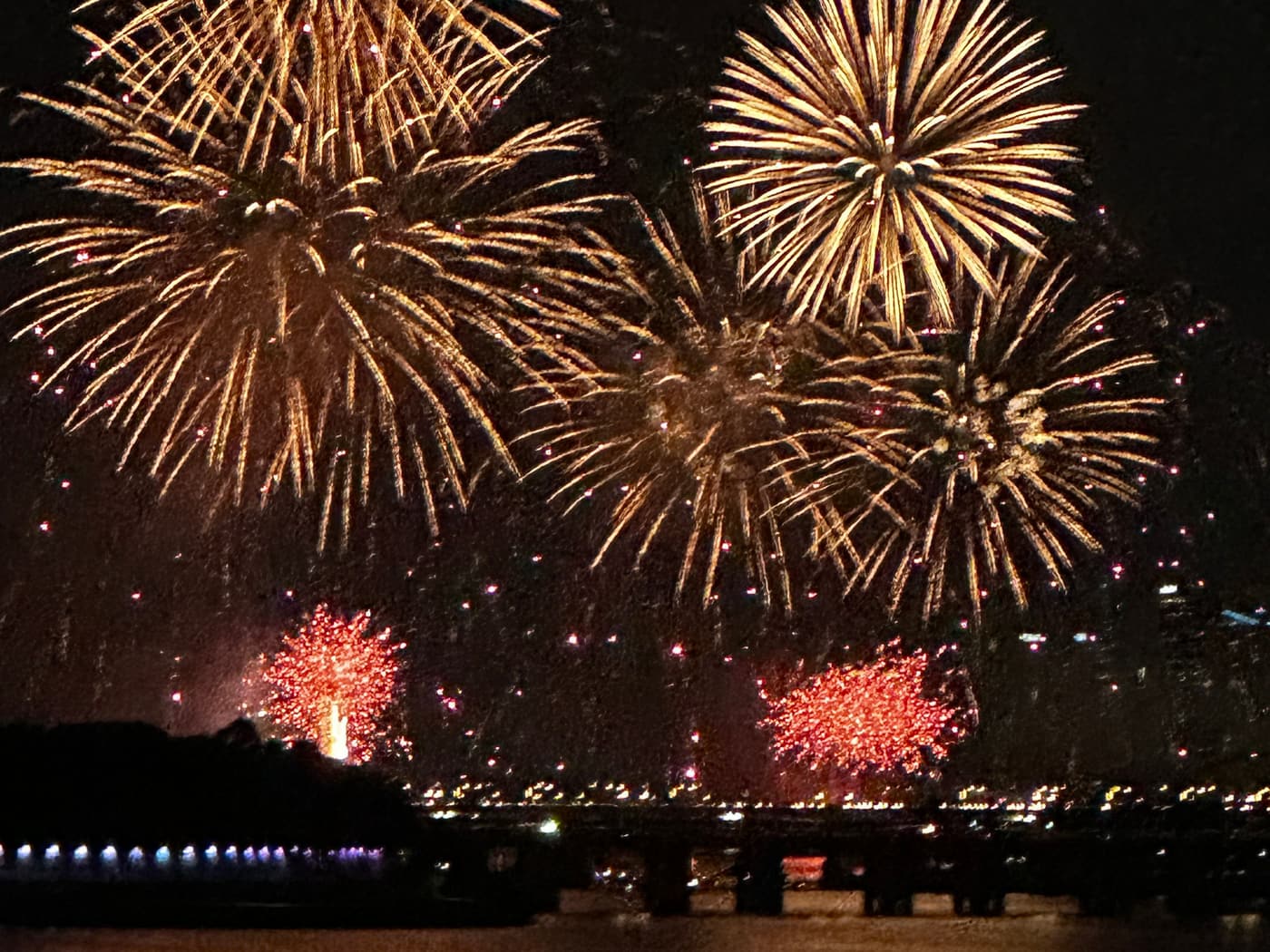
Seoul Fireworks Festival 2026 Moved Three Weeks Earlier: What That Changes
Korea's biggest fireworks night is 5 September 2026 — moved three weeks earlier to dodge Chuseok. A million people come, the nearest subway station stopped taking passengers at 6:19pm last year, and the free view is the good one.
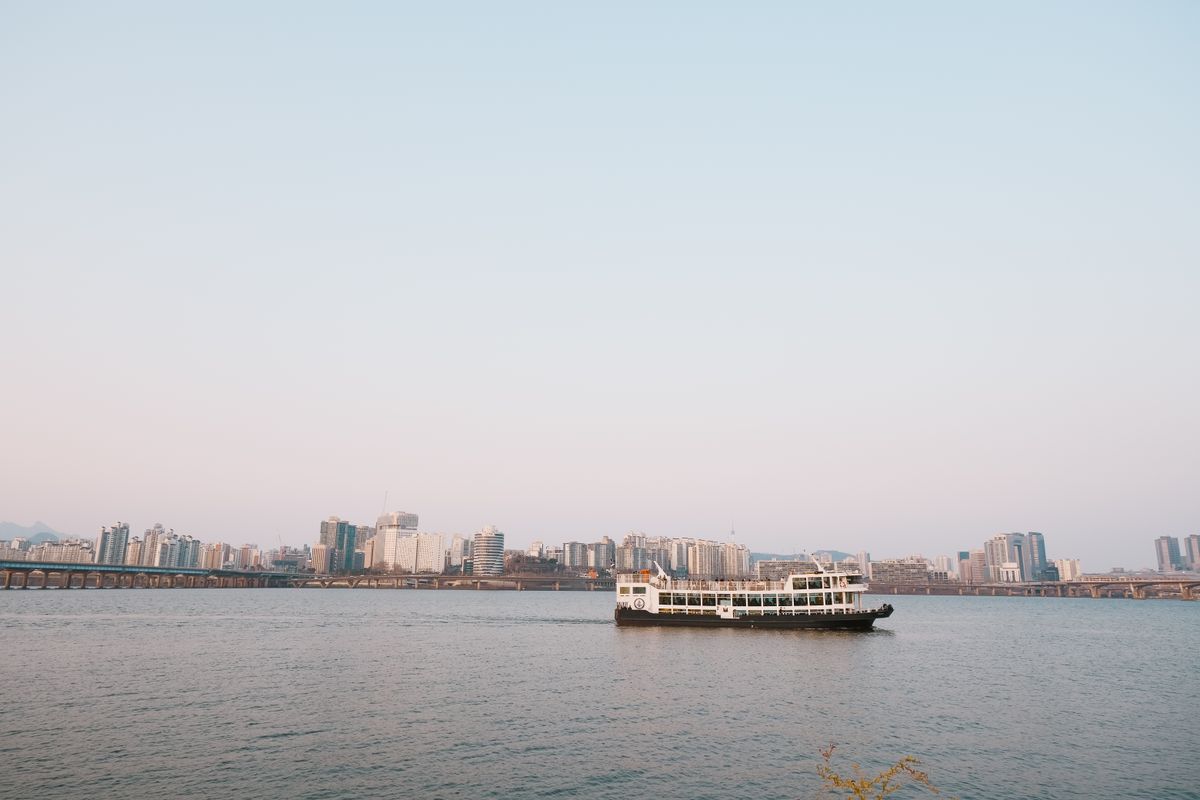
Hangang Bus 2026: Is Seoul's New River Ride Worth It?
A Hangang Bus 2026 guide for Seoul tourists: route logic, piers, when it beats the subway, when to skip it, and what to pack.