COSRX Snail Mucin: The Korean Essence That Tops Amazon, Explained Honestly
The best-selling Korean beauty product in America is a bottle of snail slime.
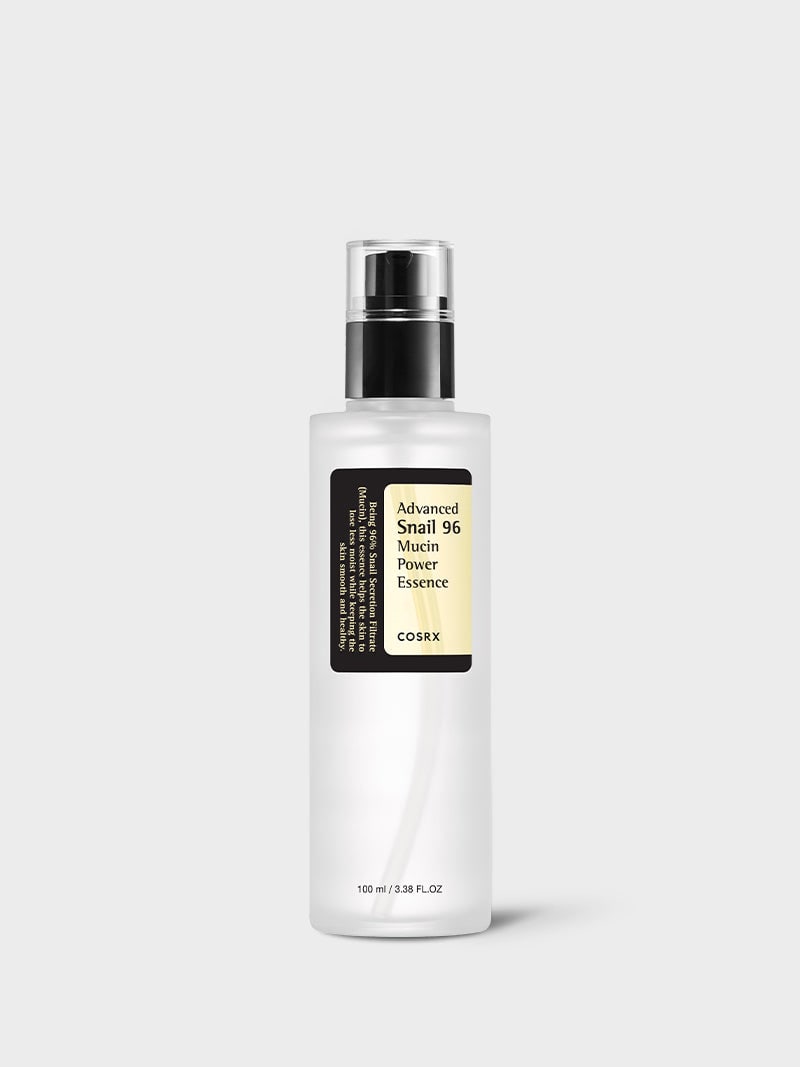
Not snail-inspired, not snail-adjacent: 코스알엑스 (COSRX) Advanced Snail 96 Mucin Power Essence is, by its own label, 96.3 percent snail secretion filtrate, and it sits at or near the top of Amazon's facial serum rankings year after year. Korean industry coverage confirms what the review counts suggest — it holds the number-one spot in Amazon's facial serum category in the Americas.
Most English coverage of this product is either a rave or a recoil. This is neither. It is the explanation: what that 96 actually means, how the mucin is collected (the part everyone asks about), what the product genuinely does and does not do, what Koreans pay for it versus what you pay, and the quiet fact that the scrappy indie brand behind it has been owned by Korea's biggest beauty conglomerate since 2024.
| Question | Short answer |
|---|---|
| What is it | A watery, slippery hydrating essence — 96.3% snail secretion filtrate (뮤신) |
| Who makes it | COSRX, founded December 2013 by a cosmetics researcher; owned by Amorepacific since 2024 |
| What it does | Hydrates, soothes, supports the skin barrier; a healthy-skin glow with consistent use |
| What it does not do | It is not a retinoid or an exfoliant — it will not resurface skin or erase wrinkles |
| Are snails harmed | No — mucin is collected from mesh the snails roam over in a dark, quiet room |
| Korea price | List ₩23,000; commonly ₩14,000–20,000 at Olive Young, August 2026 |
| US price | $25 list on COSRX's own store; check the Amazon listing for its current price |
| Skip it if | You have a mollusk allergy, you want vegan skincare, or you expect active-ingredient results |
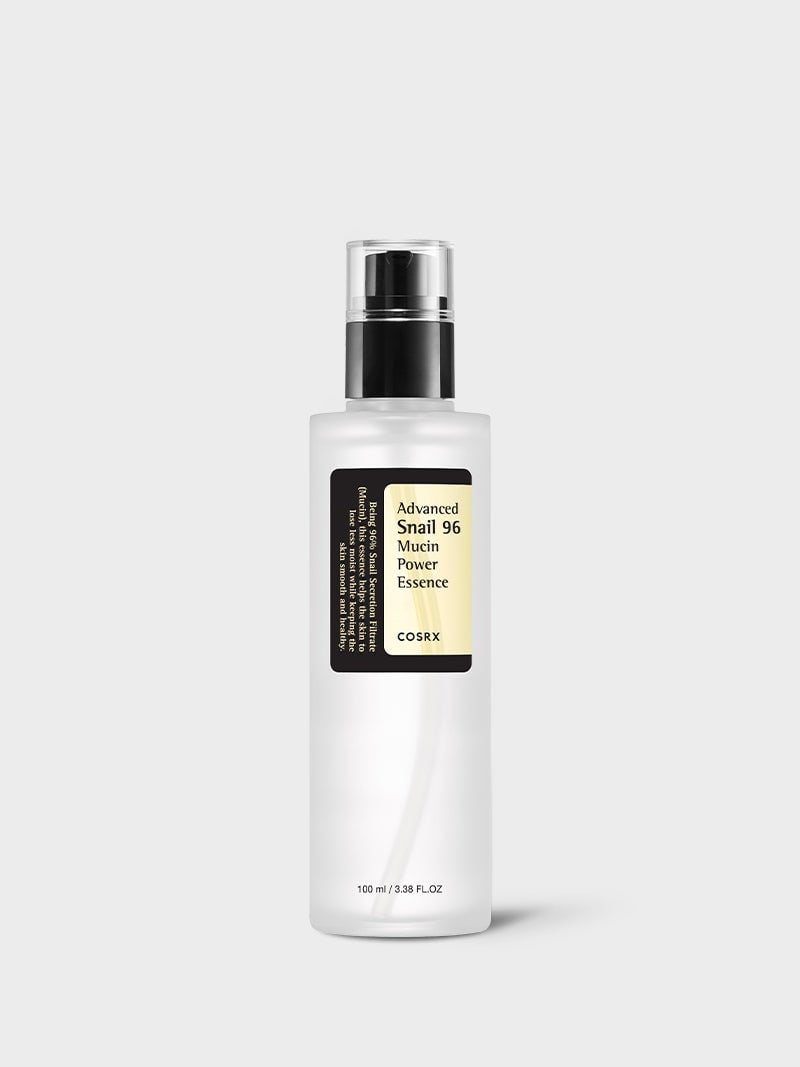
COSRX Advanced Snail 96 Mucin Power Essence (100ml) — on AmazonAffiliate link. As an Amazon Associate, EpicKor earns from qualifying purchases at no extra cost to you.
What "96" Actually Means
The number on the bottle is the formula. Snail secretion filtrate is 96.3 percent of the contents — not an extract added to a lotion base, but the base itself, lightly supported by humectants (betaine, sodium hyaluronate) and soothers (allantoin, panthenol).
Snail secretion filtrate is the mucus trail a snail produces, filtered. It is not one ingredient so much as a package: glycoproteins, hyaluronic acid, glycolic acid in trace amounts, zinc, and allantoin — which is why Korean formulators treat it as a hydrating-soothing complex rather than a single active.
On skin it behaves like a very good humectant with a distinctive texture: watery but stringy, briefly tacky, then absorbed. The texture is the honest dividing line — some people find it pleasantly cushiony, some cannot get past the slip. Nobody is wrong. It is filtered snail mucus, and it feels like exactly that for about forty seconds.
If you want the deeper ingredient science — what mucin does alongside cica, propolis and the rest of K-beauty's soothing shelf — our K-beauty ingredients decoder covers the category; this article is about the one product that made the ingredient famous.
How the Mucin Is Collected — the Question Everyone Asks First
The image people fear is a snail in a press. The reality, documented consistently in Korean and international coverage of Korean mucin suppliers, is closer to a spa visit:
Snails are placed over a mesh net in a dark, quiet room and left alone to roam. The mucin they naturally secrete as they move drips through and is collected. No external pressure is applied, and the snails are returned unharmed — COSRX's own materials describe roughly thirty minutes of wandering before the snails go back home. Stressed snails produce less and worse mucin, so gentleness here is not just ethics; it is quality control.
Two honest caveats belong next to that reassuring picture. First, this is animal-derived skincare — however gentle the collection, it is not vegan, and no relabeling changes that. Second, "cruelty-free" claims in cosmetics are marketing language, not a regulated standard; what can be said concretely is that the collection method does not injure the animal, and that the industry's own incentive aligns with keeping the snails healthy.
The Company: From Review Boards to a ₩935 Billion Buyout
COSRX is a young company that grew in an unusually Korean way.
It was founded in December 2013 by 전상훈 (Jeon Sang-hoon), a cosmetics researcher, on a premise that sounds obvious now and was not then: build products from what people with skin problems were actually asking for in reviews and forums, not from what marketing wanted to sell. The name is literally "Cosmetics + RX" — a prescription metaphor. Early products were single-purpose, cheaply packaged, fragrance-light, and named like lab reports: the pimple patch, the BHA liquid, the snail essence. The look has barely changed since, and in a market that redesigns constantly, the unchanging yellow-and-black label became a trust signal of its own.
The snail essence became the global breakout — the product that rode TikTok's K-beauty wave into Amazon's top ranks. Revenue tells the story: ₩123.3 billion in 2021, ₩204.4 billion in 2022, ₩486.2 billion in 2023, ₩589.9 billion in 2024.
Korea's biggest beauty company noticed. 아모레퍼시픽 (Amorepacific) bought a 38.4 percent stake in 2021, then acquired the rest in stages — a total investment of about ₩935.1 billion for roughly 96 percent, consolidating COSRX as a subsidiary from 2024. Korean business press initially called the deal a winner's curse when growth wobbled; by 2026 the same press was calling COSRX the group's star performer, carried by exactly the US demand this article is about. The indie brand on the bottle is, in ownership terms, no longer indie — a fact that changes nothing about the formula and is worth knowing anyway.
As an Amazon Associate, EpicKor may earn from qualifying purchases. The product this article is about is the COSRX Advanced Snail 96 Mucin Power Essence (100ml) — the listing sold through COSRX's official Amazon storefront, which matters for a product this copied. If you want the routine pairing Koreans default to, the Snail 96 + Peptide Booster set bundles it with the follow-on serum. The listing's price moves often, so check the current number rather than assuming.
See COSRX Advanced Snail 96 Mucin Power Essence (100ml) on AmazonWhat It Actually Does — and the Expectation That Ruins It
Used consistently, this is what the essence is good at:
- Hydration that layers. It is a textbook humectant step: applied to damp skin under a moisturizer, it holds water against the skin and makes the next product spread better.
- Calming. The allantoin-panthenol-mucin combination is genuinely soothing on irritated, over-exfoliated, or freshly sunburned skin — which is why Korean users treat it as a recovery product.
- The glow. The much-photographed "glass skin" finish is real in the sense that well-hydrated skin reflects light better. It is temporary, reapplied daily, like hydration itself.
And here is the expectation that generates the one-star reviews: mucin is not an active. It does not exfoliate meaningfully, does not stimulate collagen the way a retinoid does, does not fade pigment the way vitamin C or azelaic acid can. A reader who buys it expecting a wrinkle treatment has bought the wrong product — not a bad product, the wrong one. Korean routines position it as the comfortable middle layer that makes the aggressive steps tolerable, and that is the job it is world-class at.
Who should genuinely skip it: anyone with a mollusk or shellfish allergy (mucin is a mollusk product — this is not hypothetical), strict vegans, and anyone whose skincare budget only stretches to one product — in which case a sunscreen beats an essence every time, no contest.
What Koreans Pay vs What You Pay
Spec-sheet honesty, August 2026:
- In Korea: list price ₩23,000 for the 100ml, but nobody pays list — Olive Young runs it between roughly ₩14,000 and ₩20,000 depending on the promotion week, and it is stocked in every branch in the country.
- In the US: $25 list on COSRX's own store; the Amazon listing's price moves, so check it before paying list. At full list, Americans pay roughly 1.5–2x the Korean street price; when the listing is discounted, the gap narrows.
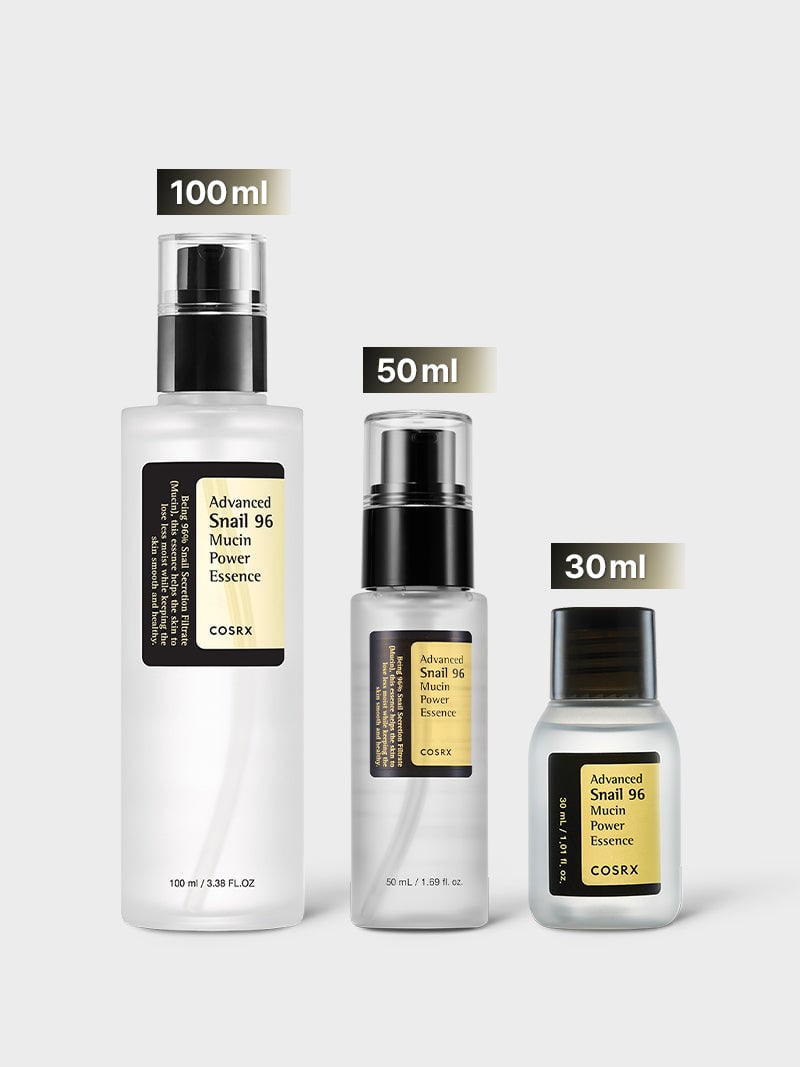
Two buying notes that matter more than the price gap. First, counterfeits exist for this product specifically — it is one of the most-copied K-beauty items, so buy from the brand's official storefront listing rather than the cheapest third-party offer. Second, check the size. The 100ml is the standard; lookalike listings sometimes price the 50ml near the 100ml's price and let the buyer assume.
If you are buying in Korea instead, our Olive Young shopping guide covers how the discount cycles work and what is actually worth carrying home.
The lowest-risk way in: the texture decides this product for most people, so the 30ml travel size answers the question for a third of the money before you commit to the full 100ml bottle. If the slip does not bother you, the big bottle is the better per-ml buy and lasts months used daily. EpicKor may earn from qualifying purchases at no extra cost to you.
See full 100ml bottle on AmazonHow Koreans Actually Use It
Routine notes that do not appear on the box:
On damp skin, not dry. The Korean default is to apply it within a minute of cleansing, while the face is still damp — a humectant needs water to hold. On bone-dry skin it just sits.
The layering trick. Two or three thin layers, pressed in with palms rather than rubbed, is the 겹바르기 (layering) habit the "glass skin" tutorials are actually describing. More layers of a bland hydrator, not more products.
Under, not instead of, moisturizer. In dry climates or winter, the essence needs a cream over it to seal — used alone in a heated room it can leave skin drier than nothing, which is a humectant behaving exactly as humectants do.
The fridge question, answered: it does not need refrigeration, but the cold version on irritated summer skin is one of those small Korean-bathroom pleasures that costs nothing to try.
FAQ
Q: Is COSRX snail mucin really snail slime?
Yes — the essence is 96.3% snail secretion filtrate, which is the mucus snails secrete, collected and filtered. It is not a synthetic imitation or a trace ingredient; the filtrate is the product.
Q: Are snails harmed to make snail mucin?
No. The collection method places snails over mesh in a dark, quiet room and gathers what they secrete naturally while roaming — about thirty minutes, per COSRX, before the snails are returned. No pressure or injury is involved, and stressed snails produce worse mucin, so the industry's incentive runs toward gentleness. It is, however, still an animal-derived product and not vegan.
Q: What does snail mucin actually do for skin?
It hydrates, soothes irritation, and supports the skin barrier — a humectant-soother complex of glycoproteins, hyaluronic acid, allantoin and trace minerals. It produces the well-hydrated glow K-beauty photography is famous for. It does not exfoliate, treat acne directly, or rebuild collagen like a retinoid; expecting active-ingredient results is the main source of disappointment.
Q: Is COSRX still an indie Korean brand?
The brand is Korean and the products are made in Korea, but the company has been majority-owned by Amorepacific — Korea's biggest beauty group — since a staged acquisition totalling about ₩935 billion, consolidated in 2024. It was founded in December 2013 by cosmetics researcher Jeon Sang-hoon, who built early products directly from consumer skin-problem forums.
Q: How much is COSRX snail essence in Korea?
List price is ₩23,000 for the 100ml, and Olive Young routinely sells it between about ₩14,000 and ₩20,000 on promotion — as of August 2026. In the US it lists at $25 on COSRX's own store; check Amazon for the current price. Counterfeits of this specific product circulate, so the official storefront listing is worth the extra dollar.
Q: Who should not use snail mucin?
Anyone with a mollusk or shellfish allergy — mucin is a mollusk-derived product and can cross-react. Strict vegans, since it is animal-derived by definition. And anyone shopping for a single transformative anti-aging product: this is a hydrator, and a sunscreen or retinoid would serve that goal better.
Sources Checked
- Korean business coverage of the Amorepacific acquisition and COSRX's performance: the 2021 38.4% stake, the staged buyout totalling about ₩935.1 billion for ~96%, subsidiary consolidation from 2024, and the revenue ladder ₩123.3bn (2021) → ₩589.9bn (2024) — Amorepacific's own announcement, Daum/business coverage April 2026
- Korean industry reporting on COSRX's Amazon position — bestseller status in Beauty & Personal Care and the #1 facial-serum ranking in the Americas — KPI News
- Korean coverage of the company's founding: December 2013, founder Jeon Sang-hoon's researcher background, and the review-driven development model
- COSRX's own product materials for the 96.3% filtrate figure, the mesh-and-dark-room collection method with snails returned unharmed, and current US list pricing ($25/100ml), checked August 2026
- Olive Young listings for Korean street pricing (₩23,000 list; ₩14,000–20,000 promotional range), checked August 2026
You Might Also Like
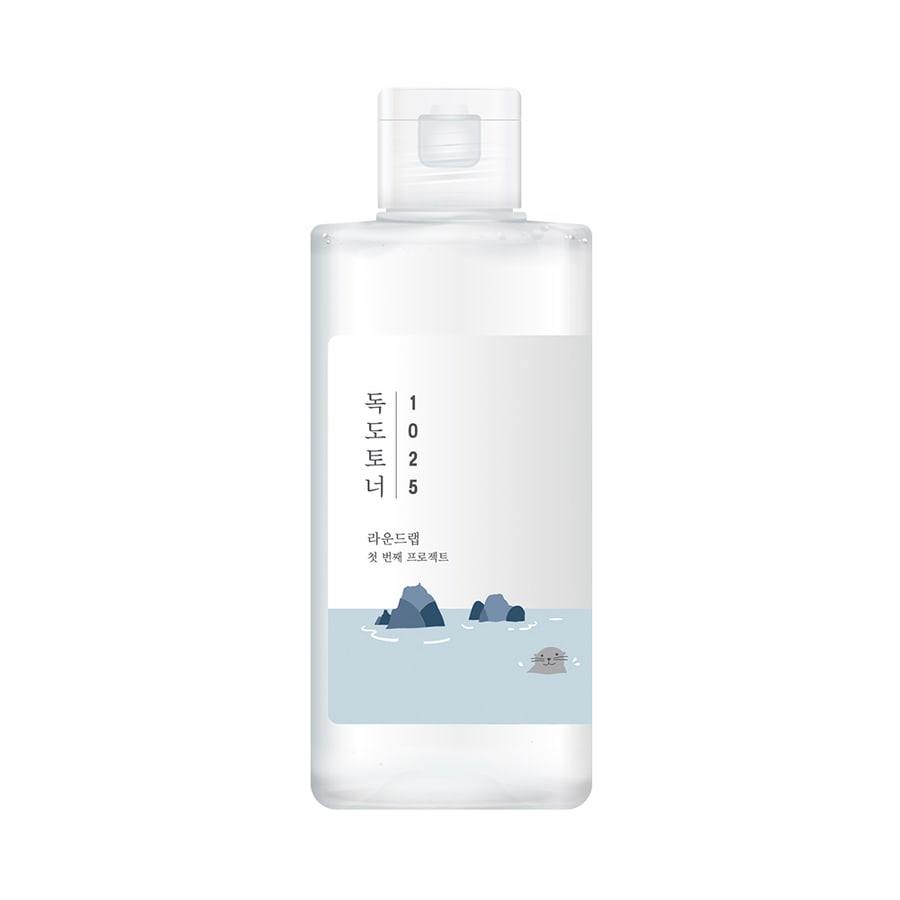
Round Lab Dokdo Toner: Korea's Six-Time No.1 Toner Is Named After a Date
The 1025 in Korea's best-selling toner means October 25 — Dokdo Day. Deep-sea water from Ulleungdo, six straight Olive Young toner awards, a word-of-mouth rise with no ad budget, and a ₩600 billion acquisition by the Beauty of Joseon company.
Torriden Dive-In Serum: Korea's Most-Awarded Hydrator, Explained Honestly
Thirteen million bottles, four straight Olive Young awards, and a formula built by leaving things out. What low-molecular hyaluronic acid actually does, what Koreans pay versus you, and who should skip the most-awarded serum in Korea.
Anua Heartleaf 77 Toner: The Korean Weed That Smells Like Fish and Topped Amazon
The toner filling American shelves is 77% extract of a Korean herb whose name means fish-smell grass. What heartleaf actually is, the two Seoul National University classmates behind Anua, real prices in Korea and the US, and who should skip it.