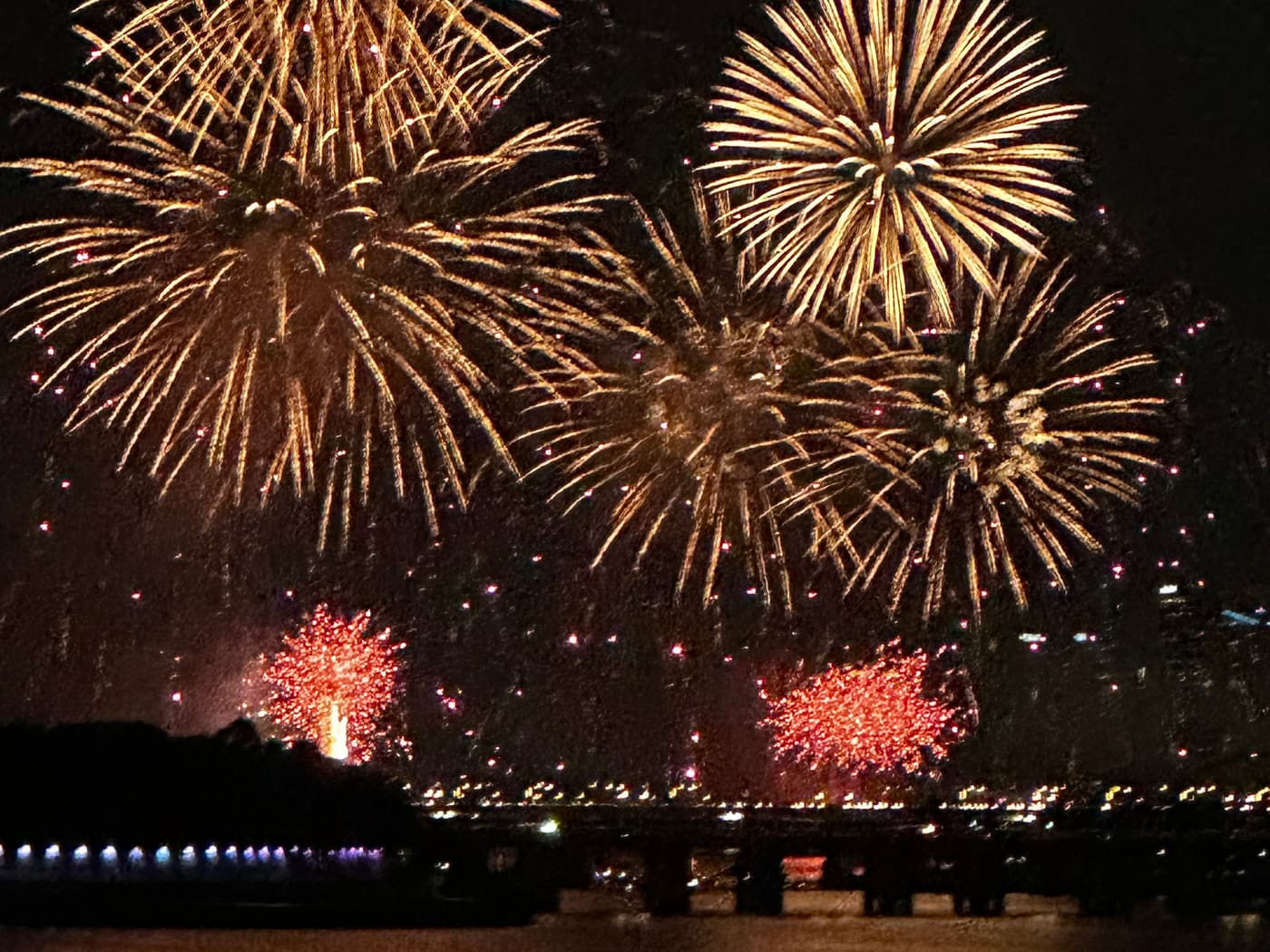
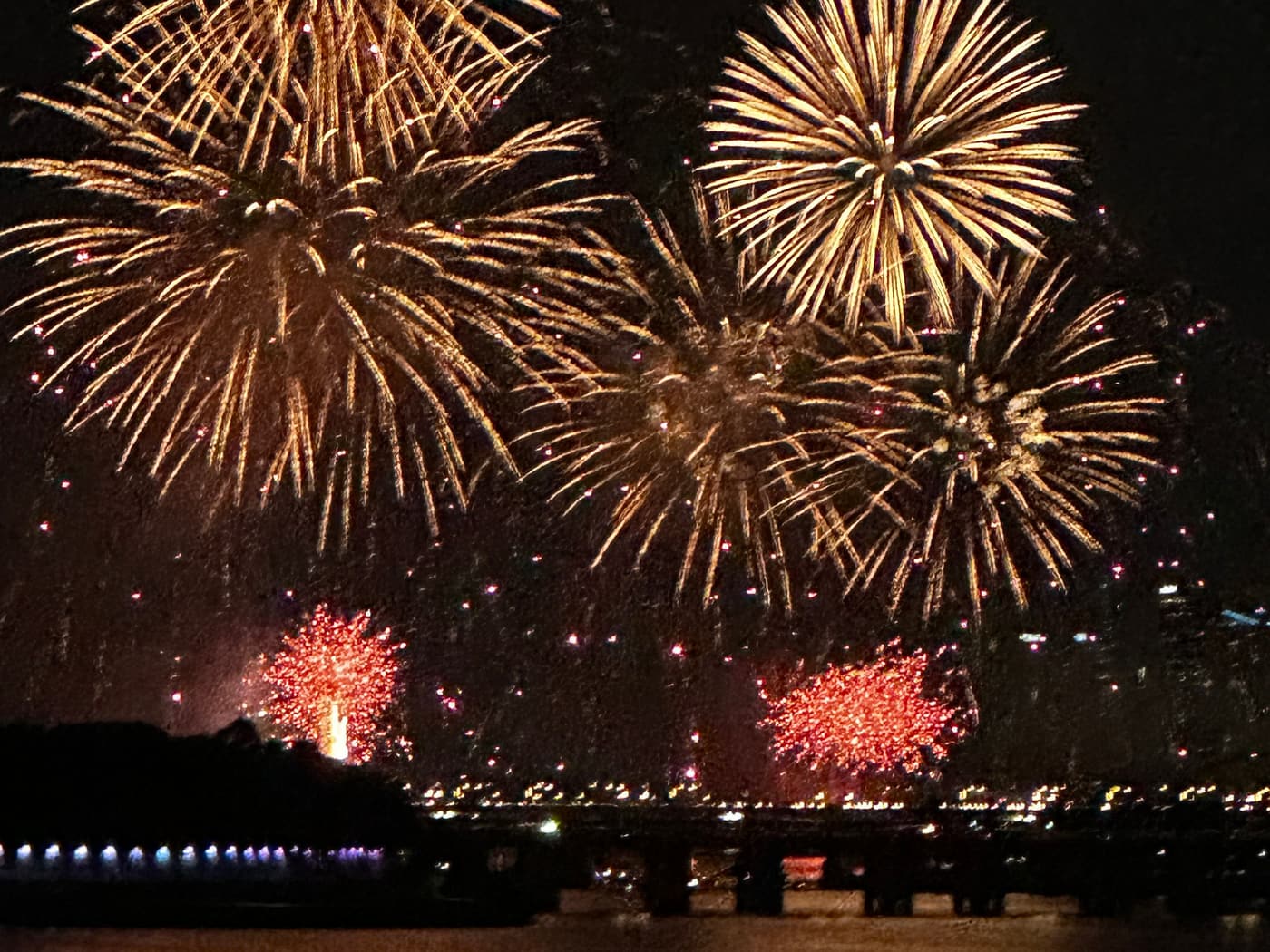
Seoul Fireworks Festival 2026 Moved Three Weeks Earlier: What That Changes
If you have an old guidebook, a saved Pinterest board, or a friend who went a few years ago, you have the wrong date. The Seoul International Fireworks Festival — 서울세계불꽃축제 — is on Saturday 5 September 2026, roughly three weeks earlier than its usual late-September or early-October slot.
Hanwha, which has paid for the whole thing since 2000, announced the move on 6 August. The reason is Chuseok: Korea's autumn harvest holiday falls in late September this year, and the country's biggest travel week is a bad place to put its biggest single-night event.
That one change cascades into everything else — when to arrive, which park to pick, and how you get home. About a million people come to the Han River for this.
ZAZE waterproof folding picnic mat — on AmazonAffiliate link. As an Amazon Associate, EpicKor earns from qualifying purchases at no extra cost to you.
The Short Answer
| Question | Answer |
|---|---|
| Date | Saturday 5 September 2026. Eve programme on Friday 4 September |
| Where | Yeouido Hangang Park, plus Ichon Hangang Park across the water |
| Main show | About 8:00pm to 9:10pm, with the site open from around 1:00pm |
| Cost | Free at both parks. Only Nodeul Island seating is ticketed |
| Ticketed seats | Nodeul Island Orange Play Zone, ₩110,000–220,000 |
| Crowd | About 1 million people |
| The real problem | Not seeing it. Leaving. |
Why the date moved, and why that matters to you
The festival has drifted around the calendar for years — early October, late September, once or twice in between. Checking the year is not optional with this event.
For 2026, Hanwha moved it to 5 September for two stated reasons: to avoid colliding with Chuseok, and to land inside the stronger inbound tourist window. Korean press covering the announcement framed it as an attempt to grow the event into a genuinely international draw rather than a domestic one.
For a visitor, the practical consequence is the weather. Early September in Seoul is still summer — humid, frequently around 28–30°C in the afternoon, and the sun does not set until roughly 7:30pm. If you are staking out a riverside spot from mid-afternoon, as most people do, you are sitting in late-summer heat for hours, not crisp autumn air. Bring water. Bring something to sit on.
Free is the good view. Genuinely.
This is the part visitors get backwards most often, so it is worth being blunt about it.
The fireworks are launched from barges on the Han River, not from a stage. There is no front row in the usual sense — the show happens in the sky over a body of water about a kilometre wide, and it is designed to be seen from both banks at once. Standing on grass for free at Yeouido gets you a view that is not meaningfully worse than a paid seat.
Yeouido Hangang Park is the main site and the loudest, most crowded, most atmospheric option. It is where the food stalls, the stages, and the daytime programme are.
Ichon Hangang Park, directly across the river in Yongsan, is the quieter choice and arguably the better one for photographs — you see the bursts against the Yeouido skyline rather than standing underneath them. Crowds spread here too, along with Wonhyo Bridge and Mapo Bridge and the Mapo and Yongsan riverbanks generally.
High viewpoints are the other option people ask about, and they come with caveats worth reading before you climb anywhere — EpicKor's Yongwangsan Skywalk guide compares Seoul's free night viewpoints against N Seoul Tower and Seoul Sky, including what they do and do not show you on fireworks night.
Nodeul Island's Orange Play Zone is the only genuinely ticketed area, sold through orange-play.co.kr. Zones ran ₩110,000, ₩165,000, and ₩220,000 with a five-ticket limit per buyer. What you are buying is a reserved seat and not having to arrive six hours early — not a better angle.
There is also a cruise-and-yacht market that sells out well in advance and is priced accordingly. It is a real option and a legitimate one. It is not necessary.
The timing nobody writes down
The published schedule is simple: the site opens around 1:00pm, an official ceremony runs about 7:40pm, the main show is roughly 8:00pm to 9:10pm, and a DJ set runs until about 10:00pm.
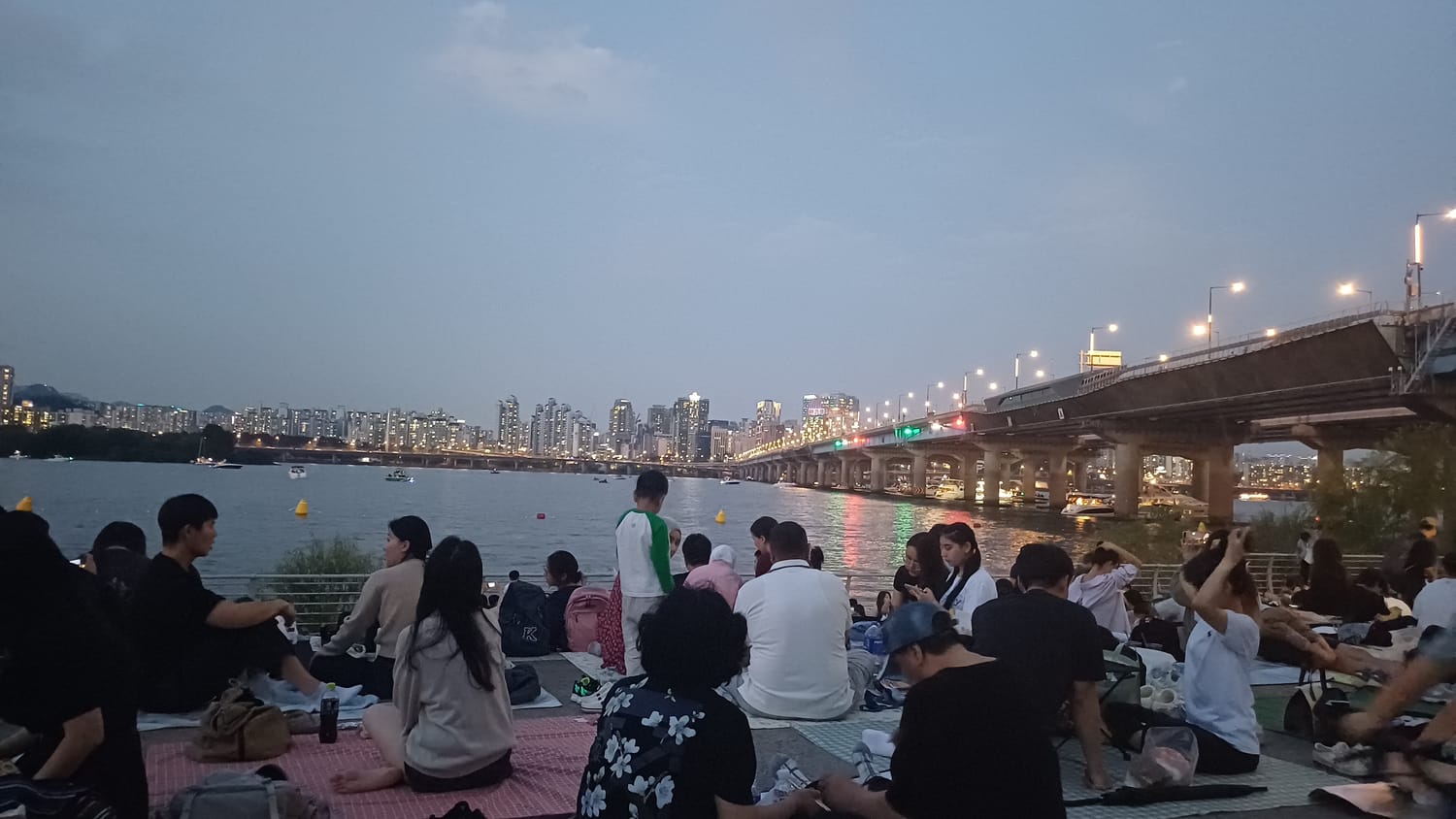
What that schedule does not tell you is when the ground runs out. The photo above is timestamped 6:43pm and the good riverbank is already occupied. Korean attendees treat this as an all-day picnic: mats down in the early afternoon, food delivered, several hours of sitting, then seventy minutes of fireworks.
A workable plan, in descending order of ambition:
- Want a front riverbank spot at Yeouido? Be there by early afternoon and commit to the day.
- Want a decent view without the whole day? Go to Ichon, or the Mapo/Yongsan bank, and arrive by late afternoon.
- Arriving after dark? You will see the fireworks — they are in the sky and the sky is large. You will not have anywhere comfortable to stand, and you will be in the densest part of the crowd.
The station closes before the show starts
Here is the fact that is missing from nearly every English-language guide, and it is the one most likely to affect your evening.
Yeouinaru Station (Line 5), the stop closest to Yeouido Hangang Park, stops accepting passengers when the crowd builds. In 2025 trains began running through it without stopping — in both directions — from 6:19pm, more than an hour and a half before the fireworks even started. This is a deliberate crowd-safety measure, not a malfunction, and it is now a routine part of how Seoul manages this event.
If that happens, use these instead:
| Station | Lines | Note |
|---|---|---|
| Yeouido | 5, 9 | The main fallback. About a 15-minute walk to the park |
| Mapo | 5 | North bank, near Mapo Bridge |
| Saetgang | 9, Sillim | South of Yeouido, usually less congested |
| Ichon | 4, Gyeongui–Jungang | For the Ichon Hangang Park side |
Seoul does add capacity — 18 extra Line 5 runs and 62 extra Line 9 runs in 2025, with more than four times the usual number of safety staff at 17 stations around the venue. Hanwha put in roughly 4,700 safety and crowd-control personnel for 2026, its largest deployment yet, including 1,200 staff volunteers.
None of that makes the trip out fast. It makes it safe.
Plan the exit, not the entrance
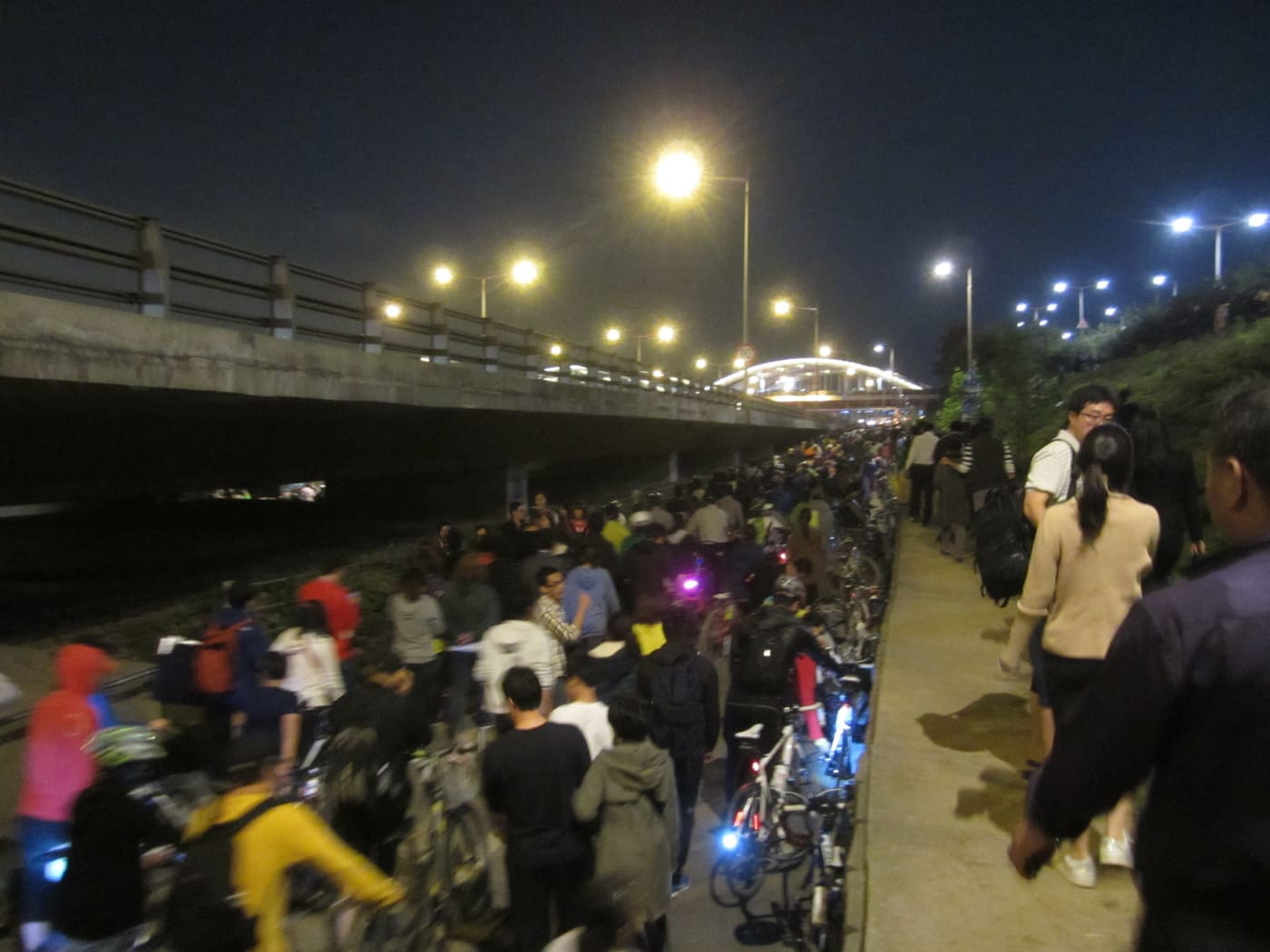
Getting to a Han River park is easy. Leaving with a million other people is the actual challenge, and the people who enjoy this event are the ones who decided in advance how the night ends.
Three approaches that work:
Stay put. The show ends around 9:10pm and the DJ set runs to 10:00pm for a reason. Sitting on your mat for another forty minutes while the first wave drains is more pleasant than standing in it.
Walk out. Pick a station 20–30 minutes away on foot and walk to it. Yeouido, Saetgang, or Mapo will all be busy, but walking away from the river before you go underground is consistently faster than joining the funnel at the nearest entrance.
Do not count on a taxi. Roads around Yeouido are restricted and gridlocked, and app-hailed cars cannot reach you any faster than a taxi can. Kakao T's parking reservation feature exists for drivers, but driving to this event is a decision you will regret.
For the mechanics of Seoul's transit apps and payment before you land, we have a full guide to Seoul transit and payment setup.
The exit problem has a second solution: don't have one. EpicKor may earn a commission if you book through this Agoda link, at no extra cost to you. Staying within walking distance of the river turns the worst part of the night into a twenty-minute stroll — check Seoul accommodation on Agoda and compare the Yeouido, Mapo, and Yongsan areas specifically. Confirm your actual dates, taxes, cancellation terms, and final price on Agoda — and book early, because a Saturday a million people have circled fills up.
What actually happens on the night
Three national teams perform in 2026: Korea, the United States, and the United Kingdom. Each country's team choreographs its own sequence, and the differences are real — shell types, rhythm, and the way each uses music vary noticeably between segments. The finale is the Korean team.
Hanwha bills it as a multimedia show, meaning fireworks synchronised with music and lasers rather than a straight pyrotechnic display. The daytime programme at Yeouido has, in past years, included busking stages, food stalls, and sponsor activations from early afternoon — the reason the site opens seven hours before anything is set on fire.
The Friday 4 September eve programme was listed by the Seoul city festival registry when the dates were confirmed, but its content had not been detailed at the time of writing. If a Friday visit matters to your plan, check the official site closer to the date.
Before you go: what to check and when
Two things are still moving as of August 2026, and both are worth a look in the week before:
The country-by-country timetable. The order and length of each team's segment is usually published shortly before the event on hanwhafireworks.com.
The traffic and station plan. Seoul publishes road closures, bus detours, and the station-skipping policy through the city's transport channels in the final days. The 2025 pattern is a reliable guide to what will happen, but the specific times are set for each year.
And a general note on this whole category: Korean festivals move. This one moved by three weeks with a month's notice. Before any Korean festival trip, confirm the current year's date on the organiser's own site rather than trusting an article — including this one, which is accurate as of August 2026 and will be updated if the plan changes.
You might like: Korea Festival Calendar 2026–2027, Month by Month: The 27 Festivals Korea's Government Picked, and Which Dates Are Confirmed
FAQ About the Seoul Fireworks Festival
Q: When is the Seoul Fireworks Festival 2026? Saturday 5 September 2026, with an eve programme on Friday 4 September. This is about three weeks earlier than recent years — Hanwha moved it to avoid the Chuseok holiday and to sit inside a stronger tourist window. The main show runs roughly 8:00pm to 9:10pm.
Q: Is the Seoul Fireworks Festival free? Yes. Yeouido Hangang Park and Ichon Hangang Park are both free and require no ticket. The only ticketed area is the Orange Play Zone on Nodeul Island, which ran ₩110,000–220,000 by zone. Because the shells are fired from barges in the middle of the river, the free view is genuinely comparable.
Q: Where is the best place to watch? Yeouido Hangang Park for atmosphere and the daytime programme; Ichon Hangang Park for a wider view against the Yeouido skyline and a somewhat calmer crowd. Wonhyo Bridge, Mapo Bridge, and the Mapo and Yongsan riverbanks also fill up.
Q: What time should I arrive? For a riverbank spot at Yeouido, early afternoon — the site opens around 1:00pm and mats are down well before 6:00pm. For a reasonable view without committing the day, late afternoon at Ichon or the Mapo side.
Q: How do I get home afterwards? Expect Yeouinaru Station to be skipped by trains — in 2025 this began at 6:19pm, before the show. Use Yeouido, Mapo, Saetgang, or Ichon instead, wait out the first wave rather than joining it, and do not plan on a taxi.
Q: How many people attend? Around a million along the Han River, which is why crowd management, not visibility, is the thing to plan around.
One line to take with you
Do not plan this night around finding the perfect view. There is no bad view of a firework a kilometre up over a river — the sky does not have a front row.
Plan it around the two things that actually go wrong: arriving too late to sit down, and having no idea how you are getting home. Sort those two out and it is one of the best nights Seoul offers, for free.
If you are building a wider Seoul itinerary around it, our Seoul in 24 hours route and the Han River evening guide both pair well with a fireworks Saturday.
And if September does not fit your trip, Korea has a second one: the Busan Fireworks Festival on 7 November, where the Gwangan Bridge is the launch platform rather than the backdrop — a genuinely different show, with a genuinely different set of rules about where to stand.
You Might Also Like
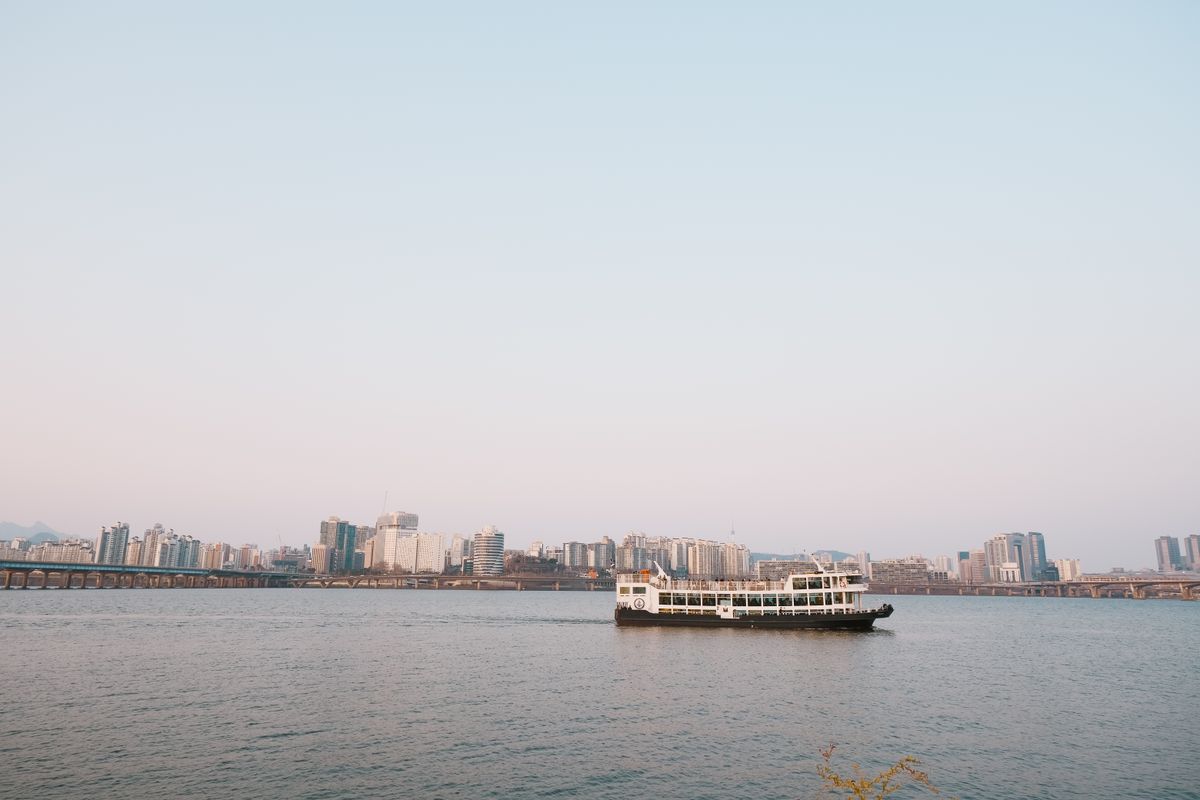
Hangang Bus 2026: Is Seoul's New River Ride Worth It?
A Hangang Bus 2026 guide for Seoul tourists: route logic, piers, when it beats the subway, when to skip it, and what to pack.
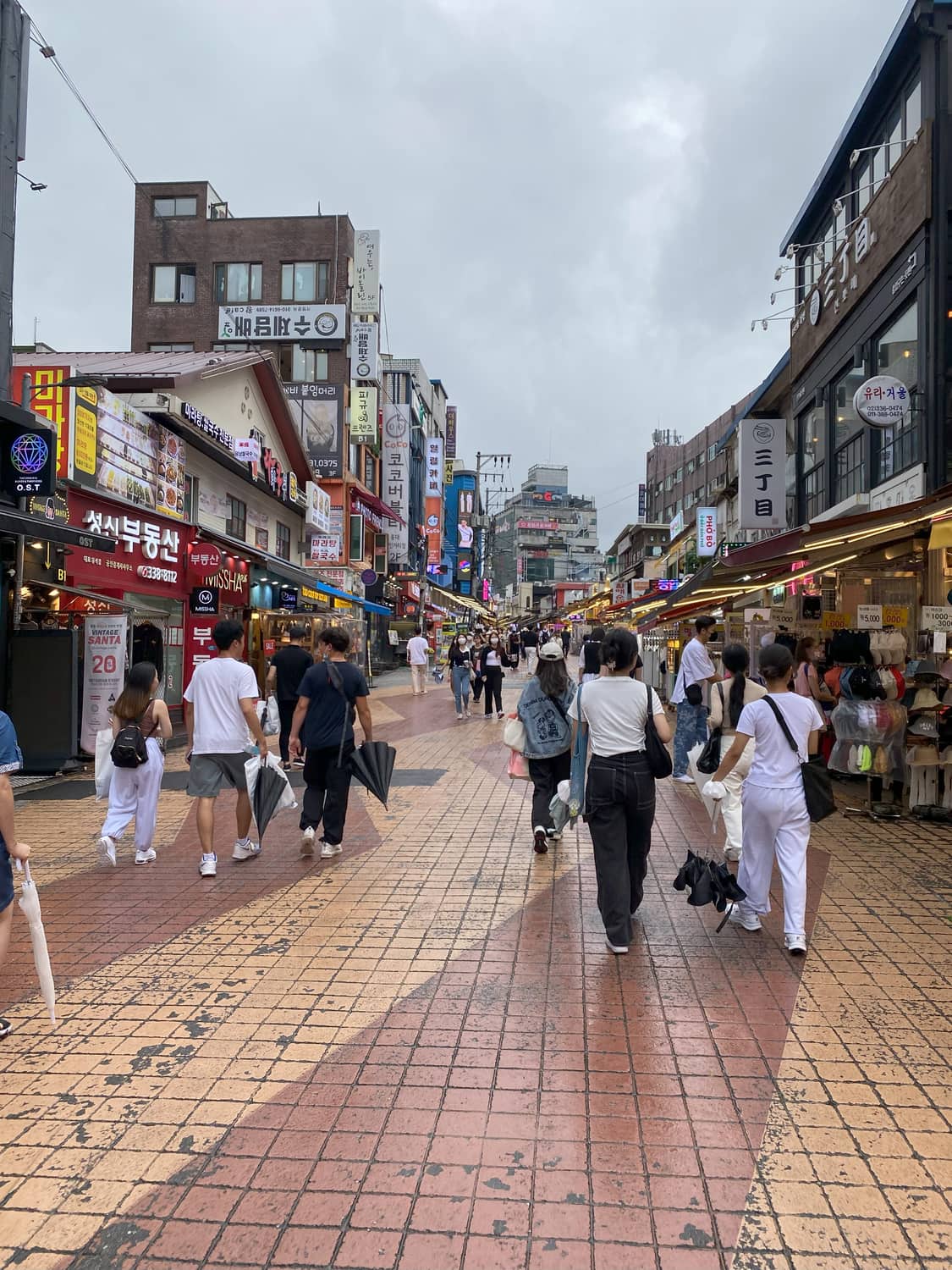
Do Koreans Speak English? Ask Someone Under 35 — What Actually Happens on a Seoul Street
Yes, if you ask the right person. Stop a Korean in their twenties or thirties on a Seoul street and you will almost always get an answer in English. The forum answer that says otherwise is twenty years old. Who to ask, how to ask, where English is built in.
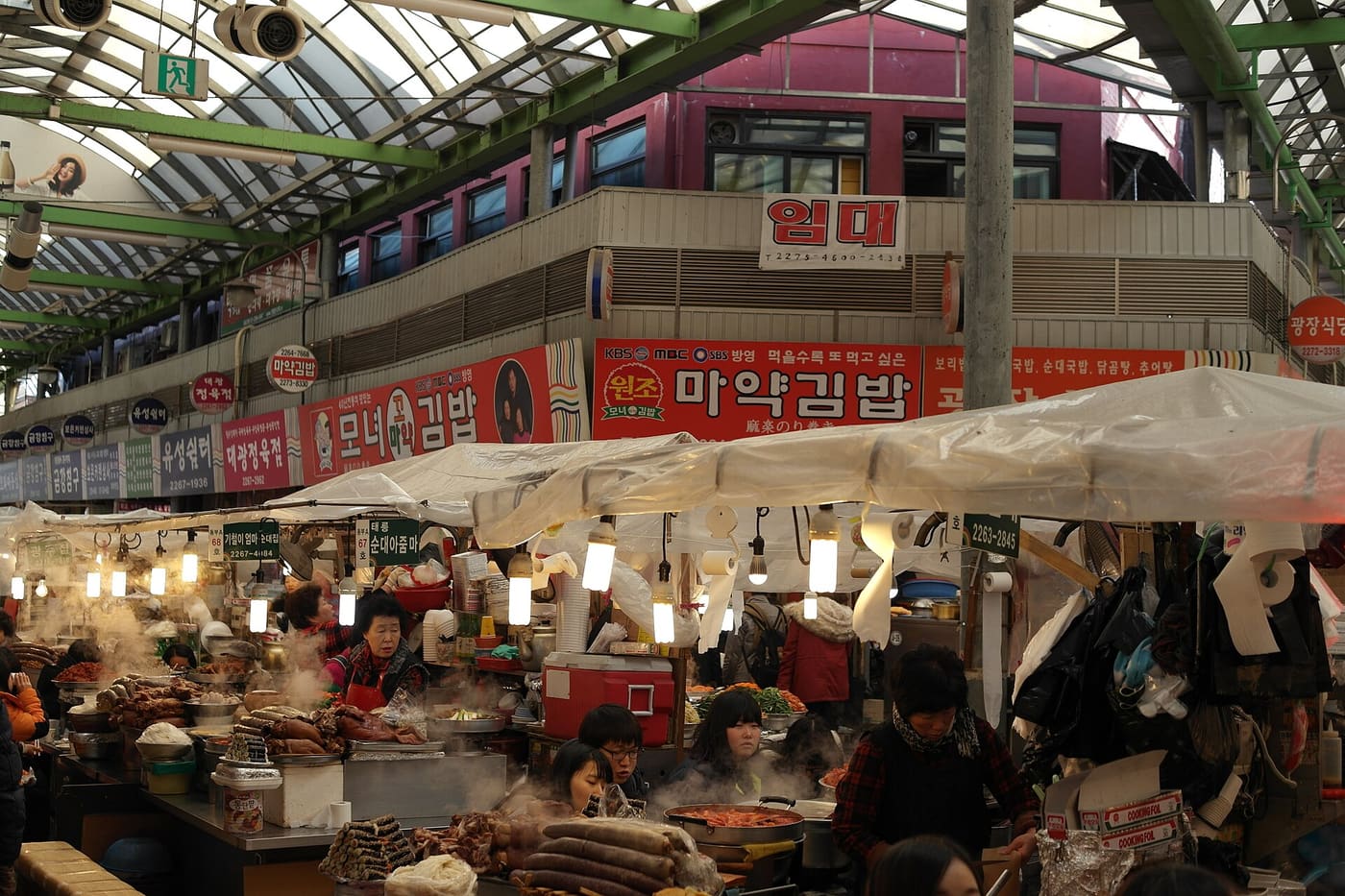
Gwangjang Market's Second Floor: Seoul's Vintage Arcade, and the One Day It's Shut
Everyone knows Gwangjang for the food alley that never closes. Above it is a vintage arcade signed 수입구제 where most items run under ₩20,000 — and it shuts every Sunday, which is exactly when visitors turn up.