What Is Dashida? Korea's Beef Stock Powder (다시다), and Why It Is Not Japanese Dashi
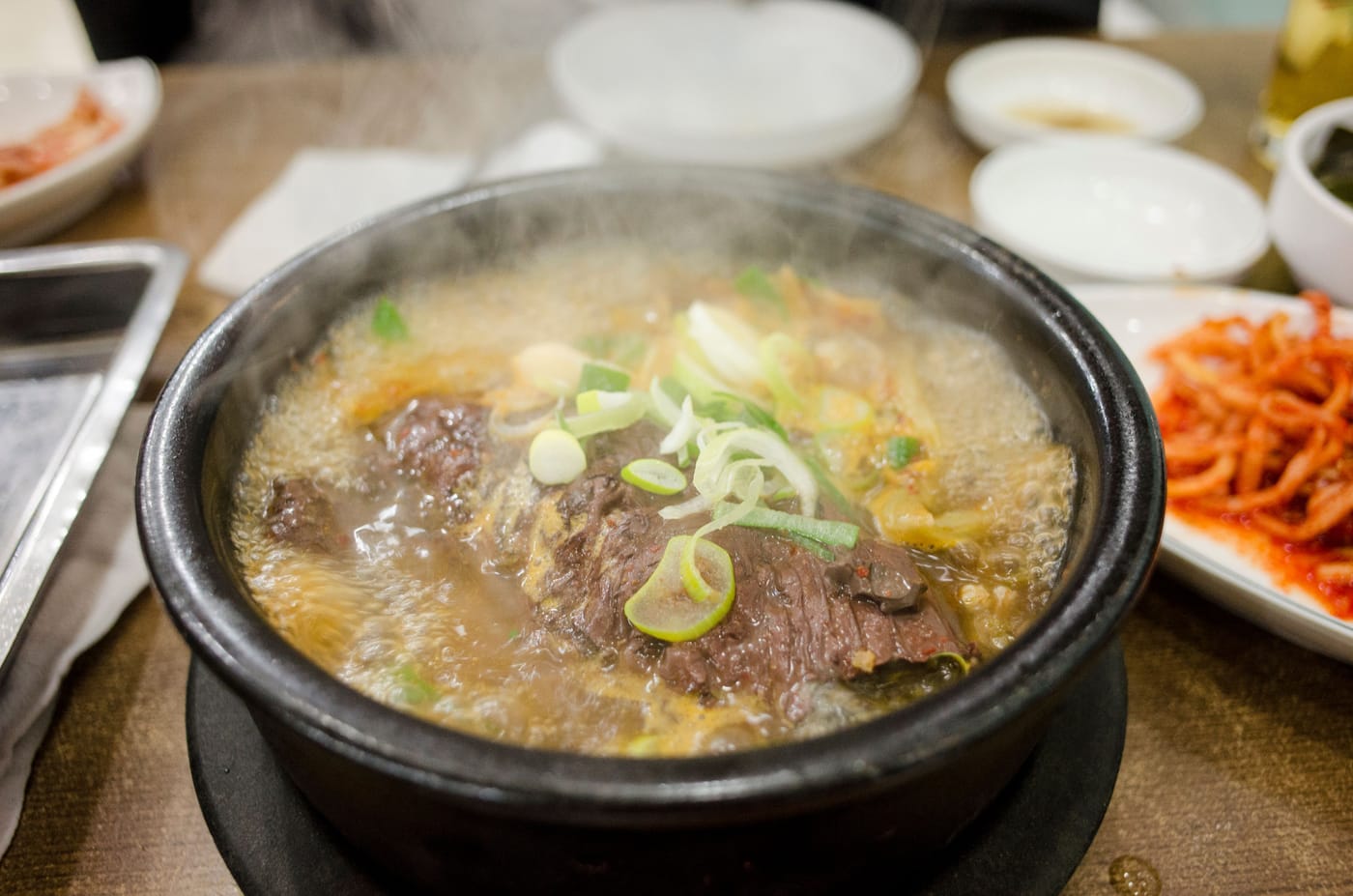
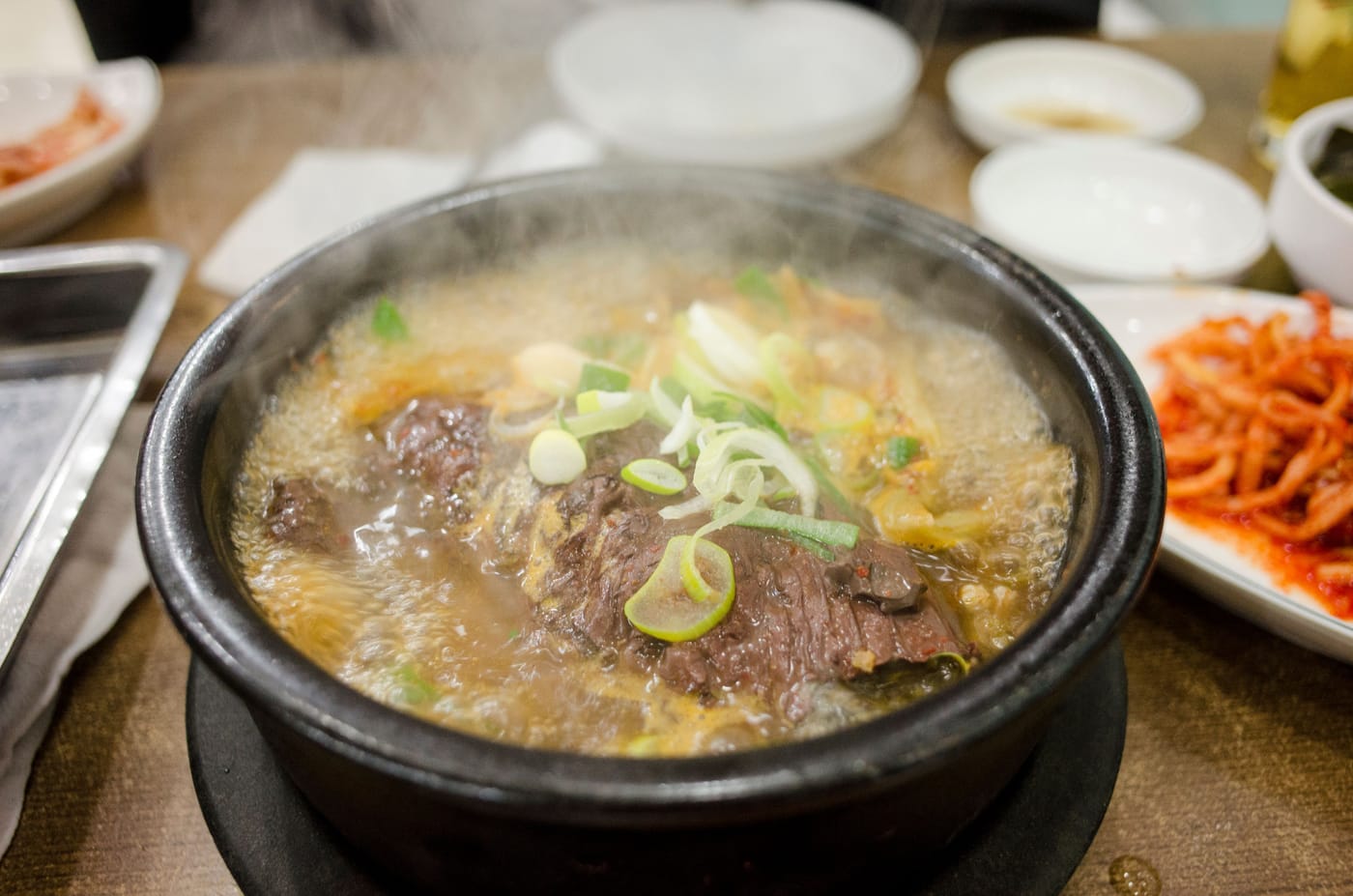
The kind of broth 쇠고기 다시다 exists to produce. Photo by makafood via Pexels.
Dasida beef stock powder (쇠고기 다시다), 500 g — the yellow box this article is about. It is ₩13,850 at CJ's own Korean shop as of September 2026, and 500 g is the size Korean households actually buy; the 1 kg bag is a restaurant quantity that will go stale in a home kitchen. Dasida beef 500 g on AmazonAffiliate link. As an Amazon Associate, EpicKor earns from qualifying purchases at no extra cost to you.
Dashida (다시다) is a Korean seasoning powder. It comes in a yellow box, it is made by CJ CheilJedang, it has been on Korean shelves since 1975, and it is what a very large share of Korean home cooking uses instead of simmering a stock. One heaped teaspoon in a pot of water gives you something that tastes like beef broth in about four seconds. By weight it is mostly salt.
That is the short answer. The rest of this page is the detail behind it — what is actually in the box, how much to use, what to reach for when you have run out, which of the five variants to buy, and why the product is constantly confused with Japanese dashi, which is a different thing entirely.
That confusion is worth clearing up first, because the English web gets it wrong. If you look up "dashida vs dashi" right now, the top explainer will tell you that "they are both beef stock" — and then, one sentence later, that dashida is made with anchovies and dashi with bonito.
Both halves of that cannot be true, and in fact neither is. Dashi is not beef stock and never has been. Dashida's flagship is beef, not anchovy. The one page trying to answer this question contradicts itself inside a single paragraph, and it is what most people land on.
So here is the answer, done properly.
These two things are not the same category. Dashida is a finished seasoning powder that is mostly salt. Dashi is a brewed broth with no salt in it at all. Comparing them is like comparing a bouillon cube to a pot of chicken stock — related, but you cannot swap one for the other.
The Short Answer
| 다시다 (Dashida) | だし (Dashi) | |
|---|---|---|
| Country | Korea | Japan |
| Category | A seasoning powder | A brewed stock |
| Made from | Beef extract, salt, MSG, nucleotides, vegetables | Kelp and dried bonito, steeped in water |
| Salt added | Yes — it is the largest ingredient | None |
| MSG added | Yes, roughly 15–20% | No, in the traditional form |
| Flavour | Strong, meaty, salty, faintly sweet | Delicate, clean, smoky and marine |
| How you use it | A spoonful straight into the pot | Brew it first, then build the dish on it |
| Made by | CJ CheilJedang since 1975 | Not a brand — a technique |
| Its real counterpart | — | ほんだし Hondashi, the instant version |
If you only remember one line: dashi is a broth you make, dashida is a seasoning you add — and dashida is mostly salt, so cut the salt in your recipe.
What Is Actually In the Yellow Box
This is the part that changes how you cook with it, and almost nobody states it plainly.
By weight, 다시다 is approximately:
| Component | Roughly |
|---|---|
| Salt | 30–40% |
| MSG (monosodium glutamate) | 15–20% |
| Nucleotide seasonings (IMP, GMP) | Small but decisive |
| Beef extract and beef powder | about 5% |
| Vegetables — onion, garlic, spring onion — sugar, flavour compounds | The remainder |
Read that top line again. Salt is the single largest ingredient. Dashida is, structurally, a seasoned salt with beef flavour built into it.
The nutrition label makes it concrete: 쇠고기 다시다 contains 17,420 mg of sodium per 100 g — 871% of the daily reference value. That number is not a warning about the product being unusually bad. It is telling you what the product is. You are not meant to eat 100 g of it any more than you would eat 100 g of table salt.
The practical consequence is a rule you should adopt immediately: when a recipe calls for dashida, reduce or remove the salt it also calls for. The most common mistake foreign cooks make is treating it as a flavour booster and salting normally on top. The result is inedible, and people wrongly blame the ingredient.
The nucleotides deserve a mention too. IMP and GMP are not filler — combined with glutamate they produce a multiplicative savoury effect rather than an additive one, which is why one small spoonful changes an entire pot. This is also why dashida is so hard to use subtly. There is no gentle amount.
Anchovy Dashida (멸치 다시다), 300 g — the second box, and the one most guides never mention. Beef dashida in a soybean-paste stew tastes wrong to a Korean palate; 된장찌개, noodle soups and most seafood broths want the anchovy grade instead. If you are buying one box, buy beef. If you are buying two, this is the second. As an Amazon Associate, EpicKor earns from qualifying purchases at no extra cost to you.
See Anchovy Dashida on AmazonWhat Dashi Actually Is
Dashi is not a product. It is a technique, and a family of stocks that sit underneath most of Japanese cooking.
The standard version, awase dashi, is made by steeping two things in water:
- 昆布 kombu — dried kelp, which supplies glutamate
- 鰹節 katsuobushi — skipjack tuna that has been simmered, smoked, fermented with mould, and dried until it is hard enough to be shaved into paper-thin flakes
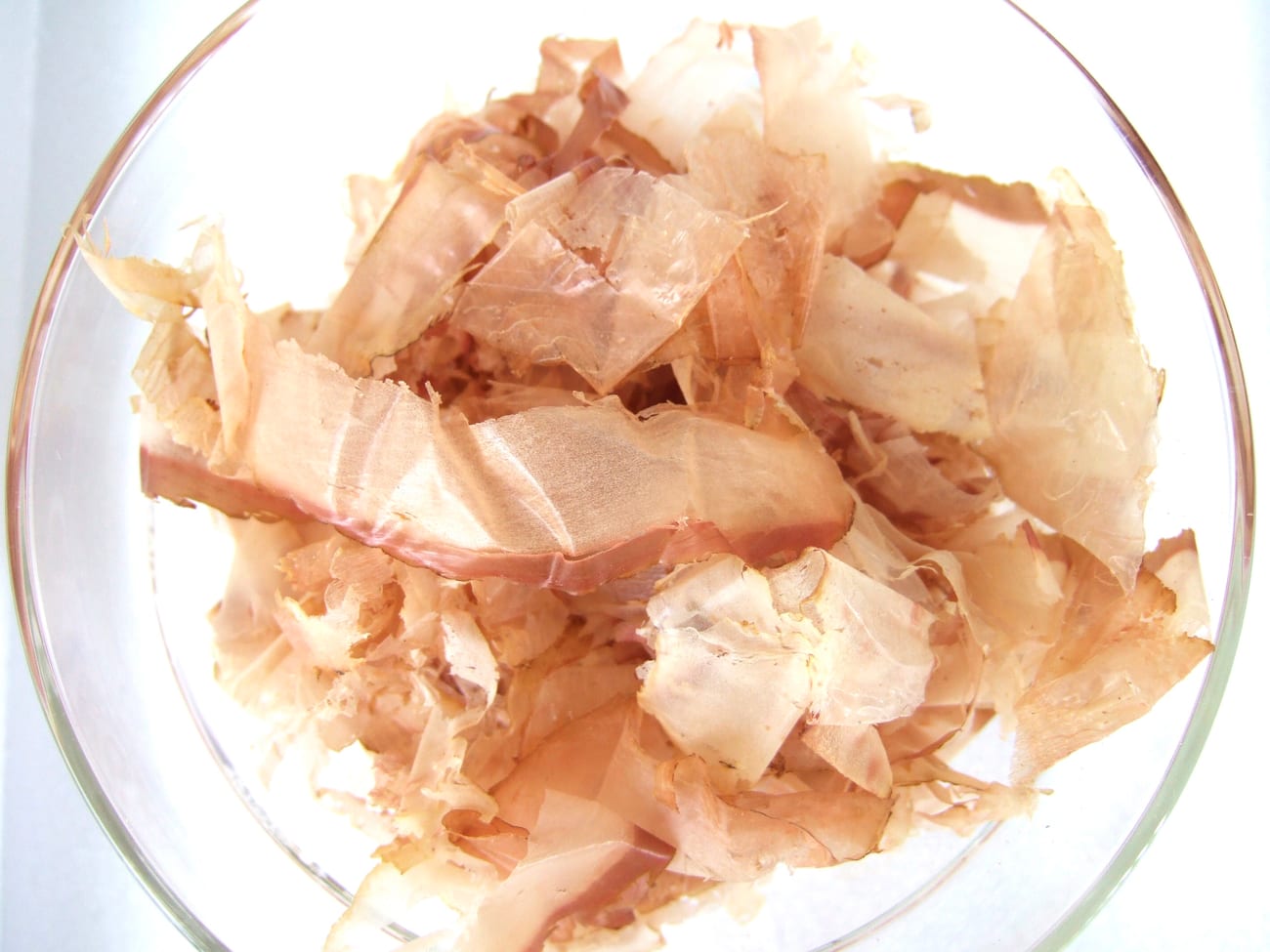
Katsuobushi — shaved from a block of dried, smoked, fermented skipjack tuna. Photo by Sakurai Midori, CC BY-SA 3.0, via Wikimedia Commons.
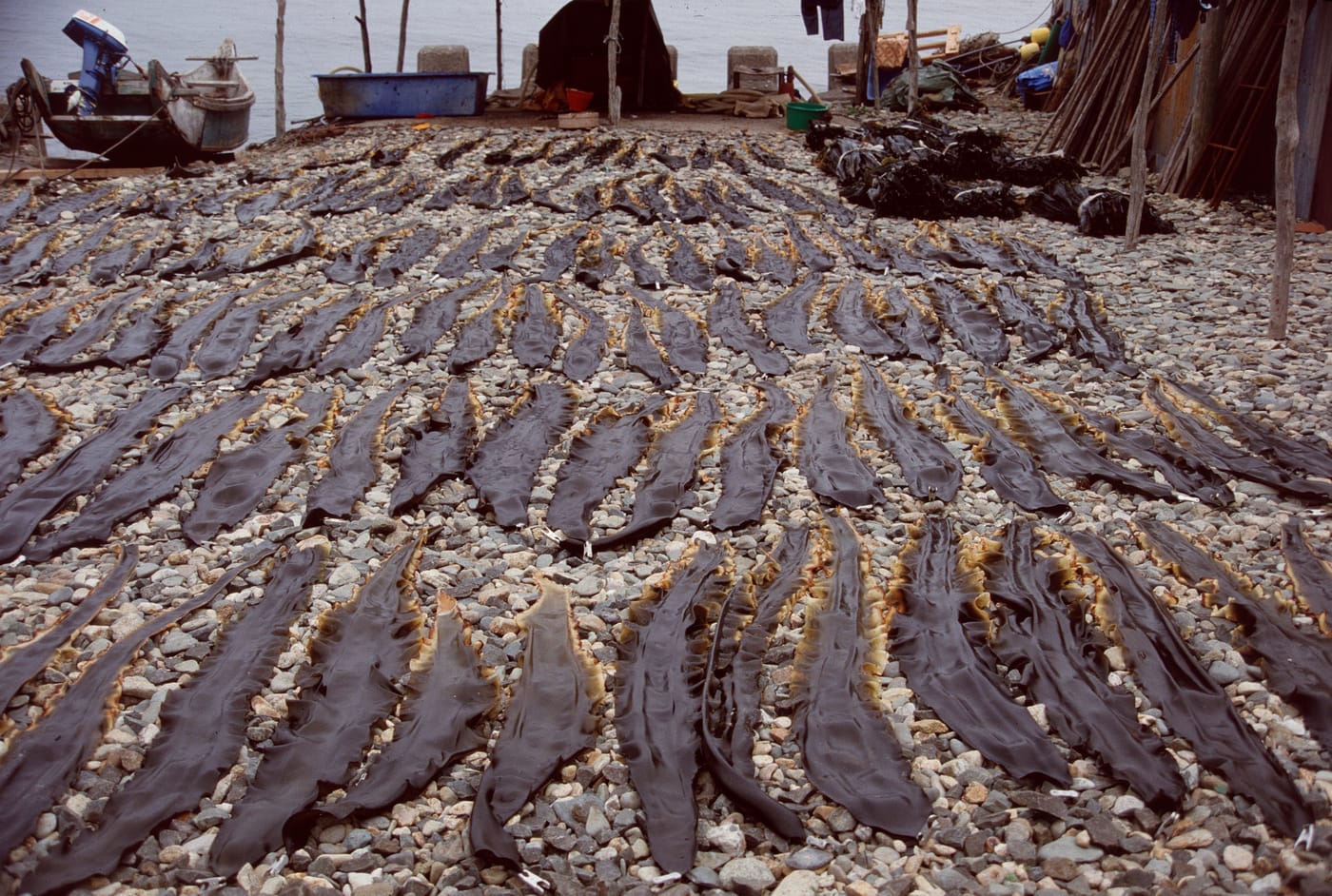
Kombu drying in Hokkaido. This is the other half of dashi, and the reason it tastes of the sea without tasting fishy. Photo by Marie-Sophie Mejan, CC BY 4.0, via Wikimedia Commons.
What matters for the comparison:
- No salt is added. Dashi is seasoned later, by the dish built on top of it — miso, soy sauce, mirin.
- No meat is involved. There is no beef anywhere in traditional dashi.
- It is deliberately restrained. Dashi is a background, not a foreground. Its whole job is to make other flavours legible.
That last point is the real gap between the two. Dashida announces itself. Dashi disappears.
You might like: Miyeokguk Guide: Why Koreans Eat Seaweed Soup on Birthdays
The Real Counterpart Is Hondashi, Not Dashi
Here is the comparison people are actually reaching for without knowing it.
The Japanese equivalent of dashida — an instant granulated powder you spoon straight into a pot — is ほんだし (Hondashi), made by Ajinomoto. That is a like-for-like match: two industrial convenience seasonings, each built to replace a stock that used to take an hour.
And this is not a coincidence of format. Hondashi is why dashida exists.
Where the Name Came From
The origin story is Korean, specific, and not in the English sources.
Dashida launched on 20 November 1975, made by 제일제당 — the company now called CJ CheilJedang. It was created on the direct instruction of 이병철, the founder and chairman of Samsung, who told his researchers to build a Korean answer to 미원 (Miwon), the pure-MSG seasoning that dominated the Korean market at the time. The model he pointed them at was Japan's Hondashi.

"11월 20일 다시다 탄생" — November 20, Dasida is born. A frame from the original 1975 campaign. Image from CJ CheilJedang's brand archive.
So the resemblance between dashida and dashi is not accidental at the level of product strategy. But the name is a different story, and this is where the interesting part is.
Korean has a verb, 다시다, meaning to smack your lips. CJ's official explanation is that the brand name comes from the phrase "맛이 좋아 입맛을 다시다" — so good it makes you smack your lips. The company promotes this Korean etymology specifically, and it has done so consistently.
Plenty of Koreans still assume the name came from Japanese だし. The honest position is this: the product was built in response to a Japanese one, and the name is a Korean pun that happens to sound like it. Both facts are true, and the company only advertises the second.
The launch lineup was two flavours — 쇠고기 (beef) and 생선 (fish). The fish version failed and was replaced by 멸치 (anchovy), which is still on shelves fifty years later. Beef took the market immediately and has held it since.
How completely it won
Korean coverage of the product's fiftieth anniversary in 2025 fills in numbers that have never appeared in English, and they explain why this one box is treated as a default rather than as a brand.
The order came after a failure. CJ's earlier fermented seasoning 미풍 (Mipung), launched in 1963, could not catch 미원 (Miwon), so Lee Byung-chul told the researchers to stop competing on the same ground and build a different category — a 종합조미료, a compound seasoning combining the fermented base with real beef and vegetable extracts. It took two years.
Then it moved very fast. Two months after launch CJ had to raise production from 20 tonnes to 200 tonnes, a tenfold increase, and by 1983 compound seasonings had overtaken pure fermented seasonings in Korean sales — the moment Miwon lost the category it had created.
It has not let go since. Dashida holds roughly 80 percent of Korea's compound-seasoning market on annual revenue of about ₩300 billion. In the retail figures compiled by the Food Industry Statistics Information System (aTFIS) for 2023, Dashida was the best-selling seasoning brand in Korea at ₩107.3 billion, ahead of Miwon (₩53.7 billion) and Chungjungone (₩29.7 billion); by manufacturer, CJ CheilJedang took 41.7 percent of a ₩319.5 billion market against Daesang's 30.2 percent. The category grew from ₩265.8 billion in 2021 to ₩319.5 billion in 2023, so fifty years in, this is not a declining product.
Which Dashida to Buy
There is more than one, and picking wrong is the second-most-common mistake after over-salting.
| Product | Korean | Use it for | Price at CJ TheMarket, September 2026 |
|---|---|---|---|
| Beef Dashida | 쇠고기 다시다 | The default. Beef soups, 미역국 seaweed soup, stews, fried rice, 국 of almost any kind | ₩13,850 (500 g) · ₩20,160 (1 kg) |
| Anchovy Dashida | 멸치 다시다 | Anchovy-based broths, 된장찌개 soybean-paste stew, noodle soups, anything where beef would be wrong | Same sizes as beef; stocked less widely |
| Clam Dashida | 조개 다시다 | Seafood soups and clam broths | Specialist; not in every supermarket |
| Dashida Gold | 다시다 골드 쇠고기 | The premium line — more beef, less filler | ₩11,180 (250 g) · ₩23,950 (600 g) |
| Premium Gold Beef | 다시다 명품골드 쇠고기 | Made with Korean 한우 beef and 천일염 sun-dried sea salt | ₩4,550 (100 g) |
Where it is in a Korean shop. Dashida lives in the 조미료 (seasoning) aisle of a large supermarket — Emart, Homeplus, Lotte Mart — usually on the same shelf as 미원 and the soup-stock tea bags, and generally at eye level, because it outsells everything around it. Convenience stores mostly do not carry it: it is a stock-up item, not a rescue item. If you want a box to take home, buy it at a supermarket in town rather than at the airport, and note that the 1 kg bag is a soft pouch that survives a suitcase better than the rigid boxes do.
For a first purchase, buy 쇠고기 다시다 in the smallest box you can find. A 1 kg bag is what Korean restaurants buy, and at home it will go stale long before you finish it.
The one substitution rule worth knowing: use 멸치 다시다 for 된장찌개. Beef dashida in a soybean-paste stew is a recognisably wrong flavour to a Korean palate — not inedible, just off, in the way beef stock in a fish soup would be.
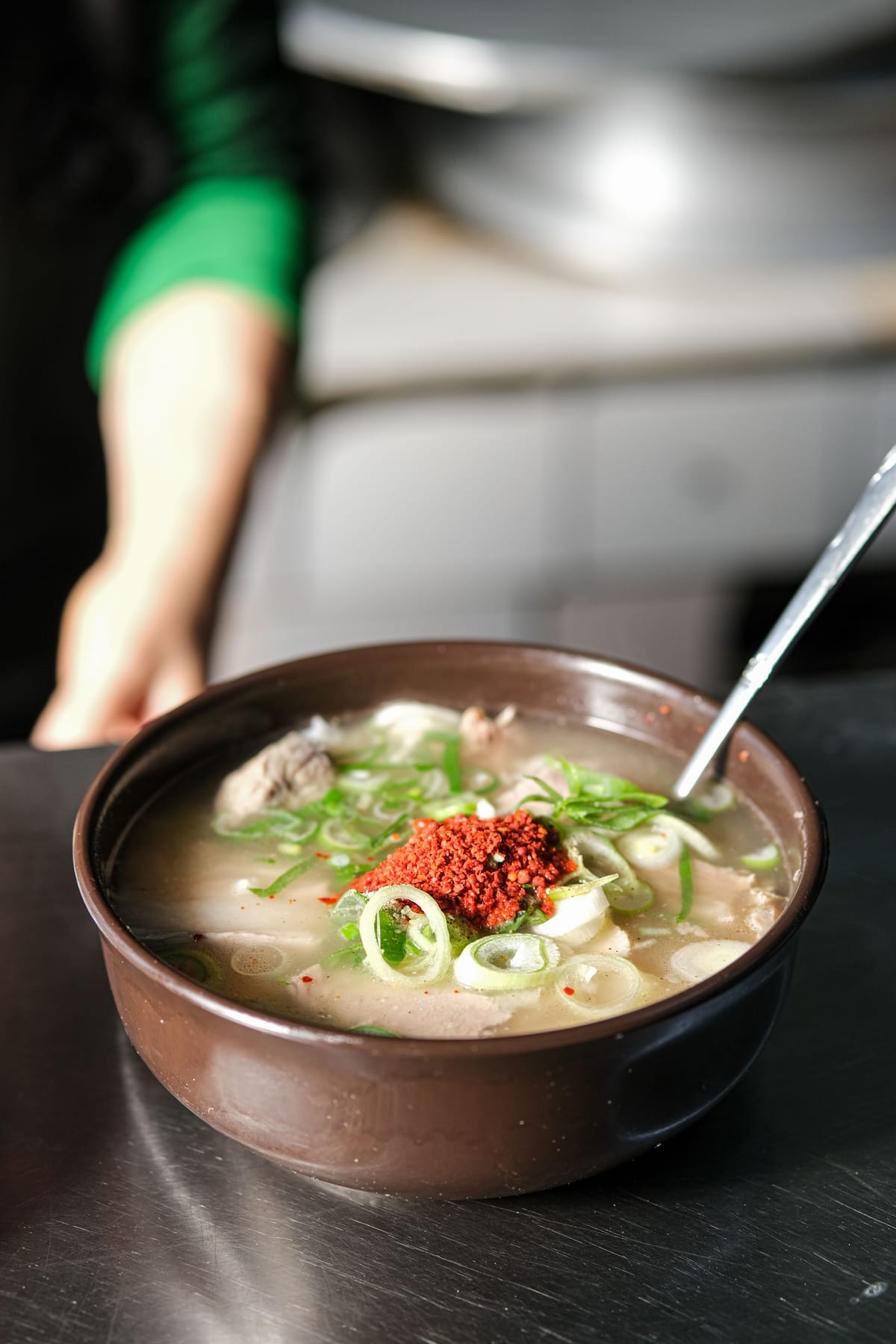
A home-style beef soup with banchan. This is the everyday context dashida lives in — not restaurant cooking, weeknight cooking. Photo by 세훈 예 via Pexels.
What to Use When You Have Run Out
There is no exact substitute, because nothing else on a Western shelf is simultaneously a salt, an MSG source, a nucleotide source and a beef extract. But the gap is closable, and what matters is knowing which direction each substitute misses in.
| Instead of 1 tsp dashida | Use | What you lose |
|---|---|---|
| Closest single swap | 1 beef bouillon cube, crushed, with the recipe's added salt cut back | The nucleotide punch. Bouillon is flatter; a pinch of dried mushroom powder makes up much of it |
| Best flavour, no shortcut | Anchovy-and-kelp stock: 6–8 gutted dried anchovies and a 5 cm square of kelp in 1 litre of water for 15 minutes, kelp out after 10 | Nothing, except 15 minutes. This is the real Korean technique, not a compromise |
| Without MSG | 연두 (Yondu) fermented soybean seasoning, or soy sauce with a little sugar | The beef. Yondu is savoury but plant-based and thinner |
| What does not work | Hondashi, dashi packets, Japanese soup base | Everything. Bonito and kelp make the dish taste Japanese, which is the one thing you were not going for |
The rule that matters more than the choice: whatever you substitute, set the salt separately. Dashida carries its own salt load, bouillon carries a different one, and homemade stock carries none. The commonest failure with all three is treating them as interchangeable at the same salt level.
How Koreans Actually Use It
Three things worth knowing, because none is on the box in English.
It is a weeknight tool, not a cheat. There is an idea among foreign cooks that dashida is what you use when you are not making the dish properly. That is not how Korea sees it. It is standard in home kitchens and standard in a very large number of restaurants, and it has been for fifty years. The dishes you ate in Korea and remember fondly were, statistically, made with it.
A little goes further than you think. For a two-person soup, start with about half a teaspoon and taste before adding more. The nucleotide effect is multiplicative, so the jump from "not enough" to "too much" is small.
It is not only for soup. Korean home cooks put it in fried rice, in 무침 seasoned vegetable side dishes, in marinades, and in the water for blanching greens. Anywhere a dish needs savoury depth without adding liquid, dashida does that job.
O'Food Korean kitchen essentials box — gochujang, doenjang, sesame oil and gochugaru in one order. Dashida is one of the three or four things that make Korean home cooking work at speed; this box is the other three, if you are setting up the pantry from nothing. As an Amazon Associate, EpicKor earns from qualifying purchases at no extra cost to you.
See the O'Food box on AmazonWhen You Should Not Use It
An honest list, because the pro-dashida case is easy and the limits are where the useful advice is.
Do not use it in Japanese dishes. If you put dashida in miso soup you will get a Korean-tasting miso soup. The beef and the salt load are both wrong for that cuisine. For Japanese cooking, use kombu and katsuobushi, or Hondashi if you want the instant route.
Do not use it if you are avoiding MSG. Dashida contains added MSG at roughly 15–20%, and that is not incidental to the product — it is the mechanism. There is no MSG-free dashida. If you want the Korean savoury base without it, look at 연두 (Yondu), a fermented soybean seasoning, or make an anchovy-and-kelp stock yourself, which is a genuine Korean technique in its own right and not a compromise.
Do not use it if you are managing sodium closely. At 17,420 mg per 100 g, dashida is a meaningful sodium source even in small amounts. Korean home cooking already runs salt-heavy in soups; adding dashida on top of a normally salted recipe compounds it.
Do not treat it as the only way to make Korean soup taste Korean. Anchovy-kelp stock, beef brisket simmered with radish, and soybean paste all get you there by different routes. Dashida is the fast route, not the only one.
You might like: Free Side Dishes in Korea: Banchan, Service, and Refills
You might like: Doenjang vs Gochujang: Which Korean Paste Does Your Dish Need?
The MSG Argument, Briefly
Dashida has carried an MSG stigma in Korea for decades, and it is worth being accurate about it rather than taking a side by reflex.
The stigma peaked with Korean television coverage — the programme 먹거리 X파일 among others — that treated MSG as inherently harmful. Korean commentary since has been fairly blunt that this framing ran ahead of the evidence. Glutamate occurs naturally in kelp, tomatoes, aged cheese, and soy sauce; it is the same molecule whether it arrives from kombu or from a factory.
What is genuinely worth attention in dashida is not the MSG. It is the salt. That is the number on the label that should change your cooking, and it is the one the MSG argument spent thirty years distracting from.
FAQ
Q: Is dashida the same as dashi? A: No, and they are not even the same kind of thing. Dashida is a Korean seasoning powder built on beef extract, salt, and MSG, spooned straight into a dish. Dashi is a Japanese stock brewed from kelp and dried bonito with no salt added. The Japanese product that actually corresponds to dashida is Hondashi.
Q: What is dashida made of? A: Roughly 30–40% salt, 15–20% MSG, nucleotide seasonings such as IMP and GMP, about 5% beef extract and beef powder, plus onion, garlic, spring onion, sugar and flavour compounds. Salt is the largest single ingredient.
Q: How much dashida should I use? A: Start with about half a teaspoon for a two-person soup and taste before adding more. Critically, reduce or remove the salt your recipe calls for — dashida is mostly salt, and salting normally on top of it is the standard beginner mistake.
Q: Does dashida contain MSG? A: Yes, at roughly 15–20% by weight, and it is central to how the product works rather than an additive on the side. There is no MSG-free version. For a Korean savoury base without added MSG, consider 연두 (Yondu) or a homemade anchovy-and-kelp stock.
Q: Which dashida should I buy first? A: 쇠고기 다시다 (beef) in the smallest box available. It covers most Korean soups and stews. Add 멸치 다시다 (anchovy) second — it is the correct one for 된장찌개, where beef would taste wrong.
Q: What can I use instead of dashida? A: The closest single swap is a crushed beef bouillon cube with the recipe's added salt cut back, ideally with a pinch of dried mushroom powder for the nucleotide depth bouillon lacks. The better answer is a 15-minute anchovy-and-kelp stock, which is the actual Korean technique. Do not substitute Hondashi or Japanese dashi packets — they will make the dish taste Japanese.
Q: Where does the name "dashida" come from? A: CJ's official explanation is the Korean phrase "맛이 좋아 입맛을 다시다" — so good it makes you smack your lips. The product itself was created in 1975 on Samsung chairman Lee Byung-chul's instruction to rival Miwon, modelled on Japan's Hondashi, so the resemblance to Japanese dashi is not entirely a coincidence at the product level — but the name is Korean.
Sources
Product composition, launch history, and the naming account from CJ CheilJedang's official Dasida brand materials and Korean-language reference sources. Sodium figures from Korean nutrition databases citing the product label. Prices read from CJ TheMarket (cjthemarket.com), CJ CheilJedang's own shop, in September 2026. The fiftieth-anniversary history — the 1963 Mipung failure, Lee Byung-chul's instruction, the two-year development, the jump from 20 to 200 tonnes two months after launch, and compound seasonings overtaking fermented seasonings in 1983 — from Korean press coverage of the anniversary in January 2025. Market figures from the Food Industry Statistics Information System (aTFIS) for 2023 as reported in the Korean business press: category ₩319.5 billion; CJ CheilJedang 41.7 percent, Daesang 30.2 percent, Sajo Daerim 4.34 percent; retail sales Dashida ₩107.3 billion, Miwon ₩53.7 billion, Chungjungone ₩29.7 billion, Beksul ₩12.9 billion. Dashi composition and method from standard Japanese culinary references.
Prices and formulations change, and product variants differ between the Korean domestic market and export versions. Check the label on the box you actually buy.
You Might Also Like
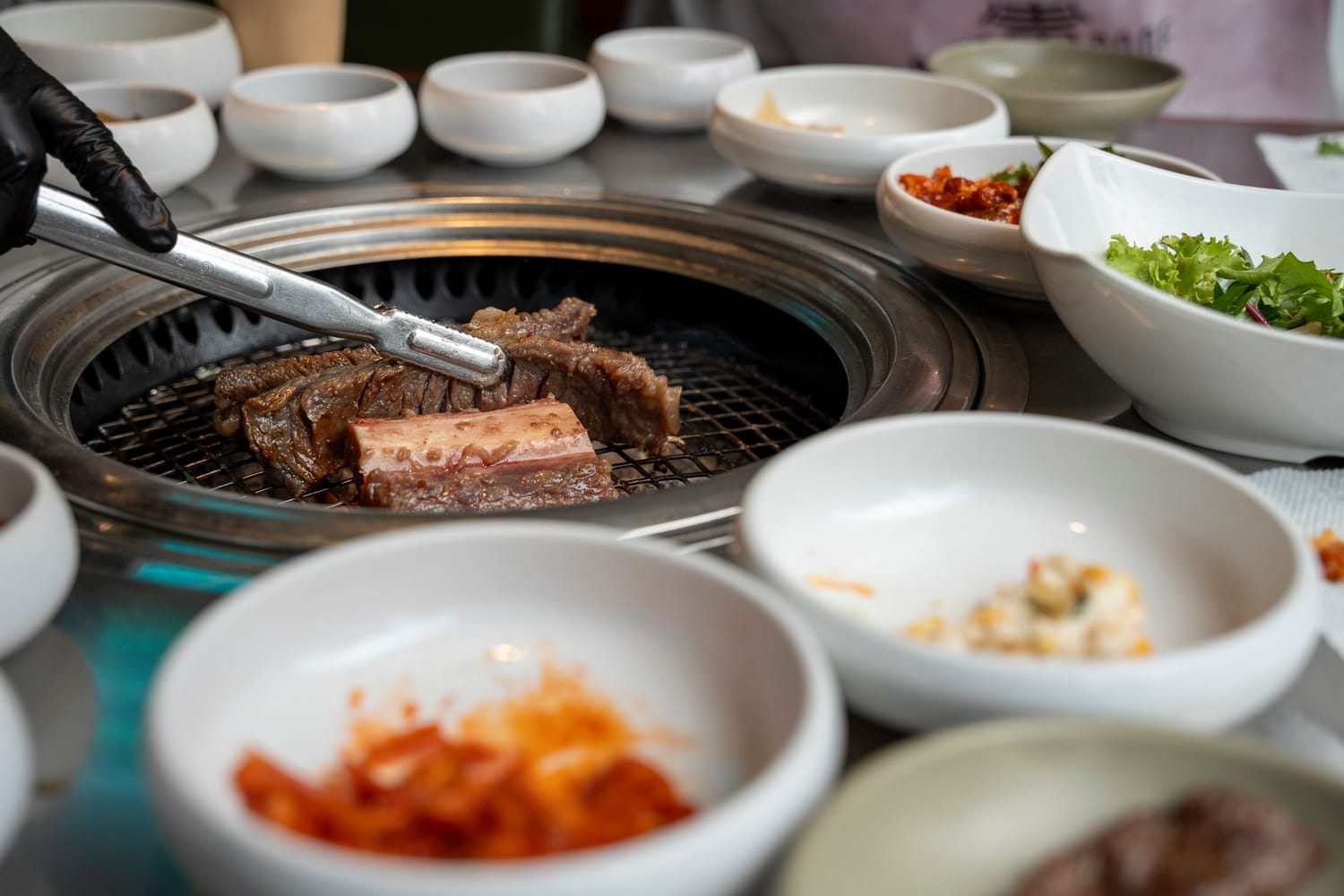
Korean Kitchen Scissors: Why Koreans Cut Meat and Noodles at the Table, and Why It Is Not an Office Scissor
Scissors on a restaurant table look wrong to most of the world and normal to every Korean. The tool is not a desk scissor: thick blades, one serrated edge, big rings, often detachable, built for galbi and cold noodles. Where it came from, and which one to buy.
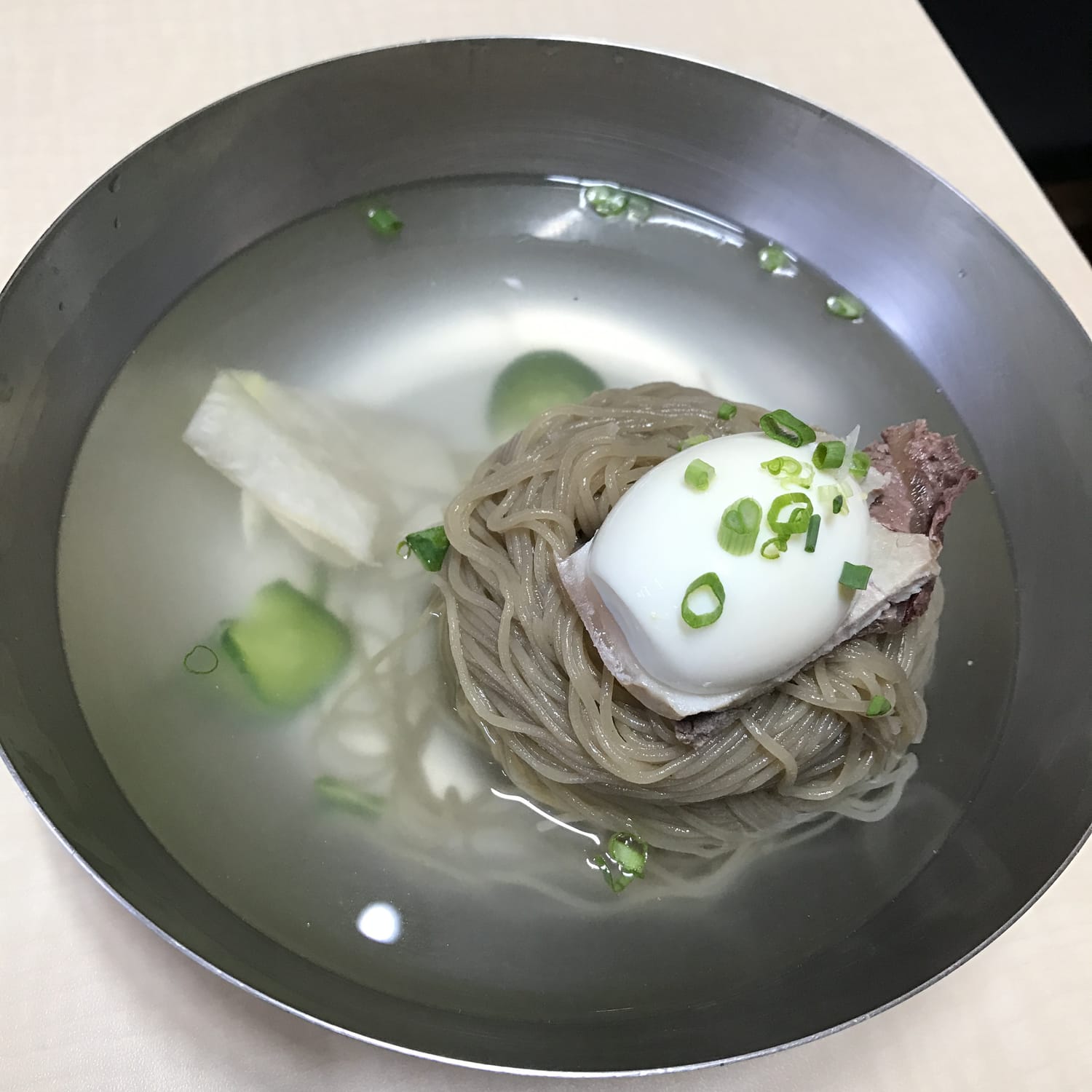
The One Korean Food Foreigners Never Learn to Love: Hamheung Naengmyeon, and Why Koreans Can't See the Problem
Foreigners who eat cheonggukjang and even hongeo still will not pay for this twice. A Korean creator who fed foreigners for years says naengmyeon was the overwhelming number one refusal, and Koreans, who rank it first every summer, cannot see why.
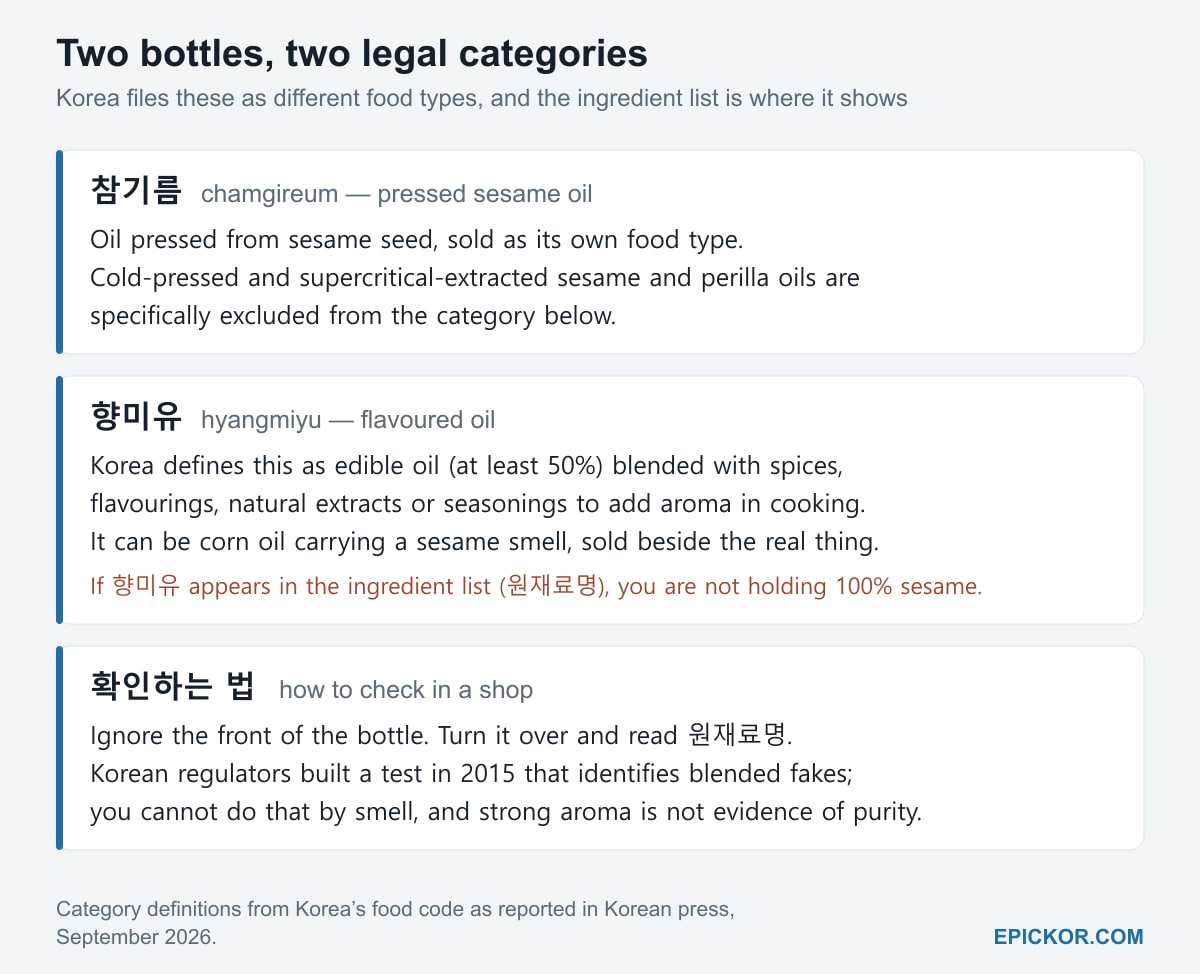
Korean Sesame Oil: The Label Word That Means It Isn't Sesame Oil
A bottle can look like Korean sesame oil and legally be corn oil carrying a sesame smell — Korea files that as 향미유, a separate food type. Imported oil runs ₩700–1,100 per 100ml; Korean-grown runs ₩5,500–6,700, because Korea grows 8–12% of its own sesame.