Korean Yakult: Not Yogurt, and Its Delivery Fridge Needs a Driving Licence
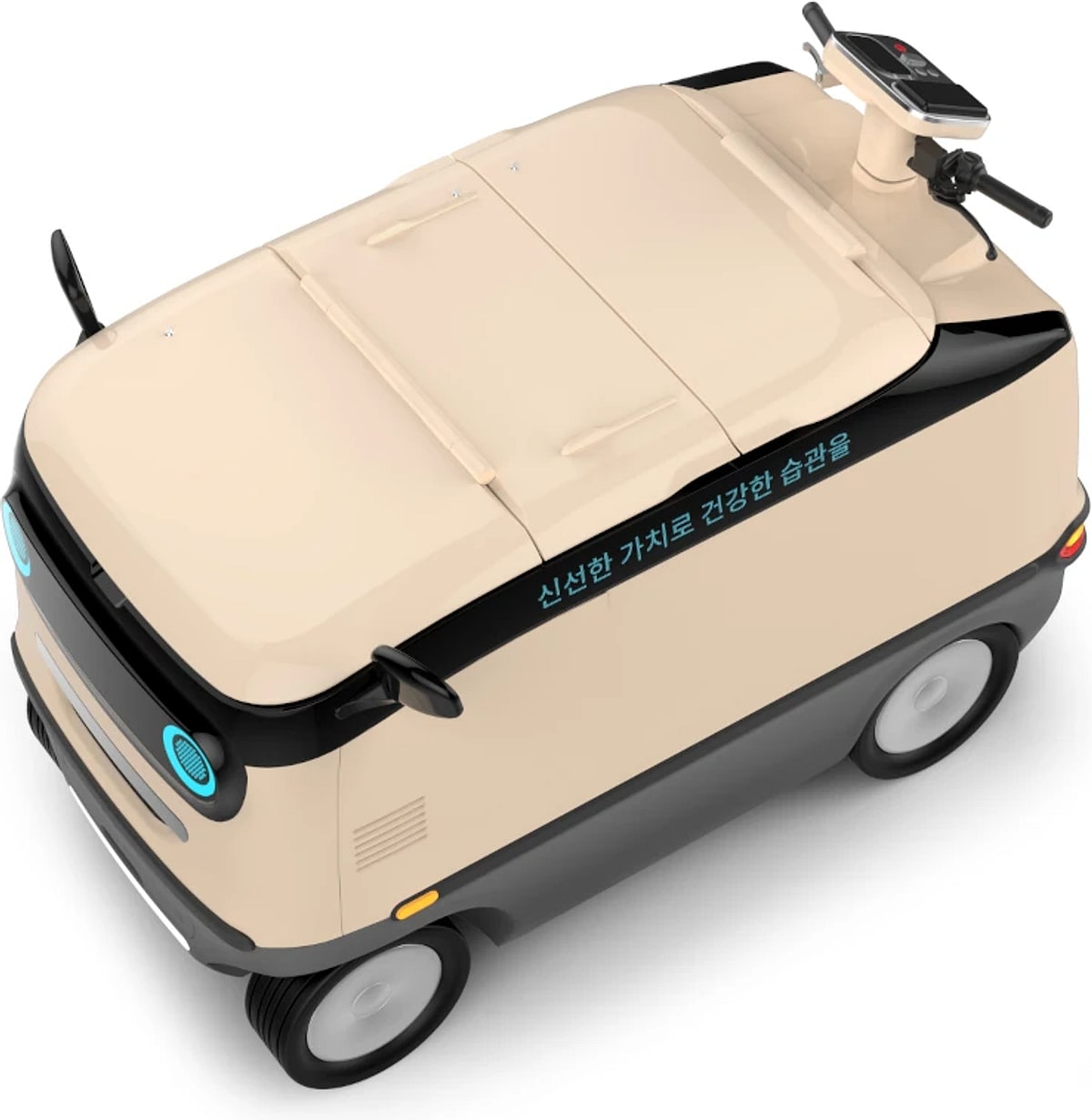
COCO 3.0, the cart Korea's Fresh Managers ride. The Korean line on the side reads 신선한 가치로 건강한 습관을. Official product image, hy Mobility.
Somewhere in your first week in Korea, a refrigerator will drive past you.
It is cream-coloured, about the size of a large armchair, it has four wheels and handlebars, and a woman is sitting on it moving at roughly walking pace — usually in the road, alongside actual cars. Visitors reliably assume it is a golf cart, a mobility scooter, or some kind of municipal vehicle.
It is none of those. It is a 220-litre mobile refrigerator, it is called 코코 (COCO), and the reason it is out in traffic instead of on the pavement is not preference. It is the law.
That cart is the visible half of a system that has been running in Korea since 1971, and the other half is a 65 ml plastic bottle that most foreign visitors mistake for yogurt. It is not yogurt. The difference is physical, not marketing.
The Short Answer
| Detail | |
|---|---|
| The drink | 야쿠르트 (Yakult) — a liquid fermented milk drink, not yogurt |
| Maker | hy (에치와이), known as 한국야쿠르트 until its 2021 rebrand |
| In Korea since | 1971 — a joint venture with Japan's Yakult Honsha |
| Bottle | 65 ml. The waisted polystyrene shape dates to a 1968 design by Isamu Kenmochi |
| The culture | Lactobacillus casei Shirota — 10 billion CFU guaranteed per bottle |
| Sugar | 9 g in regular, 5 g in 라이트 (Light) |
| Price, Aug 2026 | ₩250 for 야쿠르트 라이트. Last rise was 1 May 2025 |
| The cart | 코코 (COCO) — "Cold & Cool." 220 L fridge, 4 or 8 km/h, 10+ hours per charge |
| The rider | 프레시 매니저 — about 11,000 of them nationwide as of April 2026 |
| Why it's in the road | Legally a 원동기장치자전거 (moped class). Licence required, pavement banned |
See what Yakult is sold as outside Korea on AmazonAffiliate link. As an Amazon Associate, EpicKor earns from qualifying purchases at no extra cost to you. Note the formula and bottle size differ by market — details below.
If you only remember one line: it is a drink, not a spoonable yogurt, and the tiny bottle is tiny on purpose.
The Cart Is the Part Nobody Explains
Search in English for Korea's "yogurt ladies" and you will find warm feature journalism about elderly care and neighbourhood watch — real stories, well told. What you will not easily find is a straight answer about the machine.
So here it is.
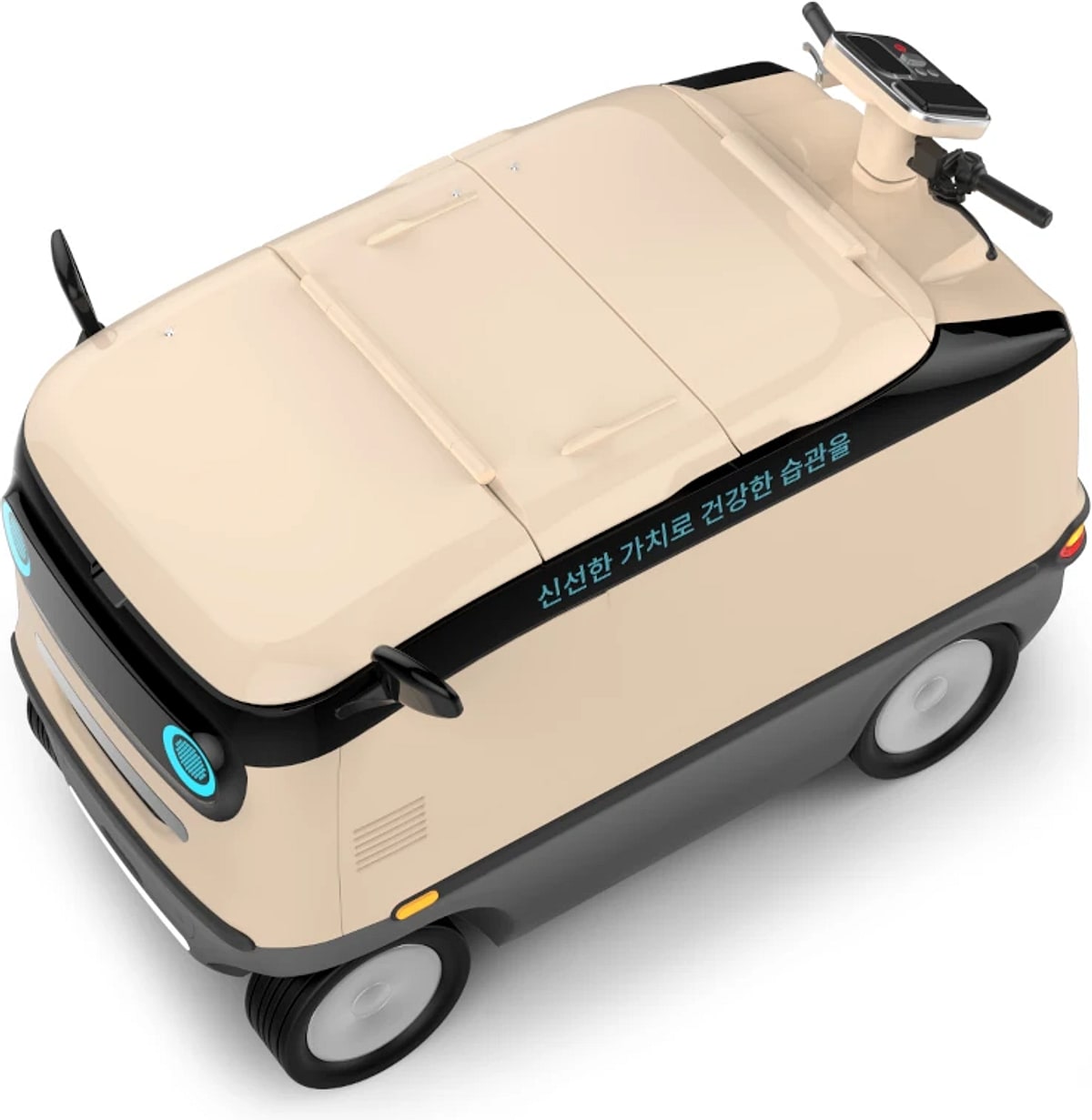
코코 stands for Cold & Cool. hy introduced it in December 2014 and rolled it out from 2015, describing it as the world's first electric refrigerated cart designed to be ridden rather than pushed. Before it, the job was done with a hand-pulled insulated trolley, which capped how much stock a Fresh Manager could carry and how far she could go.
| Spec | COCO |
|---|---|
| Refrigerator volume | 220 litres |
| Top speed | 8 km/h (there is also a 4 km/h mode) |
| Runtime | 10+ hours on a full charge |
| Generations | 1st (2011–2017), 2nd (2017–2021), 3rd / New COCO 3.0 (2021–present) |
| Unit cost | Roughly ₩8m for early units, about ₩14m for the 3rd generation |
| What the rider pays | ₩40,000/month rental, or ₩30,000 on a 12-month commitment |
| Units deployed | 9,300+ |
The third generation added an LED display, a bigger lithium-ion battery, more load capacity, a heated handlebar for winter, and an automatic stop when an obstacle comes within 1.5 metres.
Two of those details are worth pausing on. The heated handlebar tells you this is a vehicle someone sits on for six or seven hours in a Korean January. And the ₩40,000 monthly rental tells you the economics: the Fresh Manager does not own the cart. She rents a ₩14m vehicle from the company for less than the price of two cinema tickets.

The side profile makes the proportions clear — it is a chest freezer with a steering column. Official product image, hy Mobility.
Why a Refrigerator Needs a Driving Licence
This is the part that explains what you are seeing, and it comes from Korean-language sources that have no English equivalent.
Under Korea's 도로교통법 (Road Traffic Act), COCO is classified as a 원동기장치자전거 — the motorised-bicycle category covering sub-50cc powered vehicles. That classification carries three consequences:
- A licence is mandatory. The rider must hold a Class 1 or Class 2 driving licence, a 원동기 licence, or a 다륜형 원동기 (multi-wheel moped) licence.
- A helmet is legally required.
- It may not use the pavement. As a motorised vehicle it belongs on the 차도 — the roadway.
That third point is the one you are actually observing. A 4 km/h refrigerator is legally obliged to share a lane with cars doing 50.
And here is the honest part, which Korean coverage says plainly: it does not really work. Riding in traffic at walking pace is dangerous and slow, so Fresh Managers frequently use the pavement instead. Korean women's-affairs outlet 여성신문 covered this directly under the headline "야쿠르트 배달 전동카트, 보도로 다녀도 되나요?" — "Can the Yakult delivery cart use the pavement?" — and the answer was no, with the practical reality that many do anyway. It is a recognised regulatory grey zone, not a story of individual rule-breaking.
So if you see one on the pavement and one in the road on the same morning, you have not misread anything. You have watched a law that does not fit the vehicle it governs.
You might like: Korean Convenience Store Breakfast: What Locals Buy
The Woman on the Cart Has a Job Title
She has not officially been the 야쿠르트 아줌마 since March 2019, when hy renamed the role 프레시 매니저 (Fresh Manager) at its 50th-anniversary event. Most Koreans still say 야쿠르트 아줌마 in conversation, the way people keep using an old company name for years.
The numbers, as of an April 2026 industry piece:
| Figure | |
|---|---|
| Fresh Managers nationwide | ~11,000 |
| Peak | ~13,000 in 2021 |
| Seoul metro + Gangwon | ~5,500 |
| Jeju | 90 |
| Ulleungdo | 2 |
| Average tenure | 12.5 years |
| Typical day | 6.8 hours, around 161 customers |
That "2 on Ulleungdo" line is the one worth holding onto. Ulleungdo is a volcanic island in the East Sea, a several-hour ferry from the mainland. Two people run this route there. The network is not a Seoul marketing flourish — it reaches places that barely have a bus timetable.
The status matters too: Fresh Managers are 개인사업자, independent contractors who inherit an established territory rather than employees on a salary. Average reported monthly income was ₩2.12m in 2019.
The headcount decline from 13,000 to 11,000 is real, and hy's position is genuinely contested. The company limited its own online sales to protect Fresh Manager territories, which cost it platform competitiveness against Coupang while competitors built out AI logistics. One forecast in that April 2026 piece put the crossover point — where delivery robots become cheaper than people — at roughly 2028–2030.
It Is Not Yogurt, and the Difference Is Physical
Now the bottle.
Korean fermented milk splits into two legal and physical categories, and the split is the whole answer:
| 액상발효유 (liquid) | 호상발효유 (set) | |
|---|---|---|
| Form | Pourable, drinkable | Thick, holds a spoon |
| How you consume it | Drink it in two seconds | Eat it with a spoon |
| Made from | Skim milk powder, sugar, culture — homogenised after fermentation | Fermented and left set, not homogenised |
| Example | 야쿠르트 | 떠먹는 요구르트, Viyott |
The manufacturing difference is a single step: whether the fermented culture is put through homogenisation afterwards. Homogenise it and the curd breaks down into a smooth liquid you can drink. Skip that step and it stays set, and you need a spoon.
So "is Yakult yogurt?" has a clean answer. They are the same family, split by one production step, and the result is a different physical object. Yakult is a shot of sweet, tangy, milky liquid. Korean spoonable yogurt is a dessert. They are not substitutes, and Koreans do not treat them as such.
The taste follows from the form. Yakult is noticeably sweeter and sharper than spoonable yogurt, with no dairy fat weight to it — 65 ml goes down in one go and leaves a clean tang. It is closer in mouthfeel to a soft drink than to a dairy product, which is exactly why it works as the thing you hand a child, or drink standing up on the way somewhere.
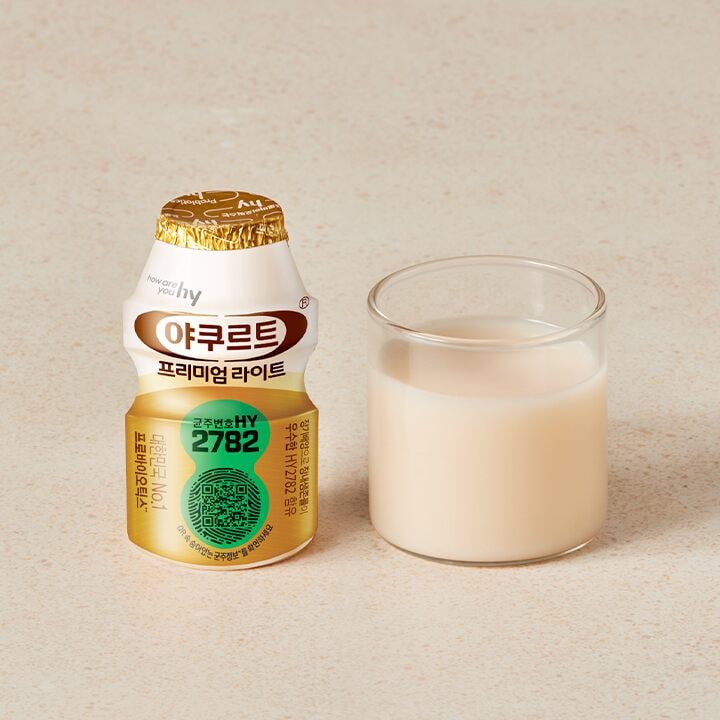
야쿠르트 프리미엄 라이트, with the gold foil seal still on. The glass shows the point: it pours. Official product image, hy.
The Sugar Question, Answered Honestly
This is where the Light version stops being a marketing tier and becomes a real decision.
| Per 65 ml bottle | 야쿠르트 | 야쿠르트 라이트 |
|---|---|---|
| Calories | 45 kcal | 30 kcal |
| Sugar | 9 g | 5 g |
Nine grams of sugar in 65 ml is dense. Run it to a common basis: that is roughly 14 g per 100 ml, which is sweeter per millilitre than cola, at about 10.6 g per 100 ml.
That comparison is worth stating plainly because nobody puts it on the label. But it needs its other half to be honest: the serving is tiny. A 65 ml Yakult delivers 9 g of sugar total. A 355 ml can of cola delivers about 38 g. So per bottle you are drinking roughly a quarter of the sugar — you are simply drinking it at a higher concentration.
The practical reading:
- Regular 야쿠르트 — the original taste, and what most Koreans picture. Sweet, and unapologetic about it.
- 야쿠르트 라이트 — 5 g of sugar, a third fewer calories, and now the volume seller. This is the one to buy if you plan to drink one daily.
- The bacteria count does not drop in the Light version. 10 billion CFU guaranteed per bottle either way, with over 20 billion across five strains actually put in at production.
If you have diabetes or are managing sugar closely, the Light version is the meaningful choice here, and the small bottle is genuinely on your side.
You might like: Milkis Flavours: Which Korean Milk Soda to Pick
Why the Bottle Is So Small
The 65 ml bottle looks like a sample. It is not — it is a correction.
Early versions were sold in 200 ml bottles, and Korean consumers could not finish them. It was too sweet at that volume, so people left them half-drunk and the product got a reputation for waste. Shrinking to 65 ml made it a single swallow, which is the format it has held ever since.
The shape has its own history. That pinched-waist polystyrene bottle was designed in 1968 by Japanese industrial designer Isamu Kenmochi, chosen for cost and safety, and it is now one of the most recognisable containers in East Asia. Korea has sold over 5 billion of them cumulatively as of 2024, and at the 1990s peak was moving 8 million bottles a day.
What Else Is Actually On the Cart
Assuming Yakult is all that is on board is the most common visitor mistake. By 2021 a Fresh Manager carried more than 500 products, and fresh meat was added in 2023.
The lines you are most likely to see, with August 2026 pricing where available:
| Product | Korean | What it is | Price |
|---|---|---|---|
| Yakult Light | 야쿠르트 라이트 | The everyday 65 ml bottle | ₩250 |
| Will | 윌 | Fermented milk marketed for stomach health | ₩1,400 (150 ml) |
| Coopers | 쿠퍼스 | Liver-focused functional line | ₩2,700 (Premium) |
| Frozen Yakult | 얼려먹는 야쿠르트 | Launched April 2016. Turn it upside down and eat it with a spoon | Varies |
| Prepared meals | — | Lunchboxes, side dishes, milk, juice, meat since 2023 | Varies |
윌 and 쿠퍼스 are the ones foreigners never guess. They are not flavour variants of Yakult — they are separate functional-drink lines with their own branding, sold at five to ten times the price, and for a lot of Korean office workers 쿠퍼스 is what you drink the morning after a work dinner.
How to Actually Buy One
Two routes, and they are not equally practical for a visitor.
From a cart. You can simply walk up to a Fresh Manager and buy. Card payment has been supported since 2014, so you do not need cash. The catch is that you cannot schedule this — each Fresh Manager works a fixed territory on a fixed round, so encountering one is a matter of being in the right neighbourhood in the morning. hy runs a location app, but it is Korean-only and built around subscription delivery to a home address, which is not a realistic setup for a two-week trip.
From a convenience store. Every CU, GS25, 7-Eleven, and Emart24 carries Yakult in the chilled drinks case, usually in multi-packs of five. This is the reliable route, and it is how most visitors will actually buy it.
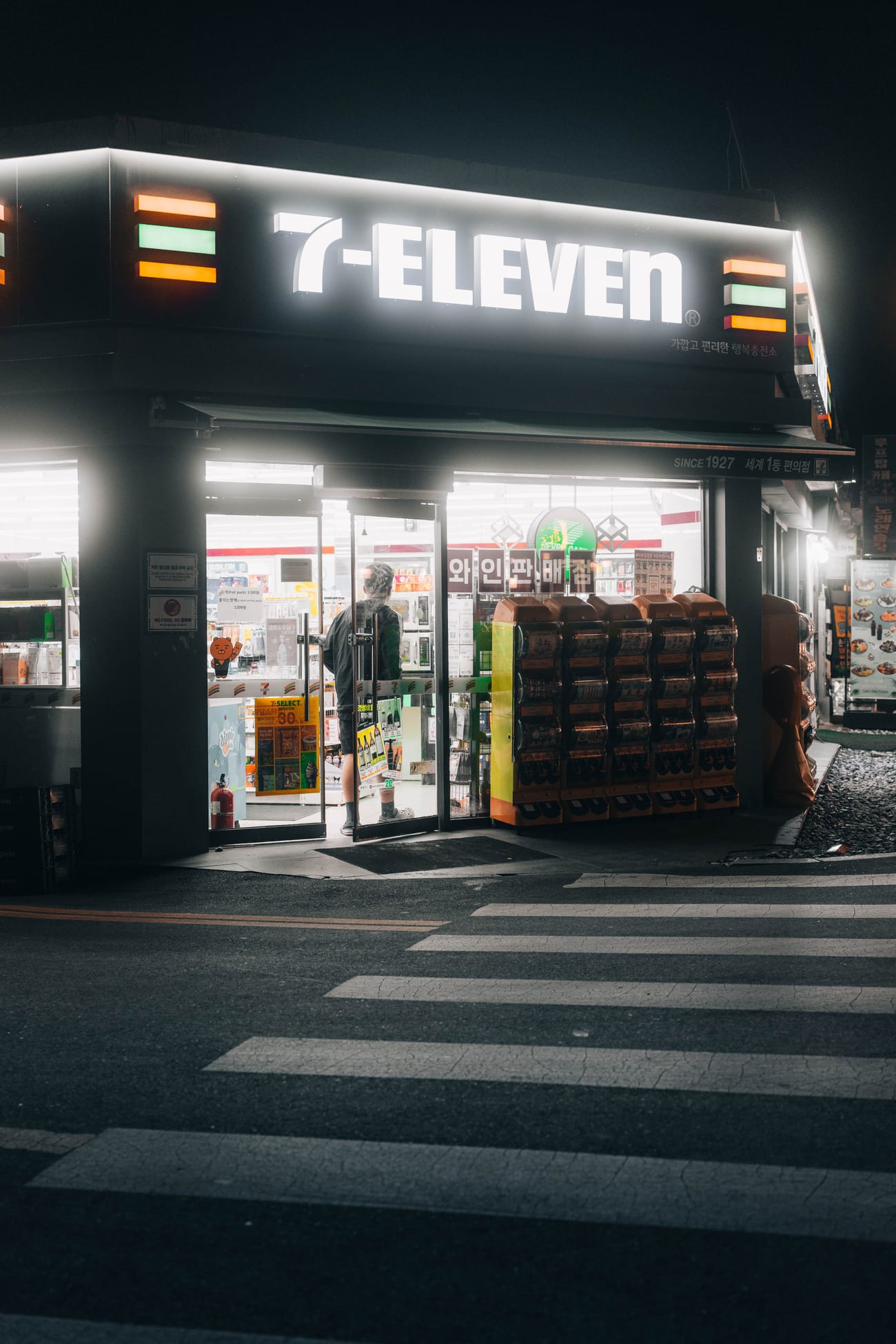
The dependable option. Every major Korean convenience-store chain stocks it in the chilled case. Photo by Paul Bill via Pexels.
Building a Korean snack shelf at home? Yakult itself does not ship — it is chilled and short-dated — but the shelf-stable Korean items that go with it do. If you are assembling a starter box before or after a trip, it is worth comparing what is actually available rather than guessing.
One honest warning about buying Yakult abroad. The Yakult sold on Amazon and in Western supermarkets is produced for those markets — different bottle size, different sugar formulation, different labelling. It is the same company and the same Shirota strain, but it is not the Korean product, and if you are trying to recreate the taste you remember from a cart in Seoul you may be disappointed. Buy it to try the drink, not to reproduce the trip.
What Koreans Actually Do With It
Three habits that are worth knowing, because none of them is on the packaging.
Freeze it. Put a bottle in the freezer, then peel the foil and eat it with a spoon like a sorbet. This is common enough that hy productised it — 얼려먹는 야쿠르트 launched in April 2016 with an inverted bottle designed for exactly this.
Mix it into soju. Yakult and soju is a standard beginner-friendly cocktail in Korean bars and homes, and it works for the same reason the drink works alone: it is sweet and sharp enough to carry alcohol. If you have seen a Korean drama scene where someone mixes something milky into a shot glass, this is usually it.
Give it to children. The 65 ml size and the sweetness make it the default Korean children's drink, and it is one of the earliest brand names Korean kids learn. That familiarity is a large part of why the door-to-door network survived when the products themselves became available everywhere.
You might like: Korean Convenience Store Food Guide
Is the Cart Going to Disappear?
Probably not soon, but the pressure is real and worth stating without spin.
The headcount is down from about 13,000 in 2021 to about 11,000 now. hy protected Fresh Manager territories by restricting its own online sales, which preserved incomes but cost the company ground against platform competitors. Industry analysis published in April 2026 put the point where delivery robots become cheaper than human rounds at roughly 2028–2030.
The counter-argument is not sentimentality. A Fresh Manager on a fixed route who visits the same 161 households for over a decade notices when an elderly customer does not come to the door — several Korean municipalities formalised this into welfare-check arrangements. A robot delivers a bottle. It does not notice an absence.
Which of those wins is an open question. What is certain is that the cart you see in traffic in 2026 is a currently-functioning system, not a heritage display.
FAQ
Q: Is Yakult the same as yogurt? A: No. Both are fermented milk, but Yakult is 액상발효유 — homogenised after fermentation so it pours and you drink it. Spoonable yogurt is 호상발효유, left set and eaten with a spoon. One production step separates them, and it produces a physically different product.
Q: How much does Yakult cost in Korea? A: As of August 2026, 야쿠르트 라이트 is ₩250. The last increase took effect on 1 May 2025, from ₩220. Functional lines cost far more — 윌 is about ₩1,400 for 150 ml and 쿠퍼스 프리미엄 about ₩2,700.
Q: Can tourists buy from the Yakult cart? A: Yes, and card payment has worked since 2014. But you cannot plan around it, because each Fresh Manager runs a fixed local route on a fixed schedule. For a reliable purchase, use any convenience store — they all stock it chilled.
Q: Why is the Yakult cart driving in the road instead of on the pavement? A: Because Korean law requires it. COCO is classified as a 원동기장치자전거 under the Road Traffic Act, which means a licence and helmet are mandatory and pavement use is prohibited. In practice many riders use the pavement anyway, and Korean media has covered this as an unresolved regulatory gap.
Q: What is the difference between regular Yakult and Yakult Light? A: Sugar and calories, not bacteria. Regular has 9 g of sugar and 45 kcal per 65 ml bottle; Light has 5 g and 30 kcal. Both guarantee 10 billion CFU. If you plan to drink one daily, Light is the sensible default.
Q: Is the Yakult sold outside Korea the same product? A: Not exactly. Yakult is made to local specifications in each market, so bottle size, sugar level, and labelling differ. The company and the L. casei Shirota strain are the same, but imported or locally-made Yakult will not taste identical to the Korean bottle.
Sources
Cart specifications, deployment figures, and generation history from hy Mobility's official product pages and Korean industry reporting. Legal classification and the pavement question from 여성신문, "야쿠르트 배달 전동카트, 보도로 다녀도 되나요?". Fresh Manager headcount and regional distribution from April 2026 Korean industry coverage. Nutrition and pricing from hy product information and Korean food-industry press, including the 1 May 2025 price revision. Product history and bottle design from Korean-language reference sources.
Prices and product availability change. Confirm current pricing in-store.
You Might Also Like
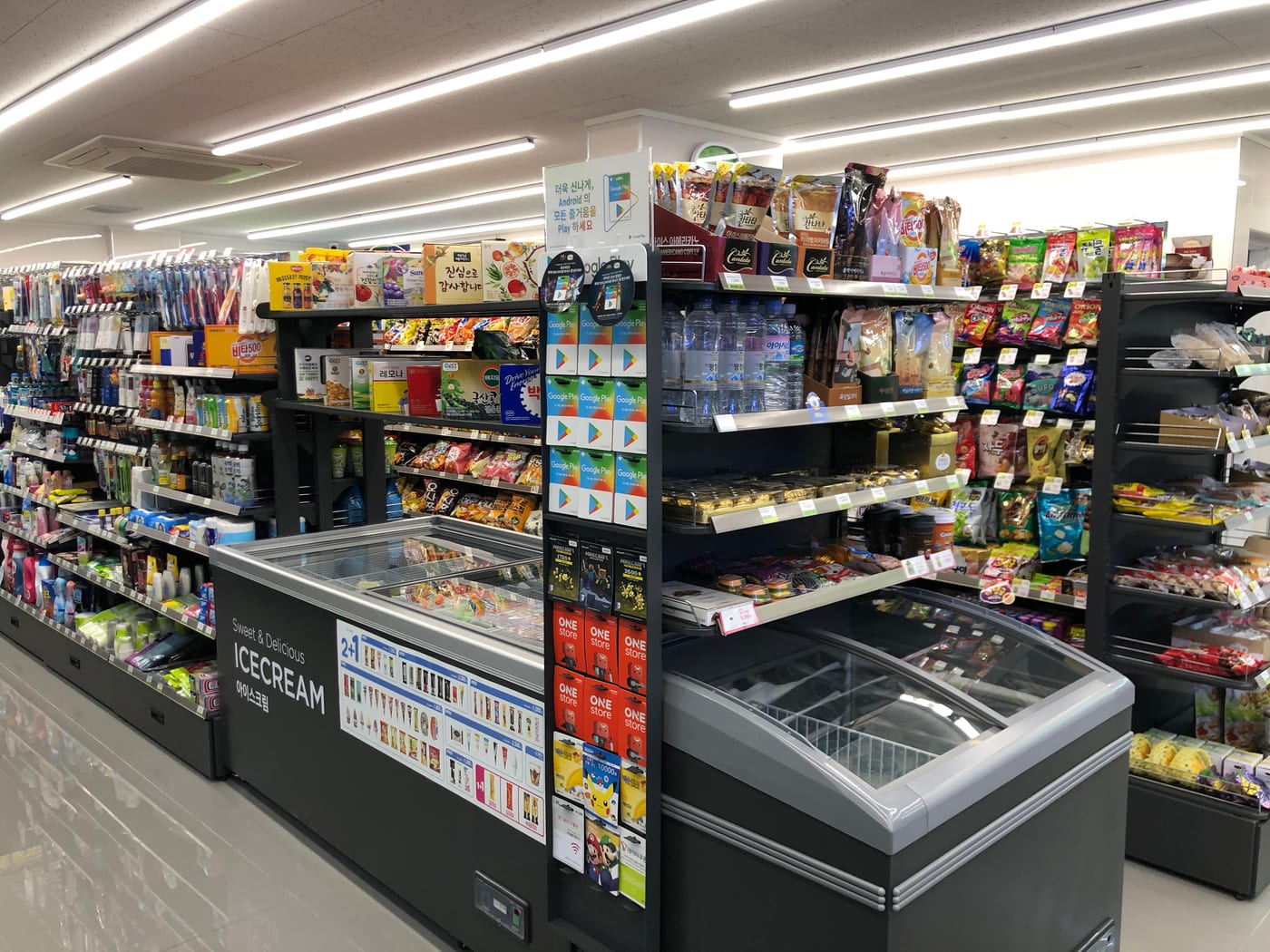
Delaffe: Korea's Convenience-Store Coffee Brand That Cut Its Price to ₩900
델라페 is not a drink, it is CU's own label — 150 million units a year, sold as a pouch you pour into a separate cup of ice. In March 2026 five of them dropped to ₩900, which makes the convenience store cheaper than Korea's cheapest café chain.
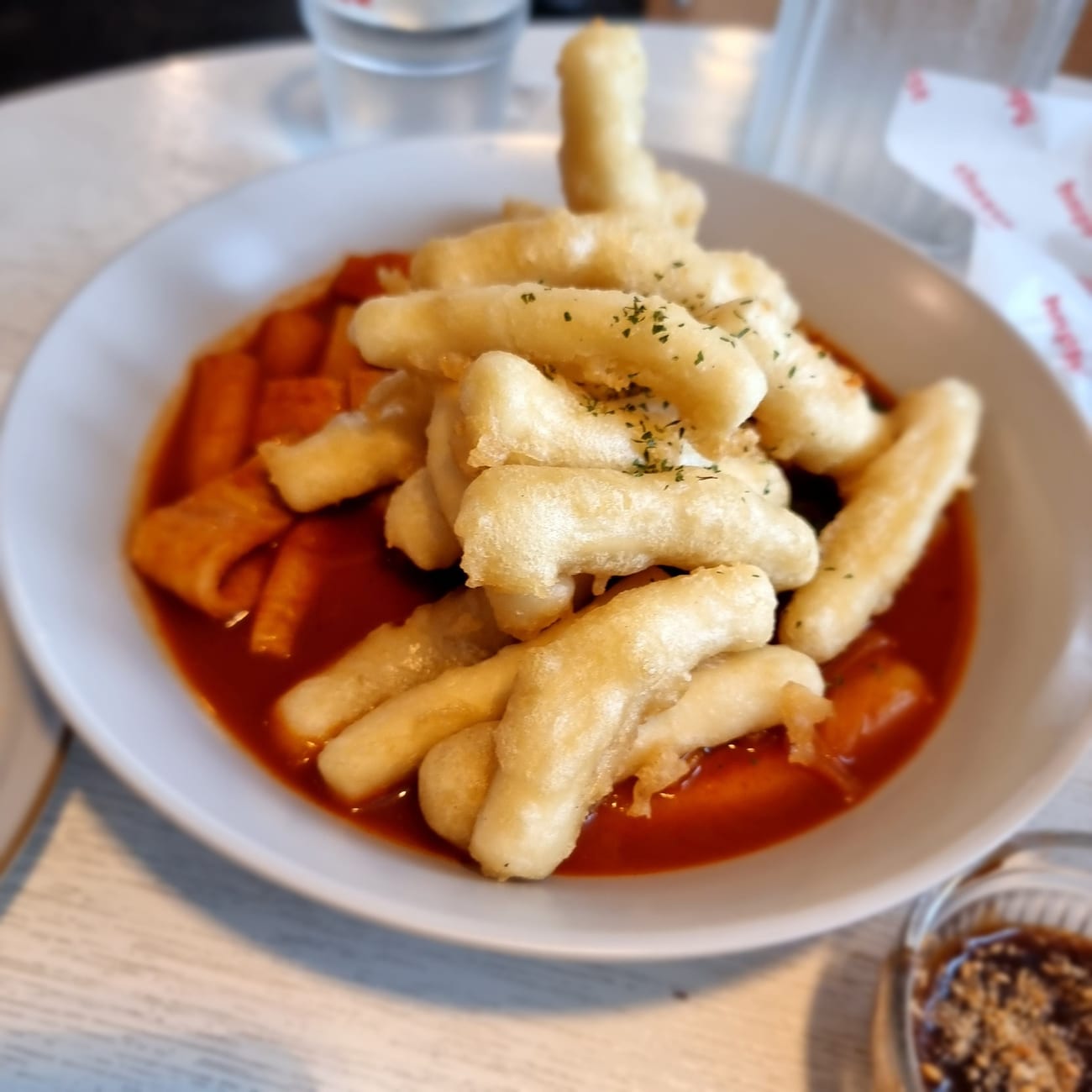
Coolpis: The Korean Drink That Exists to Put Out Tteokbokki
쿨피스 is on every spicy Korean table for a reason, and it is not the one people assume. It does not neutralise capsaicin — milk does. Launched 1980, 80 million units a year, and in 2026 its first new flavour since 2011.
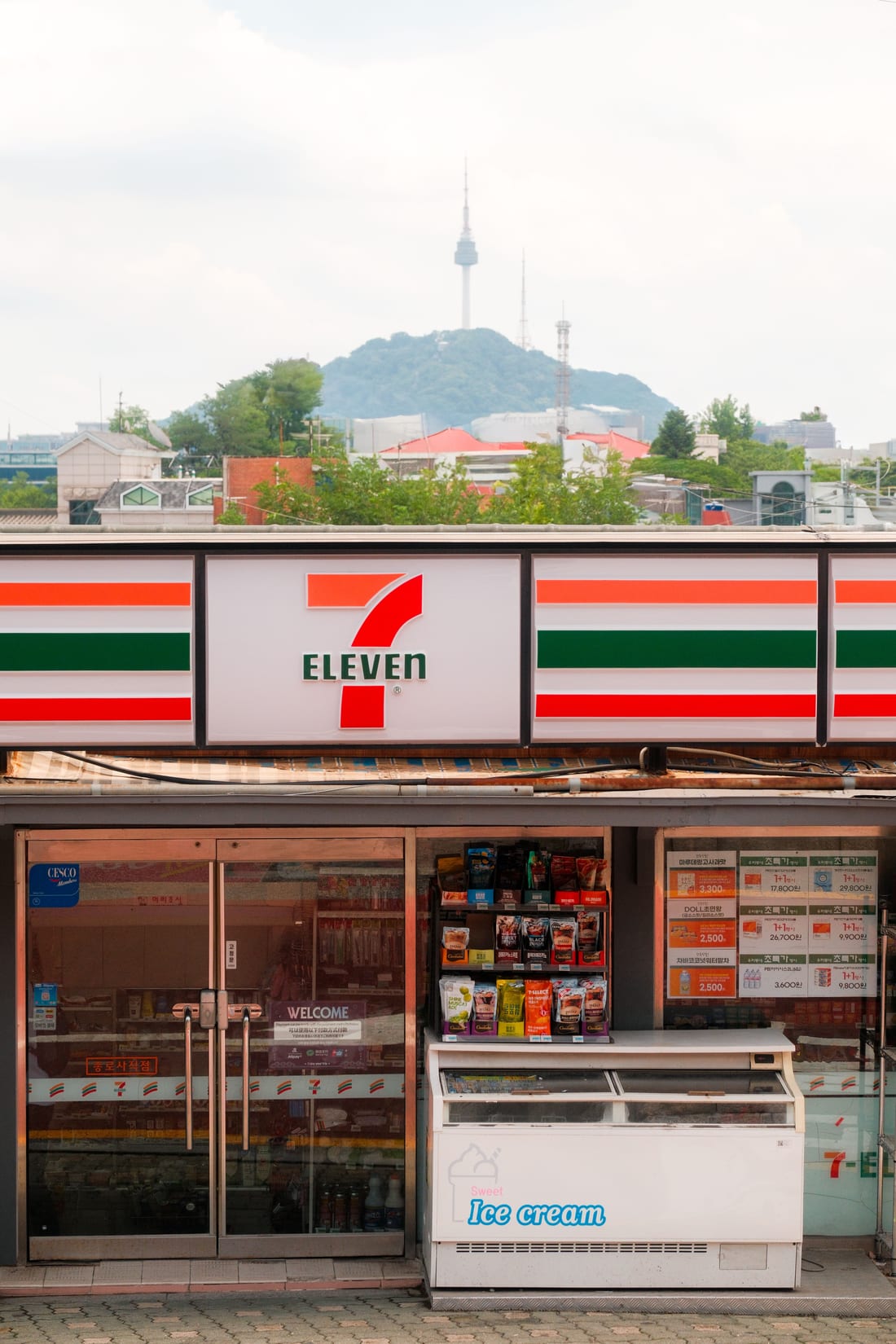
Korean Convenience Store Ice Cups: The Best-Selling Item Is a Cup of Ice
A cup of ice outsells everything else in a Korean convenience store. What it costs in August 2026 after June's price rise, why the drink is sold separately, what Koreans pour into it, and why the ₩800 cup tested cleaner than café ice.