Seochon, Seoul: The Valley Restored From a 300-Year-Old Painting
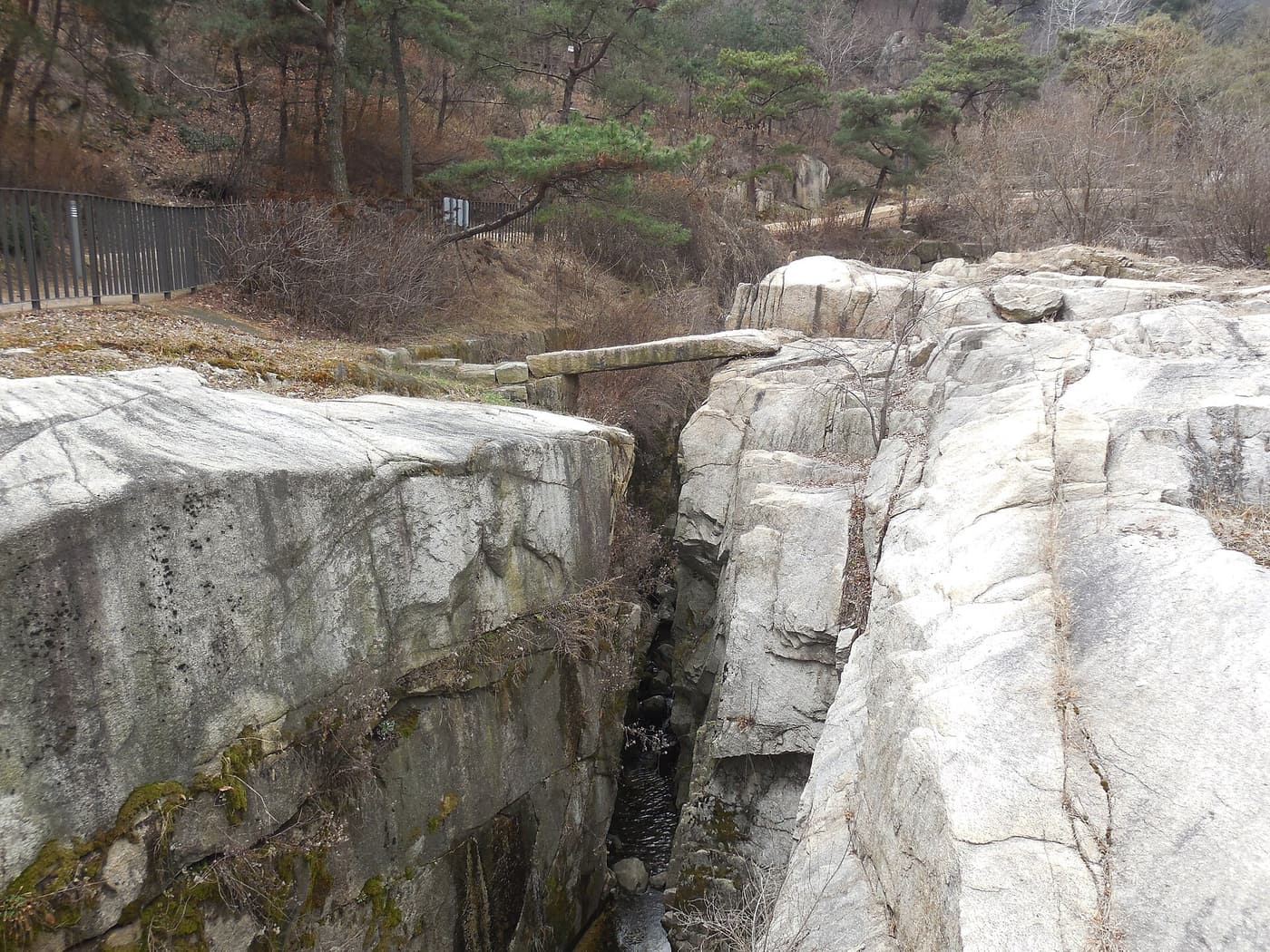
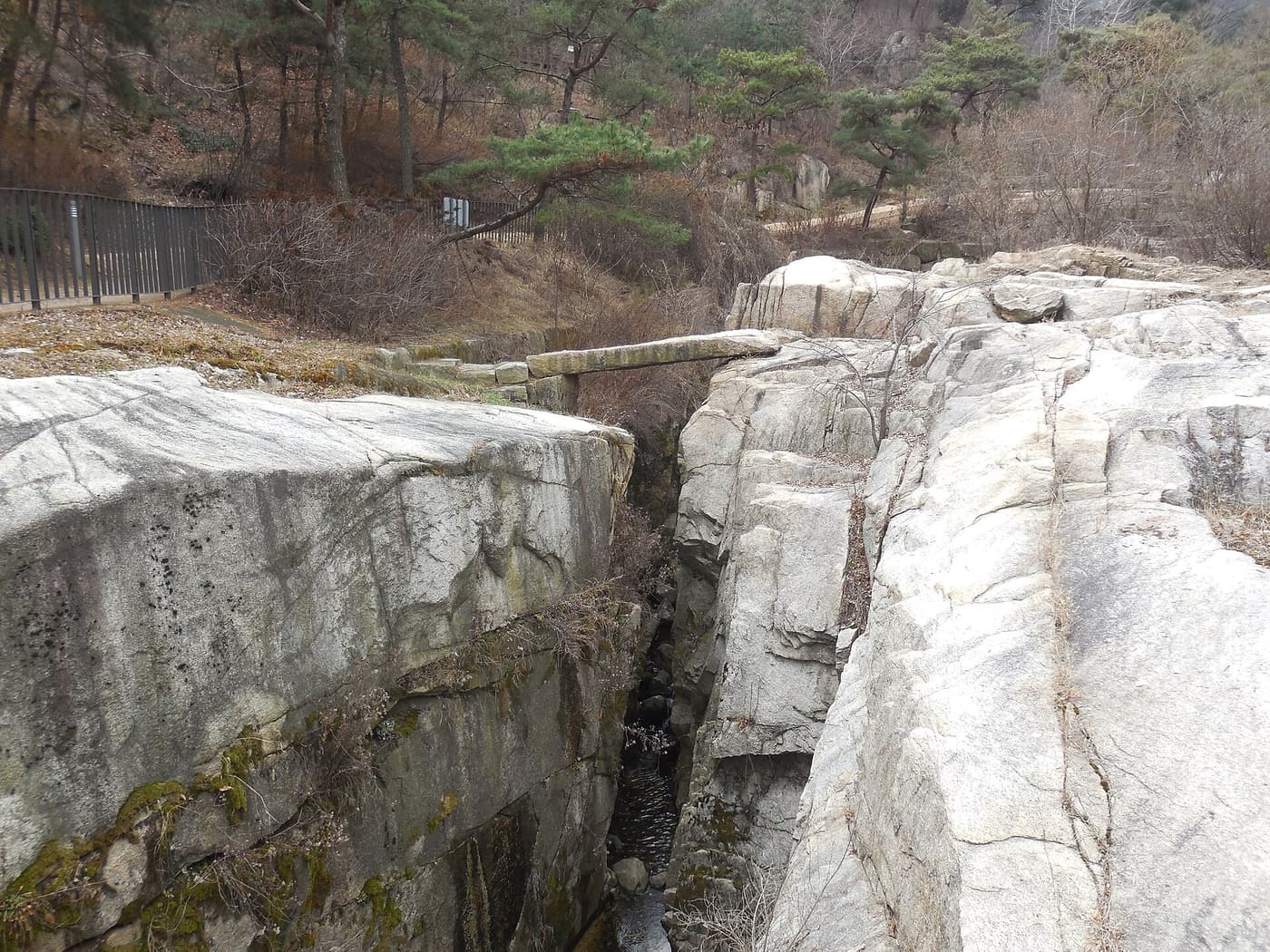
Giringyo. Two long stone slabs across the gorge — the bridge that appears in an 18th-century painting, still in place. Photo by 오모군, CC BY 3.0.
In 1971 Seoul built an apartment block over a valley on the slope of Inwangsan. In 2011 it knocked the block down. Then it rebuilt the valley — using a painting from the 1700s as the reference drawing.
The painting is by Jeong Seon (정선), the artist who effectively invented Korean true-view landscape, and the valley is Suseongdong (수성동). In his album Jangdong Palgyeong-cheop, the valley is drawn with water running between huge boulders and a stone bridge made of two long slabs laid side by side.
When the apartment came down, the bridge was still there.
That is Seochon (서촌) — the neighbourhood west of Gyeongbokgung — in one story: things that were covered over, and are now uncovered. It is also, for most visitors, the better half of the Bukchon decision, because nobody has had to put a time limit on it.
The Short Answer
| Question | Answer |
|---|---|
| Where is it? | Jongno-gu, immediately west of Gyeongbokgung Palace |
| Korean name | 서촌 — literally "west village"; officially Sejong Village (세종마을) |
| Getting there | Gyeongbokgung Station (경복궁역), Line 3, Exit 2 |
| The valley | Suseongdong Valley (수성동 계곡) — restored 2012, free, always open |
| The market | Tongin Market (통인시장) — brass-coin lunchbox from ₩5,000 |
| Also here | Yi Sang's house, Yun Dong-ju's lodging site, Park No-soo Art Museum |
| Time needed | Half a day, comfortably |
| Restrictions | None — unlike Bukchon across the palace |
Books on Korean history and Seoul — compare on AmazonAffiliate link. As an Amazon Associate, EpicKor earns from qualifying purchases at no extra cost to you.
The Valley, and the Painting It Was Rebuilt From
This is the part worth walking up the hill for, and no English guide explains it properly.
Suseongdong was a known beauty spot for centuries — a rocky gorge on the Inwangsan slope where water ran loudly enough to give the place its name. Jeong Seon painted it in the eighteenth century.
In 1971 the city put the Ogin Apartments (옥인시범아파트) on top of it. That was the era's answer to housing, and the valley effectively disappeared under concrete for four decades.
Demolition began in 2008, and during the process Seoul re-examined what was underneath. What they found matched the painting. The stone bridge — two long slabs meeting in the middle — was identified as Giringyo (기린교), a bridge named in old geographic records including the Sinjeung Dongguk Yeoji Seungnam, and photographed as recently as a 1994 book on Seoul's six hundred years.
Seoul designated the bridge and the valley a Seoul Monument, and restored the site using Jeong Seon's painting as the guide, exposing the bedrock rather than landscaping over it. The restored valley opened in 2012.
What that means when you stand there: you are looking at a view that was deliberately reconstructed to match a specific 300-year-old artwork, and the one element that did not need reconstructing is the bridge. It is a short, steep walk up from the market, and it is free.
Tongin Market and the Brass-Coin Lunchbox
The other reason to come, and it is genuinely fun rather than a gimmick.
Tongin Market (통인시장) is a small covered market in the middle of Seochon. It runs a system the merchants themselves devised: you buy brass coins (엽전) at the information desk, then walk the market filling an empty lunchbox tray from participating stalls.
| How it works | Detail |
|---|---|
| What you buy | ₩5,000 for 10 coins (엽전 10냥) |
| What things cost | Most items are 2 coins per portion |
| So a full box | Six items ≈ ₩6,000 worth of coins |
| Where to eat it | The market's shared dining area upstairs |
| Watch for | Not every stall joins the coin system — look for the sign |
| Best known dish | 기름떡볶이 — Seochon's oil-fried tteokbokki, not the red soupy kind |
The oil tteokbokki is the thing to try. Most tteokbokki you meet in Korea sits in a red gochujang sauce. Seochon's version is fried in oil with seasoning and comes out drier, chewier and less sweet. It is a genuinely different dish that happens to share a name.
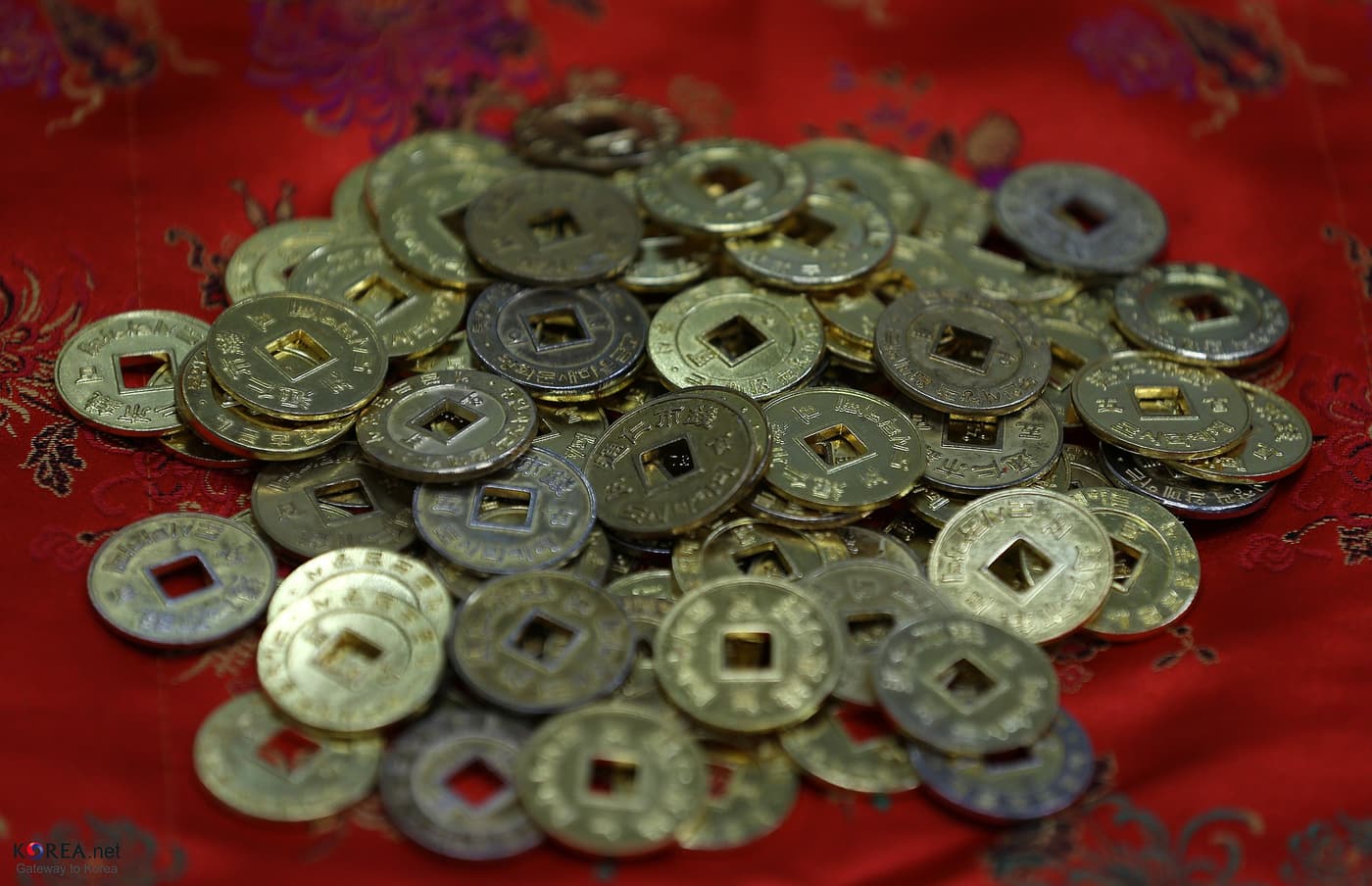
Tongin Market. Buy the coins first, then walk it once before you spend any of them. Photo by Republic of Korea, CC BY-SA 2.0.
Practical order of operations: buy the coins, then walk the whole market once without buying anything. The tray fills fast and the good stalls are not necessarily the first ones. Then go back and spend.
You might like: Bukchon Hanok Village, Seoul: The Village That Now Has Legal Visiting Hours
Why It Is Officially Called Sejong Village
The name on the signs is not Seochon. It is Sejong Village (세종마을), and the reason is a small stone marker on an ordinary street.
King Sejong — the one who commissioned Hangul — was born here in 1397, in a district then called Junsubang (준수방), which covers today's Tongin-dong and Ogin-dong. He was not born inside Gyeongbokgung. He was born in the neighbourhood outside its west wall.
Walk about two hundred metres north from Gyeongbokgung Station and there is a marker stone by the roadside reading 준수방터, and near Tongin-dong 89 a second small stone that says, plainly, birthplace of King Sejong. That is the entire monument. No hall, no ticket, no queue — a stone on a pavement in a residential street.
Which is a fair summary of Seochon generally. The things that happened here are large and the way they are marked is small. Bukchon, across the palace, has the opposite ratio.
Two practical notes that follow from the official name. First, if you are searching Korean maps or signage, 세종마을 and 서촌 both point at the same place. Second, the district sits in the protected zone around the palace, which is part of why it has stayed low-rise while the rest of central Seoul went vertical — the skyline you are walking under is a planning decision, not an accident.
The Writers' Quarter
Seochon has an unusually dense literary history for a few blocks of low-rise housing, and the sites are small, free or cheap, and close together.
- Yi Sang's House (이상의 집) — a memorial space on the site connected to the modernist writer Yi Sang, who is to Korean literature roughly what Kafka is to European.
- Yun Dong-ju's lodging site — the poet lodged in Seochon while studying, and the Yun Dong-ju Literature House sits at the top of the hill toward Buam-dong, in a converted water pressure tank.
- Park No-soo Art Museum (박노수미술관) — the painter's own house, itself an interesting 1930s building, now a small municipal museum.
None of these takes long. Treat them as punctuation on a walk rather than destinations, which is how the neighbourhood is designed to be used anyway.
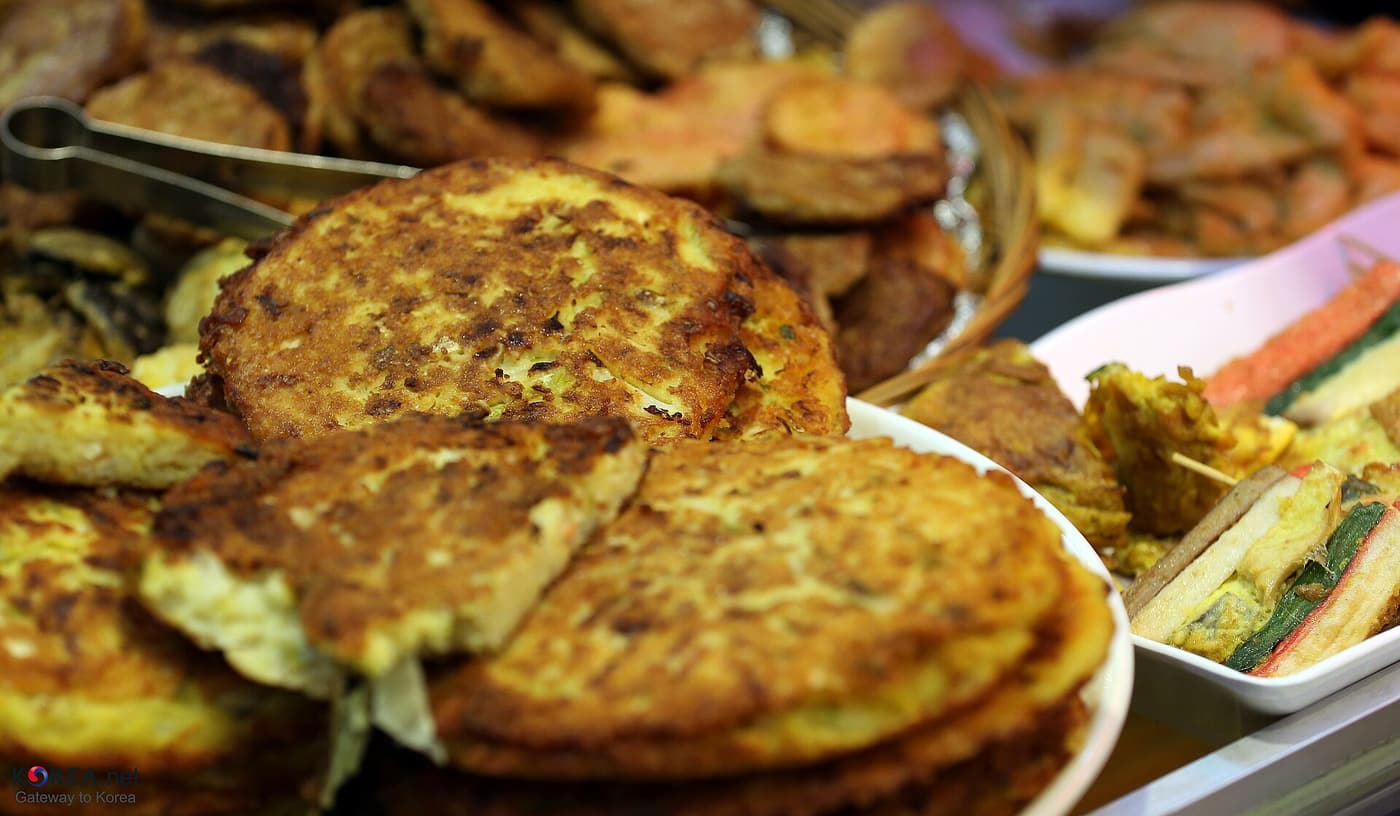
Stall food at Tongin. The coin system only works at participating stalls, so check before you queue. Photo by Republic of Korea, CC BY-SA 2.0.
A Route That Works
- Gyeongbokgung Station, Line 3, Exit 2. You come up on the palace's west side.
- Tongin Market first, while you are hungry and before the lunch rush thins the stalls.
- Walk up to Suseongdong Valley. It is uphill and takes about fifteen minutes from the market. Sit on the rocks.
- Come back down through the alleys, stopping at whichever of the literary houses is open.
- Finish at the palace wall. The Gyeongbokgung west wall walk is one of the quieter stretches in central Seoul.
That is a half-day, it is almost entirely free, and the only queue you will meet is at the market.
Walking the hill: As an Amazon Associate, EpicKor may earn from qualifying purchases. Seochon is flat at the market and steep at the valley, and the valley is the part worth doing — compare comfortable walking shoes before a Jongno day.
Compare on AmazonSeochon or Bukchon?
They sit on opposite sides of the same palace and they are not the same trip.
| Seochon | Bukchon | |
|---|---|---|
| Side of Gyeongbokgung | West | East |
| What it is | Working neighbourhood, market, valley | Residential hanok, photographed heavily |
| Restrictions | None | 10:00–17:00 on the red-zone street, ₩100,000 fine |
| Crowds | Moderate | Heavy |
| What you do | Eat, walk uphill, look at small museums | Walk and look |
| Hanok | Present, mixed in with ordinary buildings | The point |
If you have one morning, go to Bukchon — it is the more striking piece of built environment and the restriction makes mornings the right time anyway. If you have an afternoon, go to Seochon, because it does not run on a clock and there is something to eat at the bottom of the hill.
The Honest Counter-Recommendation
The valley is not Niagara. It is a rocky gorge in a city, and after heavy rain it is genuinely lovely, while in a dry spell it is a set of large stones. The interest is the history and the walk, not the volume of water. Go in with that expectation and it delivers; go expecting a waterfall and it will not.
The coin lunchbox is a lunch, not an attraction. ₩5,000 to ₩6,000 buys a tray of six things, which is good value and about as much food as it sounds like. It is not a tasting tour.
And do not try to do Seochon, Bukchon and a palace in one day. People attempt this constantly. All three are within walking distance, which makes it look reasonable on a map and exhausting in practice — the palace alone absorbs two hours if you actually look at it.
FAQ About Seochon
Q: Where is Seochon in Seoul?
A: Immediately west of Gyeongbokgung Palace in Jongno-gu. Take Gyeongbokgung Station on Line 3, Exit 2. Its official name is Sejong Village (세종마을); 서촌 simply means "west village".
Q: What is Suseongdong Valley and why is it famous?
A: A rocky valley on the Inwangsan slope, covered by an apartment block from 1971, demolished from 2008 and restored in 2012 using an eighteenth-century painting by Jeong Seon as the reference. The stone bridge in that painting, Giringyo, was still in place.
Q: How does the Tongin Market lunchbox work?
A: Buy brass coins at the information desk — ₩5,000 for ten — take an empty tray, and fill it from participating stalls at roughly two coins per item. Eat it in the shared dining area. Not every stall takes coins, so look for the sign.
Q: What is Seochon's oil tteokbokki?
A: 기름떡볶이 — rice cakes fried in oil with seasoning rather than simmered in red gochujang sauce. Drier, chewier and less sweet than the version most visitors know, and a Seochon speciality.
Q: Is Seochon better than Bukchon?
A: Different. Bukchon is the more dramatic hanok streetscape and now has enforced visiting hours; Seochon has a market, a restored valley and no restrictions. If you dislike crowds, Seochon is the better afternoon.
Q: How long do I need in Seochon?
A: Half a day covers the market, the valley and one or two of the small museums without rushing.
Q: Is there an entrance fee?
A: No. The valley and the neighbourhood are free, and the small museums are free or inexpensive.
The One Thing to Remember
Seoul knocked down an apartment block, opened a painting from the 1700s, and rebuilt what was underneath to match it — and the bridge in the painting had been down there the whole time.
Buy the coins, eat the oil tteokbokki, walk fifteen minutes uphill, and go and look at it.
Sources
- Seoul Metropolitan Government and Korean press coverage of the 수성동 계곡 restoration — the 1971 Ogin Apartments, demolition from 2008, identification of 기린교 against Jeong Seon's Jangdong Palgyeong-cheop, Seoul Monument designation, and the 2012 reopening
- Seoul Metropolitan Government and Korean press features on 통인시장 and the 엽전도시락 system — ₩5,000 for ten coins, roughly two coins per portion, and the market's oil tteokbokki
Seochon is one of the neighbourhoods compared in EpicKor's Seoul neighbourhood guide — character, nearest station, whether it is worth staying in, and how long each actually takes.
You Might Also Like
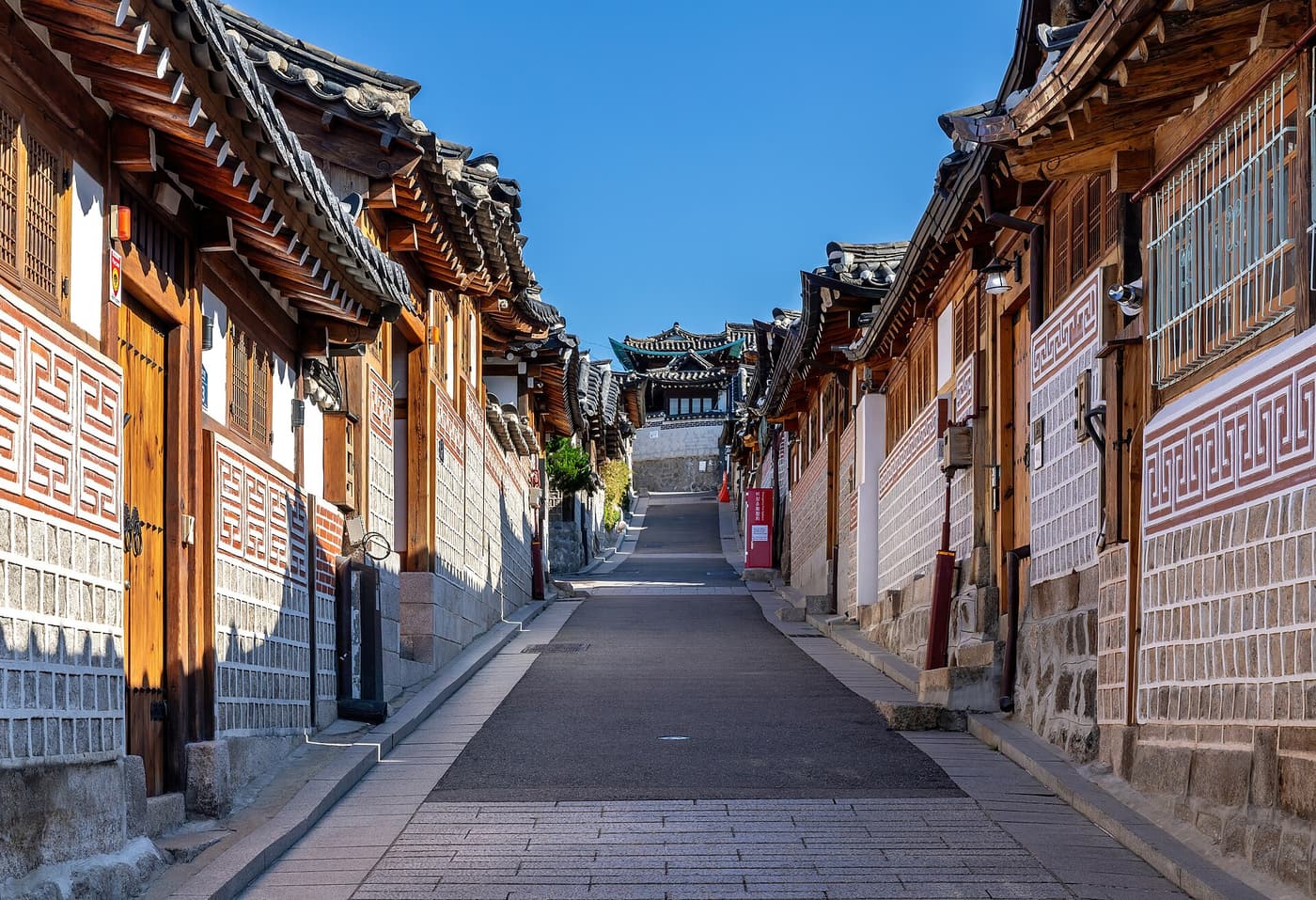
Bukchon Hanok Village, Seoul: The Village That Now Has Legal Visiting Hours
Bukchon is Korea's first Special Management Area for tourism. Since November 2024 the red-zone street has been closed to sightseeing after 5pm, with a ₩100,000 fine enforced from March 2025. It was also built by the same developer as Ikseon-dong.
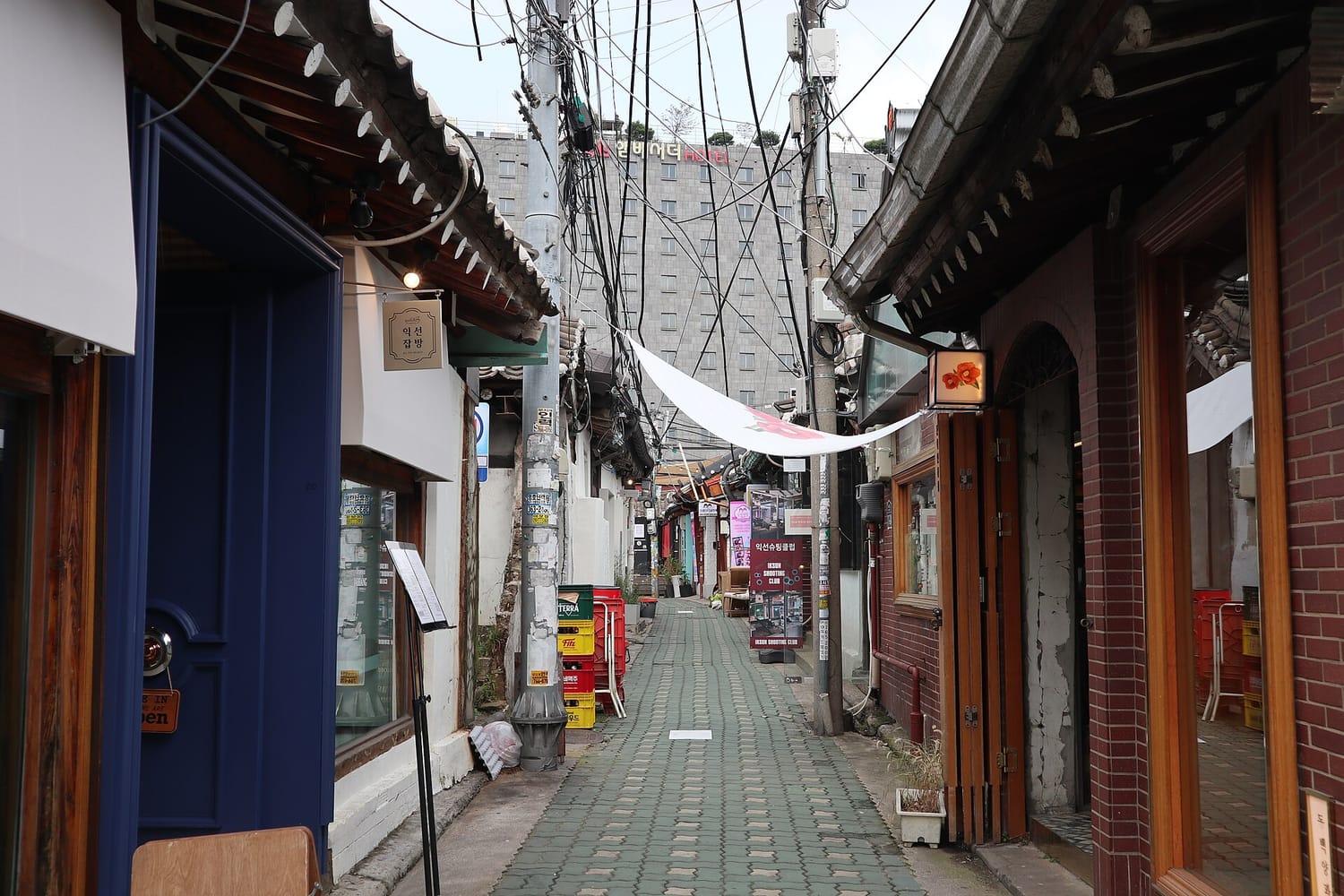
Ikseon-dong, Seoul: The Hanok Village a Developer Mass-Produced in the 1920s
Ikseon-dong is Seoul's oldest surviving hanok village, and it was not preserved from the Joseon era. It was built as a speculative housing development in the late 1920s, and it survived because redevelopment plans kept failing for nearly twenty years.
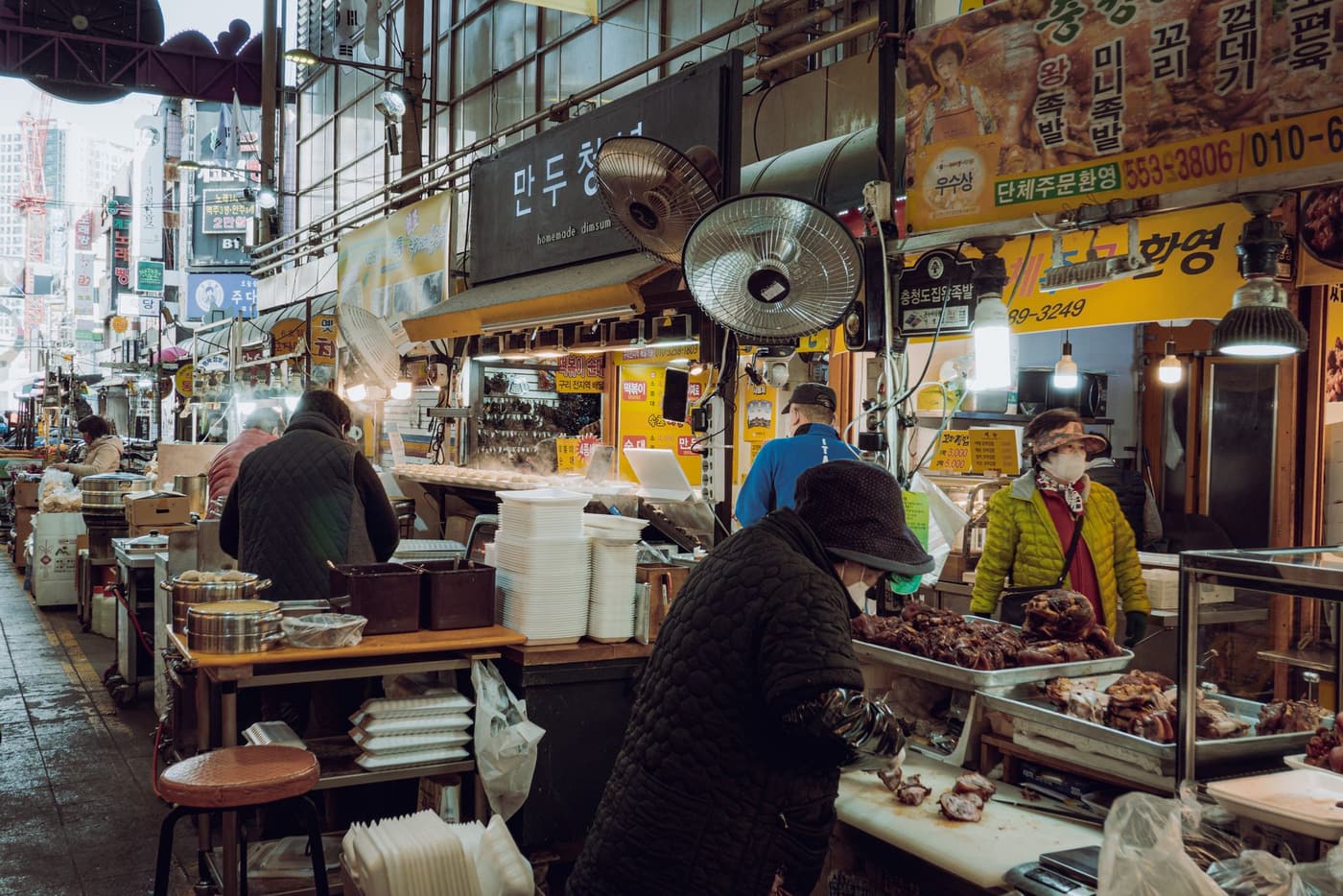
Mangwon-dong, Seoul: The Market Neighbourhood Locals Go To Instead of Hongdae
Mangwon-dong is two subway stops from Hongdae and works nothing like it. The name comes from a royal pavilion built in 1424, the market is a working grocery market rather than a tourist one, and the Mangnidan-gil nickname is borrowed from Itaewon.