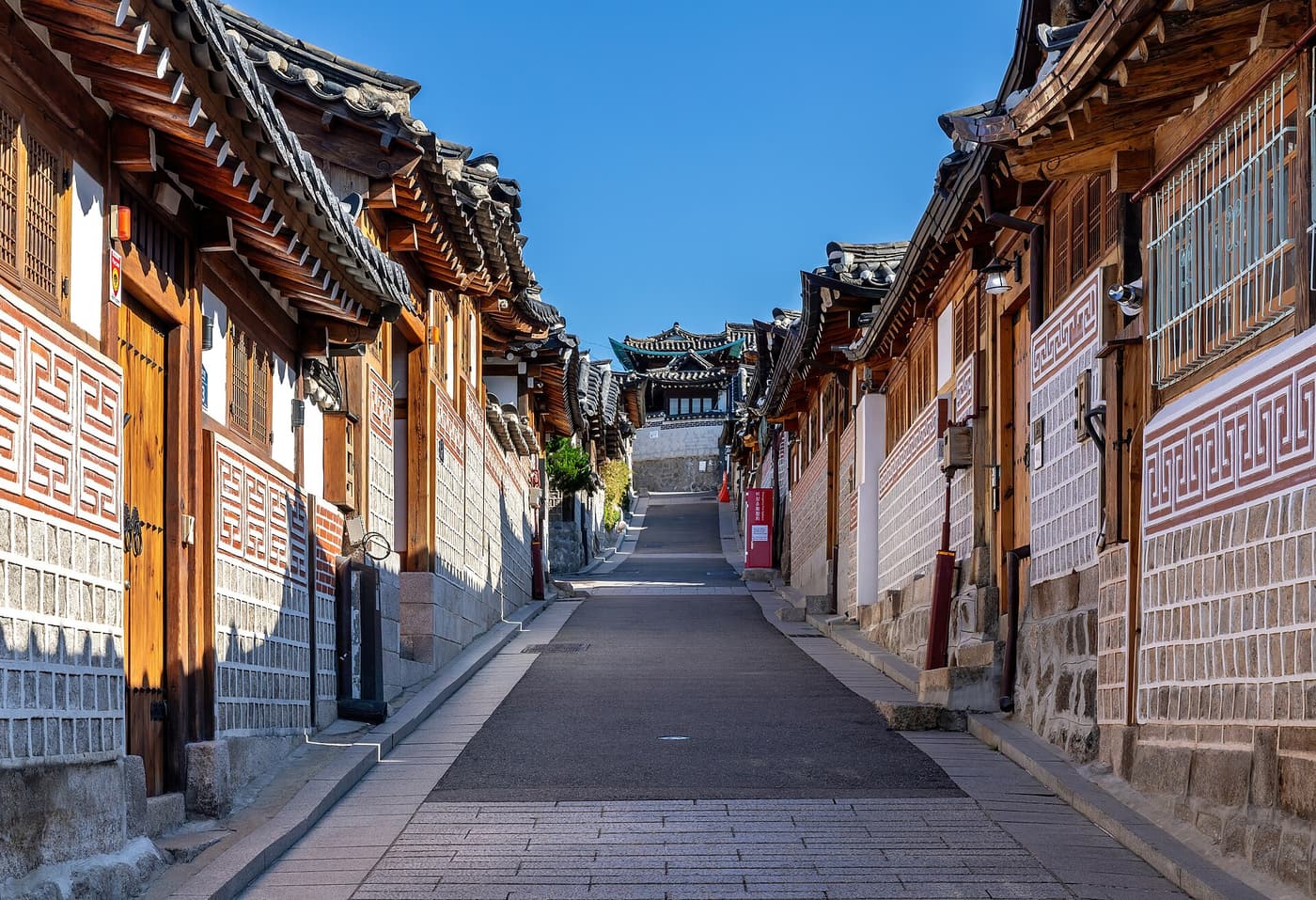
Bukchon Hanok Village, Seoul: The Village That Now Has Legal Visiting Hours
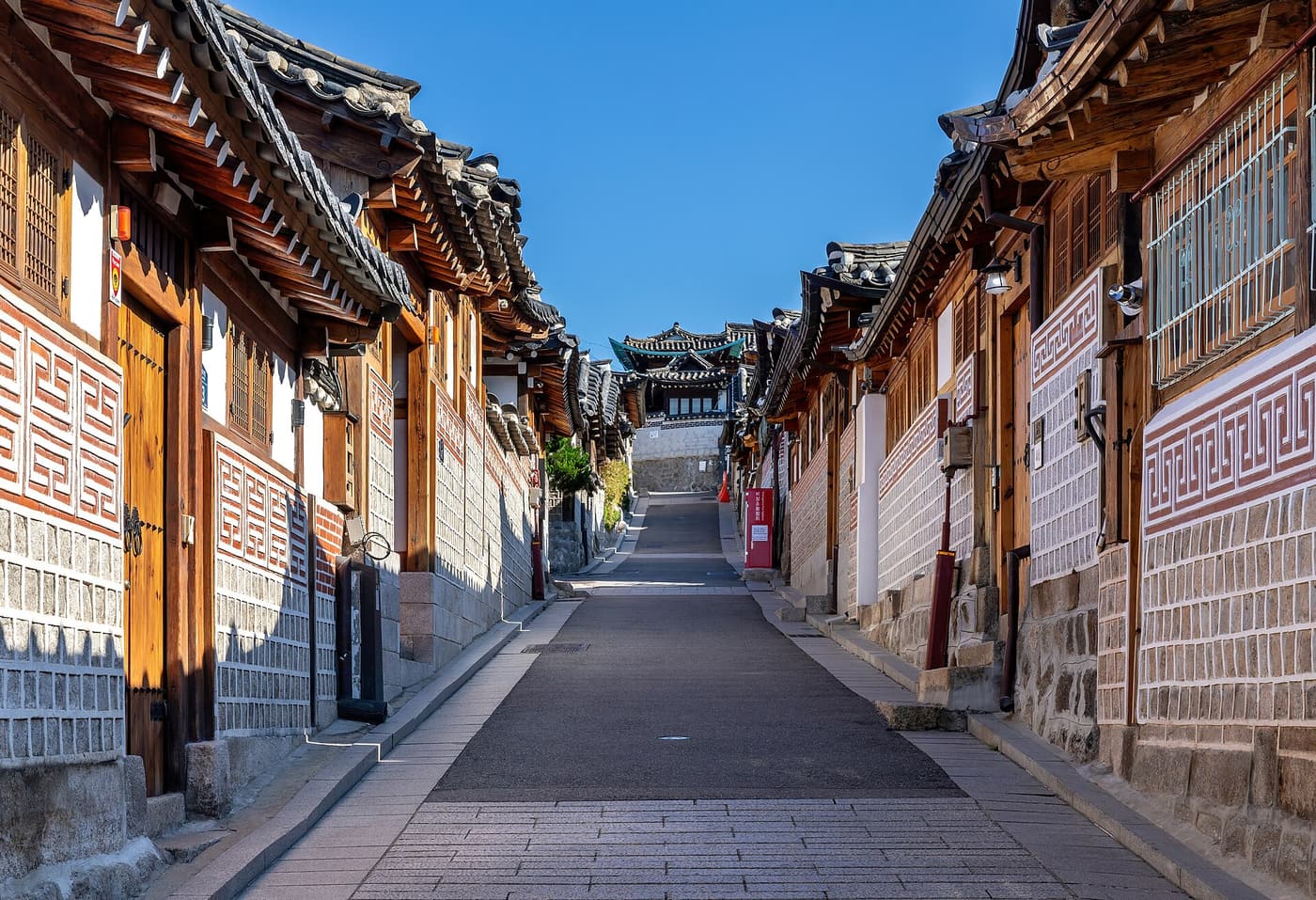
Bukchon-ro 11-gil. This is the street the restriction applies to. Photo by Basile Morin, CC BY-SA 4.0.
There is one street in Seoul where sightseeing is illegal after 5pm.
Not discouraged. Restricted, with a ₩100,000 fine. Bukchon Hanok Village became Korea's first Special Management Area for tourism on 1 July 2024, and since 1 November 2024 the stretch known as Bukchon-ro 11-gil has been open to visitors only between 10:00 and 17:00. The grace period ran to 28 February 2025. Fines have been issued since 1 March 2025.
Almost no English-language guide mentions this, and it is the single most useful thing to know before you go.
The second most useful thing is that Bukchon was not preserved from the Joseon dynasty either. Like Ikseon-dong, it was built as housing stock in the 1920s and 1930s — by the same man, in the same decade, using the same method. The two neighbourhoods have simply ended up in opposite places.
The Short Answer
| Question | Answer |
|---|---|
| Where is it? | Jongno-gu, between Gyeongbokgung and Changdeokgung |
| Getting there | Anguk Station (안국역), Line 3 |
| Visiting hours | 10:00–17:00 on the red-zone street, Bukchon-ro 11-gil |
| Since when? | Designated 1 July 2024; hours from 1 November 2024 |
| Fine | ₩100,000, enforced since 1 March 2025 |
| Who is exempt? | Residents and their guests, shop customers, hanok-stay guests, merchants, and people simply passing through |
| Do people live there? | Yes. That is the entire reason for the rule |
| Time needed | 1–2 hours |
Comfortable walking shoes — compare on AmazonAffiliate link. As an Amazon Associate, EpicKor earns from qualifying purchases at no extra cost to you.
The Rule, Precisely
Getting this wrong costs money, so here it is in detail rather than as a warning.
What is restricted: entry for the purpose of tourism — sightseeing, photography — on the designated red zone around 북촌로11길, outside 10:00–17:00.
What is not restricted: the rest of Bukchon, and the red zone itself for anyone who is not there as a tourist. Jongno-gu's guidance lists the exemptions plainly: customers of the shops, guests staying in the hanok, the merchants themselves, residents and their families and friends, and passers-by who are not engaged in tourist activity.
The practical reading: if you are walking through at 7pm on your way somewhere, you are fine. If you are standing in the middle of the lane with a camera at 7pm, you are not. If you have a dinner reservation or a hanok-stay booking on that street, you are fine.
Why it exists: people live in these houses. Bukchon is not an open-air museum with a ticket office — it is a residential neighbourhood that receives millions of visitors, and residents were dealing with noise, rubbish, and strangers photographing through their windows at night. Korea tried signage and volunteer guides first. The time limit came after those failed.
What this means for your day: Bukchon is a morning or early-afternoon destination now. Build your route around that rather than around it.
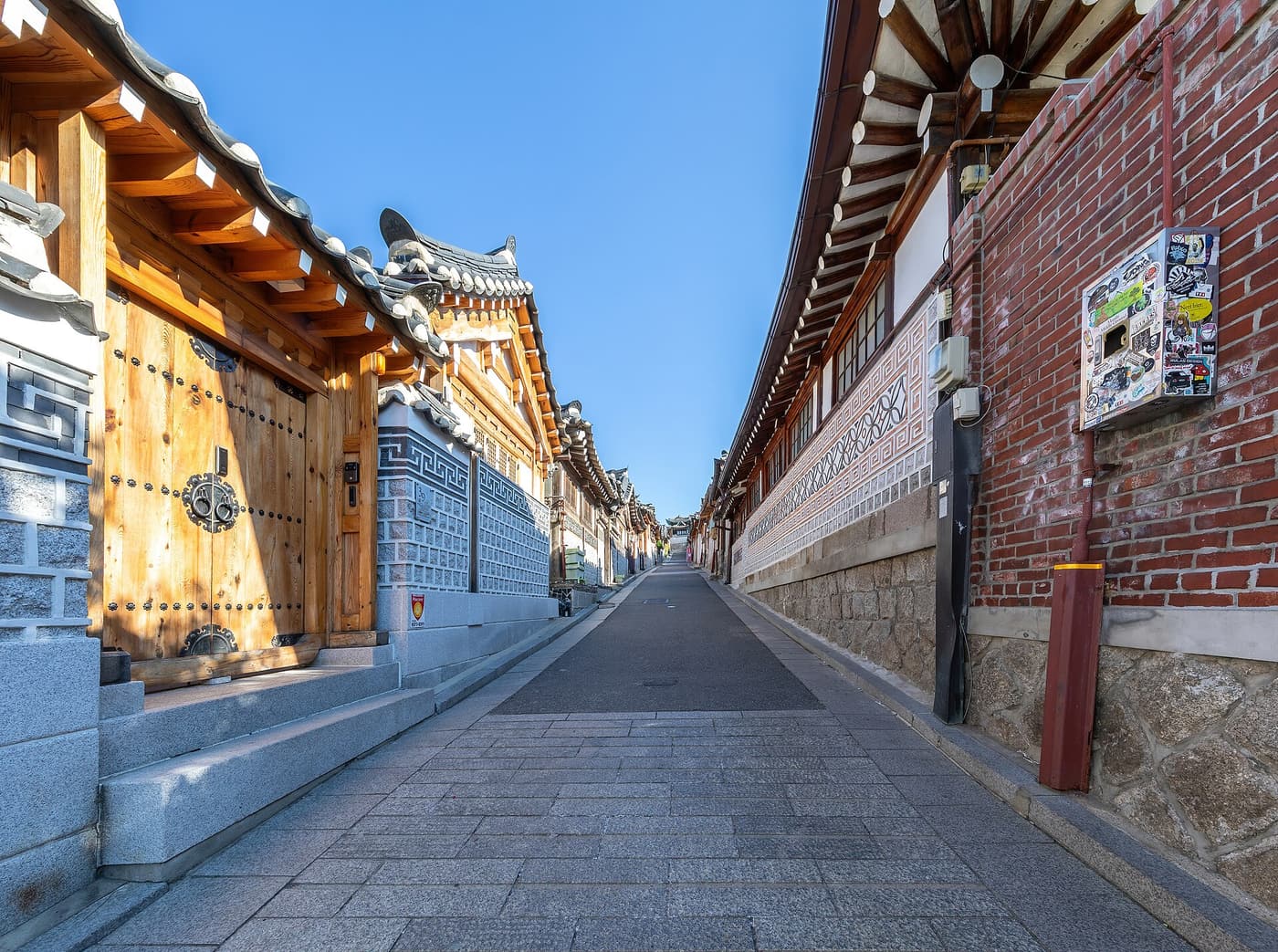
These are front doors. The gate in this photograph belongs to somebody's house, not an exhibit. Photo by Basile Morin, CC BY-SA 4.0.
The Part That Surprises People: Bukchon Is Modern
Ask most visitors when Bukchon was built and they will say something vague about the Joseon dynasty. The hanok you photograph there are roughly a century old, and they were a product.
Jeong Se-gwon (정세권, 1888–1965) founded the property firm Gunyangsa (건양사) around 1920 and became known as the building king. He bought land across colonial-era Seoul, subdivided it, and put up standardised courtyard houses at volume. He developed Gahoe-dong block 31 (가회동 31번지) into a large urban hanok estate — the part of Bukchon that appears in every photograph today.
The scale is documented. In the 1929 publication Gyeongseong Pyeollam, Jeong stated he was building around 300 houses a year. The same firm developed Ikseon-dong, plus Bongik-dong, Seongbuk-dong, Hyehwa-dong, Changsin-dong, Haengdang-dong, Hwigyeong-dong, Seodaemun and Wangsimni.
And there is a dimension to it that is easy to miss. This was the colonial period, and Japanese settlement was pushing through Seoul. Building dense, affordable Korean housing in the centre of the capital kept Korean residents in Korean houses on Korean land. Jeong used the profits to fund the Korean Products Promotion Movement, the Singanhoe, and the Korean Language Society (조선어학회) — the organisation that compiled the Korean dictionary while the language was being suppressed.
So the tidy hanok lanes you photograph are the physical residue of a property developer who bankrolled the Korean language movement. That is a considerably better story than "traditional village", and it is not on any of the signs.
You might like: Ikseon-dong, Seoul: The Hanok Village a Developer Mass-Produced in the 1920s
Bukchon vs Ikseon-dong: Same Builder, Opposite Endings
This comparison is the most useful frame for deciding where to spend your afternoon.
| Bukchon | Ikseon-dong | |
|---|---|---|
| Built | 1920s–30s, Gahoe-dong 31 | Late 1920s–1935 |
| Developer | Jeong Se-gwon / Gunyangsa | Jeong Se-gwon / Gunyangsa |
| House size | Larger, higher-status plots | Small, tightly packed |
| What is inside now | Mostly private homes | Almost entirely businesses |
| Terrain | Steep, with view points | Flat |
| What you do | Walk and look | Sit down, eat, drink |
| Rules | 10:00–17:00 on the red zone | Normal commercial street |
| Feels like | A neighbourhood you are visiting | A district built to receive you |
The reason the endings differ is not aesthetic. Bukchon's houses were bigger and its residents stayed, so it remained residential and became protected. Ikseon-dong's were small, cheap, and scheduled for demolition for two decades, so nobody invested — and cheap rent let cafés and bars move in. One was preserved by wealth, the other by neglect.
The Views Are Numbered, and That Is Part of the Problem
Jongno-gu formally designated eight viewpoints in Bukchon — 북촌8경 — and put numbered markers at each one. The intention was reasonable: spread visitors across the neighbourhood instead of concentrating them.
What happened instead is instructive. A small number of the eight became the photograph, and the rest are comparatively empty. The famous frame — hanok roofs stepping down the hill with the city behind them — is one specific spot on one specific street, and it is the same street that now closes to sightseeing at five.
The practical use of this: the numbered markers still work as a walking route, and following them takes you along lanes most visitors skip. If you want Bukchon without the crowd, walk the numbers you have never seen in a photograph rather than the one you have.
There is a broader lesson here for anyone planning a Seoul trip. Designating a viewpoint concentrates people rather than dispersing them, because a marked spot is easier to find and easier to prove you visited. Seoul has now run the full sequence in one neighbourhood — designate the views, watch the crowding, add signage, add volunteers, and finally add a time limit and a fine. It took about a decade.
If you would rather not be part of that, Seochon across the palace has no numbered views, which is precisely why it still feels like somewhere people are getting on with their day.
How to Actually Visit
- Go in the morning. Not only because of the rule — the light is better and the lanes are empty before about 10:30.
- Start at Anguk Station, Line 3. Exit 2 or 3 puts you at the bottom of the hill.
- Walk up, not down. The famous view is looking down the hill over the rooftops toward the city, which means you want the climb behind you.
- Use Gyedong-gil for the quieter version. The 계동길 spine has shops, cafés and far fewer cameras than the photo street.
- Keep your voice down and do not photograph into doorways. This is the actual request from residents, and it costs nothing.
- Pair it with Changdeokgung or Ikseon-dong, both a short walk away. Bukchon alone is not an afternoon.
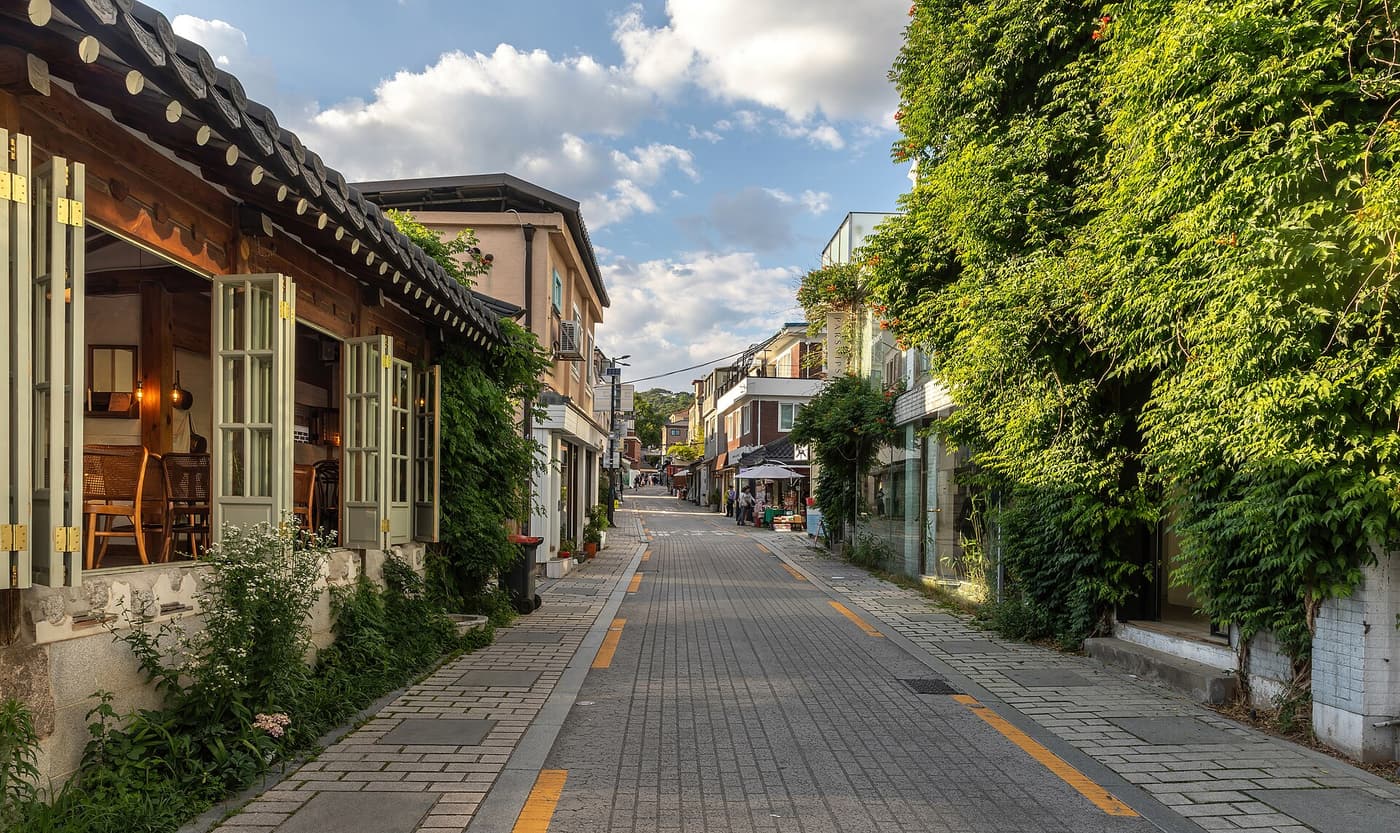
Gyedong-gil. Same neighbourhood, a fraction of the crowd, and no time restriction. Photo by Basile Morin, CC BY-SA 4.0.
Reading the houses, not just photographing them: As an Amazon Associate, EpicKor may earn from qualifying purchases. Once you know what a courtyard plan and a raised floor are doing, Bukchon stops being a backdrop — compare books on the hanok and Korean architecture.
Compare on AmazonThe Honest Counter-Recommendation
Do not rent a hanbok specifically for Bukchon. The rental shops cluster around the palaces and the hanbok-in-Bukchon photograph is the single most reproduced image in Korean tourism. If you want it, take it — but it is not the reason to come, and the crowd doing exactly that is a large part of why the street now closes at five.
Do not come only for the one viewpoint. The famous frame is roughly ten metres of one street. People travel across the city, queue for the photograph, and leave without walking the neighbourhood, which is the part worth having.
And if you dislike crowds, consider skipping it entirely. Seochon on the other side of Gyeongbokgung has hanok, a restored valley, a working market and no restrictions, because it never became the photograph. That trade is worth making for a lot of people.
Planning the Jongno walking day: Bukchon, Changdeokgung, Jongmyo, Ikseon-dong and Seochon are all within walking distance of each other, and the hills are real — compare Seoul guidebooks if you want the rest of the district mapped before you arrive.
Compare on Amazon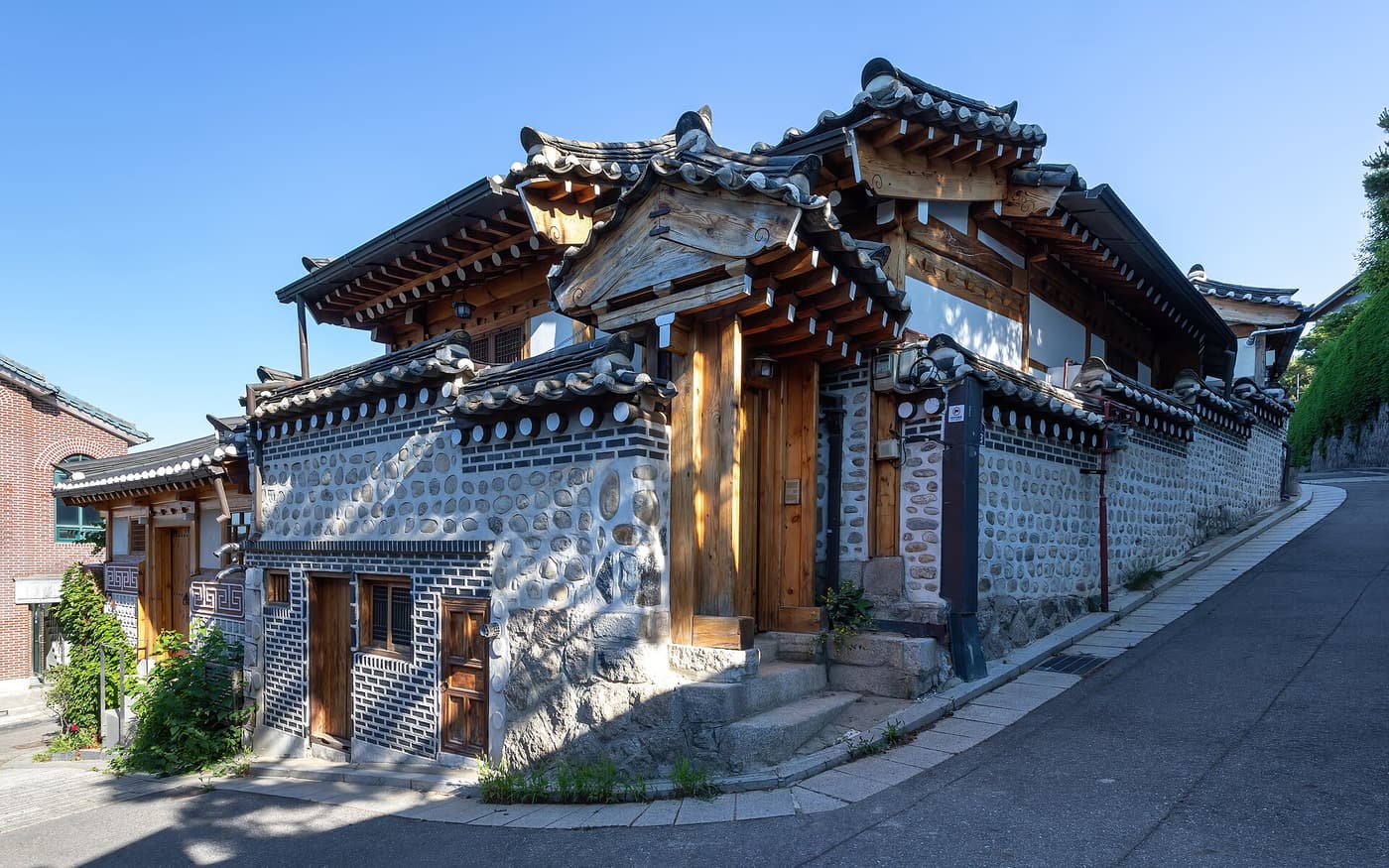
The slope is the reason for the view, and the reason your legs will notice. Photo by Basile Morin, CC BY-SA 4.0.
You might like: Seoul Winter Festa 2026: confirmed dates, Cheonggyecheon lantern hours, the free Gwanghwamun market and the ₩1,000 skating rink
FAQ About Bukchon Hanok Village
Q: What time does Bukchon Hanok Village close?
A: The red-zone street, Bukchon-ro 11-gil, is open to visitors for tourism between 10:00 and 17:00. It is not a gate that closes — the rest of the neighbourhood is unrestricted, and residents, shop customers, hanok-stay guests and people passing through are exempt.
Q: Is there really a fine?
A: Yes. ₩100,000. Bukchon was designated a Special Management Area on 1 July 2024, hours took effect on 1 November 2024, and enforcement began on 1 March 2025 after a grace period.
Q: How do I get to Bukchon Hanok Village?
A: Anguk Station on Line 3. Walk up the hill from there — the famous view looks back down over the rooftops, so you want the climb done first.
Q: How old are the hanok in Bukchon?
A: Roughly a century. Most were built in the 1920s and 1930s by the developer Jeong Se-gwon, who was constructing around 300 houses a year by his own account in 1929.
Q: Should I go to Bukchon or Ikseon-dong?
A: Bukchon if you want to walk and look at a residential neighbourhood; Ikseon-dong if you want to sit down, eat and drink inside converted hanok. They are about twenty minutes apart on foot, and doing both in one day works well — Bukchon in the morning, Ikseon-dong after.
Q: Do people actually live in Bukchon?
A: Yes, and that is the whole reason for the restriction. The houses are private homes, not exhibits.
Q: Is Bukchon free?
A: Yes. It is a public neighbourhood with public streets. Individual hanok museums and cultural centres inside it may charge.
The One Thing to Remember
Bukchon is somebody's street. Korea made that official in 2024 by putting a clock and a fine on it, which is a fairly extraordinary step and one that only happened after gentler measures failed.
Go before five, walk up Gyedong-gil instead of queueing for the one frame, and remember that the century-old houses around you were a property development whose profits went to keeping the Korean language alive.
Sources
- Jongno-gu Office and Seoul Metropolitan Government notices on the 북촌 특별관리지역 designation (1 July 2024), the red-zone visiting hours from 1 November 2024, the grace period to 28 February 2025, enforcement from 1 March 2025, the ₩100,000 fine, and the listed exemptions
- Seoul Metropolitan Government feature on 정세권 and 건양사 — the development of Gahoe-dong block 31, the roughly 300 houses a year cited in the 1929 Gyeongseong Pyeollam, the other districts developed, and his funding of the Korean Products Promotion Movement, the Singanhoe and the Korean Language Society
Bukchon is one of the neighbourhoods compared in EpicKor's Seoul neighbourhood guide — character, nearest station, whether it is worth staying in, and how long each actually takes.
Next in the series: Ikseon-dong and Seochon.
You Might Also Like
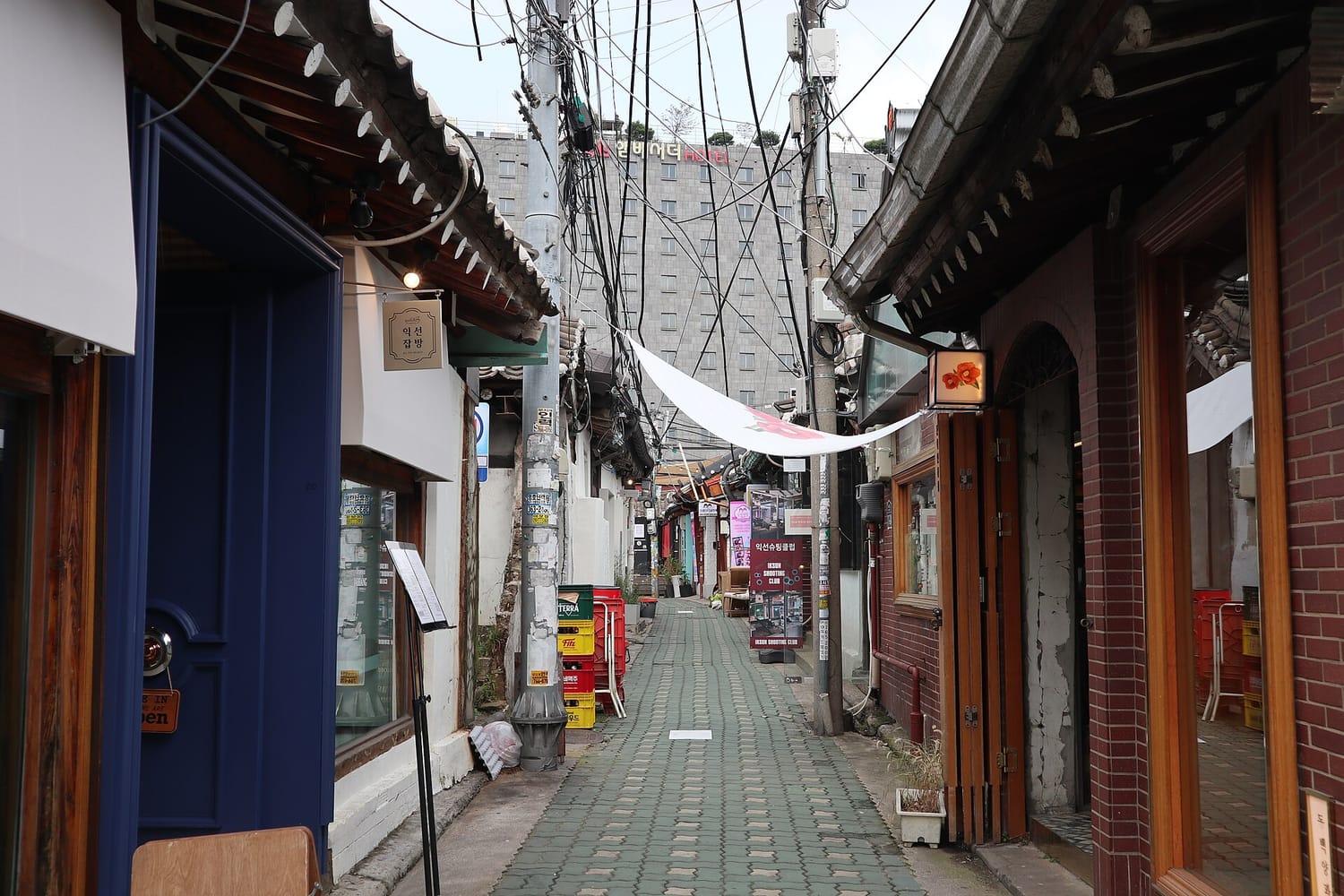
Ikseon-dong, Seoul: The Hanok Village a Developer Mass-Produced in the 1920s
Ikseon-dong is Seoul's oldest surviving hanok village, and it was not preserved from the Joseon era. It was built as a speculative housing development in the late 1920s, and it survived because redevelopment plans kept failing for nearly twenty years.
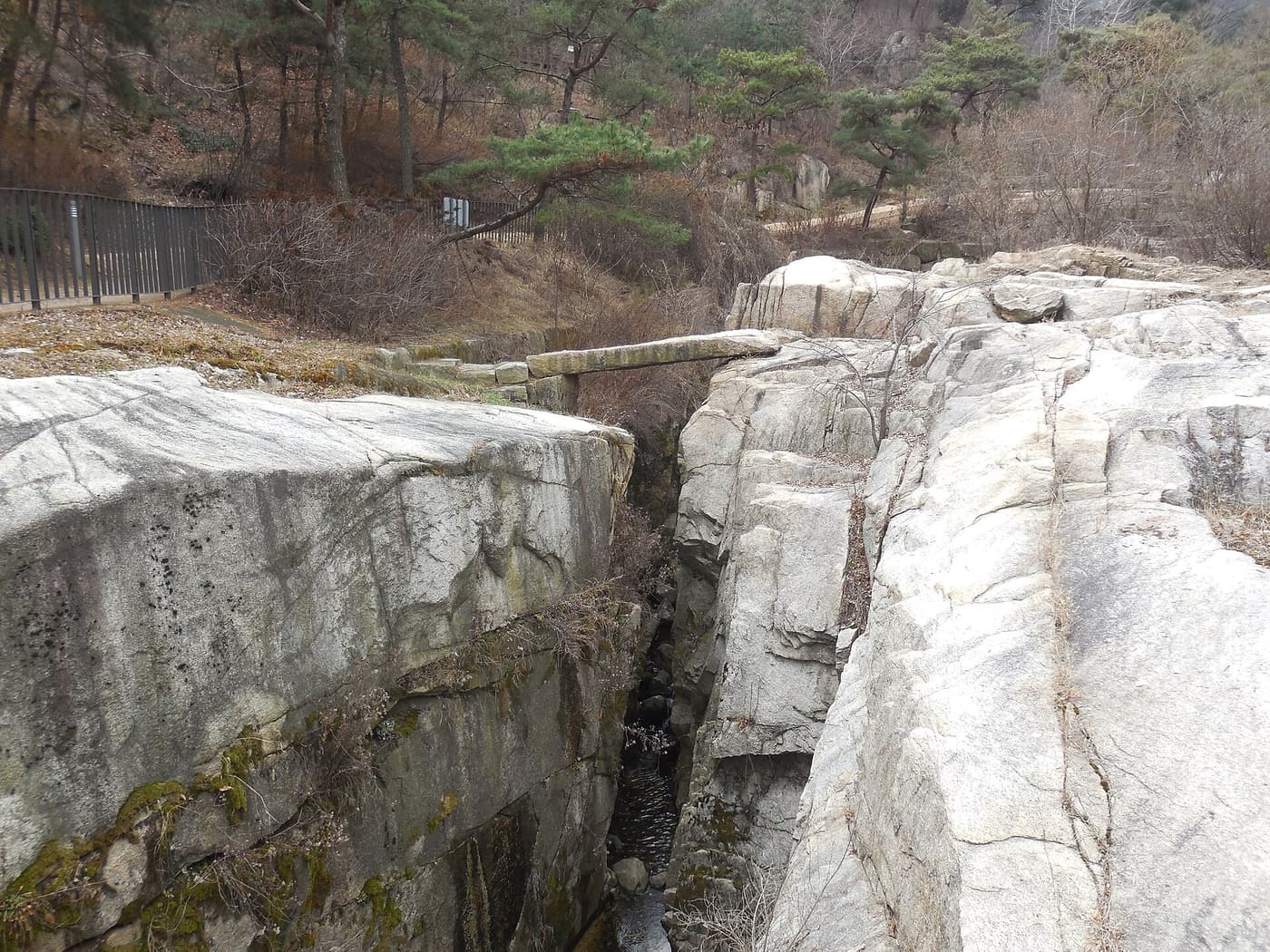
Seochon, Seoul: The Valley Restored From a 300-Year-Old Painting
Seoul demolished a 1971 apartment block in Seochon and rebuilt the valley underneath using an 18th-century painting as the reference. The stone bridge in the painting was still there. Plus the brass-coin lunchbox at Tongin Market, from ₩5,000.
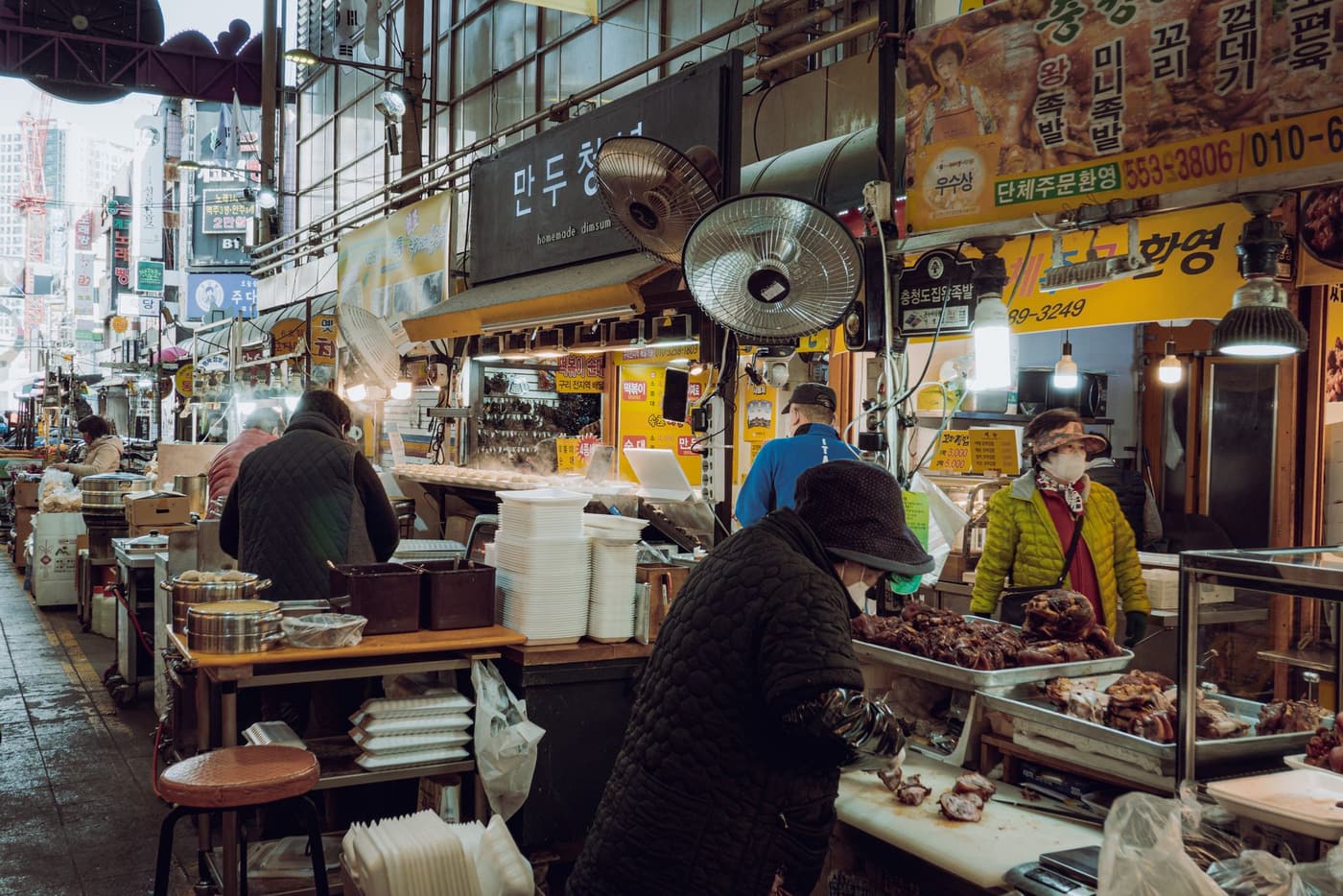
Mangwon-dong, Seoul: The Market Neighbourhood Locals Go To Instead of Hongdae
Mangwon-dong is two subway stops from Hongdae and works nothing like it. The name comes from a royal pavilion built in 1424, the market is a working grocery market rather than a tourist one, and the Mangnidan-gil nickname is borrowed from Itaewon.