Mullae Seoul Guide: The Steel District That Grew an Art Village
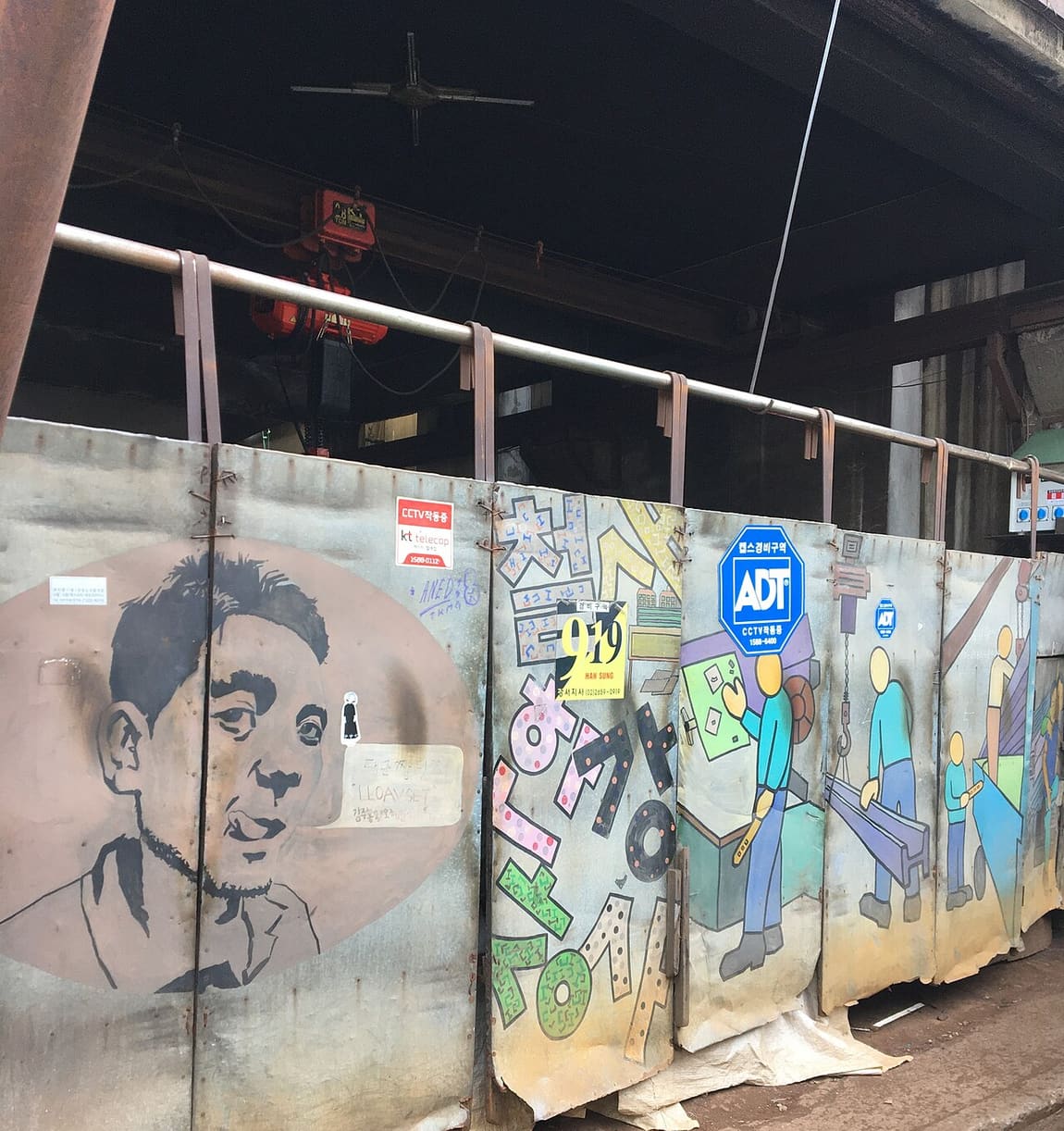
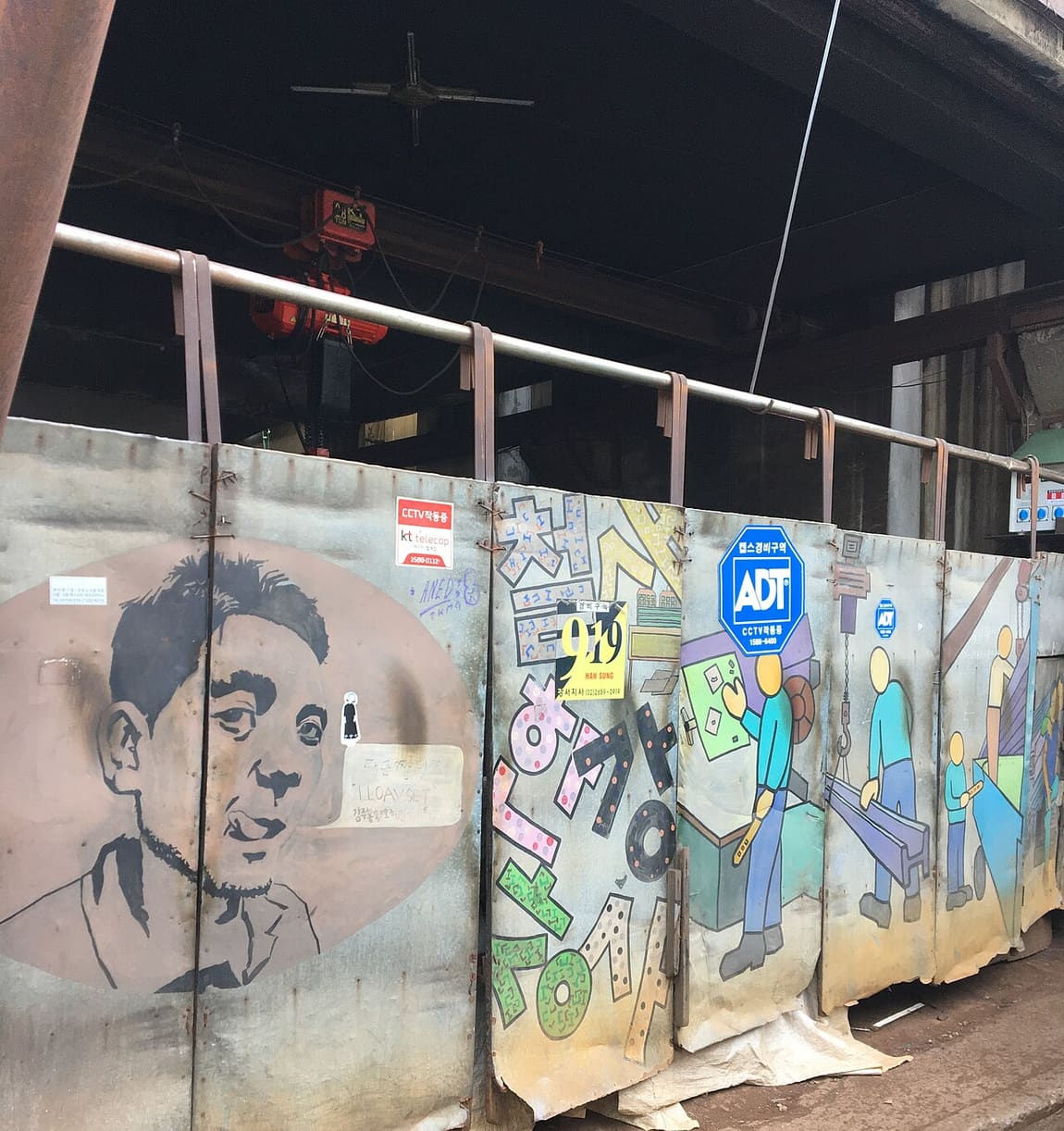
Look closely at what the mural shows: metalworkers cutting and carrying steel. Behind it, a real crane hoist and the working shop. Photo by Bellalee1205, CC BY-SA 4.0.
Mullae (문래동) is named after a spinning wheel.
Not steel, not art — 물레 (mulre), the machine used for spinning thread. The name comes from the textile industry that occupied this part of western Seoul after liberation.
Then in the late 1960s the steel workshops arrived, relocated from Cheonggyecheon, and by the 1980s this was one of Seoul's dense metalworking districts — plate steel moving on freight trucks all day.
Then artists arrived. Then the neighbourhood got a third identity.
And the name still refers to the first one, which nobody does here any more.
That layering is what makes Mullae worth an afternoon, and it is also why most visitors get it wrong: they come expecting an "art village" and find a working industrial district that happens to have galleries in it.
The Short Answer
| Detail | |
|---|---|
| Korean | 문래동 (Mullae-dong), Yeongdeungpo-gu |
| Also called | 문래창작촌 (Mullae Art Village) |
| Subway | Mullae Station (문래역), Line 2 |
| What it is | A working steel district with artist studios layered into it |
| Typical structure | Metal workshop on the ground floor, art studio upstairs |
| Best time | Weekday daytime to see the workshops running; evening for the bars |
| Not for | Anyone expecting a polished arts quarter |
Durable walking shoes — compare on AmazonAffiliate link. As an Amazon Associate, EpicKor earns from qualifying purchases at no extra cost to you.
The single most useful instruction: come on a weekday while the workshops are open. Mullae with the shutters up is an industrial neighbourhood with art in it. Mullae on a Sunday is a quiet street of closed shutters — which is prettier for photographs and tells you nothing.
How Steel Arrived, and How It Left
The sequence is unusually well documented, and each step explains the next.
Late 1960s — steel workshops relocate here from the Cheonggyecheon area. Through the 1980s the district thrives; contemporary accounts describe freight trucks loaded with steel plate arriving in numbers.
Late 1990s — cheap Chinese parts flood the market. Many small workshops cannot compete and close.
2000s — the closures leave vacant workshop space at very low rents, in a central-ish location, with high ceilings and industrial floors. Artists move in for exactly those reasons.
Around 2007 the character of the area visibly starts to change, and around 2010 the Seoul Foundation for Arts and Culture opens the Mullae Art Factory (문래예술공장) to support the artists working there. The name Mullae Art Village takes hold from roughly that point.
Note what did not happen. The steel industry was not evicted or converted. It shrank, and art grew into the gaps it left. That is why the two are still physically interleaved rather than one having replaced the other.
What "Ground Floor Steel, Upstairs Art" Actually Means
Korean coverage describes the arrangement in one line — 1층엔 철공소, 2층엔 예술 공방 — and it is literally true of many buildings here.
The practical consequences for a visitor:
- The ground floor is a workplace, not an exhibit. People are cutting and welding metal. Do not wander into an open shop front to look around
- The studios are upstairs and often unmarked. Same problem as Euljiro — you find them by looking up, and many are private working spaces rather than galleries
- Noise and sparks are normal. Angle grinders, hammering, the smell of cut metal. That is the neighbourhood functioning
- Photograph the street, not the workers. People are at their jobs
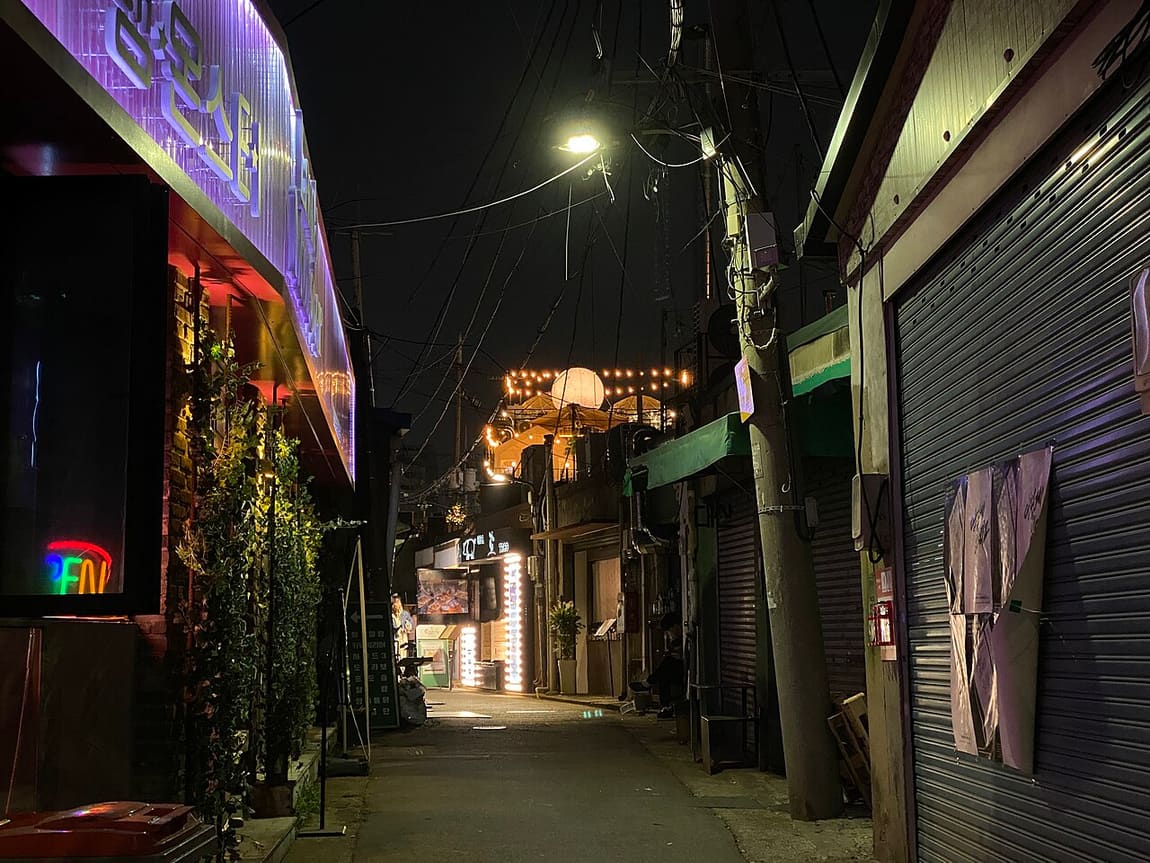
After the shutters come down, the bars light up next door. Photo by lazy fri13th, CC BY 2.0.
What to Actually Do
Walk the alleys slowly and look at the shutters. The murals are the most visible art in Mullae and they are painted directly onto working shops. Many depict metalwork itself — which is the neighbourhood commenting on itself, and it is genuinely good.
Go into the Mullae Art Factory if it is open. It is the institutional anchor of the arts side and the easiest legitimate entry point.
Find a cafe or bar in a converted unit. These exist in reasonable number and are the comfortable version of the district's texture: raw concrete, steel fittings, high ceilings.
Stay into the evening. Like Euljiro, Mullae changes at closing time — workshops shut, and small bars beside them open.
Then compare it with Euljiro, because the two are the same phenomenon at different scales. EpicKor covers that one in the Euljiro guide.
You might like: Yeonnam-dong Seoul Guide: The Park Built on a Buried Railway
Why the Artists Came Here Specifically
It is worth being concrete about this, because "artists moved into a cheap area" is true of many places and explains nothing about why this one worked.
Vacant steel workshops are unusually good studios, and for physical reasons:
- High ceilings and roll-up doors. You can build something large and then get it out of the building — a genuine constraint for sculptors and installation artists that ordinary retail units fail
- Concrete floors that tolerate abuse. Welding, casting, dropping heavy material. Nobody worries about the floor
- Three-phase power already installed for machine tools, which is exactly what workshop-based practice needs
- Neighbours who are unbothered by noise, because they are making more of it than you are
- And the suppliers are next door. If you work in metal, being surrounded by steel merchants, cutters and finishers is not a compromise. It is the best possible address
That last point is the one that separates Mullae from a generic cheap-rent story. Artists did not merely tolerate the industry — a lot of them needed it. A sculptor in Mullae can buy stock, have it cut, and carry it back on foot.
The practical consequence for a visitor: when you see a workshop that looks ambiguous — is this a fabricator or an artist? — the honest answer is often that the distinction does not hold here.
Walking a working district: As an Amazon Associate, EpicKor may earn from qualifying purchases. These are working streets with metal offcuts and uneven surfaces — compare durable walking shoes rather than anything you would mind scuffing.
Compare on AmazonGetting the Most Out of an Afternoon
A workable shape, since Mullae rewards wandering more than a checklist.
Start at Mullae Station and walk in without a destination. The district is compact and the interest is distributed rather than concentrated at any one address.
Follow the sound. Working alleys announce themselves. If a street is silent on a weekday, you have wandered into the residential or redeveloped edge and should turn back toward the noise.
Look up at every corner. Ground floors are workshops; the studios, cafes and bars are above them, and the signage is small or absent.
Give it two hours, not a whole day. Mullae is dense and small. Two hours covers it properly, and it pairs naturally with something else in western Seoul afterwards.
Bring shoes you do not mind scuffing. These are working streets with metal offcuts, oil and uneven surfaces. It is not a tidied-up arts precinct and that is the point.
How It Compares
| Neighbourhood | Korean | The mix | Go for |
|---|---|---|---|
| Mullae | 문래동 | Working steel + artist studios | Industrial texture, murals, small bars |
| Euljiro | 을지로 | Working print/tools + bars | Nightlife in a working district |
| Seongsu | 성수 | Former factories, now cafes and stores | Design and shopping, conversion complete |
| Yeonnam | 연남동 | Low-rise residential + park | Daytime walking and cafes |
Mullae is the least converted of the four, and that is the reason to go. Seongsu finished its transformation; the factories are shops now. Mullae is mid-process, and the industry is still winning on the ground floor.
If you only have time for one: Seongsu if you want to shop, Euljiro if you want a night out, Mullae if you want to see what those places looked like before they were finished.
When to Skip It
- Skip weekends and holidays if you want the real thing. Closed shutters make for pretty photos and an empty experience
- Skip it if you want galleries with opening hours. Many studios are working spaces, not exhibition spaces, and are not open to the public
- Skip it in the rain. This is an outdoor walking neighbourhood with limited indoor refuge
- Skip it if you dislike industrial noise. Grinders and hammering are constant on a working day
- Do not build a visit around a specific studio. Artist tenancies here turn over, and the district is the attraction
Korean art and design: If Mullae is the part of Seoul you want more of, compare books on Korean contemporary art and design — the studios here are the working end of that scene.
Compare on AmazonThe Redevelopment Question
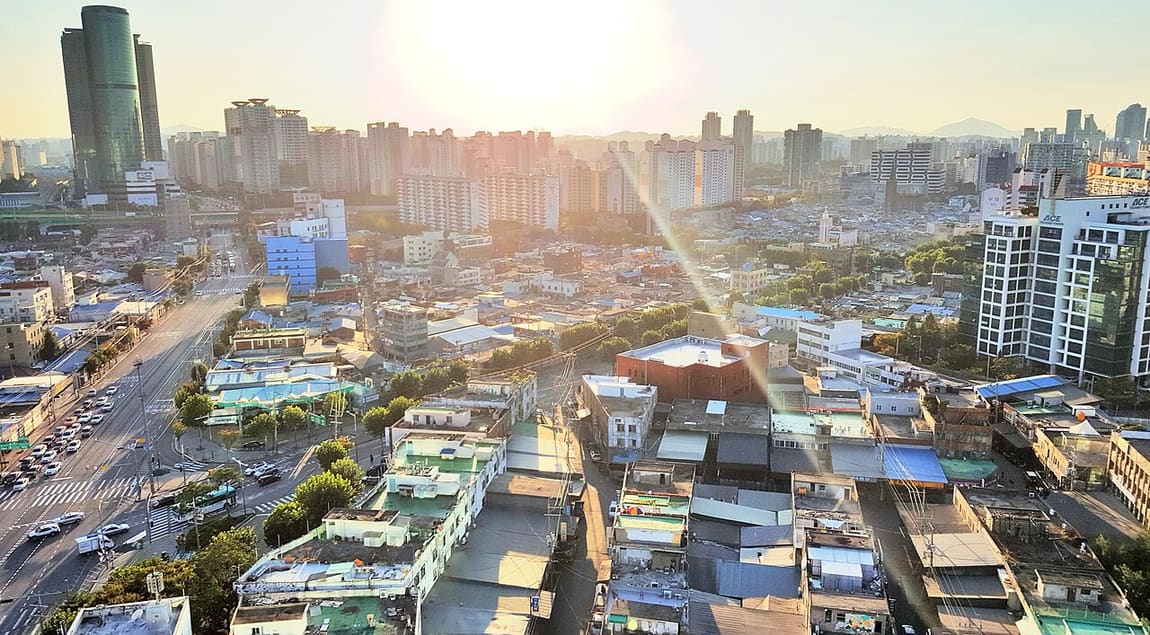
The low-rise district with towers immediately behind it. Photo by Minseong Kim, CC BY-SA 4.0.
Worth knowing, and the photograph says it faster than a paragraph can.
Mullae is low-rise industrial land in a city with extreme pressure on central land. Behind the workshop roofs stand apartment towers and offices, and the boundary between them is not fixed.
The same tension as Euljiro: the industrial texture that makes the neighbourhood interesting is old, low, and sitting somewhere valuable. Steel workshops on ground-floor rents are not what maximises the value of that land.
Practical implication: go for the district as it is now, and hold specific addresses loosely. What is here this year may not be here in five.
FAQ About Mullae
Q: What does Mullae mean?
A: The name comes from 물레, a spinning wheel used in textile production — the industry that occupied the area after liberation. It has nothing to do with steel or art, both of which arrived later.
Q: Is Mullae an art village or an industrial area?
A: Both, simultaneously. Steel workshops moved here from Cheonggyecheon in the late 1960s and many are still operating. Artists moved into vacant units from the 2000s after cheap Chinese imports forced closures. A common arrangement is a metal workshop on the ground floor and an art studio above it.
Q: When did it become an art village?
A: Gradually through the 2000s, with the character of the area visibly changing around 2007, and the name taking hold around 2010 when the Seoul Foundation for Arts and Culture opened the Mullae Art Factory.
Q: When should I visit?
A: A weekday during working hours, so the workshops are open and the district is functioning. Weekends give you closed shutters and a much quieter, emptier version. Stay into the evening if you want the bars.
Q: How do I get there?
A: Mullae Station on Line 2, in Yeongdeungpo-gu, western Seoul.
Q: How is it different from Seongsu?
A: Seongsu's conversion is finished — the old factories are cafes and stores now. Mullae's is not; the steel industry is still operating on the ground floor with art layered above and around it. Mullae is what Seongsu looked like partway through.
The One Thing to Remember
The art did not replace the steel. It was painted onto it.
That is literally true of the shutters, and structurally true of the neighbourhood. Mullae is a working metalworking district that lost enough business in the 1990s to leave room for artists, and both are still there.
Come on a weekday, listen for the grinders, and read the murals — a lot of them are pictures of the men working behind them.
Sources and Further Reading
- Korean coverage of Mullae's name deriving from 물레, the spinning wheel of the area's post-liberation textile industry
- Korean documentation of steel workshops relocating from the Cheonggyecheon area in the late 1960s and the district's prosperity through the 1980s
- Korean reporting on late-1990s closures driven by cheap imported parts, artists occupying vacant workshops from the 2000s at very low rents, the visible change from around 2007, and the Seoul Foundation for Arts and Culture opening the Mullae Art Factory around 2010
- Korean descriptions of the characteristic arrangement of metal workshops on the ground floor with art studios above
- Image sources and licensing are documented in this post's
image-sources.md
Artist tenancies and small businesses here change frequently. Confirm anything specific before travelling for it.
Mullae is one of the neighbourhoods compared in EpicKor's Seoul neighbourhood guide — character, nearest station, whether it is worth staying in, and how long each actually takes.
Next in the series: Seongsu & Hannam and Yeonnam-dong.
You Might Also Like
Haebangchon Seoul Guide: The Village Named After Liberation
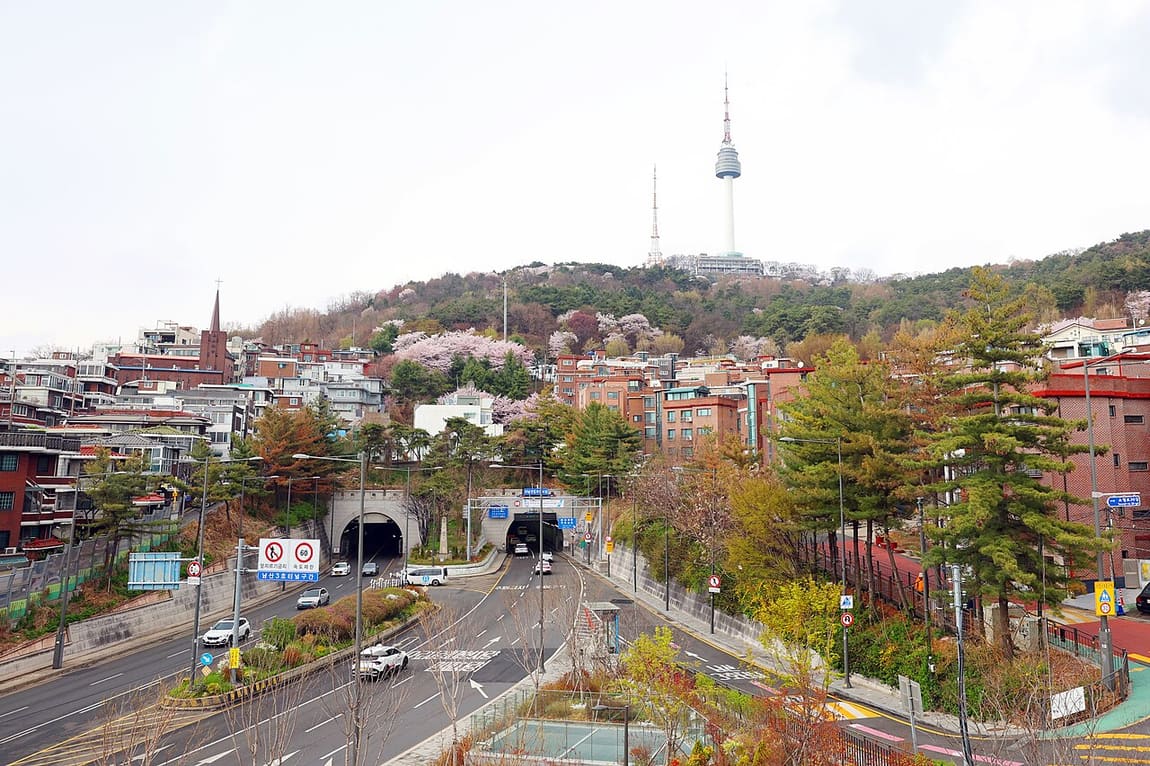
Haebangchon means Liberation Village — built by refugees on Namsan's slope after 1945. Its famous 108 steps are the surviving approach path to a Japanese colonial shrine, and its market opened in 1953. Here is how to visit and what you are walking on.
Yeonnam-dong Seoul Guide: The Park Built on a Buried Railway
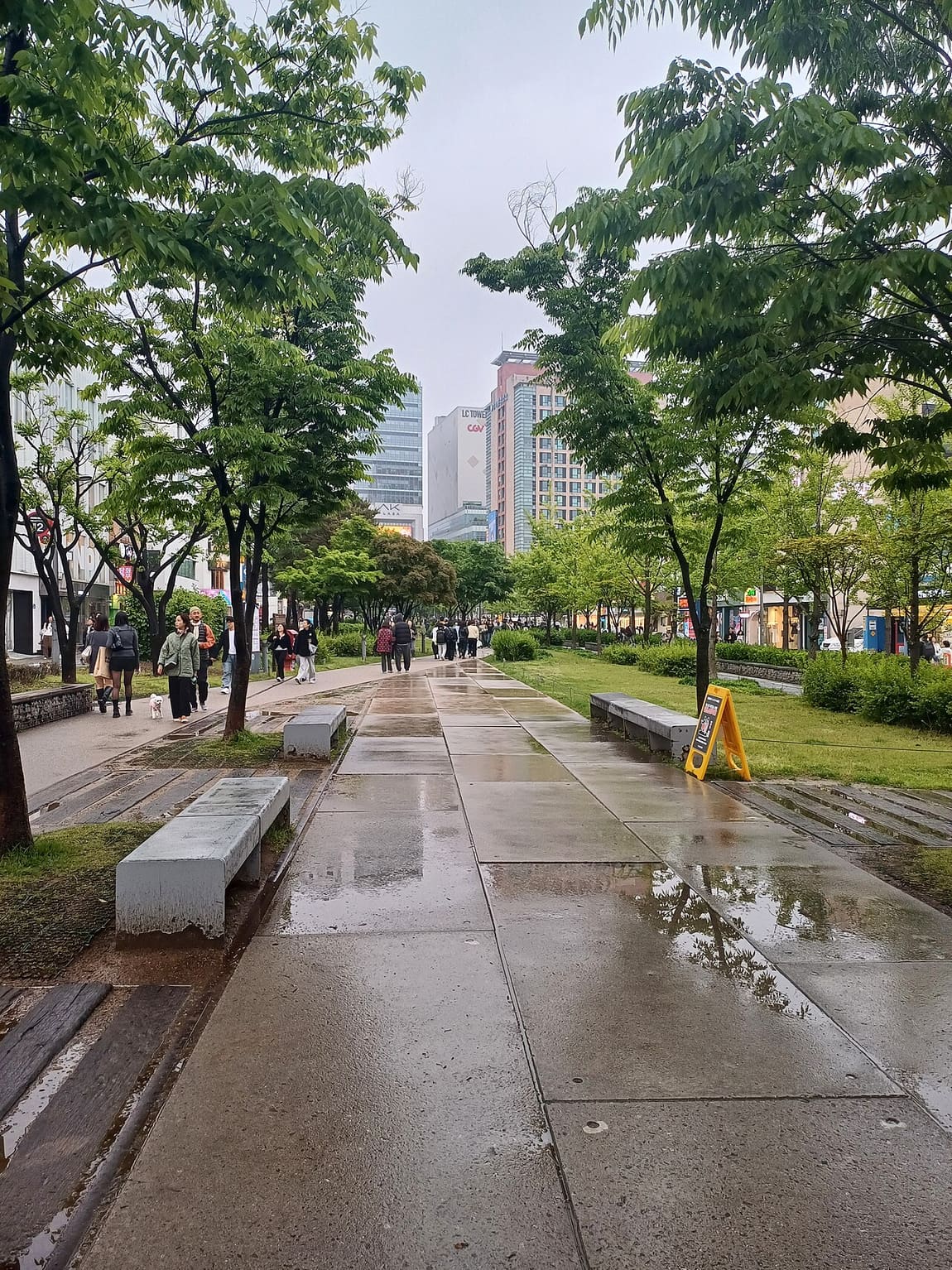
Yeonnam-dong's park is a railway. When Seoul buried the Yongsan line, the abandoned surface track became a 6km linear park, and the quiet Chinese-community neighbourhood beside it turned into the city's most walkable district. Here is how to visit.
Euljiro Seoul Guide: Why the Machine Shops Become Bars at Night
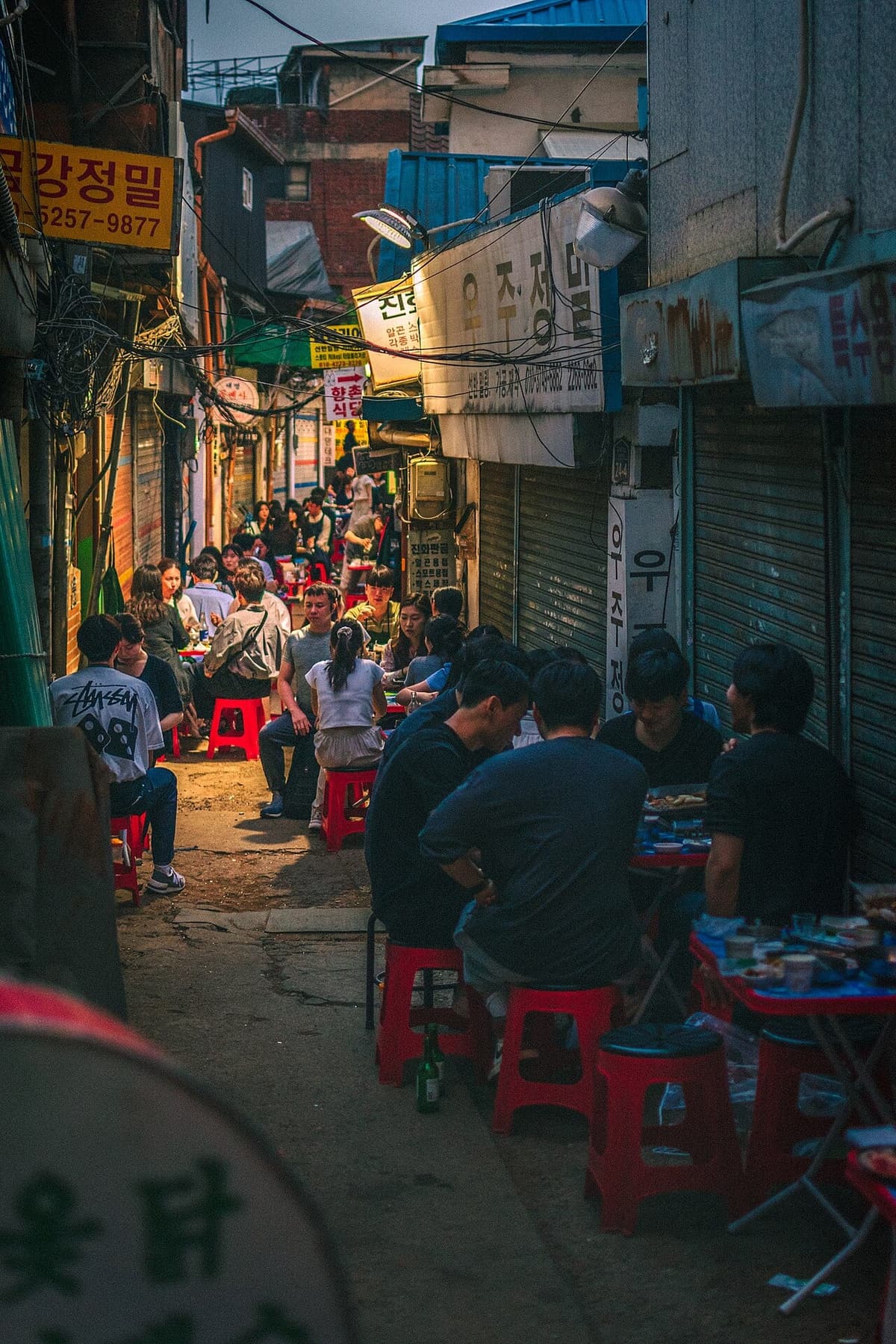
Euljiro is a working district of print shops, tool sellers and metal workshops that turns into Seoul's most atmospheric drinking alley after 6pm. The bars are there because print workers finished night shifts here. Here is how to visit it properly.