Galaxy Robot Park Seoul: Is Korea's New Robot K-pop Theme Park Worth It?
A theme park where humanoid robots perform K-pop choreography and box each other sounds like a concept trailer, not a real place you can book a ticket to this summer. But Galaxy Robot Park in Gangdong-gu, Seoul, sold out its entire slate of July weekend shows before its official grand opening even happened — 8,000 advance reservations for something that didn't exist a year ago.
Here's what's actually there, who's really behind it, and what to know before you try to book a visit.
What's Actually At the Park
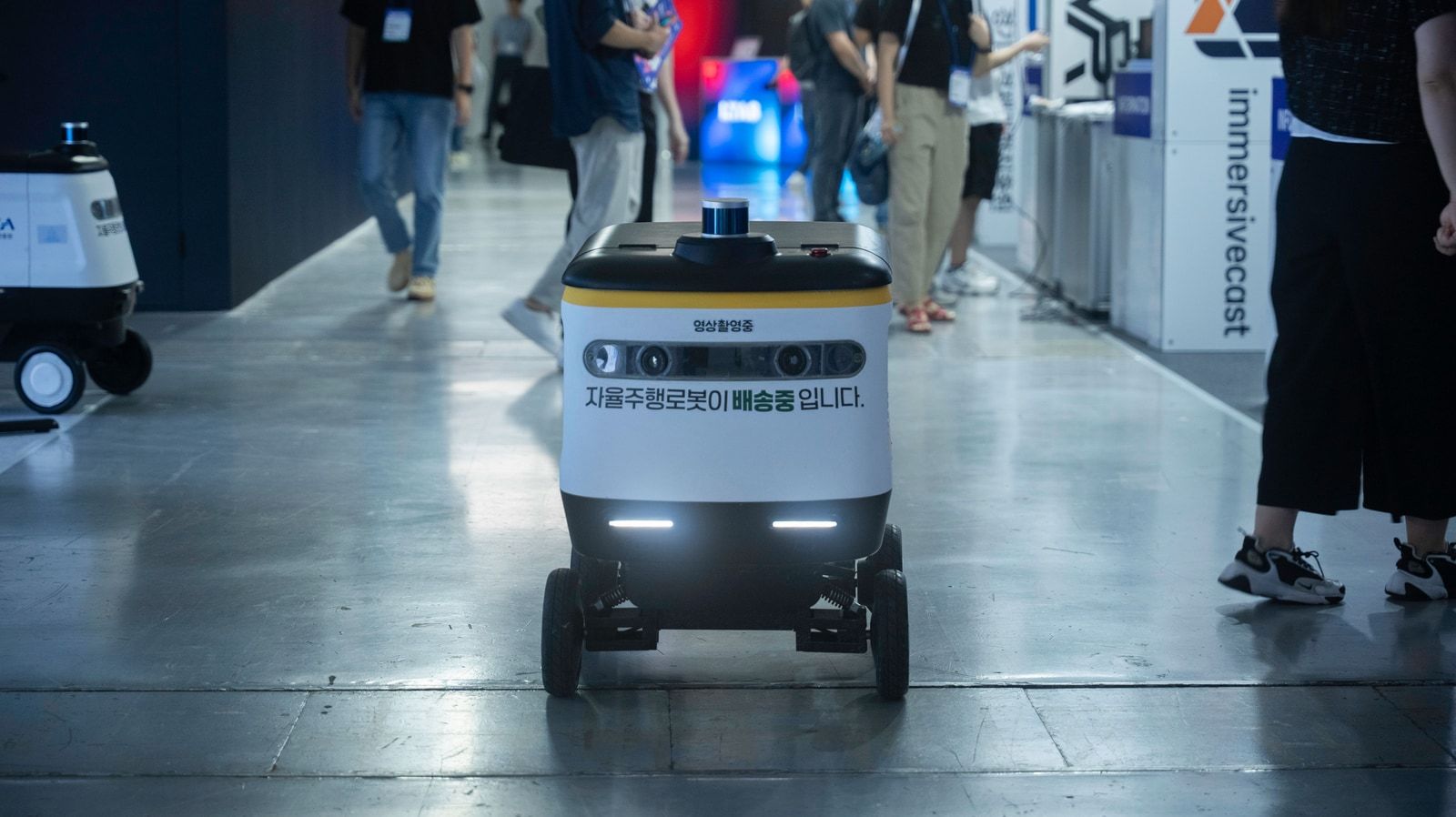
Galaxy Robot Park sits on a roughly 16,500-square-meter site in Godeok-dong, Gangdong-gu. The centerpiece is a "Robot Arena" where humanoid robots perform synchronized K-pop choreography, plus a robot boxing setup where a visitor's own movements are mirrored in real time by a fighting robot. There's also a robotic-arm portrait artist, robot valets at the entrance, robotic dogs that interact with visitors in the outdoor areas, a "hugging robot" designed to simulate a physical embrace, and a themed set piece featuring a robot posed as a monk at a mock temple. The mix of indoor arena space and outdoor robot-dog areas means this isn't a fully enclosed, weather-proof visit — worth checking the forecast before you go.
The park's own CEO has described a typical visit as running three to four hours across the various shows and activities, with a stated post-launch target of at least four performances a day.
Phone gimbals and stabilizers — compare on AmazonAffiliate link. As an Amazon Associate, EpicKor earns from qualifying purchases at no extra cost to you.
Part of a Bigger Robot-Entertainment Push
Galaxy Robot Park isn't Galaxy Corporation's only bet on robots as entertainment. In late May 2026, the company staged "MACH 33," described as the world's first robot fashion show, in Seoul — humanoid robots walked a runway alongside real human models, with reports suggesting a dedicated robot fashion label could follow. It's a separate event from the park itself, but it signals that Galaxy Corporation is treating robot performance as a genuine new entertainment category to build out, not a single one-off attraction. If the park's early reservation numbers hold up, expect more of this kind of programming rather than a single static exhibit that never changes.
Who's Actually Behind It
This isn't a government project or a chaebol initiative, even though it launched in the middle of a very real, very large Korean government and corporate push into humanoid robotics. Galaxy Robot Park is built and run by Galaxy Corporation, a private South Korean entertainment-technology company — best known as the management agency for K-pop star G-Dragon, and also the production company behind Netflix's Physical: 100. Founded in 2019, Galaxy Corporation reached unicorn status in 2026 at roughly a $680 million valuation, with reported annual revenue of about 298.8 billion won, a roughly sevenfold jump year over year. The company is run by 36-year-old CEO Choi Yong-ho, described in Korean press as the youngest head of a Korean unicorn startup.
Galaxy Corporation itself has called the park the "world's first physical AI theme park" — that's the company's own marketing language, not an independently verified claim, so it's worth treating as a bold pitch rather than a settled fact. Korea does have other, older robot-focused attractions (Robot Land in Masan/Changwon, the Seoul Robot & AI Museum in Bucheon), though those are closer to science-museum exhibits than a live-performance theme park, which is the actual basis for Galaxy Corporation's "first" claim.
The Set Design Is Doing a Lot of Work
Beyond the headline K-pop and boxing shows, a lot of what's been reported about Galaxy Robot Park reads as deliberately staged, small-scale scenes rather than a wall of screens or a generic exhibit hall. A robot posed as a monk sits at a mock Seoul-temple set piece; robotic dogs roam outdoor areas interacting directly with visitors; a "hugging robot" is built specifically to simulate a warm, physical embrace rather than just perform a task. It reads like a company thinking carefully about individual, photographable moments rather than a single big show — closer to a series of themed vignettes than one central attraction with everything else as filler.
Visiting: What's Confirmed and What Isn't
Here's the honest state of things as of late July 2026: the park soft-opened on May 5, 2026 (Children's Day), and ran an extended pre-open phase through the summer while selling advance tickets for weekend shows — all of which sold out. The official grand opening has shifted to September 2026, not August as some earlier coverage suggested, so treat the park as still in a ramp-up phase rather than fully operational with a stable public schedule.
Ticket pricing has not been publicly disclosed anywhere in English or Korean coverage as of this writing, and reservations appear to go through Interpark rather than walk-in admission — during the pre-open phase, at least, this has been a book-ahead-only experience, not a spontaneous drop-in. The nearest subway access is Godeok Station on Line 5. Given prices and exact hours are still unconfirmed, check Interpark directly before planning a visit around a specific date.
Planning to film the robot performances? As an Amazon Associate, EpicKor may earn from qualifying purchases. Compare phone gimbals and stabilizers — useful for steady video of a live K-pop robot show without the shake of handheld filming.
The Real Reception So Far
The commercial signal is genuinely strong: sold-out July weekend shows and 8,000 advance reservations during a pre-open phase is a real, unusual demand signal for a brand-new attraction. But the coverage isn't purely promotional. At least one report describes a malfunction that pulled a robot mid-performance during an early show, and industry analysts quoted in the same coverage raised a fair, ongoing question: robots can perform tirelessly and precisely, but they lack the "vulnerability and authenticity" that makes a live human performance land emotionally — leaving open whether this becomes a lasting new entertainment category or a novelty that fades once the initial curiosity wears off. Independent visitor reviews are still thin; most existing coverage so far is company statements and wire-syndicated launch stories rather than firsthand accounts, so it's genuinely too early to say with confidence how a typical visit actually feels.
Why This Exists Right Now: Korea's Robotics Moment
Galaxy Robot Park is landing in the middle of an enormous, well-documented wave of Korean investment in humanoid robotics — it's just not part of any of it directly. In February 2026, the Korean government launched a national Humanoid Strategy Council, backing a homegrown AI humanoid platform with over 50 billion won in funding through 2030 and a separate 700-billion-won manufacturing push targeting 1,000 humanoids a year in production by 2029. A 40-plus-company K-Humanoid Alliance formed in 2025 brings together Rainbow Robotics, Doosan Robotics, HD Hyundai Robotics, LG Electronics, and major university research teams. Separately, Hyundai has held a majority stake in Boston Dynamics since 2021 and moved this year to buy out SoftBank's remaining share entirely, alongside a multi-billion-dollar US robotics manufacturing investment. Samsung is the largest shareholder in Rainbow Robotics, Korea's own bipedal-robot pioneer.
Galaxy Corporation isn't listed as a member of the K-Humanoid Alliance, and Galaxy Robot Park isn't a government or chaebol-backed project — it's a private entertainment company's bet that Korea's broader robotics momentum, combined with K-pop's global reach, adds up to a viable standalone attraction. Whether that bet pays off long-term is genuinely still an open question this early into the park's life.
Building out a Seoul itinerary? As an Amazon Associate, EpicKor may earn from qualifying purchases. Bring a 10,000mAh power bank — a few hours of robot-show video will drain a phone fast, and there's no confirmed charging setup on-site.
See a 10,000mAh power bank on AmazonIs It Actually Worth Visiting?
If you're a K-pop fan or genuinely curious about where humanoid-robot entertainment is headed, the novelty alone is a real draw, and the sold-out reservations suggest plenty of people agree. If you're looking for a polished, fully mature theme-park experience with confirmed pricing and a stable schedule, it's worth waiting until after the September 2026 grand opening settles in, since the park is still explicitly in a pre-open ramp-up phase as of this writing. Either way, book through Interpark rather than expecting to walk in, and don't build a tight Seoul itinerary around a same-day visit until admission details are fully public.
If what you actually want is a Seoul venue where the booking problem is solved and the crowd is real, EpicKor's LoL Park guide covers Korea's esports arena — 450 seats, sellouts in under a minute, and exactly how to get one.
Frequently Asked Questions
Q: What is Galaxy Robot Park? A humanoid-robot entertainment park in Gangdong-gu, Seoul, built by Galaxy Corporation (G-Dragon's management agency), featuring K-pop-dancing robots, robot boxing, and other robot-performance attractions. It soft-opened May 5, 2026, with an official grand opening planned for September 2026.
Q: Is Galaxy Robot Park government-funded? No. It's a private venture by Galaxy Corporation, not part of Korea's government Humanoid Strategy Council or the K-Humanoid Alliance, even though it's launching alongside that broader national robotics push.
Q: How much does it cost to visit Galaxy Robot Park? Ticket pricing has not been publicly disclosed as of this writing. Reservations appear to go through Interpark rather than walk-in admission — check directly before planning a visit.
Q: How do I get to Galaxy Robot Park? It's located in Godeok-dong, Gangdong-gu, Seoul, near Godeok Station on Subway Line 5.
Q: Is Galaxy Robot Park actually the world's first robot theme park? That's Galaxy Corporation's own marketing description. Korea has other robot-themed attractions like Robot Land and the Seoul Robot & AI Museum, though those are closer to exhibition-style museums than a live robot-performance park, which is the basis for Galaxy Corporation's claim.
Q: What company runs Galaxy Robot Park? Galaxy Corporation, a private South Korean entertainment-technology company best known as G-Dragon's management agency and the production company behind Netflix's Physical: 100. It reached unicorn status in 2026 under CEO Choi Yong-ho.
Q: Is Galaxy Robot Park suitable for kids? Coverage frames it as explicitly family-oriented — it soft-opened on Children's Day and included a CSR gesture inviting children from single-parent and other underserved families. That said, with pricing and full operational details still unconfirmed, check current information before planning a family visit specifically around it.
Sources and Further Reading
You Might Also Like
Do Koreans Speak English? Ask Someone Under 35 — What Actually Happens on a Seoul Street
Yes, if you ask the right person. Stop a Korean in their twenties or thirties on a Seoul street and you will almost always get an answer in English. The forum answer that says otherwise is twenty years old. Who to ask, how to ask, where English is built in.
Seoul Deleted Its Women-Only Parking: What Korean Gender Policy Actually Is in 2026
Most English writing on Korean gender policy describes rules that were removed, renamed, or never existed. Seoul scrapped women-only parking in 2023, the ministry was renamed in 2025, and the famous five-point exam bonus went to men and ended in 1999.

Gwangjang Market's Second Floor: Seoul's Vintage Arcade, and the One Day It's Shut
Everyone knows Gwangjang for the food alley that never closes. Above it is a vintage arcade signed 수입구제 where most items run under ₩20,000 — and it shuts every Sunday, which is exactly when visitors turn up.