Korea's Automated Convenience Culture: Ramen Machines to Robots
Korea's automated convenience culture is not only about futuristic robots. It is about removing small frictions from daily life: ordering without waiting, paying without explaining, cooking ramyeon beside the Han River, using kiosks in a crowded cafe, entering a 24-hour unmanned store, or watching a robot arm make coffee behind glass. These systems can feel charming, efficient, confusing, or lonely depending on who uses them.
The Korean word untact became especially visible during the pandemic, but the deeper habit is older: Korea likes fast, standardized, low-friction service. The same culture that made delivery apps, transit cards, convenience stores, self-service kiosks, and quick cafe turnover feel normal also makes automation feel less strange.
For travelers, automated Korea is both fun and practical. It can help you eat, shop, wash, order, and move faster. It can also create problems if the kiosk has no English, your foreign card fails, the machine expects a Korean phone number, or an unmanned store has limited staff support. This guide explains the useful parts and the friction points.
Quick Answer: Why Is Korea So Automated?
Korea is highly automated because dense cities, high labor costs, fast consumer expectations, digital payments, convenience-store culture, and comfort with kiosks all support self-service systems. Automation solves a practical problem: reduce waiting, standardize service, operate longer hours, and let customers complete small tasks without a conversation.
The best examples for visitors are Hangang ramyeon machines, cafe kiosks, robot cafes, unmanned convenience or snack shops, self-photo booths, self-laundry, parking systems, and automated car washes. Some are genuinely efficient. Some are more novelty than necessity. The common thread is that the machine handles a repeatable action.
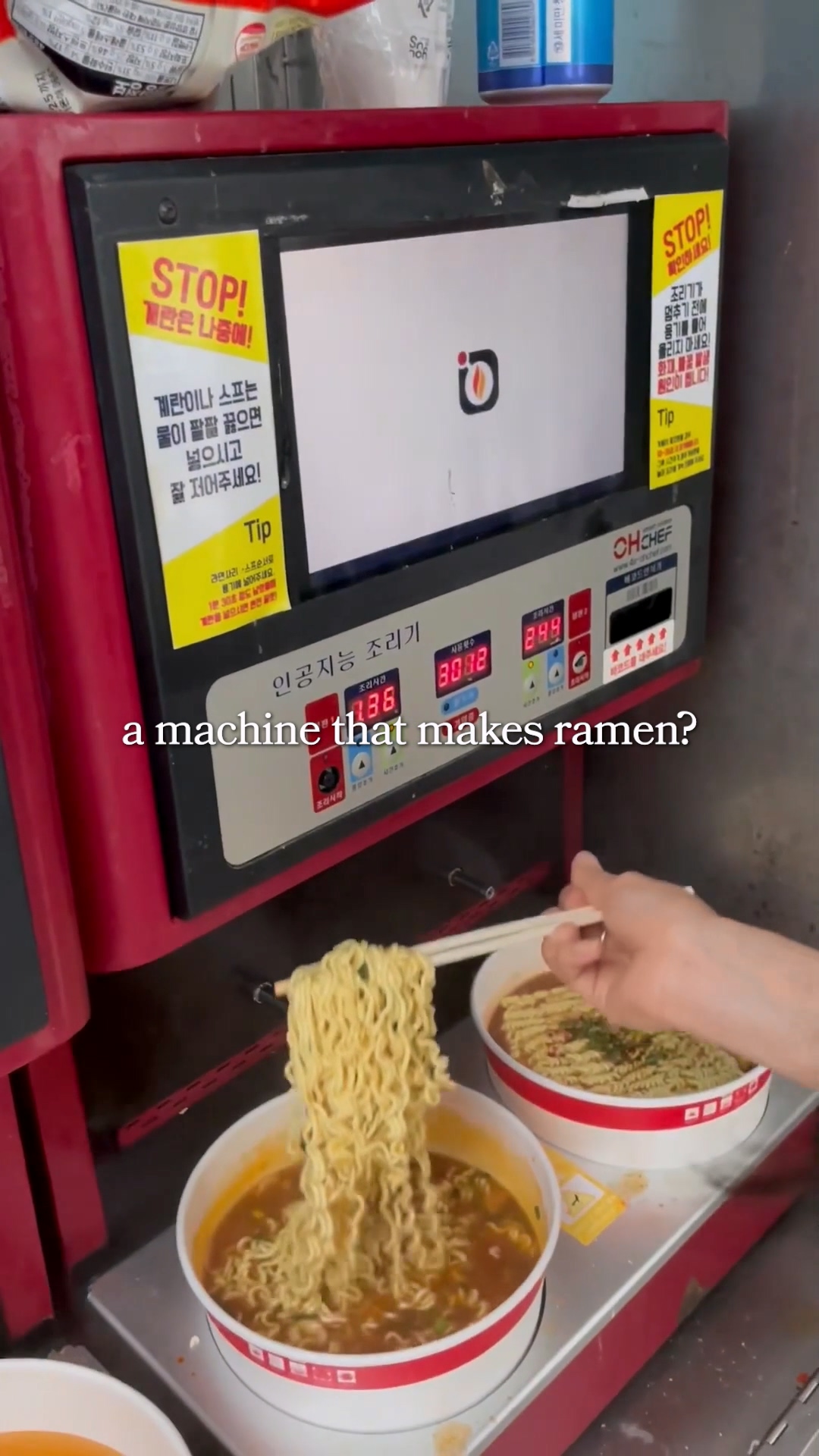
Korea's official tourism site describes Hangang riverside convenience-store ramyeon as a visitor-friendly experience where you buy a packet, place it in a cooking station, and let the machine prepare it. Seoul and national food-safety authorities also monitor unmanned food stores because automation still needs hygiene, freshness, and accountability.
For the non-robot version of the same habit, EpicKor's unique things in Korea guide covers elevator cancel buttons, restaurant call bells, heated bus-stop seats, and lost-item systems as everyday micro-conveniences.
| Automation Type | Where Visitors See It | Why Koreans Use It | Visitor Friction |
|---|---|---|---|
| Hangang ramyeon machine | Han River convenience stores | Cheap food, view, easy picnic ritual | Busy lines, trash rules, store hours |
| Kiosks | Cafes, fast food, cinemas, museums | Speed and order accuracy | Language, card, phone-number fields |
| Robot cafes | Office areas, stations, universities, malls | Novelty plus labor-saving service | Locations change; menu support may be limited |
| Unmanned stores | Snack, ice cream, stationery, laundry | 24-hour access and low staffing | No staff if payment or product issues happen |
Korean ramen cooking pot — compare on AmazonAffiliate link. As an Amazon Associate, EpicKor earns from qualifying purchases at no extra cost to you.
Hangang Ramyeon Machines: The Perfect Tourist Automation
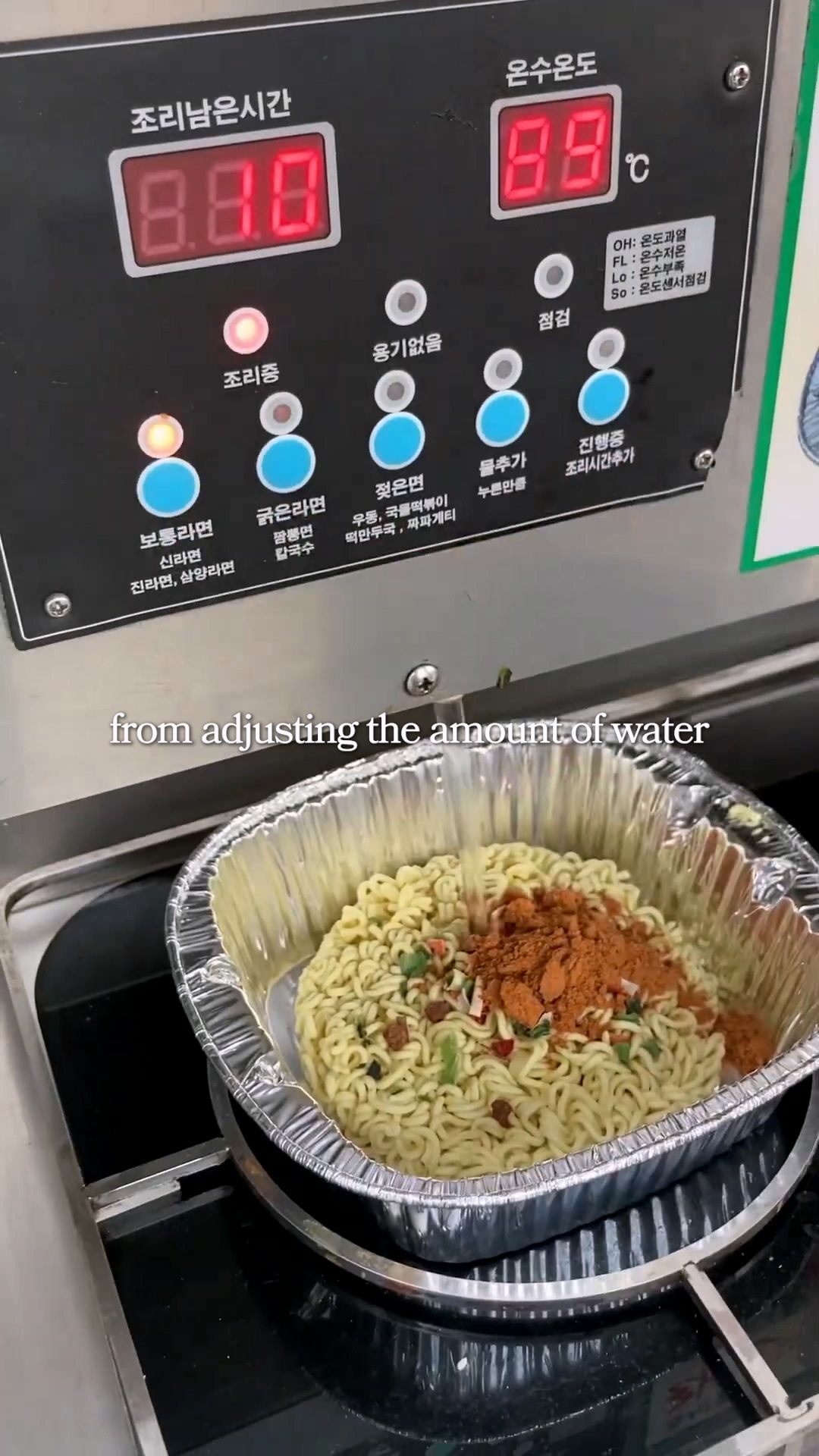
If one Korean machine deserves tourist fame, it is the Hangang ramyeon cooker. The ritual is simple: buy a packet of ramyeon and a special foil container at a riverside convenience store, place the noodles and seasoning inside, use the cooking station, and wait while the machine adds water and boils the noodles. Then you eat with the river view.
Where the machines are, and what it costs
| Detail | |
|---|---|
| Korean name | 한강라면 (Hangang ramyeon) |
| Where | Convenience stores inside Hangang parks — Yeouido and Banpo are the best-known |
| Price | around ₩4,800 as of January 2024, up from ₩2,500 in the early years. Expect higher now |
| What you pay for | The noodles plus use of the cooker — you are not buying a bowl from a kitchen |
| Time | about 3 minutes 30 seconds |
The history is more specific than most guides say. The cookers appeared in a Yeouido Hangang Park convenience store in the late 2000s, and the habit became a nationwide phenomenon in 2011, when 7-Eleven — which then operated 13 stores across the Hangang parks — began installing them across its riverside branches. One chain rolling out one appliance created a national food ritual.
Why it tastes different from the same packet at home
This is the part nobody explains, and it is the actual answer to why people say Hangang ramyeon hits differently.
The machine does not follow the packet. It dispenses roughly 400–450ml of water — about 100ml less than the instructions call for — and runs for only about three and a half minutes, shorter than a standard home cook.
Less water and less time means a more concentrated broth and firmer noodles. It is not nostalgia or the river view doing the work; the appliance is making a measurably different bowl. If you want to reproduce it at home, use less water than the bag says and pull the noodles early — the same trick Koreans already apply to instant noodles generally.
The honest counter-recommendation: ₩4,800 for a packet of instant noodles is several times what the same packet costs at a normal convenience store, and roughly what a modest restaurant meal costs. You are paying for the setting, not the food. Do it once for the river and the ritual. If you want to eat cheaply by the Hangang, bring your own from a mart and skip the cooker.
VISITKOREA frames this as a must-try soul-food experience because it combines cheap food, Seoul scenery, convenience stores, and local leisure culture. It is not fine dining. That is the point. The machine makes a simple food feel like a place-based memory.
For visitors, the practical tips matter. Go at off-peak times if you hate lines. Clean up properly. Follow recycling rules. Add an egg only if the store sells it and the machine setup allows it. Do not block the cooking station while taking photos. If the weather is windy or rainy, the experience becomes less romantic very quickly.
Recreate the easy version at home: As an Amazon Associate, EpicKor may earn from qualifying purchases. If Hangang ramyeon becomes your favorite Korea memory, compare a Korean ramen cooking pot for a simple at-home version without pretending it replaces the river view.
See Korean ramen cooking pot on AmazonKiosks: Helpful Until They Are Not
Kiosks are everywhere in Korea: cafes, fast-food chains, cinemas, photo booths, bakeries, museums, bus terminals, parking lots, and some restaurants. They are popular because they reduce queues and standardize options. They also let people order without small talk, which many customers appreciate.
The friction starts when the interface assumes local knowledge. Some kiosks ask for a Korean phone number for pickup alerts, loyalty points, or waiting lists. Some accept only local payment methods. Some have English menus but not English error messages. Some use food options that are obvious to locals and confusing to visitors.
The best traveler strategy is to pause before tapping randomly. Look for the language button, choose card payment, skip membership, photograph or translate the final confirmation if needed, and ask staff if the machine traps you. If the line behind you is growing, step aside and reset. Losing thirty seconds is better than ordering four iced Americanos by accident.
Robot Cafes and the Appeal of Watching the Machine
Robot cafes are a more theatrical version of automation. A kiosk takes the order, a robot arm prepares the drink, and the customer watches a precise routine through glass. The appeal is partly labor-saving and partly performance. It is not only "coffee." It is the small spectacle of a machine doing a human service task.
For travelers, robot cafes are fun when you treat them as a quick stop rather than a guaranteed destination. Locations can change, and not every branch is in a tourist-friendly area. Search Naver Map or KakaoMap shortly before going, check recent reviews, and have a backup cafe nearby.
The bigger trend is not that robots will replace every cafe. It is that Korea experiments quickly with service formats: kiosks, pickup shelves, app orders, unmanned booths, delivery robots, table-order tablets, and hybrid stores where one employee oversees many automated steps.
Unmanned Stores Need Rules Too
Unmanned stores can look like a trust-based dream: walk in, choose ice cream or snacks, scan, pay, leave. But automation does not erase safety obligations. Seoul announced in 2026 that it had conducted a first full survey of 1,147 unmanned food-selling stores and would continue managing blind spots, especially around expired products and school-area monitoring. The Ministry of Food and Drug Safety also provides hygiene guidance for unmanned food stores.
This is an important reminder: automation is not automatically clean or safe. A store without staff still needs expiry-date control, refrigeration, cleaning, pest prevention, payment integrity, and customer support. For travelers, check packaging, expiration dates, freezer condition, and payment confirmation just as you would anywhere else.
The most interesting thing about Korean unmanned stores is that they rely on both technology and social trust. Cameras, card payments, and remote monitoring help, but the model also assumes most customers will behave. That assumption tells you something about everyday public order in Korea.
| Before Using an Unmanned Store | Why It Matters | What to Do | Red Flag |
|---|---|---|---|
| Check payment methods | Some systems dislike foreign cards | Have a backup card or cash option nearby | No clear support contact |
| Check expiration date | No staff may be rotating items constantly | Read labels before opening | Expired or damaged packaging |
| Check freezer/fridge condition | Temperature matters for safety | Avoid soft melted items or odd smells | Water, frost damage, or warm drinks |
| Keep receipt/payment proof | Useful if gate or scanner errors happen | Photograph confirmation screen if needed | Payment charged but exit/product unresolved |
Automatic Car Washes and Everyday Automation
Automatic car washes show a different side of Korean convenience. The driver enters, follows the instruction signs, leaves the car in neutral or follows the local machine direction, and lets foam, brushes, jets, and dryers do the work. It is not unique to Korea, but it fits the larger pattern: standardize a repetitive errand so it feels quick and oddly satisfying.
For residents, automated car washes save time. For visitors, they are mainly a cultural observation unless you are renting a car. If you do rent, do not enter a car wash unless you understand the instructions, rental rules, antenna/mirror guidance, and payment flow. A cheap wash is not worth a rental-car headache.
The more useful lesson is that Korean automation often turns chores into systems: laundry, car wash, food ordering, package pickup, photo printing, subway recharge, parking payment, and convenience-store cooking. The future arrives through errands before it arrives through dramatic robots.
Related EpicKor Guides
- Korean Highway Rest Areas - another place where Korea turns errands, food, bathrooms, and travel into efficient systems.
- Korea Tourist Cheat Codes - practical travel shortcuts for maps, routes, food, and shopping.
- What Koreans Eat for Breakfast - useful for understanding convenience food beyond one viral machine.
- Korean Ramen Culture Guide - the broader food context behind instant noodles and ramyeon rituals.
Small Korea-tech travel helper: If your day depends on maps, kiosks, translation, and mobile payment, compare portable power banks before a long Seoul route.
See portable power banks on AmazonFAQ
Q: What is untact culture in Korea? A: Untact refers to non-contact or low-contact service culture. It became especially visible during the pandemic, but Korea already had strong self-service, kiosk, delivery, and digital-payment habits.
Q: Are Hangang ramyeon machines easy for tourists? A: Usually yes. Buy the correct ramyeon setup from the convenience store, follow the machine instructions, wait for cooking, and clean up properly. Busy parks may have lines.
Q: Do Korean kiosks accept foreign cards? A: Many do, but not all. Some systems require local cards, local phone numbers, or Korean-only steps. Keep a backup payment method and ask staff if available.
Q: Are robot cafes common in Seoul? A: They exist, but they are not on every corner. Locations can change, so search on Naver Map or KakaoMap shortly before visiting.
Q: Are unmanned stores safe? A: Many are fine, but check expiration dates, packaging, freezer condition, and payment confirmation. Seoul and MFDS have highlighted the need for hygiene and monitoring.
Q: Why does Korea adopt automation so quickly? A: Dense cities, fast service expectations, digital payments, labor pressures, convenience-store culture, and consumer familiarity with kiosks make automation easier to test and scale.
Sources and Further Reading
- VISITKOREA: Hangang riverside convenience-store ramyeon
- Seoul Metropolitan Government: unmanned food-store survey and management
- Ministry of Food and Drug Safety: unmanned food-store hygiene guidance
- KDI policy material: convenience stores and unmanned cafes inspection results
Video Insight: Automated Innovations
The automated store is part of EpicKor's Korean convenience store guide — the four chains compared, current prices, and what each product actually is.
Also in the section: Bag vs cup noodles and Convenience store food.
The in-store ramyun machine is part of EpicKor's Korean ramyun guide — every packet compared by soup base and verified Scoville, with current Korean prices.
Also in the section: Bag vs cup and The ramyun guide.
You Might Also Like
Korean Kitchen Scissors: Why Koreans Cut Meat and Noodles at the Table, and Why It Is Not an Office Scissor
Scissors on a restaurant table look wrong to most of the world and normal to every Korean. The tool is not a desk scissor: thick blades, one serrated edge, big rings, often detachable, built for galbi and cold noodles. Where it came from, and which one to buy.
The One Korean Food Foreigners Never Learn to Love: Hamheung Naengmyeon, and Why Koreans Can't See the Problem
Foreigners who eat cheonggukjang and even hongeo still will not pay for this twice. A Korean creator who fed foreigners for years says naengmyeon was the overwhelming number one refusal, and Koreans, who rank it first every summer, cannot see why.
Why Do Koreans Stare at Foreigners? The 5% Country, and Where the Looking Actually Happens
In central Seoul nobody looks at you. In a provincial market, a small town or a subway car of grandmothers, they do. Korea only became a 5%-foreign country in 2025. Where the staring happens, what it means and does not mean, and what to do with it.