Jesa and Chuseok Rites Explained: What Korean Families Do
Most explanations of jesa stop at "Korean ancestral memorial rite" and move on. That misses everything interesting about it — that the food has a seating chart, that the whole thing is timed to when the ancestor supposedly arrives, that a specific family member is expected to do days of cooking, and that Korean families are currently arguing about all of it in a way that's changing the tradition in real time.
This guide explains what jesa and charye actually involve, why the table is arranged the way it is, who ends up doing the work, and how much of this you'll realistically encounter as a visitor.
Jesa vs Charye: Two Words, Two Occasions
They get used interchangeably in English writing, but Korean families distinguish them.
| Jesa (제사) | Charye (차례) | |
|---|---|---|
| When | Anniversary of a specific ancestor's death | Holiday mornings — Chuseok and Lunar New Year |
| Time of day | Traditionally late night, near midnight | Morning |
| Who it honors | One ancestor (and spouse) | Several generations at once |
| Scale | Smaller, immediate family | Larger, extended family gathers |
| Length | Longer, more formal steps | Shorter and simplified |
Korean honey yakgwa — compare on AmazonAffiliate link. As an Amazon Associate, EpicKor earns from qualifying purchases at no extra cost to you.
The late-night timing of jesa surprises people. The traditional logic is that the ancestor's spirit arrives in the deepest, quietest part of the night, so the rite was held around midnight on the eve of the death anniversary. Many modern families have moved it to a more livable evening hour — one of several quiet compromises that have become normal.
The Table Has Rules, and They're Directional
A charye or jesa table isn't arranged by what looks nice. There's a compass logic to it, and older relatives will correct you.
The setup faces north, and dishes are placed in rows working back from the ancestral tablet:
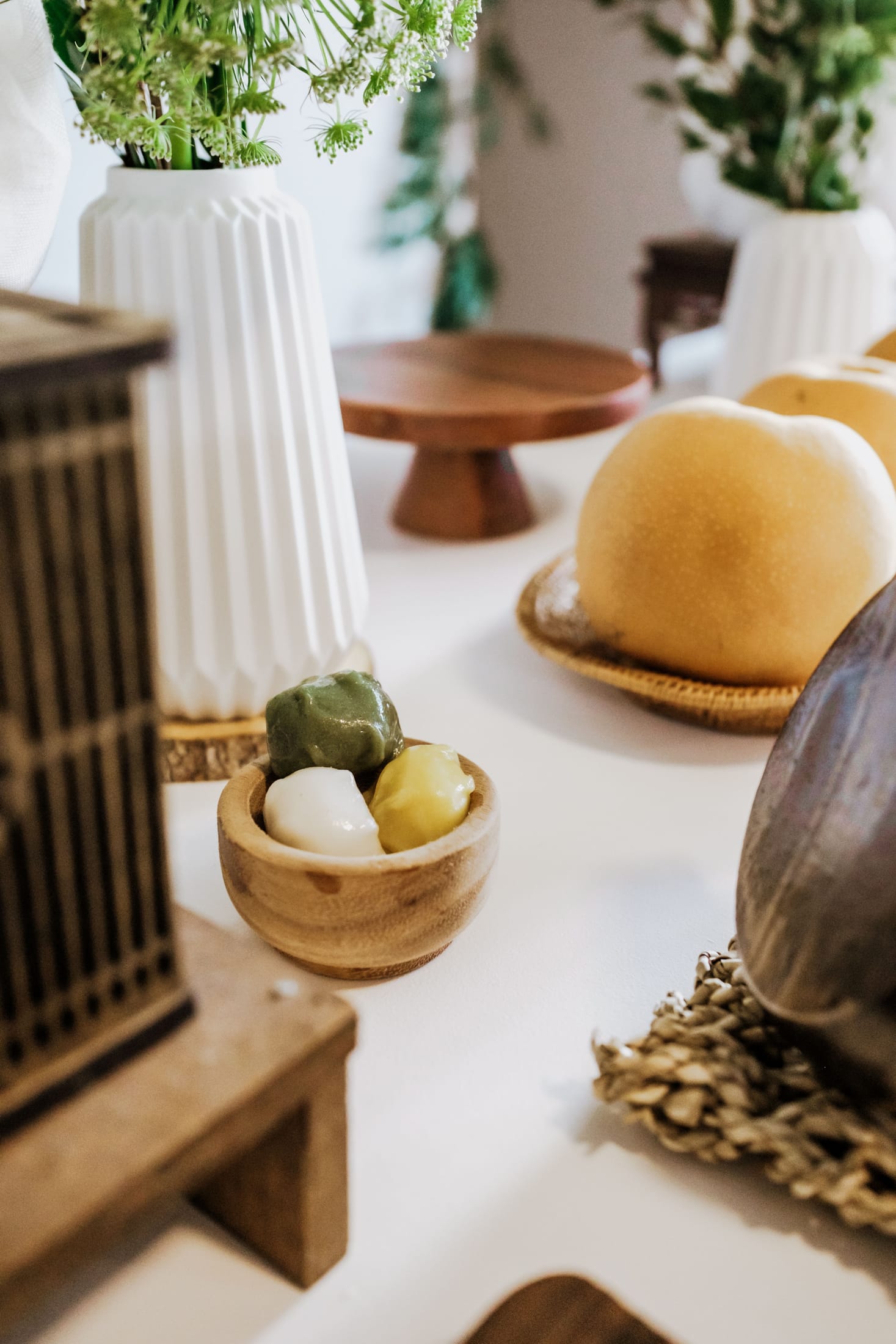
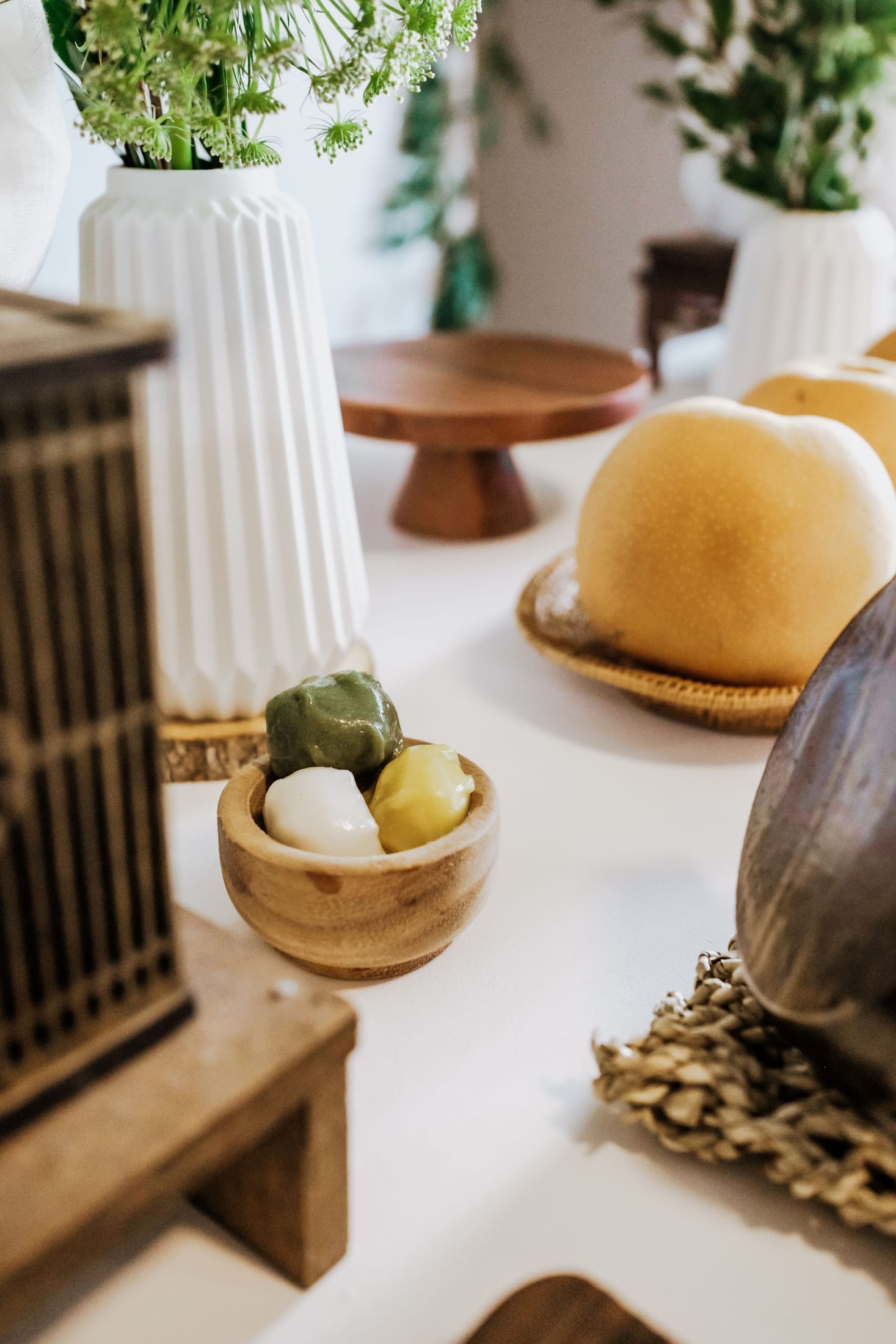
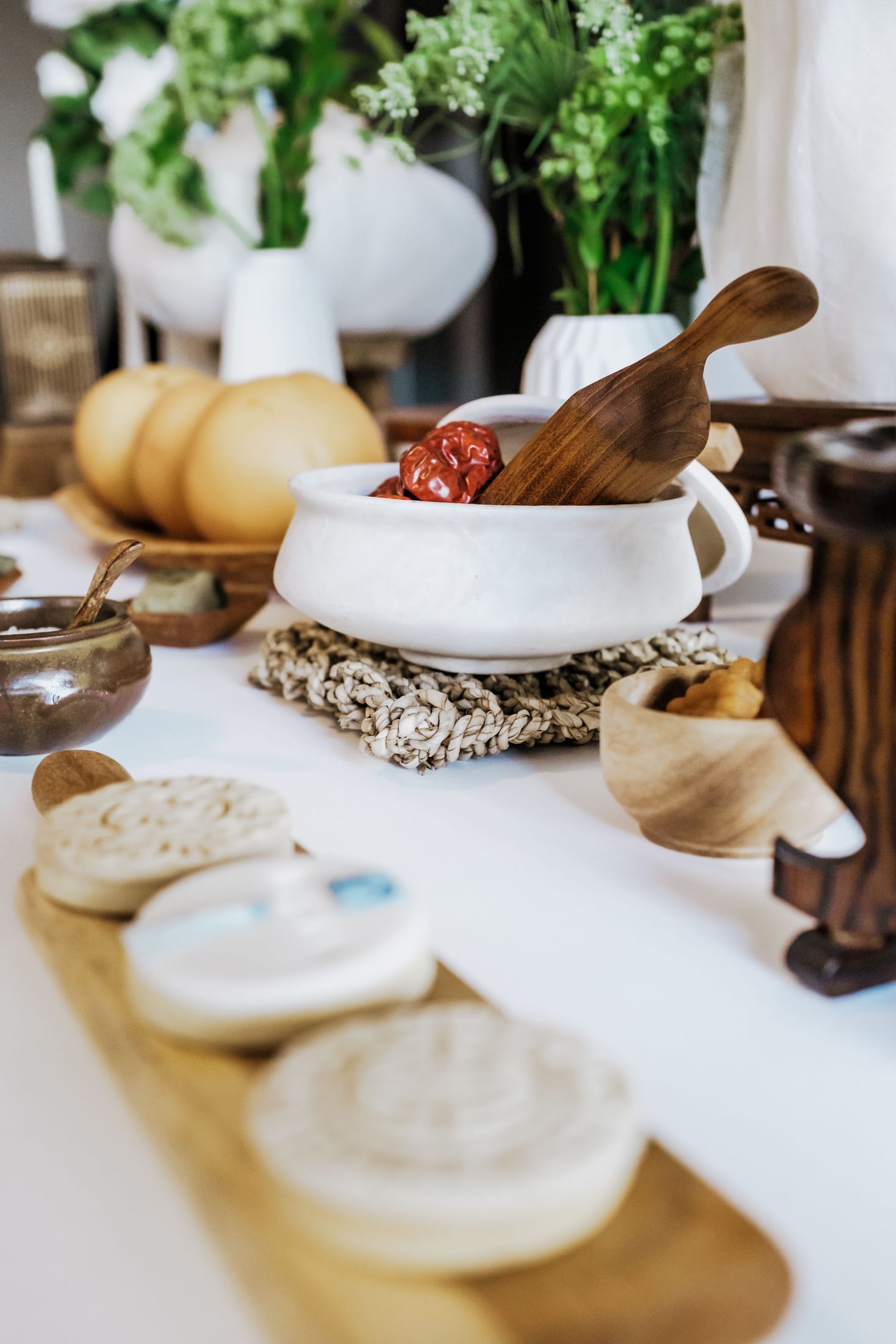
- Front row: fruit. This is where the best-known rule lives — hongdongbaekseo (홍동백서), red fruit to the east, white fruit to the west. Korean pears and jujubes are fixtures.
- Second row: side dishes — namul (seasoned vegetables), kimchi, and dried fish.
- Third row: soup and grilled or pan-fried items — this is where the endless jeon comes in.
- Back row: rice, soup, and alcohol, closest to the ancestor.
Another rule you'll hear quoted is eodongyukseo (어동육서) — fish east, meat west. And there's a category of foods that are traditionally excluded: peaches (believed to repel spirits), and fish whose names end in -chi, like galchi and kkongchi, which were historically considered too common for a ceremonial table.
How strictly is this followed in 2026? It varies enormously by family, region, and how senior the person setting the table is. Plenty of younger families keep the broad shape — fruit in front, rice at the back — and quietly ignore the finer directional rules. Some Confucian scholars' associations have publicly said the elaborate versions were never as universal as people assume.
Songpyeon: The One Food Everyone Knows
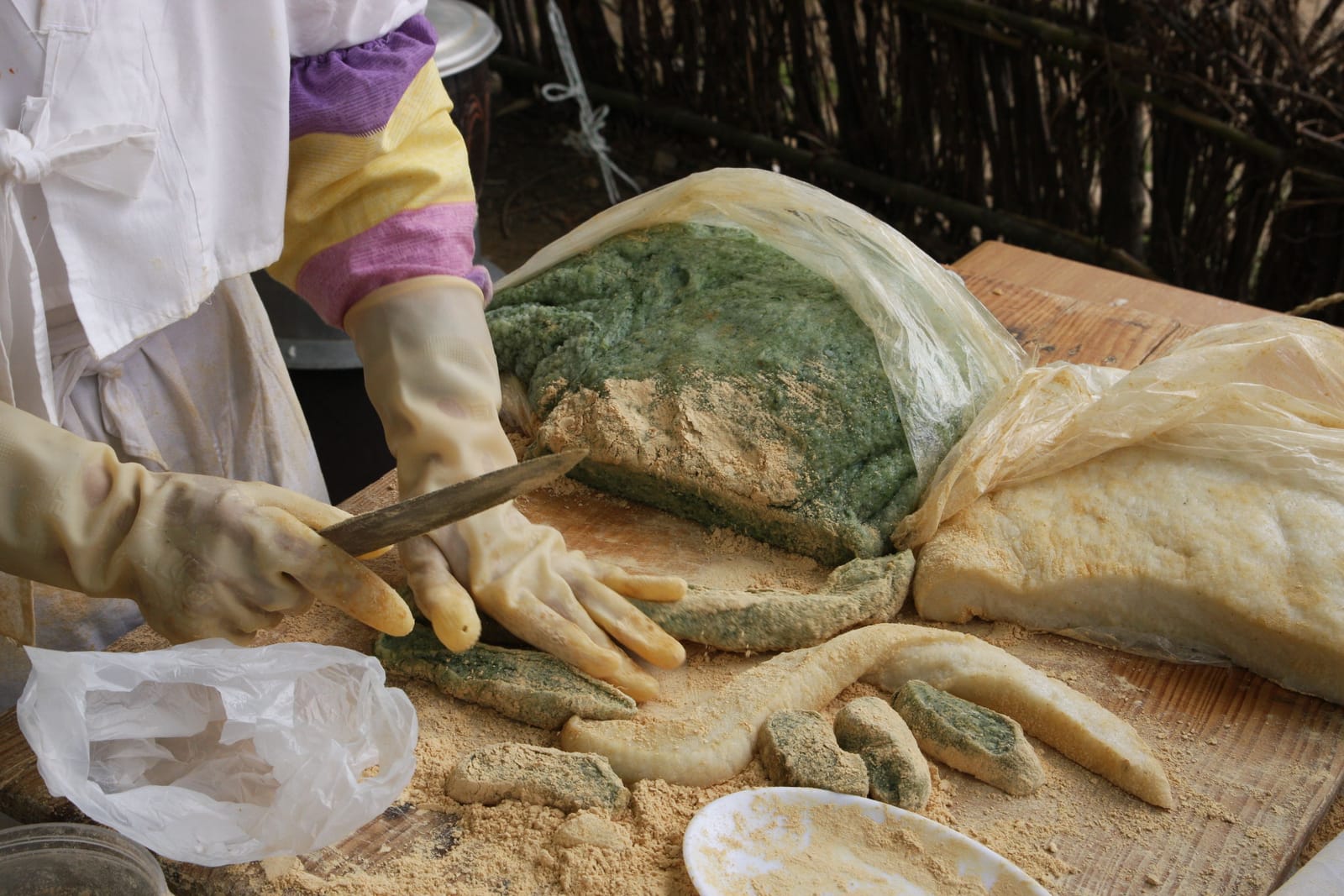
If a single food represents Chuseok, it's songpyeon — half-moon rice cakes filled with sesame and honey, mung bean, or sweetened chestnut, then steamed over a layer of pine needles. Song means pine; the needles are what give them their scent and their name.
The traditional line, still repeated to children and unmarried adults, is that people who shape beautiful songpyeon will meet a beautiful spouse or have a beautiful child. It's a folk saying rather than a belief anyone defends seriously, but it's the reason songpyeon-making is a group activity with a running commentary about everyone's technique.
The half-moon shape has its own story. One common telling ties it to a Baekje-era omen about a full moon waning while a half moon grows — so the half moon represents a future still opening up. It's a good story; treat it as tradition rather than documented history.
Trying the holiday flavours at home: As an Amazon Associate, EpicKor may earn from qualifying purchases. Fresh songpyeon doesn't travel, but the sweet-honey side of the Korean holiday table does — Korean honey yakgwa is the shelf-stable traditional confection that actually ships well.
See Korean honey yakgwa on AmazonWhat Actually Happens During the Rite
The sequence is more choreographed than most descriptions suggest. A full jesa runs through a fixed order, and even simplified family versions keep the spine of it.
- Setting and inviting. The table is laid, the ancestral tablet or a photograph is placed, and the door is symbolically left open so the spirit can enter.
- The first cup. The eldest male descendant pours rice wine, circles it over incense three times, and offers it. This is the step everyone recognizes.
- Bowing. Participants perform deep bows — traditionally two full bows for the deceased, versus one for the living, which is why bowing twice at a Korean funeral is correct and bowing twice to a living person is not.
- Second and third cups. Offered by the next relatives in seniority.
- Inserting the spoon. Rice is opened and a spoon stood upright in it, signalling that the ancestor should eat. Note this is exactly why standing chopsticks upright in a bowl of rice is considered bad manners at an ordinary Korean meal — it mimics a funeral offering.
- Waiting in silence. The family steps out or turns away briefly so the ancestor can eat undisturbed.
- Clearing and sharing. The rite closes, and — the important part — everyone eats the food together. This shared meal, eumbok, is the point as much as the ceremony is.
That last step explains a lot about why the food matters so much. It isn't discarded after the rite; it becomes the family meal.
Who Actually Does the Work
This is the part tourism writing skips, and it's the part Korean families talk about most.
Preparing a full charye table is genuinely days of labour — shopping, frying dozens of jeon by hand, arranging everything correctly. Traditionally that work has fallen on the women who married into the family, and specifically on the eldest son's wife. The strain has a name in Korean: myeongjeol jeunghugun (명절증후군), "holiday syndrome" — the physical and emotional exhaustion around major holidays, widely discussed in Korean media each year.
The friction is real enough that it shows up in divorce filing statistics reported after major holidays, and it's a standard subject of newspaper columns and TV dramas every Chuseok. If you watch Korean drama, the tense kitchen scene at a holiday gathering is not an invention.
That pressure is what's driving the change described below. It isn't young people abandoning tradition out of indifference; it's families renegotiating who pays the cost of it.
How Families Are Changing It
Korean ancestral rites are shifting faster than most outsiders realize.
- Simplifying the table. Fewer dishes, and increasingly a shift toward what the deceased actually liked rather than the prescribed spread. Even Confucian organizations have publicly endorsed simpler tables.
- Ordering in. Pre-made jeon sets and full charye packages are sold at department stores and online every holiday season. This was mildly scandalous a decade ago and is now unremarkable.
- Skipping it. A growing share of households, especially younger and urban ones, hold no rite at all — or replace it with a family meal and a visit to the grave.
- Travelling instead. Chuseok has become one of the year's biggest outbound travel periods, which tells you plainly how some families now spend it.
- Sharing the labour. Slowly, and unevenly, but men cooking at holidays is no longer remarkable in many families.
None of this means the tradition is vanishing. Visiting ancestral graves (seongmyo) and tending them (beolcho) remain widely observed even by families who've dropped the formal table.
What This Means If You're Visiting Korea
For a traveler, Chuseok is less about rites you'll witness and more about logistics you'll run into.
Almost nobody will invite you to a jesa — it's a private family occasion, not a spectacle, and there is no ticketed version. What you will encounter is the country largely closing and moving: intercity trains and buses booked out weeks ahead, highways at a standstill, many small restaurants and shops shut for two or three days, and Seoul unusually quiet as residents leave for hometowns. Palaces and major cultural sites often run free admission and special programming, which is genuinely the best time to see them.
If your trip overlaps the holiday, our Chuseok travel guide covers the closures, transport booking, and what stays open. And if you want the food-culture background, the Korean birthday seaweed soup guide explains another dish where the occasion matters more than the recipe.
If you're traveling during the holiday: As an Amazon Associate, EpicKor may earn from qualifying purchases. Chuseok means packed trains and long transfers, so a portable power bank is the one thing worth having in your bag before the stations fill up.
See portable power bank on AmazonFrequently Asked Questions
Q: What is the difference between jesa and charye? Jesa is held on the anniversary of a specific ancestor's death, traditionally late at night, for a smaller group. Charye is the simpler morning rite on holidays like Chuseok and Lunar New Year, honoring several generations with the extended family present.
Q: Why can't you put peaches on a jesa table? Peaches are traditionally believed to drive spirits away, which would defeat the purpose of inviting an ancestor to the meal. Fish with names ending in -chi, such as galchi, are also conventionally excluded as too everyday for a ceremonial table.
Q: Do all Korean families still perform jesa? No, and the share is falling. Many urban and younger households have simplified the table dramatically, buy pre-made holiday food, replace the rite with a family meal and grave visit, or skip it entirely. Grave visiting remains far more widely kept than the formal table.
Q: What is songpyeon and why is it half-moon shaped? Songpyeon are steamed rice cakes filled with sesame, honey, mung bean, or chestnut, cooked over pine needles — song means pine. The half-moon shape is traditionally explained through a Baekje-era omen in which a waning full moon signals decline and a half moon signals growth ahead. Treat it as folklore rather than documented history.
Q: Will I see a jesa ceremony as a tourist? Almost certainly not. It's a private family rite held at home, with no public or ticketed version. What you will notice is the travel rush, widespread closures, and unusually empty streets in Seoul during the holiday.
Q: What is "holiday syndrome" in Korea? Myeongjeol jeunghugun (명절증후군) describes the exhaustion and stress around major holidays, historically borne most heavily by women who married into the family and were expected to prepare the entire table. It's openly discussed in Korean media every holiday season and is a major reason the tradition is being simplified.
The Bottom Line
Jesa isn't a museum piece and it isn't a tourist attraction. It's a living family practice with a directional table layout, a food list with genuine rules, an uneven distribution of labour, and an active argument inside Korean households about how much of it to keep.
The most useful thing to understand as an outsider is that when a Korean family simplifies their charye table, they usually aren't discarding respect for their ancestors. They're deciding it shouldn't cost one person three days in a kitchen.
Sources and further reading:
You Might Also Like
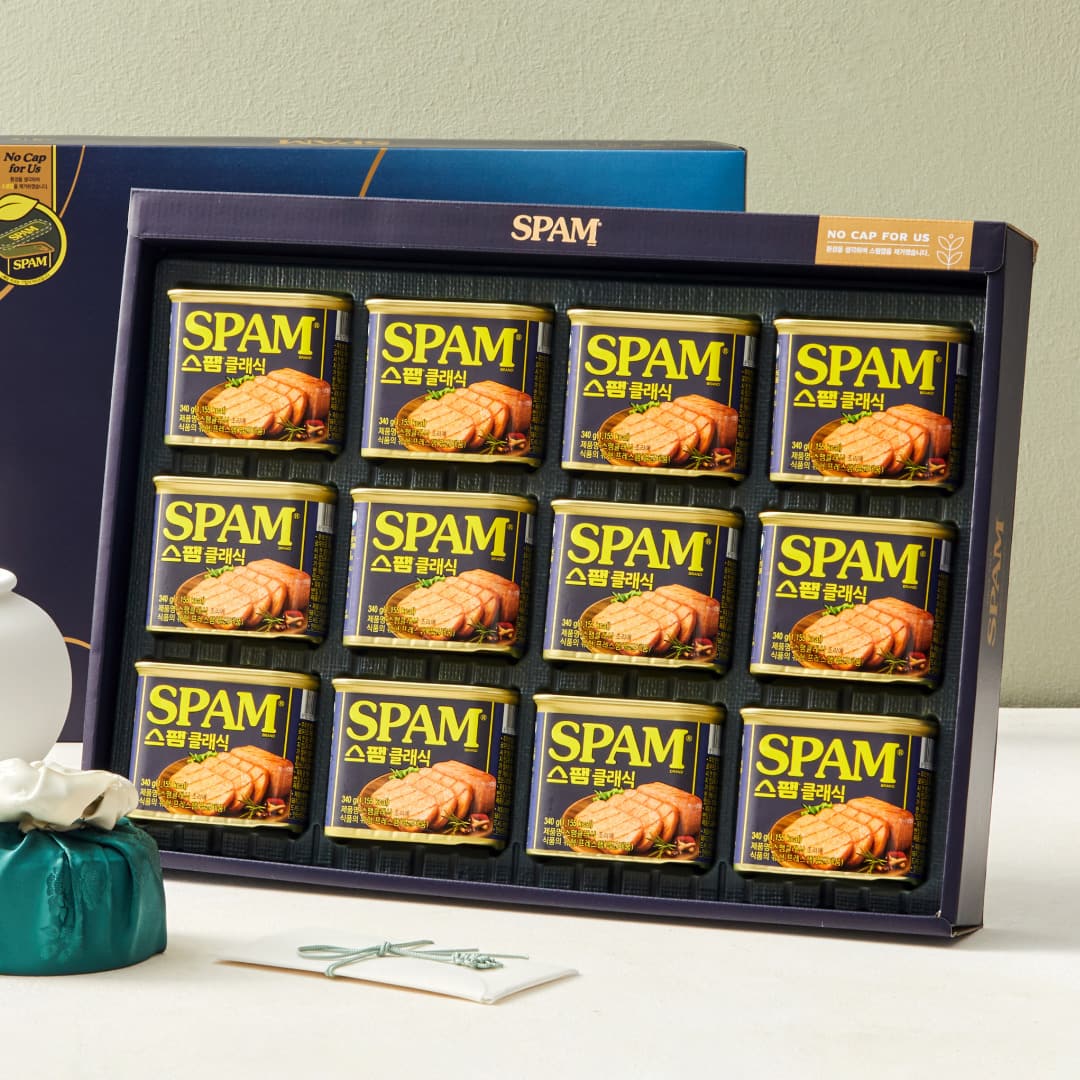
Korea's Spam Gift Sets Explained: What the Numbers Mean and Which One to Buy
Spam is a serious Chuseok gift in Korea, and the sets are sold by number. Lower number means bigger box — 1호 is twelve 340g cans, 12호 is eight 200g. The price printed on the box is fiction: every set is selling 40-45% below it right now.
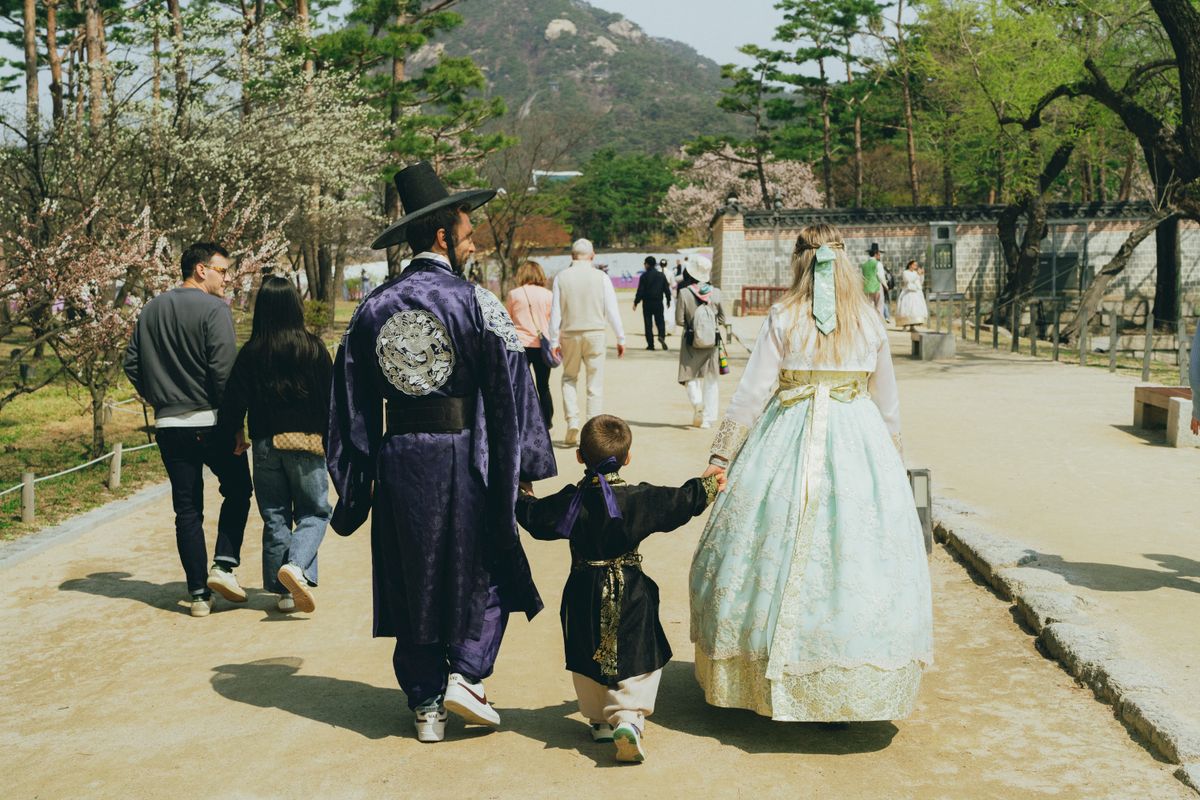
Chuseok 2026: Korea Slows Down 24-26 September, Train Seats Sell 7-11 September
Chuseok 2026 is Friday 25 September, no substitute holiday. Confirmed: highway tolls waived and the four palaces, Jongmyo and MMCA free 24-27 September. KTX general sale 7-11 September by route, Seoul-Busan ₩54,400. What closes on the 25th and the 27th.
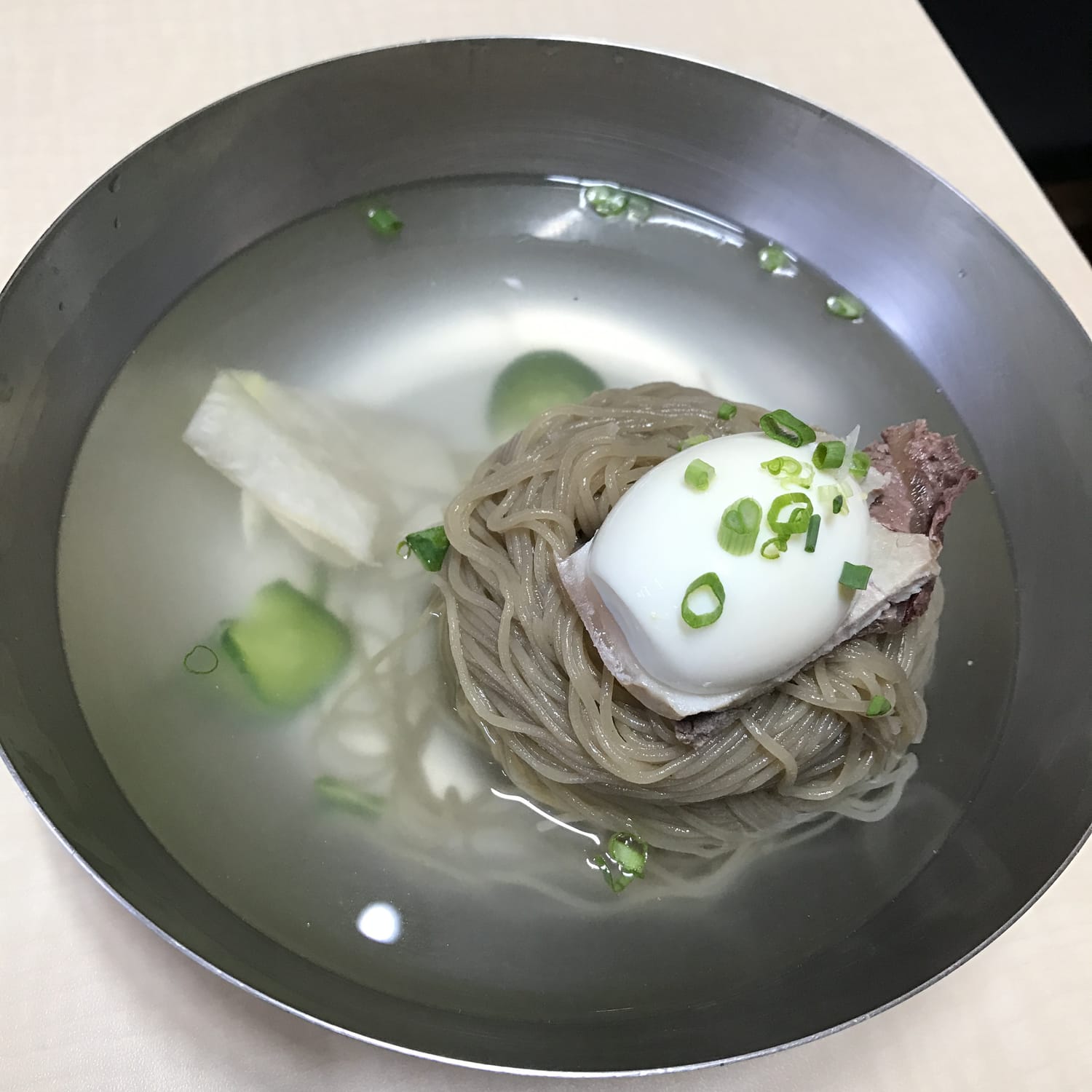
The One Korean Food Foreigners Never Learn to Love: Hamheung Naengmyeon, and Why Koreans Can't See the Problem
Foreigners who eat cheonggukjang and even hongeo still will not pay for this twice. A Korean creator who fed foreigners for years says naengmyeon was the overwhelming number one refusal, and Koreans, who rank it first every summer, cannot see why.