What Koreans Eat Beyond Tourist Classics: 7 Everyday Favorites
There is no single way that “real Koreans” eat. A student grabbing convenience-store gimbap, a family sharing bossam, and an office worker ordering jjajangmyeon are all part of contemporary Korean food life. Region, age, budget, health, and schedule change the menu.
For a visitor, the best way to move beyond a short barbecue-and-fried-chicken checklist is not to hunt for a secret dish. It is to understand the foods built around ordinary situations: quick breakfast, delivery night, market snack, group dinner, rainy evening, or late meal after work.
Here are seven useful entry points. They are familiar rather than obscure, widely available rather than guaranteed everywhere, and different enough to show how Korean meals fit daily routines.
Quick comparison
| Food | Best situation | Typical flavor | What to check |
|---|---|---|---|
| Gimbap | Fast breakfast, picnic, train ride | Savory sesame rice and fillings | Ingredients and refrigeration time |
| Jjajangmyeon | Delivery or casual lunch | Rich black-bean sauce | Pork, seafood, and portion size |
| Bossam | Shared dinner | Tender pork, salty-spicy wraps | Minimum order and shrimp sauce |
| Sundubu-jjigae | Hot individual meal | Soft tofu, chili, savory broth | Seafood stock and spice level |
| Jeon | Rainy day or group snack | Crisp, savory pancake | Seafood and shared oil |
| Eomuk and tteokbokki | Market or street snack | Brothy, spicy-sweet | Fish, wheat, and heat |
| Hotteok | Cool-weather dessert | Sweet syrup and toasted seeds | Very hot filling and nuts |
Korean food starter selection — compare on AmazonAffiliate link. As an Amazon Associate, EpicKor earns from qualifying purchases at no extra cost to you.
1. Gimbap: the portable everyday meal
Gimbap wraps seasoned rice and fillings in dried seaweed, then slices the roll into bite-size pieces. Common versions include egg, pickled radish, carrot, spinach, ham, tuna mayonnaise, beef, or vegetables. It looks superficially like a sushi roll, but the seasoning, fillings, and everyday context are distinct.
Specialty gimbap shops make rolls to order, while convenience stores sell packaged versions. Freshly made gimbap is ideal for a picnic or train ride, but rice and cooked fillings should not sit warm for many hours. Buy it close to when you plan to eat and follow storage instructions.
Vegetarian travelers should ask about ham, egg, fish cake, and meat seasoning rather than judging by the visible vegetables. “Yachae gimbap” means vegetable gimbap, but kitchen recipes vary.
Our Korean breakfast guide has more quick morning choices for travelers who do not want a hotel buffet.
2. Jjajangmyeon: Korea’s classic delivery comfort food
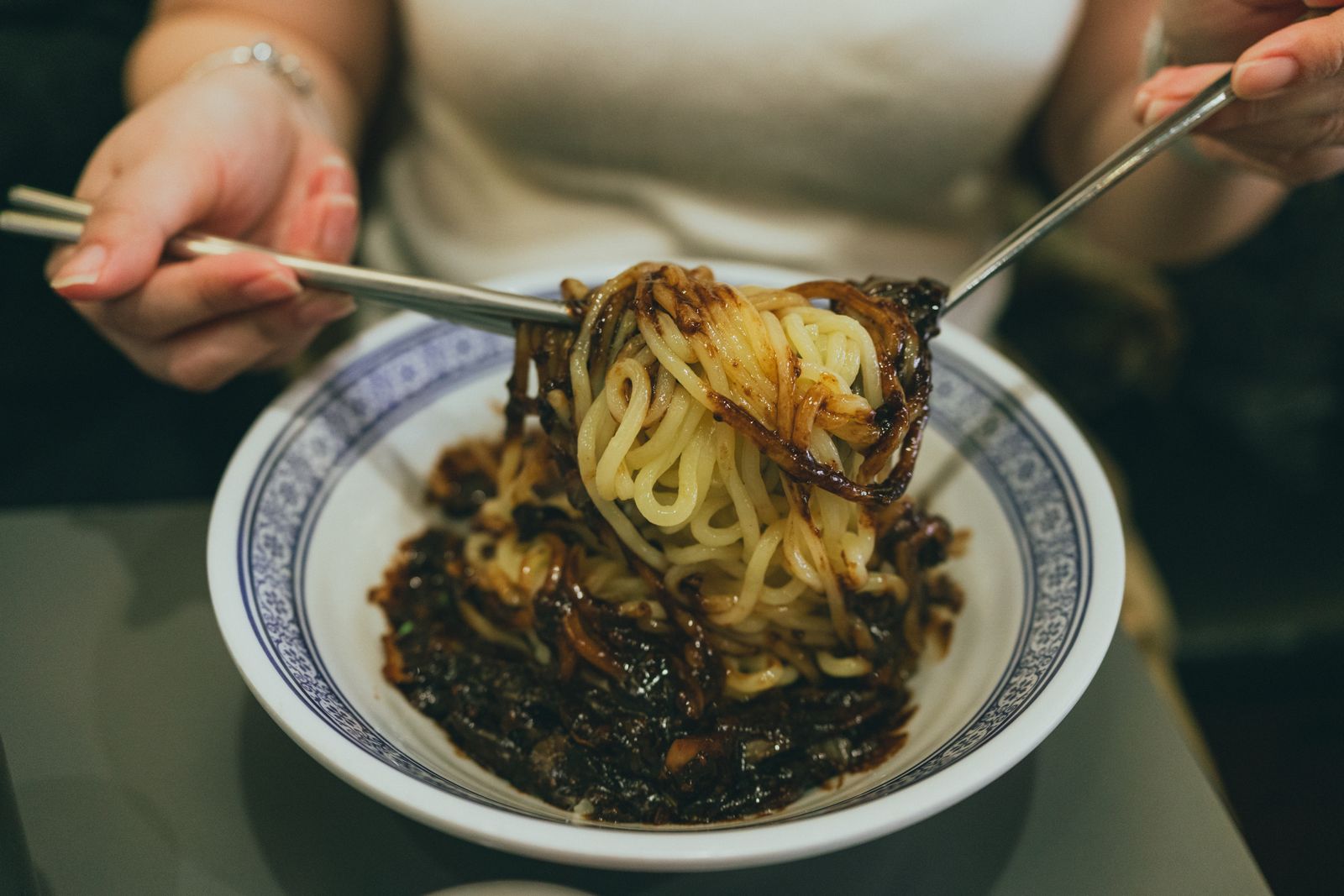
Jjajangmyeon combines wheat noodles with a dark sauce made from chunjang, a fermented black-bean paste stir-fried with ingredients such as onion, pork, or seafood. It is Korean Chinese cuisine: a dish developed in Korea through Chinese immigrant restaurant history, not a standard noodle preparation across China.
The sauce is earthy, savory, and mildly sweet rather than fiercely spicy. Danmuji, yellow pickled radish, provides a crisp acidic contrast. Gan-jjajang usually serves a separately stir-fried sauce with a more distinct onion texture, while seafood versions may be labeled samseon.
Delivery culture made the dish an everyday icon. It also appears in the playful Black Day story on April 14, when singles are said to eat black noodles. Our Korean couple-anniversary guide explains why that is better understood as pop culture than an obligation.
Try Korean staples at home: As an Amazon Associate, EpicKor may earn from qualifying purchases. Compare a Korean food starter selection, checking the seller, ingredient list, sodium, and expiry date before ordering.
3. Bossam: pork wraps built for sharing
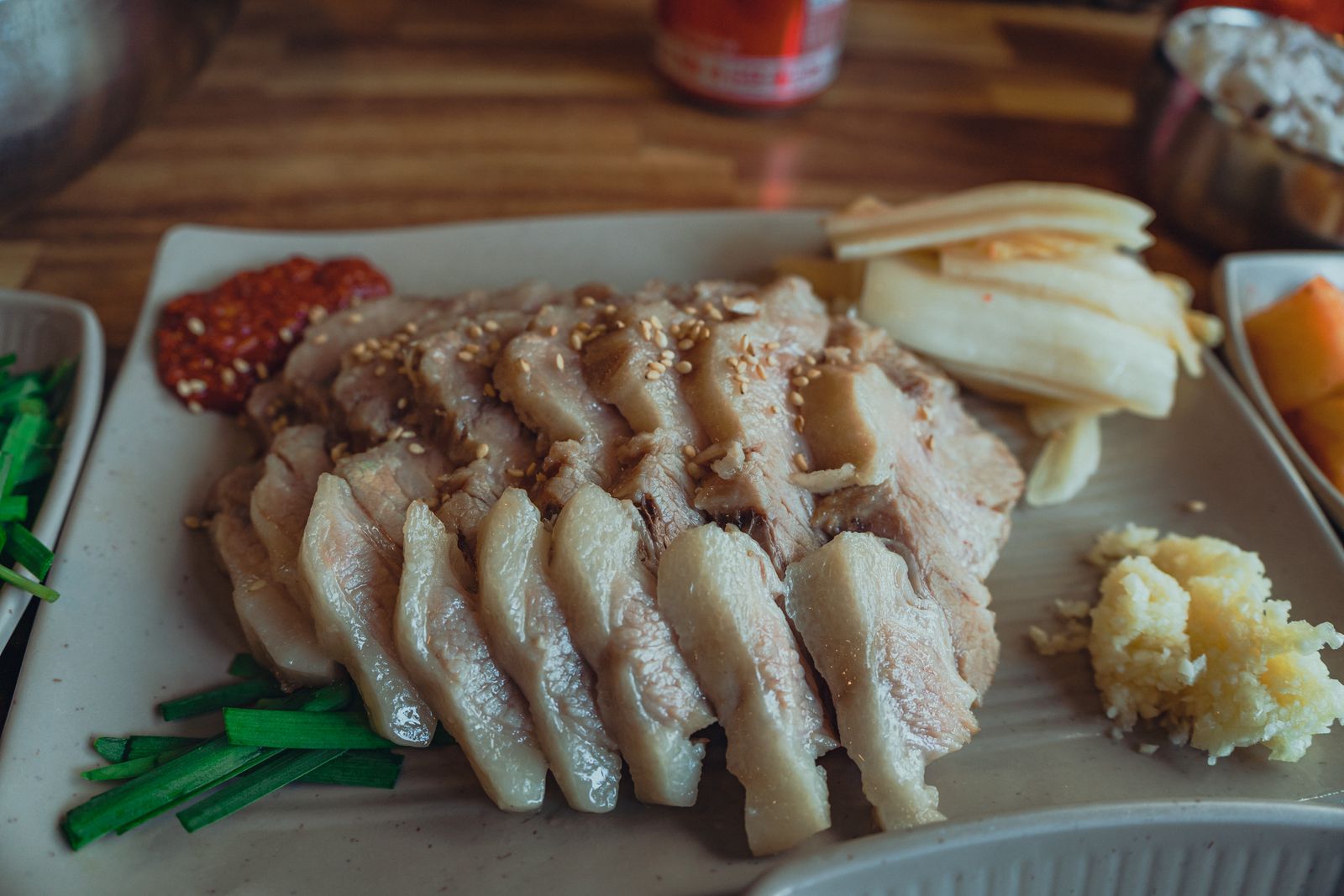
Bossam is sliced boiled or braised pork served with cabbage or lettuce, garlic, ssamjang, salted shrimp, and often a strongly seasoned kimchi. Each diner builds a small wrap. The contrast is the point: warm rich pork, cool leaf, fermented heat, and salty condiment.
Restaurants commonly sell bossam in shared sizes rather than individual portions. Ask whether the set includes side dishes and how many people it is designed to serve. Some places pair bossam with jokbal, soy-braised pig’s feet, in a combination platter.
Saeujeot, the tiny salted-shrimp condiment, is traditional but important for shellfish allergies. Kimchi and sauces may also contain fish products. State dietary restrictions clearly before ordering.
4. Sundubu-jjigae: a bubbling one-person stew
Sundubu-jjigae is soft tofu stew, often brought to the table bubbling in an earthenware pot. Versions may include clams, pork, kimchi, mushrooms, or a raw egg added at the end. Rice and small side dishes make it a complete, warming meal.
The red color does not tell you the exact spice level. Ask for “an maepge” if you want it less spicy, but the kitchen’s base broth may already contain chili. A pale or “white” version is sometimes available.
Seafood broth is common even when the visible topping is tofu or vegetables. Strict vegetarians and people with allergies need confirmation. For a wider explanation of pots and table cooking, see our Korean cookware guide.
5. Jeon: far more than one green-onion pancake
Jeon includes many pan-fried foods: pajeon with green onions, kimchi-jeon, seafood haemul pajeon, mung-bean bindaetteok, and small battered slices prepared for holidays. Restaurants may serve one large pancake or an assorted platter.
The familiar rainy-day pairing is jeon with makgeolli, a cloudy fermented rice drink. It works because the hot, salty pancake contrasts with the cool, tangy drink—and because the sound of sizzling batter is popularly compared with rain. Read our full pajeon and makgeolli rainy-day guide for drink handling and allergy details.
Jeon is not automatically vegetarian. Seafood, meat, egg, fish sauce, or shared oil may be involved. Ask about the exact variety.
6. Eomuk and tteokbokki: the street-stall duo
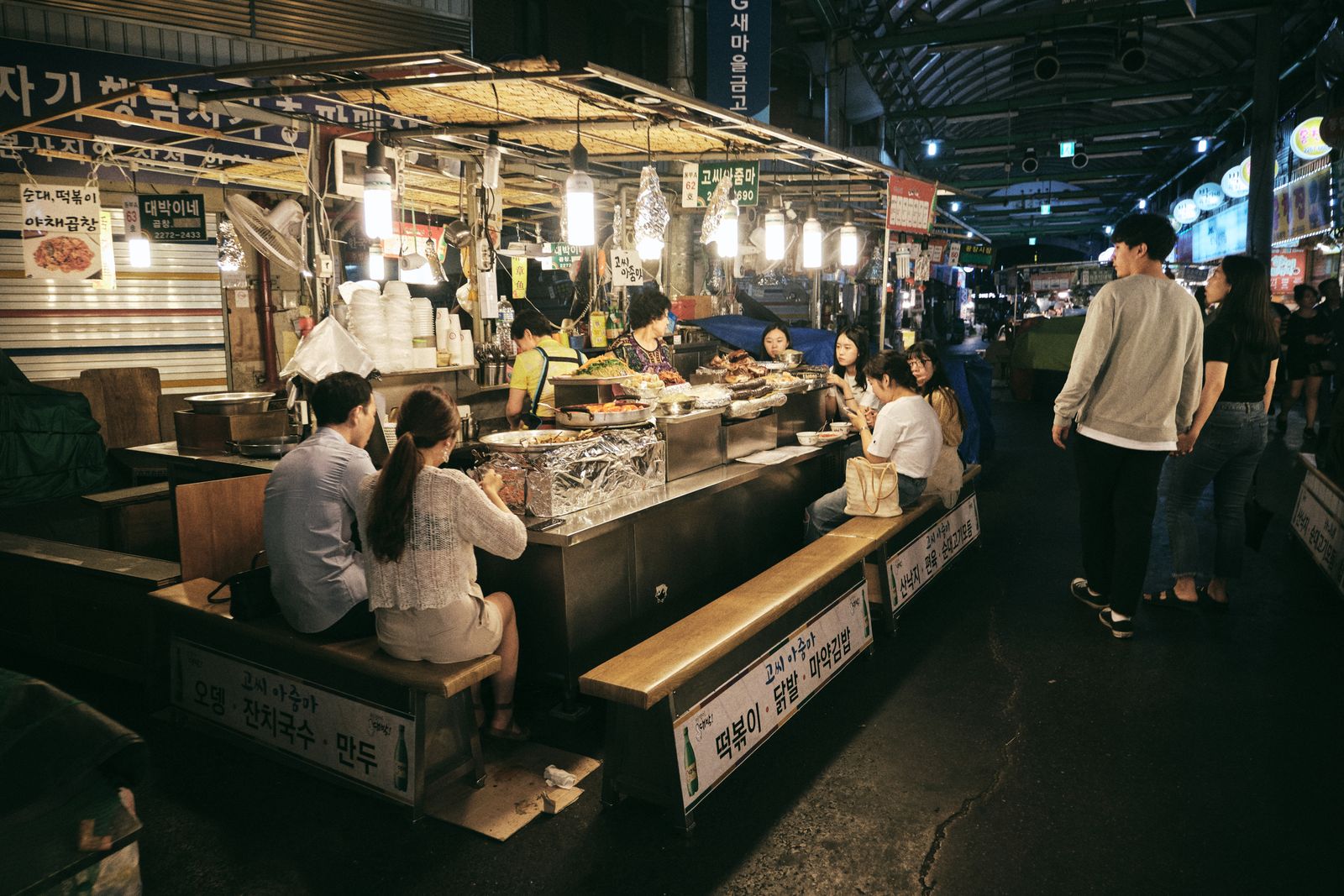
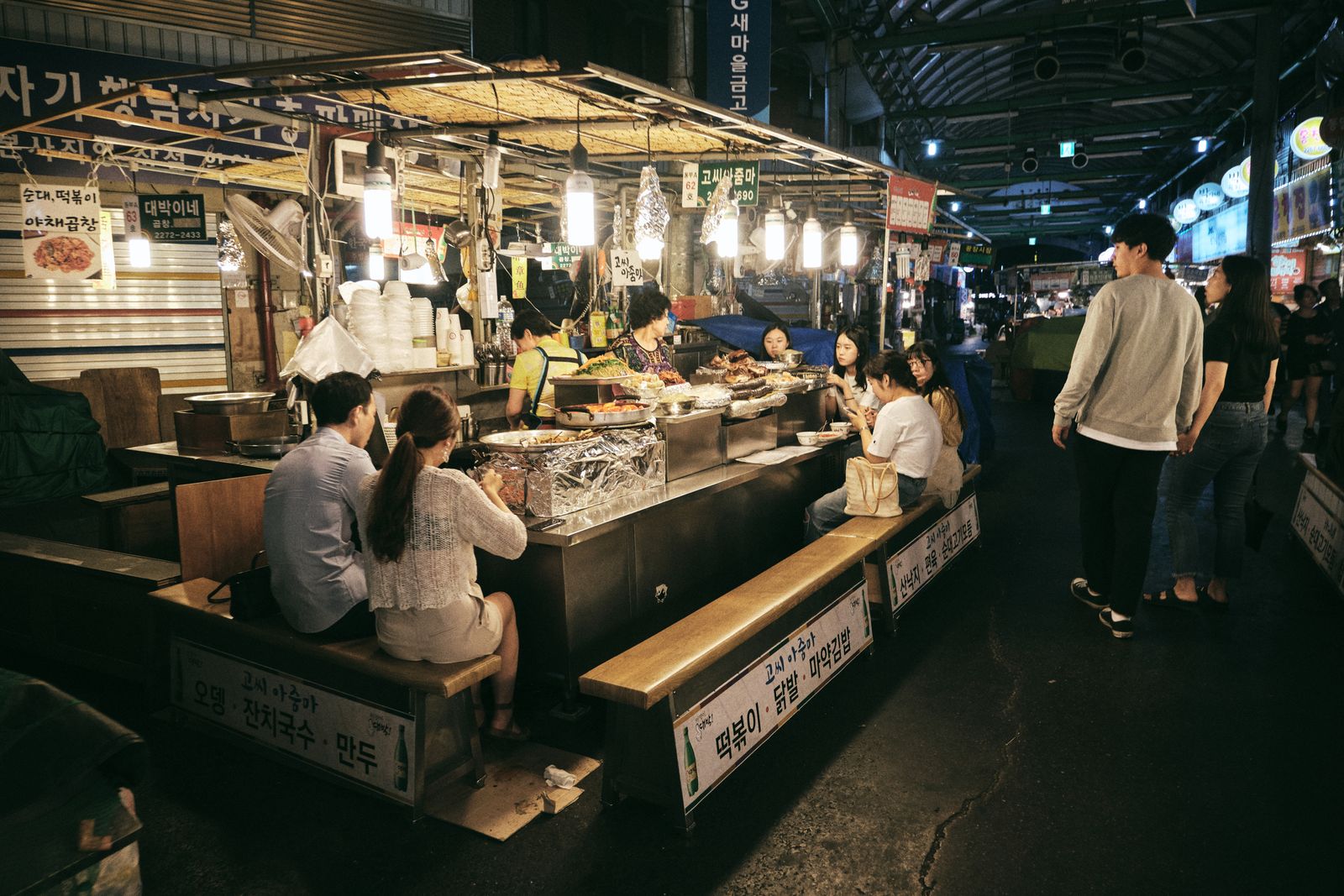
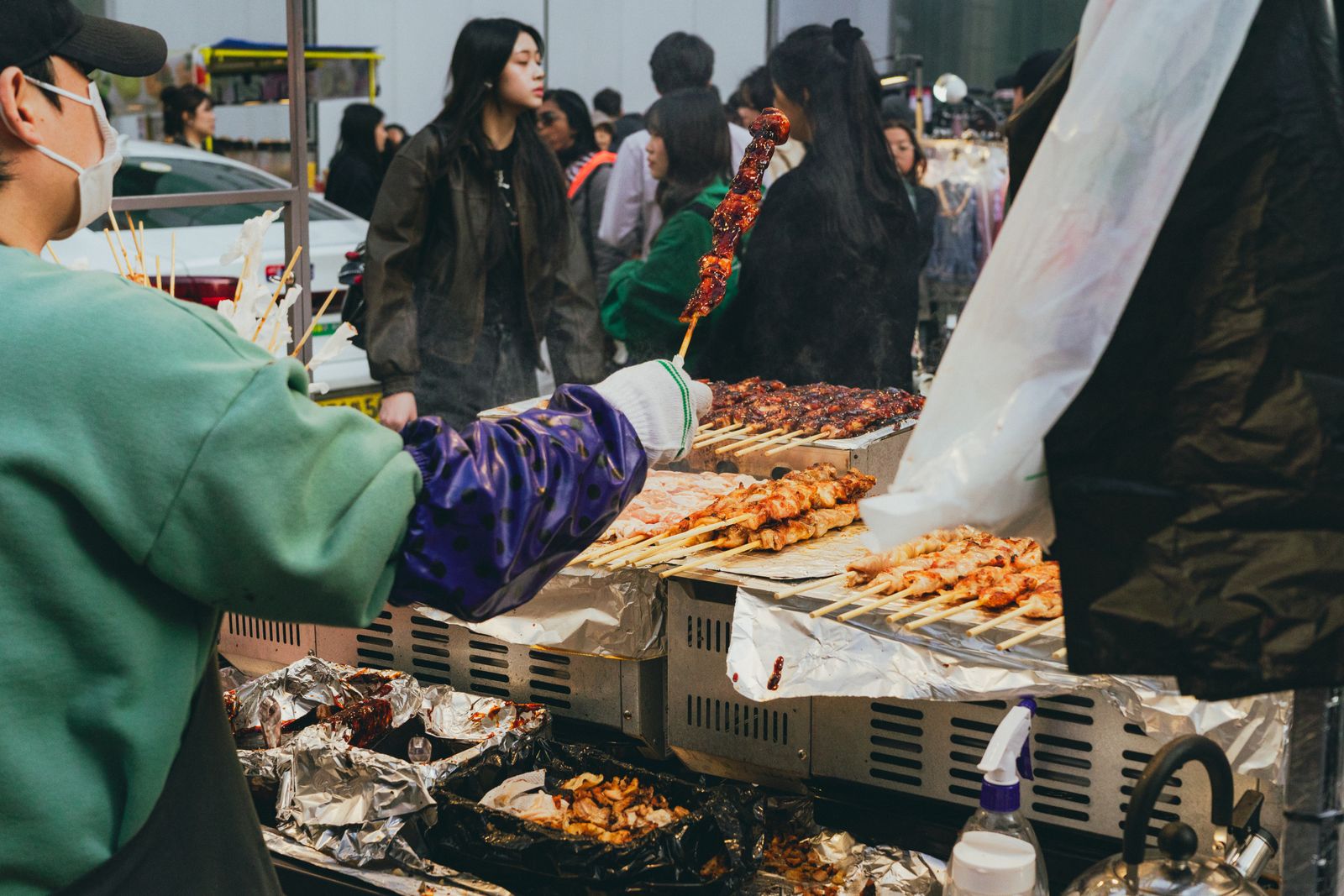
Eomuk is processed fish cake, often folded onto skewers and held in hot broth. Tteokbokki is chewy rice cake in a usually red, spicy-sweet sauce. At snack shops, the two share a natural rhythm: a bite of hot rice cake, then a sip of mild broth.
The broth and fish cake can contain fish, wheat, soy, and other allergens. Tteokbokki sauce varies from mildly sweet to genuinely hot; cheese or cream versions may be gentler but are not necessarily low in spice or dairy-free.
Pay after ordering according to the stall’s system, and do not assume every displayed skewer is self-service. At traditional markets, keep bags close to your body and step away from the counter once you have your food so other customers can order.
7. Hotteok: crisp outside, dangerously hot inside
Hotteok is a filled griddle cake associated especially with cool-weather street snacking. A common sweet version contains brown sugar, cinnamon, and seeds or nuts that melt into syrup. Savory versions and regional variations also exist.
Wait before the first bite. The outside can feel manageable while the syrup inside is hot enough to burn. Hold the paper cup upright and bite from an edge rather than squeezing the center.
Nut and seed fillings are common, and shared equipment makes allergy assumptions risky. Our guide to Korean desserts beyond bingsu adds bakery and café options when street food is inconvenient.
How to build a balanced food day
Trying seven rich foods in one afternoon is a recipe for fatigue, not cultural depth. Spread them across the trip and combine a market snack with a lighter meal. Korea’s side dishes add variety, but they are not always unlimited and should not be wasted.
| Time | Practical choice | Why it works |
|---|---|---|
| Early morning | Fresh gimbap or a simple soup | Fast and easy near transport |
| Lunch | Jjajangmyeon or sundubu-jjigae | Common individual meal formats |
| Afternoon | One hotteok shared or eaten slowly | Leaves room for dinner |
| Market visit | Eomuk plus a small tteokbokki | Samples two textures without a feast |
| Group dinner | Bossam with vegetables and sides | Designed for sharing |
| Rainy evening | Jeon, with or without makgeolli | A weather-linked social meal |
Ordering and allergy tips
Translation apps help with menus, but an allergy card written in Korean is safer for serious restrictions. Ask whether broth, sauce, kimchi, and shared cooking surfaces contain the allergen—not only whether the named dish does. If a self-service screen is the main obstacle, the Korean food-kiosk ordering guide walks through menu choices, payment, and pickup numbers.
Look for the number of servings. Korean menus often list a shared dish by small, medium, or large, while stews may require a two-person minimum. Staff can usually point to an appropriate size even when conversation is limited.
Return bowls and trays where the shop indicates. At a busy market, finish eating away from the sales counter. Carry a small tissue pack, but use the restaurant’s wet wipes and bins rather than leaving waste on a street table.
Finding these foods without chasing a viral restaurant
Search the Korean dish name in Naver Map or KakaoMap and filter recent reviews, distance, and current hours. Gimbap is 김밥, jjajangmyeon is 짜장면, bossam is 보쌈, sundubu-jjigae is 순두부찌개, and jeon is 전. A restaurant with a focused menu and steady local traffic is often a better fit than a famous venue across the city.
Check the most recent closure-day notice and the kitchen’s last-order time. Some shops take an afternoon break even when the map shows broad opening hours. Market stalls may close for weather, ingredient sellout, or vendor rest days.
Delivery apps can be difficult without a Korean phone number, address format, or payment method. Ask hotel staff only when the property offers that service, or choose pickup from a nearby shop. Never assume a reception desk is responsible for receiving food.
For a first meal, order the standard version before adding every topping. That gives you a reference for the dish and makes allergy questions simpler. If a portion is listed for two people, do not pressure the restaurant to break a shared recipe into an unsupported single serving. The Korean breakfast guide lists several naturally solo-friendly formats for another day.
For a practical Korean table setup: Compare Korean barbecue scissors and tongs only if the steel, grip, cleaning instructions, and storage suit your kitchen.
Frequently asked questions
Q: Are these foods eaten by every Korean?
No. They are familiar and widely available, but personal diet, region, age, and preference differ. There is no authenticity test based on one menu.
Q: Which dish is easiest for a solo traveler?
Gimbap, jjajangmyeon, sundubu-jjigae, and street snacks are usually simple solo choices. Bossam is commonly sold as a shared meal.
Q: Which options are vegetarian?
None should be assumed vegetarian without checking. Gimbap, broth, kimchi, jeon, and sauces may contain meat, egg, seafood, or fish-based seasoning.
Q: Is jjajangmyeon spicy?
Standard jjajangmyeon is generally savory and mildly sweet rather than hot, though recipes vary and spicy versions exist.
Q: What should I try on a rainy day?
Pajeon or another jeon is the classic choice. Makgeolli is optional; tea or a soft drink works too.
Q: Is Korean street food available all year?
Some staples are year-round, but hours, weather, market rules, and season affect vendors. Hotteok is especially associated with cooler months.
Sources and further reading
- VISITKOREA: Korean food and dining portal
- VISITKOREA: gimbap and everyday Korean food
- VISITKOREA: seasonal Korean street foods
The strongest food itinerary is not the most obscure one. It is the one that lets you notice when, where, and with whom each dish makes sense.
You Might Also Like

Korean Food Scissors Guide: Practical Tools and Hangover Drinks
A practical guide to Korean food scissors, table tools, hangover drinks, and the small convenience habits visitors notice in Korea.
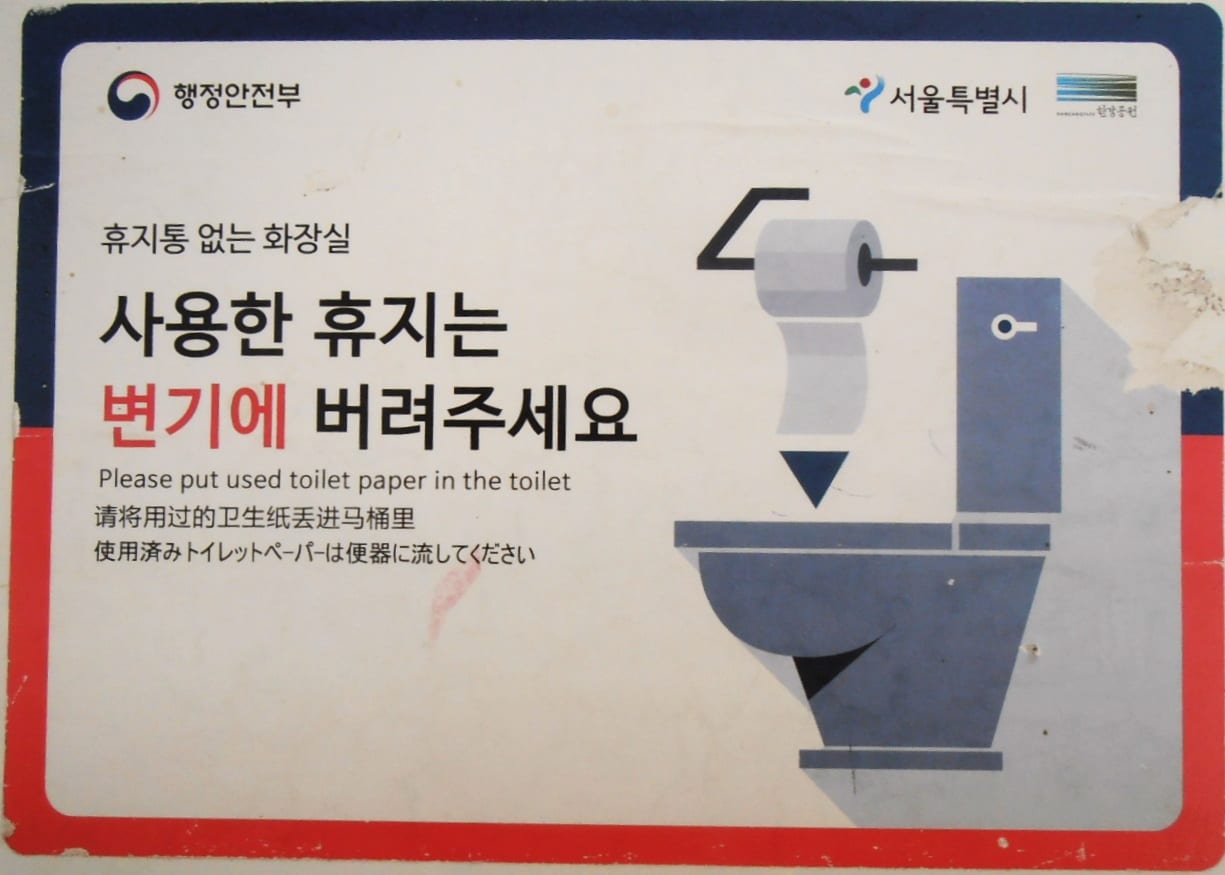
Public Toilets in Korea: 78,183 of Them, and the Law That Decides Which You Can Walk Into
Korea has 78,183 public toilets and a law that sorts them into five categories. One of them lets you walk into a private building and use the restroom without buying anything. Plus the 10-minute subway re-entry rule and why the stall has no bin.

Korea Rainy Season Guide: Umbrellas, Jangma, and Travel Tips
A practical Korea rainy season guide covering umbrellas, jangma timing, Seoul etiquette, packing, weather checks, and travel mistakes.