Korean Coin Noraebang Guide 2026: Seoul Karaoke Booths
A coin noraebang in Seoul solves a problem you may not know you have: sometimes you want to sing three songs, not rent an evening.
If you want the bigger cultural background before using a booth, start with EpicKor's Korean noraebang guide, then return here for the pay-per-song version.
The traditional Korean noraebang is a private singing room usually booked by time. A coin noraebang, often written 코인노래방 or shortened to 코노, breaks the experience into smaller units. Many venues let you pay for a set number of songs or a short time bundle. The rooms are compact, the transaction can be mostly self-service, and singing alone is normal.
That makes coin karaoke one of Seoul's easiest low-commitment culture stops. It also creates a confusing first five minutes. The sign is in Korean. The room looks empty. The microphone works only after payment. The search result shows three versions of the same title. Then your first song begins before you understand the echo control.
This guide makes those five minutes predictable.
Quick Answer: How Do You Use a Coin Noraebang?
Choose an open room, check whether payment happens at the front kiosk or inside the booth, pay for songs or time, select a microphone, search by title or artist, add the song to the queue, and press start. Return the microphone neatly and leave when the paid songs or minutes end.
The details vary by chain and machine. Some accept coins, bills, cards, or mobile payment; some remain truly coin-oriented. Some booths sell a fixed number of songs, while others offer time packages. Prices, bonus songs, hours, and payment methods can change by neighborhood and date, so read the posted rate before entering money.
| Feature | Coin Noraebang | Traditional Noraebang |
|---|---|---|
| Typical payment | Per song or short time bundle | Room time, often in larger blocks |
| Room size | Usually compact | Ranges from small to group rooms |
| Best for | Solo visits, pairs, quick practice | Groups and longer social sessions |
| Service | Often self-service | Often staffed counter and room assignment |
| Commitment | Low; easy to stop after a few songs | Higher; the room is the main activity |
BONAOK Bluetooth karaoke mic — rehearse your noraebang song at homeAffiliate link. As an Amazon Associate, EpicKor earns from qualifying purchases at no extra cost to you.
The official Seoul tourism guide presents noraebang as a central example of Korean “bang,” or room, culture: a private stage where your group selects songs and follows lyrics on a screen. Coin noraebang keeps that privacy while making the unit smaller and more spontaneous.
Step 1: Read the Sign Before Choosing a Room
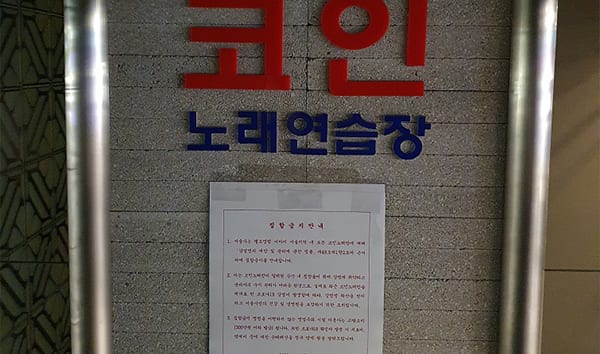
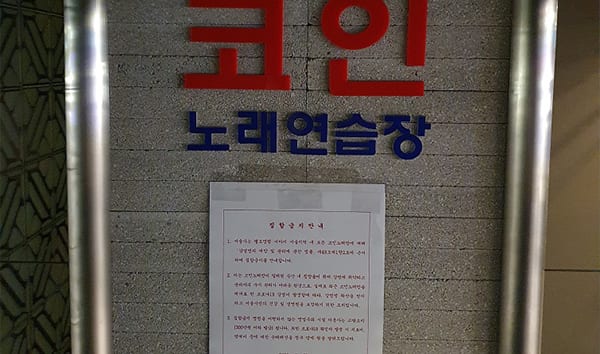
Look for 코인노래방, 코인노래연습장, or the common abbreviation 코노. A room marked 사용중 is in use. An open door and a screen at the payment page usually indicate availability, but follow the venue's posted system. Some locations assign rooms at a front kiosk even when the booth appears empty.
Before sitting down, check four things:
- Is the room clean and obviously available?
- Does payment happen outside or inside?
- Is the rate per song, per minute, or a selectable package?
- Which payment methods are accepted?
Do not force a locked door or enter a room with belongings inside. A guest may have stepped out briefly. If the system is unclear, ask staff with a simple sentence: “How do I pay?” A translation app can display 결제는 어떻게 해요? on your screen.
Neighborhood matters less than maintenance. A bright entrance, visible rate board, working emergency contact, clean booth, and active staff presence are more useful than a social-media claim that one branch is “the cheapest in Seoul.”
Step 2: Pay for Songs or Time
Coin noraebang began with literal coin payment, but the name now describes the compact pay-as-you-go format more broadly. The machine may accept 500-won coins, 1,000-won bills, domestic cards, or mobile payment. Foreign cards and contactless wallets are not guaranteed.
If you only have a large bill, change machines may be near the entrance. Check the label before inserting money: a machine might exchange bills for coins, sell a song package, or operate a locker. Once credit is loaded, refunds may be unavailable.
Watch the counter on the song screen. It may show 곡 for songs or 분 for minutes. Bonus songs sometimes appear automatically after a certain purchase, but never plan around them. The posted paid amount is the promise; a bonus is optional venue policy.
Do not quote one “standard Seoul price” to your group. Rent, equipment, neighborhood, time, and promotions differ. Decide whether the displayed package feels reasonable before payment and start with the smallest useful option if you are uncertain.
Practice without renting a room: As an Amazon Associate, EpicKor may earn from qualifying purchases. If coin noraebang makes you want a casual home setup, compare portable Bluetooth karaoke microphones by speaker quality, latency, battery life, and volume control rather than novelty lights alone.
Step 3: Search for English and K-Pop Songs
Most modern systems offer several search paths. Common Korean labels include:
- 제목: title
- 가수: singer or artist
- 노래검색: song search
- 인기차트: popularity chart
- 신곡: new songs
- 예약: reserve or add to queue
- 예약취소: cancel reserved song
- 시작: start
- 정지: stop
Start with the touchscreen or the remote's search button. If an English keyboard is available, search the official English artist name or title. If not, paste the Korean title from a search app or use the machine's K-pop chart and new-song menus.
Song numbers are useful. Korean karaoke catalogs often associate each track with a numeric code, and fans sometimes share those codes online. The code can be faster than typing, but confirm that it belongs to the machine brand in your booth. A number from another catalog may call up an unrelated song.
When several results appear, compare:
- Original versus live, remix, or instrumental version.
- Korean, Japanese, and English releases with similar titles.
- Full song versus shortened version.
- The displayed artist name, not only the thumbnail.
Queue one song first. Learn how the machine counts down before adding ten. In a pay-per-song booth, selecting the wrong version may still consume credit once it starts.
Step 4: Set the Microphone, Key, Echo, and Tempo
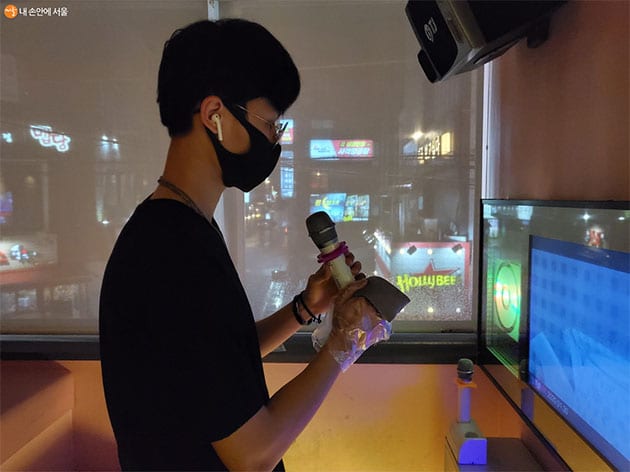
Pick up the microphone and test it briefly after the system is active. Do not tap or hit the grille; a quiet spoken sound is enough. If there are two microphones, use the one already paired with the channel shown on screen.
Common controls include:
- 음량: volume
- 마이크: microphone level
- 에코: echo
- 음정 or 키: key
- 템포: tempo
- 남 / 여: male/female preset key shift on some systems
Keep the first song near the default. Excessive echo makes timing harder, and a high microphone level can cause feedback. If the key is uncomfortable, use one small step at a time. The goal is not to match the original singer's range. It is to finish the chorus with your voice intact.
Scoring is entertainment, not vocal science. The machine measures limited signals and can reward sustained notes or timing differently from how a human listener would. A score of 72 does not mean Seoul has rejected your artistry.
Solo Coin Noraebang Is Normal
Korea's compact entertainment spaces make solo use practical. You are paying for the booth, not performing a public audition. Staff are used to individuals entering, singing briefly, and leaving.
For a comfortable first solo visit, go in daylight or early evening, choose a visible well-maintained venue, and buy a small song bundle. Start with a track you know completely. The booth is less intimidating after the first chorus.
Solo practice also changes how you use the controls. You can repeat a difficult song, lower the key, or stop between tracks without negotiating with friends. If you are protecting your voice, treat fifteen focused minutes as more valuable than an hour of shouting.
Travelers sometimes worry that everyone outside can hear them. Soundproofing varies, and the hallway may hear muffled sound, but each room is producing its own music. Nobody is waiting to review your bridge.
Etiquette: Keep the Private Room Easy for the Next Person
Coin noraebang is private, not consequence-free. Equipment is shared and the next guest may enter minutes after you leave.
Do not smoke or vape unless a clearly designated legal area says otherwise. Do not bring messy food into a booth that prohibits it. Keep drinks away from the console, microphone receiver, and speaker equipment. Follow age, alcohol, and operating-hour rules shown at the venue.
Use the microphone normally. Swinging it by the cable, dropping it onto the bench, screaming directly against the grille, or hitting it for rhythm damages equipment and is unpleasant for the next guest.
In a pair or group, rotate fairly. Coin songs are visible units, so agree whether each person gets one turn or whether duets count differently. Cancel an accidental queue before it starts rather than arguing through the intro.
Before leaving:
- Return microphones to their hooks or holders.
- Take your phone, wallet, jacket, and charging cable.
- Put trash in the designated bin.
- Stop any remaining queue if the venue instructs you to.
- Close the door without slamming it.
Safety and Voice Care
Choose a venue with a clear entrance, posted rates, working lights, and an obvious way to contact staff. Keep the door accessible and know how to exit. If a lock, payment device, electrical cable, or microphone appears damaged, change rooms and tell staff.
Protect personal belongings. A phone left charging in an unlocked booth is not automatically secure because the room feels private. Keep bags where you can see them and check the bench before leaving.
For your voice, warm up gently and drink water. Avoid trying to overpower the speaker. Lower the backing track or microphone level instead. If your throat hurts, stop. A holiday does not need a vocal injury caused by the final chorus of a song written for several trained performers.
Low-latency practice: For quiet rehearsal between outings, compare wired in-ear headphones; a simple wired pair avoids the delay that can make singing against a Bluetooth backing track feel late.
When Coin Noraebang Fits a Seoul Itinerary
Coin noraebang works best as a flexible connector, not a destination that requires crossing the city. Use it after dinner, during rain, while waiting for a friend, or between shopping and the subway. Areas around universities, entertainment districts, and busy stations often have multiple options.
| Situation | Best Plan | Why |
|---|---|---|
| Solo first visit | Three familiar songs in early evening | Low cost and low pressure |
| Two friends after dinner | Alternate songs, then one duet | Fair queue and clear stopping point |
| Rainy shopping day | Use a nearby booth, not a distant “famous” one | Keeps the itinerary efficient |
| Serious K-pop practice | Time bundle, water, key adjustments | Better for repetition than random song hopping |
| Large group celebration | Choose a traditional noraebang instead | More space and better group value |
Pair the experience with EpicKor's PC bang guide, Korean board game cafe guide, Hongdae guide, and Seoul rainy-day guide. Together they explain why Seoul packages play, privacy, equipment, and time into rooms that can be rented for one activity.
FAQ About Coin Noraebang in Seoul
Q: How much does coin noraebang cost in 2026?
There is no single citywide price. Venues sell different song counts or time bundles and may change promotions. Read the posted rate before paying and start with a small package.
Q: Can I use a foreign credit card?
Maybe, but not reliably. Some kiosks accept cards or mobile payment while others rely on Korean payment systems, cash, or coins. Carry small won notes and coins as a backup.
Q: Can I search for English songs?
Most modern catalogs include international songs. Search by English title or artist, use an English keyboard if available, or enter a verified song number for that machine's catalog.
Q: Is it strange to go alone?
No. Compact booths and per-song pricing make solo singing and practice a normal use case.
Q: Is coin noraebang open all night?
Some venues operate late, but hours and youth-access rules vary. Check the specific location on the day rather than assuming 24-hour operation.
Q: What if the machine takes my money but gives no credit?
Do not insert more money immediately. Photograph the display and room number, then contact onsite staff or the posted support number. Keep the transaction record if you paid electronically.
Sources
You Might Also Like
Have All BTS Members Finished Korean Military Service? 2026 Status
Yes — all seven finished. Jin was discharged 12 June 2024, J-Hope 17 October 2024, and RM, V, Jimin, Jung Kook and SUGA between 10 and 21 June 2025. Full dates, why SUGA served longer, and what BTS did after the uniforms came off.

BTS Part 2: The Korean Group's English Gamble and the ARMY Machine
How BTS beat Justin Bieber's 6-year Billboard streak, spoke at the UN, and became the first Korean act to hit No. 1 on the Hot 100.

BTS Part 1: Seven Unknown Korean Trainees at a Label With No Money
How BTS went from a nearly bankrupt Korean label and one teenage rapper to the FIFA World Cup Final stage. Part 1 of EpicKor's BTS history series.