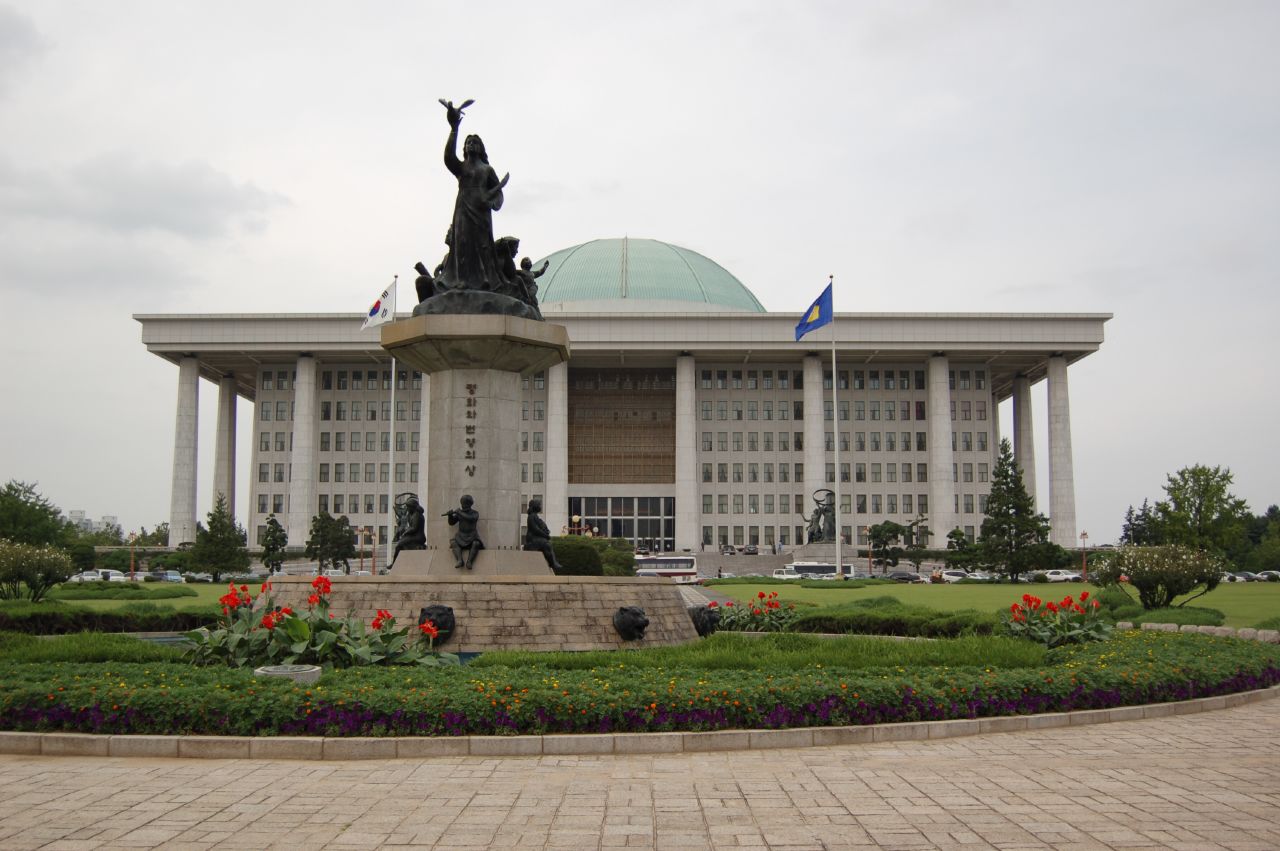
South Korean Political Parties and Presidents 2026
South Korean political parties are easier to misunderstand than Korean elections themselves.
A foreign reader sees two large party names: the Democratic Party of Korea and the People Power Party. Then the names change, former parties merge, presidents are connected to older party labels, scandals happen, courts intervene, and another election resets the map. If you try to read Korea only through today's party logos, the history becomes distorted.
As of July 10, 2026, South Korea's president is Lee Jae-myung, who came from the Democratic Party. The People Power Party was the ruling party during the presidency of Yoon Suk Yeol from 2022 until his removal from office in 2025 and the early presidential election that followed. That sentence is factual, but it is not enough.
The useful question is colder: how did these two camps become the two main containers for Korea's liberal and conservative politics, and which presidents came through those lines?
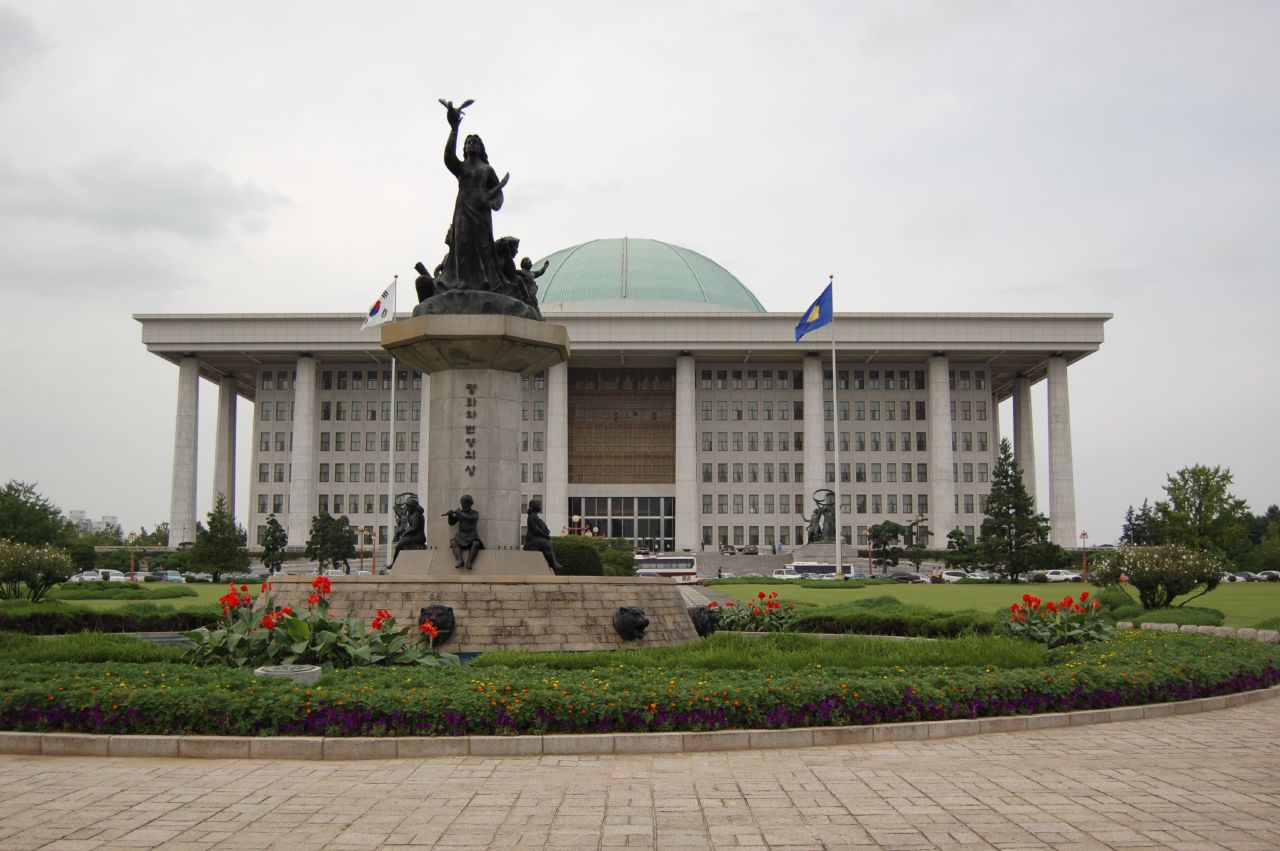
Quick Answer: What Are The Two Main Parties?
South Korea's current two-party structure is dominated by the Democratic Party of Korea, usually treated as the main liberal or progressive camp, and the People Power Party, usually treated as the main conservative camp.
That description is conventional, not perfect. Korean parties are not permanent institutions in the way some foreign parties are. They split, merge, rename, absorb smaller groups, and rebuild around elections. A president may be historically connected to a camp even if the current party name did not exist at the time.
The Democratic Party line is usually associated with presidents such as Kim Dae-jung, Roh Moo-hyun, Moon Jae-in, and Lee Jae-myung, though the party names and organizations around them changed across decades.
The conservative line associated with today's People Power Party includes presidents such as Lee Myung-bak, Park Geun-hye, and Yoon Suk Yeol, again with different party names at the time.
The point is not to score either side. The point is to read the labels correctly.
Korea politics reading note: As an Amazon Associate, EpicKor may earn from qualifying purchases. If this guide makes you want more context, compare South Korea politics books and Korean history books before treating one election result as the whole story.
The Cold Timeline Since Democratization
Modern Korean party politics cannot be separated from 1987. That year matters because South Korea moved into the democratic Sixth Republic with direct presidential elections and a single five-year presidential term.
From that point forward, presidents no longer governed as repeat-term incumbents. They entered office with one fixed term, while parties had to survive after them. That is one reason party labels change often. A presidential victory can create a new coalition; a scandal or defeat can destroy one.
Here is the simplified post-1987 sequence:
| Election Era | President | Broad Camp | Why It Matters Structurally |
|---|---|---|---|
| 1987 | Roh Tae-woo | Conservative establishment line | First direct presidential election of the Sixth Republic. |
| 1992 | Kim Young-sam | Conservative coalition line | Civilian president after military-backed political era. |
| 1997 | Kim Dae-jung | Liberal opposition line | First opposition-party transfer of presidential power. |
| 2002 | Roh Moo-hyun | Liberal reform line | Expanded the reformist and participatory politics lane. |
| 2007 | Lee Myung-bak | Conservative line | Returned conservative camp to the presidency. |
| 2012 | Park Geun-hye | Conservative line | First female president; later removed after impeachment. |
| 2017 | Moon Jae-in | Democratic Party line | Early election followed Park's removal. |
| 2022 | Yoon Suk Yeol | People Power Party line | Conservative camp returned to power. |
| 2025 | Lee Jae-myung | Democratic Party line | Early election followed Yoon's removal. |
This table does not say who governed well. It only records the alternation of power and the party line attached to each presidency.
Democratic Party Of Korea: The Liberal Camp's Current Container
The Democratic Party of Korea is the current major party on the liberal side of Korean politics. Its roots are not a straight line from one founding date to the present. They pass through opposition movements, democratic reform politics, mergers, renamings, and electoral coalitions.
That is why it is safer to describe the Democratic Party line rather than pretending every liberal president belonged to the exact same legal party.
Kim Dae-jung's presidency from 1998 to 2003 is a key point in this history. His election in 1997 was the first peaceful transfer of presidential power to an opposition candidate in South Korea. It came during the Asian financial crisis and changed the sense of what electoral turnover could mean in the country.
Roh Moo-hyun followed in 2003 through the liberal reformist lane. His presidency was marked by decentralization debates, generational political energy, difficult relations with conservative institutions, and later post-presidential controversy. He was not simply a repeat of Kim Dae-jung. He represented a different social and political style inside the broad liberal camp.
Moon Jae-in became president in 2017 after Park Geun-hye was removed from office. His administration was linked to the Democratic Party name as foreign readers recognize it today. It also showed how impeachment can reset party power in Korea without requiring a normal five-year cycle to finish.
Lee Jae-myung became president after the 2025 election that followed Yoon Suk Yeol's removal. That made the Democratic Party the ruling camp again as of 2026.
People Power Party: The Conservative Camp's Current Container
The People Power Party is the current major conservative party. It was founded in 2020 as part of a conservative reorganization and later became the main party behind Yoon Suk Yeol's 2022 presidential victory.
That does not mean Korean conservatism began in 2020. The conservative line runs through earlier parties such as the Grand National Party, Saenuri Party, Liberty Korea Party, and United Future Party. Those labels matter because Lee Myung-bak and Park Geun-hye were not elected under the current People Power Party name.
Lee Myung-bak served from 2008 to 2013 after winning as a conservative candidate. His presidency is often remembered through economic-management themes, major infrastructure politics, and later legal controversies after leaving office.
Park Geun-hye served from 2013 until 2017. She was South Korea's first female president and the daughter of former president Park Chung-hee. Her presidency ended when the Constitutional Court upheld her impeachment in 2017.
Yoon Suk Yeol served from 2022 until 2025. He entered politics after a career as a prosecutor and won the presidency as the People Power Party candidate. His presidency ended after impeachment and removal, followed by the 2025 early election. EpicKor's sourced December 2024 martial law crisis timeline separates the Assembly vote, impeachment judgment, criminal proceedings, and snap election.
Again, this is not a moral ranking. It is a sequence of institutional facts.
Why Korean Party Names Change So Often
Foreign readers sometimes assume that a party name should behave like an old institution. In Korea, a party name often behaves more like a coalition brand.
There are several reasons.
First, presidential elections are high-pressure, winner-take-all moments. A party that loses badly may decide that the brand has become politically expensive. Rebranding can signal a new start, even when many personnel remain.
Second, Korean parties often form around factions, regions, leaders, and crisis moments. A party may merge with another group before an election, split after a leadership fight, or rename itself after a scandal.
Third, the single five-year presidential term creates a strange incentive. A president cannot run again, but the party must keep running. Once the president becomes unpopular, the party may try to distance itself. Once a new candidate becomes popular, the party may reorganize around that person.
Fourth, impeachment has changed party history twice in recent memory. Park Geun-hye's removal preceded the 2017 election won by Moon Jae-in. Yoon Suk Yeol's removal preceded the 2025 election won by Lee Jae-myung. These were not ordinary handovers after completed terms.
For broader Korean civic context, EpicKor's Ahjussi meaning guide, Korean hierarchy at work guide, and Korean university life guide help explain why age, status, institutions, and language all carry social weight beyond formal politics.
Presidents And Parties: Do Not Force A Simple Family Tree
The cleanest mistake is to say: Democratic Party presidents here, People Power presidents there.
That is too simple.
Kim Dae-jung, Roh Moo-hyun, Moon Jae-in, and Lee Jae-myung belong to the broad liberal or Democratic line, but they came through different party organizations and political moments.
Lee Myung-bak, Park Geun-hye, and Yoon Suk Yeol belong to the broad conservative line associated with the parties that eventually became or preceded the People Power Party, but they also came from different versions of that camp.
Korea's older presidents before democratization do not map neatly onto today's parties. Park Chung-hee, Chun Doo-hwan, and Roh Tae-woo belong to authoritarian or military-linked eras that shaped later conservative politics, but it would be inaccurate to treat them as simple People Power Party figures. The party did not exist then.
The proper method is to separate:
- legal party at the time of election
- broad ideological camp
- governing coalition
- later party inheritance
- historical memory
That makes the story less dramatic, but more accurate.
Context before opinion: If Korean elections feel confusing, compare Korean constitution and government books or a broader modern Korean history book. Party labels make more sense when the constitutional timeline is clear.
How To Read Korean Politics Without Picking A Side
The neutral reading method is boring, but it works.
First, check the date. A 2020 article, 2022 article, 2025 article, and 2026 article may all describe different party arrangements.
Second, check whether the source is talking about the legal party, the broader camp, or a faction. Those are not the same.
Third, separate impeachment, criminal investigation, election defeat, and policy failure. They are different categories. Putting them all into one word like "scandal" loses accuracy.
Fourth, do not assume a president controls the whole party forever. Korean parties can turn on their own presidents, reorganize around new leaders, or split into factions.
Fifth, avoid treating politics as a simple left-right import from another country. Korea's parties are shaped by democratization, regional history, North Korea policy, prosecution politics, generational conflict, housing, labor, gender debates, education, and chaebol reform. Imported labels help only a little.
Sources Checked
This guide was checked against the Democratic Party of Korea party profile, the People Power Party party profile, the list of South Korean presidents, the presidency profile, and AP reporting on Yoon Suk Yeol's 2025 removal from office. Current political positions, party leadership, seat totals, and litigation can change, so this article avoids live faction claims unless they are needed for the historical frame.
FAQ
Q: Is the Democratic Party of Korea the current ruling party?
As of July 10, 2026, President Lee Jae-myung came from the Democratic Party, so it is the presidential ruling camp. Legislative control and party standings should be checked separately because National Assembly balance can change through elections, defections, and by-elections.
Q: Is the People Power Party the same as all Korean conservatism?
No. It is the current major conservative party, but Korean conservatism existed through earlier party names and coalitions before the People Power Party was created in 2020.
Q: Which presidents are linked to the Democratic Party line?
Kim Dae-jung, Roh Moo-hyun, Moon Jae-in, and Lee Jae-myung are usually discussed within the broad liberal or Democratic line, though their exact party organizations differed by period.
Q: Which presidents are linked to the conservative or People Power line?
Lee Myung-bak, Park Geun-hye, and Yoon Suk Yeol are usually discussed within the broad conservative line associated with the parties that preceded or became today's People Power Party.
Q: Why do Korean parties change names so much?
Parties often rename, merge, or split after elections, scandals, factional disputes, or leadership changes. The presidential system also creates pressure because a president serves only one five-year term while the party must continue competing.
Q: Is this article saying one side is better?
No. It is only mapping parties, presidents, elections, and institutional events. Evaluating policy performance would require a separate article with a different method.
You Might Also Like
South Korea Explained: K-Pop, Growth, Tragedy, and Resilience
A clear guide to South Korea's compressed development, Hallyu soft power, historical trauma, safety reforms, and why modern Korea feels intense.
Why the Korean War Armistice Still Shapes Daily Life in Seoul
A careful guide to the Korean War Armistice, the DMZ, South Korea's calm under tension, travel safety context, and what visitors should know.

Korean Spa Prices and Tattoo Rules: Spa Land Busan, Cimer and Aquafield
Spa Land does not ban every visible tattoo, and Korean spas are not all tattoo-friendly. The written rules, plus October 2026 prices: Spa Land ₩26,000 for four hours, Cimer ₩60,000 rising to ₩70,000 on 1 December, Aquafield ₩26,000.