
BTS Guide 2026: The Korean Group's Members, ARMY, and Military Return
A BTS guide in 2026 has to start in a different place than an older BTS article. The group is no longer only a story of underdog rise, Grammy nominations, Billboard records, and global fandom. BTS is also now a post-military-return story. All seven members have completed their mandatory service, the fandom has passed through a long solo-project era, and new listeners are trying to understand why the group still matters.
This guide is for that reader: someone who knows the name BTS, maybe knows “Dynamite” or “Butter,” but wants a clean map of the members, ARMY, military timeline, music identity, and Korean cultural context.

Who Are BTS?
BTS is a seven-member South Korean group under BIGHIT MUSIC. The official BIGHIT profile describes BTS as an acronym for Bangtan Sonyeondan or “Beyond the Scene,” and says the group debuted in June 2013. The members are RM, Jin, SUGA, j-hope, Jimin, V, and Jung Kook.
That official profile also emphasizes self-produced music, performance, fan interaction, the LOVE MYSELF campaign, the UN “Speak Yourself” speech, major awards, and the group's global fan community, ARMY.
For a beginner, the key point is simple: BTS became enormous because the group combined idol performance with unusually strong narrative continuity. Fans did not only follow songs. They followed growth, friendship, lyrics, vulnerability, documentary-style content, and a shared language of resilience.
K-pop and K-drama fan goods — compare on AmazonAffiliate link. As an Amazon Associate, EpicKor earns from qualifying purchases at no extra cost to you.
The Seven Members at a Glance
| Member | Common role in the group story | Beginner listening angle |
|---|---|---|
| RM | Leader, rapper, lyric anchor | Start with introspective lyrics and speeches |
| Jin | Vocalist, oldest member, warmth and humor | Notice ballads, fan communication, and post-service symbolism |
| SUGA | Rapper, producer, sharp personal writing | Compare BTS tracks with Agust D solo work |
| j-hope | Rapper, dancer, performance energy | Watch dance-focused stages and solo color |
| Jimin | Vocalist, dancer, emotional stage presence | Look for performance detail and tone |
| V | Vocalist, visual mood, deep-tone color | Follow slower tracks, fashion imagery, and acting-adjacent appeal |
| Jung Kook | Main vocalist, youngest member, pop versatility | Start with solo pop tracks and live vocals |
If you are reading because of one member, that is fine. BTS fandom often begins with one bias and then expands into the group story.
What Changed After Military Service?
Older BTS articles often speak in future tense about reunion. That is outdated. Korea.net reported in June 2025 that RM and V were discharged on June 10, Jimin and Jung Kook on June 11, and SUGA would finish his duty on June 21, completing the reunion of all seven members. Yonhap also reported that SUGA's discharge marked the remaining step after the other six members completed service.
That means 2026 BTS coverage should not say “all seven will be back by June 2025” as if it has not happened yet. The post-service era is now the context.
For member-specific civic context, EpicKor's BTS V military-service guide explains why discharge dates mattered to fans and Korean public life.
Why Military Service Was Such a Big Deal
South Korea requires most able-bodied men to complete mandatory service. For global fans, BTS's enlistment period felt like a pause. In Korea, it also placed the group inside a national civic system that affects ordinary men, celebrities, athletes, and public debate.
BTS's service period mattered because it tested whether the fandom could stay active without full-group promotions. The answer was yes. Solo projects, archives, Festa events, fan activity, and anticipation kept the group present.
Start with the fan basics: As an Amazon Associate, EpicKor may earn from qualifying purchases. If BTS pulls you into albums, displays, or watch-party gifts, compare K-pop and K-drama fan goods without treating every listing as official merchandise.
Why BTS Felt Different From Earlier K-pop Groups
BTS did not invent K-pop, social media fandom, or idol storytelling. But the group aligned those pieces unusually well.
They offered:
- Member personalities that fans could follow over time.
- Lyrics about youth pressure, insecurity, dreams, burnout, and self-acceptance.
- Strong performance structure across rap, vocals, and dance.
- Constant behind-the-scenes and fan-facing content.
- A fandom identity, ARMY, that felt participatory rather than passive.
This is why BTS became a “gateway” group. Many listeners entered through one song, one member, one dance practice, one UN speech, or one meme, then discovered Korean music more widely.
The gateway effect matters for EpicKor readers because it often leads beyond music. A BTS fan may start with a music video, then learn Hangeul, search Seoul neighborhoods, compare albums, buy photocards, visit a birthday cafe, and finally plan a Korea trip around concerts, pop-ups, or filming-location style stops. BTS turns curiosity into a whole Korea-facing behavior loop.
BTS and Korean Hip-Hop
BTS's rap line is one reason global fans became curious about Korean hip-hop. RM and SUGA had pre-idol rap backgrounds, while j-hope became central to the group's performance and rap identity. That history does not make BTS a pure hip-hop group, but it does explain why authenticity debates followed them from the beginning.
If you want to understand that wider scene, read EpicKor's Korean hip-hop guide. BTS makes more sense when you understand how Korean rap, idol training, and pop performance overlap.
How to Start Listening
Do not begin with a random ranking of “best BTS songs.” Start by choosing the question you care about.
| If you want... | Start with... | Why |
|---|---|---|
| Global pop entry | “Dynamite,” “Butter,” “Permission to Dance” | Easy English-language access and huge public recognition |
| Emotional group identity | “Spring Day,” “Life Goes On” | Shows why fans attach memory and comfort to the group |
| Performance energy | Dance practices and award stages | BTS is visual and physical, not only audio |
| Rap-line depth | RM, SUGA/Agust D, and j-hope solo work | Shows writing, production, and individual voice |
| Current context | Post-service news and official discography | Prevents outdated reunion assumptions |
BIGHIT's official discography is useful because it gives the album sequence directly, including major releases such as Proof, BE, Butter, Map of the Soul: 7, and earlier albums.
What Is ARMY?
ARMY is BTS's fandom. But that simple answer undersells it. ARMY functions as fan community, translation network, streaming force, charity organizer, meme engine, buyer group, and travel motivator.
That is why BTS has effects far beyond music charts. Fans buy albums and photocards, visit Seoul, attend pop-ups, learn Korean phrases, watch Korean variety, and explain Korean culture to friends. The fandom becomes a bridge.
For the collecting side, EpicKor's K-pop photocard guide and K-pop birthday cafe guide explain how fan attention turns into real-world goods, routes, and events.
The Solo Era Did Not Break the Group Story
One reason BTS remained visible during military service is that the solo era did not feel like a random set of side projects. It gave each member a clearer color. Some fans followed vocal releases, some followed rap projects, some followed fashion and ambassador work, and some followed documentary or livestream moments. The group story became wider rather than silent.
For new fans, this is helpful. You can start with one member's solo work, then move backward into group albums. You do not need to consume everything chronologically. A Jung Kook listener can arrive through polished global pop. An RM listener can arrive through reflective songwriting. A SUGA listener can arrive through production and personal rap. A j-hope listener can arrive through performance energy. Then the group catalog begins to feel less overwhelming.
The only caution is not to mistake a solo lane for the whole group. BTS works because the members' individual colors return to a shared structure.
BTS and Korean Soft Power
Korea.net's 2025 discharge article did more than report military timing. It connected BTS's return to Festa, ARMY, HYBE headquarters decorations, and the group's anniversary. That is a soft-power story: a pop group becomes a national cultural event, a tourism signal, and a global media moment.
The danger is turning BTS into a government slogan. They are artists first. But their global impact also helps explain why Korean language, food, beauty, drama, fashion, and travel became easier for international audiences to approach.
Keep the small collectibles safe: If albums or fan events lead to photocards, compare photocard sleeves and toploaders before storing cards loosely in a bag or drawer.
What Beginners Should Avoid
Avoid these common mistakes:
- Do not assume every solo project sounds like group BTS.
- Do not treat old military-service predictions as current facts.
- Do not call every fan-made item official.
- Do not reduce ARMY to chart tactics; the community is broader than streaming.
- Do not start with fan wars. Start with music and context.
That last point matters. BTS is surrounded by intense online debate. You can understand the group better by listening first and arguing later, preferably never.

FAQ
Q: Are all BTS members back from military service?
Yes. As reported in June 2025, the discharge sequence was complete with SUGA's service ending after the other six members had already returned.
Q: Who are the seven BTS members?
The members are RM, Jin, SUGA, j-hope, Jimin, V, and Jung Kook.
Q: What does BTS stand for?
BIGHIT's official profile says BTS comes from Bangtan Sonyeondan and also “Beyond the Scene.”
Q: What is ARMY?
ARMY is BTS's fandom. It is a global fan community involved in listening, translating, collecting, organizing, charity work, and travel-driven Hallyu activity.
Q: Where should a new fan start?
Start with a few accessible songs, then watch live performances, then explore each member's solo color. Avoid trying to memorize everything in one day.
Q: Is BTS still part of K-pop?
Yes, but they are also a global pop act and Korean soft-power reference point. Both descriptions can be true at the same time.
Sources
- BIGHIT MUSIC: BTS official profile
- BIGHIT MUSIC: BTS official discography
- Korea.net: BTS military discharge sets stage for all-seven reunion
- Yonhap News Agency: SUGA discharge and BTS service completion context
- HYBE: Artist roster and company context
Video Insight: The BTS Untold Story
You Might Also Like
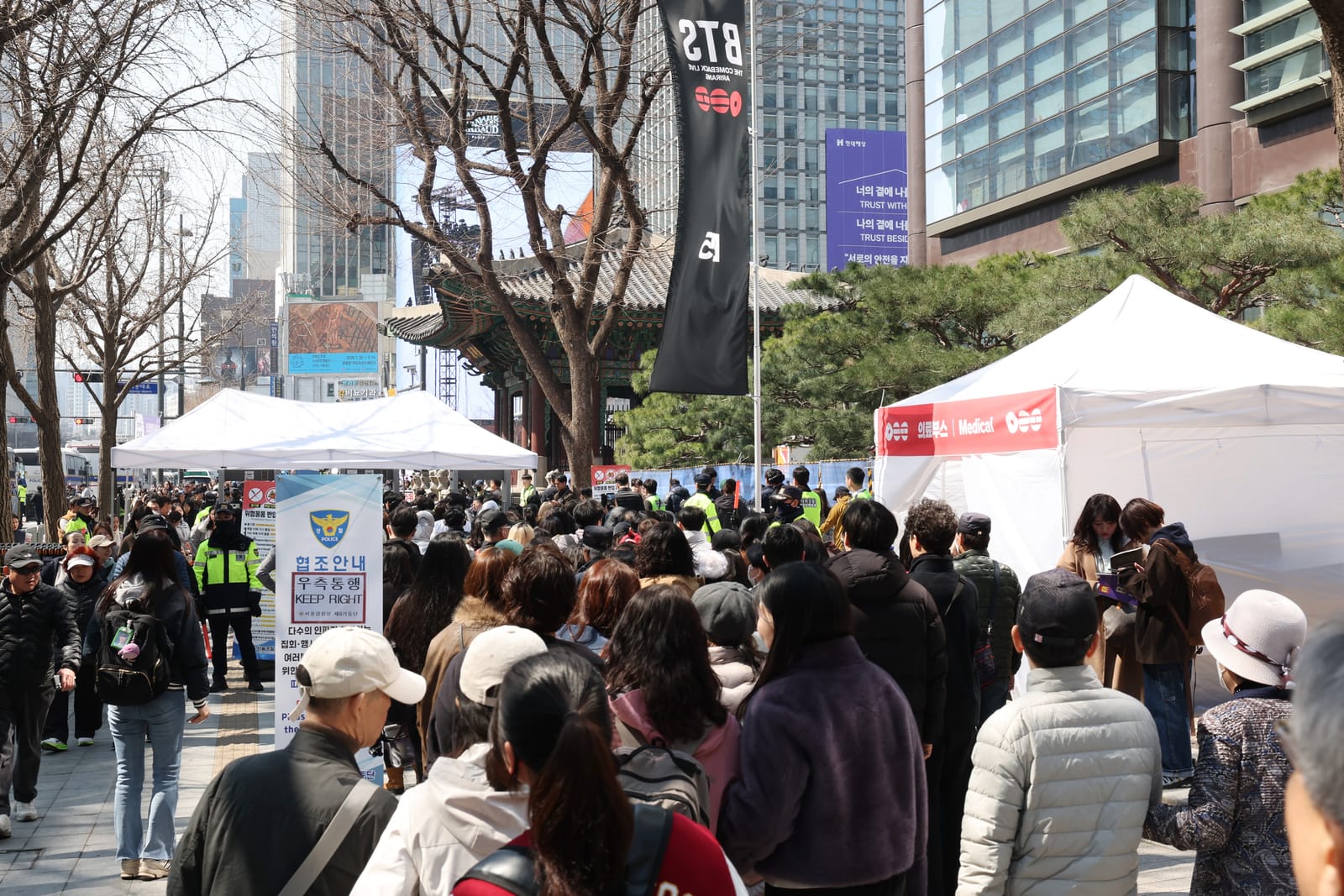
Have All BTS Members Finished Korean Military Service? 2026 Status
Yes — all seven finished. Jin was discharged 12 June 2024, J-Hope 17 October 2024, and RM, V, Jimin, Jung Kook and SUGA between 10 and 21 June 2025. Full dates, why SUGA served longer, and what BTS did after the uniforms came off.
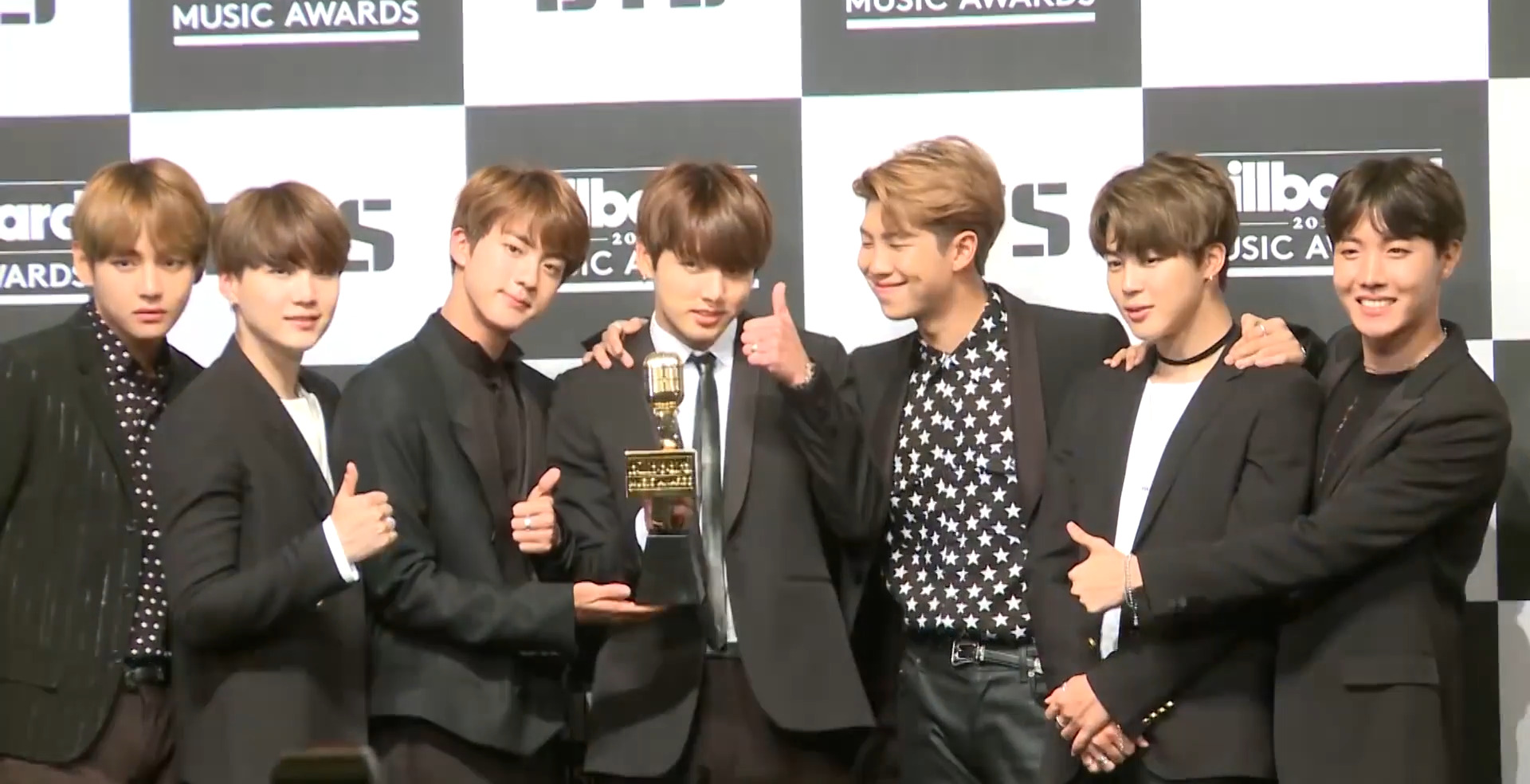
BTS Part 2: The Korean Group's English Gamble and the ARMY Machine
How BTS beat Justin Bieber's 6-year Billboard streak, spoke at the UN, and became the first Korean act to hit No. 1 on the Hot 100.
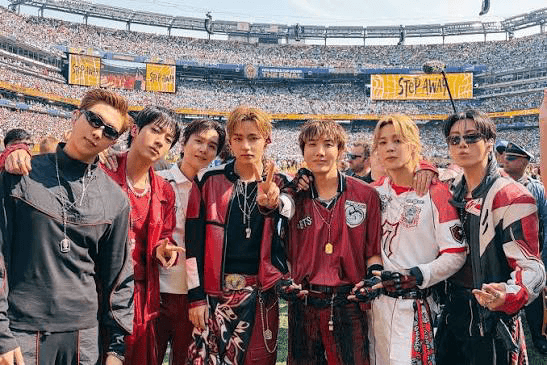
BTS Part 1: Seven Unknown Korean Trainees at a Label With No Money
How BTS went from a nearly bankrupt Korean label and one teenage rapper to the FIFA World Cup Final stage. Part 1 of EpicKor's BTS history series.