BTS Part 1: Seven Unknown Korean Trainees at a Label With No Money
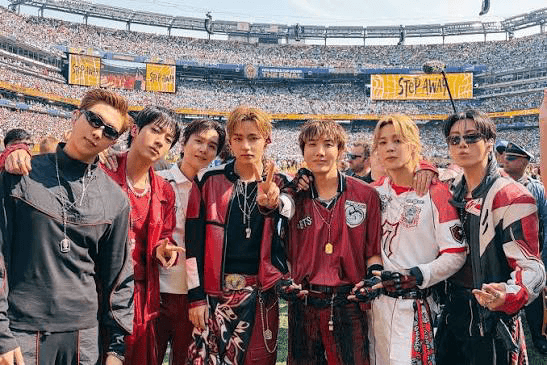
On July 19, 2026, seven men in coordinated red-and-black looks walked onto the field at MetLife Stadium in New Jersey. It was the FIFA World Cup Final — the single most-watched sporting event on Earth — and for the first time in the tournament's history, organizers had built a real halftime show around it. Madonna was on the bill. So was Shakira. So was Justin Bieber, who came out for an acoustic number introduced by Jason Sudeikis and Brendan Hunt in their Ted Lasso characters. Post Malone had already opened the day's festivities during the pregame ceremony, debuting a brand new song in front of the biggest crowd he will probably ever play for.
And then BTS ran out and tore through "Dynamite."
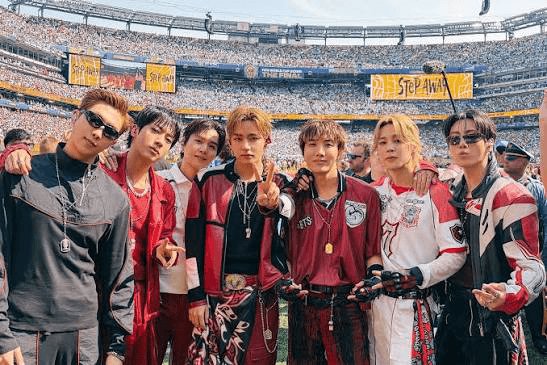
Two minutes. That's roughly how long BTS's slot in the World Cup's first-ever halftime show actually lasted, sandwiched between Madonna and Shakira in a lineup that Chris Martin of Coldplay personally curated. Two minutes is not a lot of time. But it was two minutes on a stage that, for most of history, simply did not include Korean pop groups — or realistically, any Asian musical act at that scale. FIFA and Global Citizen built this show to raise attention (and reportedly around $100 million) for global education and youth soccer programs, and they built it around a handful of artists they considered unimpeachably global. BTS was one of them.
That's the part worth sitting with before anything else: a Korean group was treated as a default answer to "who represents global pop music" by an organization that had never needed to ask that question in these terms before. This three-part series is about how that happened — not as a vague "they worked hard" story, but as a specific, traceable sequence of decisions, near-failures, and one very risky bet made by a record label that almost didn't survive long enough to sign them.
K-pop and K-drama fan goods — compare on AmazonAffiliate link. As an Amazon Associate, EpicKor earns from qualifying purchases at no extra cost to you.
A Record Label That Was Nearly Bankrupt
Start in 2005. Bang Si-hyuk, a songwriter in his early thirties who had cut his teeth at JYP Entertainment, left to start his own label: Big Hit Entertainment. For the next several years, Big Hit did what most small Korean entertainment labels do — it developed solo artists and one idol group, and none of them made money. By around 2007, according to Bang's own later account, the company was close enough to bankruptcy that it survived on personal loans, delayed salaries, and a small staff willing to keep working on the promise of a future that hadn't arrived yet.
That is the actual starting condition. Not "a promising young company." A company that, by its founder's own description, was roughly one bad year from closing.
Around 2010, Bang made a decision that only makes sense in hindsight: he put most of what Big Hit had left into building a group around a 16-year-old underground rapper named Kim Namjoon. Namjoon had been writing and performing in Seoul's small hip-hop scene under the name Runch Randa before Big Hit recruited him. He would later be known to the entire world as RM — but in 2010, he was just the one bet a struggling label had decided to make everything on.
Over the next three years, six more members joined what would become BTS: Jin, SUGA, j-hope, Jimin, V, and Jung Kook, the youngest, recruited as a young teenager. They trained the way most K-pop trainees train — hours of dance drills and vocal lessons every day — except they did it inside a company that could not promise them the debut would ever come. Several members have said in later interviews that during these years they openly wondered whether Big Hit would survive long enough, or have enough money, to put them on stage at all. They lived together in a one-bedroom dorm the company provided, because that was what the company could afford.
A Market That Already Had Its Giants
To understand how much of an outsider bet this was, it helps to know what Korean pop music actually looked like in 2013. The industry ran, and still largely runs, on what fans and trade press call the "Big 3" system — SM Entertainment, YG Entertainment, and JYP Entertainment, three labels with decades of infrastructure, in-house songwriting teams, and idol groups that already had international followings. Girls' Generation, Big Bang, 2NE1, and a wave of SM-trained groups controlled the charts and the variety-show circuit. Getting real attention as an idol group in Korea in 2013 generally meant getting it through one of those three companies, or through connections and budget that competed with them.
Big Hit had none of that. It had one struggling label, a small staff, and a group built around a rapper from an underground scene that, at the time, had little overlap with mainstream idol pop at all. When trade outlets and fans discuss BTS's rise today, this is the detail that gets flattened the most: BTS did not rise within the existing system. They rose by building a separate one, out of necessity, because the existing one had no real reason to make room for a nobody label's hip-hop-idol hybrid.
The Debut Nobody Was Watching
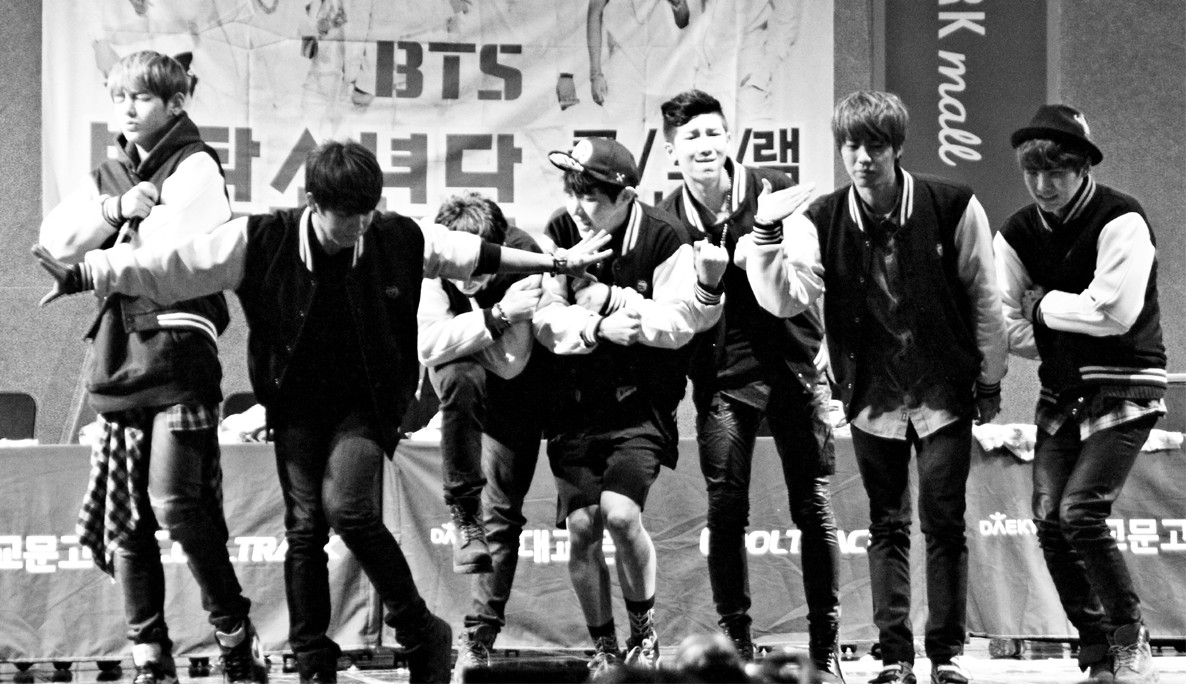
BTS released their debut single album, 2 Cool 4 Skool, on June 12, 2013, and took their first music-show stage the next day on Mnet's M Countdown. There was no viral moment. No breakout single that immediately reordered the charts. Korean music media at the time treated them, when it noticed them at all, as one more rookie idol group in a crowded year — except with an odd angle: the members rapped, and rapped like they meant it, in a scene (Korean idol pop) that underground hip-hop purists openly looked down on. BTS spent their first year absorbing a specific kind of criticism from both directions — too idol for hip-hop fans, too rap-focused for typical idol fans — while performing at the kind of small fanmeetings and regional fansigns that every rookie group works through: subway-station meetups, department store event stages, a slot at Incheon's Korean Music Wave.
Their first releases were not random singles either. 2 Cool 4 Skool, the follow-up O!RUL8,2? (September 2013), and Skool Luv Affair (2014) formed what fans now call the "School Trilogy" — a deliberately connected run built around one concept: the defiant, pressured, not-yet-formed identity of a teenager still in school. It is a small detail that explains a lot. Before BTS had any real audience to speak of, they were already writing about the specific anxieties of being young in a system that tells you exactly who to become. That was not a marketing team's idea of what might sell. It was closer to autobiography — RM, SUGA, and j-hope wrote much of it themselves, and the members were, quite literally, still teenagers or barely out of their teens while performing it.
Following along from the beginning: As an Amazon Associate, EpicKor may earn from qualifying purchases. If BTS's origin story has you curious about the wider world of K-pop and K-drama fandom, browse K-pop and K-drama fan goods — a useful starting point rather than an official merch guarantee.
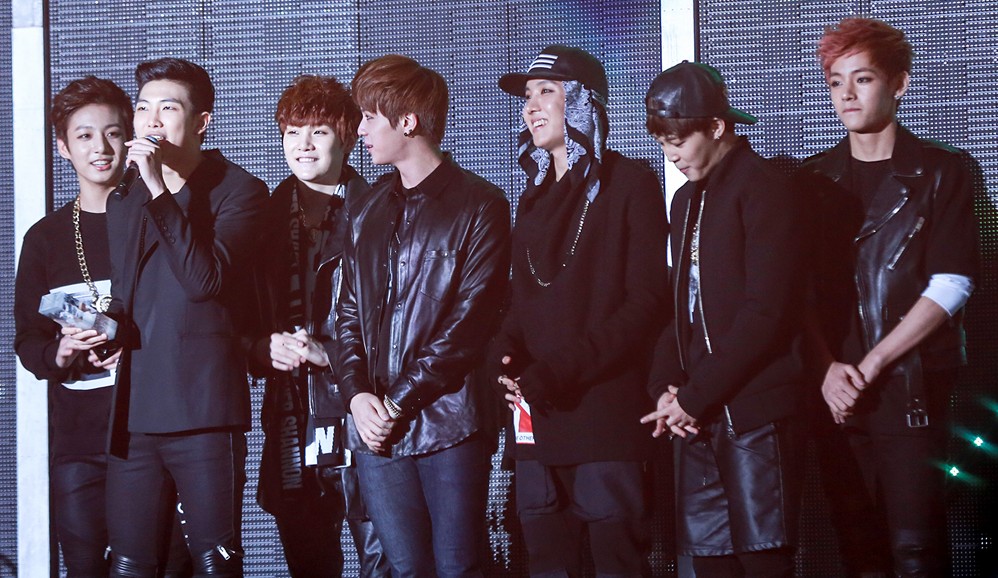
Five months after that quiet debut, something small but real happened: BTS won Best New Artist at the 2013 Melon Music Awards. It wasn't the biggest new-artist prize on the Korean calendar that year, and it didn't make them famous overseas. But for a group that had trained inside a company that might not have survived to debut them at all, it was the first outside confirmation that the bet had not been a total loss.
Why This Beginning Actually Matters
It's tempting to skip past the trainee years and the small awards on the way to the more dramatic later chapters — the Billboard No. 1, the United Nations speech, the World Cup stage. But the specific shape of BTS's beginning explains choices the group made later that a more comfortable, well-funded debut would not have required.
Because Big Hit had no major-label marketing budget to compete with, BTS leaned hard into direct-to-fan content almost from day one. Starting in 2014, the members began filming and posting their own behind-the-scenes clips — backstage at music shows, in the van between schedules, goofing around at dance practice — under the name "Bangtan Bomb." No production crew, no scripted concept, just members with a camera and downtime. It cost the company almost nothing and it worked precisely because a "Big 3" label with a packed promotional budget would never have needed to bother. Because the members had lived through years of not knowing whether they would debut at all, the lyrics that eventually made BTS distinct — about pressure, self-doubt, and youth anxiety — came from something the members had actually lived, not a concept assigned by a planning team. Big Hit's near-bankruptcy in the 2000s isn't a footnote to BTS's rise. It's the reason BTS built its own audience from zero, one small interaction at a time, instead of inheriting one.
For readers who want the fuller K-pop backdrop this all sits inside — training systems, the hip-hop-versus-idol tension, and how Korean labels operate — EpicKor's Korean hip-hop guide and BTS reference guide fill in that wider context.
Want the vocabulary to go with the story? As an Amazon Associate, EpicKor may earn from qualifying purchases. The K-pop Dictionary is a practical reference for the Korean slang and fandom terms that come up constantly once you start following a group's history this closely.
See The K-pop Dictionary on AmazonNone of that guaranteed what came next. A good origin story doesn't automatically produce a Billboard No. 1 or a UN podium. What it produced, by the end of 2013, was seven members, one modest award, a small but genuinely attentive fanbase, and a label that — barely — was still in business. Part 2 of this series picks up from there: the specific, deliberate bet on English-language singles and direct fan engagement that turned that small foundation into a group that broke Billboard's biggest chart.
Frequently Asked Questions
Q: When did BTS actually debut?
Their debut single album, 2 Cool 4 Skool, was released June 12, 2013, under Big Hit Entertainment (now HYBE). Their first live television stage followed the next day, June 13, on Mnet's M Countdown.
Q: Was Big Hit Entertainment really close to bankruptcy?
Yes. Founder Bang Si-hyuk has described the company as close to insolvency around 2007, several years after founding it in 2005, before recovering enough by 2010 to invest its remaining resources in building BTS around RM.
Q: Who was BTS built around first?
RM (then known by his real name, Kim Namjoon), a teenage underground rapper recruited by Big Hit around 2010. The other six members joined over the following three years.
Q: Did BTS perform at the 2026 FIFA World Cup Final alongside Justin Bieber and Post Malone?
BTS performed "Dynamite" during the World Cup Final's halftime show alongside Madonna, Justin Bieber, and Shakira. Post Malone performed separately, during the same Final's pregame ceremony, where he debuted a new song.
Q: Was BTS an instant success after debuting?
No. Their first year involved modest fanmeetings, mixed critical reception from both idol and hip-hop audiences, and one meaningful early win — Best New Artist at the 2013 Melon Music Awards — rather than an immediate breakout.
Sources
You Might Also Like
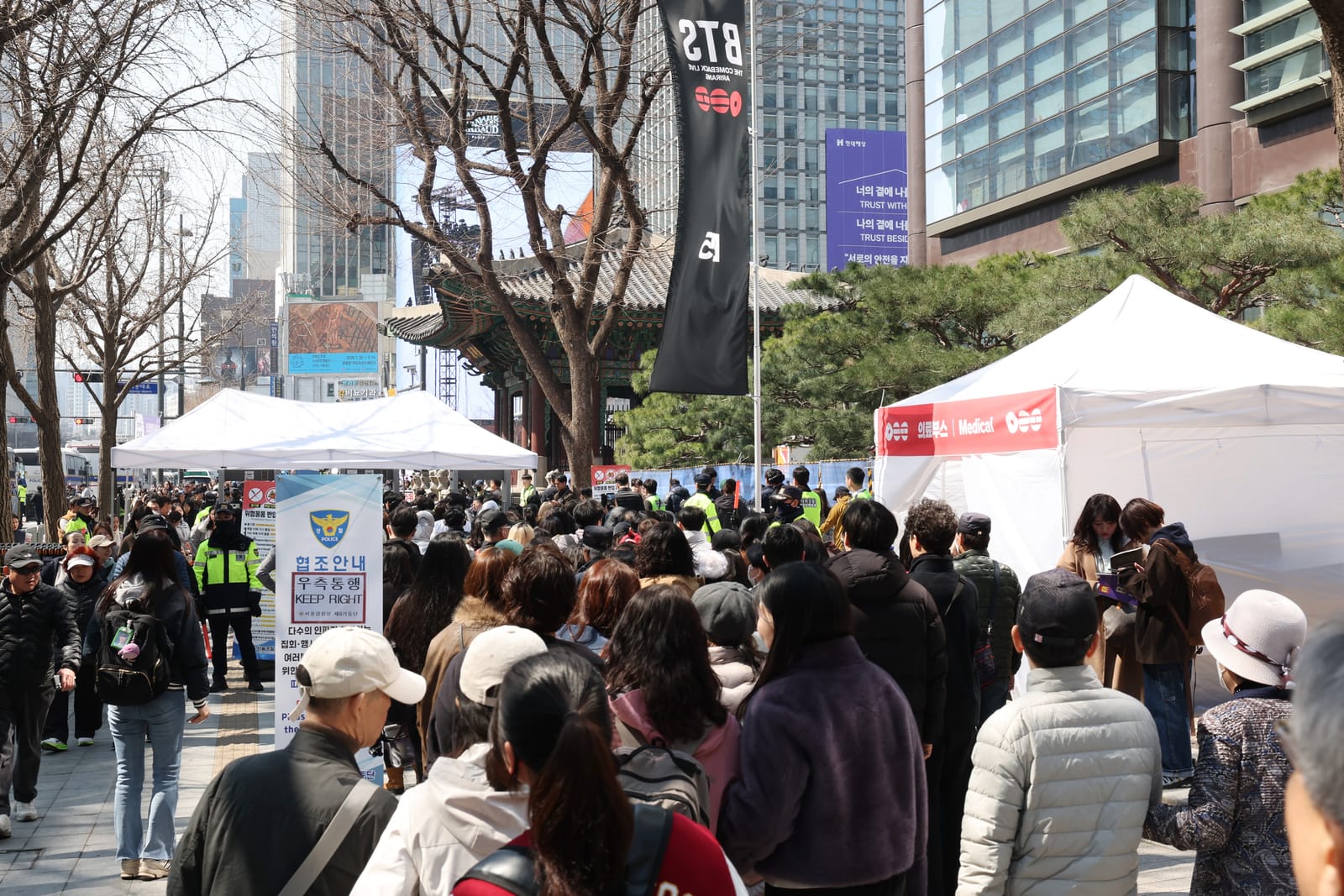
Have All BTS Members Finished Korean Military Service? 2026 Status
Yes — all seven finished. Jin was discharged 12 June 2024, J-Hope 17 October 2024, and RM, V, Jimin, Jung Kook and SUGA between 10 and 21 June 2025. Full dates, why SUGA served longer, and what BTS did after the uniforms came off.
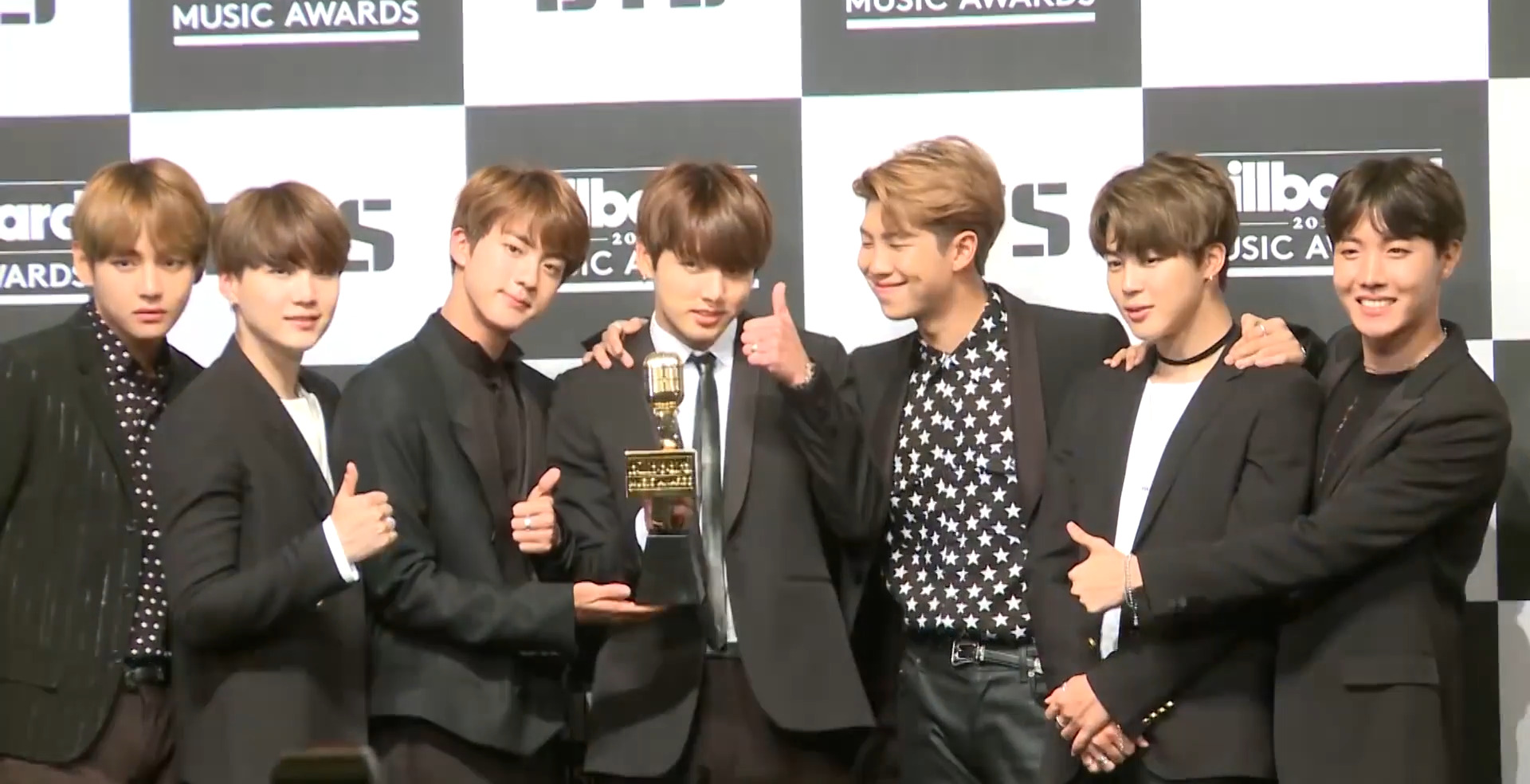
BTS Part 2: The Korean Group's English Gamble and the ARMY Machine
How BTS beat Justin Bieber's 6-year Billboard streak, spoke at the UN, and became the first Korean act to hit No. 1 on the Hot 100.
BTS Guide 2026: The Korean Group's Members, ARMY, and Military Return
A current BTS guide for new fans explaining the seven members, ARMY, military-service return, discography, social impact, K-pop context, and how to start.