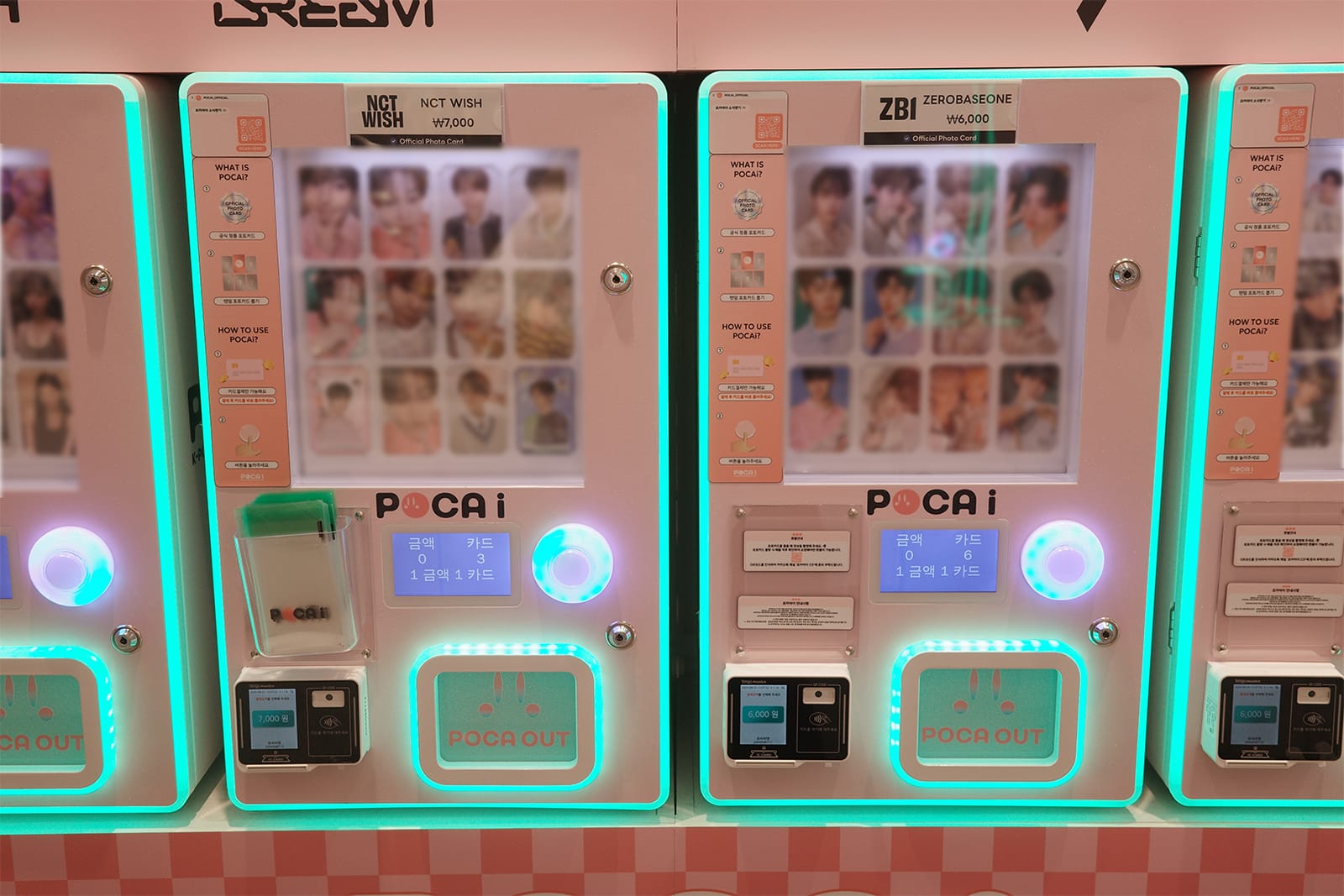
K-Pop Photocard Guide 2026: Buy, Trade, Avoid Fakes
A K-pop photocard guide needs to explain one strange fact first: the smallest item in the album can create the biggest decision.
You buy a full album, open the package, and find a random member. If it is your favorite, the purchase feels magically successful. If it is not, a second economy begins. You may trade with another fan, buy a specific card, sell a duplicate, or keep opening albums. That loop is why a pocket-size printed card can move album sales, fan conversations, pop-up visits, and collector spending.
Seoul is a rewarding place to explore that culture, but it is not a citywide guarantee of bargains or authenticity. Official albums, store benefits, event-only cards, disclosed fan-made goods, counterfeit cards, and ordinary replicas can appear close together. The goal is not to become a forensic expert in one afternoon. It is to know what you are buying, preserve evidence, and refuse a transaction that cannot answer basic questions.
Quick Answer: The Safest Way to Buy K-Pop Photocards in Seoul
For the lowest-risk first purchase, buy a sealed album from an established retailer, keep the receipt, and open it carefully. The included photocard is part of that album's documented package. If you want one specific member, use a reputable specialty seller that clearly identifies the artist, release, card version, condition, and source.
Do not treat the word “official” as proof by itself. Ask what made the card official: a standard album inclusion, a retailer preorder benefit, a lucky-draw event, a fan-sign benefit, a concert package, or another documented promotion. A seller should be able to name the source.
| Buying Route | Best For | Main Advantage | Main Risk |
|---|---|---|---|
| Sealed album at established retailer | First pull and full package | Clear retail chain and receipt | Random member; duplicate albums |
| Established specialty store | Specific cards and merch | Organized selection and staff | Condition and origin still need checking |
| Official pop-up or event | Limited benefits | Direct event context | Queues, dates, purchase conditions |
| Fan-to-fan trade | Swapping duplicates | No need to buy another album | Identity, condition, and proof vary |
| Unlabeled street or marketplace listing | Browsing only | May look inexpensive | Unclear source, replicas, pressure sales |
Ultra Pro 3x4 toploaders (25-pack) — keep photocards flat before you tradeAffiliate link. As an Amazon Associate, EpicKor earns from qualifying purchases at no extra cost to you.
The Korea Tourism Organization describes photocards as an album add-on that became a major reason fans buy multiple copies, then trade and collect with one another. That official framing matters: trading is not a side effect. It is part of the fan interaction built around randomized inclusion.
What Counts as an Official Photocard?
An official photocard is issued or authorized through the artist's company, album distributor, retailer promotion, event organizer, fan-sign, tour package, or another traceable campaign. It is not defined only by glossy paper, rounded corners, or a familiar selfie.
The same artist and era may have several legitimate card families:
- A standard album card randomly included in a particular version.
- A retailer preorder benefit, often called a POB.
- A lucky-draw card tied to a store or event period.
- A fan-sign or video-call entry benefit.
- A concert, membership kit, season's greetings, or pop-up inclusion.
Those categories can look different because they were printed by different suppliers for different campaigns. A texture, corner shape, or color difference does not automatically prove a fake. Authentication starts with identifying the exact card, not comparing it with a generic idea of what “real” feels like.
Fan-made cards are not automatically dishonest. Many are openly sold as decorative freebies, unofficial goods, or replicas. The problem begins when a seller presents an unofficial product as an official limited card or hides the distinction behind vague language.
If a listing uses terms such as “inspired,” “fan-made,” “replica,” “unofficial,” or “Lomo,” assume it is not an official inclusion. That may be perfectly fine for decoration. It should not be priced or traded as an authenticated collectible.
Why Random Album Pulls Drive Trading
The basic album purchase is simple. The collector's math is not.
An album may have multiple physical versions, and each version may contain one or more randomized cards from a larger set. Buying more albums increases chances but never guarantees the member you want unless the product explicitly says so. Retailer benefits can add another layer: the same album bought from two stores may produce different promotional cards.
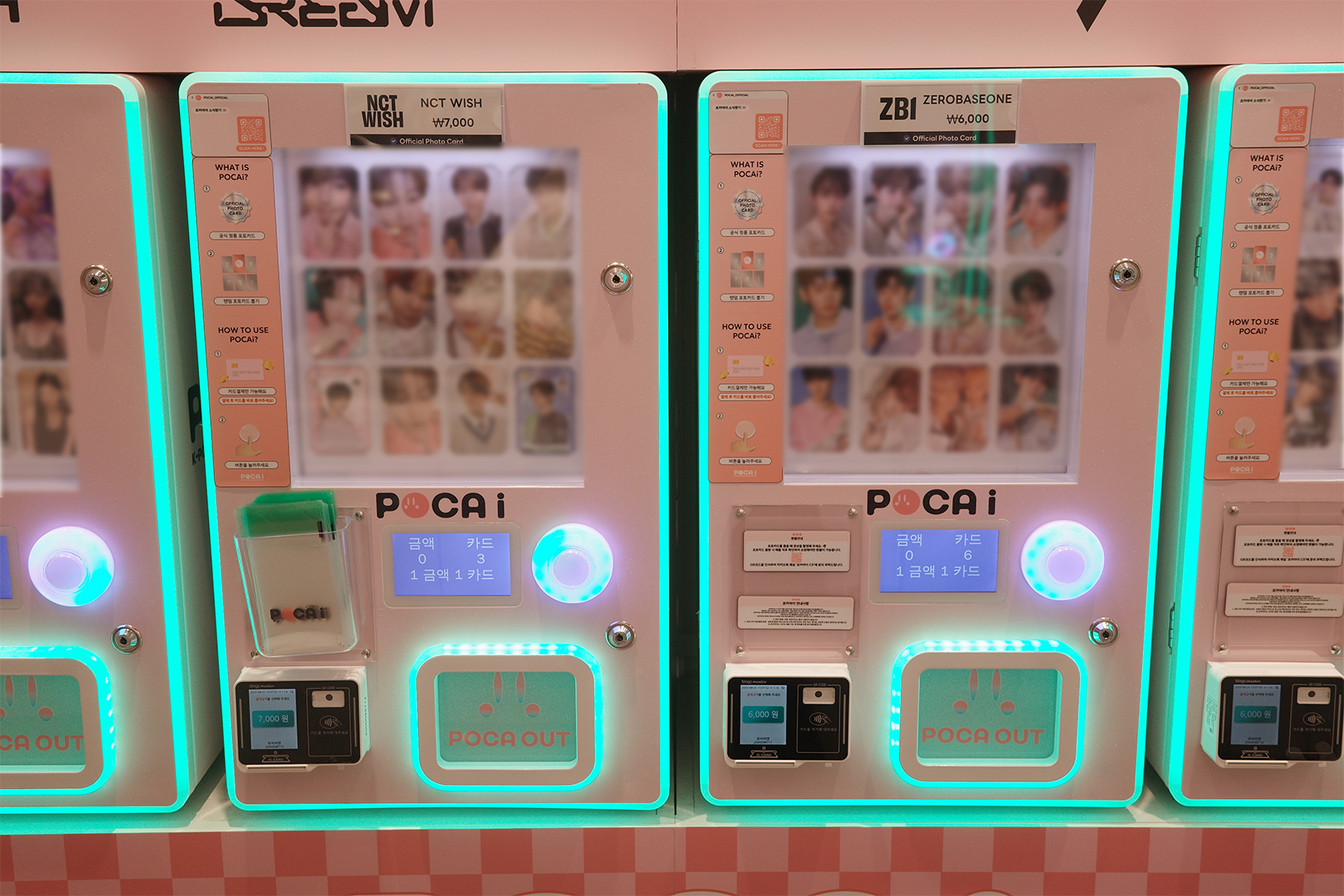
This is where new collectors overspend. They focus on the single desired card and ignore the cost of every unwanted album, shipping fee, event condition, and duplicate. Before chasing a pull, compare three totals:
- The cost of opening more albums.
- The price of buying the exact card from a reputable seller.
- The value and time involved in trading your duplicate.
The cheapest visible option is not always the cheapest completed collection. A slightly higher price with a clear source, receipt, condition photos, and buyer protection can be better than an anonymous bargain.
Protect the pull first: As an Amazon Associate, EpicKor may earn from qualifying purchases. Before opening several albums, compare photocard sleeves and rigid toploaders; a clean card should enter a soft, appropriately sized sleeve before a hard holder.
Where to Shop in Seoul Without Turning the Guide Into a Store Promise
Seoul's K-pop retail map changes quickly. Pop-ups end, branches move, event stock sells out, and a store known for one group may have little for another. Build a shopping route around established districts and verify the specific branch on the day.
Gwanghwamun and Jongno: the easy central route
Kyobo Book Centre Gwanghwamun and its Hottracks section combine books, stationery, albums, and K-pop goods. The official Seoul tourism listing was edited in May 2026 and lists daily hours of 9:30 a.m. to 10 p.m., except Lunar New Year's Day and Chuseok. VISITKOREA's 2026 Gwanghwamun K-pop guide also identifies the B2 “THE STAGE” area at Youngpoong Bookstore Jongno as a K-pop flagship space with albums, official merchandise, photo zones, and interactive areas.
That makes the neighborhood efficient for a first pass. You can compare two established stores without crossing the city, then continue toward Insadong.
Insadong: specialty shopping inside a sightseeing day
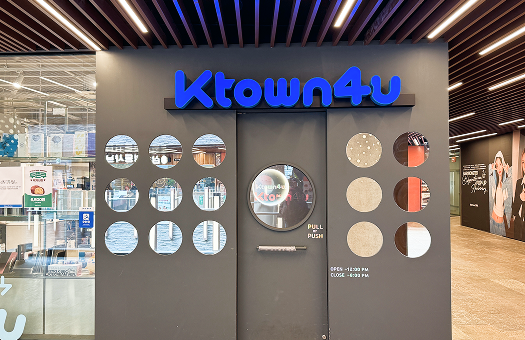
The same official 2026 guide lists Ktown4u Insadong inside the Anyoung Insadong complex. It describes albums, official merchandise, lucky draws, and seasonal fan events. Event benefits are conditional: confirm the date, qualifying album, purchase quantity, identity requirements, and whether the benefit is random before paying.
If you are buying more than photocards, use EpicKor's K-pop merchandise guide to compare official lightsticks, albums, pop-up goods, and counterfeit warning signs before choosing a store. If a summer comeback is what brought you into the shop, EpicKor's summer K-pop guide explains how seasonal songs, charts, and public-space replay shape Korean listening habits.
Myeongdong and Hongdae: high choice, high need to compare
Both districts have established retailers, pop-ups, underground shopping, and independent sellers. They are useful when you already know the artist, release, and card you want. They are less useful when bright displays make every item feel equally official.
Take a photo of the shop name and receipt. Check packaging before leaving. If a loose card is expensive, ask for both front and back images under neutral light and the exact source. Never assume that a card displayed beside official albums is itself official.
How to Check a Photocard Without Pretending One Trick Is Perfect
There is no universal “two tabs means real” rule. Print runs, factories, rereleases, promotions, and manufacturing tolerances differ. Use a layered check.
First, identify the exact release and benefit. Search for reliable unboxing records, official product details, or consistent collector templates for that specific card. Compare the front crop, back design, logo placement, text spacing, and color balance with multiple examples—not one compressed social image.
Second, inspect the physical card under neutral light. Look for:
- A crop that is unexpectedly zoomed, shifted, or missing edge detail.
- A back design that belongs to another album version.
- Blurry fine details, strange skin smoothing, or visible pixel artifacts.
- Inconsistent corner radius, thickness, coating, or surface texture.
- Damage that was hidden in the listing, especially dents, scratches, and binder impressions.
Third, verify the transaction story. Where did the seller obtain it? Can they show the album, order record, event receipt, or earlier trade evidence? Proof can also be falsified, but a coherent chain is better than “trust me, rare official.”
Finally, compare with a known authentic card only if it is the same release and benefit. A standard album card is not the correct physical reference for a separate lucky-draw card.
If the evidence remains weak, walk away. Authentication uncertainty should lower your willingness to pay, not increase the urgency.
Trading Etiquette and Safety in Seoul
For an in-person trade, agree on the exact card and condition before meeting. Exchange current front-and-back photos with a handwritten date or another agreed proof marker. State flaws clearly. A tiny dent that “only appears under light” is still a condition detail.
Meet in a staffed public place during business hours, such as a cafe or established retail area. Do not follow a stranger to a private room for a card trade. If the value is meaningful, bring a friend and keep the conversation in the marketplace or messaging platform that records the agreement.
At the table:
- Keep both cards sleeved until both sides are ready.
- Inspect under neutral light without bending the card.
- Confirm that the card matches the photos and agreed version.
- Complete the exchange only after both people agree.
- Do not photograph the other person's identification or private messages without consent.
For mail trades, use a soft sleeve, rigid protection, a resealable team bag or equivalent moisture barrier, and a sturdy mailer. Do not place adhesive tape directly on the sleeve opening where it can catch the card. Record packing and keep postage evidence.
How to Sleeve, Store, and Travel With Photocards
Clean, dry hands are usually safer than lotion-covered hands or unnecessary gloves that reduce grip. Hold the card by the edges. Use an archival-quality, acid-free, PVC-free sleeve sized so the card does not slide aggressively but is not forced.
A toploader is useful for transport and trades, but it is not a substitute for the inner sleeve. For a collection, choose binder pages designed for the card and sleeve size. Side-loading pockets and zippered covers can reduce accidental slipping and dust exposure. Avoid overfilled ring binders that press hardware into cards.
Store the collection upright or flat according to the binder design, away from direct sunlight, heat, moisture, food, and smoke. Do not leave valuable cards in a hot car or pressed against a window. Silica gel can help in a storage box, but it should not touch the cards and must be replaced according to its instructions.
When flying, keep the valuable part of the collection in your carry-on. Airport security, cabin pressure, and ordinary travel movement are less dangerous than a checked bag being crushed, delayed, or exposed to moisture. Photograph the collection before travel if insurance or value documentation matters.
Build a collection, not a pressure stack: Compare side-loading and zippered photocard binders by pocket dimensions, page material, ring clearance, and capacity rather than choosing only by the cover design.
A Practical Seoul Photocard Checklist
| Moment | Do This | Avoid This |
|---|---|---|
| Before shopping | Save exact album version and card reference | Searching only by member name |
| At the store | Ask source, condition, event rules, and returns | Assuming every nearby item is official |
| Before trading | Exchange dated front/back proof and flaw notes | Moving immediately to private messages with no record |
| At exchange | Meet publicly and inspect under neutral light | Bending, rushing, or accepting a switched card |
| After purchase | Sleeve, document, and store away from heat | Loose cards in pockets or luggage |
For a wider shopping day, connect this guide with EpicKor's K-pop shopping route, K-pop birthday cafe guide, Myeongdong guide, Seoul character shop guide, and Naver Map guide. If BTS brought you into collecting, the BTS V military-service guide gives the civic context behind the group's post-service return era. If seasonal music is the hook, the summer K-pop guide is the better listening-context companion. For the bigger cultural-commerce loop, the K-brand explainer shows how fandom attention turns into products, language, travel, and shopping, while the Korean celebrity Instagram guide explains why follower counts can turn into brand and merch demand. The photocard stop should fit the trip; the trip should not become a six-hour search for one uncertain card.
You might like: K-Pop Concert Tickets in Seoul (2026): Seat Prices, the Passport Name Check and Korea's New Resale Fine
FAQ About K-Pop Photocards in Seoul
Q: Are photocards inside sealed official albums always official?
The included card should be an official album inclusion when the album comes through a legitimate retail chain, but inspect tamper evidence and keep the receipt. Resealed or secondhand packages need more caution.
Q: Does a matte or glossy finish prove a card is fake?
No. Different releases and benefits can use different finishes and thicknesses. Compare only with verified examples of the exact card version.
Q: Are fan-made photocards illegal or bad?
Not automatically. The collector problem is misrepresentation. A clearly disclosed unofficial decorative card is different from a replica sold as a rare official item.
Q: Can I trade photocards with fans in Seoul?
Yes, but arrange the version and condition in advance, meet in a staffed public place, keep transaction records, and inspect both sides before exchanging.
Q: What protection should I carry while shopping?
Carry clean soft sleeves and a few rigid toploaders in a small resealable bag. A loose card should not spend the day in a wallet or phone case.
Q: Where should a beginner shop first?
Start with established album retailers such as the central Gwanghwamun/Jongno route. Specialty stores and official pop-ups are useful once you understand versions and event conditions.
Sources
You Might Also Like
Gwangjang Market's Second Floor: Seoul's Vintage Arcade, and the One Day It's Shut
Everyone knows Gwangjang for the food alley that never closes. Above it is a vintage arcade signed 수입구제 where most items run under ₩20,000 — and it shuts every Sunday, which is exactly when visitors turn up.
Where to Buy Luggage in Seoul: Namdaemun, Real Prices, and When Not to Bother
You shopped too well and now you need another suitcase. Namdaemun is the answer, but the underground arcade shuts on the 2nd and 4th Sunday, the bag shops close for Chuseok, and a cheap case is not always cheaper than shipping.
Myeongdong, Seoul: Street Food Prices and K-Beauty Shopping
Myeongdong street food runs ₩4,000-8,000 a portion, about double the Seoul average, and the carts appear around 16:00. What is worth eating there, how to shop K-beauty without overpaying, tax refunds, and timing a night visit.