Jeju in Winter, Korea: Tangerine Picking and Camellia Gardens — Prices, Seasons and Which Farms by Bus
Last updated: 13 October 2026. Prices and opening hours come from the operators' own pages where they publish them as text or images (Hueree, the Seogwipo Citrus Museum). Where an operator's site is script-only, we used the operator's listing on Naver Place, read on 13 October 2026. Bus routes and times are from the Jeju Bus Information System (bus.jeju.go.kr), read the same day. All prices are adult prices in won, as of October 2026. Sources are listed at the end.
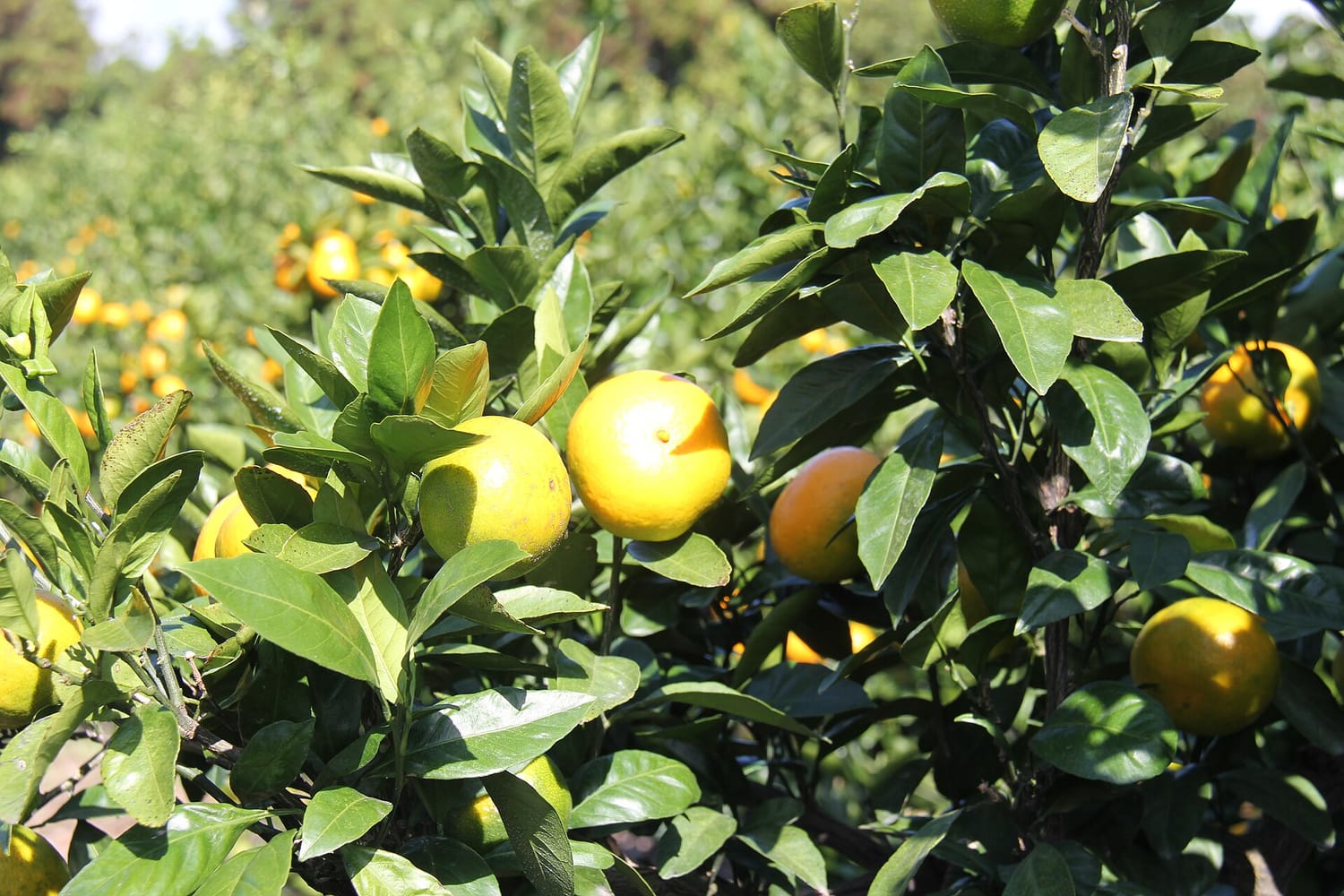
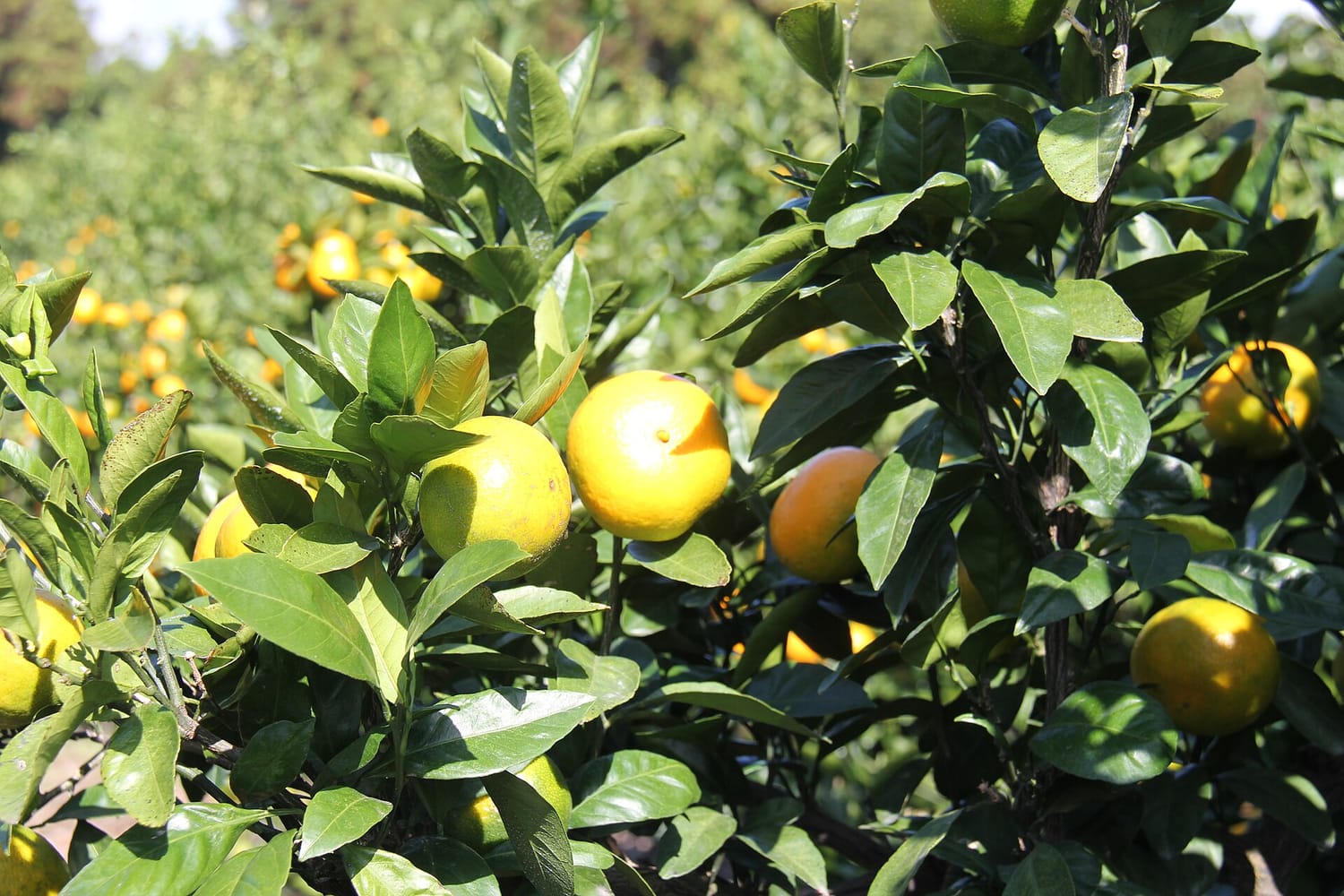
Tangerine picking in Jeju (제주 감귤따기) starts in October and runs into January, and Jeju's camellias (동백, dongbaek) take over from November. Together they make up Jeju's winter: orange fruit on dark trees behind black stone walls, then pink and red flowers into early spring.
English guides tend to list the places without the numbers. Here they are. Camellia Hill (카멜리아힐) now charges ₩12,000 for an adult, more than the ₩8,000 that older English listings still show. At Hueree (휴애리), picking costs ₩8,000 on top of a ₩13,000 park ticket, so an adult pays ₩21,000 to fill a bag of unstated size. A small farm in Jeju City charges ₩11,000 for 2 kg. And the cheapest picking on the island, the Seogwipo Citrus Museum's ₩5,000 session, sold out early in 2025 and has no 2026 dates yet.
Without a car, location matters as much as price: most of these places are on the Seogwipo side, and some buses come only every two hours.
Jeju winter means wind and showers between orchards and bus stops: Columbia Watertight II packable rain jacket, on AmazonAffiliate link. As an Amazon Associate, EpicKor earns from qualifying purchases at no extra cost to you.
Quick Guide: Jeju tangerine farms and camellia gardens (as of October 2026)
| Place | Adult price | Season | Nearest bus | Skip it if |
|---|---|---|---|---|
| Hueree (휴애리자연생활공원), Namwon | ₩13,000 entry + ₩8,000 picking | Picking October–January, until the fruit runs out | 623/624 to the 휴애리 stop, 2 min walk; about every 2 hours | You only want fruit |
| Jeju Songjeong Farm (제주송정농원), Jeju City | ₩11,000 for 2 kg, unlimited tasting | From 1 October into mid-January | City buses at 영평동 stop, 1 min walk | You want the sea in the background |
| Shimteo Farm (쉼터체험농장), Wimi | ₩3,000 entry + ₩10,000 for 1 kg | October (Yura), then November (early-season tangerines) | 201 coast bus, 위미2리 교차로, 2 min walk | You want the best price per kg |
| Seogwipo Citrus Museum (서귀포감귤박물관), Hyodon | ₩1,500 entry; picking was ₩5,000 for about 1 kg in 2025 | 2025: November–December, ended early | 621/623/624, 감귤박물관 stop | Your trip is in October, or it's raining |
| Camellia Hill (카멜리아힐), Andeok | ₩12,000 | Varieties flower from autumn to spring | 752-1/752-2 village loop, 동백동산 stop | You arrive by bus after midday |
| Jeju Dongbaek Arboretum (제주동백수목원), Wimi | ₩8,000 | Closed 23 March to mid-November | 201 coast bus, 동백수목원 stop, 1 min | You visit before mid-November |
| Camellia Forest (동백포레스트), Namwon | ₩7,000 | Blooms November–February; closed in mid-October | 623/624, then a 17–20 min walk | You can't walk 20 minutes each way |
| Wimi Camellia Grove (위미동백나무군락) | No ticket office | Native red camellias, from about January | 201 coast bus, 세천동 stop, about 7 min walk | You want to walk among the trees (see below) |
Prices from Hueree's own fee page, the Citrus Museum's fee page, and the operators' Naver Place listings, read 13 October 2026. Bus stops and walking times are from the same Naver Place listings; routes and times are from bus.jeju.go.kr.
Where to base yourself: Seogwipo or Jeju City
If picking and camellias are the reason for your winter trip, stay on the Seogwipo side. Six of the eight places in the table are in Namwon-eup (남원읍) or Hyodon (효돈), east of Seogwipo town. Camellia Hill is in the southwest, and only Songjeong Farm is in Jeju City.
- Seogwipo's old town has a few direct 624 runs from the Jungang Rotary (중앙로터리) to Hueree (see below), and the 201 coast bus east to Wimi. The 281 runs from Seogwipo to the Harye transfer stop for Hueree.
- Jeju City works if you're doing one picking trip (Songjeong Farm) on a short visit, or if you need late flights. Everything in Namwon is an hour or more away on the 281 or 201, plus a wait for the connecting bus.
Our Where to Stay in Jeju Without a Car: Korea's Five Best Bases by Bus compares the five main bases, with last buses and airport fares.
Jeju stays on Agoda: for a winter trip, search the Seogwipo side first Use the map view and look at Seogwipo's old town around the Jungang Rotary, or the coast road through Wimi and Namwon if you want the camellias on your doorstep. Check that the address is a short walk from a stop on the 201 or the 624, because the village roads in between have few buses. EpicKor may earn a commission if you book through this Agoda link, at no extra cost to you. Check dates, taxes, cancellation terms and the final price on Agoda before you book.
Compare Jeju stays on AgodaTangerine picking: what you actually take home, per kilo
Every farm offers the same deal: cut the fruit, eat what you like, take a bag home. What differs is the price and the bag. Where the operator states the amount, here is the cost per kilo.
| Farm | What you pay (adult) | Take-home stated | Effective ₩ per kg |
|---|---|---|---|
| Jeju Songjeong Farm (제주송정농원) | ₩11,000 | 2 kg, extra charged at ₩1,000 per 100 g | ₩5,500 |
| Seogwipo Citrus Museum (서귀포감귤박물관), 2025 figures | ₩1,500 entry + ₩5,000 | About 1 kg | ₩6,500 |
| Shimteo Farm (쉼터체험농장), October | ₩3,000 entry + ₩10,000 | 1 kg | ₩13,000 |
| Hueree (휴애리) | ₩13,000 entry + ₩8,000 | "An experience bag" (체험봉투), size not stated | Can't be calculated |
Hueree is a park ticket with picking added, not a cheap way to buy fruit. Its fee page says picking can only be added to a park admission, and its picking page says the ₩8,000 "may change with the market price of tangerines". The same price applies to everyone from 36 months up. For that you get a theme park: seasonal flower festivals, a black-pig show, and a camellia festival from mid-November into December, with the pink sasanqua out until January, according to the park. Take the kids, not the shopping list.
Songjeong Farm is the value pick, and the only one in Jeju City. ₩11,000 buys 2 kg plus unlimited tasting, and children below kindergarten age go in free with a parent. Overweight is charged at ₩1,000 per 100 g, which is ₩10,000 a kilo, so stop picking when the bag feels full. The farm lists hours of 10:00–16:30 with the last session at 15:30, and takes bookings through Naver Booking.
The Citrus Museum is cheapest but the hardest to plan. In 2025 the session cost ₩5,000 and included about 1 kg. It was planned for 3 November to 30 December, in two daily slots (09:30–11:30 and 13:00–16:30), with no picking in the rain. The museum's own page now says it ended early, because the prepared amount ran out. As of 13 October 2026, its picking page still shows only that 2025 notice. Check it before you plan a day around it.
Hueree by bus: the 623 and 624, about every two hours
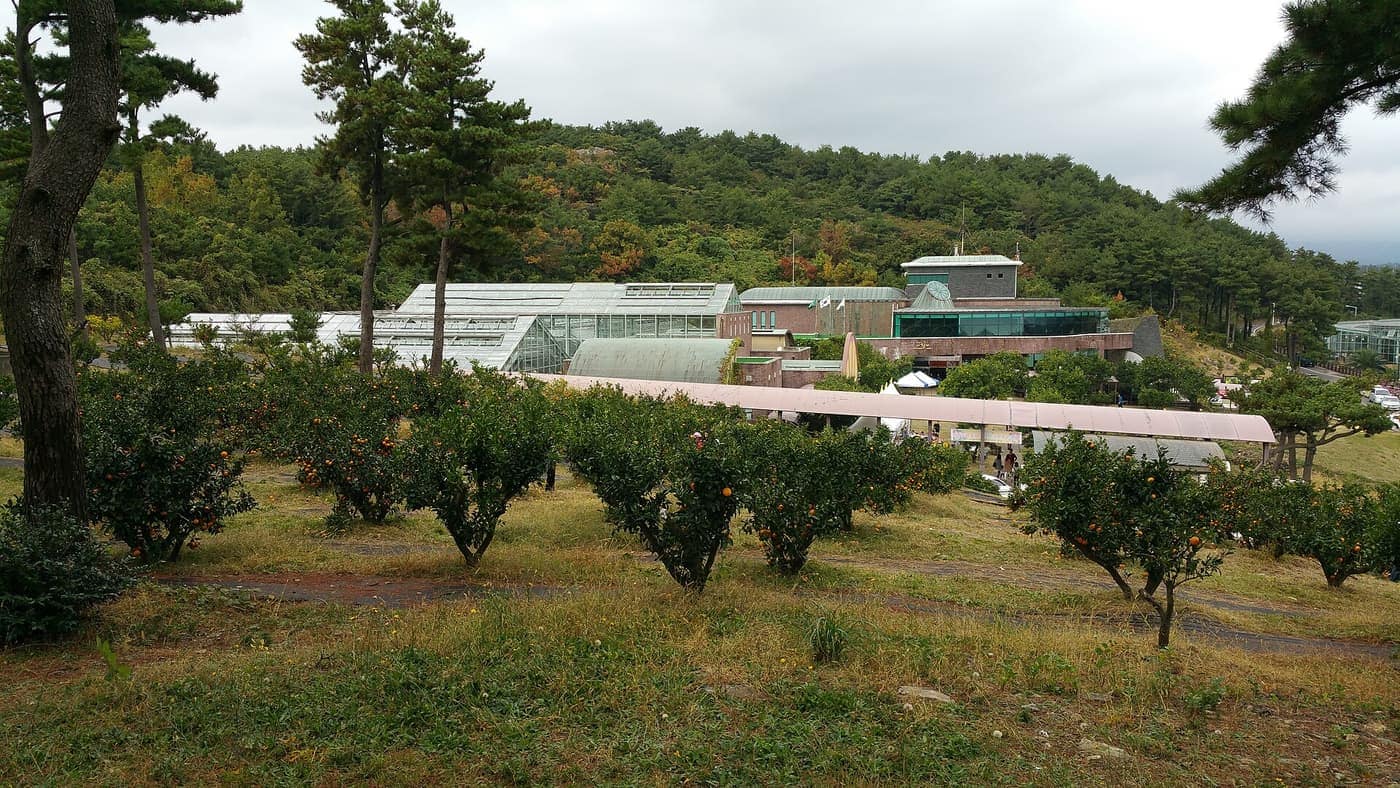
Hueree Nature Park (휴애리자연생활공원) is at 256 Sillyedong-ro (신례동로 256), on the lower slopes of Hallasan above Namwon. The 휴애리 stop is about 2 minutes' walk from the gate. Only two village loops serve it, and both are infrequent.
- 623: 7 runs a day from Harye 2-ri entrance (하례2리입구), at 07:15, 08:41, 10:49, 13:07, 15:15, 17:30 and 19:50. The first six reach the Hueree stop about 9 minutes later (the 19:50 skips it), then continue into Seogwipo, so the 623 is your bus back to town: it leaves Hueree at 10:58, 13:16 and 17:39 for the Jungang Rotary.
- 624: 8 runs a day the opposite way round the loop, but only five stop at Hueree (08:33, 11:10, 13:40, 15:58 and 18:10), and only three of those come through Seogwipo's Jungang Rotary: the 10:17, 12:47 and 17:17 departures. For a picking visit from town, that means the 10:17 or the 12:47.
From Jeju City, Hueree's own directions say to take the 281 (or the 181 express) over the 5.16 road, get off at the Harye transfer stop (하례환승정류장), and change to the 623 at Harye 2-ri entrance. Use the Jeju Buses, Korea (2026): ₩1,150 a Ride, the 600 and 601 Airport Buses to Jungmun, Foreign Cards That Tap, and Getting Around Without a Rental Car for the fare and transfer rules. With the 623's gaps, check the connection in Kakao Map before you leave, or take a taxi for the last stretch.
Times to know: the park opens 09:00–18:00. Picking runs 10:00–17:00, but sign-up closes at 16:00, and from October to February the last entry is 16:30. Dogs under 7 kg can come in on a lead, if you bring waste bags.
Camellias: which ones bloom when
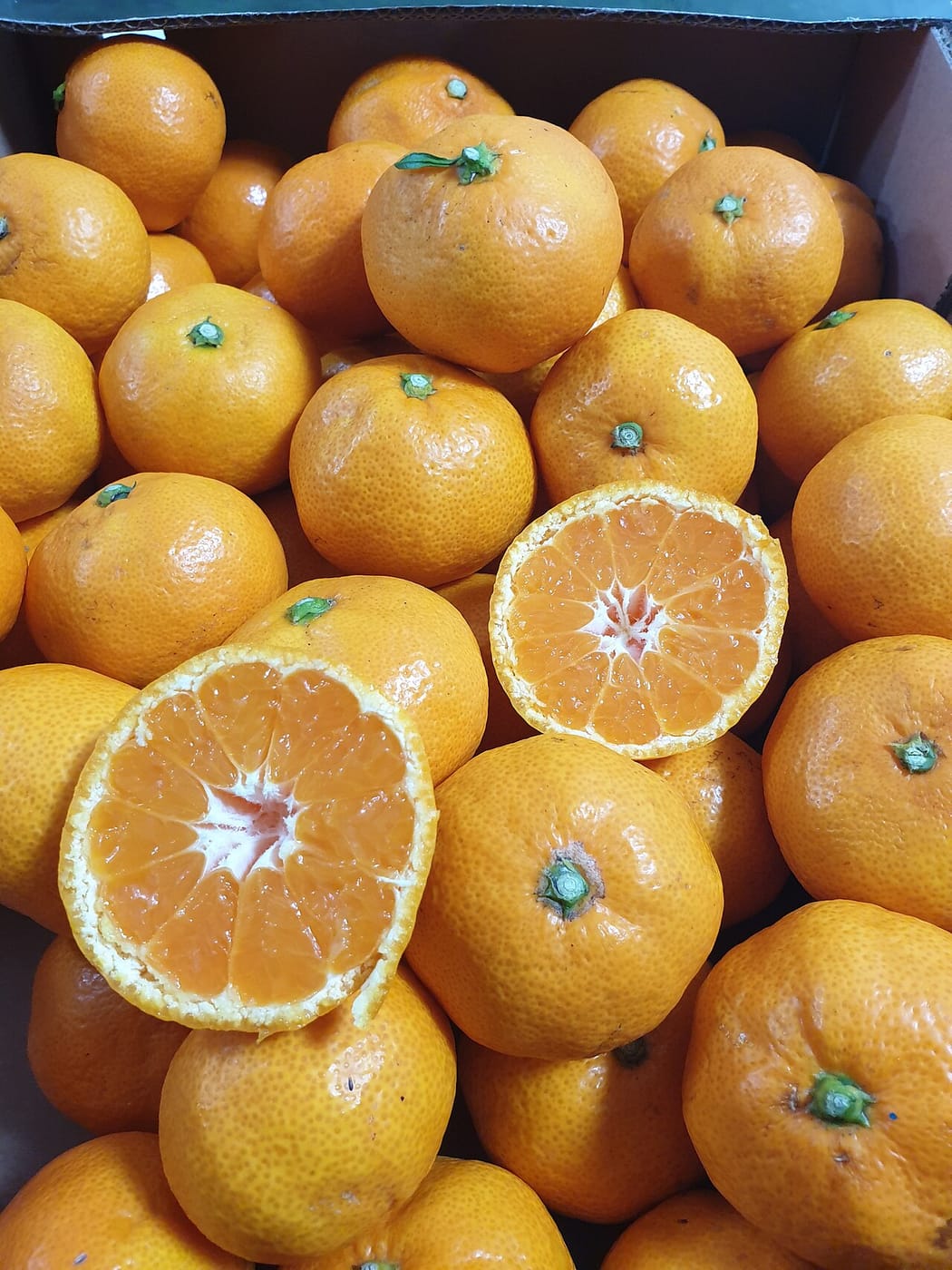
Jeju's camellia season is really two seasons, because two kinds of camellia flower at different times.
- Sasanqua camellias (애기동백, aegi-dongbaek) are the pink, many-petalled kind planted in most paid gardens. They bloom from November to February. Seoul Shinmun's 2025 survey of Jeju camellia spots found Camellia Forest peaking in late January, and Jeju Dongbaek Arboretum says its trees are the largest sasanqua forest in Korea, some more than 45 years old.
- Native camellias (토종 동백, Camellia japonica) are the red, single-flowered kind that grow wild on Jeju. They bloom later, from about January into early spring. The same Seoul Shinmun piece found the 300-year-old native grove at Sinheung 2-ri (신흥2리) flowering from late January to early April.
So December is for the pink gardens and late January to March for the red native trees. Mid-January is the week to see both.
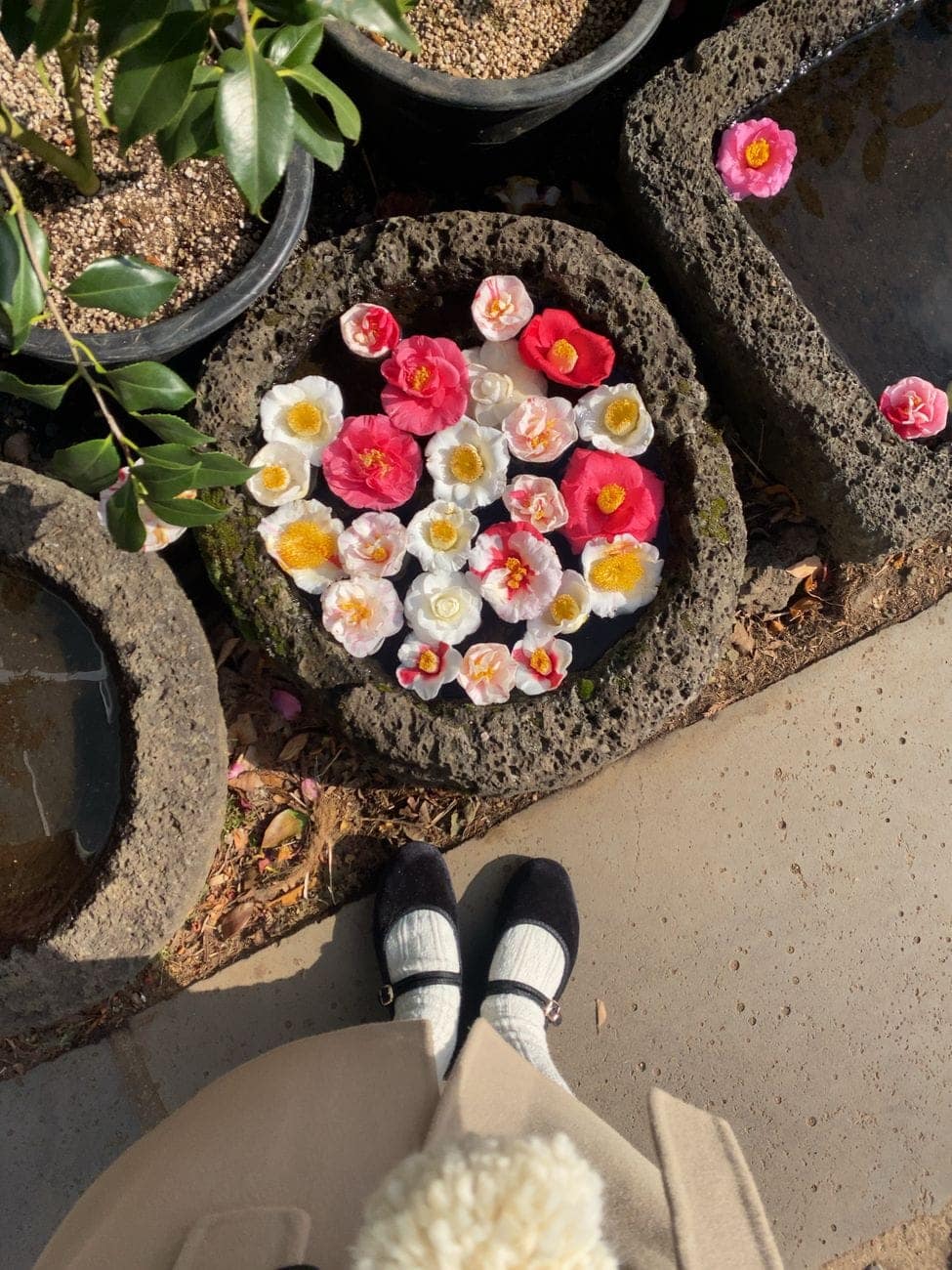
Camellia Hill: ₩12,000, and the bus problem
Camellia Hill (카멜리아힐), at 166 Byeongak-ro in Andeok-myeon (안덕면 병악로 166), is the best known of the gardens. Its operator calls it the largest camellia arboretum in Asia: about 6,000 trees of some 500 varieties from 80 countries, chosen to flower "at different times from autumn to spring". That makes it the one garden worth visiting in November and in March.
Price, as of October 2026: adults ₩12,000, teenagers, seniors and soldiers ₩10,000, children ₩9,000. Hours listed for summer and the shoulder season are 08:30–18:30, with tickets and last entry at 17:30. Winter hours are shorter, so check before an afternoon visit.
The bus problem. The 동백동산 stop is 1 minute from the gate, but it's served only by the 752-1 and 752-2, village loops from Moseulpo's Unjin port (운진항) through the Donggwang transfer stop (동광환승정류장). Both run scheduled trips only in the morning. The last 752-2 leaves Donggwang at 12:24. From 14:00 to 21:30 the route switches to a call bus (실시간 호출형 수요응답 버스) that you book in real time, which is hard to arrange without Korean.
To get there, take the 151 express from Jeju Bus Terminal over the Pyeonghwa-ro road to Donggwang, then a morning 752-2: it leaves Donggwang at 07:15, 08:19, 09:19, 10:29, 11:24 and 12:24, and reaches the garden about 15 minutes later. Coming back, the 752-1 passes the garden heading for Donggwang until about 12:35. After lunch, plan on a taxi from Donggwang, or visit Camellia Hill on a car day.
The Wimi cluster: two gardens, a grove and a farm on the 201
The village of Wimi (위미리), on the coast road east of Seogwipo, has the most camellias within walking distance of a frequent bus. The 201 coast bus runs through it every 15–22 minutes, on its way round the east coast between Seogwipo and Jeju City.
Jeju Dongbaek Arboretum (제주동백수목원), at Wimi-ri 929-2, costs ₩8,000 for adults and ₩5,000 for children, as of October 2026. The 동백수목원 stop is a minute from the entrance. It closes from 23 March until mid-November, so before then you're looking at a gate. It's a grove of rounded sasanqua trees, seen from walking paths and a fountain. One review on its Naver listing complains the route is short and that many flowers had died. Go when the pink is out, from about early December.
Wimi Camellia Grove (위미동백나무군락) is a protected Jeju monument (제주특별자치도 기념물 제39호). The trees were planted by Hyeon Maeng-chun (현맹춘, 1858–1933). She married into the village at 17, saved 35 nyang from gathering seaweed and day labour, bought a stretch of wasteland and sowed it with camellia seeds from Hallasan as a windbreak. There are about 500 trees, the largest 1.4 m round and 10 m tall. There is no ticket office. But in January 2025 the inside of the grove was closed for path works, and visitors photographed it over the stone walls from the Olle trail. In October 2026 the arboretum next door still described the grove as "being developed" (조성중). From the 세천동 stop on the 201 it's about a 7-minute walk.
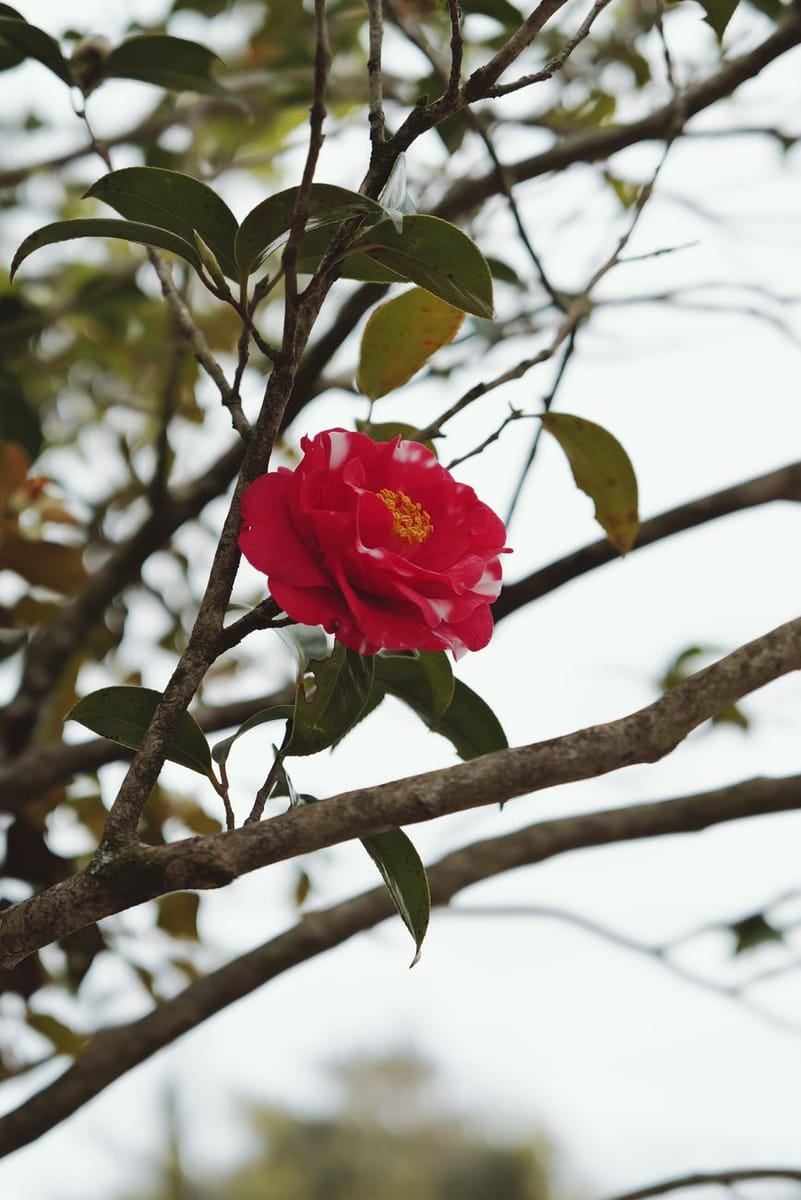
Shimteo Farm (쉼터체험농장), at 7678 Iljudong-ro (일주동로 7678), is a picking farm on the same coast road. It lists a ₩3,000 entry, ₩10,000 for 1 kg of open-field Yura (유라) tangerines in October, and early-season tangerines (조생) in November, with no price posted yet for those. It's open 09:00–18:00, 2 minutes' walk from the 위미2리 교차로 stop. It costs the most per kilo, but on the 201 you can pick in the morning and walk the camellias after lunch.
Camellia Forest (동백포레스트), at 53-38 Saenggiak-ro (생기악로 53-38), is the photogenic one: mostly sasanqua, some trees over 40 years old, planted among summer-orange (하귤) trees, with a café at the entrance. Entry is listed at ₩7,000 for adults (Korea Tourism Organization listing, updated 7 October 2026; older listings show lower prices, so check on arrival). In mid-October its listing shows it closed every day. It opens for the bloom, which ran from November to February in 2025. By bus, it's awkward: the nearest stops on the 623/624 (소남동산 and 상산모루) are a 17–20-minute walk away, on a road the operator says is easiest to follow with a phone map.
Smartwool Classic Thermal Merino base layer: one thin layer for a windy orchard Jeju rarely freezes, but a January afternoon between bus stops, an exposed orchard and a camellia garden on a hill gets cold fast in the wind. A mid-weight merino layer under a shell keeps you warm outside and is not too hot in a heated bus or café. The men's cut is the Smartwool Men's Classic Thermal Merino. If you already pack a thermal layer, skip it. As an Amazon Associate, EpicKor earns from qualifying purchases at no extra cost to you.
See the women's Smartwool merino crew on AmazonSeason calendar: what's on, month by month
| Month | Tangerines | Camellias | Watch out for |
|---|---|---|---|
| October | Picking opens at Hueree and Songjeong; Shimteo picks Yura | Gardens mostly closed or green | Fruit still part-green |
| November | Peak season for open-field tangerines; the Citrus Museum's sessions started in November in 2025 | Sasanqua starts; Dongbaek Arboretum reopens mid-month | Jeju Citrus Expo, 19–23 November 2026 |
| December | Picking continues while stocks last | Pink sasanqua in full colour | Picking can sell out early |
| January | Last weeks: Hueree to January, Songjeong to mid-January | Sasanqua at its peak in late January; native red camellias start | Shorter winter garden hours |
| February–March | Picking over | Native red camellias (Wimi, Sinheung 2-ri); Dongbaek Arboretum closes 23 March | Many paid gardens close for the year |
The 2026 Jeju Citrus Expo (제주감귤박람회) runs from 19 to 23 November at the Jeju Agricultural Ecology Park (제주농업생태원) in Seogwipo, according to Financial News. It's mostly a citrus trade fair, on the same side of the island as Hueree.
Skip it if: the honest version
- Skip Hueree if you only want tangerines. ₩21,000 for a bag of unstated size makes sense only if you'll spend the afternoon in the park.
- Skip Camellia Hill by bus after midday. The 752 loops switch to a call bus at 14:00. Go in the morning or take a taxi from Donggwang.
- Skip Jeju Dongbaek Arboretum and Camellia Forest before mid-November. Both list themselves as closed in October.
- Don't plan around the Citrus Museum's picking until it posts 2026 dates. Last year's ran out early, and it doesn't run in the rain.
- Skip picking on a wet day anyway. The fruit is slippery and the paths are muddy, and the museum's sessions are cancelled.
The short version: book a morning at Songjeong Farm if you're in Jeju City, or pick at Shimteo and walk the Wimi camellias on the 201 if you're in Seogwipo. Save Hueree for a day with children.
Frequently Asked Questions
Q: When is tangerine picking season in Jeju? A: From October to January. Hueree runs picking from October to January, and Jeju Songjeong Farm from 1 October into mid-January, while the fruit lasts. Open-field tangerines are best from November. The Seogwipo Citrus Museum ran sessions in November and December 2025, but ended early when the fruit ran out.
Q: How much is Camellia Hill? A: ₩12,000 for adults, ₩10,000 for teenagers, seniors and soldiers, and ₩9,000 for children, as of October 2026. Ticket sales and last entry are at 17:30 in summer and the shoulder season. Older English guides may still show a lower price.
Q: When do camellias bloom in Jeju? A: Pink sasanqua camellias in the gardens bloom from November to February, peaking around late January. Native red camellias bloom later, from about January to early April.
Q: Can I go tangerine picking in Jeju without a car? A: Yes. Songjeong Farm in Jeju City is a minute's walk from a city bus stop, and Shimteo Farm in Wimi is on the 201 coast bus. Hueree is on the 623 and 624, which come about every two hours, so check the timetable first.
Sources
- Hueree: 이용요금&방법 (admission, ₩8,000 picking, October–January, picking only with admission, winter last entry 16:30, dogs under 7 kg), 감귤체험 (picking 10:00–17:00, sign-up closes 16:00, price may change with the tangerine market, take-home "체험봉투") and 오시는 길 (623/624, 181/281 to the Harye transfer stop) and 동백축제 (festival mid-November to December, camellias until January), read 13 October 2026. Opening hours and the bus stop: operator listing on Naver Place (휴애리자연생활공원), read 13 October 2026.
- Seogwipo Citrus Museum: 관람안내 (hours, closures, fee table, 65+ free for Korean nationals) and [직영] 감귤따기체험 (2025 session ended early as stock ran out), read 13 October 2026. 2025 dates, slots, ₩5,000 fee, about 1 kg and the rain rule: Wikitree, 23 October 2025. Bus routes: Naver Place listing (서귀포감귤박물관), read 13 October 2026.
- Camellia Hill: prices, summer hours and "발권 및 입장마감 17:30" from the operator listing on Naver Place (카멜리아힐), read 13 October 2026; the 500 varieties, 80 countries and 6,000 trees from the operator's own description in its Naver Booking items, read the same day. The official site camelliahill.co.kr renders prices in script only. The older ₩8,000 adult price still appears, for example, on the English tourist-information listing at ktriptips.com, checked 13 October 2026.
- Jeju Dongbaek Arboretum, Camellia Forest, Jeju Songjeong Farm and Shimteo Farm: operator listings on Naver Place (제주동백수목원, 동백포레스트, 제주송정농원, 쉼터체험농장), read 13 October 2026, including prices, the arboretum's closure notice (휴장공지 3월23일~11월 중순) and description of the Wimi grove, Songjeong's last session at 15:30, and the bus stops and walking times. Songjeong's 1 October–mid-January season: jeju.com, 29 September 2026.
- Bus routes and timetables: Jeju Bus Information System, 노선 안내, and the timetable files for the 623 and 624 (effective 1 August 2024; which runs stop at Hueree and the Jungang Rotary), the 201 (15–22-minute headway) and the 752-1 and 752-2 (effective 10 April 2026, with the 14:00–21:30 call-bus service), read 13 October 2026.
- Camellia types, bloom timing, Camellia Forest, Sinheung 2-ri and the January 2025 closure of the Wimi grove interior; Hyeon Maeng-chun's story and tree sizes: Seoul Shinmun, republished by TWIG24, January 2025. Monument number and planting history also in Korea Education Newspaper (한국교육신문), 22 February 2008.
- 2026 Jeju Citrus Expo dates and venue: Financial News, 13 August 2026.
You Might Also Like
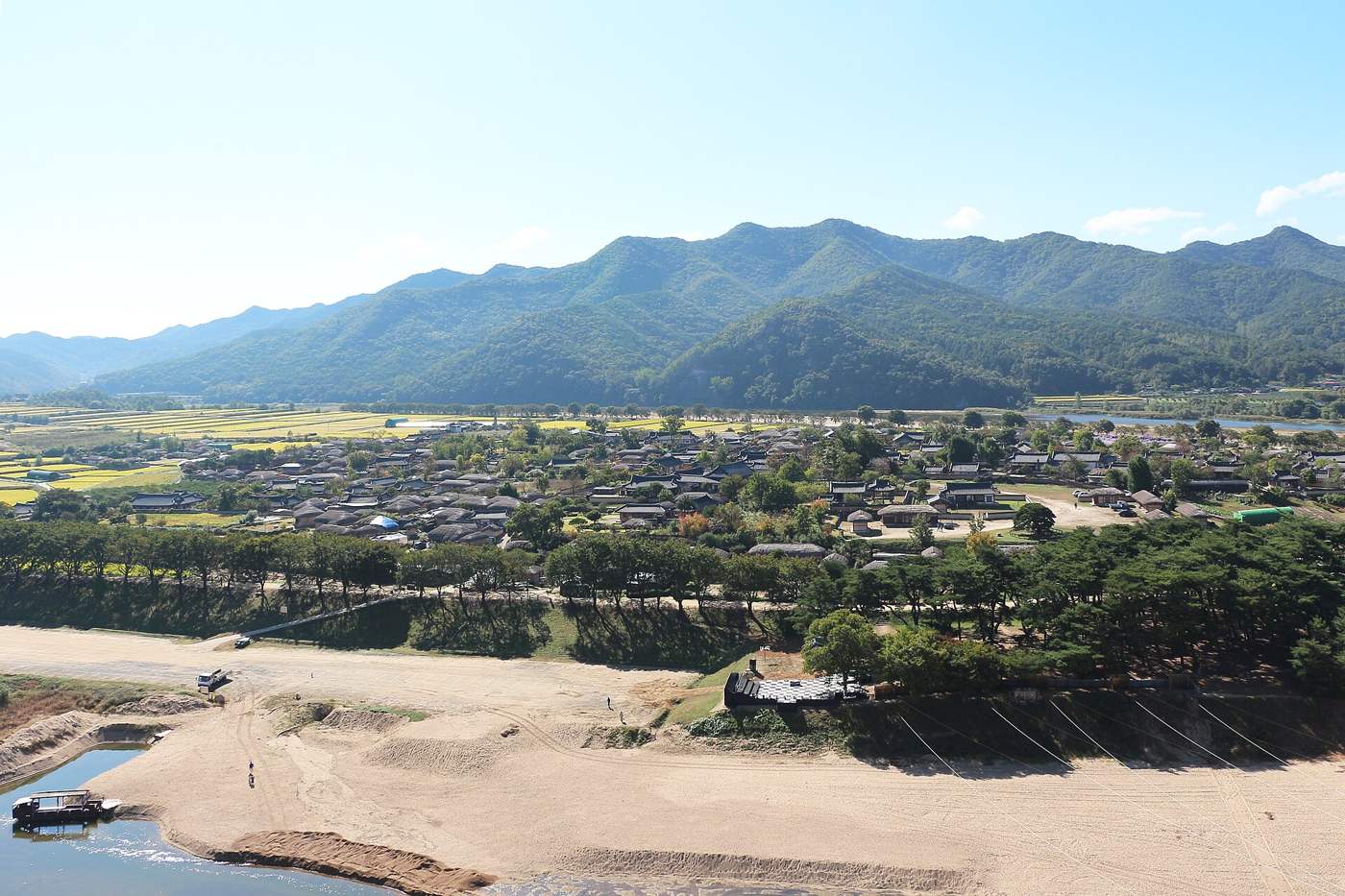
Andong Hahoe Village from Seoul, Korea: KTX-Eum, Mask Dance, Hanok Night
Winter hours already apply at Andong Hahoe Village: last entry 4:30 p.m. from 1 October. The KTX-Eum from Cheongnyangni is ₩27,700, 9–10 trains a day, and the free mask dance is 2 p.m. Tuesday to Sunday. Plus the 33 village minbak.
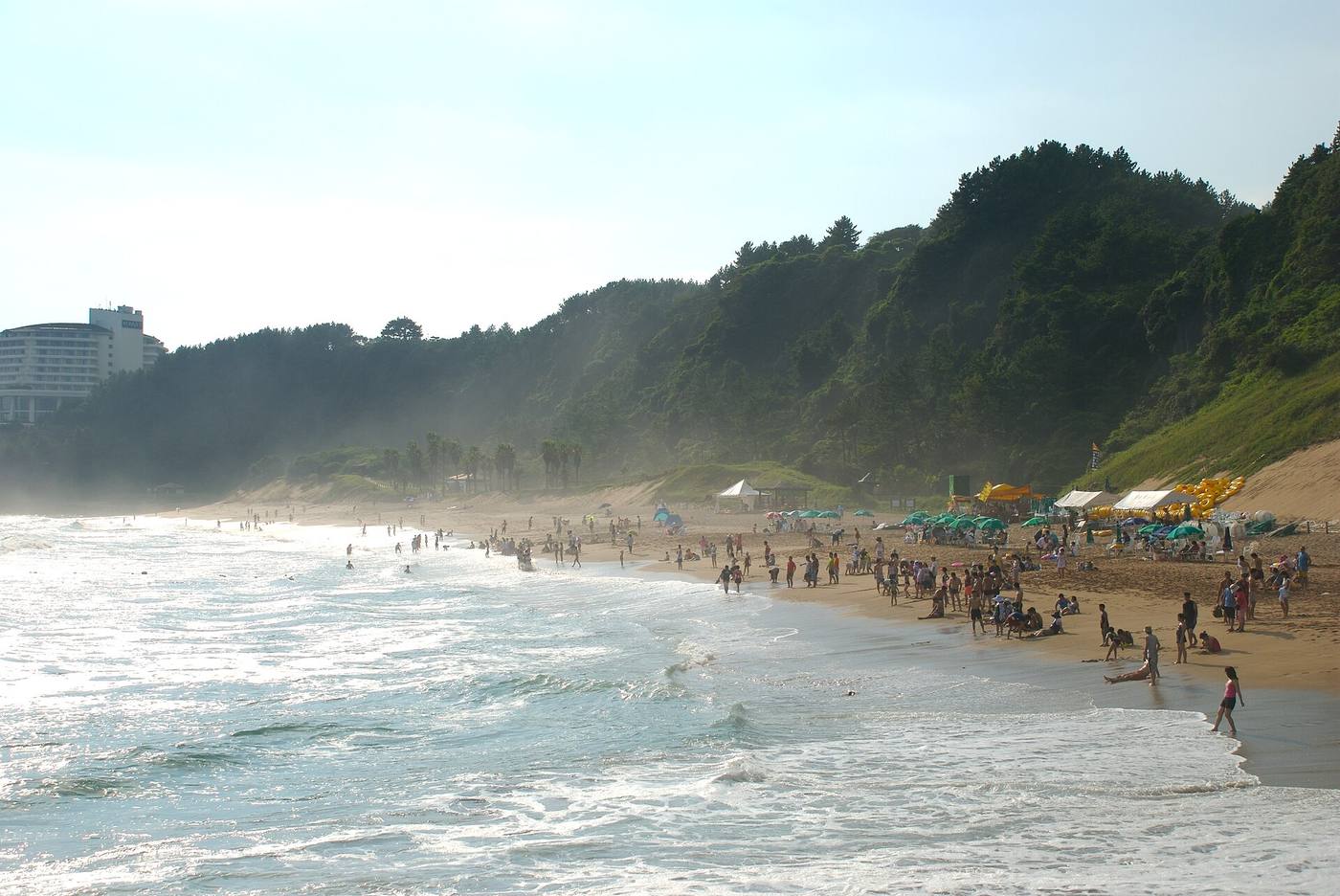
Where to Stay in Jeju Without a Car: Korea's Five Best Bases by Bus
57.5% of Jeju's rooms are in Jeju City and Seogwipo, yet 82.7% of its rural guesthouses sit in the outer villages, where buses are far sparser. Five car-free bases compared by bus line, airport fare and the last bus home.
Hallasan, Jeju, Korea This Winter: Gwaneumsa Reopened 24 September 2026, the 11:30 Summit Cutoff From 1 October, 1,500 Places a Day and the No-Show Ban
Hallasan's Gwaneumsa summit trail reopened on 24 September 2026 after rockfall-fence repairs. From 1 October the summit checkpoints close at 11:30, not the 12:00 English guides list; 1,500 summit places a day, and one no-show costs three months.