Pocachip: Korea's No.1 Potato Chip, and Why the Original Came Second
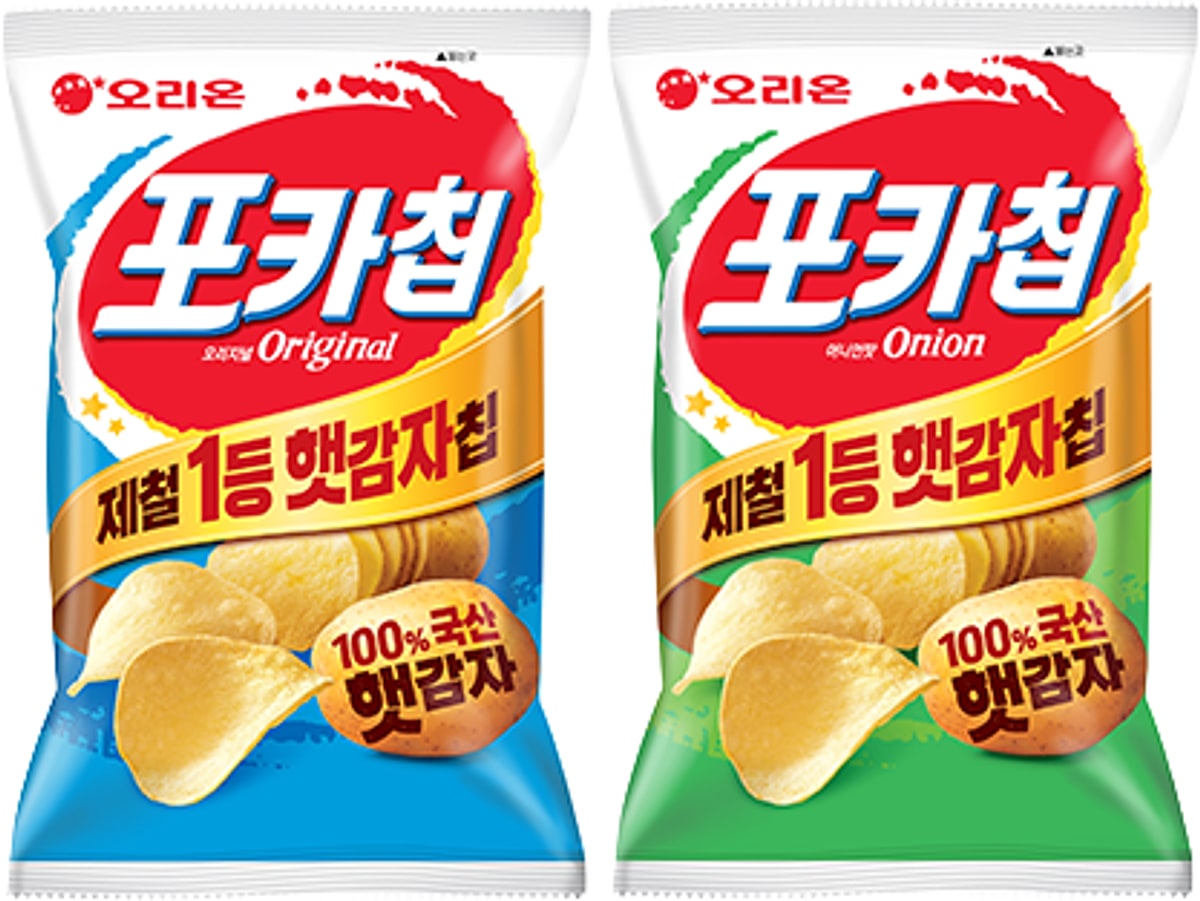
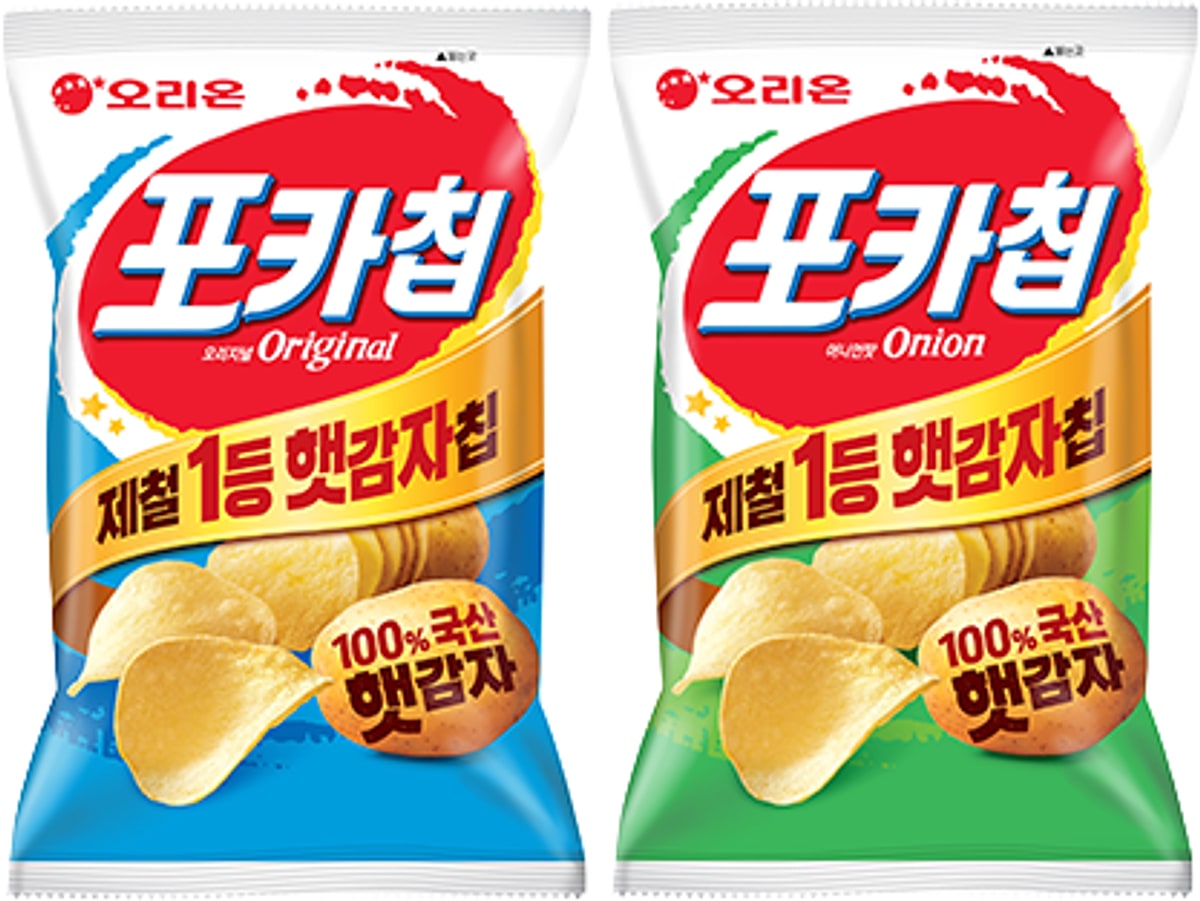
포카칩 Original (blue) and Onion (green). The gold badge reads 100% 국산 햇감자 — 100% Korean new potatoes — and that claim is only true for part of the year. Official product image, Orion.
포카칩 has been the best-selling potato chip in Korea for over thirty years, and in the first half of last year it was the country's second best-selling snack of any kind at ₩54.4 billion — the fastest-growing product in the top ten.
Almost nothing has been written about it in English. You can buy it on Amazon and at every Korean grocer abroad, and what you will find online is a product listing.
So: which bag to pick, how it differs from the ridged one next to it, and the thing about the blue bag that nobody outside Korea knows.
The Short Answer
| Detail | |
|---|---|
| Korean name | 포카칩 (Pocachip) |
| Maker | 오리온 (Orion) |
| Launched | Onion in July 1988. Original only in 1992 |
| The name | 포 from 포테이토 (potato) + 카 from the Korean onomatopoeia for a crisp snap |
| What it is | A 생감자칩 — sliced from whole potatoes, not pressed from flakes. Cut very thin |
| Potatoes | 100% Korean new potatoes June–October. Imported the rest of the year |
| Main flavours | 오리지널 (blue) · 어니언 (green) · 스윗치즈 (yellow) · 트리플페퍼 |
| Sister product | 스윙칩 — same company, thicker and ridged |
| Price, Aug 2026 | ₩1,700 for 66 g at convenience stores; around ₩1,100 per bag in supermarket multipacks |
| Market position | No.1 in Korean fresh-potato chips since 1988 |
| Abroad | No.1 in Vietnam since 2017 — ahead of Lay's |
Compare Pocachip flavours on AmazonAffiliate link. As an Amazon Associate, EpicKor earns from qualifying purchases at no extra cost to you.
If you only remember one line: buy the green bag first. Onion is the one Korea actually built the brand on.
The Original Is Not the Original
This is the fact that reorders how you read the shelf.
어니언맛 launched in July 1988. At the time, potato chips barely existed as a category in Korea, and Orion led with onion — a seasoned chip, not a plain one.
Original did not arrive until 1992, and it was not called Original then either. It launched as 소금맛 — salt flavour. The English word "Salted" was added to the bag in 1996, and only around 2006 was it relabelled 오리지널.
So the product English speakers reach for as the default, assuming it is the base from which the others branched, is the later one, renamed twice, four years behind the flavour that actually established the brand.
That is not a trivia point. It changes the recommendation: in Korea, 어니언 is not a variant of Original — Original is the plain version of Onion. If you are buying one bag to find out what Pocachip is, the green one is the more representative answer.
The Bag Changes With the Season
Look again at the gold badge on the front: 100% 국산 햇감자, one hundred percent Korean new potatoes.
It is true — for part of the year.
Korean potato harvest runs roughly June to October, and during those months Orion produces Pocachip from domestic new potatoes. Outside that window the domestic crop is gone, and production switches to imported potatoes, chiefly from the United States and Australia.
This is not concealed and it is not unusual for the industry, but it has a practical consequence that no English page mentions: a bag bought in Korea in September and a bag bought in February are not made from the same potatoes. Korean snack press treats the annual switch to 햇감자 as news, which tells you the difference is considered real.
The chips are also 생감자칩 — cut from whole potatoes rather than pressed from dehydrated flake, which is what separates Pocachip and Swing Chip from stacked chips like Pringles. And they are cut unusually thin, which is the entire textural identity: they shatter rather than crunch.
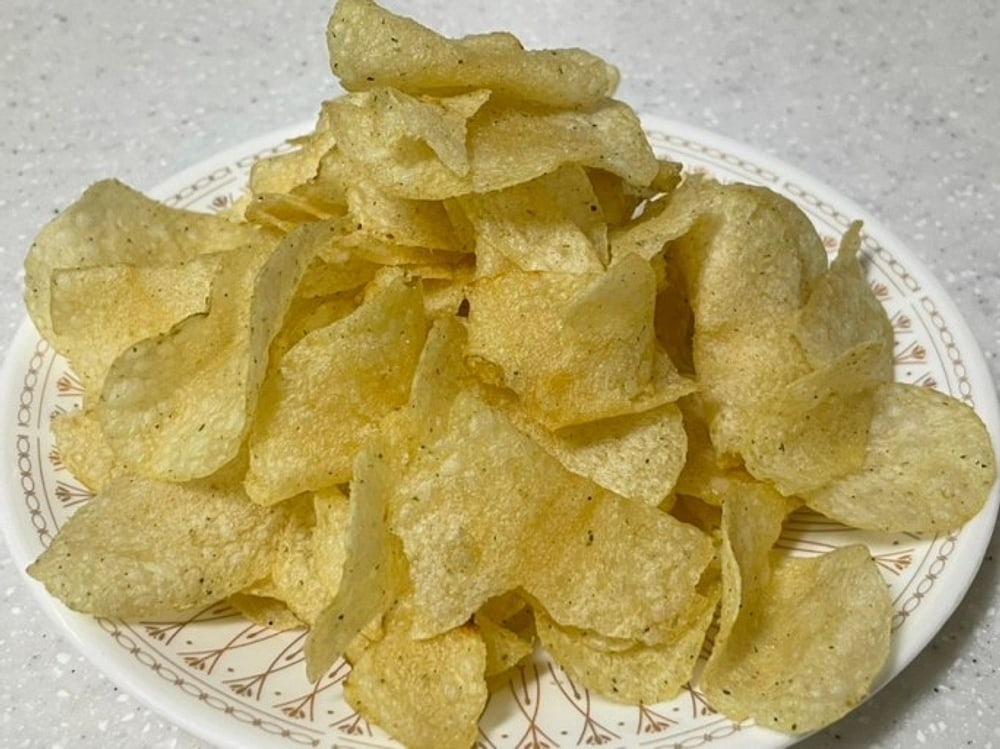
Out of the bag: thin, flat, and translucent at the edges. Photo by 박둘리, CC BY 2.0 KR, via Wikimedia Commons.
You might like: Matdongsan: Korea's Peanut Crunch Snack
Pocachip vs Swing Chip
These two sit next to each other in every Korean shop, they are made by the same company, and choosing between them is the actual decision a shopper faces.
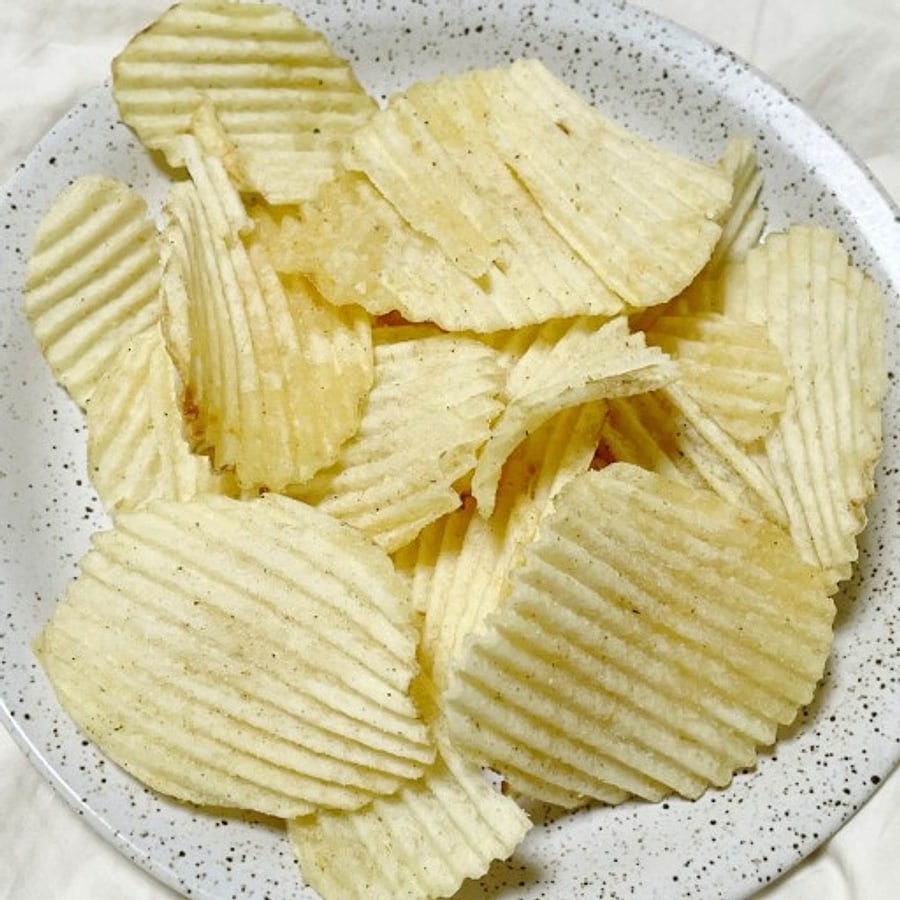
스윙칩, the sister product. Same maker, same domestic-potato claim, completely different cut. Photo by 박찹쌀, CC BY-SA 2.0 KR, via Wikimedia Commons.
| 포카칩 | 스윙칩 | |
|---|---|---|
| Cut | Thin and flat | Thick, with wave ridges (물결무늬) |
| Texture | Shatters. Light, brittle | Substantial. A real crunch |
| Seasoning | Sits on a smooth surface, tastes cleaner | Catches in the ridges, tastes stronger |
| Best for | Eating a lot of, on its own | Dips, and heavily seasoned flavours |
| Signature flavour | Onion | 간장 (soy) and spicy lines |
The rule of thumb: if you want to taste potato, buy Pocachip. If you want to taste seasoning, buy Swing Chip. The ridges exist to hold powder, and Orion puts its more aggressive flavours — carbonara buldak, soy — on the ridged one for exactly that reason.
Together the two brands have passed ₩4 trillion in cumulative global sales, and Orion's potato-snack business alone did ₩874 billion last year, closing on a trillion won.
Which Flavour to Buy
| Flavour | Korean | Bag | Verdict |
|---|---|---|---|
| Onion | 어니언맛 | Green | Start here. Lightly sweet seasoning, the original product, and the one Koreans grew up on |
| Original | 오리지널 | Blue | Salt only. Clean, and the best showcase for the potato itself |
| Sweet Cheese | 스윗치즈맛 | Yellow | Discontinued once, relaunched May 2024 after demand. Sweeter than non-Koreans expect |
| Triple Pepper | 트리플페퍼 | — | Peppery rather than chilli-hot. The most "adult" of the range |
Limited editions rotate constantly — 라임모히또 (lime mojito), 불닭 (buldak), 표고버섯 (shiitake) have all had runs. Treat them the way you would treat any Korean limited edition: buy it when you see it, because it may not be there next month.
One honest note on Sweet Cheese. Korean "sweet cheese" seasoning is genuinely sweet, closer to a dessert note than the savoury cheese powder most Western palates expect. It was withdrawn once and came back by demand, so Korea clearly likes it — but it is the flavour most likely to surprise a first-time buyer in the wrong direction.
Price and Where to Buy
| Where | Size | Price, Aug 2026 |
|---|---|---|
| Convenience store (CU, GS25, 7-Eleven) | 66 g | ₩1,700 |
| Supermarket / online multipack | 66 g × 20 | around ₩1,100 per bag |
| Large bag | 137 g | Varies |
It is in every convenience store and every supermarket in Korea; there is nothing to hunt for. The multipack is where the value is — buying twenty bags online costs about 65% of the convenience-store rate per bag, which matters if you are stocking up before flying home.
Convenience stores run 2+1 and 1+1 promotions on it constantly. If you are buying more than one bag, check the shelf tag before paying, because the promotion is frequently better than the multipack maths.
Buying Korean snacks at home? Pocachip exports widely and is easy to find outside Korea — but the flavour range abroad is narrower than in Korea, and the seasonal Korean-potato bags are a domestic thing. Worth comparing what is actually stocked before you settle on a flavour.
It Beat Lay's in Vietnam
The part of the story that surprises Koreans as much as anyone.
Orion took Pocachip into Vietnam and has held the number one potato chip market share there since 2017 — ahead of Lay's, the global leader. Orion runs localised products in Vietnam and China, and is expanding production lines at home and abroad on the back of it.
For context on how unusual that is: this is a Korean snack brand beating PepsiCo's flagship chip in a third country, sustained over most of a decade.
At home its position is less comfortable than it looks. Nongshim's 포테토칩 has been closing the gap, and Korean trade press in July 2026 framed the year as a fight over which potato chip takes the No.1 snack slot outright. The 2015 허니버터칩 mania briefly convulsed the whole category and still did not displace Pocachip — but the current challenge is a direct competitor in the same format, which is different.
You might like: Korean Snacks Guide: What to Buy, Taste, and Pack
Who Should Skip It
Skip it if you want something you cannot get at home. This is a very good thin potato chip, and it is a potato chip. Someone hoping for a distinctly Korean flavour experience will get more from Orion's cheese chip or from a snack with no Western equivalent at all.
Skip Original if you only buy one bag. It is the plainest thing in the range and the least representative. Buy Onion.
Skip the big 137 g bag unless you are sharing. Thin chips go soft quickly once opened, and Korean summer humidity is unkind to them. The 66 g is the sensible unit.
FAQ
Q: What is Pocachip? A: Korea's best-selling potato chip, made by 오리온 (Orion) since 1988. It is a 생감자칩 — sliced from whole potatoes rather than pressed from flakes — cut very thin, so it shatters rather than crunches. The name is 포 from potato plus 카, the Korean onomatopoeia for a crisp snap.
Q: Which Pocachip flavour should I buy first? A: 어니언맛 (Onion, green bag). It launched in 1988, four years before Original, and it is the flavour the brand was built on. Original is the plain salted version, not the base the others came from.
Q: What is the difference between Pocachip and Swing Chip? A: Same company, different cut. Pocachip is thin and flat; 스윙칩 is thick with wave ridges. Pocachip tastes more of potato, Swing Chip carries stronger seasoning because the ridges hold more powder.
Q: Is Pocachip really made from Korean potatoes? A: During the Korean harvest, roughly June to October, yes — that is when the 100% 국산 햇감자 badge applies. Outside those months Orion uses imported potatoes, mainly from the United States and Australia. The same bag is not made from the same potatoes year-round.
Q: How much does Pocachip cost in Korea? A: As of August 2026, ₩1,700 for a 66 g bag at convenience stores. Supermarket and online multipacks work out to roughly ₩1,100 per bag. Convenience stores run 2+1 and 1+1 promotions on it very frequently.
Q: Is Pocachip like Lay's or Pringles? A: Closer to Lay's — both are sliced from real potatoes. Pringles is pressed from dehydrated flake, which is a different product entirely. Pocachip is cut thinner than most Lay's, and in Vietnam it has outsold Lay's since 2017.
Q: Why is it spelled Poca and not Poka? A: Romanisation is inconsistent on the bags themselves and across retailers, so you will see Pocachip, Poca Chip, and Poka Chip for the same product. The Korean is always 포카칩.
Sources
Launch years, the flavour-naming sequence, name etymology, production method and variant history from Korean-language reference sources and Orion product materials. The 100% 국산 햇감자 claim is printed on the packaging; the harvest-season production switch is reported annually by Korean food-industry press. Market share, the ₩874 billion potato-snack figure, cumulative ₩4 trillion global sales, and the Vietnam position from Korean business press, July 2026. Convenience-store pricing checked August 2026.
Prices, flavours and promotions change constantly, and export ranges differ from the Korean domestic range. Check the bag in front of you.
You Might Also Like
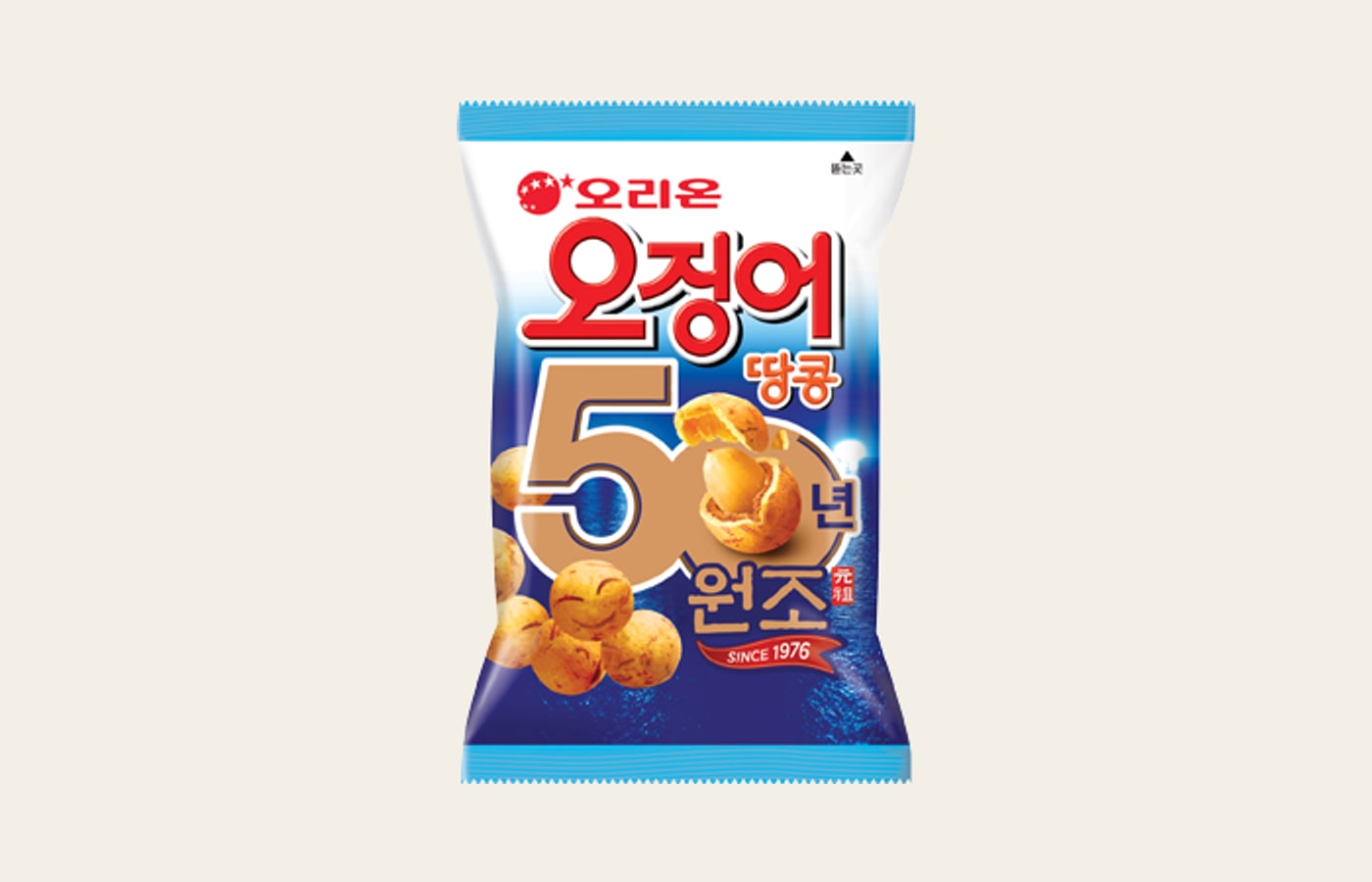
Orion Squid Peanut: Korea's Beer Snack Is Coated Twenty-Eight Times
오징어땅콩 turned 50 in 2026. There is real squid on it — strips thinner than 0.2 mm — and each peanut gets 27, 28 or 29 coats of batter depending on its size, so every ball comes out identical.
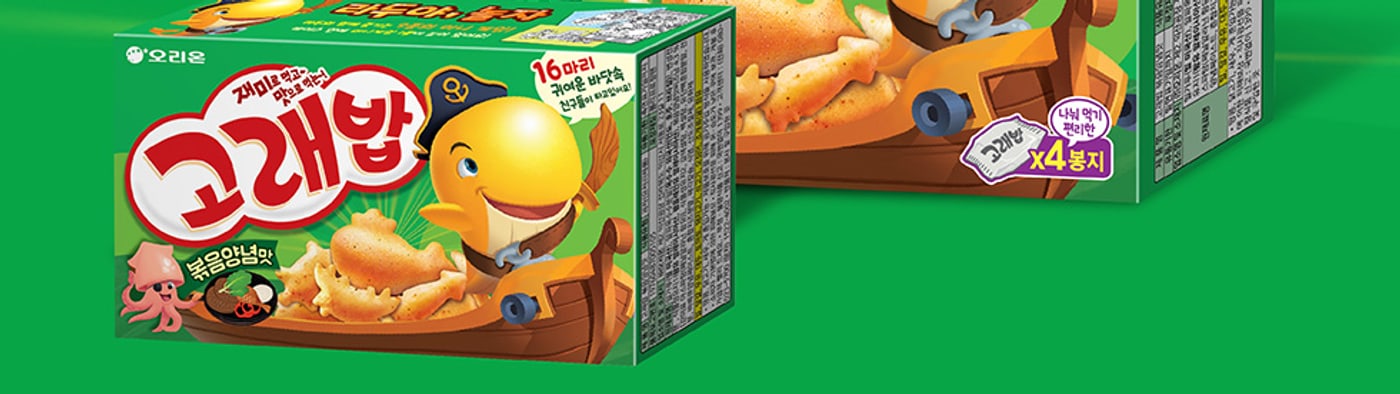
Goraebap: Korea's Whale Food Crackers Have 16 Shapes, and Every One Has a Name
English sources say nine sea creatures. Orion's own packaging says 16, and each has a pun name — the dolphin is called Endorphin. Launched March 1984, what the box games are, which flavour to buy, and August 2026 prices.
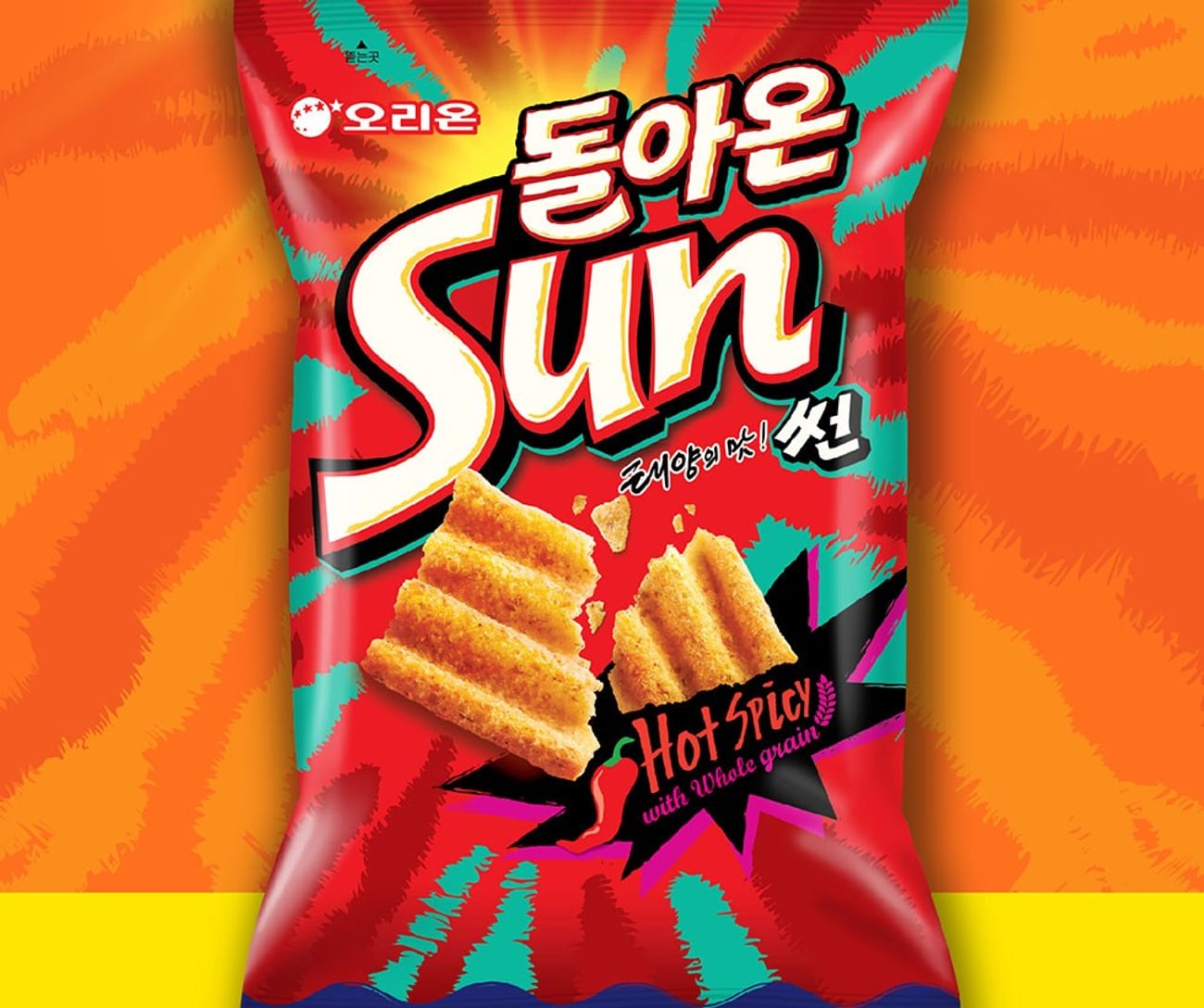
Korea's Sun Chips Is a Different Chip, and It Came Back From a Fire
A 2016 factory fire destroyed the only production line and Orion discontinued it; customers asked for two years and it returned in April 2018 as 돌아온 썬. Why the Korean bag is not the American one, which flavour to buy, and August 2026 prices.