Is Korean Cider Alcoholic? Chilsung Cider vs Sprite
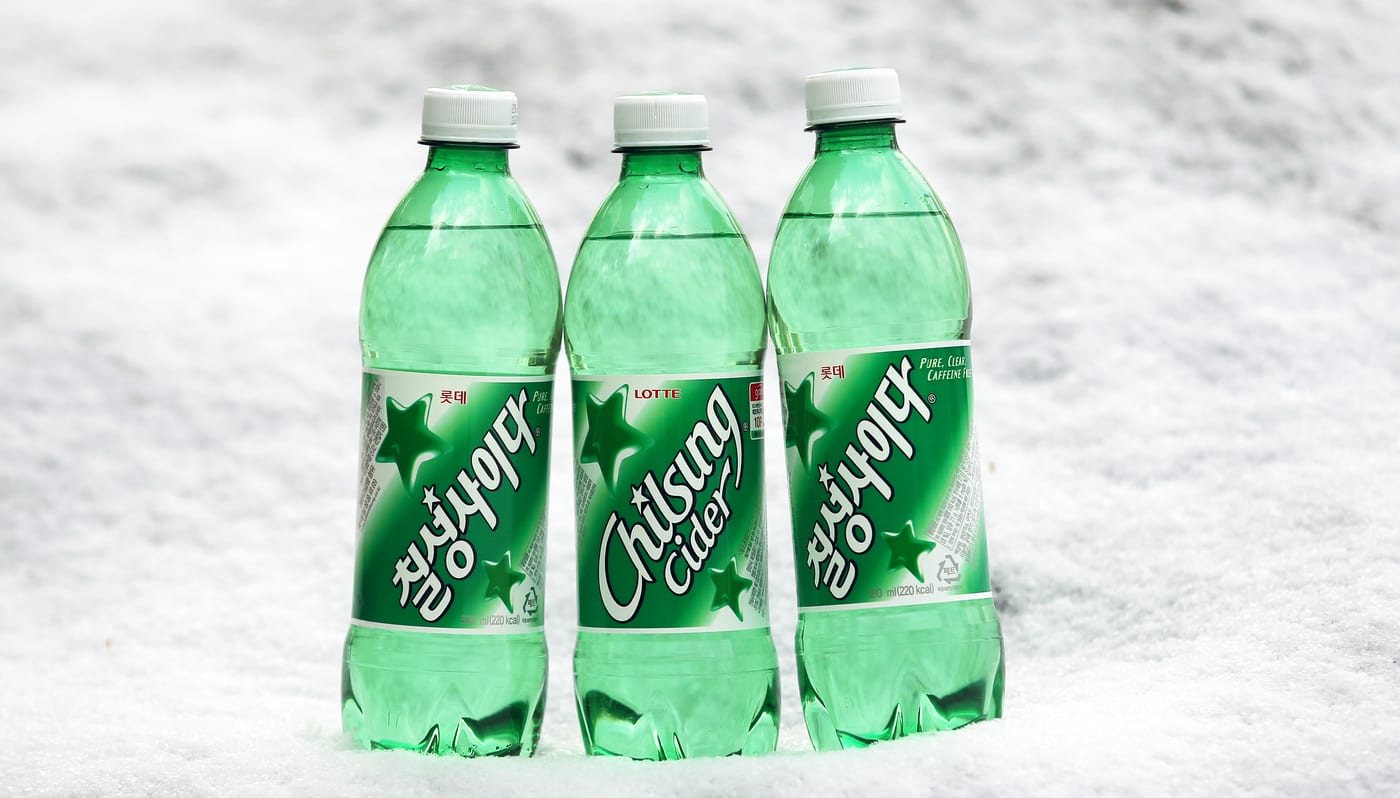
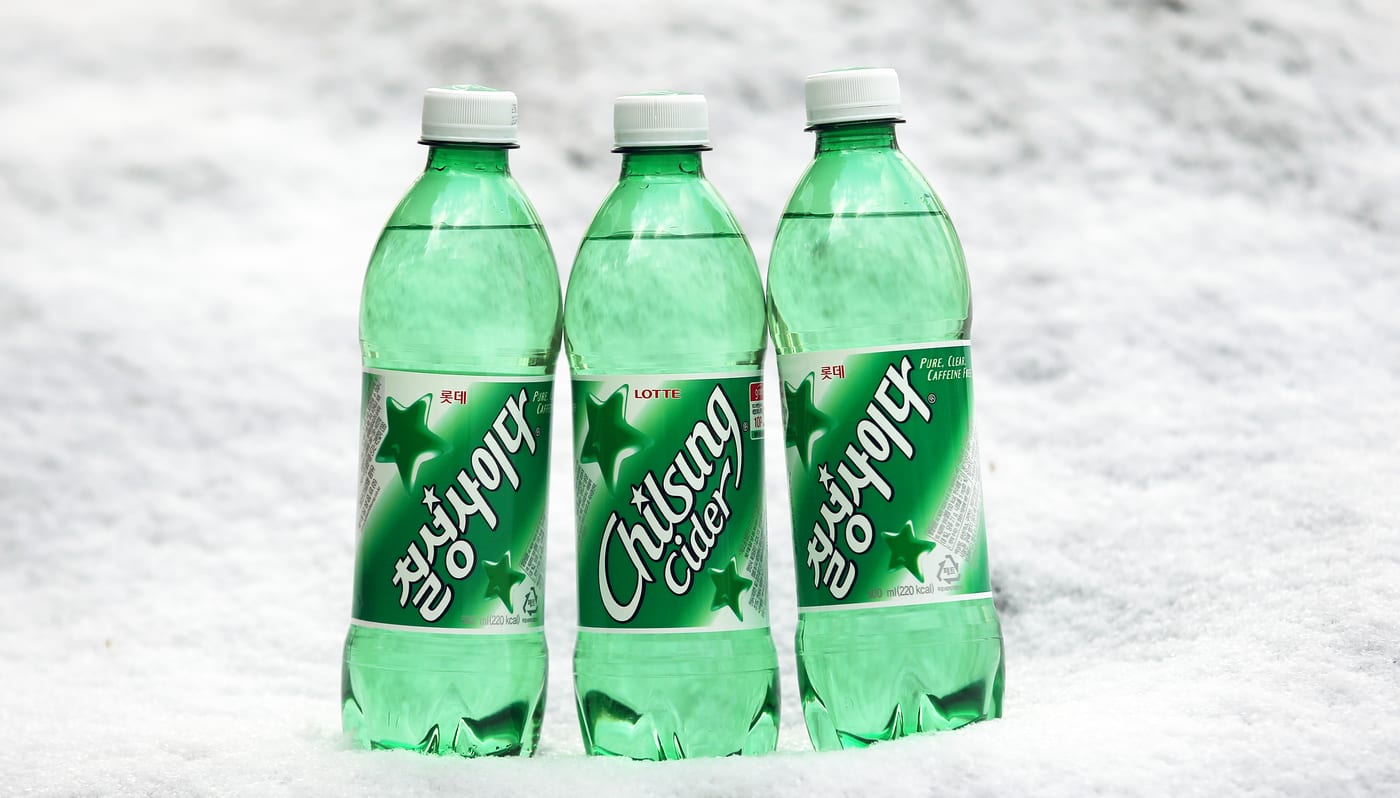
칠성사이다 in its familiar green bottle. The label reads "PURE, CLEAN, CAFFEINE FREE" — which answers one of the most-asked questions about it. Photo by Republic of Korea (KOCIS), CC BY-SA 2.0, via Wikimedia Commons.
A Korean restaurant menu says cider. You order it expecting something alcoholic and apple-flavoured, and a clear, colourless, fizzy lemon-lime drink arrives.
Nothing has gone wrong. In Korea, 사이다 means clear lemon-lime soda. There are no apples in it and there is no alcohol in it. The word means something different here, and the misunderstanding is common enough that Google's most-asked questions about Korean cider are "is it alcoholic", "is it halal", and "does it have caffeine."
Short answers: no, yes, and no. The longer answers are below, along with the thing every English article about this drink gets backwards.
The Short Answer
| Detail | |
|---|---|
| Korean name | 칠성사이다 (Chilsung Cider) |
| What it is | Clear lemon-lime carbonated soft drink. No apples, no alcohol |
| Launched | 9 May 1950 — six weeks before the Korean War began |
| Maker | 롯데칠성음료 (Lotte Chilsung), which acquired it in 1974 |
| Older than | Sprite, by 11 years. Sprite launched in 1961 |
| Alcohol | None. It is a soft drink |
| Caffeine | None. Printed on the bottle |
| Market share | About 80% of Korea's cider category; second-biggest soda in Korea after Coca-Cola |
| Price, Aug 2026 | ₩2,500 for 500 ml — raised from ₩2,300 on 1 August 2026 |
| Zero range | Original Zero, plus Lime, Green Plum, Orange, and Yuzu (April 2026) |
| The name | 칠성 = "seven stars." They stand for seven people |
Lotte Chilsung Cider, 250ml × 6 — on AmazonAffiliate link. As an Amazon Associate, EpicKor earns from qualifying purchases at no extra cost to you.
If you only remember one line: Korean cider is Sprite-shaped, not cider-shaped — clear, sweet, no alcohol, no caffeine.
Alcohol, Caffeine, Halal: The Questions People Actually Ask
These are the top autocomplete branches for Korean cider in English, so they get direct answers.
Does Korean cider contain alcohol? No. 칠성사이다 is a soft drink with no alcohol content whatsoever. The confusion comes entirely from the English word. If you want the alcoholic Korean drinks, that is a different guide.
Does it contain caffeine? No — and unusually, the bottle says so. The label carries "PURE, CLEAN, CAFFEINE FREE" in English, which is why the answer is visible in the photograph at the top of this page. Unlike dark colas it also contains no phosphoric acid (인산) and no caramel colouring (캐러멜 색소), which is why it pours clear.
Is it halal? There is no alcohol and no animal-derived ingredient in the standard formula, so the practical answer for most travellers is yes. But certification is a separate matter from ingredients, and it varies by market and production site. If you require certified halal rather than merely alcohol-free, check the specific can or bottle in front of you rather than trusting a general answer — including this one.
Is it healthy? It is a sugared soft drink. A 500 ml bottle is around 220 kcal, essentially all sugar. That is comparable to other full-sugar sodas. If that matters to you, the zero range below is the real answer.
Lotte Chilsung Cider (칠성사이다), 250ml x 6 — the Korean soda that beat Sprite to the shelf by eleven years. It travels: widely stocked by Asian grocers and online. Export cans are not always the domestic size or formulation, and the Zero flavours rarely make it overseas, so read the listing. As an Amazon Associate, EpicKor earns from qualifying purchases at no extra cost to you.
See Chilsung Cider on AmazonWhy It Is Called Cider When There Are No Apples
The word did not lose its apples in Korea. It lost them in Japan.
In the late nineteenth century, English cider — the low-alcohol apple drink — reached Japan. What survived the crossing was not the apples but the sensation: sweet, strongly carbonated, fruit-ish. Japanese adopted the word as サイダー (saidā) and applied it to clear carbonated fruit-flavoured drinks generally, apple or no apple.
That sense is what passed into Korean as 사이다. It is a loanword that arrived with its meaning already changed, which is why the English original is no help at all.
So when a Korean menu offers 사이다, the useful translation is not cider. It is closer to "lemonade" in the British sense, or simply "Sprite."
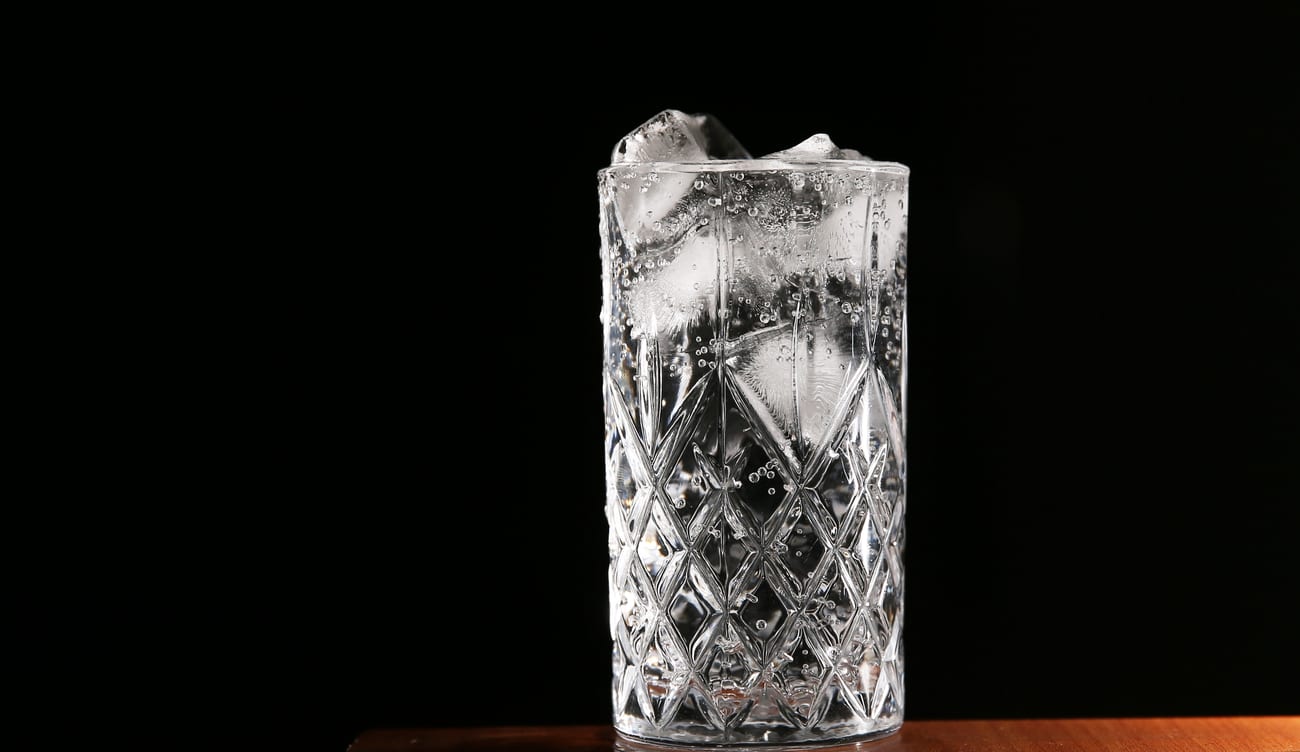
Poured, the point makes itself. Apple cider is amber and cloudy; this is water-clear. Photo by Republic of Korea (KOCIS), CC BY-SA 2.0, via Wikimedia Commons.
The Thing Every English Article Gets Backwards
Search in English and you will be told, repeatedly, that Chilsung Cider is "Korea's answer to Sprite."
Check the dates.
| Launched | |
|---|---|
| 칠성사이다 | 9 May 1950 |
| Sprite | 1961 |
| Coca-Cola, officially produced in Korea | 1968 |
Chilsung Cider is eleven years older than Sprite, and eighteen years older than legally bottled Coca-Cola in Korea. It is not an answer to Sprite. Sprite arrived in a market Chilsung already held.
The launch date is worth sitting with for another reason. 9 May 1950 is six weeks before the Korean War began on 25 June. The company launched a soft drink into a country that was about to be destroyed, and the brand survived both the war and the seventy-five years after it.
The Seven Stars Are Seven People
칠성 means seven stars, and the label carries them.
The name came from the seven founders of 동방청량음료합명회사, the company that launched the drink in 1950: 최금덕, 박운석, 장계량, 주동익, 정선명, 김명근, and 우상대.
Their first choice was 七姓 — seven surnames, literally naming themselves. They changed it to 七星, seven stars, for the Big Dipper, on the reasoning that the constellation is permanent and a company should aspire to the same.
The business changed hands repeatedly — 동방청량음료 to 칠성음료공업 in 1968, into 칠성한미음료 in 1973, and acquired by Lotte in 1974, which is why a drink named after seven Korean founders is sold today by 롯데칠성음료. The seven stars stayed on the bottle through all of it.
You might like: Milkis Flavours: Which Korean Milk Soda to Pick
The Zero Range Is Where the Action Is
This is where 칠성사이다 has diverged most from Sprite, and where Korean and English searches disagree completely.
English asks what is it and is it like Sprite. Korean asks about variants and sizes — the top Naver branches are 제로, 제로 유자, 500, 캔, 355, 190, 유자, 병. Koreans settled the identity question decades ago and are now choosing a flavour.
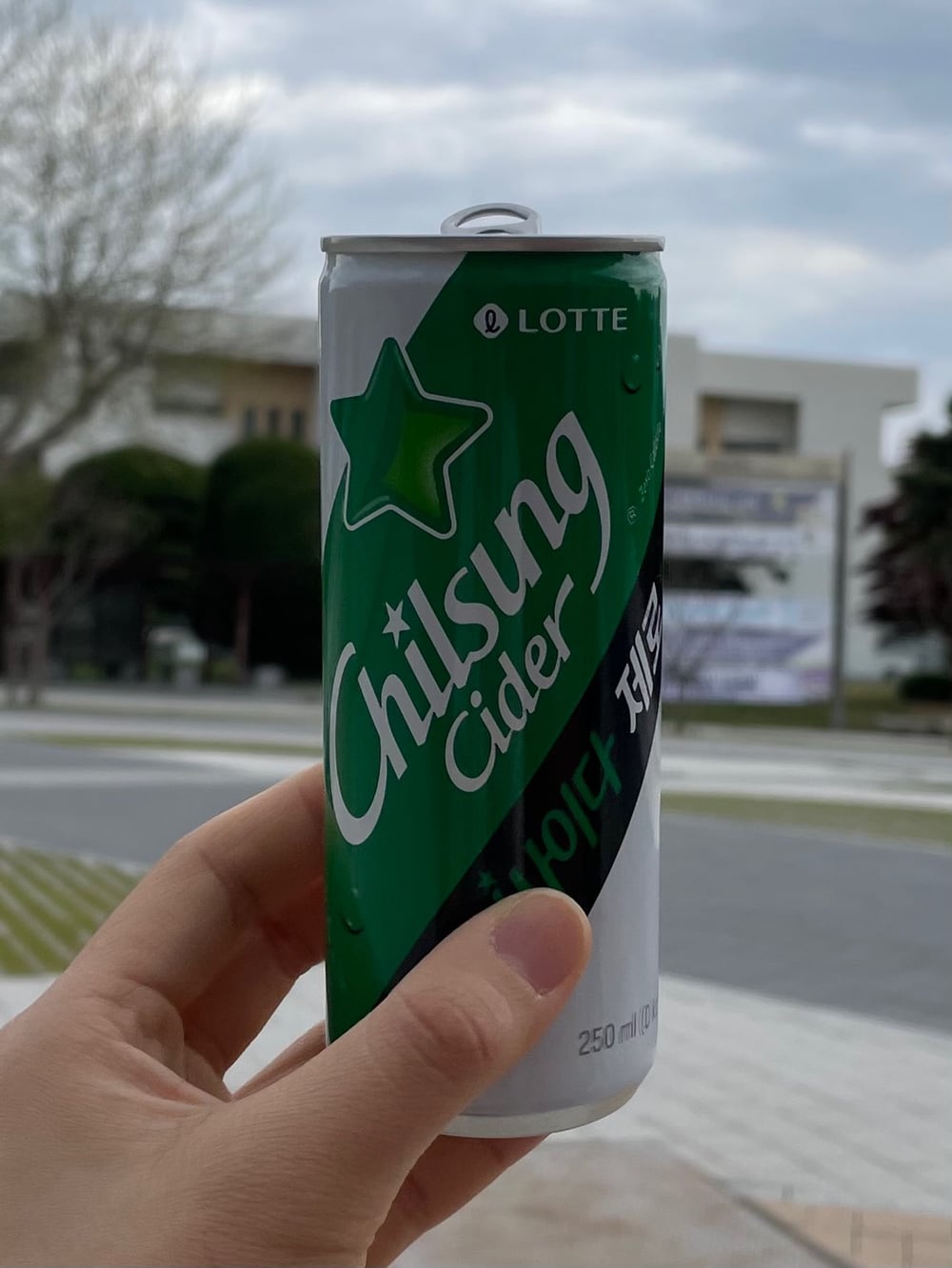
칠성사이다 제로, 250 ml. The zero line now has more flavours than the original ever did. Photo by Hyeonyoung Lee, CC BY-SA 4.0, via Wikimedia Commons.
| Variant | Korean | Launched |
|---|---|---|
| Zero | 제로 | 2011, withdrawn 2015, relaunched 2021 |
| Lower sugar | 로우슈거 | July 2018 |
| Plus | 플러스 | February 2022 |
| Blue Lime Zero | 블루라임 제로 | June 2023 |
| Green Plum Zero | 매실 제로 | March 2024 |
| Retro | 레트로 | April 2024 |
| Orange Zero | 오렌지 제로 | May 2025 |
| Yuzu Zero | 유자 제로 | April 2026 |
Two notes. Zero failed the first time — launched 2011, pulled in 2015, brought back in 2021 into a completely changed market, and it is now a core line rather than an experiment. The zero versions sweeten with 알룰로스 (allulose), 수크랄로스 (sucralose), and 아세설팜칼륨 (acesulfame K).
And 유자 (yuzu) is the one to try if you see it. It launched in April 2026, it is genuinely Korean rather than a global flavour extension, and yuzu against a clean lemon-lime base works far better than it sounds.
Price, and the Rise That Just Happened
| Size | Price |
|---|---|
| 500 ml PET | ₩2,500 — up from ₩2,300 |
| Zero lines | Up ₩100–300 across the range |
The increase took effect on 1 August 2026, so if you are in Korea this month you are paying the new price. Lotte Chilsung raised Chilsung Cider and Pepsi together, citing cost pressure.
It comes in an unusually wide range of formats — cans at 190, 210, 250, 310, 330 and 490 ml, PET from 300 ml up to 2 L, and glass at 236 and 340 ml. The small 190 ml can is the one you will meet in Korean restaurants, and the glass bottle is the one that turns up at old-style eateries.
What Koreans Actually Do With It
Three uses that are not obvious from the bottle.
It is the default drink at the Korean BBQ table. After beer, 사이다 is the most-poured thing at a grill restaurant. It is ordered for the people not drinking, for children, and by drinkers as a palate reset between fatty cuts. If you want the one non-alcoholic order that will not get a second look, this is it.
It goes into the cooking. Korean home cooks use 사이다 in marinades and sauces — the sugar helps browning and the acidity tenderises meat. It turns up in 갈비 marinade, in cold noodle broth, and it is standard in hwachae, the summer fruit punch.
The word became slang. In Korean internet usage, calling something 사이다 means it was satisfying — a blunt remark that cut through nonsense, a plot that finally resolved. Its opposite is 고구마, sweet potato, for something so frustrating it feels like choking. A drama scene can be described as 사이다 or 고구마, and Koreans will know exactly what you mean. That metaphor exists because the drink's defining sensation is relief.
Lotte Korean soda variety pack — Milkis, Chilsung Cider and 2% Peach in one order. If the honest comparison below makes you want to run it yourself, this is the cheapest way to get the three Lotte sodas on one table. As an Amazon Associate, EpicKor earns from qualifying purchases at no extra cost to you.
See the variety pack on AmazonChilsung Cider vs Sprite: The Honest Comparison
They are close. Anyone telling you they taste nothing alike is overselling it.
| 칠성사이다 | Sprite | |
|---|---|---|
| Launched | 1950 | 1961 |
| Profile | Lighter, cleaner, less sweet up front | Sweeter, sharper carbonation |
| Carbonation | Softer | More aggressive |
| Caffeine | None | None |
| In Korea | The default. ~80% of the category | Present, but not the one people reach for |
The practical difference is sweetness and fizz intensity. Chilsung reads as a lighter drink — a soda-water tang arrives first, then the lemon-lime sweetness behind it. Sprite front-loads the sugar and hits harder with the carbonation.
Whether that is better is a preference, not a fact. What is a fact is that Chilsung got there first, and the framing that treats it as a Sprite imitation has the history exactly reversed.
FAQ
Q: Is Korean cider alcoholic? A: No. 칠성사이다 is a non-alcoholic soft drink — a clear lemon-lime soda. The confusion comes from English, where "cider" means a fermented apple drink. The Korean word arrived via Japanese サイダー already meaning "clear carbonated fruit-flavoured drink."
Q: Does Korean cider have apples in it? A: No. It is lemon-lime flavoured. There is no apple anywhere in it, despite the name.
Q: Does Chilsung Cider contain caffeine? A: No, and the bottle says so — the label carries "PURE, CLEAN, CAFFEINE FREE." It also contains no phosphoric acid and no caramel colouring, unlike dark colas.
Q: Is Chilsung Cider halal? A: The standard formula contains no alcohol and no animal-derived ingredients, so for most travellers the practical answer is yes. Formal halal certification is separate from ingredients and varies by market — if you need certification rather than alcohol-free, check the specific product.
Q: Is Chilsung Cider the same as Sprite? A: They are similar, not identical. Chilsung is lighter, less sweet at the front, and softer in carbonation. It also predates Sprite by eleven years — 1950 against 1961 — so it is not a Korean copy of Sprite.
Q: How much does Chilsung Cider cost in Korea? A: As of August 2026, ₩2,500 for a 500 ml bottle, raised from ₩2,300 on 1 August 2026. Zero variants rose ₩100–300 at the same time.
Q: What does 사이다 mean as slang? A: Something satisfying — a blunt truth or a resolution that clears the air, named after the drink's cooling relief. Its opposite is 고구마 (sweet potato), for something frustrating enough to feel like choking.
Sources
Launch date, founding company, the seven-founder naming, ownership history and variant timeline from Korean-language reference sources and Lotte Chilsung brand materials. Category share and Coca-Cola's 1968 Korean bottling from Korean business press. The August 2026 price revision from Korean economic press. Caffeine, phosphoric acid and colouring claims read from the product label. Sprite's 1961 launch from standard references.
Prices, variants and export formulations change. Check the bottle in front of you.
You Might Also Like
Milkis vs Calpis, and Whether Korea's Milk Soda Has Alcohol
Milkis is not Calpis — different country, different bacteria, seventy years apart — and it has no alcohol, though the question returns for a reason printed on the can. Which flavour to buy first, the ₩750 promotion price, and how Koreans drink it.
Maxim vs G7: Why Korea's Coffee Mix Tastes Nothing Like Vietnam's
Korea grows no coffee and drinks 405 cups a person a year. Vietnam is the world's second-biggest producer. That difference is why a Maxim stick is sweet and creamy and a G7 stick is bitter — and why one company holds 88% of Korea's coffee mix market.
Delaffe: Korea's Convenience-Store Coffee Brand That Cut Its Price to ₩900
델라페 is not a drink, it is CU's own label — 150 million units a year, sold as a pouch you pour into a separate cup of ice. In March 2026 five of them dropped to ₩900, which makes the convenience store cheaper than Korea's cheapest café chain.