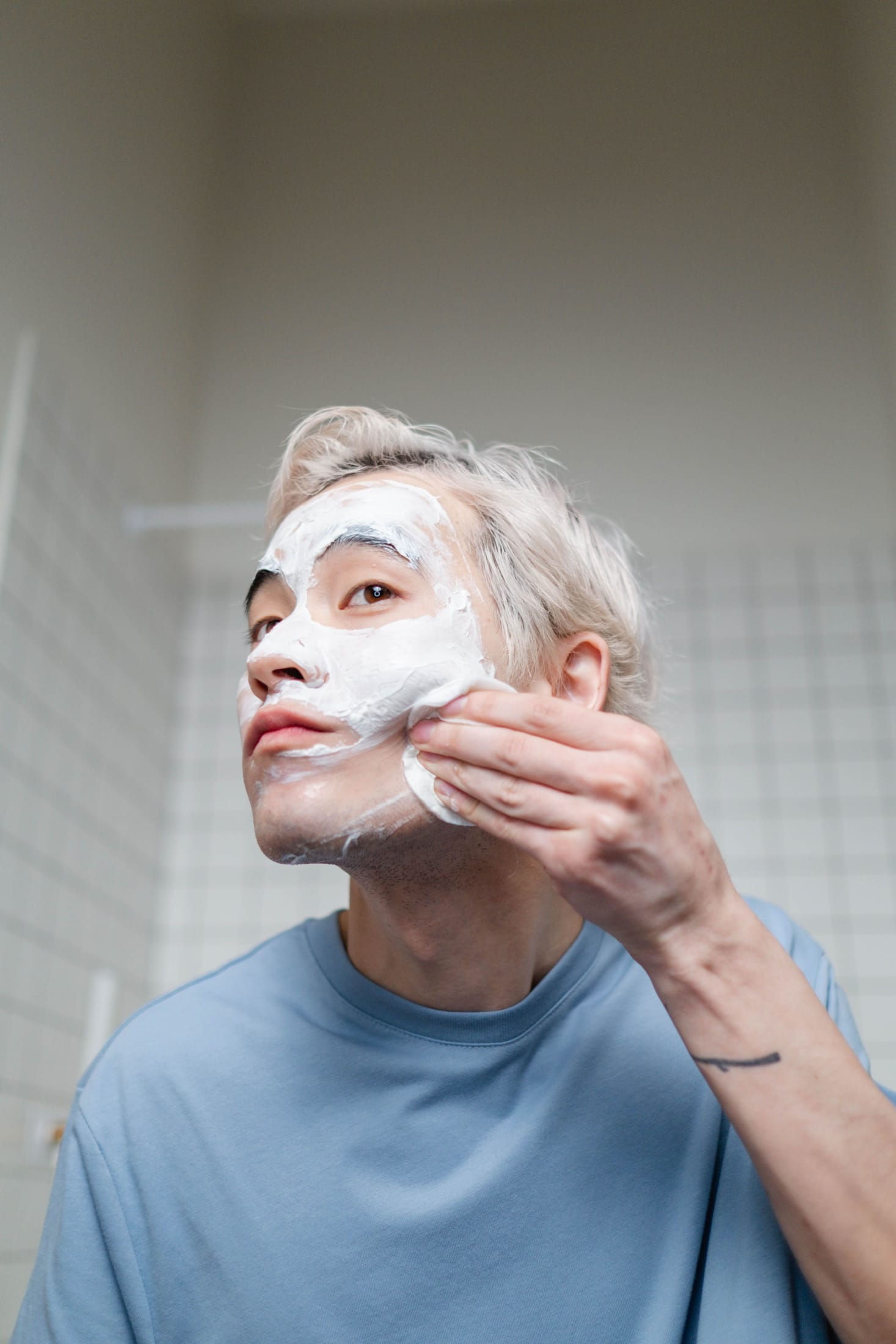
Korean Men's Skincare 2026: The Routine Behind Idol Skin
Here's what nobody tells you about Korean men's skincare: in Korea it isn't a trend, a phase, or a punchline. It's a normal shelf in a normal bathroom. Korean men buy more skincare per person than men anywhere else on earth — by a wide margin — and nobody involved thinks it's remarkable. Meanwhile most guides written for Western men still open by reassuring you that washing your face won't compromise your masculinity.
This guide skips that part. It covers why Korea got here, the actual routine order Korean men use, which steps genuinely matter versus which ones are optional, what the K-pop idol connection really is (and isn't), and how to start without buying ten bottles you'll abandon in a month.
ROUND LAB Birch Juice Sun Stick (SPF 50+) — on AmazonAffiliate link. As an Amazon Associate, EpicKor earns from qualifying purchases at no extra cost to you.
Why Korea Leads the World in Men's Skincare
The numbers are not close. Euromonitor International put South Korea's men's grooming retail value at roughly 1,198 billion Korean won in 2025, up about 3% year over year — and Korea has held the global top spot in per-capita men's skincare spending for well over a decade. When Euromonitor first measured the category seriously, Korea alone accounted for around a fifth of worldwide men's skincare sales despite being a country of about 52 million people.
Three forces got it there, and none of them is "Korean men are vain."
Climate and pollution. Korea's seasons are brutal in both directions — humid, punishing summers and dry, cold winters, with spring bringing fine dust warnings. Skin that gets whiplashed like that needs help, and the products evolved to answer a real problem.
Military service and workplace grooming. Mandatory service puts most Korean men through years of sun, shaving, and hard conditions in their late teens and early twenties, which is exactly when skincare habits form. On the other side of it, a workplace culture that reads a groomed appearance as basic professionalism keeps the habit going. Our guide to lookism in Korea covers how far that appearance pressure extends, including its downsides.
Product availability. When every convenience store and subway-station shop sells decent sunscreen, using it stops being a project.
The Actual Routine, In Order
The internet loves the "10-step Korean routine." Almost no Korean man does ten steps. A realistic weekday looks like four, and a thorough evening looks like six.
| Step | Product | Morning | Evening | Skippable? |
|---|---|---|---|---|
| 1 | Cleanser (gel or foam) | Yes | Yes | No |
| 2 | Toner | Yes | Yes | Yes, if short on time |
| 3 | Essence or serum | Optional | Yes | Yes, at first |
| 4 | Moisturizer / lotion | Yes | Yes | No |
| 5 | Sunscreen | Yes | No | Never skip |
| 6 | Sheet mask | No | 1–2× per week | Yes |
If you only ever adopt two of these, make them cleanser and sunscreen. Everything else is refinement; those two are the load-bearing steps. A Korean pharmacist or shop assistant will tell you the same thing, usually while gently steering you away from the expensive serum you were reaching for.
The order matters more than the count. The working rule is thinnest to thickest — watery things before creamy things — because a heavy cream applied first will simply block whatever you put on top of it.
Starting with the step that actually matters: As an Amazon Associate, EpicKor may earn from qualifying purchases. Sunscreen is the one step Korean men treat as non-negotiable, and a stick format survives a work bag better than a bottle — the ROUND LAB Birch Juice Sun Stick (SPF 50+) is the non-sticky, no-white-cast kind that people reapply because it isn't annoying.
See ROUND LAB Birch Juice Sun Stick (SPF 50+) on AmazonWhat the K-Pop Idol Connection Actually Is
Idols did change the culture, but not in the way the marketing implies. No amount of snail mucin produces an idol's face — that's lighting, professional makeup, dermatology budgets, and in many cases procedures nobody discusses on camera. Believing otherwise is how people end up disappointed with perfectly good products.
What idols genuinely did was remove the stigma. Groups like BTS, EXO, SEVENTEEN, and Stray Kids made a visibly cared-for face part of mainstream masculinity rather than a contradiction of it. A Korean teenager in 2026 sees male skincare as unremarkable in a way his father's generation did not.
The honest version is this: consistent cleansing, moisturizing, and daily SPF over several years produces a real, visible difference in skin texture and sun damage. It will not produce a different bone structure. Our K-beauty ingredients guide breaks down what snail mucin, cica, propolis, and rice extract actually do, so you can buy by function instead of by promise.
What Korean Men's Products Do Differently
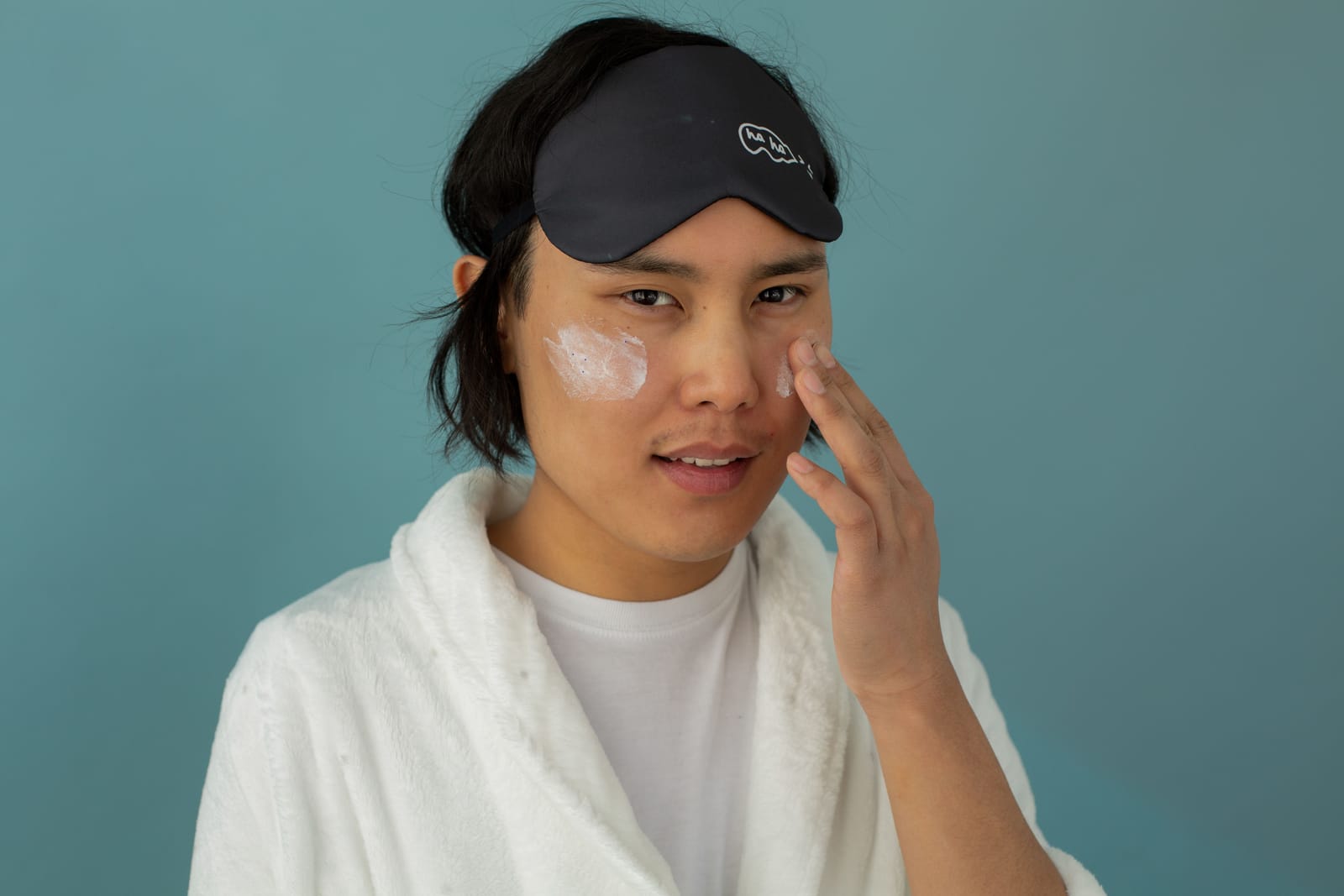
Walk into a Korean shop and the men's section doesn't look like the Western one. A few practical differences:
- Lighter textures. Korean formulations lean watery and fast-absorbing rather than thick and occlusive, which suits oilier skin and means the product disappears instead of sitting on your face.
- Sunscreen that people actually wear. This is the biggest gap. Korean SPF is cosmetically elegant — no chalky cast, no greasy film — which is precisely why the daily-use rate is so high.
- All-in-one "olin-won" products. Many Korean men use a single lotion that combines toner, essence, and moisturizer. It's not the optimal routine, but the routine you do beats the routine you skip.
- Less fragrance-forward marketing. Western men's grooming often sells on scent; Korean products more often sell on a named function or ingredient.
One caution worth stating plainly: Korean cosmetics are regulated as cosmetics, not medicine. Products can improve hydration, texture, and sun protection. Claims about "curing" acne or reversing deep wrinkles belong to dermatology, not a bottle.
Shaving Changes the Whole Equation
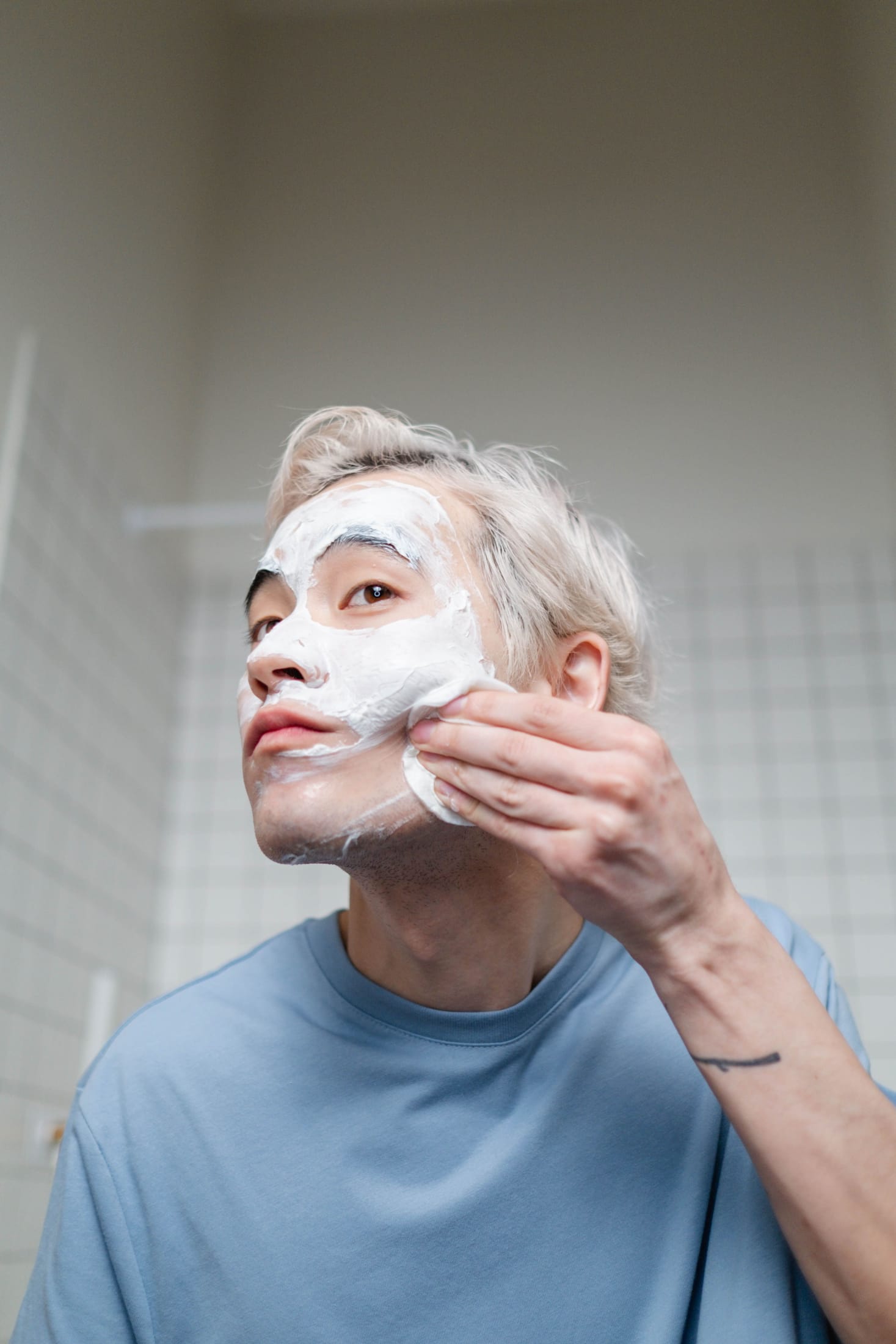
This is the part Western men's guides consistently underplay. Shaving is not a grooming step that happens next to skincare — it is an exfoliating procedure that removes a layer of skin along with the hair, and everything you do afterward lands on freshly stripped skin.
Korean routines account for this in a few specific ways:
- Shave after cleansing, not before. Warm water and a cleanser soften the beard and lift the hair, which means less blade pressure and less irritation.
- Skip the alcohol aftershave. The stinging sensation people associate with "working" is just a barrier that has been dried out and inflamed. Korean routines replace it with a hydrating toner or a soothing gel — this is where cica (centella) products earn their reputation.
- Moisturize immediately. Not ten minutes later. Skin loses water fastest in the minutes after shaving.
- Give ingrowns space. If you get razor bumps along the jaw or neck, adding a strong acid or retinol on top usually makes it worse before it makes it better.
If you shave daily, the single highest-return change you can make isn't buying a serum — it's swapping a drying aftershave for something soothing and following it with moisturizer.
What to Skip
A short list of things sold hard that beginners genuinely do not need:
Toner "for oily skin" that contains high alcohol. It strips oil, skin overproduces oil in response, and you end up oilier by evening. Korean hydrating toners work the opposite way.
Separate eye cream, at first. Under-25 skin usually gets everything it needs from your regular moisturizer applied gently around the orbital bone. Add eye cream when you actually see a concern.
Sheet masks as a daily habit. They're pleasant and hydrating, but they're a supplement, not a foundation. Two a week is plenty; daily use mostly consumes money.
Anything promising to shrink pores permanently. Pore size is largely genetic. Products can clear and visually soften pores. They cannot resize them, and any product claiming otherwise is overselling.
A full routine bought in one trip. Covered below, but it bears repeating — it's the single most common way people quit.
How to Start Without Wasting Money
The most common beginner mistake is buying a full seven-product set at once, hating one of them, and quitting entirely.
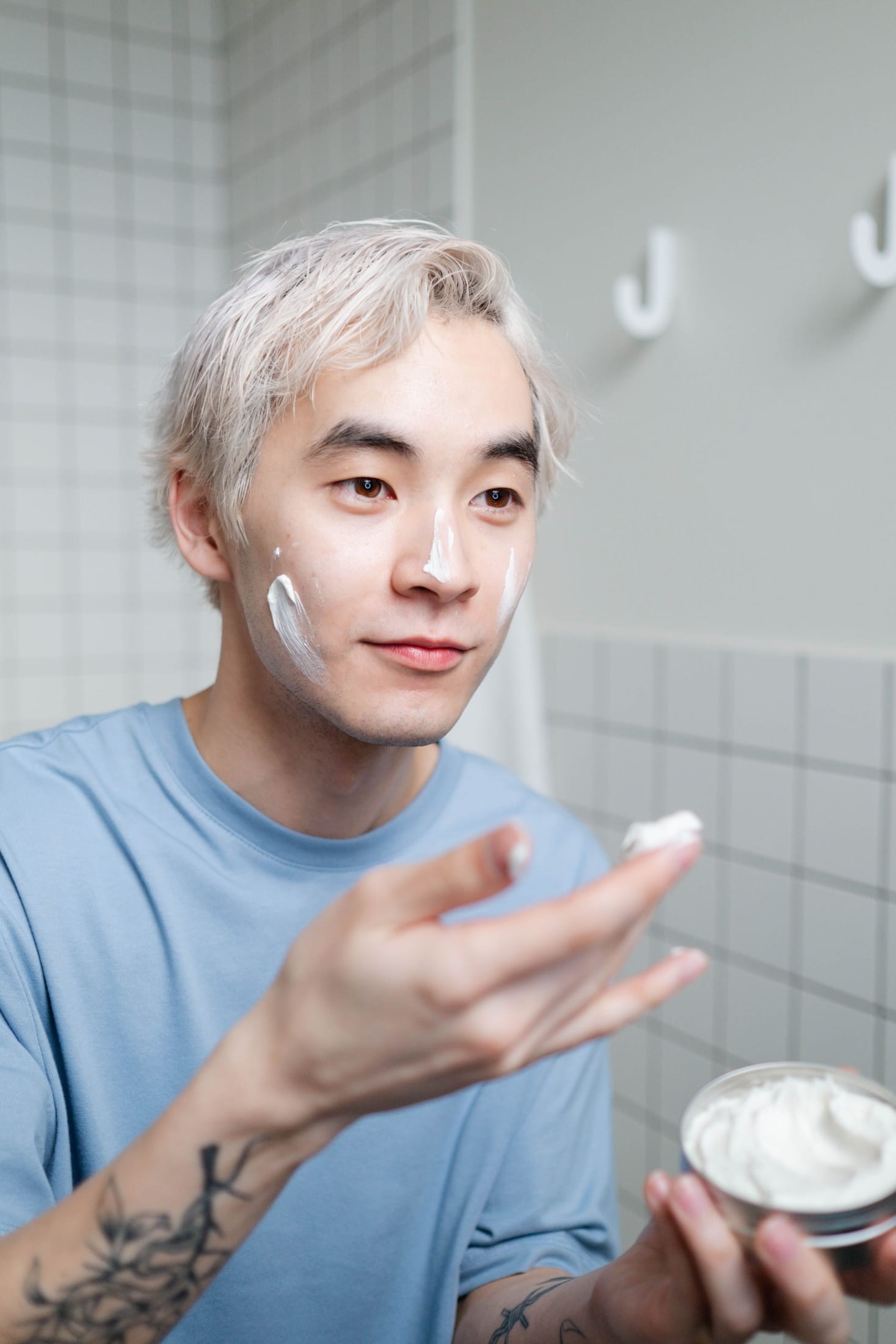
Start with three products for a month: a gentle cleanser, one basic moisturizer, and a sunscreen you don't mind wearing. That's it. Add a toner or essence only after the first three are automatic — usually around week four or five.
Patch-test anything new on your jawline for two days before putting it on your whole face, especially if it contains a strong active. And ignore the step count entirely; a consistent three-step routine outperforms an aspirational eight-step one every single time.
If you're shopping in Korea rather than online, EpicKor's Olive Young shopping guide covers how to navigate the shelves without overbuying, and the Korean sunscreen guide compares the SPF formats worth carrying.
The three-product starting kit: As an Amazon Associate, EpicKor may earn from qualifying purchases. If you want to try the Korean approach without a shelf full of bottles, a gentle Korean cleanser plus one lightweight moisturizer is genuinely enough to start — browse Korean cleansers and pair one with the sun stick above.
Buying It in Korea vs Buying It at Home
If you're travelling to Korea, the price gap is real and worth planning around. The same products routinely cost less in Seoul than they do exported, and the selection is far wider — most Korean brands release men's lines that never reach overseas shelves.
Where Korean men actually shop:
- Olive Young — the default health-and-beauty chain, on nearly every commercial street. Prices are on the shelf, no haggling, frequent multi-buy deals. This is where most of the country buys skincare.
- Convenience stores — for sunscreen and single-use sheet masks when you forgot yours. Limited range, fine in a pinch.
- Daiso — surprisingly serviceable basics at very low prices, good for travel sizes.
- Department store counters — premium brands and free samples, but you'll pay for the setting.
Two practical notes for visitors. First, tax refund: many shops process it in-store above a minimum spend if you show your passport, so carry it. Second, check the manufacture date, printed as a six-digit code; Korean cosmetics turn over fast and you want recent stock, especially for anything with active ingredients.
Buying from abroad, the tradeoff flips. You pay more and see fewer options, but you avoid guessing in a crowded shop in a language you may not read. For a first routine, ordering three known products online and testing them for a month is the lower-risk path.
Frequently Asked Questions
Q: Do Korean men really use 10 skincare steps? Almost never. The ten-step routine is a marketing construct that circulated internationally. A typical Korean man's weekday routine is closer to four steps: cleanser, toner, moisturizer, and sunscreen.
Q: Why do Korean men use so much more skincare than men elsewhere? Euromonitor data has consistently placed South Korea first in per-capita men's grooming spending, with the market worth roughly 1,198 billion won in 2025. The drivers are a harsh climate, grooming expectations in the workplace and military, easy product availability, and cultural normalization led partly by K-pop.
Q: Is Korean men's skincare different from women's, or is it marketing? Largely marketing, with two real differences: men's products often use lighter, faster-absorbing textures suited to oilier and thicker skin, and many are sold as all-in-one lotions. Nothing stops you from using a "women's" product that suits your skin.
Q: Can Korean skincare give me idol skin? No. Idol appearance involves professional makeup, lighting, dermatology, and often procedures. Consistent cleansing, moisturizing, and daily sunscreen do produce real improvements in texture and sun damage over time — that's the honest ceiling.
Q: What is the single most important product to start with? Sunscreen, then a gentle cleanser. Daily SPF is the step with the clearest long-term effect on how skin ages, and it's the one Korean men skip least.
Q: Do I need a toner? Not to begin with. Korean toners are hydrating rather than the harsh astringents Western men may remember, but they are a refinement step. Get cleanser, moisturizer, and sunscreen consistent first.
The Bottom Line
Korea didn't arrive at the world's highest men's skincare spending because Korean men are unusually vain. It got there because the climate demanded it, the culture stopped treating it as strange, and the products became good enough and cheap enough that using them takes no effort.
You don't need the ten steps or the idol photo on the box. Wash your face, moisturize, wear sunscreen every day, and give it six months. That's the entire secret, and it's the one Korean men actually follow.
Sources and further reading:
You Might Also Like
Seoul Self Photo Studio 2026: Booking, Makeup, Outfits
A Seoul self photo studio guide for 2026 covering profile photos, outfit planning, makeup, booking, poses, four-cut booths, and mistakes.
Korean Jjimjilbang Guide: Sauna Etiquette and Tips
A first-timer Korean jjimjilbang guide covering bathhouse etiquette, sauna rooms, snacks, what to bring, and mistakes to avoid.
The One Korean Food Foreigners Never Learn to Love: Hamheung Naengmyeon, and Why Koreans Can't See the Problem
Foreigners who eat cheonggukjang and even hongeo still will not pay for this twice. A Korean creator who fed foreigners for years says naengmyeon was the overwhelming number one refusal, and Koreans, who rank it first every summer, cannot see why.