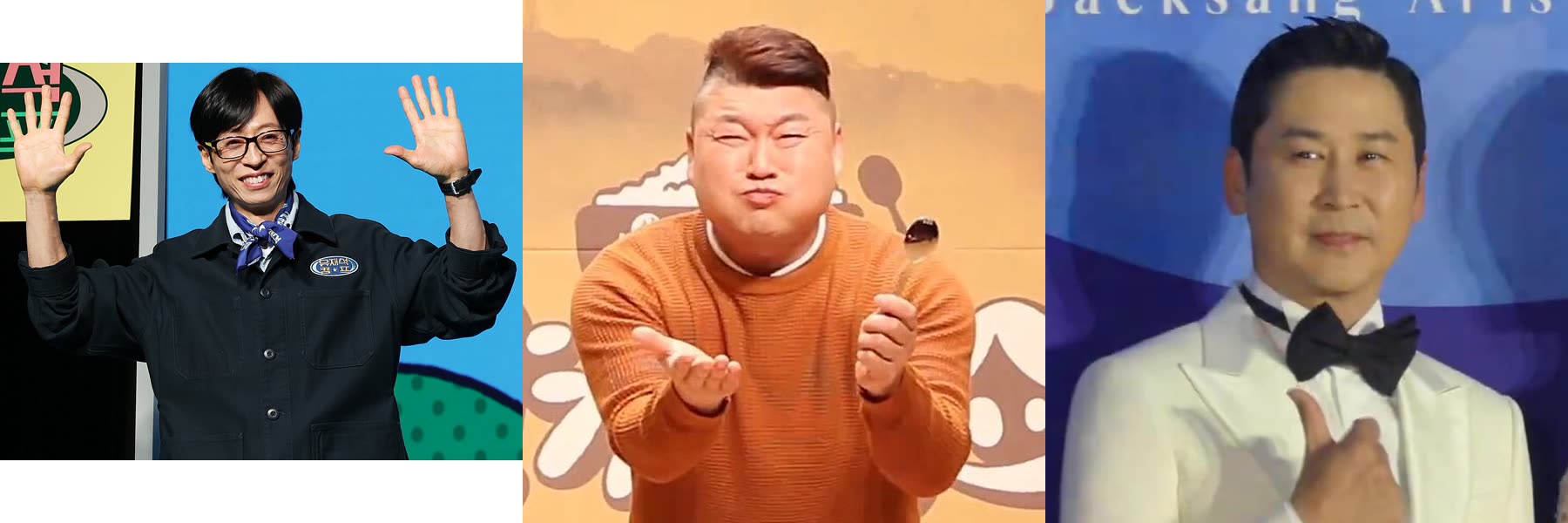
Korea's National MCs: Yoo Jae-suk, Kang Ho-dong & Shin Dong-yup
Korean television does not use “MC” only for the person who reads an introduction. A great MC must create rhythm, protect guests, understand editing, build a cast, rescue weak moments, and make a program feel familiar without making it feel dead. When Koreans call someone a gukmin MC, or “National MC,” they are describing long-term public trust as much as technical skill.
Three names define that idea across the last three decades: Yoo Jae-suk, Kang Ho-dong, and Shin Dong-yup. They are often placed in the same category, but they do not do the same job. Yoo is the ensemble conductor and attentive listener. Kang is the physical, emotional engine who turns a group into an event. Shin is the timing specialist who can move between family television, adult conversation, animals, awards, and digital talk without losing control of tone.
This guide traces their origins, breakthrough programs, signature strengths, difficult periods, and current positions as of July 2026. It is intentionally positive, but not uncritical. Their longevity makes more sense when the uncomfortable chapters are included rather than erased.
Quick Answer: Why Are These Three Called National MCs?
They earned the title through duration, range, and reliability. All three began in the early 1990s and survived repeated changes in Korean entertainment: studio comedy, celebrity talk shows, outdoor reality, cable television, streaming, YouTube, and short-form clips. Each became the face of multiple era-defining programs rather than one lucky hit.
Yoo Jae-suk is the strongest all-around symbol of mainstream trust. His major programs include X-Man, Infinite Challenge, Happy Together, Family Outing, Running Man, You Quiz on the Block, and Hangout with Yoo. Kang Ho-dong brought the energy of a championship ssireum wrestler to X-Man, Love Letter, Star King, Knee-Drop Guru, 2 Days & 1 Night, Strong Heart, New Journey to the West, Kang's Kitchen, and Knowing Bros. Shin Dong-yup built an unusually broad portfolio around Happy Saturday, Guys and Girls, TV Animal Farm, Hello Counselor, Witch Hunt, SNL Korea, My Little Old Boy, Amazing Saturday, and Zzanbro.
They are not official state representatives, and “National MC” has no formal certification. It is a media and public nickname. More than one person can hold it because the title expresses cultural status, not a ranked government post.
| Host | Core Hosting Language | Best-Loved Territory | Defining Strength |
|---|---|---|---|
| Yoo Jae-suk | Listening, callbacks, self-deprecation, ensemble balance | Outdoor variety, human-interest talk, long-running teams | Makes other people feel central while quietly controlling the whole show |
| Kang Ho-dong | Volume, repetition, physical comedy, competition, emotional escalation | Travel, games, food, sports, large group chemistry | Turns low energy into a shared event and commits completely to the premise |
| Shin Dong-yup | Precision, implication, reaction, guest comfort, adult wit | Studio talk, family/animal formats, awards, candid conversation | Reads the broadcast line faster than almost anyone and can approach taboo subjects without losing the room |
The Birth of Korean Cool — on AmazonAffiliate link. As an Amazon Associate, EpicKor earns from qualifying purchases at no extra cost to you.
Yoo Jae-suk: The Conductor Who Makes Everyone Else Better
Yoo Jae-suk debuted in 1991 after receiving an encouragement prize at the first KBS College Gag Festival. His career did not explode immediately. The decade of relative obscurity that followed became part of his public story: a nervous young comedian with limited screen time gradually learned how to observe, prepare, and support people around him.
His early breakthrough came through programs such as Live and Enjoy Together and celebrity game formats, but the 2000s created the Yoo Jae-suk Koreans now recognize. X-Man established his ability to manage stars, recurring jokes, games, and complicated casts. Happy Together demonstrated durable studio conversation. Infinite Challenge, which ran from 2005 to 2018, turned him into the center of a program that could attempt sports, music festivals, social experiments, long-term projects, satire, and deliberately absurd missions.
Family Outing and Running Man extended his outdoor-variety identity. You Quiz on the Block later showed another side: slower conversations with ordinary people, specialists, survivors, public figures, and celebrities. Hangout with Yoo made his adaptability the format itself, moving him through music, projects, alter egos, and changing casts.
Why Koreans Trust Yoo Jae-suk
Yoo's strongest skill is not speaking. It is allocation. He notices who has not talked, who is uncomfortable, which joke can return later, when a senior should be respected, and when the host should become the target. He gives a guest a usable question, then listens closely enough to ask the next one.
His self-deprecation is structural. By allowing jokes about his appearance, fashion, dancing, caution, or controlling habits, he lowers the distance between the most powerful person on set and everyone else. That makes it easier for younger comedians and actors to challenge him on camera.
Preparation is another part of the brand. Colleagues consistently describe him as someone who monitors programs, learns guest histories, arrives ready, and treats a production as shared work. That professionalism supports the “Yoo-nim” nickname—part reverence, part joke—without requiring him to behave like a saint.
The Programs That Built the Yoo Era
Infinite Challenge is his central legacy because it changed the scale of Korean variety. Running Man gave him global recognition through the Korean Wave. You Quiz on the Block proved that he could lead warm, serious conversation without becoming solemn. Hangout with Yoo showed that even a host famous for ensemble work could carry a flexible one-person premise and then rebuild it around others.
In 2026, Netflix's Yoo Jae-suk Camp placed him in charge of a large group camp with ordinary participants and familiar entertainment collaborators. The show also triggered familiar criticism that his programs rely on recurring personal networks and proven game patterns. That is a reasonable creative debate, not a major personal scandal. Yoo's continued challenge is to use trust and chemistry without letting familiarity become repetition.
Yoo Jae-suk's Current Position
As of July 2026, Yoo remains Korea's clearest default National MC. You Quiz on the Block, Running Man, and Hangout with Yoo continue to place him across talk, team variety, and weekly broadcast. His recent streaming work proves that his brand travels beyond terrestrial television, although its core appeal is still distinctly Korean: manners, group awareness, speed, and the belief that the host should make the guest look good.
His position is not simply “number one.” He is the reference point against which newer MCs are judged—sometimes unfairly. No younger host can reproduce a reputation built through three decades of weekly television.
The Birth of Korean Cool — the industry these three men built their careers inside, in one readable book. Most of why variety-show seniority and group chemistry read as harder than a K-drama plot is in here; it is the context the shows assume you already have. As an Amazon Associate, EpicKor earns from qualifying purchases at no extra cost to you.
See the book on AmazonKang Ho-dong: From Sand-Ring Champion to Human Variety Engine
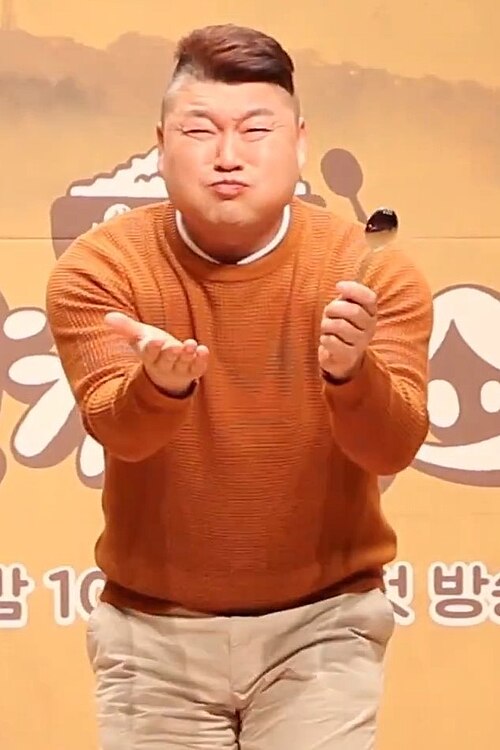
Kang Ho-dong entered broadcasting with a body and voice the audience already knew. Before television, he was a professional ssireum wrestler, winning the all-weight Cheonhajangsa title five times and the Baekdu division seven times. His intense stare, explosive roar, and willingness to dominate the sand ring made him a sports celebrity before he became an entertainer.
He retired from ssireum in 1992 and moved into entertainment in 1993, encouraged and mentored by veteran comedian Lee Kyung-kyu. The transition was improbable but logical. Ssireum had trained him to read an opponent, perform under pressure, use physical presence, and turn a contest into a story.
The First Kang Ho-dong Television Language
Early Kang was loud, aggressive, repetitive, and relentlessly physical. He could seize a weak studio moment and force it into life. Programs such as Match Made in Heaven, Ya Shim Man Man, Love Letter, and X-Man used that energy. He pushed guests, reacted with his whole body, created mock rivalries, and made winning or losing a silly game feel temporarily important.
That style reached a peak in 2 Days & 1 Night. The first season combined travel across Korea, food, sleeping conditions, random luck games, punishment, and a cast that behaved like a chaotic family. Kang was not a neutral moderator. He was captain, competitor, bully, victim, older brother, and morale machine. The program also introduced landscapes, regional dishes, and local communities to a national audience.
Knee-Drop Guru revealed that his intensity could serve conversation. Guests arrived with a “worry,” and Kang's exaggerated confidence opened into interviews that could become unexpectedly personal. Strong Heart and Star King again showed his ability to manage many guests and turn individual talent into big emotion.
The 2011 Tax Controversy and Return
In 2011, tax authorities assessed additional taxes after finding underpayment. Kang apologized and announced a temporary withdrawal from entertainment. A later criminal complaint was dismissed by prosecutors because the National Tax Service had not filed the complaint required for prosecution and the assessed annual amount was below the relevant threshold; reports also said authorities did not find deliberate fraudulent methods.
That outcome should not be simplified into either “convicted tax evader” or “nothing happened.” Additional tax was assessed, Kang accepted responsibility publicly, and criminal prosecution did not proceed. He returned to broadcasting in late 2012.
The interruption changed his television image. Post-return Kang became more willing to be teased and less dependent on dominating every exchange. New Journey to the West turned his old-fashioned habits, appetite, fear, and technological awkwardness into comedy. Kang's Kitchen made his labor and anxiety visible. Knowing Bros placed him inside an ensemble where younger or equal cast members could openly attack the old National MC persona.
What People Love About Kang Ho-dong
Kang commits. If a program asks him to eat, run, cook, shout, wrestle, travel, sleep outside, praise a guest, or repeat a catchphrase until it becomes ridiculous, he does not protect his dignity. His regional accent and emotional directness help him connect with athletes, older guests, children, market vendors, and people uncomfortable with polished celebrity conversation.
He is especially strong when a group needs heat. Yoo Jae-suk often finds the existing rhythm; Kang creates one by force and then lets the cast ride it. At his best, the force becomes generosity: he spends his energy so that everyone has something to react to.
Kang Ho-dong's Current Position
Kang is no longer the universal weekly center he was at the peak of 2 Days & 1 Night, but he remains a singular Korean entertainment figure. Knowing Bros preserves his ensemble role, while the 2026 Coupang Play series Kang Ho-dong's Neighborhood Bookstore returned him to a solo talk format after 13 years. The show placed a softer, bookshop-owner version of Kang opposite guests from different fields. Its response was more modest than his historic hits, but the experiment showed a veteran trying to reduce volume without losing curiosity.
He was also announced for TV Chosun's regular Ten Million Eccentrics Show in 2026. His present position is that of an institution in transition: less dominant, still instantly recognizable, and most powerful when a format uses his history rather than pretending it does not exist.
Shin Dong-yup: The Master of Timing, Tone, and the Dangerous Pause
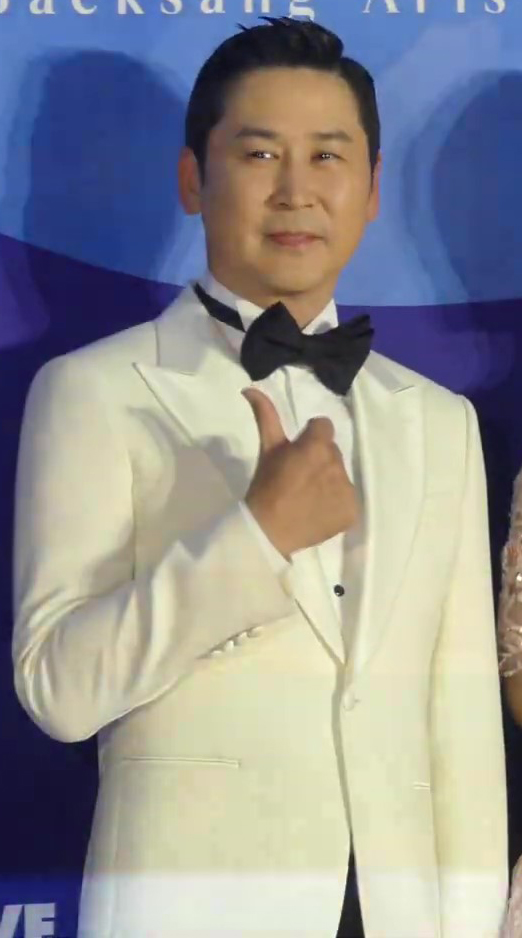
Shin Dong-yup debuted as a special SBS comedian in 1991, the year the network launched. He became a major 1990s star through sketch comedy, variety, and the sitcom Guys and Girls. His image was different from Kang's physical force or Yoo's gradual ensemble rise. Shin was quick, mischievous, verbally precise, and unusually comfortable with implication.
His most famous comic device is the pause before or after a line. He lets the audience understand what he is suggesting without always saying it. That timing made him ideal for adult comedy, but his career is much broader than innuendo.
From Family Television to Adult Talk
Shin has hosted TV Animal Farm since its early years, becoming “the Animal Farm uncle” to generations of viewers. The program requires warmth, seriousness, and respect for real suffering—not the tools most international viewers first associate with his racy humor. He has also handled family counseling, music, competition, awards, celebrity-parent observation, and studio panel formats.
Witch Hunt was an important shift in Korean television talk. It discussed dating, desire, boundaries, and relationships with a directness that mainstream programs had often avoided. Shin's role was to keep the conversation candid but broadcastable. SNL Korea used his willingness to approach discomfort, while My Little Old Boy and Amazing Saturday placed him inside popular long-running ensembles.
His YouTube program Zzanbro Shin Dong-yup translated that skill into a digital drinking-talk format. Guests can speak more freely than on network television, but Shin still manages pacing, disclosure, and recovery. He knows when a provocative question will produce honesty and when it will only produce defense.
The 1999 Marijuana Case and Rebuilt Career
Shin was arrested in December 1999 for marijuana use and disappeared from television for roughly a year. It was a serious criminal and career interruption, especially in a country with strict drug laws and strong stigma. He returned in 2001 and gradually rebuilt his position through steady work rather than a single dramatic rehabilitation narrative.
The episode remains part of his public history and is sometimes referenced by Shin himself through carefully controlled humor. It should not be romanticized, but neither does it define the next quarter-century of his career. His recovery is one reason the industry sees him as durable: he learned to acknowledge a past failure without making every program about redemption.
Why Shin Dong-yup Is So Difficult to Replace
Shin can move between tones faster than most hosts. He can deliver an adult joke, turn serious for an animal-rescue story, support an anxious singer, manage a live awards error, and return to comedy without making the transitions feel cynical.
He is also a generous reactor. His raised eyebrow, delayed smile, or quiet look can complete another person's joke without stealing it. That economy makes him ideal for studio formats where too much host energy would crush the cast.
His adult humor occasionally receives criticism for going too far or feeling dated. The relevant measure is not whether every joke lands; no three-decade career could pass that test. It is whether he can read changing standards and let guests keep agency. His longevity suggests a high success rate, while the criticism keeps the boundary visible.
Shin Dong-yup's Current Position
As of 2026, Shin remains one of Korean television's busiest and most format-flexible senior hosts. TV Animal Farm, My Little Old Boy, and Amazing Saturday keep him present across family, observational, and music-variety audiences, while Zzanbro gives him a major digital platform.
He may be less likely than Yoo to be used as a universal symbol of moral reassurance, and less physically iconic than Kang. His position is more technical: when a show needs speed, safety, candor, and risk in the same chair, Shin is still one of the first names considered.
The Programs That Define Each Career
| Era / Need | Yoo Jae-suk | Kang Ho-dong | Shin Dong-yup |
|---|---|---|---|
| 1990s foundation | KBS comedy and a long apprenticeship out of the spotlight | Sports fame converted into physical comedy and forceful hosting | SBS launch-era comedy, variety, and sitcom stardom |
| 2000s breakthrough | X-Man, Happy Together, Infinite Challenge | Love Letter, X-Man, Star King, 2 Days & 1 Night | TV Animal Farm, talk and studio-variety rebuilding |
| 2010s reinvention | Running Man, then You Quiz and Hangout with Yoo | New Journey to the West, Kang's Kitchen, Knowing Bros | Witch Hunt, SNL Korea, My Little Old Boy, Amazing Saturday |
| 2020s platform move | Streaming experiments while maintaining major weekly broadcasts | OTT talk and veteran ensemble work | Broadcast staples plus a successful YouTube drinking-talk format |
| Best entry point for newcomers | Running Man for action; You Quiz for conversation | New Journey to the West or Kang's Kitchen | Amazing Saturday for ensemble; Witch Hunt or Zzanbro for adult talk |
They Also Explain How Korean Variety Changed
The three careers map neatly onto industry change. In the 1990s, comedians were tied closely to broadcasters, sketch stages, and studio formats. The 2000s rewarded celebrity game shows, large casts, and the rise of reality-variety. The 2010s split audiences across terrestrial networks, cable channels, and global distribution. The 2020s added streaming seasons and creator-led YouTube formats.
That final shift is explored further in EpicKor's guide to Korea's YouTube podcast and creator-talk boom. Viewers coming from scripted television can also use our Korean drama starter guide to compare how variety and drama build different kinds of star familiarity.
Yoo adapted by carrying trust across every platform. Kang adapted by letting his old power image become material for younger casts to challenge. Shin adapted by taking a skill once restricted by broadcast standards—adult candor—and moving it into formats where longer, more direct conversation was possible.
Their durability also reflects production relationships. Korean variety is collaborative and writer-heavy. A host who understands camera positions, edit points, recurring character roles, guest research, and staff pressure is valuable even before the audience sees a joke. New viewers may notice personality first; producers notice whether an episode can be built around that person every week.
For more background on why Koreans use titles such as “Nation's MC,” see our broader guide to Korean “nation's” titles and public nicknames.
Who Is the “Best” National MC?
The useful answer depends on the format.
Choose Yoo Jae-suk for a complicated ensemble, a guest who needs protection, a human-interest interview, or a program that must be trusted by a broad audience. Choose Kang Ho-dong for travel, competition, food, physical play, regional warmth, or a group that needs energy. Choose Shin Dong-yup for precise studio pacing, adult themes, live-event control, or a conversation that must approach a boundary without collapsing.
Ratings, awards, brand rankings, and public polls can produce different answers. None captures the basic truth that Korean variety has room for three hosting philosophies. Their coexistence is more interesting than a permanent league table.
Final Take
Yoo Jae-suk, Kang Ho-dong, and Shin Dong-yup became National MCs because they did not remain the performers they were in 1991 or 1993. Yoo converted insecurity and observation into an ethic of ensemble care. Kang converted championship force into comic energy, then learned to let others puncture it. Shin converted speed and risky wit into an unusually broad command of tone.
Their controversies are different in scale and meaning. Yoo mainly faces creative criticism about repetition and familiar networks. Kang's 2011 tax assessment caused a temporary withdrawal, though criminal prosecution did not proceed. Shin's 1999 marijuana case interrupted his career before a long rebuild. A fair profile neither erases those chapters nor allows them to swallow decades of work.
The National MC title survives because these hosts made television feel collective. They do not only ask questions. They teach a cast—and the audience—how to be in the room together.
Lonely Planet Korean Phrasebook & Dictionary — the cheap version of learning Korean from variety shows. Variety programmes are excellent listening practice because hierarchy, teasing and everyday speech are all visible at once; you only need the honorific endings to start hearing the structure. As an Amazon Associate, EpicKor earns from qualifying purchases at no extra cost to you.
See the phrasebook on AmazonFAQ
Q: What does “National MC” mean in Korea?
It is an unofficial public and media nickname for a host with exceptional national recognition, trust, longevity, and influence. It is not a government title and does not belong to only one person.
Q: Who is the most famous Korean National MC?
Yoo Jae-suk is the name most consistently associated with the title today. Kang Ho-dong and Shin Dong-yup are also widely treated as National MC-level figures because of their long careers and distinct influence.
Q: Were Yoo Jae-suk and Kang Ho-dong rivals?
Television and media often framed them as rivals during the 2000s because they led competing hit programs and had opposite styles. They have also worked together, most famously on X-Man, and the rivalry is better understood as a comparison of hosting schools than personal hostility.
Q: Was Kang Ho-dong a real ssireum champion?
Yes. Before broadcasting, he was an elite professional ssireum wrestler who won five Cheonhajangsa titles and seven Baekdu-division titles. He retired from the sport in 1992 and entered entertainment in 1993.
Q: Why is Shin Dong-yup famous for adult humor?
He uses implication, pauses, reactions, and precise wording to approach topics that Korean mainstream television once avoided. Programs such as Witch Hunt, SNL Korea, and Zzanbro made that skill especially visible, though his family and animal programs show a much wider range.
Q: Which program should an international viewer start with?
Try Running Man or You Quiz on the Block for Yoo Jae-suk, New Journey to the West or Kang's Kitchen for Kang Ho-dong, and Amazing Saturday or selected Zzanbro interviews for Shin Dong-yup. Availability and subtitles vary by country.
Sources and Further Reading
- KBS World: Yoo Jae-suk profile, debut, long apprenticeship, and early career
- KBS: Yoo Jae-suk's 1991 debut and career milestones
- KBS World: Yoo Jae-suk's 2021 Baeksang Grand Prize
- Netflix: Yoo Jae-suk Camp
- Kyunghyang Shinmun: Kang Ho-dong's major career programs and broadcast history
- ChosunBiz: ssireum history and Kang's five Cheonhajangsa and seven Baekdu titles
- Seoul Shinmun: prosecutors' dismissal of the 2011 tax complaint against Kang
- Coupang Play: official 2026 release for Kang Ho-dong's Neighborhood Bookstore
- SBS News archive: Shin Dong-yup's 1999 marijuana arrest
- Dong-A Ilbo: Shin's return and second career phase in 2001
- SBS News: Shin's long association with TV Animal Farm
You Might Also Like
International School Tuition in Korea: Fees by School, Who Can Enrol
Seoul Foreign School's ₩33.37 million high-school fee is really ₩53.9 million once its $14,955 dollar part is added, the figure it files with the government. 2026–27 fees school by school, extra costs, and the 3-year rule for Korean children.
Korean English Kindergarten Ban: Why Korea Outlawed Entrance Tests for Preschoolers, and What Parents Pay
Since 1 October 2026 it is illegal in Korea to test a preschooler to get into an English kindergarten, the '4-year-old exam' (4세 고시). Fines reach ₩3 million. What the law says, what English kindergartens cost, and the ladder to medical school.
Korean Marathon Runner Died in Seoul: Korea's Running Backlash, Rules and Real Costs
A runner in her twenties collapsed 500 m from the finish of Seoul's 11 October half marathon. Then came the 'memorial run' row, the dog-shaped GPS route through Seochon's alleys and ₩1.49M watches. Korea's running backlash, the rules and the costs.