Seoul Kids Cafe Guide 2026: Which Public Play Spaces Tourists Can Actually Use — the ₩5,000 Weekend Outdoor Cafes, and the Indoor Branches That Ask for Seoul ID
Last updated: September 2026. The eligibility rules are from Seoul City's announcement of 5 February 2026 and the branch pages on Seoul's booking portal (우리동네키움포털, umppa.seoul.go.kr), read on 12 September 2026; the outdoor programme is from Seoul Metropolitan Government's release of 1 April 2026; museum prices and booking rules are from each museum's official site.
A Seoul kids cafe (키즈카페) is an indoor play space where children climb, build and run while a parent sits nearby, and the city runs its own cheap version: the Seoul Kids Cafe (서울형 키즈카페), at ₩0 to ₩5,000 for a session of 80 to 120 minutes. Most English guides stop there and recommend them to tourists. The branch pages tell a different story. Of the four indoor branches we checked on Seoul's booking portal in September 2026, three limit use to Seoul residents and people who work, study or run a business in Seoul, and ask for a Seoul citizen card, a Korean resident registration extract or a work or student ID at the door. The fourth, a free branch inside the Seoul Museum of Craft Art in Jongno, states no such condition on its page. The city's own rule adds one opening: a visitor who comes with a Seoul resident is eligible.
What a visiting family can use without question is the city's outdoor weekend kids cafes (여기저기 서울형 키즈카페): 30 play zones in parks, including eight Han River parks, open on weekends from April to June and September to November, ₩5,000 per child aged 4 to 9, guardians free, with 20 percent of places kept for walk-ins on the day. They are running now. This guide sorts out which public play spaces are open to you, what they cost, and the museum children's rooms that make a better rainy-day plan.
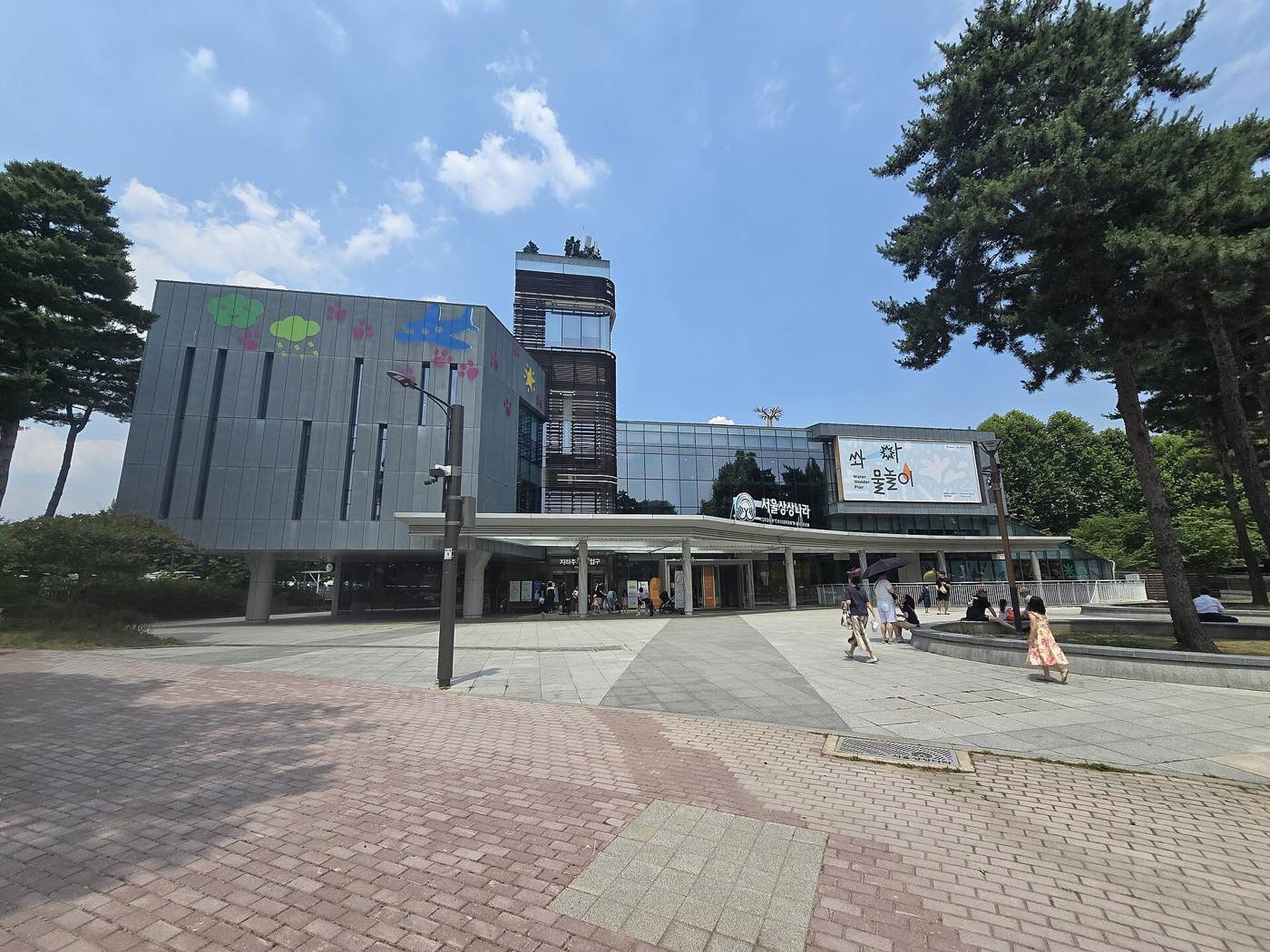
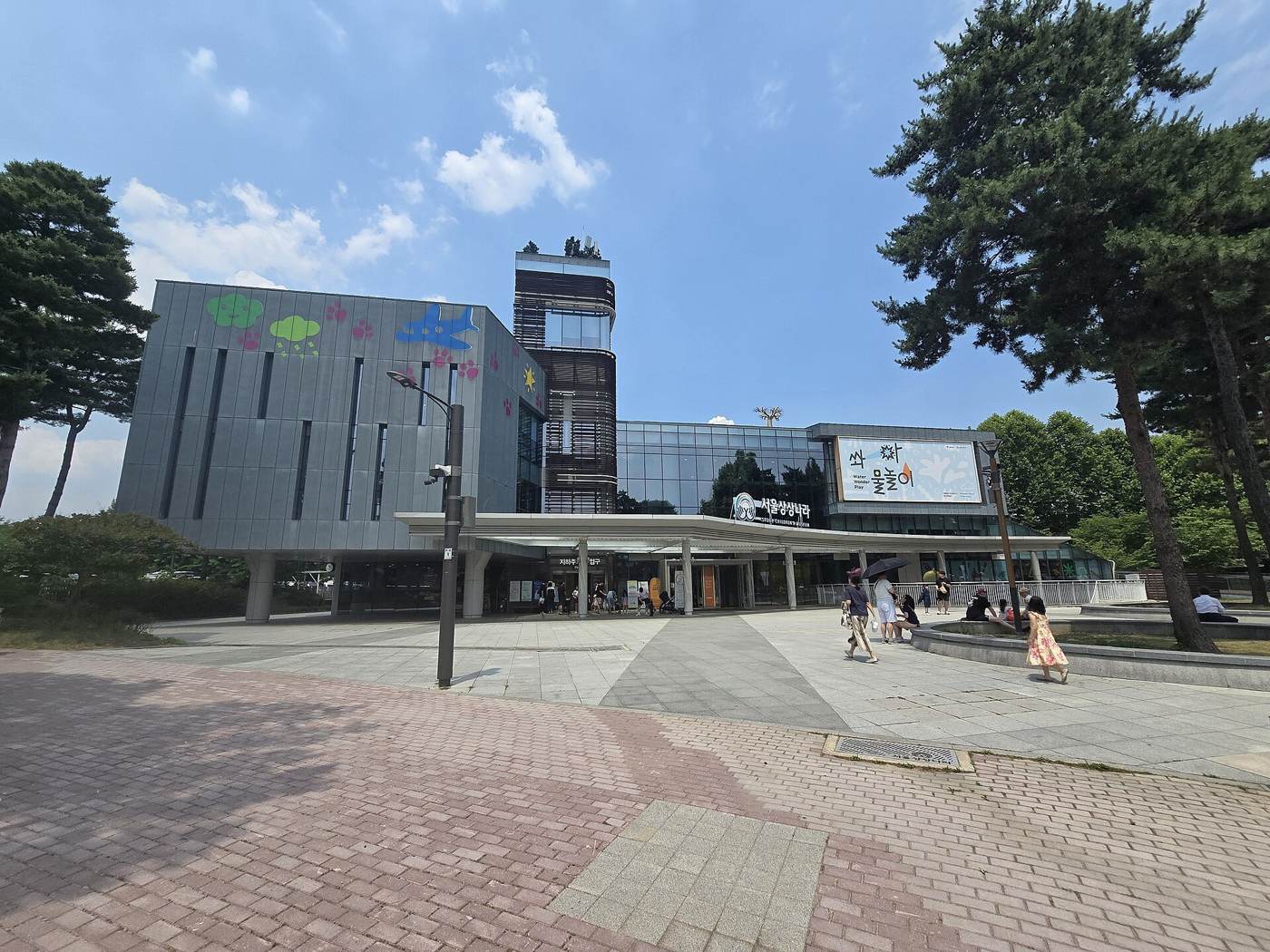
The Seoul Children's Museum in Children's Grand Park: ₩4,000, no residency rule, and the easiest public play space for a visiting family to book. Photo: KSH1015, Wikimedia Commons, CC0 (2024).
Every Korean play floor asks for socks, and bare feet or slippery tights get turned away: a pack of Tphon toddler grip socks covers a whole trip of kids cafes, museum play rooms and hotel floors. As an Amazon Associate, EpicKor earns from qualifying purchases.
Quick Guide: Seoul's public play spaces for a visiting family, autumn 2026
| Option | Cost | Ages | Can a tourist use it? |
|---|---|---|---|
| Outdoor weekend kids cafes (여기저기 서울형 키즈카페), 30 sites incl. 8 Han River parks | ₩5,000 per child, guardians free | 4–9 | Yes. No residency condition; 20% of places are same-day walk-ins. Weekends, Sep–Nov |
| Indoor Seoul Kids Cafes (서울형 키즈카페) | ₩0–5,000 per session | varies by branch, 0–12 | Mostly no. The programme is for Seoul residents, Seoul workers and students, and people who come with a Seoul resident; three of four branch pages we checked ask for documents |
| Seoul Museum of Craft Art kids branch (Jongno) | Free | 0–9 | No residency condition stated on its page (the city-wide rule may still apply); closed Mondays; booked through the same portal |
| Seoul Children's Museum (서울상상나라) | ₩4,000 for everyone 36 months and over; under 36 months free | all | Yes, online booking (walk-ins within capacity); closed Mondays |
| National Museum of Korea Children's Museum | Free | young children | Yes, but online booking only, opening 14 days ahead at midnight; no walk-in tickets |
| National Folk Museum Children's Museum | Free | young children | Yes, booking required; 09:30–16:50 |
| Private kids cafes | paid by the hour | varies | Yes, walk in and pay |
WaterWipes On The Go — the wipes for the snack before the session Most public play spaces ban food on the play floor, so children eat just before or just after, usually on a park bench or a museum lobby. The 28-count travel pack of unscented, water-based wipes is the one that fits a stroller basket. As an Amazon Associate, EpicKor earns from qualifying purchases.
See WaterWipes On The Go on AmazonThe indoor Seoul Kids Cafes: cheap, and mostly for Seoul families
The Seoul Kids Cafe programme is the city's answer to expensive private play centres. The city's announcement of 5 February 2026 describes it as a public play space for children aged 0 to 9 (older siblings up to primary-school age can come along) and their guardians, at up to ₩5,000 at city-run branches and up to ₩3,000 at district-run ones, booked through the 우리동네키움포털 (Our Neighbourhood Kium Portal). The same announcement sets the rule for the whole programme: Seoul Kids Cafes are for Seoul residents, people who work, study or run a business in Seoul, and people from elsewhere who come with a Seoul resident. The branch pages say which documents to bring.
Here is what four branch pages said on 12 September 2026:
| Branch | Fee | Ages | Who may use it |
|---|---|---|---|
| Seocho, Yangjae 1-dong No. 2 | ₩3,000 per child, guardian included | 0–6 | "서울시민, 서울 생활권자" — Seoul residents, or people who work, study or run a business in Seoul; bring a Seoul citizen card or a resident registration extract under three months old |
| City-run No. 1, Dongjak | ₩5,000 per child, guardians free | 4–10 | Seoul residents or Seoul workers and students, with ID, resident certificate, employee or student card |
| City-run Nogosan, Mapo | ₩5,000 per child, guardian included | 4–12 | "서울 생활권자", with resident registration or proof of Seoul work, study or business |
| City-run Craft Village, Jongno (Seoul Museum of Craft Art) | Free | 0–9 (10–12 with a younger sibling) | No residency condition stated on its page |
So the honest answer to "can tourists use Seoul's public kids cafes?" is: not the indoor ones, on your own. A passport does not prove Seoul residence, and the rule exists because the city is subsidising its own families; a family visiting friends or relatives who live in Seoul can go with them. The Jongno branch at the Seoul Museum of Craft Art, a short walk from Anguk station and Insadong, is worth asking about: free, 80-minute sessions starting at 10:00, 13:10, 14:50 and 16:30, closed Mondays, bookable from 15:30 seven days ahead. Its page states no residency condition, but the city-wide rule may still apply, so confirm with the branch first.
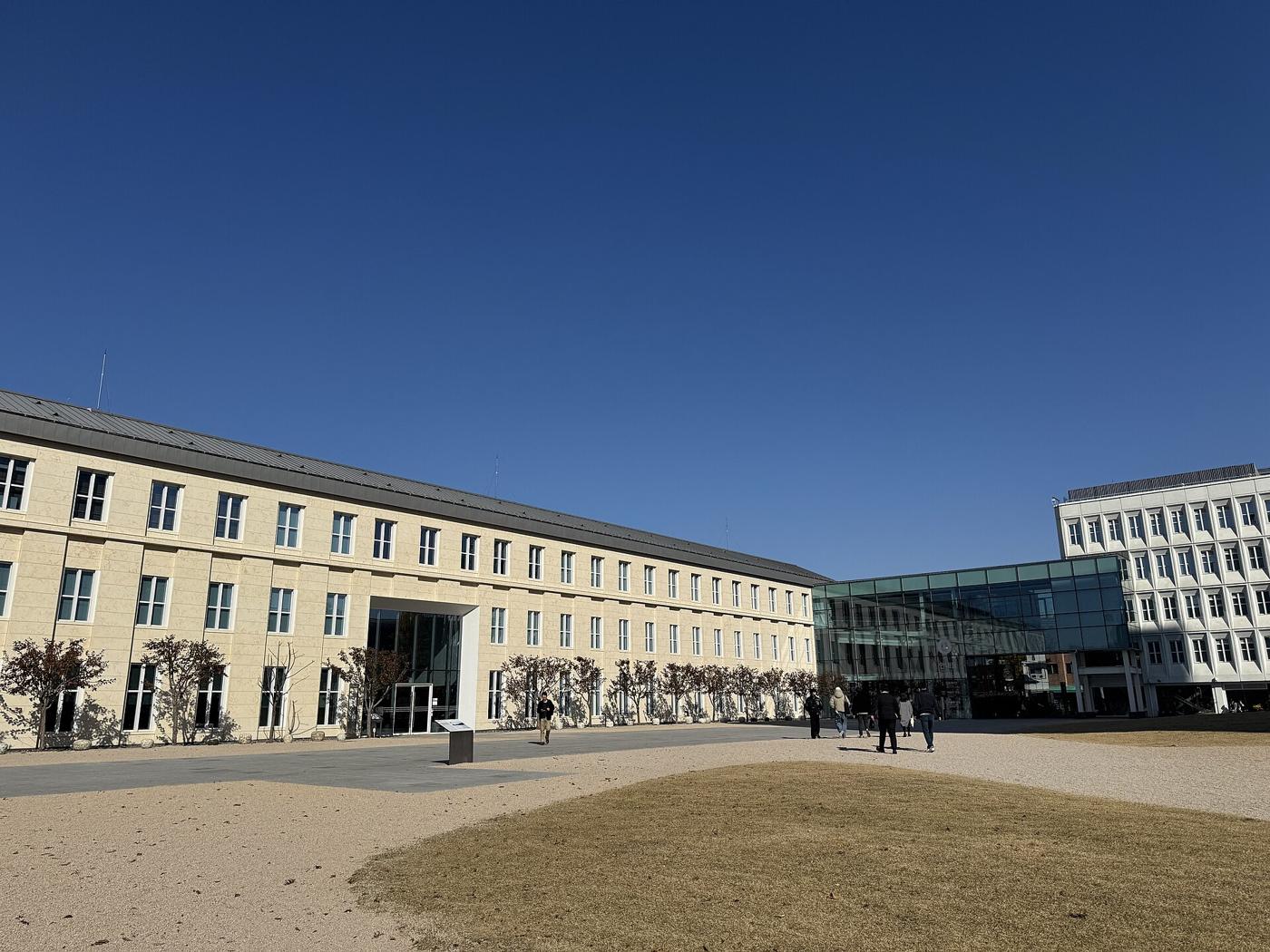
The Seoul Museum of Craft Art near Anguk station, home of the free Craft Village kids branch. Photo: Youngjin, Wikimedia Commons, CC BY-SA 4.0 (2024).
The practical catches apply to every branch:
- Booking is online through the portal, which requires an account; most branches release the following week's slots every Tuesday at 11:00 or 13:00, and the Craft Village branch opens seven days ahead at 15:30. Plan it a week ahead, not on the morning.
- Sessions are short and fixed: 80 to 120 minutes, and a no-show can bring a 30-day ban.
- Up to three children per guardian, siblings only at some branches.
- Socks on, food off the play floor.
The outdoor weekend kids cafes: the one a visitor can simply walk into
The outdoor programme is different in every way that matters to a visitor. Seoul's release of 1 April 2026 describes 30 outdoor play zones in parks, including eight Han River parks such as Jamwon, Yeouido and Ttukseom, plus Seoul Botanic Park, Pureun Arboretum, Heojun Park and Guui Park. The details:
- Ages 4 to 9 (by calendar age).
- ₩5,000 per child; guardians enter free.
- Usually three two-hour sessions a day, on weekends only (times vary by site).
- April–June and September–November 2026.
- 80 percent of places by advance booking on the same portal, 20 percent for same-day walk-ins.
- The release sets no residency condition.
For a family in Seoul between now and the end of November, that is the move: a Han River park on a Saturday morning, a play session for the children, and the river path for the adults. Arrive at the start of a session for the walk-in places, and check the city's announcements that morning, because bad weather can cancel outdoor sessions.
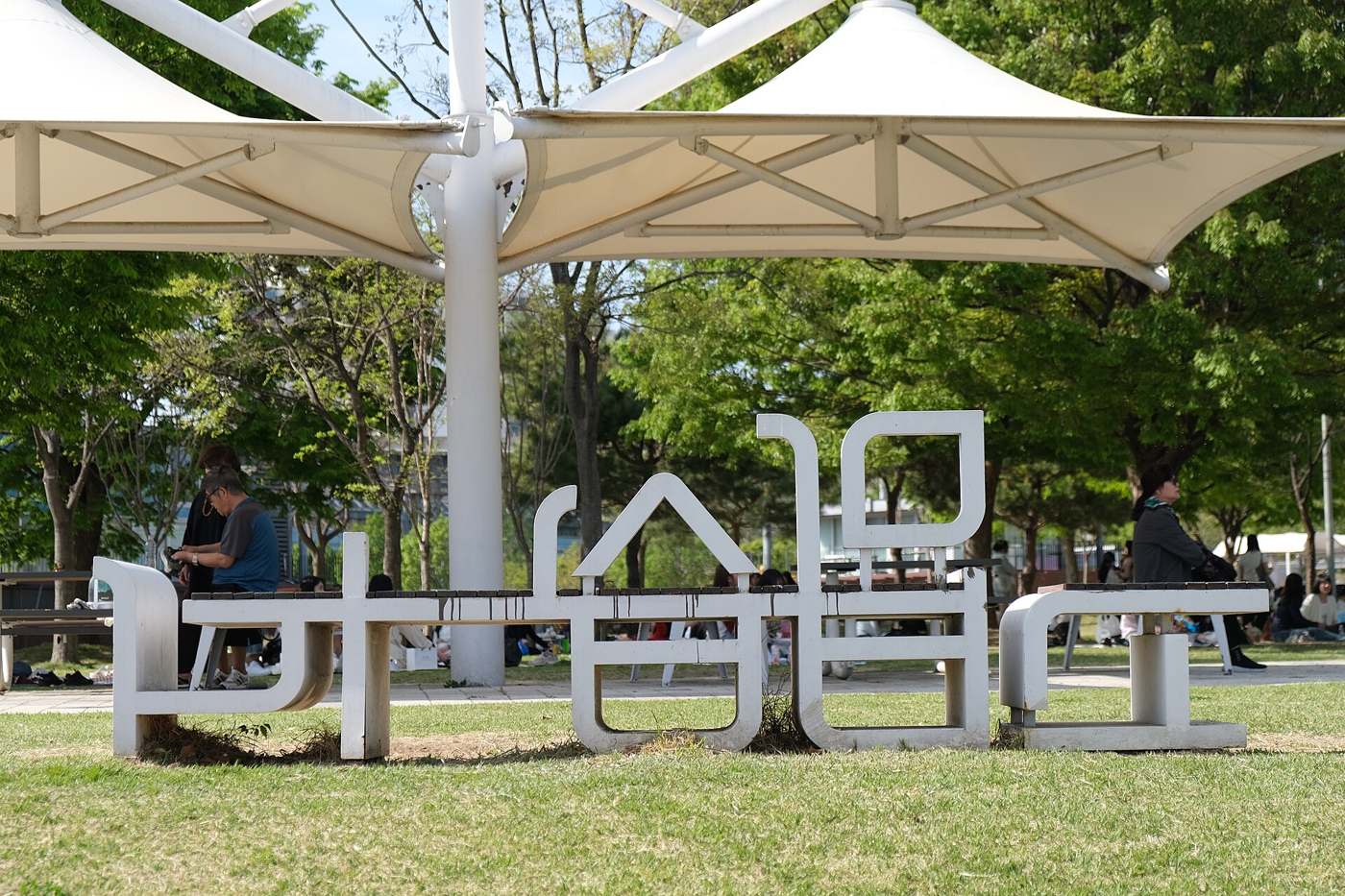
Ttukseom Hangang Park in April 2026, one of the eight Han River parks in the weekend outdoor kids cafe programme. Photo: Motoko C. K., Wikimedia Commons, CC BY 4.0.
The better rainy-day plan: museum children's rooms
If the reason you wanted a kids cafe is rain, the national and city museums have children's museums that are open to everyone and cost little or nothing. The catch is booking.
- Seoul Children's Museum (서울상상나라), in Children's Grand Park: ₩4,000 for everyone aged 36 months and over, adults included; under 36 months free. Open 10:00–18:00 (last entry 17:00), closed Mondays and over Chuseok, booked online; free entry under 36 months needs proof of age.
- National Museum of Korea Children's Museum: free, but online booking only, opening 14 days ahead at midnight, with no tickets on the day, up to five tickets per booking, and babies under 36 months needing their own booking. Book it the moment your dates are fixed.
- National Folk Museum of Korea Children's Museum, on the Gyeongbokgung grounds: free, booking required, 09:30–16:50 (closed 25 September 2026 for Chuseok). It pairs naturally with the palace next door.
For a wider rainy-day list, see our Seoul rainy day guide.
Private kids cafes: the walk-in option
Private kids cafes are ordinary businesses: you walk in, pay by the hour, and usually buy a coffee while the children play. They are the fallback when the public options are booked or closed to you. Quality, price and English support vary a lot, so search near your actual base (your hotel, a big station or a mall) on Naver Map or KakaoMap, which list local businesses far better than global maps; our Korea travel apps guide explains the setup. Large malls and department stores often have play zones too, which are small but come with clean restrooms, nursing rooms and food courts.
The best family strategy: one anchor, one play break
With children, the best Seoul day has one adult-interest anchor and one child-movement anchor:
- Morning palace or museum, afternoon children's museum or Han River play session.
- Saturday morning outdoor kids cafe at a Han River park, lunch nearby, hotel rest.
- Morning shopping for older siblings, then a private kids cafe near the mall for the younger ones.
The mistake is stacking adult goals until the child refuses to continue. A play break works better as a planned reset than as a crisis response. For Han River logistics, see our Hangang picnic guide; for the wider family trip, our Seoul with kids guide.
Age, safety and rules
Check age limits first; they differ by branch and programme (0–6 at one indoor branch, 4–12 at another, 4–9 outdoors). Guardians stay responsible for their children the whole time; a kids cafe is not a drop-off service. Socks are required on play floors, food usually is not allowed on them, and staff enforce rules more directly than many visitors expect. If something breaks, tell staff.
When a kids cafe is not the right choice
Skip it if your child is overstimulated, sick or too tired to follow safety rules; a hotel rest, a riverside stroller walk or an early dinner may work better. Skip crowded weekend peaks if your child struggles with noise.
FAQ
Q: Can tourists use Seoul's public kids cafes? Not the indoor ones on your own. The city limits them to Seoul residents, people who work, study or run a business in Seoul, and visitors who come with a Seoul resident, and three of the four branches we checked in September 2026 ask for a Seoul citizen card or resident registration at the door. The free branch at the Seoul Museum of Craft Art in Jongno states no such rule on its page, but ask first. The outdoor weekend kids cafes in parks have no residency condition.
Q: How much is a Seoul Kids Cafe? Between free and ₩5,000 per child for a session of 80 to 120 minutes, depending on the branch. The outdoor weekend kids cafes cost ₩5,000 per child aged 4 to 9, with guardians free.
Q: Where are the outdoor kids cafes in Seoul, and when do they run? At 30 sites, including eight Han River parks such as Jamwon, Yeouido and Ttukseom, plus Seoul Botanic Park and other city parks, on weekends from April to June and September to November 2026. Twenty percent of places are kept for same-day walk-ins.
Q: What should children wear? Comfortable clothes and socks. Socks are required on play floors; avoid slippery tights and accessories that can catch on equipment.
Q: What is the best rainy-day option for young children in Seoul? The museum children's rooms: the Seoul Children's Museum (₩4,000), the National Museum of Korea Children's Museum (free, book 14 days ahead) and the National Folk Museum Children's Museum (free, booking required).
Q: Are private kids cafes open to visitors? Yes. They are ordinary businesses you can walk into and pay by the hour; search near your hotel or a mall on Naver Map or KakaoMap.
Sources and Useful Links
- Seoul booking portal 우리동네키움포털, Seoul Kids Cafe branch pages read 12 September 2026: Seocho Yangjae 1-dong No. 2 (
SC251201), city-run No. 1 Dongjak (DJ230901), city-run Nogosan Mapo (MP260701), city-run Craft Village Jongno (JN251201): eligibility, fees, ages, sessions. - Seoul Metropolitan Government, Seoul Kids Cafe announcement (5 February 2026) — eligibility for Seoul residents, people who live, work or study in Seoul, and non-residents who come with a Seoul resident; ages 0–9; city-run up to ₩5,000, district-run up to ₩3,000.
- Seoul Metropolitan Government release, 1 April 2026: outdoor weekend kids cafes — 30 sites, 8 Han River parks, ages 4–9, ₩5,000, 80% booking / 20% walk-in, April–June and September–November.
- Seoul Children's Museum admission; National Museum of Korea Children's Museum; National Folk Museum Children's Museum.
You Might Also Like
Seoul With Kids 2026: The Numbers That Matter — a Step-Free Subway, Nursing Rooms at Only 108 Stations, Car Seat Taxis, Free Strollers, and Where to Stay
Seoul with kids in 2026: every Seoul-run subway station now has a street-to-platform elevator, but only 108 have a nursing room; taxis must use car seats but carry none; under-6s ride free; strollers are free at the airport. Where to stay.
Seoul Night Picnic Guide 2026: Hangang, Ramen, Chicken, Ice Cups
A Hangang night picnic runs on two numbers: about ₩4,800 for ramyeon from the convenience-store cooker and ₩1,000 for a Ttareungi day pass. Which park to pick, what to buy, Banpo fountain timing, and the rules that matter.
Hangang Swimming Pools 2026: Seoul Summer Guide
A 2026 Hangang swimming pool guide covering dates, hours, fees, sites, swim-cap rules, weather pauses, and what to bring.