Korean Soft Power Icons: BTS, Son, Bong, IU, and More
Korean soft power is not one person, one band, or one viral drama. It is the way music, film, sport, television, food, beauty, language, and everyday style make people curious enough to learn more about Korea. If you are new to Korean culture, six public figures help you read that bigger story: BTS, Son Heung-min, Bong Joon-ho, Yoo Jae-suk, Kim Yuna, and IU.
This is not a ranking of "the greatest Koreans." It is a practical map for overseas readers. Each figure opens a different door: global fandom, sport, cinema, variety television, Olympic memory, and singer-songwriter culture. Together they show why Korea is no longer understood only through electronics, cars, war history, or the "Miracle on the Han River."
The Short Answer: Why These Six Matter
Korea's cultural image used to travel through a small number of official symbols: palaces, taekwondo, kimchi, Samsung, Hyundai, and division on the peninsula. Those still matter, but the entry points have multiplied. A teenager may discover Korea through BTS lyrics. A football fan may arrive through Son Heung-min highlights. A film student may start with Bong Joon-ho. A variety-show fan may learn social cues through Yoo Jae-suk. A sports viewer may remember Kim Yuna's Olympic programs. A drama fan may connect IU's music with her acting.
That range is the point. Korea's Ministry of Culture, Sports and Tourism and related agencies now track Hallyu as a broad cultural field rather than only a music export. Recent official surveys and media analyses treat Korean music, drama, film, literature, food, beauty, and tourism as connected parts of a larger attention system.
| Icon | Best Entry Point | What They Explain About Korea | Useful Next Step |
|---|---|---|---|
| BTS | K-pop fandom, lyrics, concerts | Global community built around Korean-language content | Compare translations, official videos, and fan culture |
| Son Heung-min | Football highlights and national-team matches | How Korean pride travels through overseas sport | Watch club and Korea matches with context |
| Bong Joon-ho | Parasite and genre films | Class tension, satire, and Korean cinema craft | Read Korea through film settings, not only plot |
| Yoo Jae-suk | Variety clips and long-running shows | Conversation manners, hierarchy, teasing, and warmth | Notice how he manages guests and awkward moments |
| Kim Yuna | Olympic figure-skating programs | National memory, excellence, and pressure under attention | Watch full programs rather than only medals |
| IU | Albums, lyrics, dramas, concerts | Artist trust, emotional clarity, and long career growth | Move between music and acting to see her range |
BTS: The Fandom Gateway to Modern Korea
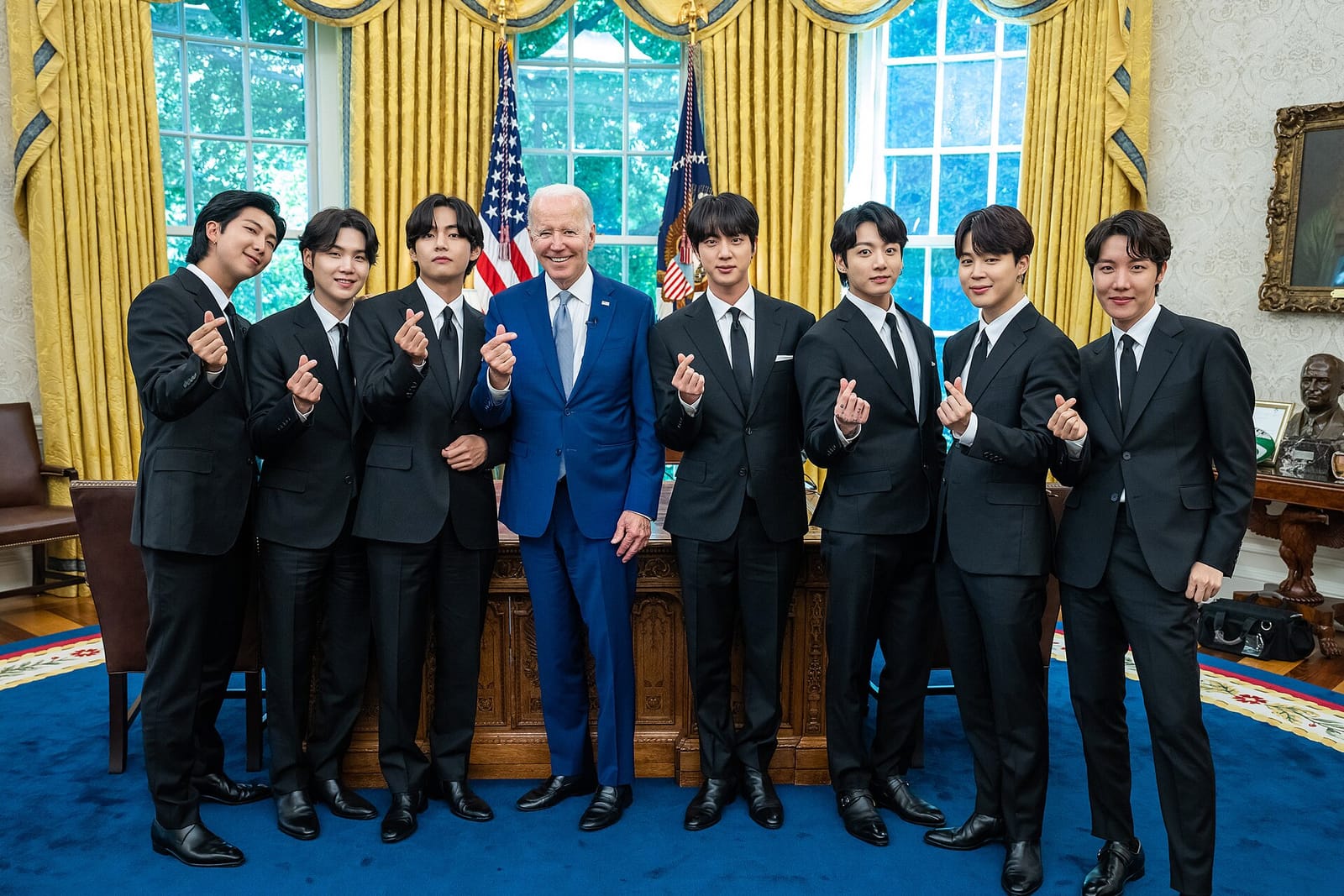
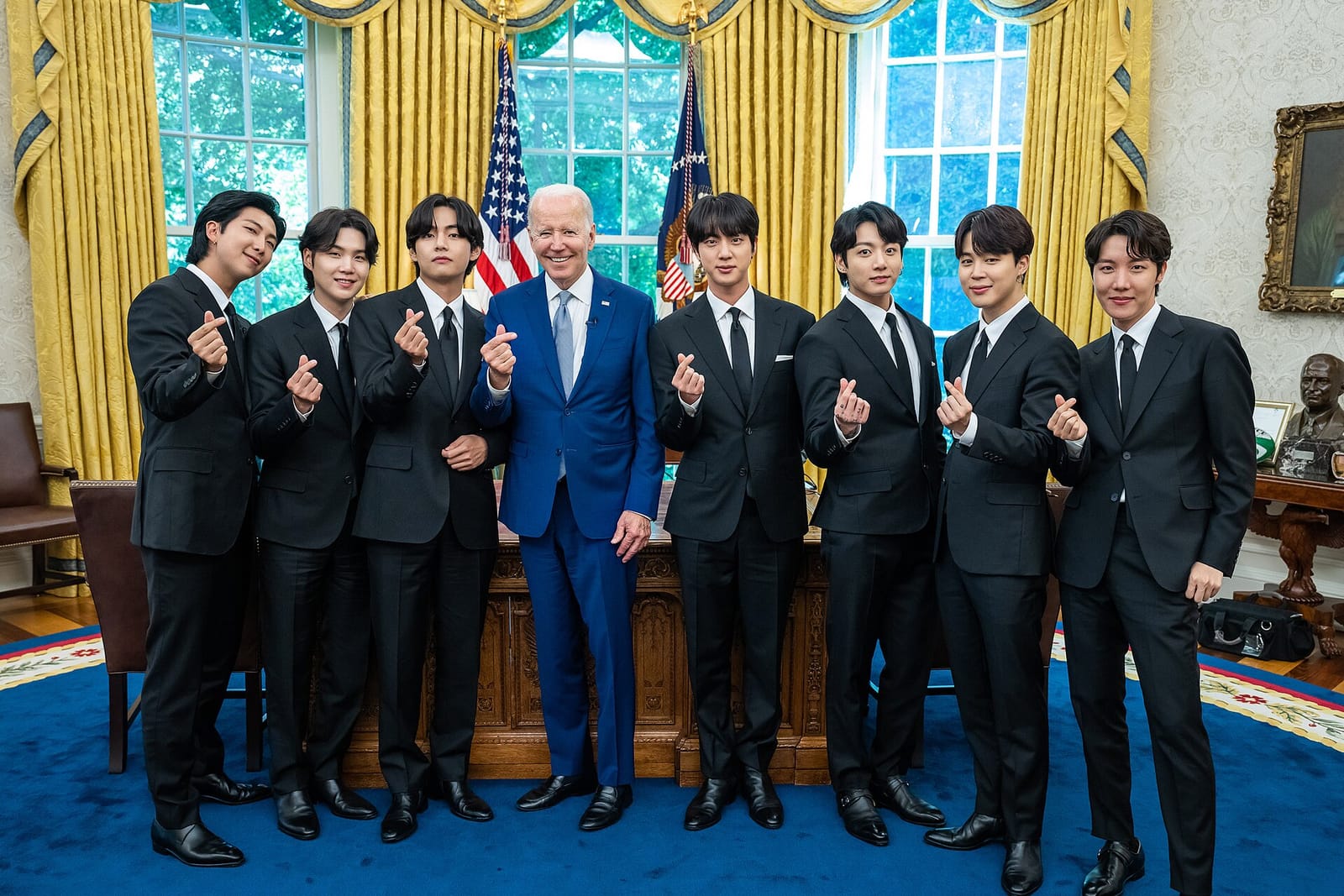
BTS matters because they lowered the language barrier without pretending it did not exist. Fans did not need every lyric translated before feeling the emotional shape of a song. Then translations, subtitles, livestreams, fan essays, and cultural explainers turned that first feeling into study. A Korean phrase, food reference, school memory, or military-service question could send a fan into a deeper search.
Their official diplomatic role also shows how popular culture became part of Korea's public image. Korea.net reported that BTS were appointed as Special Presidential Envoy for Future Generations and Culture in 2021, and the United Nations hosted their "Permission to Dance" performance during the SDG Moment. That does not mean every idol is a diplomat. It does mean the Korean government recognized that private cultural influence could carry messages official campaigns could not.
BTS also changed what "Korean content" could look like overseas. Earlier Hallyu often moved through Asian drama markets first, then expanded outward. BTS fandom was more networked: YouTube, X, Weverse, TikTok, fan translations, reaction channels, and group chats. For many overseas fans, Korea became not a distant travel destination but a daily media environment.
For a broader fan-culture path, pair this with our summer K-pop guide, K-pop photocard guide, coin noraebang guide, and BTS V military-service guide. Those explain how global fandom connects to seasonal listening, small everyday habits, Korean civic context, and the post-service comeback cycle.
Build context before buying merch: As an Amazon Associate, EpicKor may earn from qualifying purchases. If Hallyu made you curious about the country behind the songs, compare Korean culture and history books before filling a shelf only with fan goods.
Son Heung-min: Sport as Shared National Emotion
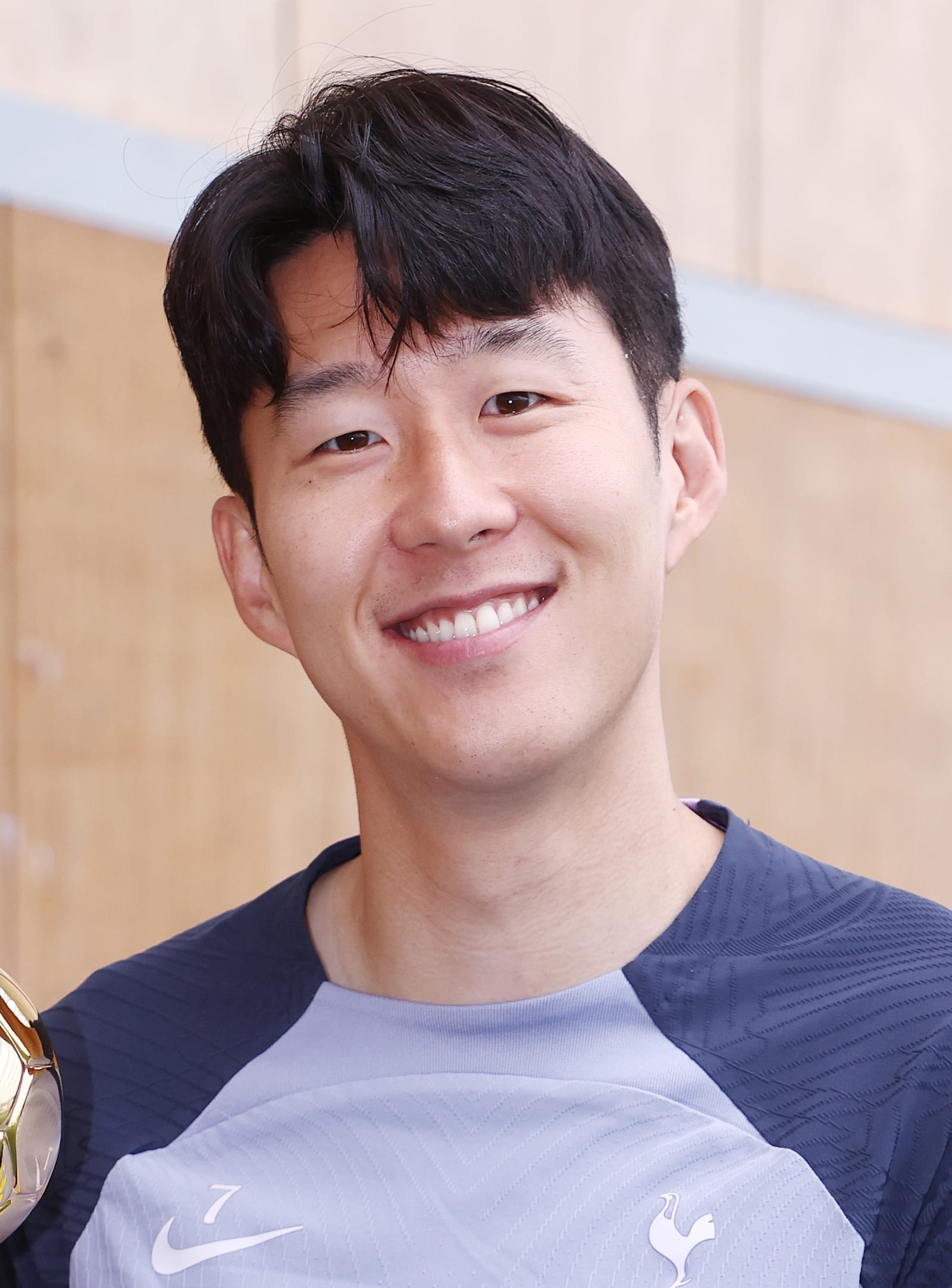
Son Heung-min gives overseas readers a different Korea story: not choreography and fandom, but pressure, stamina, timing, and national attention. His career made Korean football visible to people who might never watch K-pop or dramas. When Son scores, changes clubs, captains Korea, or plays through a difficult match, Korean media and online communities react as if a piece of national reputation is on the field.
The important thing is not to reduce him to "hard work." Son's appeal comes from skill as much as attitude: two-footed finishing, intelligent movement, and the ability to attack space before defenders settle. The old stereotype that Korean athletes succeed only through effort misses the technical quality that made him a world-level forward.
His career also shows how overseas club loyalty works in Korea. Many Korean viewers followed Tottenham because of Son, just as an earlier generation followed Manchester United because of Park Ji-sung. As recorded in current club and football records, Son's later move to Los Angeles FC added another chapter to that player-centered fandom. The emotional center is not always the club badge. It is the Korean player carrying a familiar flag into a global league.
For more detail on this path, read our guide to Korean footballers abroad.
Bong Joon-ho: Why Korean Cinema Travels So Well
Bong Joon-ho is often discussed through one line: the "one-inch barrier" of subtitles. The more useful lesson is that his films travel because they are specific. Parasite does not hide Korean apartment layouts, class language, tutoring culture, basement spaces, or Seoul weather. It trusts viewers to enter the details.
KOFIC's Korean Film Biz Zone records Parasite as a Cannes Palme d'Or film and an Academy Award winner, including Best Picture, Best Director, Best Original Screenplay, and Best International Feature Film. Those awards mattered because they changed the perceived ceiling for Korean-language cinema. A subtitled Korean film was not only a niche festival success; it became part of the global mainstream conversation.
Bong's films also explain why Korean pop culture often mixes tones. Comedy, horror, family drama, social critique, and violence may sit close together. Overseas viewers sometimes ask why a Korean film can feel funny and devastating within the same hour. That tonal flexibility is one of its strengths. It reflects a storytelling culture comfortable with social contradiction. For a broader starting map beyond Bong, EpicKor's Korean cinema guide explains iconic films, famous lines, and why context matters more than memorizing quotes.
If BTS shows Korea's fan network, Bong shows Korea's narrative confidence. The lesson for readers is simple: do not watch Korean films only for plot twists. Watch the homes, jobs, meals, school pressures, debt, slang, and public spaces around the story.
Yoo Jae-suk: The Social Grammar of Korean Variety TV
Yoo Jae-suk may be less obvious to a newcomer than BTS or Son, but he is one of the best teachers of Korean social rhythm. Variety television is where viewers see greetings, teasing, age hierarchy, self-mockery, food reactions, team games, and emotional confession performed in public. Yoo's role is to keep that energy warm rather than cruel.
He is often called "the nation's MC" because he can make celebrities, athletes, comedians, and ordinary guests feel safe enough to participate. That skill is not just speaking quickly. It is reading status, knowing when to tease, knowing when to protect, and giving quieter people a way into the conversation.
For overseas viewers, Yoo Jae-suk helps explain why Korean entertainment often values group chemistry. A show is not only about one star being impressive. It is about reaction shots, inside jokes, respectful address, and the small miracle of turning awkwardness into a shared laugh. This is why variety clips can teach cultural nuance that a formal textbook misses.
Kim Yuna: National Memory Under Olympic Pressure
Kim Yuna's cultural role is different from a weekly entertainer's. Her peak performances became national memory. She carried an individual sport in a country that did not have the deep figure-skating infrastructure of older powers, then made her programs feel like public events.
It is easy to flatten her story into "Queen Yuna" mythology. A better reading is that she represents Korea's emotional relationship with excellence. Koreans watched her not only to see if she would win but to see whether years of discipline could survive global pressure. That is why her calm on the ice still feels symbolic.
Kim Yuna also broadened the visual language of Korean public pride. Not every national icon wears a football kit, sings on stage, or acts in a drama. Some become shared memory through a few minutes of controlled movement, music, and silence.
IU: The Long Career Trust Model
IU explains a quieter kind of Korean influence: trust built over time. She moved from youthful singer image to songwriter, concert performer, and actor with a public identity that feels personal without being careless. Her appeal is not only vocal skill. It is the sense that she can make sadness, humor, nostalgia, and ordinary affection feel clear.
Her acting career also matters. Overseas viewers may meet her through a drama, then discover her music later. Korean fans often move the other direction: songs first, then acting. That two-way path makes IU a useful example of how Korean entertainment careers cross formats without feeling random.
IU's image also complicates the idea that Korean fame is only about visual perfection. Styling matters, of course. But her strongest public value is emotional credibility. In a culture where celebrities are watched intensely, maintaining that credibility for years is a rare achievement.
How to Use These Icons Without Turning Them Into Stereotypes
The risk with any "icons of Korea" list is that it turns living people into mascots. Use these six as entry points, not as final explanations. BTS does not represent every Korean musician. Son does not represent every Korean man. Bong does not represent every Korean film director. Yoo does not represent every comedian. Kim Yuna does not represent every Korean athlete. IU does not represent every Korean woman or artist.
A better method is to ask what each figure makes visible:
- BTS makes fandom infrastructure visible.
- Son makes overseas sports identity visible.
- Bong makes class and genre storytelling visible.
- Yoo makes conversational etiquette visible.
- Kim Yuna makes national pressure visible.
- IU makes long-term audience trust visible.
That approach keeps the article useful without turning culture into a personality quiz.
| If You Like... | Start With | Then Explore | Related EpicKor Guide |
|---|---|---|---|
| K-pop fandom | BTS | Photocards, noraebang, fan cafes | K-pop photocard guide |
| Football | Son Heung-min | K League, Korea matches, supporter culture | Korean footballers abroad |
| Film | Bong Joon-ho | Korean genre cinema and social satire | Seoul bookstores and libraries |
| TV personality | Yoo Jae-suk | Variety shows, speech levels, teasing | Korean address terms |
| Sporting excellence | Kim Yuna | Olympic memory and national attention | Korean baseball fandom |
| Music and drama | IU | Lyrics, acting, concerts, OST culture | Summer K-pop guide |
What This Means for Travel and Everyday Korea
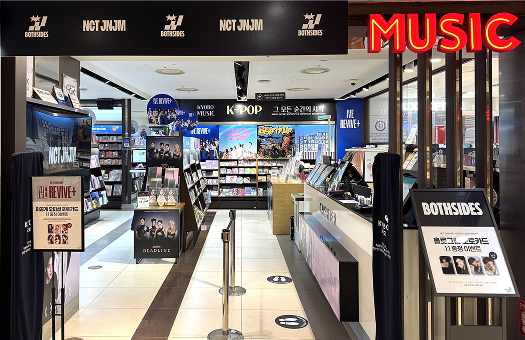
Soft power becomes interesting when it changes real behavior. A BTS fan may start learning Hangeul. A film viewer may visit a Seoul neighborhood because a movie made the city feel legible. A Son fan may schedule a trip around a national-team match. An IU listener may look for Korean lyric translations, then end up reading about honorifics.
That is the bridge EpicKor cares about: curiosity turning into useful cultural understanding. If you are planning a first trip, pair this guide with first-time Korea travel basics, Seoul safety and etiquette, and Hangeul design culture. For the broader mechanism behind that bridge, the K-brand explainer shows how Hallyu attention turns into travel, shopping, language, and food curiosity. Those posts move from "I recognize the icon" to "I understand the place a little better."
Fan goods are easier after you know the context: If you are buying around a concert, drama night, or Korean-culture gift, compare K-pop and K-drama fan goods with shipping time, authenticity, and return terms in mind.
Sources and Further Reading
- MCST 2025 Overseas Hallyu Survey release
- MCST 2025 Survey on Korea's National Image
- Korea.net report on BTS as special presidential envoy
- LAFC 2026 roster rundown mentioning Son Heung-min
- KOFIC profile and awards record for Bong Joon-ho
FAQ
Q: Who is the most important Korean soft power icon? There is no single answer. BTS may be the strongest global fandom gateway, Son Heung-min is the clearest sports gateway, and Bong Joon-ho changed the global ceiling for Korean cinema. The most useful icon depends on what brought you to Korea in the first place.
Q: Is Korean soft power only K-pop? No. K-pop is central, but official Hallyu reporting also covers drama, film, literature, food, beauty, tourism, and consumer behavior. Korea's global image is now a network of cultural entry points.
Q: Why include Yoo Jae-suk if many overseas readers do not know him? Because variety television teaches Korean social rhythm. Yoo Jae-suk shows how humor, hierarchy, politeness, teasing, and group chemistry work in everyday entertainment.
Q: Are these six people officially chosen by Korea? No. This is an editorial guide, not a government list. BTS had an official envoy role, but the six names here were chosen because each helps explain a different part of Korea's cultural reach.
Q: What should I watch or read first? Start with the lane you already enjoy: BTS performances and lyric translations for music, Son highlights for sport, Parasite for film, Yoo Jae-suk variety clips for social rhythm, Kim Yuna Olympic programs for sport memory, or IU songs and dramas for long-form artist trust.
Q: Does knowing these icons help with travel? Yes, if you use them as cultural doors. They can lead you toward Korean language, etiquette, neighborhoods, fan stores, concert culture, museums, and everyday habits rather than only celebrity trivia.
Video Insight: The 6 Icons of Korea
You Might Also Like
K-pop Idol Training in Seoul 2026: Tourist Class Guide
A realistic Seoul guide to K-pop dance classes, idol training experiences, trainee life myths, booking tips, costs, and etiquette.
Korean Pop-Up Store Culture: Why Seoul Lines Up for Limited Drops
A guide to Korean pop-up store culture in Seoul: why people line up, where pop-ups happen, how limited drops work, and what tourists should know before going.
Korean Four-Cut Photo Booth Guide: Poses, Frames, Tips
A 2026 guide to Korea's four-cut photo booth culture, from Life4Cut and Photoism to fandom frames, poses, QR downloads, and tourist tips.