Why Korean Fans Are Angry at Hong Myung-bo and the KFA
South Korea's 2026 World Cup ended with one win, two losses, and elimination in the group stage. The result hurt, but the anger now surrounding former head coach Hong Myung-bo is not simply the usual rage that follows a bad tournament. It is tied to a two-year argument about how the Korea Football Association (KFA) chose him, whether its own rules carried any real weight, and why people who asked for transparency felt ignored until the team failed.
That distinction matters. Hong is one of the most important players in Korean football history. He captained the 2002 team that reached the World Cup semifinals and won the Bronze Ball. Yet the same symbolic status that once protected him now intensifies the criticism. To many supporters, this was not only a tactical failure. It was a test of whether reputation and personal networks still outranked procedure.
This article separates confirmed findings from fan interpretation. It explains the World Cup results, the government audit, the KFA's response, who has criticized Hong, how visible the anger really is, and what reforms are being attempted as of July 19, 2026.
Quick Answer: Why Are Korean Football Fans So Angry?
Fans are angry for four overlapping reasons. First, South Korea failed to reach the expanded 32-team knockout round after qualifying for an 11th consecutive World Cup. Second, the 2024 hiring process for Hong was criticized from inside the KFA's own committee before a Ministry of Culture, Sports and Tourism audit confirmed serious procedural defects. Third, Hong left Ulsan HD in the middle of a K League season after previously signaling that he would stay. Fourth, KFA leadership repeatedly appeared defensive, legalistic, or slow to accept responsibility.
The anger is real and highly visible among matchgoing supporters, football communities, former national-team players, commentators, and some lawmakers. But it is inaccurate to say that every Korean hated the appointment from the beginning. A Korea Gallup poll conducted immediately after Hong's July 2024 appointment found 47 percent calling it a good decision, 25 percent a bad one, and 28 percent unsure or declining to answer. Disapproval was much higher among young men, including 54 percent among men in their 30s. That suggests the strongest early backlash was concentrated among people most intensely engaged with football.
There is no equivalent nationwide poll yet measuring anger after the 2026 elimination. Airport protests and online reactions prove intensity, not a precise national percentage.
What Happened at the 2026 World Cup?
South Korea entered Group A with co-host Mexico, Czechia, and South Africa. The tournament had expanded to 48 teams, with the top two teams in each group and eight best third-place teams advancing to a new Round of 32. Korea therefore had a wider route to the knockout stage than in previous 32-team tournaments.
The team started well, coming from behind to beat Czechia 2-1 through goals from Hwang In-beom and Oh Hyeon-gyu. It then lost 1-0 to Mexico and 1-0 to South Africa. Korea finished third with three points and was eliminated. The fact that one victory was not enough made the final defeat especially bitter: the team had controlled its own path and still fell short.
Hong resigned after the campaign. KFA president Chung Mong-gyu, who had said he would step down after the tournament, also submitted his resignation before the launch of a reform committee in July.
| Confirmed Event | What Happened | Why It Mattered in Korea |
|---|---|---|
| 2024 coaching search | Hong was announced after a five-month search and a late-stage process led by the KFA technical director | Insiders and supporters questioned whether finalist interviews were equal and whether committee procedure had been bypassed |
| Government audit | The Culture Ministry found procedural defects in Hong's appointment and wider governance failures | It turned a fan complaint into an official institutional finding |
| 2026 group stage | Korea beat Czechia but lost to Mexico and South Africa, finishing third and eliminated | The expanded format made failure feel less defensible |
| Airport return | Hundreds gathered before dawn; hostile chants, profanity, police protection, and some supportive voices were reported | It showed that the dispute had moved beyond online criticism |
| Resignations | Hong and KFA president Chung Mong-gyu left their positions | Personal departures created an opening for reform but did not repair the system by themselves |
A History of Football in North and South Korea, 1910–2002 — the backstory to this angerAffiliate link. As an Amazon Associate, EpicKor earns from qualifying purchases at no extra cost to you.
What the Government Audit Actually Found
The most important fact in this story is that the Culture Ministry did not merely say fans had a point. Its final special-audit report, announced in November 2024, identified 27 unlawful or improper operational matters across the KFA.
On Hong's appointment, the ministry said the technical director did not have authority to perform the recommendation work assigned to the National Team Strengthening Committee. It also found that the final candidates were not interviewed on equal terms. Hong was approached late at night without preset questions or an observer, while foreign candidates had participated in structured interviews. The KFA announced Hong before obtaining written board approval, then used a later written vote that the ministry said hollowed out the board's authority.
The audit did not conclude that Hong's employment contract was automatically void. That nuance is crucial. A procedurally defective appointment and an invalid private contract are not the same legal conclusion. The ministry called for disciplinary measures against Chung and relevant officials and demanded improvements to the coach-selection process.
The audit also went far beyond Hong. It found problems involving a large loan for the football center, a subsidy application, national-team coach appointments, advisory payments, and the KFA's abandoned 2023 attempt to pardon 100 disciplined football figures, including 48 people expelled in connection with match fixing. These findings help explain why many fans describe the issue as a governance crisis rather than a single bad hire.
What the KFA Said in Its Defense
The KFA published a lengthy explanation arguing that it followed its rules and that much of the controversy came from poor communication. Its account described a July 5, 2024 meeting with Hong, his conditional acceptance on July 6, the public announcement on July 8, and written board approval on July 13.
That timeline did not settle the dispute. To critics, approval after a public announcement looked like ratification of a finished decision, not meaningful oversight. To the KFA, it was a permissible administrative sequence. The Culture Ministry ultimately sided with the procedural criticism.
This difference between “we had a legal interpretation” and “the process was visibly fair” sits at the center of the anger. Sports organizations depend on legitimacy. A selection can survive formal paperwork and still lose public trust.
Who Is Criticizing Hong Myung-bo?
The people pointing fingers at Hong are not one unified group, and their reasons are different.
Ulsan HD supporters felt personally betrayed. Hong had led the club to consecutive K League titles, then left during the 2024 season after previously indicating that he would remain. For those fans, the national-team controversy also became a loyalty issue.
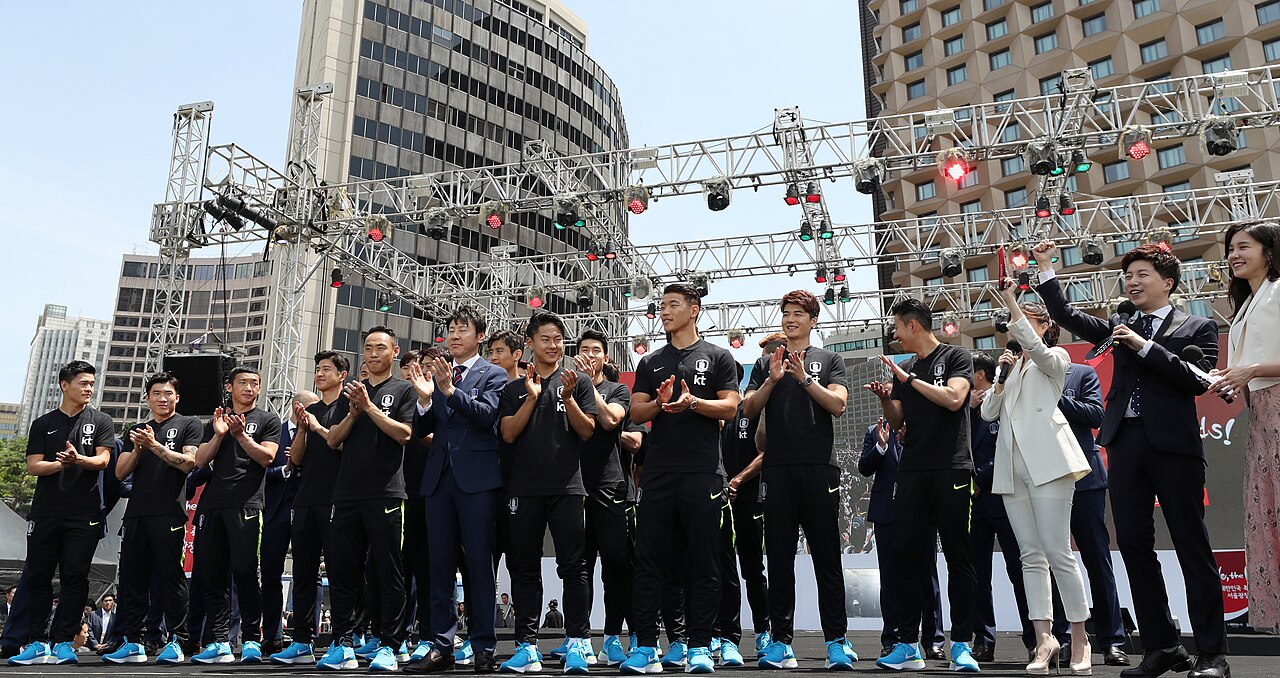
The Red Devils and ordinary national-team supporters focused on performance and accountability. At the June 30 airport return, Yonhap reported roughly 300 fans gathering before 4 a.m., more than 100 police officers, chants demanding Hong's departure and salary return, banners, drums, profanity, and at least one online threat that prompted police attention. There were also people telling supporters not to blame the players and others offering encouragement. That mixed scene is more truthful than describing the airport as one unanimous mob.
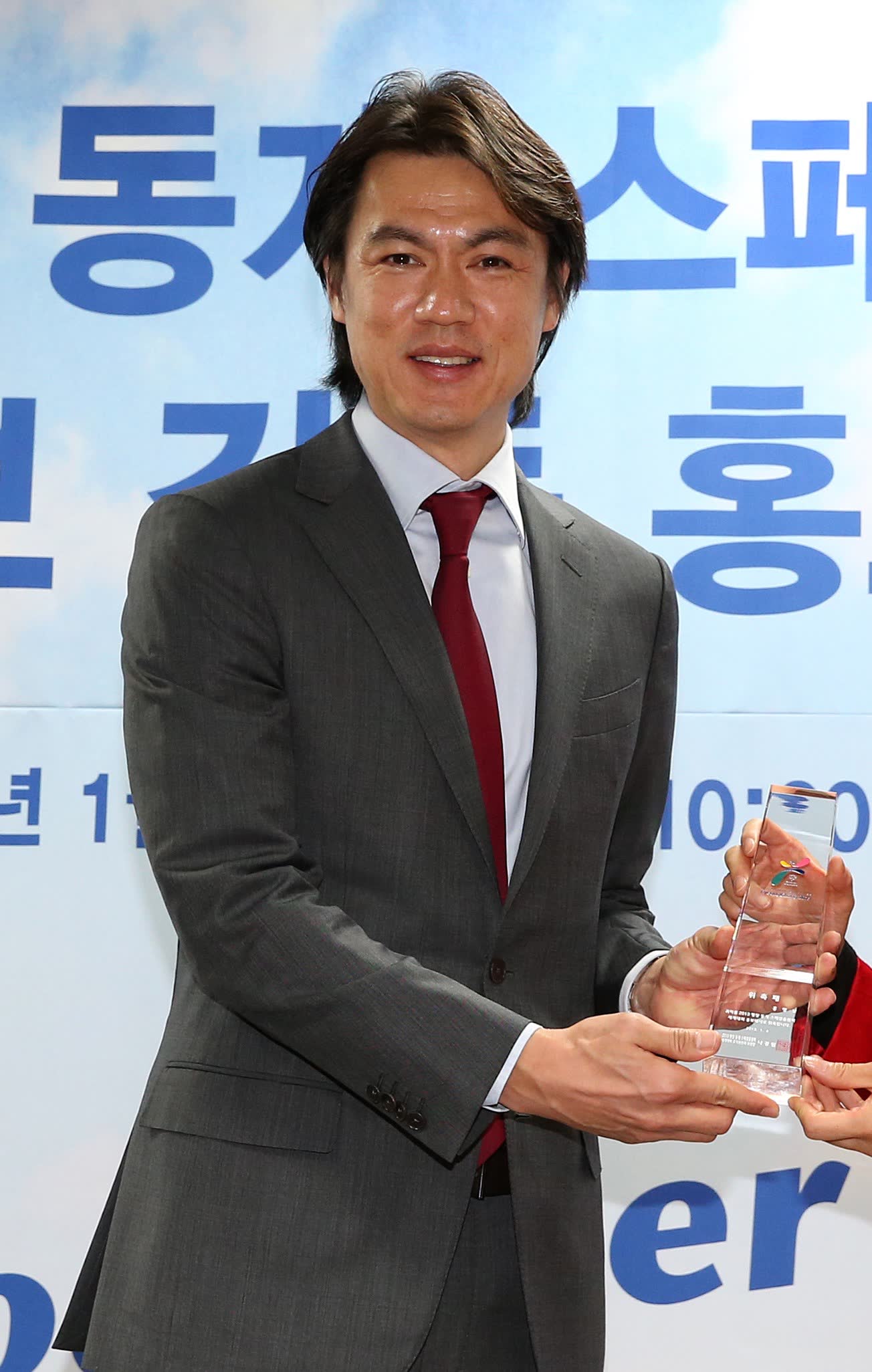
Former national-team players and football professionals challenged the system. Park Joo-ho, who had served on the KFA's strengthening committee, publicly said normal, transparent procedure would have prevented the controversy. Park Ji-sung, Lee Young-pyo, Lee Dong-gook, Lee Chun-soo, and Cho Won-hee were among prominent former players who criticized aspects of the KFA's handling. Their involvement mattered because they could not easily be dismissed as uninformed online commenters.
Commentators, journalists, civic critics, and lawmakers broadened the argument from football tactics to governance. Parliamentary hearings, ministry audits, and police complaints placed the KFA under a level of institutional scrutiny rarely seen in Korean sports administration.
Criticism is legitimate; threats and dehumanizing abuse are not. A coach can be held responsible for accepting a flawed appointment and for poor results without pretending that every rumor, insult, or threat is part of accountability.
Understand the football culture behind the argument: As an Amazon Associate, EpicKor may earn from qualifying purchases. Compare books on South Korean football history and 2002 World Cup retrospectives before reducing this dispute to one tournament result.
How Angry Are Koreans, Really?
Korean football anger has several levels. The loudest level appears in stadium banners, airport chants, livestream comments, and football forums. A broader level appears in public frustration with the KFA's leadership and governance. A third group cares about the national team but does not follow appointment procedure closely. There are also fans who dislike the process while rejecting personal abuse of Hong.
The 2024 Gallup result is the best warning against exaggeration. Overall opinion was initially more favorable than negative, while young male respondents were much more skeptical. After the audit and World Cup failure, visible sentiment clearly deteriorated, but no current nationwide survey gives a reliable percentage.
The safest factual conclusion is this: anger is intense, organized, and mainstream within the Korean football public, but it should not be converted into an invented claim that nearly all 52 million Koreans feel the same way.
Why the Anger Is About More Than Three Matches
Korean supporters often accept that a stronger opponent can win. What they resent is the belief that decisions were made without a credible process and then defended until failure made change unavoidable.
The Hong controversy accumulated older grievances: the expensive and unsuccessful tenure of Jürgen Klinsmann, criticism of Chung Mong-gyu's long presidency, the 2023 disciplinary-pardon fiasco, questions about the Cheonan football center, and a sense that former players or insiders were heard only after going public.
Hong also carried a unique contradiction. He represented the disciplined, heroic image of 2002, but accepted a 2024 appointment that many supporters saw as opaque. The stronger the national symbol, the sharper the disappointment when that symbol appears to benefit from the system under criticism.
What Countermeasures Are Now Underway?
Several responses are active, but none should yet be treated as completed reform.
| Measure | Status as of July 19, 2026 | What to Watch |
|---|---|---|
| Leadership exits | Hong resigned after elimination; Chung submitted his resignation | Whether replacements are selected through transparent, published criteria |
| K-Football Innovation Committee | Launched July 6 with Yoo Seung-min and Park Ji-sung as co-chairs and members from football, law, academia, the KFA, and the pro league | Concrete deadlines, public recommendations, independence from the next KFA leadership |
| Reform agenda | Governance, youth development, technology systems, coaching selection, and competitiveness are under discussion | Whether proposals change bylaws, budgets, and appointment authority rather than producing slogans |
| National Assembly hearing | The hearing planned for July 22 was postponed on July 16 so both parties could participate; a new July date had not been finalized | Witness attendance, document disclosure, and enforceable follow-up |
| Investigations and audit follow-up | Government and police scrutiny has continued around complaints and past decisions | Clear separation between criminal questions, administrative violations, and poor judgment |
The Innovation Committee is the most visible current response. Its membership includes former national-team figures Park Ji-sung, Lee Young-pyo, and Park Joo-ho, alongside sports administrators and outside experts. That composition gives it credibility, but credibility is only the starting point. Fans will judge whether coach hiring criteria become public, committee votes are documented, conflicts of interest are managed, and KFA presidents lose the ability to dominate technical decisions informally.
The National Assembly hearing also remains unresolved. It had been scheduled for July 22 with Chung and Hong among the planned witnesses, but lawmakers announced a delay on July 16 while seeking bipartisan participation. Any article still presenting July 22 as a fixed date is out of date.
For another current Korean trust crisis in which official findings and corporate explanations must be separated carefully, read our fact-checked guide to Korea's data breaches from Coupang to TVING.
What Real Reform Would Look Like
The next national-team coach should not be the only focus. Korea needs a repeatable system that remains credible even when the final choice is unpopular.
That means publishing the committee's authority before a search begins; defining how candidates are scored; using comparable interview conditions; recording conflicts of interest; obtaining real board approval before an announcement; disclosing why a finalist was chosen without leaking private negotiations; and evaluating the coach against football objectives that were stated in advance.
The KFA also needs stronger separation between elected leadership, technical administration, and commercial projects. An organization handling public subsidies, national-team identity, youth development, and professional stakeholders cannot rely on personal trust alone.
Finally, reform needs supporter communication. Fans do not need every private contract detail, but they do need to know who decided, under what authority, using what criteria, and who is accountable if the process fails.
Why Koreans Love Football This Much
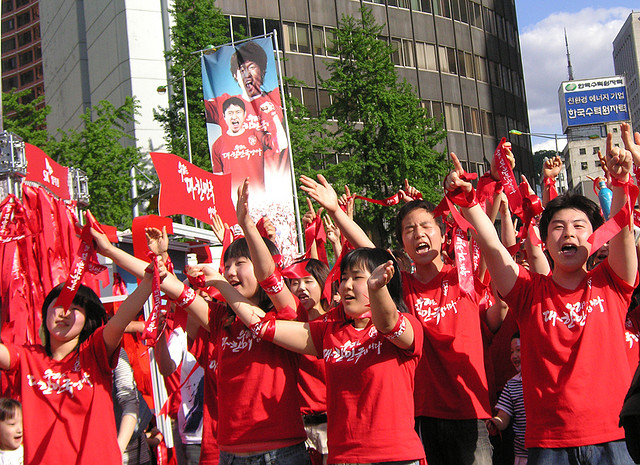
To understand the fury, you have to understand the affection. The 2002 World Cup transformed Korean football into a shared civic memory. Red-shirted crowds filled plazas and streets; the national team became a rare symbol that crossed age, region, and class. Later generations inherited rituals of late-night European matches, early-morning World Cup alarms, neighborhood futsal, K League loyalty, national-team watch parties, and endless tactical arguments.
South Korea has now qualified for 11 consecutive World Cups. That consistency creates expectation, but the love is not based only on winning. Football offers a public language for belonging. Son Heung-min's captaincy, Park Ji-sung's European career, and the 2002 semifinal run are remembered as evidence that a relatively small football nation can stand on the largest stage.
For the wider player-development story behind that national attention, see EpicKor's guide to Korean footballers abroad and the youth system. Our 2026 World Cup brunch guide also shows how this tournament's Korea schedule turned national-team viewing into a morning ritual.
That is why governance feels personal. Fans believe the national team is a public trust, not private property of an association. Their anger can become ugly, but its underlying demand is simple: if millions give the team their time, identity, and hope, the people running it should be able to explain how decisions are made.
Final Take
Hong Myung-bo is being criticized for results, for accepting a disputed appointment, and for leaving Ulsan midseason. The KFA is being criticized for something larger: a governance culture that appeared to value internal discretion over visible fairness. The Culture Ministry audit confirmed that key parts of the 2024 process were improper, while stopping short of declaring Hong's contract automatically void.
The 2026 failure brought that unresolved conflict back with greater force. Resignations, an innovation committee, a postponed parliamentary hearing, and continuing scrutiny are real responses. They are not yet proof that Korean football has changed.
The next test is not whether the KFA finds a famous new coach. It is whether supporters can see a process that would still look fair if their preferred candidate loses.
For the next watch party: If you follow Korea across time zones, compare portable football training gear or a Korea football scarf. Support and institutional criticism can exist at the same time.
FAQ
Q: Did South Korea qualify for the 2026 World Cup knockout stage?
No. Korea beat Czechia 2-1, lost 1-0 to Mexico, and lost 1-0 to South Africa. It finished third in Group A with three points and did not qualify for the Round of 32.
Q: Did Hong Myung-bo resign?
Yes. He resigned after South Korea's group-stage elimination at the 2026 World Cup.
Q: Did the government say Hong's contract was illegal?
No. The Culture Ministry found serious procedural defects in the appointment process but said those defects did not automatically mean the private employment contract was invalid.
Q: Do all Koreans oppose Hong Myung-bo?
No reliable evidence supports that claim. A July 2024 Gallup poll initially found more favorable than unfavorable views overall, although disapproval was much higher among young men. Current football-fan anger is intense, but no post-World Cup nationwide poll provides a precise national share.
Q: Who criticized the KFA appointment process?
Critics included supporters, Ulsan fans, former KFA committee member Park Joo-ho, prominent former national-team players such as Park Ji-sung and Lee Young-pyo, journalists, lawmakers, and the Culture Ministry through its audit findings.
Q: What is Korea doing to reform football governance?
Current measures include leadership resignations, the K-Football Innovation Committee, continued audit and investigative follow-up, and a planned National Assembly hearing. The hearing originally set for July 22 was postponed, with a replacement date still pending as of July 19.
Sources and Further Reading
- FIFA: 2026 World Cup match results and schedule
- FIFA: final Group A standings and Korea's elimination
- Ministry of Culture, Sports and Tourism: final KFA special-audit findings
- Korea Football Association: official FAQ and response on the coaching appointment
- Korea Gallup: July 2024 public opinion on Hong's appointment
- Yonhap: airport reaction after the 2026 World Cup
- SBS News: Park Joo-ho on transparency and the KFA process
- NewsPim: launch and membership of the K-Football Innovation Committee
- Edaily: postponement of the National Assembly KFA hearing
You Might Also Like
Have All BTS Members Finished Korean Military Service? 2026 Status
Yes — all seven finished. Jin was discharged 12 June 2024, J-Hope 17 October 2024, and RM, V, Jimin, Jung Kook and SUGA between 10 and 21 June 2025. Full dates, why SUGA served longer, and what BTS did after the uniforms came off.
BTS Part 1: Seven Unknown Korean Trainees at a Label With No Money
How BTS went from a nearly bankrupt Korean label and one teenage rapper to the FIFA World Cup Final stage. Part 1 of EpicKor's BTS history series.
Korea's Data Breach Crisis: From Coupang to TVING
A fact-checked guide to the Coupang and TVING data breaches, what failed, how Koreans reacted, company responses, and Korea's new privacy measures.